

You can make a jar of lip balm with just beeswax, shea butter and grapeseed oil. The wax sets the balm, the shea butter gives it body and the oil helps it spread. With three ingredients, changes in texture are easier to understand.
This 28 g batch leaves out the peppermint essential oil but keeps the ratio of fats to wax in Bramble Berry’s published formula. A jar makes it easy to take a small amount and assess the texture at room temperature.
Ingredients for 28 g
| Ingredient | Weight | Role in the balm |
|---|---|---|
| Unrefined cosmetic-grade shea butter | 15 g | Adds body and emollience. |
| Grapeseed oil suitable for lip cosmetics | 10 g | Helps the balm spread. |
| Yellow cosmetic-grade beeswax | 3 g | Adds firmness and forms a film. |
| Starting total | 28 g |
Weigh the oil: 10 g is not 10 ml. Some balm may remain in the bowl, so the filled jar can weigh slightly less than the starting batch. Use scales that read to at least 0.1 g for the 3 g of wax.
For a first batch, keep to these ingredients. Olive oil in place of grapeseed oil, cocoa butter in place of shea butter, or a different wax will change the result. Our guide to beeswax in cosmetics (in Spanish) explains which documents to look for when sourcing wax for a cosmetic product. Its appearance alone tells you little about its suitability.
FORMULA BY WEIGHT
Three ingredients for a 28 g batch
Ratios adapted from Bramble Berry, without peppermint essential oil. Weigh the oil; grams and millilitres are not equivalent.
BATCH SIZE
Calculate the quantities for your balm
Choose a total weight. The proportions are 15 parts shea butter, 10 parts grapeseed oil and 3 parts beeswax.
From 14 to 280 g. Use a comma or decimal point and up to one decimal place.
Enter a total between 14 and 280 g, with no more than one decimal place.
Quantities are rounded to 0.1 g. Use scales with this resolution or better. The filled weight may be lower if some mixture remains in the bowl.
The figures shown are for 28 g. You can still download the Spanish PDF if the calculator is unavailable.
Use the ingredients specified in the recipe. Heating and cooling times do not scale directly with the weight.
Step-by-step method
Use a heatproof bowl, spatula, thermometer and one or two small jars suitable for cosmetics. Clean and dry everything that will touch the balm. Record the ingredient batch numbers and the date.
- Weigh each ingredient separately. For this batch, the three weights should add up to 28 g.
- Melt gently and stir. If you use a microwave, work in short intervals and mix between them. A small batch heats quickly. Adjust the intervals to the appliance, follow the ingredient suppliers’ instructions and stop once the mixture is liquid and uniform. Handle the hot bowl with care.
- Pour into the jars while the mixture still flows. Avoid splashes and weigh how much actually goes into each jar.
- Control the cooling. Bramble Berry uses a refrigerator to speed up this stage. Use a clean space and a suitable container. Keep water and condensation out of the balm and adjust the cooling time to the size of your batch.
- Let the balm reach room temperature before judging its texture. Close the jar when the balm is cool and dry.
What texture to expect and how to troubleshoot it
You should be able to pick up a little balm with a clean, dry spatula and spread it evenly. Assess it at the temperature where it will be used. Cold makes it firmer and warmth makes it softer.
If you find grains or harder patches, review the ingredients and the cooling process. The oil used with shea butter affects its crystallisation, as AAK explains in its formulation guidance. Reheating can change the texture, but the grains may return.
| What you observe | What to check |
|---|---|
| Too firm | Room temperature and the weights of wax and shea butter. |
| Too soft | Room temperature and weighing accuracy. |
| Grainy patches | Cooling, temperature changes and the combination of ingredients. |
| Oil separates | Mixing, ingredients and the behaviour of the formula. |
| Droplets of water | Water or condensation has entered the jar; the formula is no longer water-free. |
Change one thing at a time and record it. If you want a different finish, start with a formula designed for it. A balm intended for a twist-up tube must also hold its shape and work with the mechanism.
How much do I need for 56 g?
Double all three weights: 30 g shea butter + 20 g grapeseed oil + 6 g beeswax = 56 g. Changing just one weight changes the formula.
Heating time does not automatically double. Watch the mixture and adjust the heat to your bowl and appliance.
Why the recipe leaves out honey
Honey does not disperse evenly in a mixture of oil, butter and wax alone. It may look mixed at first, then form droplets or separate. Soap Queen describes this in its balm trials.
A balm containing honey needs a different formulation and an assessment of how it will be preserved. In this recipe the hive ingredient is beeswax. It contains no added water, allantoin, fragrance or essential oils.
TWO DIFFERENT FORMULAS
Adding honey changes the formula
This recipe
Fats + wax
No added water or honey.
With added honey
The honey may form droplets or separate.
A different formulation is needed.
Mixing for longer does not guarantee that the honey will stay evenly dispersed.
Use and storage
Apply a small amount to healthy lips using clean, dry hands or a spatula. Avoid ingredients to which you know you are allergic, and stop using the product if irritation develops.
Keep the jar closed, out of direct sunlight and away from heat. Avoid leaving it in a car or dipping wet fingers into it. A formula without added water may present a low microbiological risk, depending on its ingredients, manufacture, packaging and use. It is not sterile. See the DGK paper on water activity.
Record the date and prepare small batches. Stop using the balm if its smell changes, spots appear or you notice deterioration. A normal appearance cannot establish a shelf life. Our guide to preserving homemade cosmetics (in Spanish) explains how to distinguish oxidation, separation and contamination.
Can I keep it indefinitely because there is no added water?
No. Oils and butters can oxidise, and contamination can occur during preparation or use. The shelf lives of the individual ingredients cannot establish a shelf life for the finished balm. Appearance and smell alone cannot confirm its safety.
Frequently asked questions
Does it protect against the sun?
This recipe has no measured sun protection factor. For sun protection, choose a lip product labelled with its SPF.
Can I add propolis?
Adding a few drops is not enough. You need to know the extract’s carrier, concentration and compatibility with an oil-based mixture. Read our guide to propolis extracts (in Spanish) before changing the formula.
Can vitamin E replace a preservative?
No. An antioxidant and an antimicrobial preservative do different jobs. Adding vitamin E cannot establish a shelf life or compensate for water entering the balm.
Can I give it away or sell it?
A blog recipe cannot establish the safety of an individual batch or authorise its sale as a cosmetic. If you plan to sell a product, read about the obligations and professional safety assessment in our guide to bee products in cosmetics (in Spanish).
If you prefer a ready-made lip balm
Our shop stocks a propolis lip balm with a different formulation. Check its ingredients, particularly if you have a known allergy to propolis.
IN OUR SHOP
A ready-to-use lip balm
Check the ingredients and avoid propolis if you know you are allergic to it.

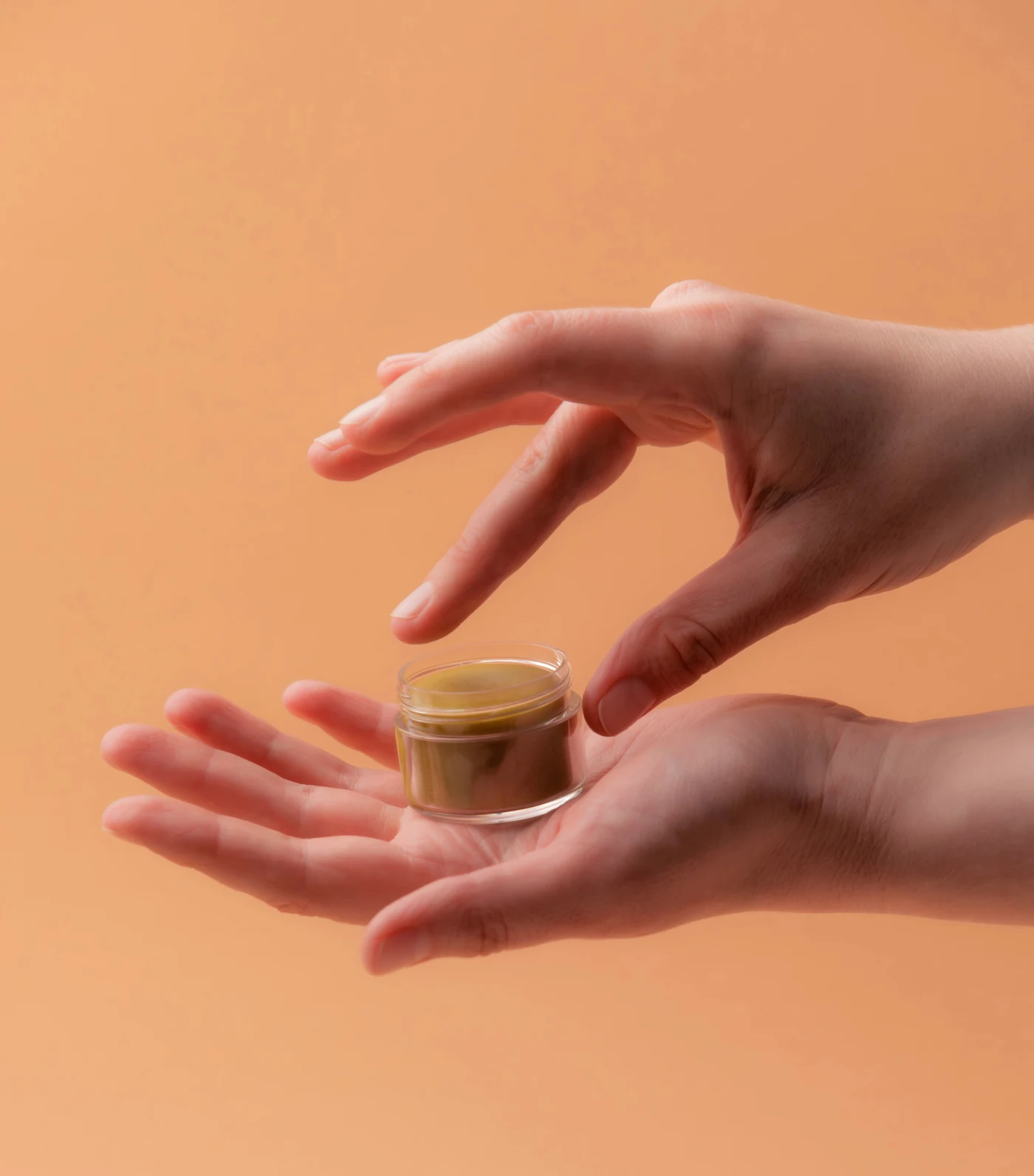
The illustrations explain the formula and how to handle the balm. The photograph is illustrative and does not document a trial of this recipe by LTA.


