


Options for supplementing a pollen shortage


Ultra Bee is supplied as a ready-to-use patty. MegaBee is a powder that requires preparation. Check incoming pollen and colony demand, and follow the label for whichever format you choose.
Vitellogenin and the beekeeper’s “fat bee”
Look inside a hive and the pollen stores are easy to see. Another protein reserve is carried by the bees themselves. The fat body, a tissue with important metabolic functions, stores nutrients and produces proteins including vitellogenin. In a well-nourished winter worker these reserves can be substantially greater than in an older summer forager.
This helps explain how workers reared towards the end of the season can live through winter and nurse larvae when brood rearing resumes. They draw on their body reserves during a shortfall in fresh pollen. Those reserves have limits, particularly when the colony is feeding a growing area of brood.

“Fat bees” is beekeepers’ shorthand for workers in good nutritional condition. It refers to the internal reserves that support winter survival and later nursing. An adult bee’s apparent body size on the comb is an unreliable way to judge those reserves.
What a shortage of pollen looks like

Pollen supplies much of a honey bee colony’s protein and lipids, alongside vitamins and minerals. Nurse bees consume pollen or bee bread and use those nutrients to rear brood. The return of pollen-laden foragers is a useful sign of supply on that particular day. Brood signals can stimulate pollen foraging, although pollen at the entrance is not proof of a good queen.
Syrup or fondant supplies energy. It can help when nectar is scarce, but sugar cannot replace the protein that nurses need. A product such as Apipasta Vitamins has its own declared composition. Check the label and the shortage you are trying to address. Encouraging more brood when fresh or stored pollen is scarce can increase the demand on workers’ body reserves.
Possible changes during a prolonged dearth include the following. The sequences overlap and none of these signs alone establishes a nutritional diagnosis.
| Early shortage | Less brood food around young larvae, less drone brood and sometimes less worker brood. Workers may draw on their body protein reserves. |
|---|---|
| Persistent shortage | Further depletion of body nutrients can impair nursing, development and resistance to other stresses. Check colony health and available forage. |
| Severe shortage | Foragers may bring back dust from materials such as animal feed, flour or sawdust. These materials are poor substitutes for a varied pollen supply. A severely weakened colony can die. |
During a suitable inspection, look at the amount of brood food around the youngest larvae. Compare larvae of a similar age across combs or colonies. Several days of rain can interrupt incoming pollen even where flowers are present.

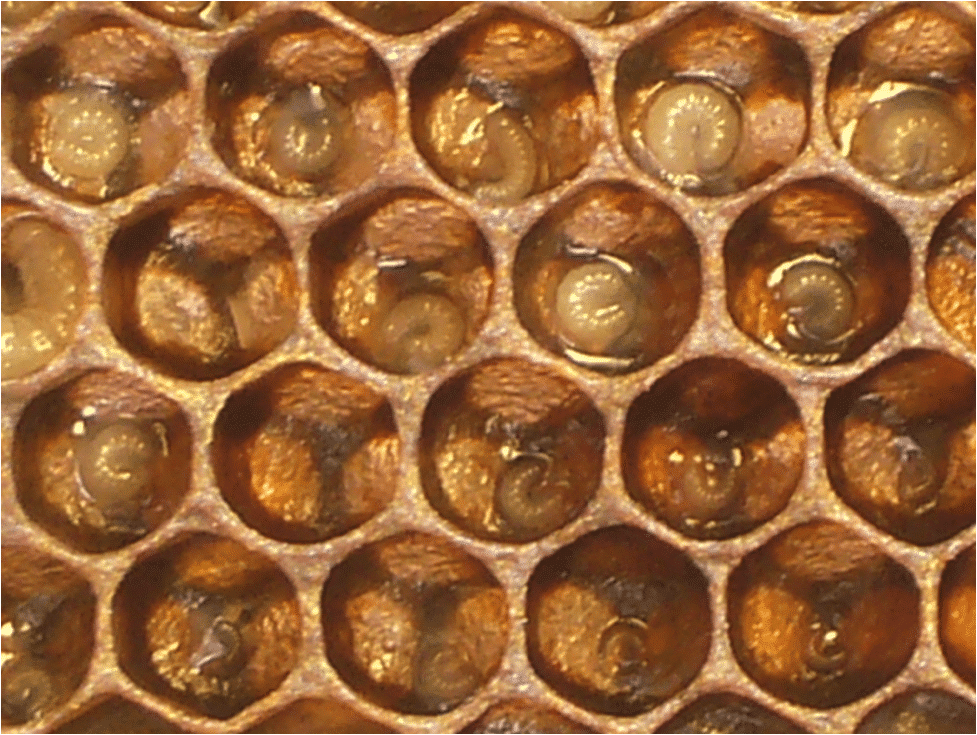

Larvae with little visible food are sometimes described as “dry brood”. Larvae in a pool of food are sometimes called “wet brood”. These expressions describe what is visible at the time. The quality of the queen, disease, Varroa pressure and the colony’s brood-to-nurse ratio can also affect what you see.
Vitellogenin, the physiological state of nurse bees and brood-food production are linked. A varied pollen supply is one part of supporting them. Bee bread of several colours suggests different floral sources, but colour alone cannot tell you its nutritional composition.

When to consider a protein supplement
Natural pollen from a range of flowers is the starting point. In Randy Oliver’s field experience in California, patties offered during a good natural pollen flow often brought little apparent benefit, and some colonies barely consumed them. That matters economically: regular trips, time and fuel can cost as much as the feed.
No supplement is a complete replacement for a varied natural pollen supply. A patty is most useful when a colony that needs protein cannot gather enough and has insufficient bee bread in reserve. Compare the cost of feeding with the prospects for fresh forage and the work you expect the colony to do.
- After a hot, dry summer. Winter bees are being reared as laying starts to decline. Check pollen stores and the next likely flow before deciding whether to supplement.
- At the start of the brood-rearing season. Overwintered workers feed the first larvae, and newly emerged workers need pollen as the brood area expands. Bad weather can interrupt pollen supply during this period.
- When making splits or nucleus colonies. A growing brood nest can place heavy demands on a relatively small nursing population. Compare what is coming in with what the nucleus already has.
Oliver’s chart below illustrates supply and demand in his own seasonal plan. The blue line represents pollen demand and the orange line supply. Where demand rises above supply, a shortage may develop. The California example includes the period after almond bloom. Apply the reasoning to your own flowering dates and climate.

Sources. Randy Oliver, California, Scientific Beekeeping, and the autumn management article published by Apiservices.


