


Feed for autumn stores and brood rearing


A powdered protein supplement and fondant meet different needs. Check pollen supply, accessible honey and the brood before choosing. Follow the directions for the particular product.
When the last main honey crop comes off, the next beekeeping season is already under way. What remains in the hives during late summer and autumn helps determine how many healthy workers will be there when the first spring flows arrive. Start with the colony’s own stores, the local pollen flow and the state of the brood nest.

As part of preparing the apiary for winter, assess queen performance, colony size and reserves of honey and pollen. Late flowers may still contribute both nectar and pollen. Leaving adequate honey in the hive can reduce purchased feed and leave the colony better placed to take advantage of an early spring crop. The balance depends on your site and season.
Summer foragers and workers that will overwinter have different demands. Long-lived winter bees accumulate protein and lipid reserves in the fat body. These reserves help them survive the dearth and resume nursing when brood rearing expands. Bees that are several months old may therefore help feed the first substantial brood of spring.

Nurse bees produce brood food using their glands. The hypopharyngeal glands supply important proteins. A shortage of suitable pollen while the colony is raising its winter generation can limit gland development and the amount of brood the colony can support.
How food moves through the colony
Trophallaxis is food sharing between bees. Young adult nurse bees eat pollen and use its nutrients in their own tissues and in glandular secretions for brood. Food also passes between adults. A protein patty can help when incoming pollen and stored bee bread are insufficient, but a patty alone cannot guarantee brood quality or overwinter survival.
Choosing a protein patty
Read the declared protein concentration, ingredients and directions for the product. This guide uses patties in roughly the 14–20% protein range as examples for a shortage during autumn brood rearing. More generally, products sold for this purpose vary, and the percentage does not show digestibility, amino-acid balance or how readily a colony will consume them.
Products with less than 8% protein are often better understood as carbohydrate-led maintenance feeds with some additional nutrients. They serve a different purpose from a supplement selected to support active brood rearing. Check which nutrient is limiting before choosing a feed.

What autumn feeding is meant to achieve
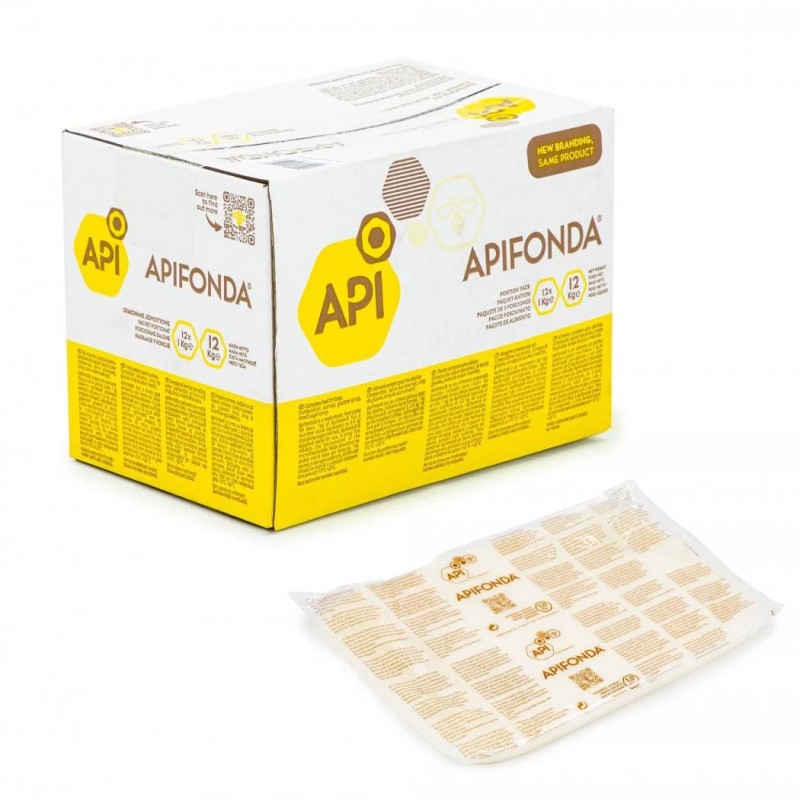
Carbohydrate and protein address different shortages. Apipasta fondant is an example of an energy feed. Protein supplements may be useful when pollen is scarce. Good natural forage and sufficient honey in the brood nest remain the starting point.
- Support nurse bees. Adequate nutrition during the late brood cycle helps them feed developing larvae and maintain the queen.
- Build the winter generation. Workers with adequate body reserves are better equipped for a long period with limited forage. Assess colony health and Varroa alongside nutrition.
- Go into winter with an adequate cluster and accessible food. Feeding at the right moment gives the colony time to use the supplement and organise its stores.
- Leave enough bees for the first spring brood. A colony emerging from winter in good condition has a better chance of building up in time for local flowering.
The target is a healthy winter population with food it can use. Continually stimulating laying in a colony already meeting its needs can increase demand on reserves.
How to plan feeding in the apiary
- Assess first. Look at adult population, the brood pattern, bee bread, incoming pollen, honey stores and hive weight.
- Choose for the shortfall. Where autumn pollen is genuinely scarce and brood is present, compare the declared protein in candidate patties. The 10–20% range often quoted in practical examples is a guide to comparing products, not a dose for every colony.
- Check energy stores separately. A light hive can still need carbohydrate even when it is accepting a protein patty. In cold conditions an appropriate fondant may be easier for the cluster to reach.
- Start in time. If a shortage is developing in late summer, deal with it while the colony is raising winter bees. The local flow and temperature matter more than a calendar date.
- Check uptake. Offer a quantity the colony can consume. Inspect its condition and follow the feed supplier’s directions when replacing it.
- Adjust from one visit to the next. Record weight, patty consumption, changes in brood and the return of fresh pollen. Reduce or stop feeding when the reason for it has passed.
What to record before winter
Note each colony’s stores and strength, what you fed, how much it took and when the last pollen came in. That record makes it easier to explain a strong or weak start the following spring.

A well-chosen wintering site still matters: shelter, access and forage can change the amount and timing of supplementary feed. The best spring preparation often starts with the decisions made after the previous harvest.


