
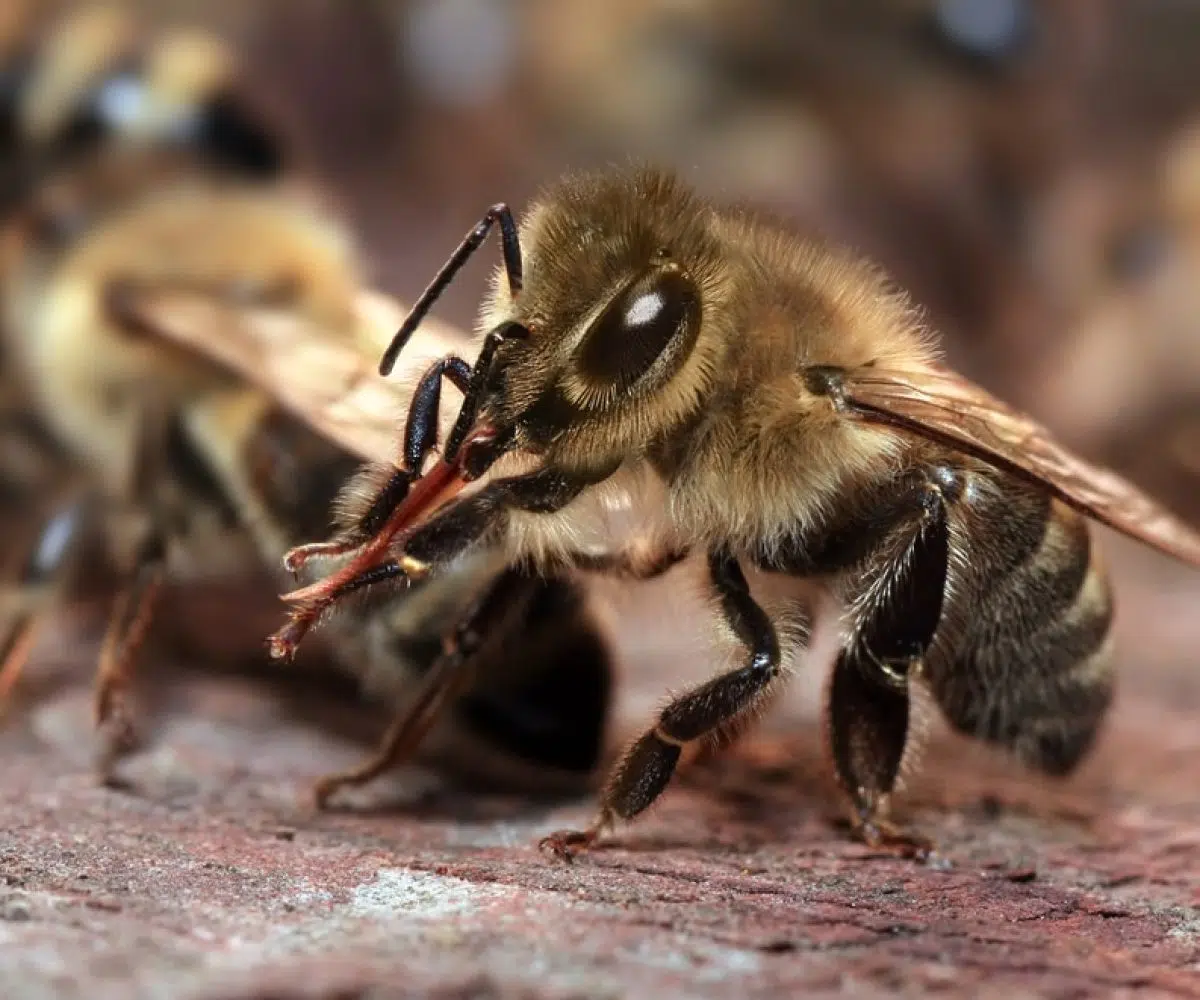
What is trophallaxis in bees?
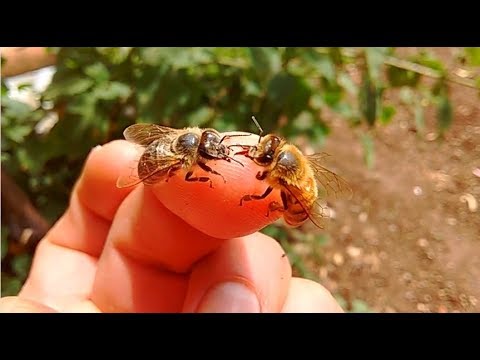
Trophallaxis is the mouth-to-mouth transfer of liquid food between bees. A familiar example is a worker passing nectar or diluted honey from her crop—the temporary storage organ often called the honey stomach—to another worker. The recipient extends her proboscis towards the donor’s mouthparts and takes up the regurgitated liquid. Antennal contact accompanies many of these encounters, which can be observed on the comb or in an observation hive.
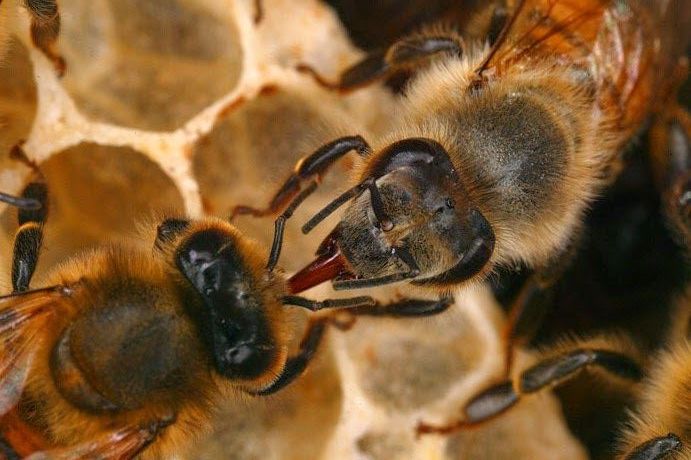
Returning nectar foragers often unload to receiver bees inside the hive, and food can pass onwards through further exchanges. This is a network, not a compulsory one-way chain of fixed age groups. Pollen nutrition follows a different route: young workers consume stored pollen and use its nutrients to develop the glands that produce food for larvae and other bees. Feeding the brood or queen is therefore not simply passing the same crop contents, or intact pollen pellets, unchanged from mouth to mouth. See research on pollen consumption and nurse-bee nutrition.
Food sharing supports the colony, but it does not prove that every bee receives the same diet or has the same nutritional condition. In experiments with caged honey bees, sugar-solution intake varied between individuals. Those laboratory results should not be treated as an exact measure of food distribution in a full hive, but they caution against assuming that sharing automatically means equal intake.
More than just feeding
An exchange may begin when one bee solicits food or another offers it, with contacts directed towards the head and mouthparts. The bees actively touch one another with their antennae. Not every brief mouthpart contact transfers a large meal: a small sample can also provide sensory information.
Trophallaxis is therefore more than food distribution. A bee receiving scented nectar can associate its odour with a food reward. Farina, Grüter and Díaz demonstrated learning of nectar odours brought back by foragers inside the hive. Such social learning can help recruits recognise a useful floral scent before their own foraging trip; it does not, by itself, specify the source’s distance and direction.
Chemical communication also helps organise colony life and nestmate recognition, but it is misleading to describe trophallaxis as making every bee’s odour identical. Research on worker cuticular hydrocarbons found chemical profiles that change with age and task and are influenced by the social environment. These recognition cues are not simply a uniform cocktail of pheromones distributed by food sharing.
Conclusion
A colony responds to changing food supply, weather, queen status and intruders through many local interactions and sensory signals. Trophallaxis contributes to that information flow, particularly about incoming liquid food. It does not mean every bee instantly knows everything happening inside and outside the hive, or that food exchange alone communicates all those conditions.
The term superorganism is a useful way to describe the colony’s integrated life: workers, drones, the queen and developing brood depend on one another, and their different activities support survival and reproduction. The comparison with cells in a body is an analogy, not a claim that individual bees are identical or have the same role.
Would you like to learn more about beekeeping?
See our online beginner beekeeping course, taught in Spanish.
The course page provides the syllabus and current enrolment details. Its promotional video below is also in Spanish.
![Introducción al Curso de Apicultura [SÚPER COMPLETO]](https://www.latiendadelapicultor.com/blog/wp-content/plugins/wp-youtube-lyte/lyteCache.php?origThumbUrl=https%3A%2F%2Fi.ytimg.com%2Fvi%2FuJomNRA0UP8%2F0.jpg)

ISNI 0000 0005 1801 1100 | Joshua Ivars is the manager of LA TIENDA DEL APICULTOR and the author of this blog, where he shares technical and practical guidance for beekeepers. Drawing on extensive experience in the beekeeping sector, he offers advice and solutions based on beekeepers’ real needs, sharing his knowledge of equipment and essential beekeeping practices.


