
-
Beehives
- Complete beehive
- Accessories
-
Nuc hives
- Nucs by format
- With bees & mating
- Spare parts
-
Bee equipment
- For the apiary
- For the beekeeper
-
Clothing
- Clothing Accessories
-
Beeswax
-
Pure beeswax
- Beeswax and foundation
- Beeswax foundations
- Melting and rolling beewax
-
Pure beeswax
-
Bee feed
- Accessories and source materials
- Utensils
-
Bee health
- Varroa Treatments
- Diseases control
- Nutraceuticals
-
Extraction and bottling
- Before extraction
- Honey extraction
- After extraction
-
Bee pollen
- Harvest
- Indicted
-
Honey packaging
- Flasks per utility
- Flasks by size
- Other packaging
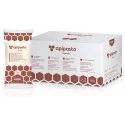 Apipasta with vitamins 15kg
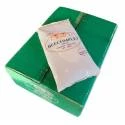 Beecomplet® Spring 14Kg
 Beekeeper suit with round veil
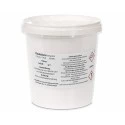 Oxalic acid 1kg
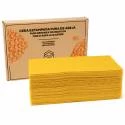 Beeswax Foundation 5kg
 Fresh royal jelly 20g
 Classic honey jar 1kg comb-lines TO77 - Pack of 16 units
 Promotor L Apis 1 litre
Beeswax
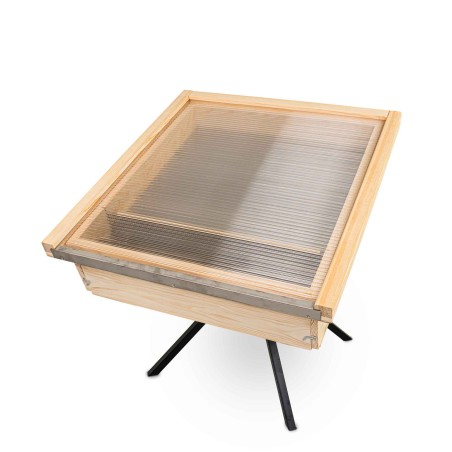
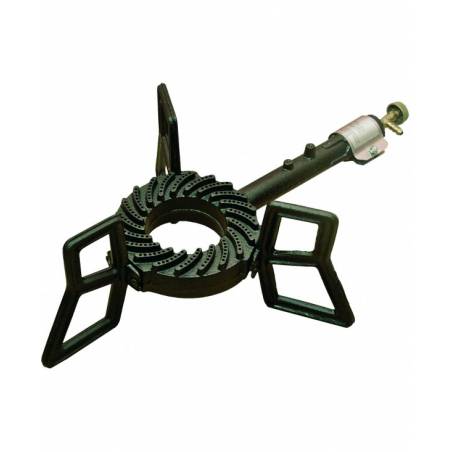
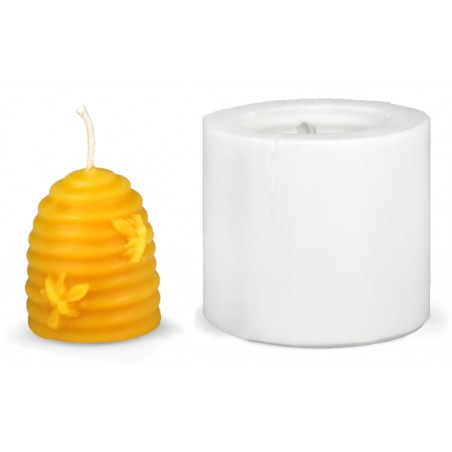
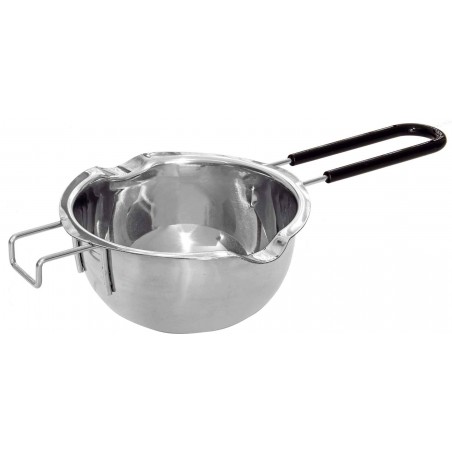
Beeswax in blocks and in foundation sheets, ready-made candles and everything needed to work it: moulds, wicks, melters, embossing mills and moth treatment.
- Pure beeswax
- Melting and rolling beewax
Categories
Brand
Price
-
€0.00 - €63,525.00


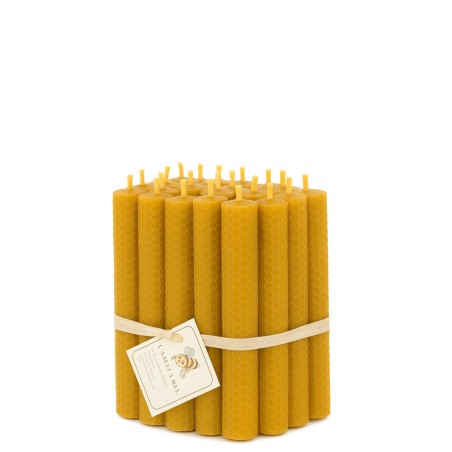

What to look at when buying and renewing wax
Wax isn't just any consumable: it's the structure where the colony rears brood, stores food and organizes much of its life. That's why, when buying foundation sheets or blocks of wax, I wouldn't look only at the price per kilo. I'd look above all at origin, cleanliness, acceptance by the bees and the use you're going to give it. Poor-quality wax can cause rejection, irregular comb building, brace comb or brood problems. And in the brood chamber you have to be especially careful, because old wax accumulates remains of cocoons, spores and treatment residues; many acaricides are fat-soluble and tend to stay in the wax.
My advice is to work with wax you trust and to renew combs on a planned schedule, not when they're already black and worn out. In the brood nest, I'd try to replace part of the frames every year, introducing new foundation when the colony is strong, with nectar/pollen coming in and enough temperature to draw it out well. For supers, the sanitary demands are usually lower than in the brood chamber, but it's still worth keeping the combs well and protecting them from wax moth, moisture and mould. I wouldn't obsess only over cell size: I'd first prioritize clean, well-embossed wax, compatible with your frame and well accepted by the bees. Good wax goes less noticed when everything is fine, but it shows enormously when it fails.
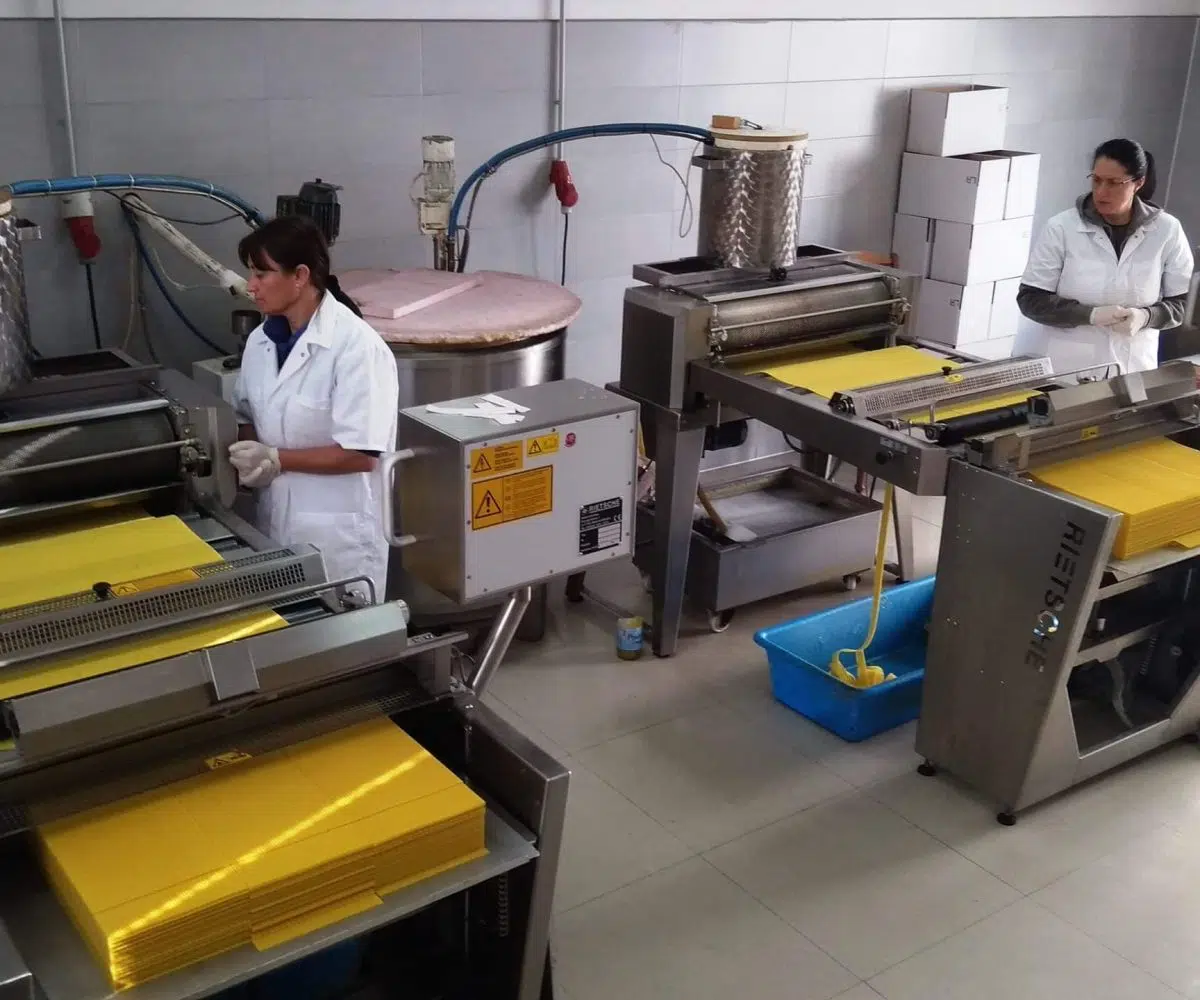
Beeswax
"Beeswax" is really several different products, and the first thing is to know which one you are after.
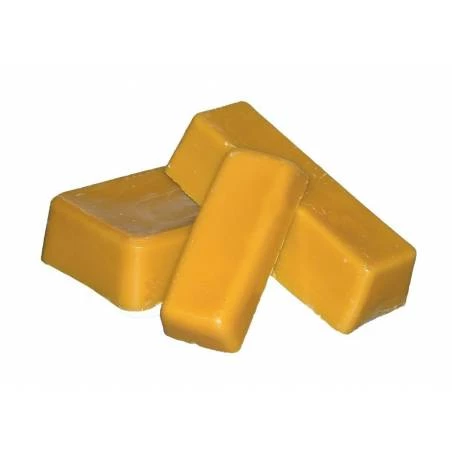
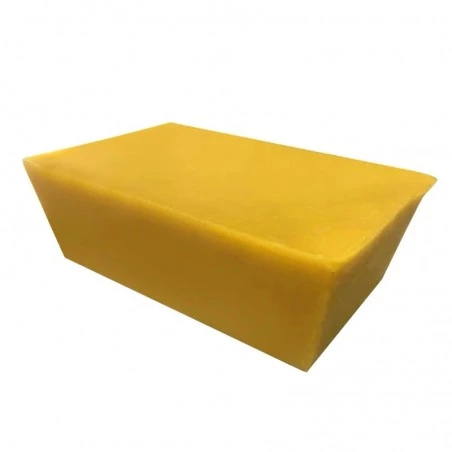
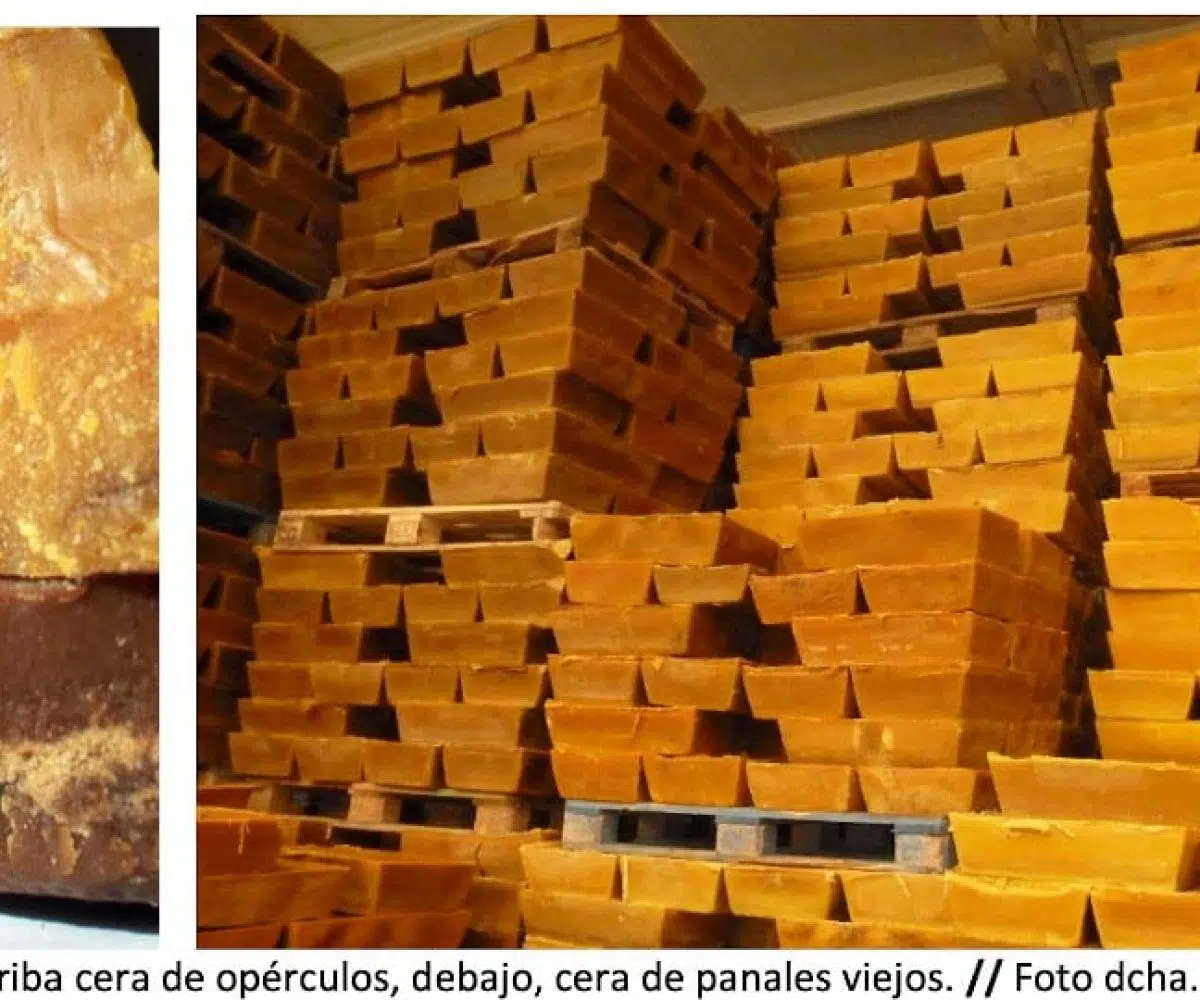
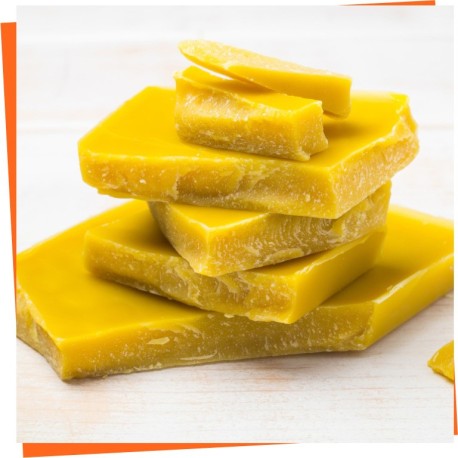
- Wax in blocks — purified wax, for cosmetics, artisan candles, polishing waxes or encaustic.
- Foundation sheets — for the hive. Here the frame size rules, not the weight: check the format before ordering.
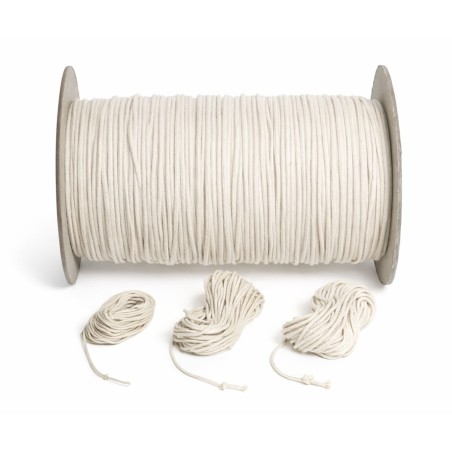
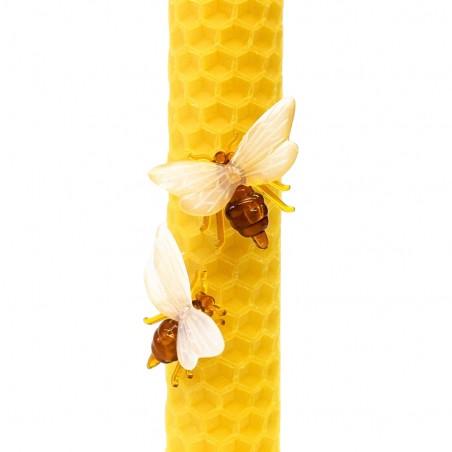
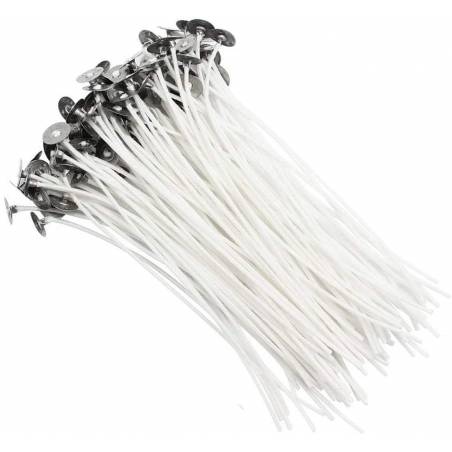
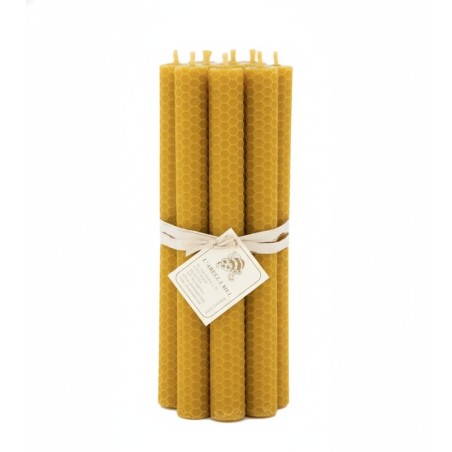
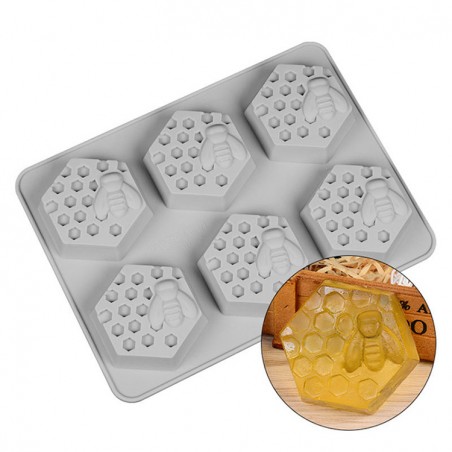
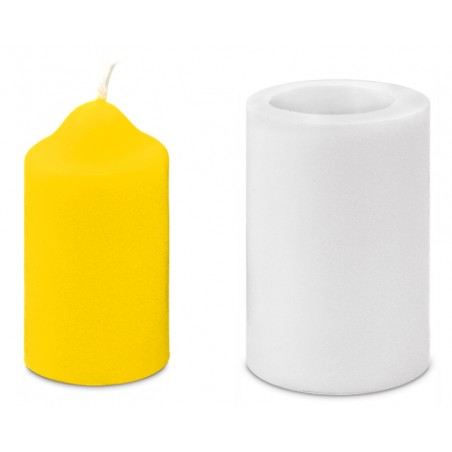
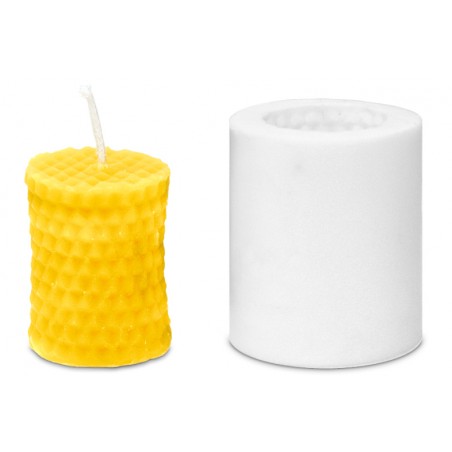
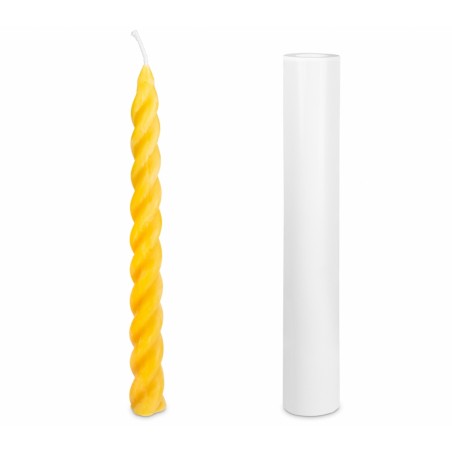
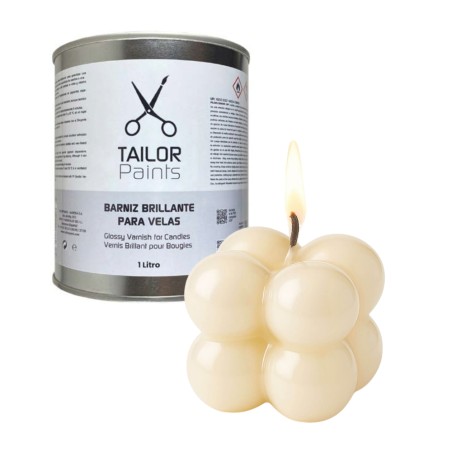
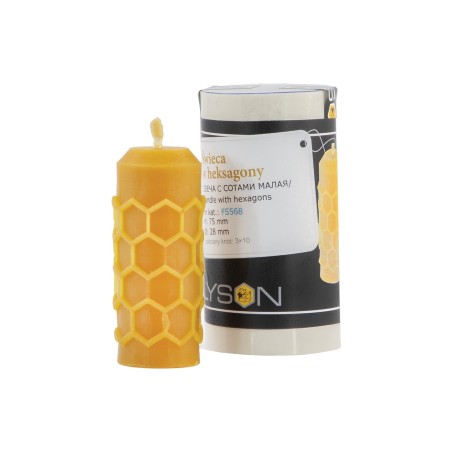
- Ready-made candles and supplies to make your own, moulds and wicks included.
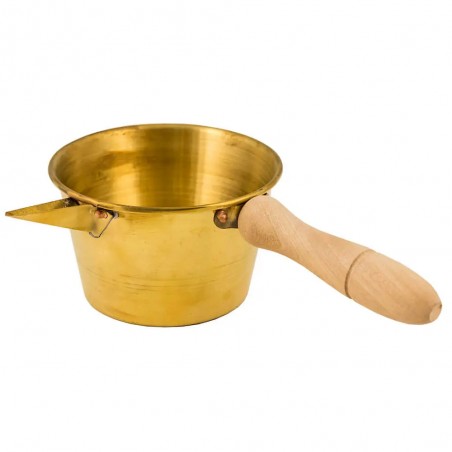
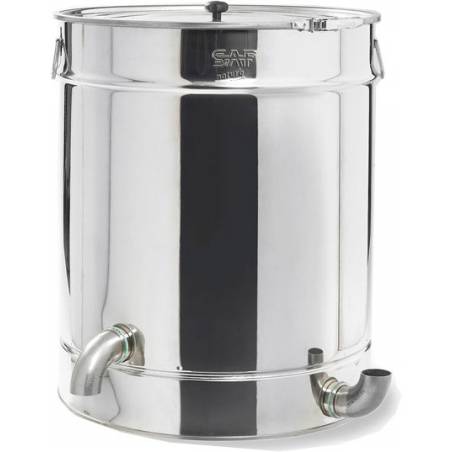
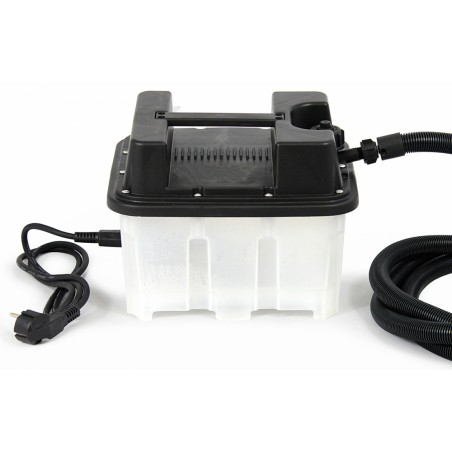
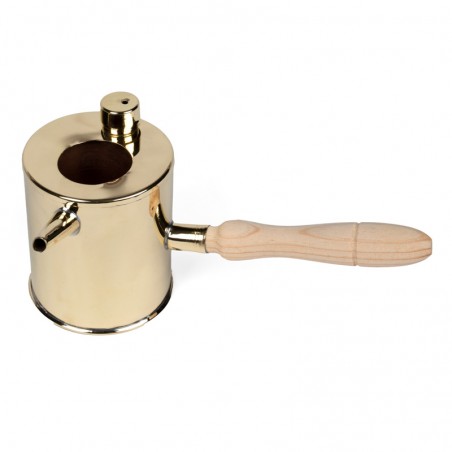
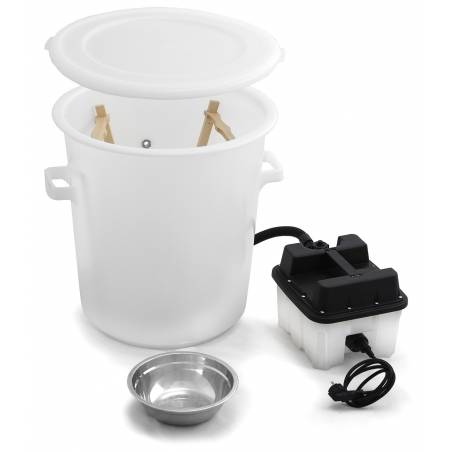
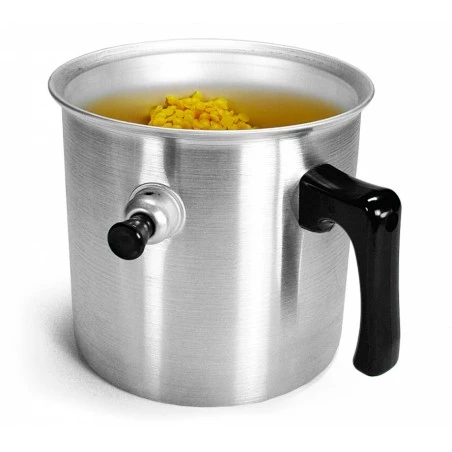
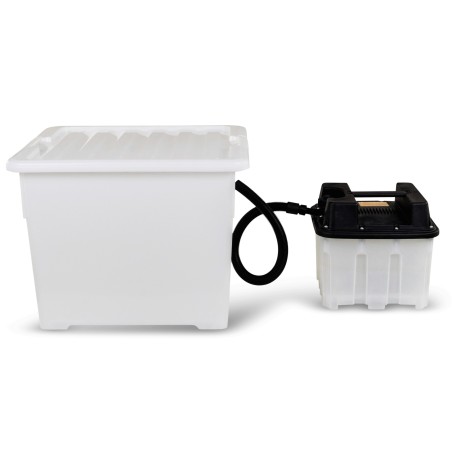
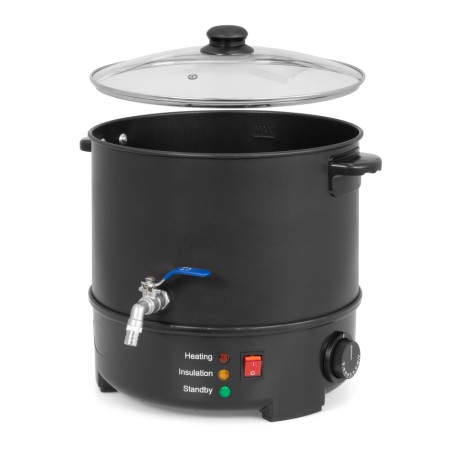
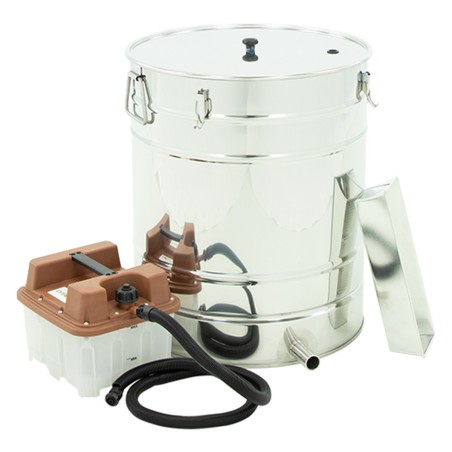
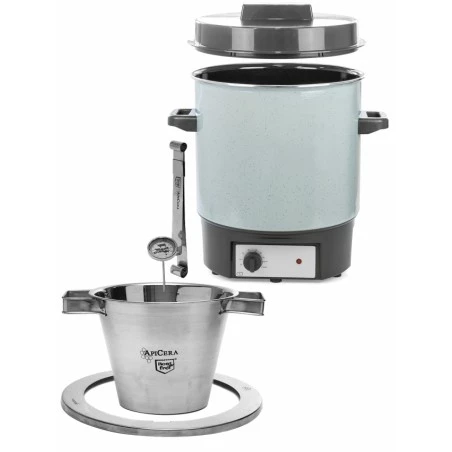
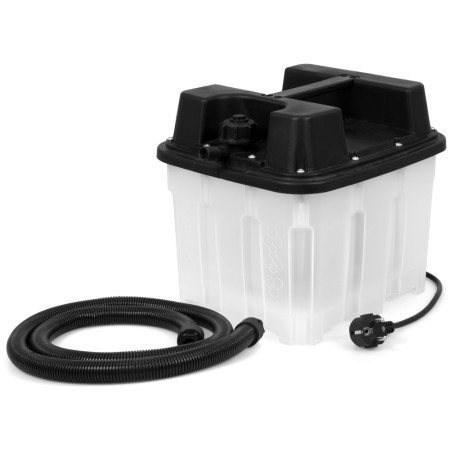
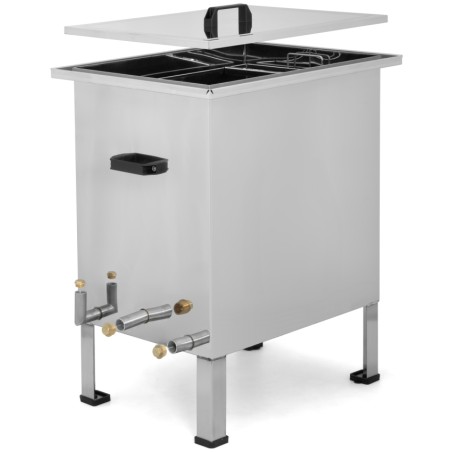
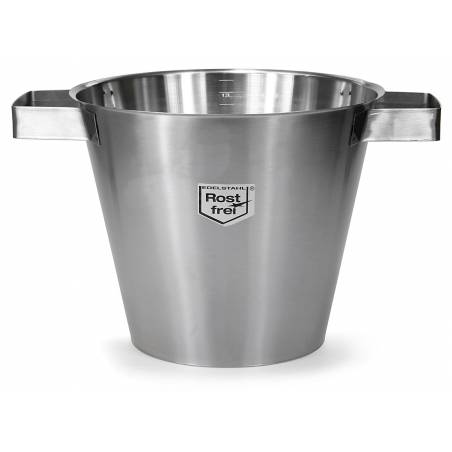
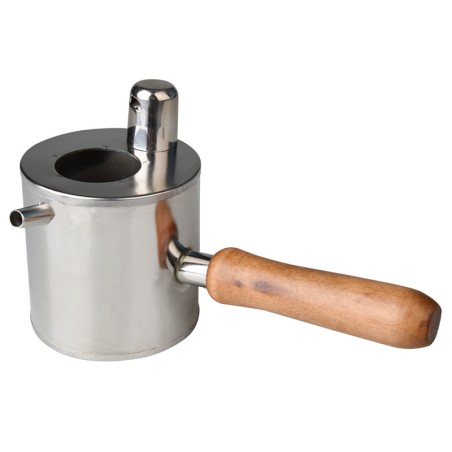
- Wax melters and moth control, the kit for anyone processing their own wax.
The temperatures, which is what people ask about most
Wax turns plastic — mouldable but not liquid — between 30 and 35 ºC, and its melting point sits between 61 and 65 ºC. Melting it completely takes 60-70 ºC; breaking water-wax emulsions, 75-80 ºC. Above 140 ºC the volatile fractions start to evaporate, and those are what carry the smell: for candles and cosmetics, stay at the minimum that works. Real sterilisation, the kind that destroys Paenibacillus larvae spores, needs 120 ºC for 30 minutes under pressure — that is not something a saucepan does.
"Pure" does not mean the same thing everywhere
Wax is a fat and, as such, it accumulates fat-soluble compounds. A sheet can be perfectly embossed and still be poor if it is adulterated, old, scorched or loaded with residues. Four things are often sold as if they were the same:
- Clean wax — melted and settled, with no visible impurities.
- Sterilised wax — treated by time and temperature to reduce pathogens and spores.
- Decontaminated wax — put through specific processes to reduce chemical residues.
- Traceable or analysed wax — with documentary support for origin, purity or residues.
They are not synonyms, and only the last is verifiable. If it is destined for cosmetics or brood-chamber foundation, ask about the analysis, not about the adjective.
If it is for the hive: why comb is renewed
A black comb, after 13 to 15 brood generations, holds around 46 % actual wax: the rest is cocoons, larval remains and accumulated propolis. The cells narrow and their walls thicken, and the bees that emerge are smaller — from about 123 mg in new comb to 106 mg in black comb. On top of that they attract wax moth more, because they hold more protein.
The usual guideline is to renew between 20 and 30 % of the brood chamber each year, or at least 2-3 sheets per hive. A standard sheet weighs around 100 g, and giving the colony ready-made wax saves it an enormous energy investment: producing a kilo of wax costs it several kilos of honey, and the exact ratio varies so much with climate and colony strength that no single figure should be trusted.
What is foundation wax for?
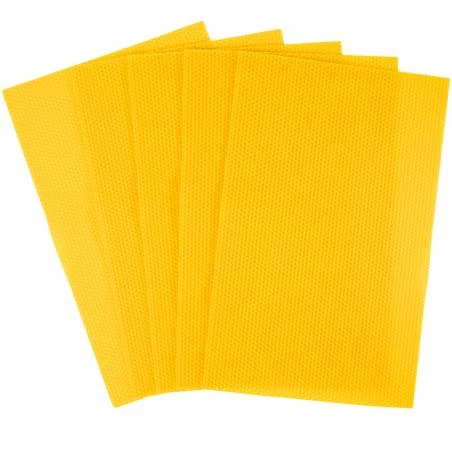
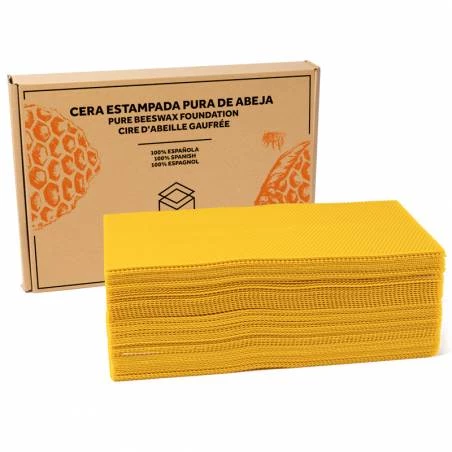
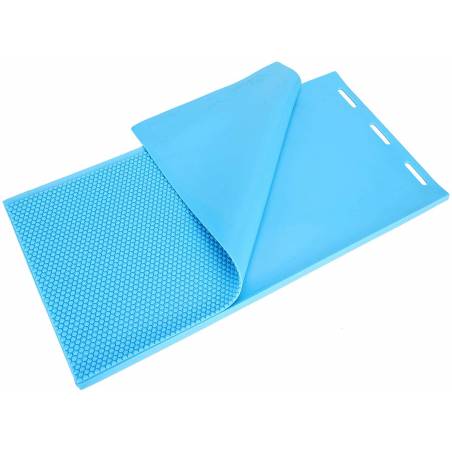
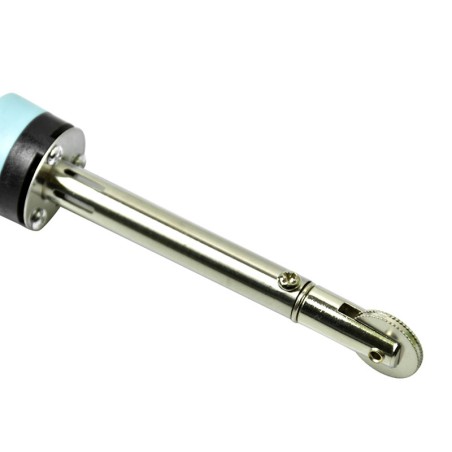
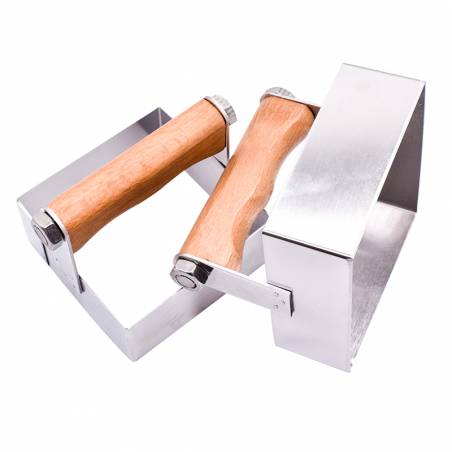
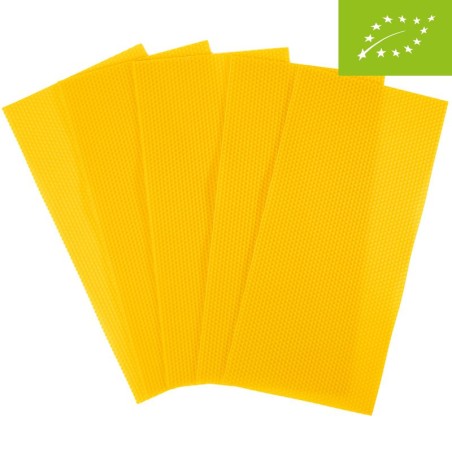
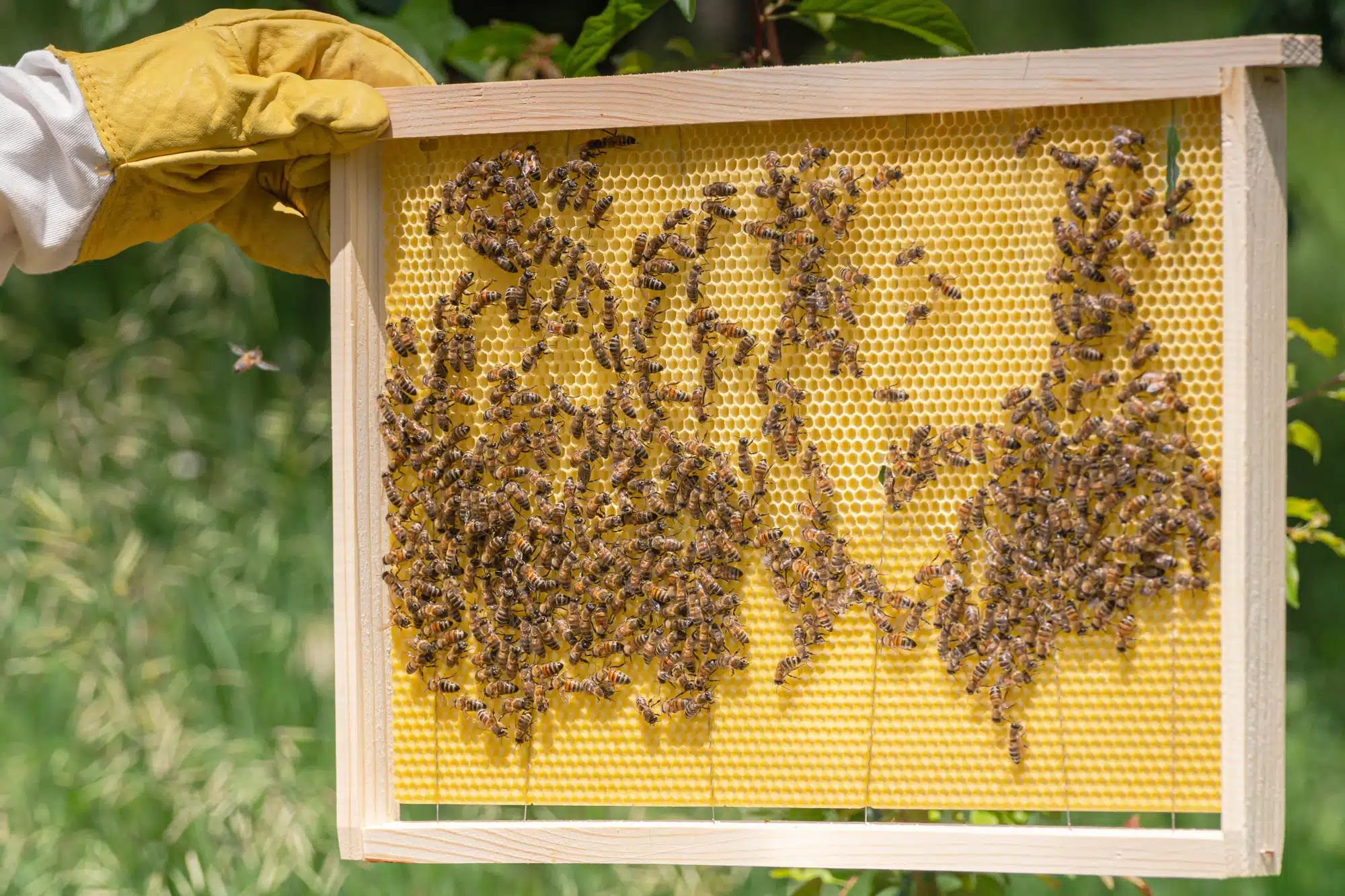
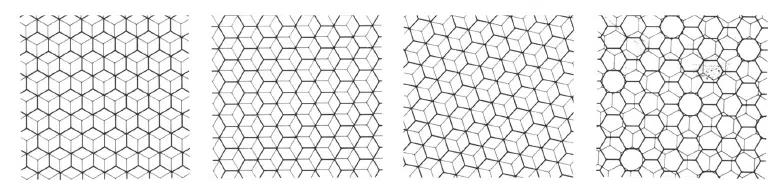
Foundation sheets, also known as wax sheets for hives, serve a specific purpose in beekeeping. Made from beeswax, they carry a pattern of hexagonal cells pre-embossed on the surface that acts as a base and a guide for the bees to build their combs.
Foundation sheets are fitted into the hive frames, and once the bees find them they set to work, drawing out and building the cells where they will store honey and pollen and raise the brood. The pre-embossed structure helps the bees build an orderly comb, efficient in both space and resources.
In short, foundation sheets make comb-building easier for the bees and improve efficiency and output in the hive.
How many kg of wax does a hive need?
The exact amount of wax a hive needs varies with several factors, such as the size and design of the hive and the number of frames.
For a common Langstroth hive with two chambers and 10 frames per chamber (20 frames in all), for example, roughly 2 to 2.4 kg of wax would be needed to fit every frame with foundation sheets.
Bear in mind that the bees will also produce wax naturally to build extra comb and make repairs in the hive. Hives also vary in size and design, so the amount of wax required may differ with the type and configuration of the hive.
How do you fix foundation wax into frames?
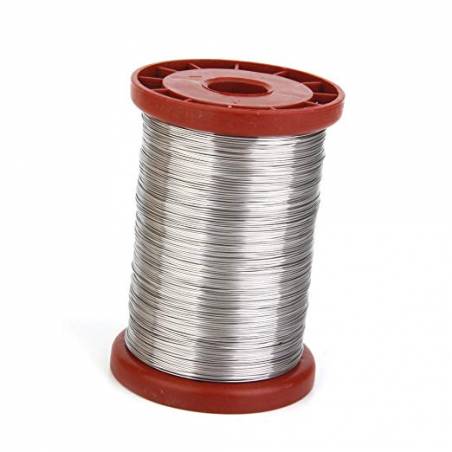
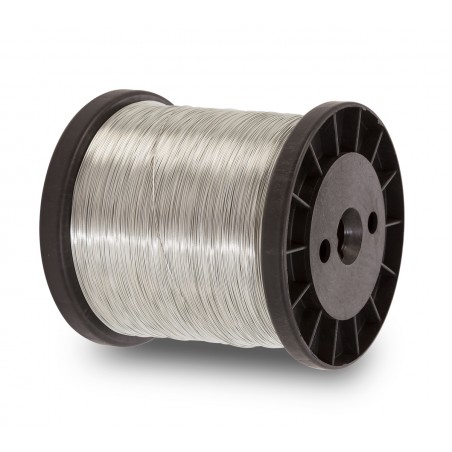
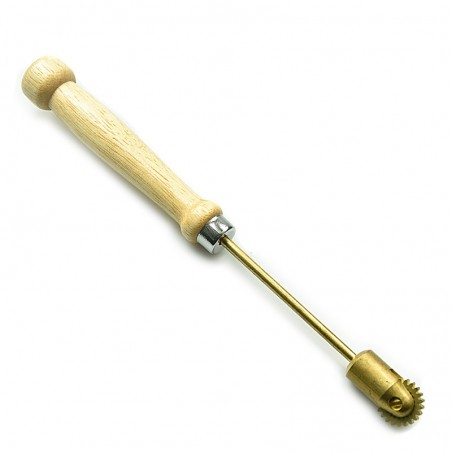
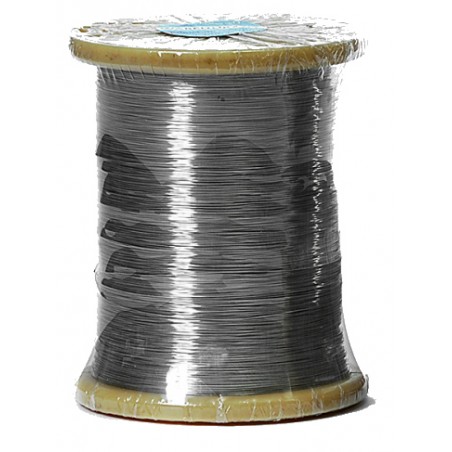
Before fixing the foundation sheets into the frames, the wires need tensioning with pliers or with a purpose-made tool, to guarantee a smooth, even surface.
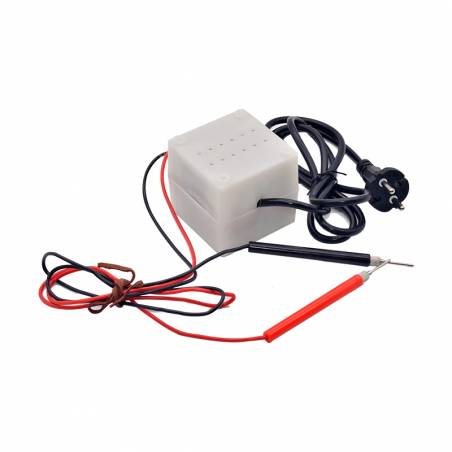
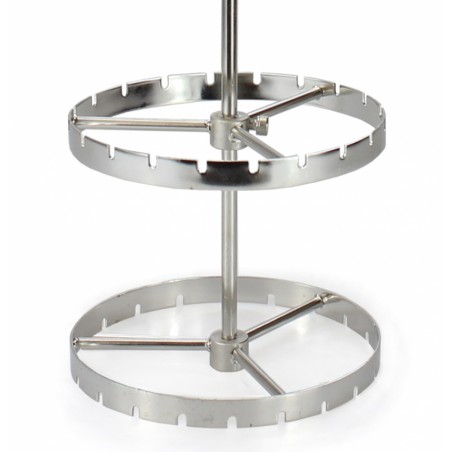
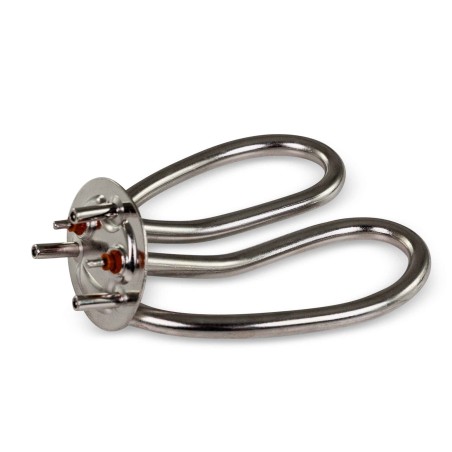
Once tensioned, an electric current is applied to the wire using an electrical transformer with clips, connecting the terminals to each end of the wire.
The transformer is applied for just a few seconds — long enough for the wire to heat up sufficiently to melt the wax and become embedded in it. It is important not to overheat the wire, to avoid damaging the sheet and cutting it into pieces.
So take care when applying the current and watch the wax as it melts. Once the wax is bonded into the frame, it is ready to go into the hive.
How many sheets does a kilo of wax make?
The number of wax sheets you get from a kilo of wax depends on their size and thickness. As a reference, for standard-size foundation sheets used in Langstroth hives, measuring roughly 42 cm x 20 cm, you can expect around 9 to 11 sheets per kilo of wax.
How is beeswax dissolved?
Beeswax is not soluble in water, but it dissolves well in fats, oils and some organic solvents. To dissolve it in an oil, for instance, it is enough to heat the oil and add the beeswax, stirring constantly until the wax has melted and mixed completely with the oil. Solvents that can be used to dissolve beeswax include benzene, chloroform and ether.
Beeswax melts when exposed to a temperature between 62 and 65 °C. To work it effectively, heating it higher is recommended, around 75 to 90 °C, so that it turns fully liquid. It is essential not to overheat the wax: above 100 °C it can start to lose volatile components, and beyond 140 °C the loss of constituent molecules is significant.
How is beeswax prepared?
Once harvested, raw beeswax contains impurities such as propolis, bee remains and other particles. To prepare it, it is put through a melting process in hot water. The impurities settle at the bottom or float on the surface, while the pure beeswax solidifies as it cools, forming a layer on top of the water. Once solid, it is lifted off and dried, and the wax is finally stored or used as needed — for making foundation sheets, candles, cosmetic products and more.
What is beeswax and what is it used for?
Beeswax is a natural substance secreted by young bees to build the combs in the hive. It is composed mainly of fatty-acid esters and various long-chain alcohols. Its uses are wide-ranging; among the best known are:
- In beekeeping, to make foundation sheets that give the bees a base on which to build comb.
- Candle-making.
- In the cosmetics industry, to produce creams, balms and other personal-care products.
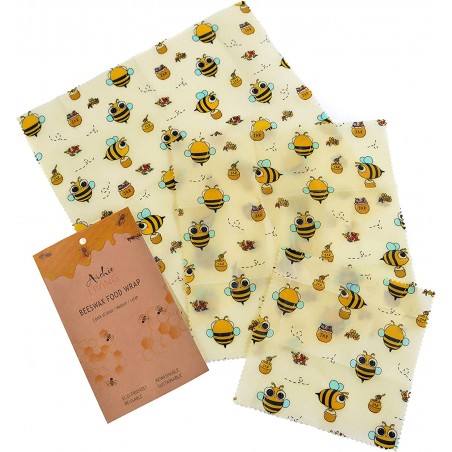
- As a coating and preserving agent in food.
Which type of beeswax should I choose for my project?
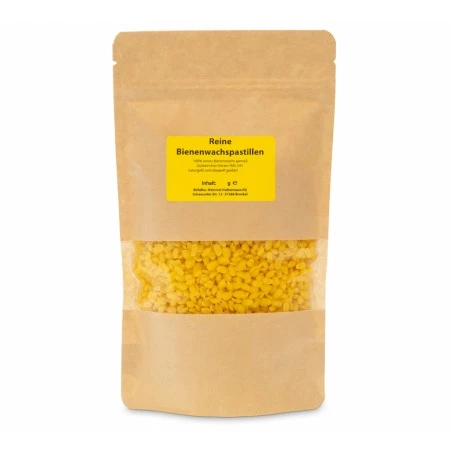
Which type of beeswax to choose depends above all on what you will use it for. If you want to make candles, for instance, it is advisable to go for high-purity wax in pellet or block form, since it melts evenly and keeps its natural aromas, which translates into candles with a clean burn and an attractive finish.
If, on the other hand, your aim is to renew or make combs or foundation sheets for the hive, the right choice is wax in sheets or blocks that has been filtered to remove impurities and treatment residues, thereby ensuring better acceptance by the bees and better productivity in honey production.
In short: weigh up where your wax will end up and make sure you choose a certified, natural product that meets the purity and quality standards needed to get the most out of your hive.