
 Apipasta with vitamins 15kg
 Beecomplet® Spring 14Kg
 Beekeeper suit with round veil
 Oxalic acid 1kg
 Beeswax Foundation 5kg
 Fresh royal jelly 20g
 Classic honey jar 1kg comb-lines TO77 - Pack of 16 units
 Promotor L Apis 1 litre
Foundation machines
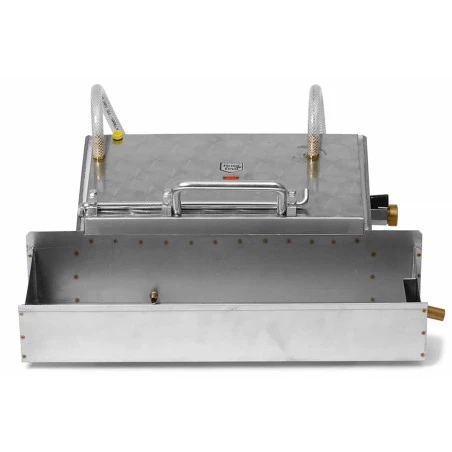
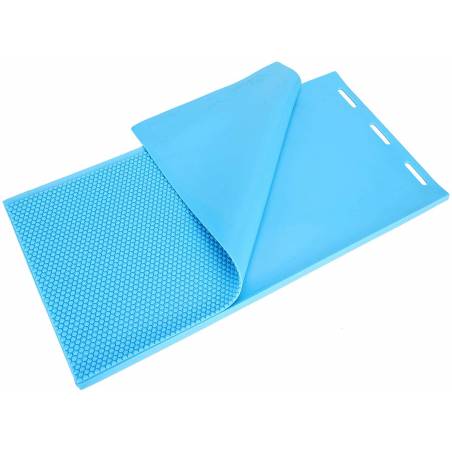
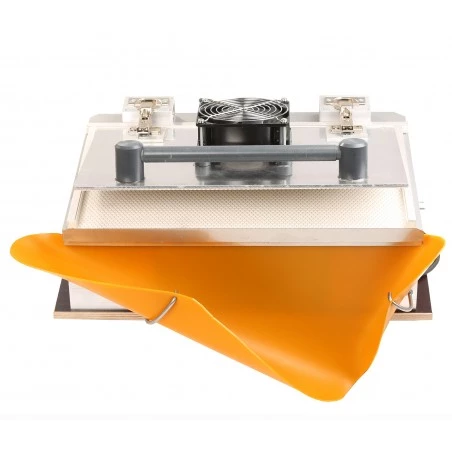
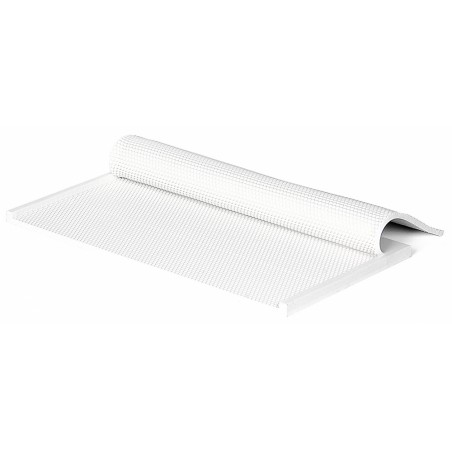
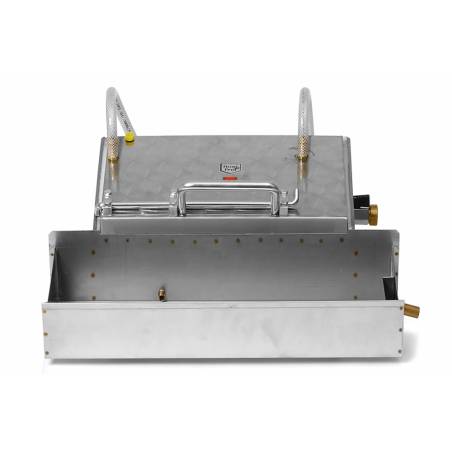
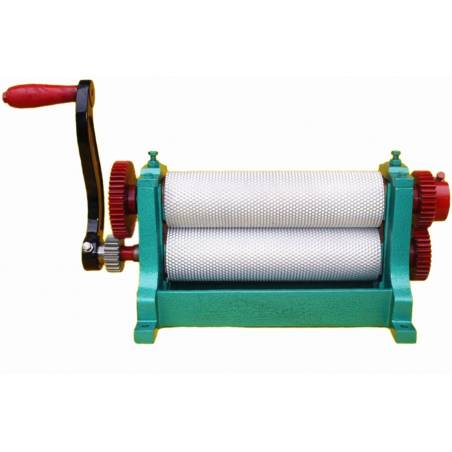
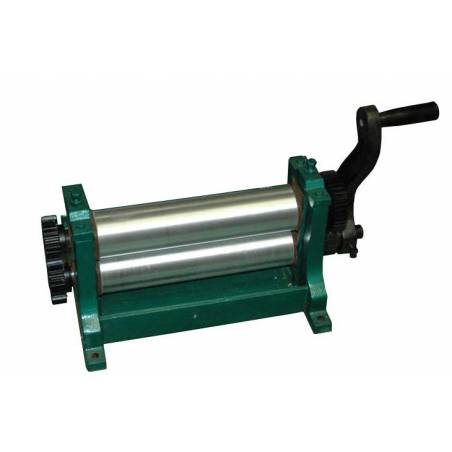
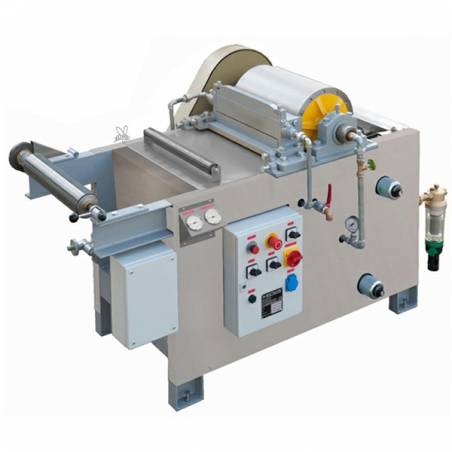
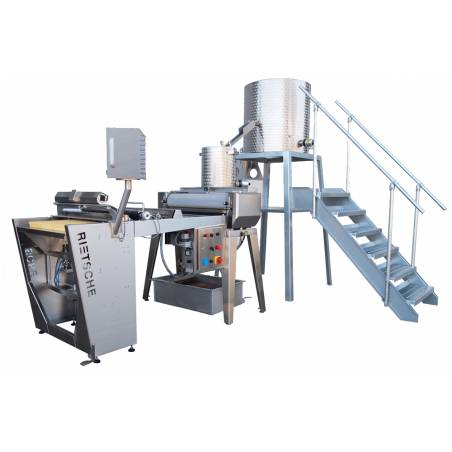
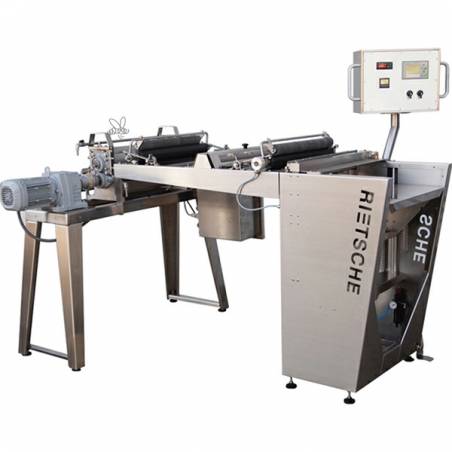
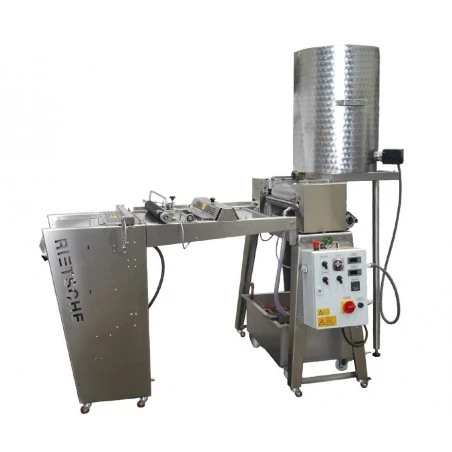
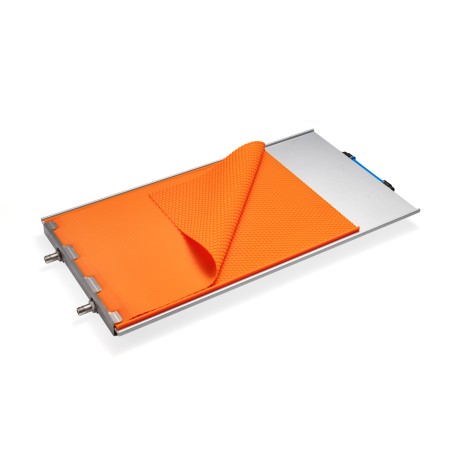
Foundation mills and matrices for making wax sheets: silicone moulds from €50, Langstroth matrices, rollers and water-cooled machines for continuous production.
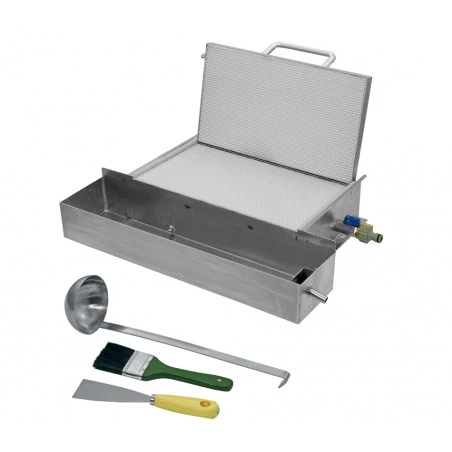
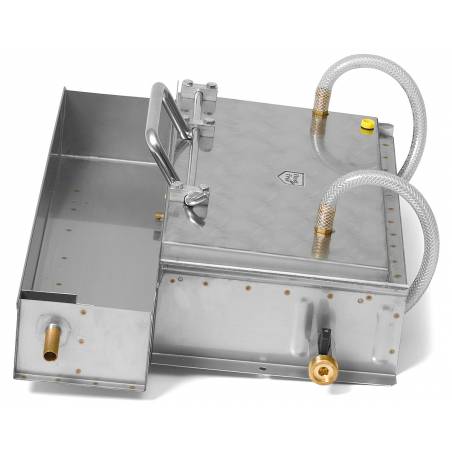
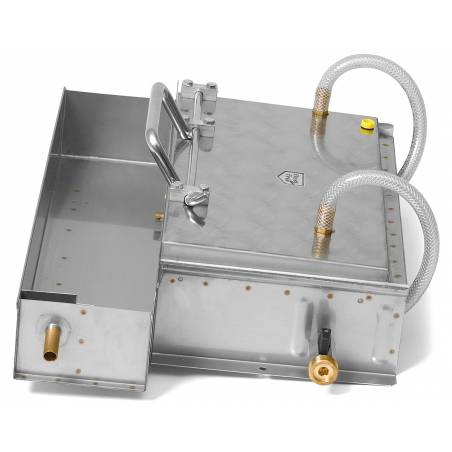

When a wax foundation press is worth it
A wax foundation press shouldn't be bought just to “make your own sheets”. It makes sense when you want to better control the origin of your wax, use your own production and work with sizes adapted to your frames. But here's a key point: the press doesn't improve bad wax. If the wax comes from old combs, has been in direct contact with treatments, is badly settled, mouldy or overheated, the machine will only turn it into an embossed sheet with the same problems. For beekeeping use, before thinking about rollers, cooling or output per hour, I'd look at traceability, cleanliness and acceptance of that wax by the bees.
My advice is to choose the press according to your real volume. For a few hives or occasional tests, a matrix or mould can be enough, although it requires more time and patience. For a beekeeper who already processes wax every year, I'd look at a water- or air-cooled press, because it helps you work more continuously and get more consistent sheets. For cooperatives or wax processors, we're now talking about rollers, pre-laminators, winders and professional lines. Before buying, I'd check the frame format, cell size, sheet thickness, cooling system, ease of release, cleaning, robustness and spare parts availability. With the European honeybee, I wouldn't sell small cell as a varroa solution: first clean wax, good management and comb renewal.
And here I'll take a clear stand: if you don't have your own well-selected wax or sufficient volume, it's often more worthwhile to buy good-quality foundation than to set up a half-baked embossing system. But if you work your own wax with criteria, a good press gives you something very valuable: control. Control over what wax goes back to the hive, what format you use, how you renew combs and what quality you're putting in the brood chamber. With wax, the real saving isn't only in making sheets: it's in avoiding rejections, brace comb, poor acceptance and health problems that later turn out much more expensive.
Foundation machines
Embossing your own wax closes the circle: the wax that comes out of your hives goes back into them as foundation, without passing through a market where you do not know what you get back.
Silicone mould or roller
- Matrix or silicone mould — from €50 for the basic one and €189 for the Langstroth matrix. It works by pressing: pour the wax, close it, take out the sheet. It is what pays off for own use and moderate volumes, and needs no installation.
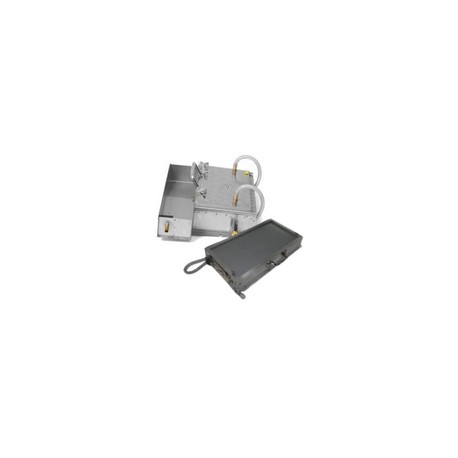
- Roller or cylinder mill — produces continuously by passing a wax slab between two engraved rollers. It is what you need above a certain volume, and that is where water cooling comes in: without it the rollers heat up, the wax sticks and the sheet comes out deformed.
Release agent is not optional
Mould or roller, wax sticks. The release liquid for rollers (€139.95) looks expensive until you lose a day's work to torn sheets. On silicone moulds cold soapy water solves it, but engraved cylinders need the specific product.
Before the sheet comes clean wax
A foundation mill does not fix bad wax: it reproduces it in sheet form. Before embossing, the wax has to be melted and settled, and if it comes from old combs it is worth knowing where from. And remember the measurement: a standard sheet weighs around 100 g, and the matrix has to match your hive's frame — Langstroth, Dadant and Layens do not share a format.
Which wax is worth stamping?
The machine matters less than what you put into it. The sheet you stamp will end up inside the brood chamber, so the wax needs to be free of residues.
Cappings wax is the best raw material: it is new wax, the wax the bees have just secreted to seal the honey, and it has barely been in contact with treatments. That is why it is worth keeping it separate from the rest during extraction rather than mixing it in.
Wax from old brood combs is the one that calls for most care: it has spent years in the hive and it is where residues from treatments and from whatever the bees bring in from the field build up. Melting it is not enough — fat-soluble residues stay in the wax — so it is better destined for candles or other uses than returned to the hive.
If you buy wax to stamp, ask for it filtered and with an analysis. And if you send it out to be milled, ask whether you get your own wax back or wax from the common batch: it is not the same thing.
How do you use a wax foundation mill?
How you use a foundation mill depends on the type of machine and the process you follow:
· Craft method: a soaped silicone matrix with the cells embossed on it is used as a mould. Liquid wax is poured onto the matrix and pressed to mark the cells. The wax must be held at a controlled temperature in a bain-marie, generally between 65 °C and 90 °C. This method gives more rigid sheets.
· Roller printing: in this more professional method you start by making wax slabs, warmed in hot water to moulding temperature, around 40 °C. Once warm, the slabs are passed through flat rollers to create a wax sheet, which then goes through printing rollers to mark the cell pattern. The resulting sheet is cut to the required size.
· Industrial milling: a machine receives molten wax from a feed tank, which lets a fine stream of liquid wax fall onto chilled printing rollers turning in opposite directions. The result is a wax sheet that is cut to size. In the semi-automatic process, the wax is first laid onto a large roller to create a coil, which is then printed with the cell patterns on a machine with embossing rollers.
In every case you need to make sure of the wax quality, keep the temperatures right, and use wax and materials free of residues to avoid contaminating the hives.
What is a wax foundation mill and what is it used for?
A wax foundation mill is a machine that takes molten wax and impresses a predefined design on it, producing sheets or foundation with structured cells. The process mimics the natural pattern the bees use to build their combs.
It is mainly used to:
• Make comb-building easier: stamped sheets act as a guide so the bees form uniform, well-defined cells, which improves the organisation of the hive and speeds up brood development.
• Optimise wax handling: standardising the size and shape of the cells makes it easier to reuse wax in later processes, such as making new sheets or even by-products like candles.
In short, the foundation mill is a key tool for the beekeeper, since it helps turn wax into a high-quality structural component, contributing to better efficiency and a healthier hive.
What are the benefits of using a wax foundation mill?
Using a wax foundation mill brings a number of benefits that boost both production efficiency and hive health. Here are some of the main ones:
• Uniformity and consistency: the mill produces sheets with perfectly defined cells of even size, which makes it easier for the bees to accept them and work them at their best.
• An efficient process: automating the stamping cuts the time and manual effort needed to prepare the sheets, speeding up comb renewal and allowing production on a larger scale.
• Better hive organisation: stamped sheets act as structural guides, helping the bees build regular, well-distributed cells, which favours brood development and honey storage.
• Saving resources: by making wax reuse easier and reducing the effort the bees put into producing new wax, it optimises the honey spent on wax-making and increases the hive's profitability.
• Controlled quality: being precise and uniform, the stamping process helps deliver a high-quality end product, which translates into better acceptance by the bees and steadier beekeeping output.
In short, the wax foundation mill is a key tool that, by improving the consistency and efficiency of the process, has a direct impact on the performance and health of your hives.
Do you need to heat the wax before using a foundation mill?
Yes, the wax needs heating before you use a foundation mill. Heating brings it to a liquid state, so that it spreads evenly in the mould and takes up the intended design. It is important to heat it at a controlled temperature, generally between 70 and 90 °C, to get the right viscosity without losing its natural properties or the aromas that help the bees accept it. Heating it properly guarantees an even impression and improves how the process performs in the hive.
Are there different types of wax foundation mill?
Flexible versus rigid mills: foundation mills fall into two main types. Flexible ones produce wax sheets that are more pliable, ideal in cold climates or for hives that call for more adaptability in comb structure. Rigid ones give sheets with firm, well-defined cells, which favours structural stability in warm settings where wax tends to soften.
Cell type and sizes: the mill's design directly shapes the size and form of the cells. In European beekeeping, for instance, it is common to work with cells of roughly 5.3 to 5.4 mm, ideal for the European honey bee. There are models set up for other races, though: some mills are calibrated to produce cells of 4.8 to 4.9 mm, suited to smaller bees (such as African ones), or even to give somewhat larger cells, up to 5.6 mm, intended for drone rearing.
Customisation and adapting the process: whether to choose a flexible or a rigid mill, and how to set the cell dimensions, depends on factors such as the climate, the type of hive and the race of bee. Some machines let you adjust variables such as sheet thickness, so you can optimise wax use and make the new sheets easier for the bees to accept. This flexibility is fundamental to maximising hive performance and ensuring efficient, healthy comb building.
How do I maintain and clean a wax foundation mill?
To maintain and clean a wax foundation mill, it is essential to follow a routine that guarantees both correct operation and the quality of the stamping every time. Here are some practical tips:
• Switch off and let it cool: before you start cleaning, make sure the machine is off and completely cold, to avoid burns or damage to components.
• Remove wax residues: use a silicone spatula or a soft-bristled brush to carefully clear residual wax from surfaces and contact areas. This prevents build-up that could affect stamping quality in future runs.
• Clean the accessible surfaces: with a soft cloth dampened in warm water and, if needed, a neutral detergent, clean the outer parts of the machine. Avoid abrasive products or harsh chemicals that could damage the material.
• Take off removable parts: if your mill has trays, moulds or other detachable pieces, remove them and clean them separately. Rinse them well to get rid of any detergent and dry them completely before reassembling.
• Care for electronic and control areas: for components that must not get wet, use a dry or slightly damp cloth, always following the maker's recommendations.
• Periodic maintenance: give the machine a deep clean at the end of each stamping session or at least weekly, to stop wax building up and keep performance at its best over time.
Follow these steps and your foundation mill will stay in good condition, giving you high-quality sheets and lasting longer.