 Apipasta with vitamins 15kg
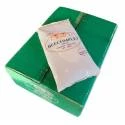 Beecomplet® Spring 14Kg
 Beekeeper suit with round veil
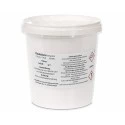 Oxalic acid 1kg
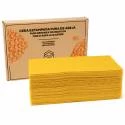 Beeswax Foundation 5kg
 Fresh royal jelly 20g
 Classic honey jar 1kg comb-lines TO77 - Pack of 16 units
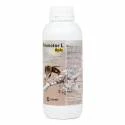 Promotor L Apis 1 litre


 Share in WhatsApp
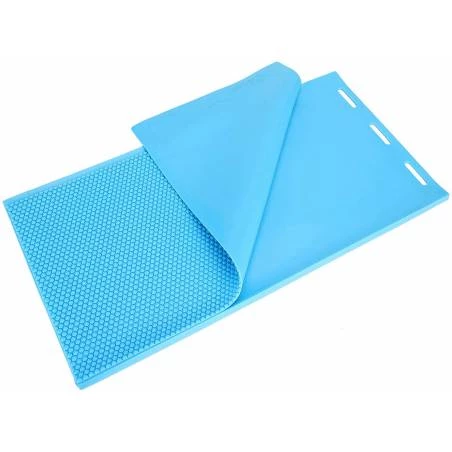
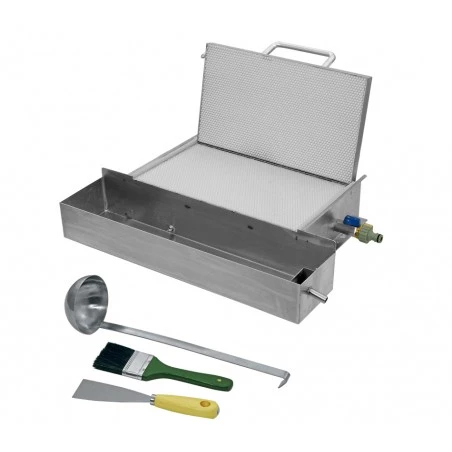
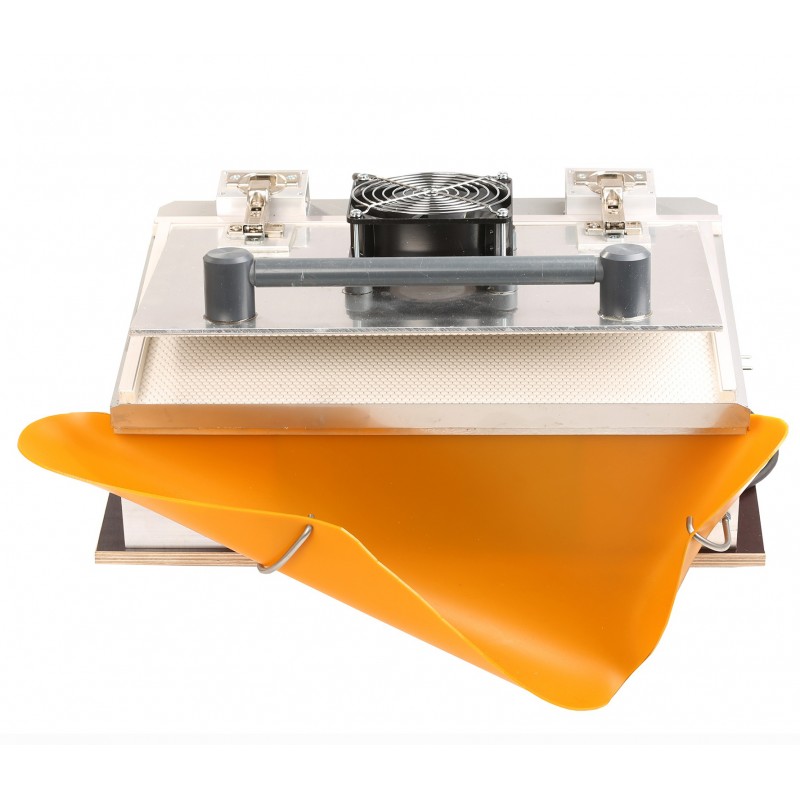
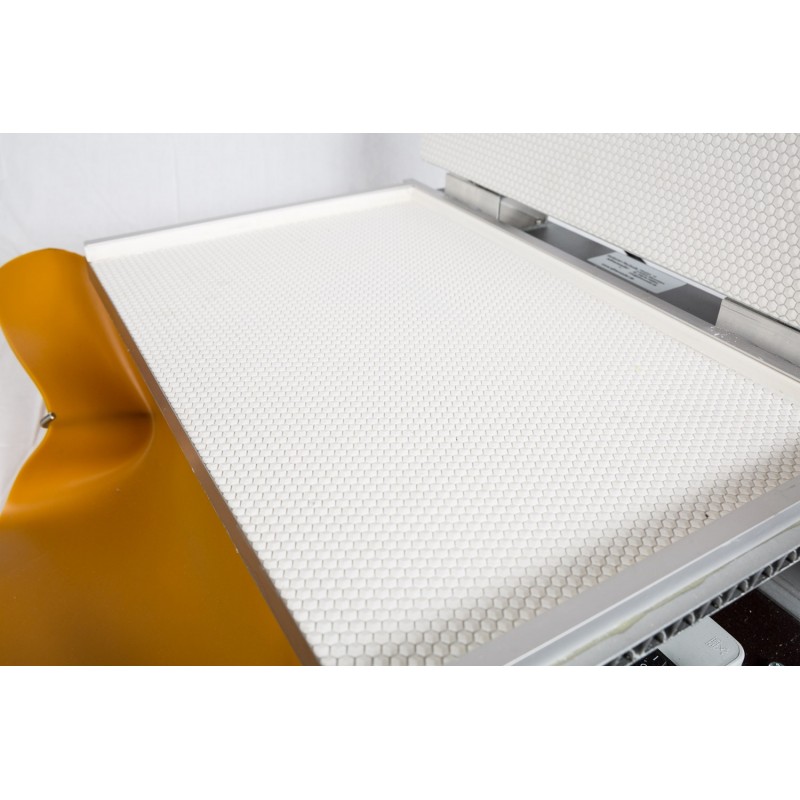
Foundation press with silicone moulds on aluminium plates and fan cooling: adjustable thickness and 5.4 mm cell.
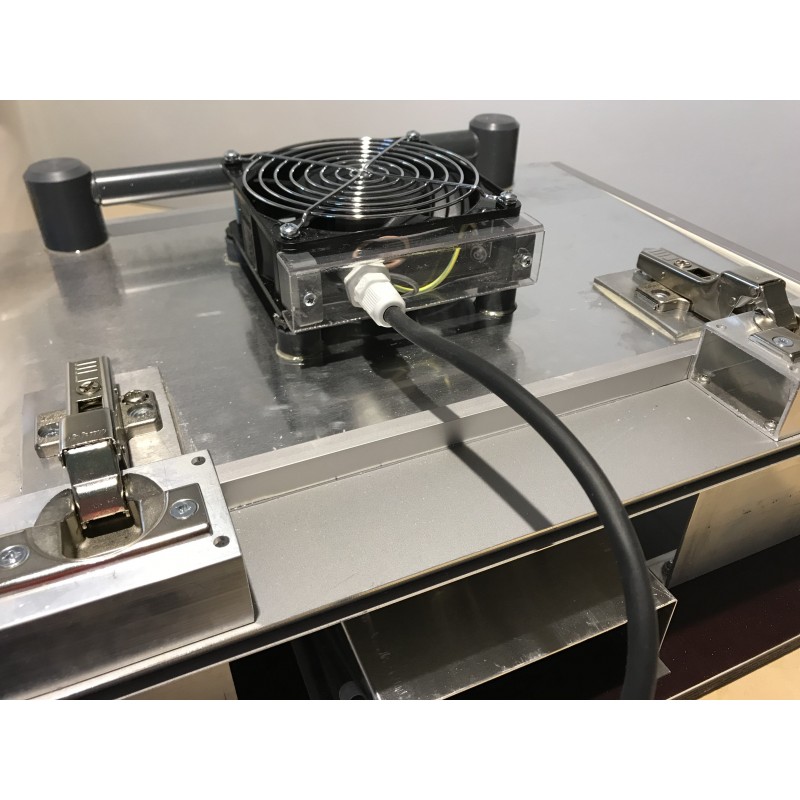
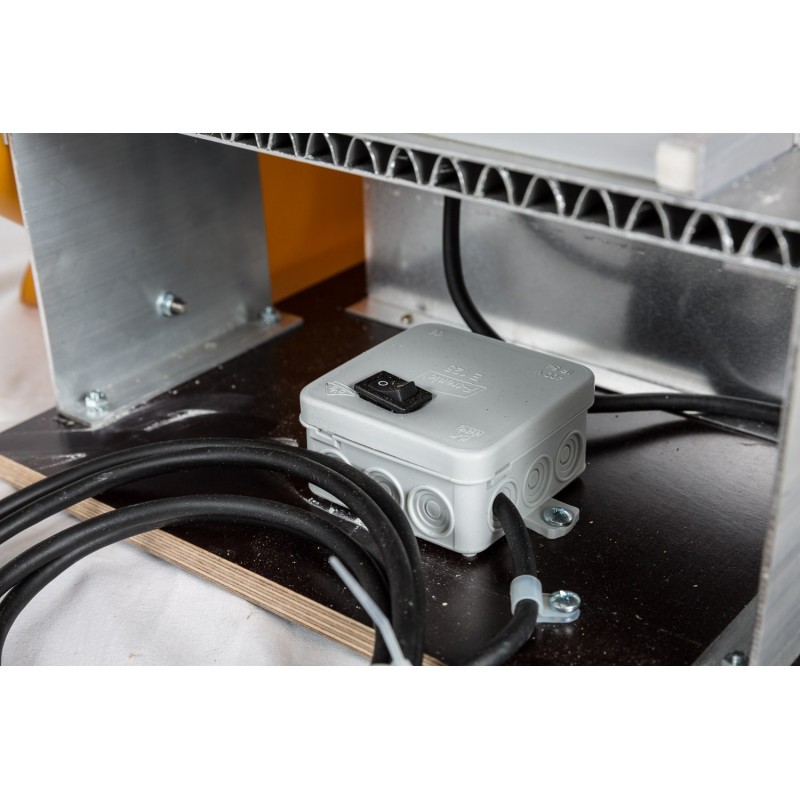
Air-cooled does not mean no installation. It swaps the water supply for something else: compressed air at 4-6 bar to release the mould, plus the 230 V fans that chill the sheet. Two silicone moulds on aluminium plates, which do not warp with the heat.
01 · THREE FORMATS, NO LAYENS
It is made in Langstroth 20 × 42, Dadant Blatt 26 × 41 and Dadant 27 × 42 centimetres. The two Dadant versions carry a step of a little over forty euros over the Langstroth.
What there is not is Layens. If you work that format, the route is the water-cooled press, which is made in the 30 × 35 size. Choosing the mould is the first step, not the last.
02 · IT ASKS FOR 4-6 BAR OF AIR
The mould opens by injecting compressed air between the plates, at 4-6 bar. The same air then clears the water off the finished sheet before you lift it. Without a compressor, the machine is not usable.
It is worth comparing with the water-cooled alternative, which only asks for a nearby tap and an open circuit. It is not that one is simpler than the other: the installation is different, and it helps to know which one you already have.
03 · ALCOHOL BEFORE EVERY CAST
The maker specifies a light spray of alcohol on the silicone before each cast. It is a small amount, but it is a consumable and a gesture repeated on every sheet.
That is the practical difference from our water-cooled presses, which use no release agent of any kind. At forty or fifty sheets a session, the gesture adds up.
04 · THICKNESS SET BY SCREW
The aluminium support is hinged with adjusting screws at the back: turning them and varying the pressure changes the thickness of the sheet. Thinner gives more metres per kilo of wax; thicker stands up better to being drawn out.
The standard cell is the 5.4 mm one, and moulds of 5.17 mm are made to order. The attached funnel collects the surplus wax and returns it to the melting pot.
05 · THE SHEET COMES OUT SMALLER
The maker says so themselves: because of the gentle cooling, the finished sheet ends up slightly smaller than the mould. It is not a fault, it is how wax behaves, but check it against your frame before ordering a format.
On temperature, the useful reference: wax melts between 62 and 65 °C and is poured at around 70-75 °C. Above 85 °C it darkens, and colour is the first thing anyone looks at in a sheet.
06 · BEFORE YOU BUY
Compressor and format: the two checks.
| ✓ A GOOD FIT | Making your own foundation in Langstroth or Dadant, with thickness set by screw. |
| ⚠ IT NEEDS A COMPRESSOR | Air at 4-6 bar to open the mould, plus alcohol before every cast. A socket is not enough. |
| ✕ NOT MADE IN LAYENS | Only Langstroth and the two Dadants. For Layens, the water-cooled 30 × 35. |
| Type | Plate foundation press, air-cooled |
|---|---|
| Formats | Langstroth 20 × 42 · Dadant Blatt 26 × 41 · Dadant 27 × 42 |
| Standard cell | 5.4 mm |
| Cell to order | 5.17 mm |
| Moulds | Two, silicone on aluminium plate |
| Cooling | 230 V fans |
| Compressed air | 4 to 6 bar, to open the mould |
| Release | Alcohol sprayed before each cast |
| Thickness | Adjustable by screw on the hinges |
| Recovery | Attached draining funnel |
| Recommended pouring temperature | 70 to 75 °C |
| Reference | 104-3 |
Write your question
check_circle
check_circle