
-
Beehives
- Complete beehive
- Accessories
-
Nuc hives
- Nucs by format
- With bees & mating
- Spare parts
-
Bee equipment
- For the apiary
- For the beekeeper
-
Clothing
- Clothing Accessories
-
Beeswax
-
Pure beeswax
- Beeswax and foundation
- Beeswax foundations
- Melting and rolling beewax
-
Pure beeswax
-
Bee feed
- Accessories and source materials
- Utensils
-
Bee health
- Varroa Treatments
- Diseases control
- Nutraceuticals
-
Extraction and bottling
- Before extraction
- Honey extraction
- After extraction
-
Bee pollen
- Harvest
- Indicted
-
Honey packaging
- Flasks per utility
- Flasks by size
- Other packaging
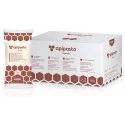 Apipasta with vitamins 15kg
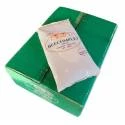 Beecomplet® Spring 14Kg
 Beekeeper suit with round veil
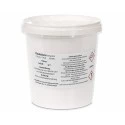 Oxalic acid 1kg
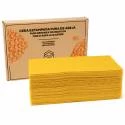 Beeswax Foundation 5kg
 Fresh royal jelly 20g
 Classic honey jar 1kg comb-lines TO77 - Pack of 16 units
 Promotor L Apis 1 litre
Bee swarms, queens and nucleus colonies
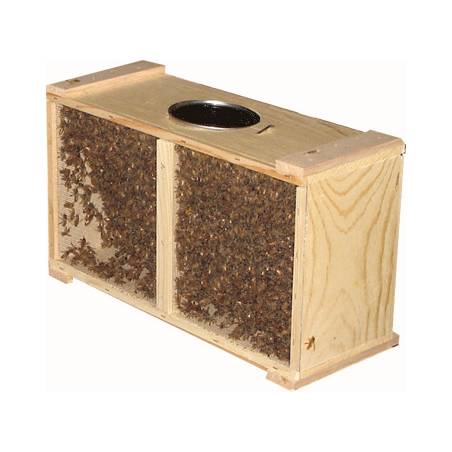
1.2 kg bee packages, Langstroth and Layens nucleus colonies with a mated queen, virgin or mated Iberian queens, and mated Buckfast queens. Booking, collection or delivery depends on the product page and the availability window for each type of live bee stock.
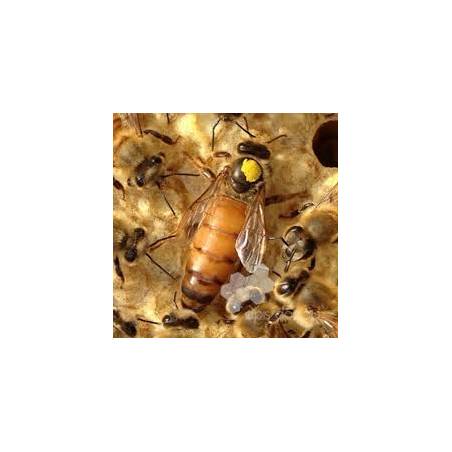
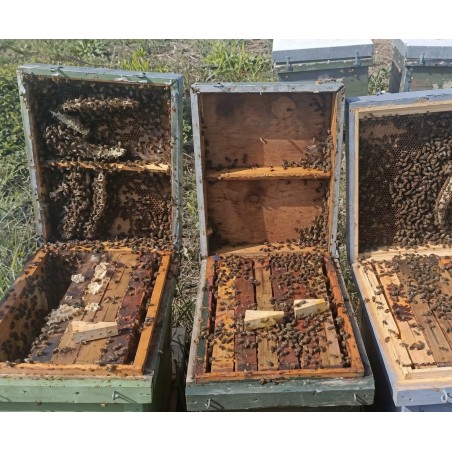
My recommendation on swarms, queens and nuclei
Buying live bees isn't like buying a hive, a frame or a feeder. Here you're buying a head start, genetics, health and season time. For someone starting out in beekeeping, I usually recommend a nucleus with bees and a mated queen rather than a package of bees or a queen on her own. The nucleus already comes with brood frames, bees, stores and an accepted queen; that gives you a much more stable start. A package of bees can work very well, but it demands more management: a prepared hive, drawn comb or well-accepted foundation, feeding, monitoring and patience until the colony gets going. And a queen on her own isn't for “creating a hive” from scratch; it's for replacing or improving a colony that already has bees.
My advice is to choose according to your real objective. If you want to start safely, I'd go for a nucleus. If you want to strengthen or start up empty hives and you already have experience, a package of bees can be an interesting option. If you want to improve gentleness, productivity or replace an old queen, then I'd look at mated queens; virgins are cheaper, but carry more uncertainty because they have to mate in your area. I'd also look closely at the genetics: the Iberian bee can fit very well in harsh, dry areas or with more traditional management; Buckfast is usually of interest when you're after gentleness, laying rate and more comfortable management. There's no perfect breed for everything.
And here I'll take a clear stand: I wouldn't buy live bees just on price or late in the season. I'd check the frame format, the delivery date, the origin, the health certificate, the queen's state, the nucleus's strength, the stores, the health status and the adaptation to your area. And when they arrive, I wouldn't leave them “to their fate”: you have to install them well, feed them if needed, check laying, watch varroa and support the build-up. A good nucleus can give you half the season already won; a badly chosen or badly received one can give you problems from the very first month.
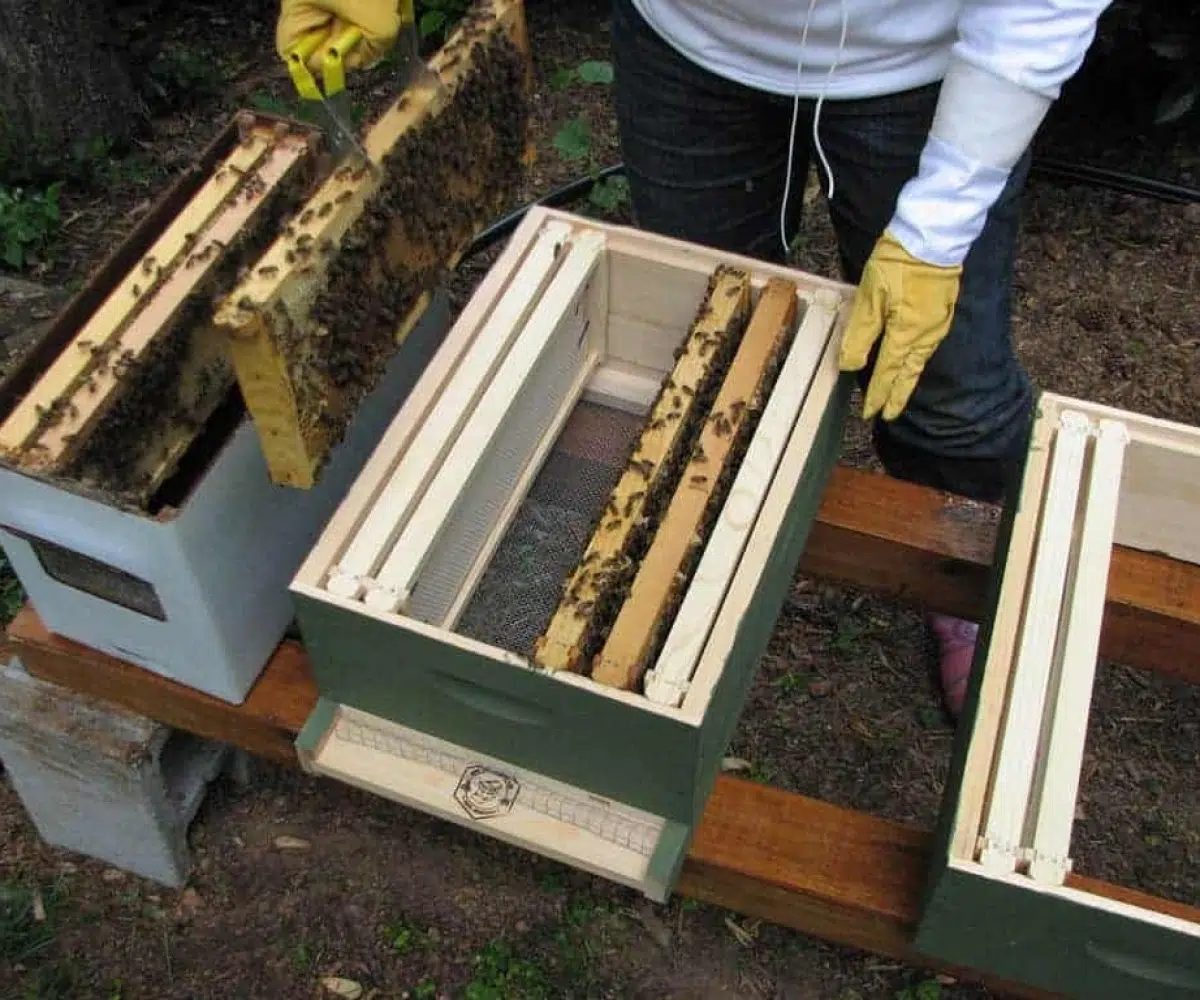
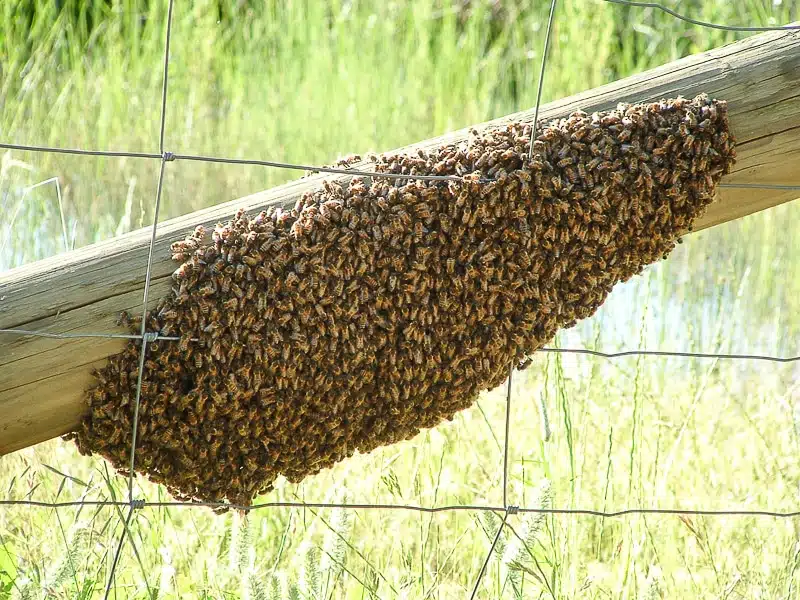
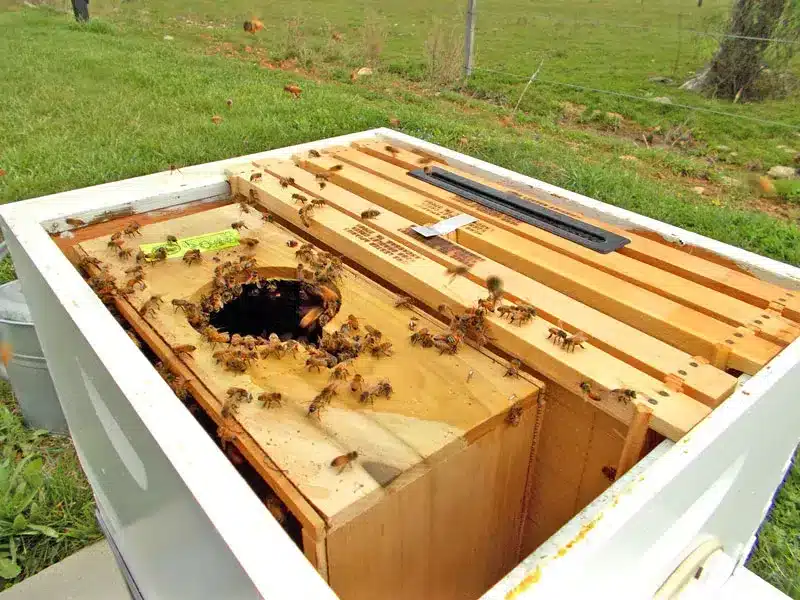
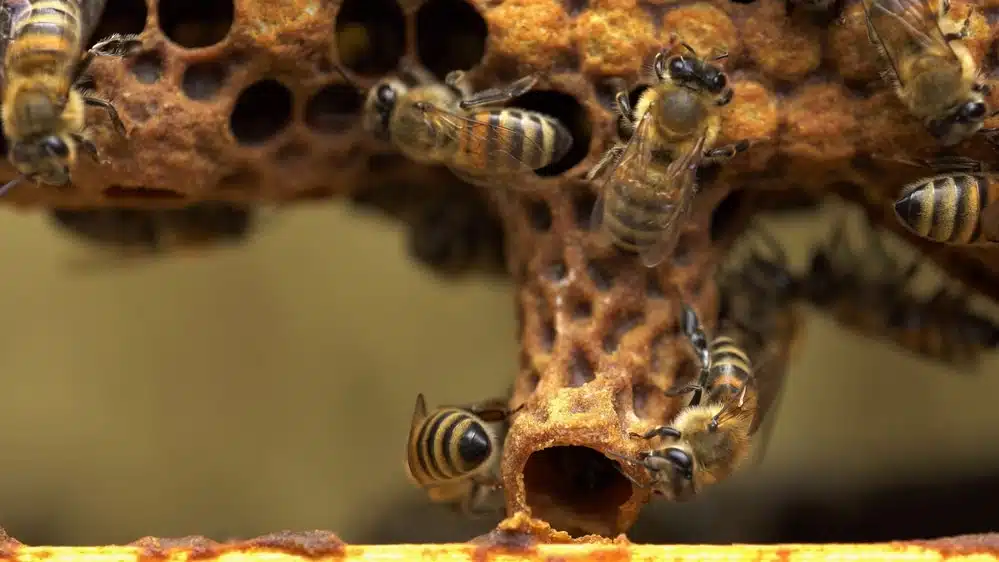

Bee swarms, queens and nucleus colonies
What live bees are available
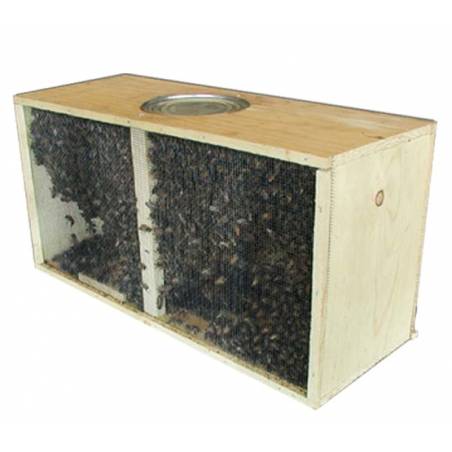
Bee packages. They contain 1.2 kg of bees and a mated queen, with no comb or brood. Options include Iberian bees and packages with a Buckfast queen; they need a prepared hive in which to begin drawing comb.
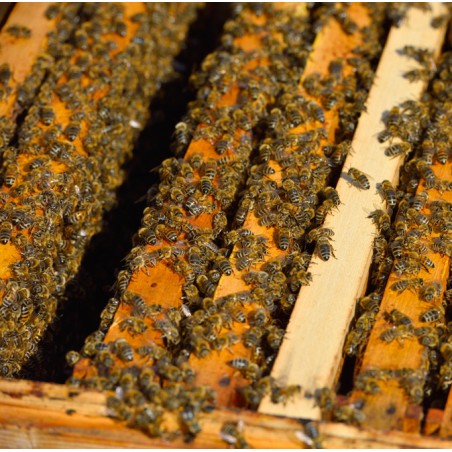
Nucleus colonies. They arrive established on frames, with brood, food stores and a mated queen. The active range includes a five-frame Langstroth nuc —three brood frames and two food-store frames— and a six-frame Layens nuc with brood and stores.
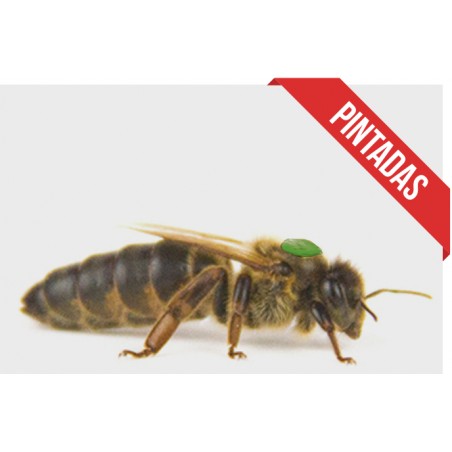
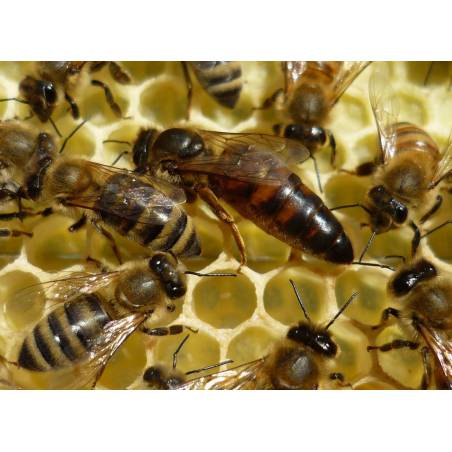
Queens. A queen on her own is intended to introduce genetics or replace a queen in a colony or nuc that already has bees. The current range includes virgin and mated Iberian queens, as well as mated Buckfast F1 queens.
A purchase tied to the beekeeping season
Live bees do not behave like ordinary warehouse stock: availability depends on breeding, weather and the season. A booking secures a place or an expected window, but the precise date and fulfilment method must always be checked on the product page.
What to check before booking
- Frame format. Choose Langstroth or Layens to match your hives. If the frames are incompatible, you will not be able to transfer brood or food stores between colonies when necessary.
- Receiving hive. For a package, prepare the hive body, frames or foundation, and starter feed. A queen on her own needs a colony or nuc that has been correctly prepared for introduction.
- Registration and paperwork. The destination beekeeping holding must be registered and its hives identified. Ask the competent authority which movement document applies to the specific origin, destination and animal-health situation.
- Date and fulfilment method. Not every product can be delivered to your address, and collection points differ. Check the product page before paying and be ready to install the bees on the notified date.
Do I need to be registered as a beekeeper to receive live bees?
For bees to be moved, the destination must be a registered beekeeping holding and the hives must carry its identification code. Before booking, ask the agricultural office or competent authority in your region which registration and movement document apply to that origin, destination and date. Not every shipment requires a special animal-health certificate: this depends on the health situation and restrictions in force. Also check the product page, because some live bees must be collected while others can be delivered subject to conditions.
How many hives should I buy to start?
Two or three, not one. With a single hive you have nothing to compare against: when something goes wrong — the queen fails, stores drop, a health problem shows up — you cannot tell whether it is that hive or simply the season, because there is nothing beside it to use as a reference. And if that one colony is lost, you are out until next season. With two or three you learn by seeing the normal against the odd, and above all you can move a frame of brood or stores from the strong colony to the one that is struggling, which is the single manoeuvre that saves most colonies. One condition: buy them in the same format, because with frames that do not fit each other that manoeuvre is impossible.
What is the difference between a virgin queen and a mated queen?
A virgin queen still has to complete her mating flights and begin laying in your apiary; the outcome depends on the weather, available drones and preparation of the nuc or colony. A mated queen has already completed this stage and, where stated on the product page, is supplied after her laying has been checked. The higher price reflects the rearing time, mating nuc and risk already borne by the breeder. Mated does not mean instrumentally inseminated or that the paternal line is controlled unless the product specifically says so. In both cases, acceptance depends on the introduction procedure.
Will I harvest honey in the first year?
It is possible, but the purchase should not be planned on the assumption that there will be a crop. A package starts with no comb or brood; a nuc has more of a head start, but it must still grow and build up stores. The result depends on the delivery date, initial strength, available drawn comb, nectar flows, weather and management. The first objective is to establish a colony with enough bees and stores for winter. Honey should be removed only if there is a genuine surplus that will not compromise that objective.
What happens if the colony does not accept the queen?
No introduction method completely removes the risk of rejection. Before introducing her, confirm that the colony is genuinely queenless and check for queen cells or signs of laying workers. Keep the queen in her cage and follow the breeder's method and timing; do not release her while workers bite the cage or form an aggressive ball around it. If she arrives dead, injured or in poor condition, document the issue and make contact immediately before handling her. Any applicable claim or replacement is governed by the product page and the terms of sale for that specific live bee product.