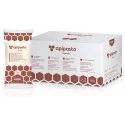
 Apipasta with vitamins 15kg
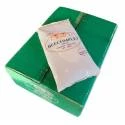 Beecomplet® Spring 14Kg
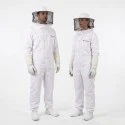 Beekeeper suit with round veil
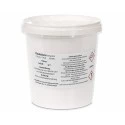 Oxalic acid 1kg
 Beeswax Foundation 5kg
 Fresh royal jelly 20g
 Classic honey jar 1kg comb-lines TO77 - Pack of 16 units
 Promotor L Apis 1 litre
- Out of stock

 Share in WhatsApp
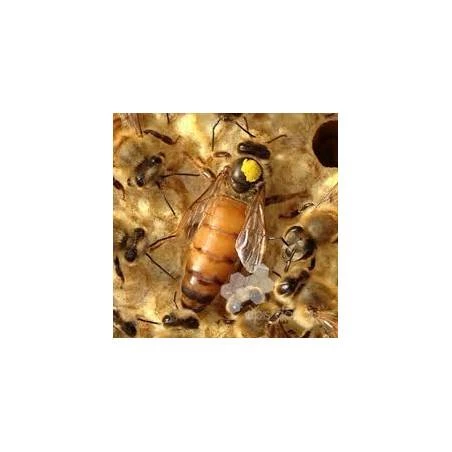
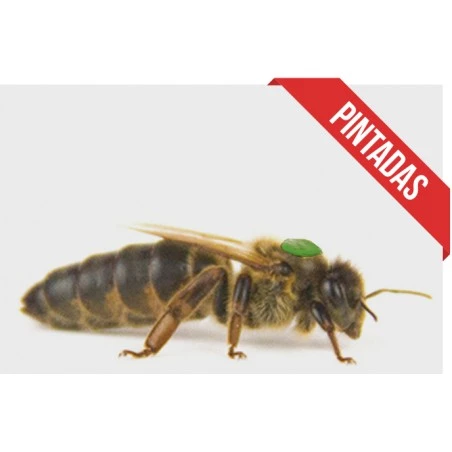
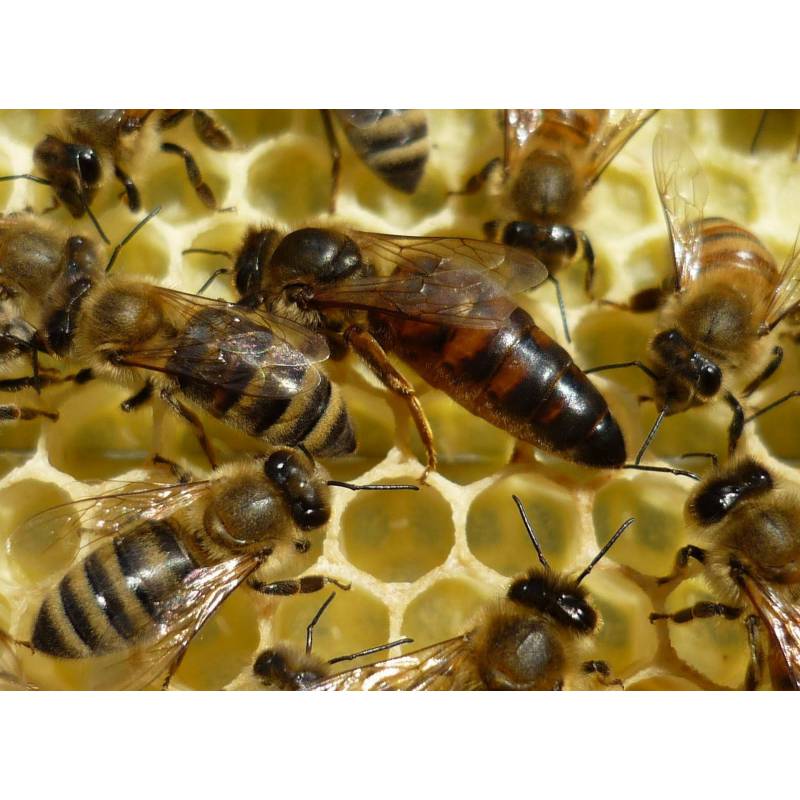
An unmated Iberian queen, for beekeepers who supply the mating nuc and the drones.
A virgin costs a fraction of a mated queen, but half the work falls to you: she needs a queenless colony, a spell of flying weather and mature drones nearby. With those in place, it is the cheapest way to requeen. Without them, the mated queen works out better.
01 · WHEN TO CHOOSE ONE
With a mated queen you buy laying that has already started and the risk ends at acceptance. With a virgin you keep the uncertain part yourself: the mating flight. It fits if you work with mating nucs, if you are requeening several colonies at once with room in the calendar, or if you would rather the drone line came from your own apiary. It does not fit if you need that hive producing within three weeks.
02 · THE WINDOW
She becomes active two or three days after emerging and the useful window runs up to about three weeks. Within that span she needs flying days: as a reference, 20 °C minimum, clear skies and light wind. A long spell of poor weather inside the window is what spoils the batch, because a queen cannot be «kept» for later. The month you introduce her matters as much as the queen herself.
03 · THE DRONES
In the Iberian Peninsula 15 to 20 matings per queen are cited, all with drones from the surrounding area: your district supplies the drone line, and without mature drones around there is no mating at all. A drone takes about 24 days to emerge and another 12 to mature, so plan for them five weeks ahead of the date you want the queen to fly.
04 · SELECTION
These are Apis mellifera iberiensis queens, the subspecies native to the Iberian Peninsula. The line was selected for low winter consumption, for making the most of short flows and for hygienic behaviour. Read that as the breeder's aim, not as a promise about the colony you are going to build: the outcome depends on the mating, the surroundings and your management. Being Iberian is also what makes them eligible for grants under Spain's Plan Nacional Apícola; check the terms of the current call.
⚠ PRECAUTIONS
Mating depends on the weather, on the drones around the apiary and on the state of the receiving colony: none of the three comes in the cage. The hive or nuc that receives her must be queenless and prepared before she is introduced. Acceptance and the behaviour of the resulting colony are judged after several weeks of laying, not from the look of the queen.
05 · BEFORE YOU BUY
| ✓ FITS | Mating nucs, queenless hives already prepared and planned requeening of several colonies. |
| ✕ DOES NOT FIT | Anyone needing laying straight away, or without mature drones in the apiary: the mated queen is the answer there. |
| Subspecies | Apis mellifera iberiensis |
|---|---|
| State | Virgin, unmated |
| Active after emerging | 2-3 days |
| Mating window | Up to about 3 weeks |
| Flight conditions | Reference: 20 °C minimum, clear sky, light wind |
| Matings cited | 15-20 drones |
| Intended use | Mating nuc or prepared queenless hive |

check_circle
check_circle