
-
Beehives
- Complete beehive
- Accessories
-
Nuc hives
- Nucs by format
- With bees & mating
- Spare parts
-
Bee equipment
- For the apiary
- For the beekeeper
-
Clothing
- Clothing Accessories
-
Beeswax
-
Pure beeswax
- Beeswax and foundation
- Beeswax foundations
- Melting and rolling beewax
-
Pure beeswax
-
Bee feed
- Accessories and source materials
- Utensils
-
Bee health
- Varroa Treatments
- Diseases control
- Nutraceuticals
-
Extraction and bottling
- Before extraction
- Honey extraction
- After extraction
-
Bee pollen
- Harvest
- Indicted
-
Honey packaging
- Flasks per utility
- Flasks by size
- Other packaging
 Apipasta with vitamins 15kg
 Beecomplet® Spring 14Kg
 Beekeeper suit with round veil
 Oxalic acid 1kg
 Beeswax Foundation 5kg
 Fresh royal jelly 20g
 Classic honey jar 1kg comb-lines TO77 - Pack of 16 units
 Promotor L Apis 1 litre
Special Hives
Hives that step outside the National, Commercial and Langstroth standards: Warré and Kenyan top-bar, glazed observation hives, polystyrene bodies and gravity-flow systems. Each family uses its own frame format, so here you check compatibility before you check the price.
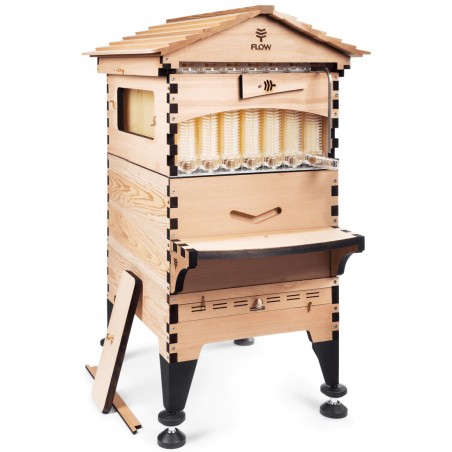
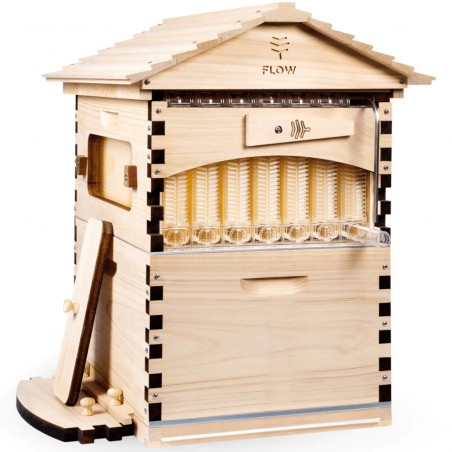
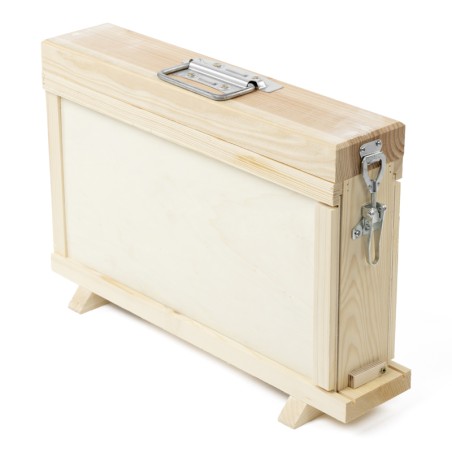
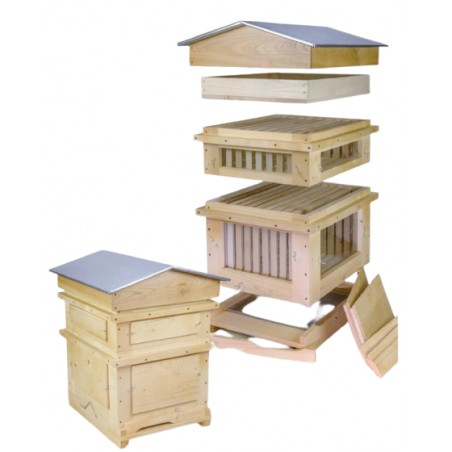
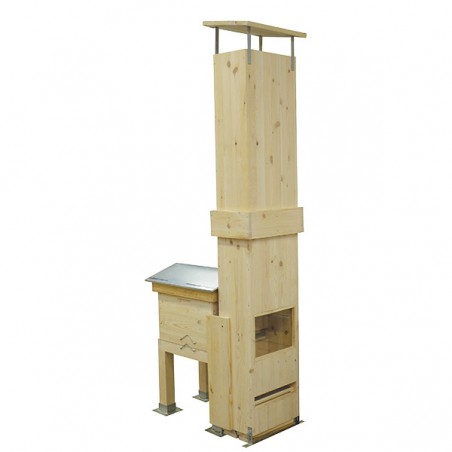
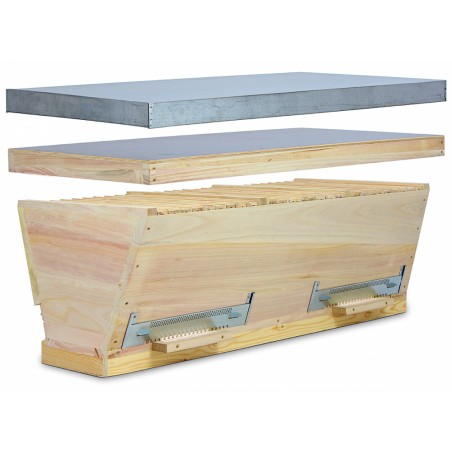
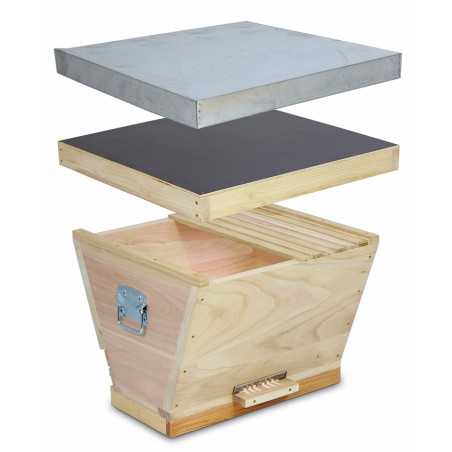
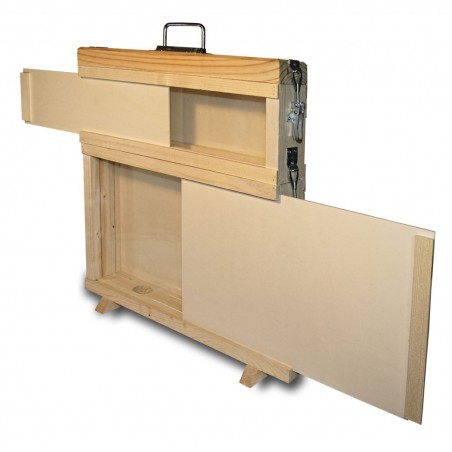
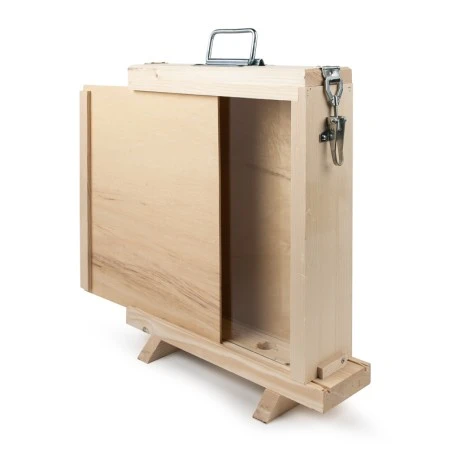
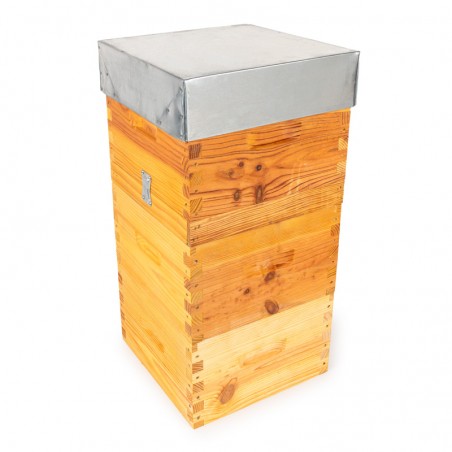
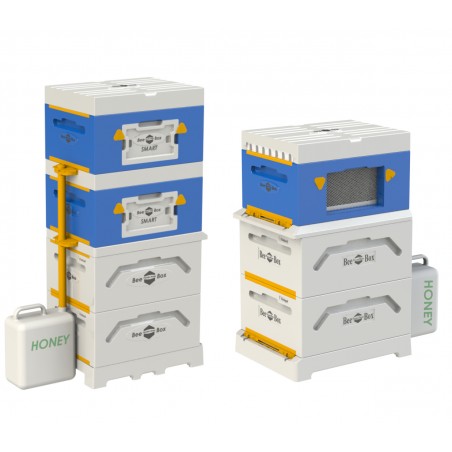
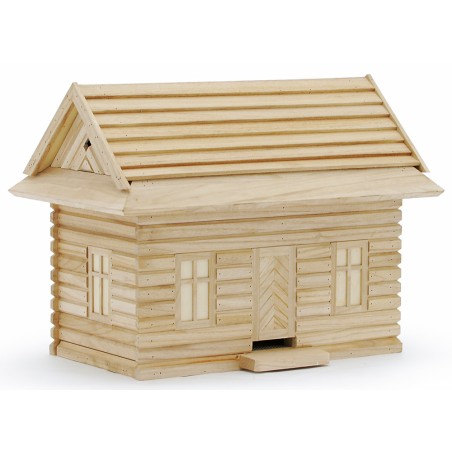
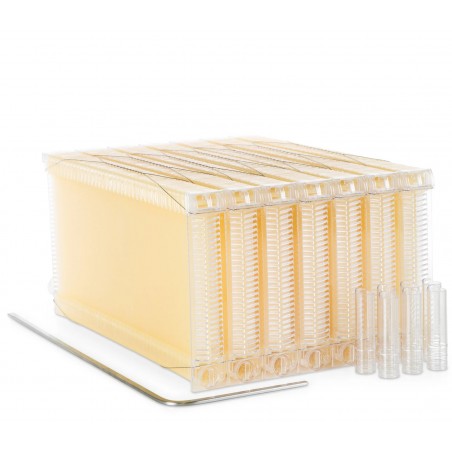
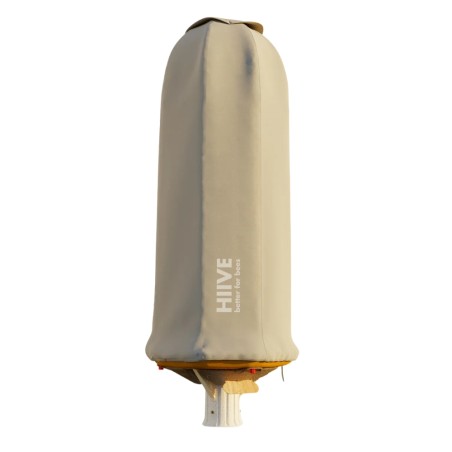
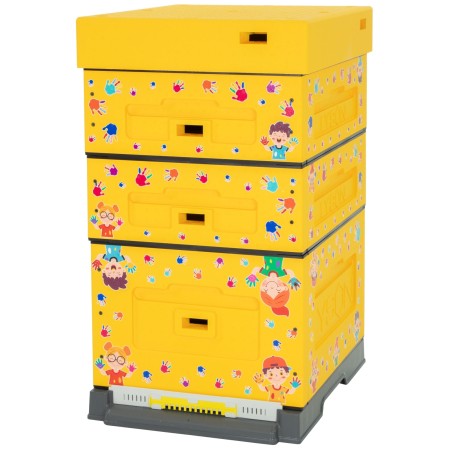
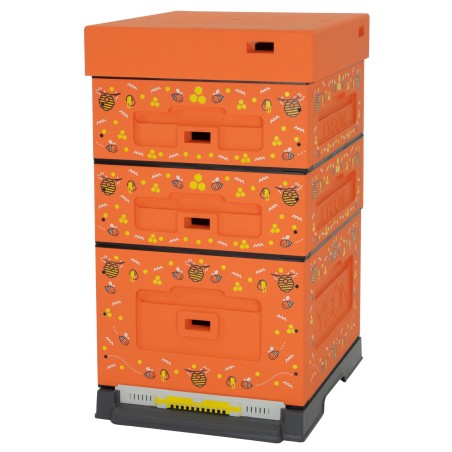
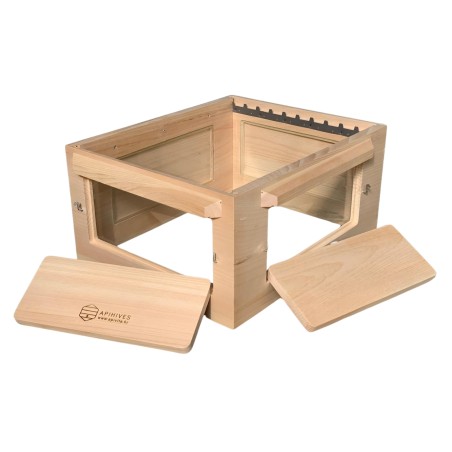

These hives do not compete with a Langstroth: they do something else
If you are after your first production hive, this is not your category: there Langstroth, Dadant or Layens rule, with spares available anywhere and interchangeable frames. What is here answers different needs. The observation hive — glazed, in Layens, Langstroth or Dadant — is for showing: classroom, visit, fair, shop window. The Warré and the Top Bar are systems with a different management philosophy, not a prettier version of the above.
And what you need to know before buying an observation hive, which is what sells most from here: it holds live bees. It is not furniture. It needs an outside exit, stable temperature and someone to look after it between events — a colony shut behind glass with no management dies, and the display becomes the opposite of what you meant to teach. If it is for a classroom or a fair, decide who maintains it before buying, not afterwards.
Special Hives
Special beehives include designs for observation and training, Warré and Top Bar systems, urban hives and configurations that differ from common standards. The choice should start with the intended use, not only the appearance or format.
Choose according to the purpose
- Observation and training: glazed or display models that provide a view inside according to each product's design.
- Alternative management: Warré systems and Kenyan Top Bar hives, with their own geometry and components.
- Specific uses: urban hives, Flow systems and other formats whose assembly, handling and spare parts must be checked.
Check compatibility
Each design may use different dimensions, frames or bars, supers, floors and roofs. Before buying, check the included parts, required assembly, access for handling and cleaning, intended location and availability of compatible components.
If you need standard formats to compare Langstroth, Dadant and Layens, return to the main beehives category.
Read each product page
This category contains both complete hives and individual components. Items in the same family are not necessarily compatible: always confirm the exact contents, dimensions and stated system on the product page.
Can I extract honey from a Warré or a Kenyan top-bar hive with my extractor?
No. These models do not use a standard frame, and without a frame holding the comb on all four sides it will not stand the force of a centrifugal extractor. Harvesting is done by pressing or by cutting, which means two things worth knowing before you buy: you need a different extraction method from the one you already have, and that comb does not go back into the hive — the bees rebuild it from scratch, at the cost in honey that entails.
Will my existing frames and supers fit?
It depends on the model, and the name will not tell you. The polystyrene bodies here are Dadant Blatt and take the standard Dadant frame (42 × 27 cm in the brood box, 42 × 13 cm in the super) — so if you run National or Commercial, they will not fit, and that is the check to make first. Warré, Kenyan top-bar and own-format systems take nothing standard at all. The rule that saves an expensive return: confirm the exact frame dimensions on the product page before assuming compatibility, because the same commercial name covers national variants with different measurements.
Do these have to be marked like a conventional hive?
Yes. Wherever hive identification is required, the obligation attaches to the hive, not to its design: a Warré or an urban hive is marked exactly like a Langstroth. What changes is how you do it — on polystyrene or on a glazed face, branding with a hot iron is not an option, so you need an indelible system compatible with that material. The exact format, wording and placement are set by your own national or regional authority, so check there before you mark anything.
Are these a good idea for a beginner?
Usually not, and not on quality grounds. The problem is isolation: if the beekeepers around you run National, Commercial or Langstroth, with a special model you cannot swap brood frames, buy a local nucleus that fits, or borrow a super when you are stuck — and spares take longer to arrive. They make sense once the aim is something else: education and observation, an urban site, or a specific management approach you have chosen deliberately. There is no hive that is better than the rest; there is the one that suits your area, your flows and the labour you can put in.