 Apipasta with vitamins 15kg
 Beecomplet® Spring 14Kg
 Beekeeper suit with round veil
 Oxalic acid 1kg
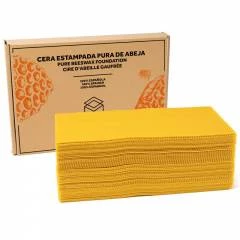
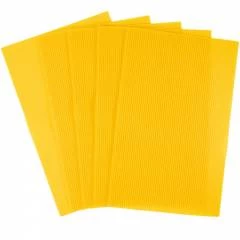
 Beeswax Foundation 5kg
 Fresh royal jelly 20g
 Classic honey jar 1kg comb-lines TO77 - Pack of 16 units
 Promotor L Apis 1 litre

 Share in WhatsApp
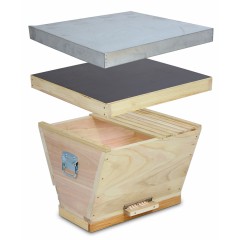
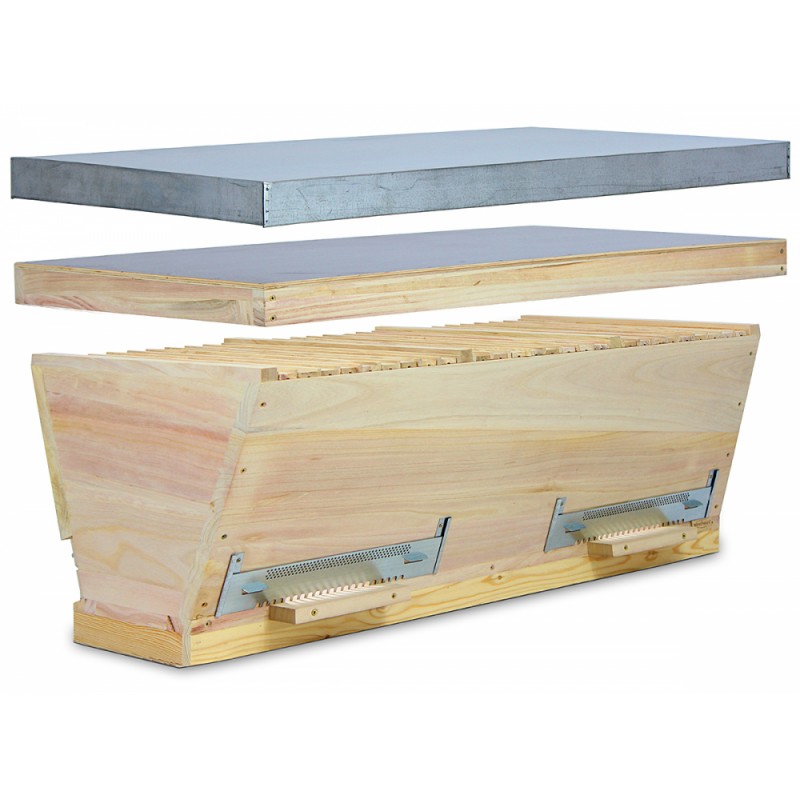
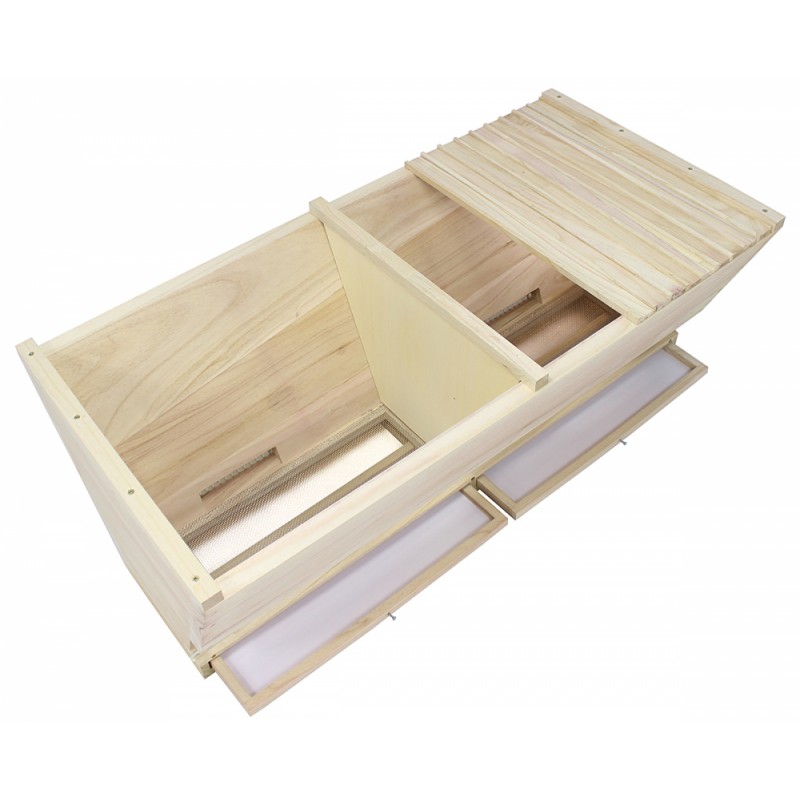
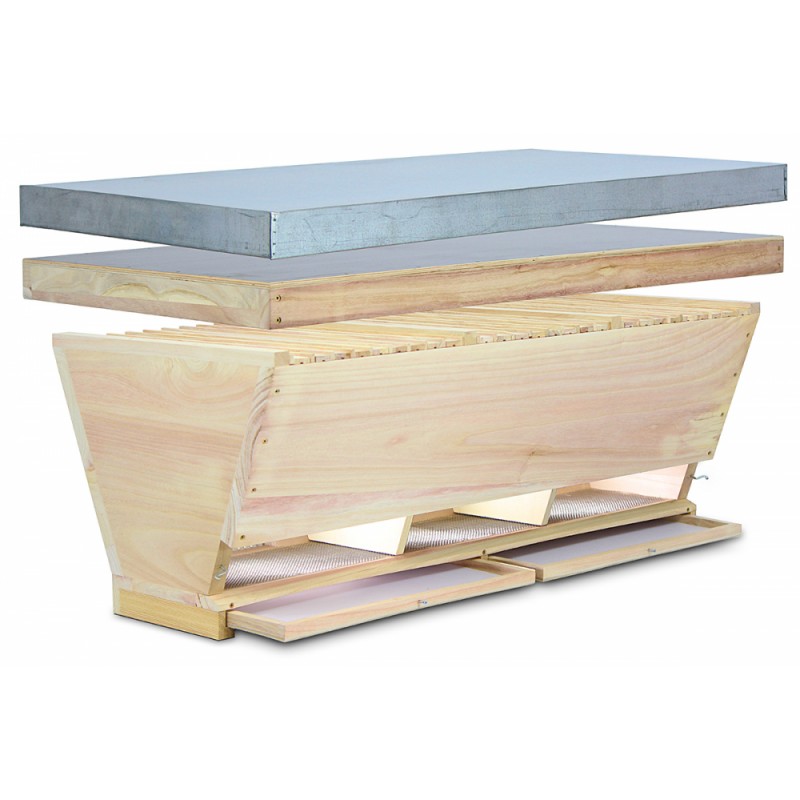
Horizontal Kenyan Top Bar hive made of wood, with all its elements. Double size. Ideal for amateurs curious about this type of handling, not recommended for professional beekeepers.
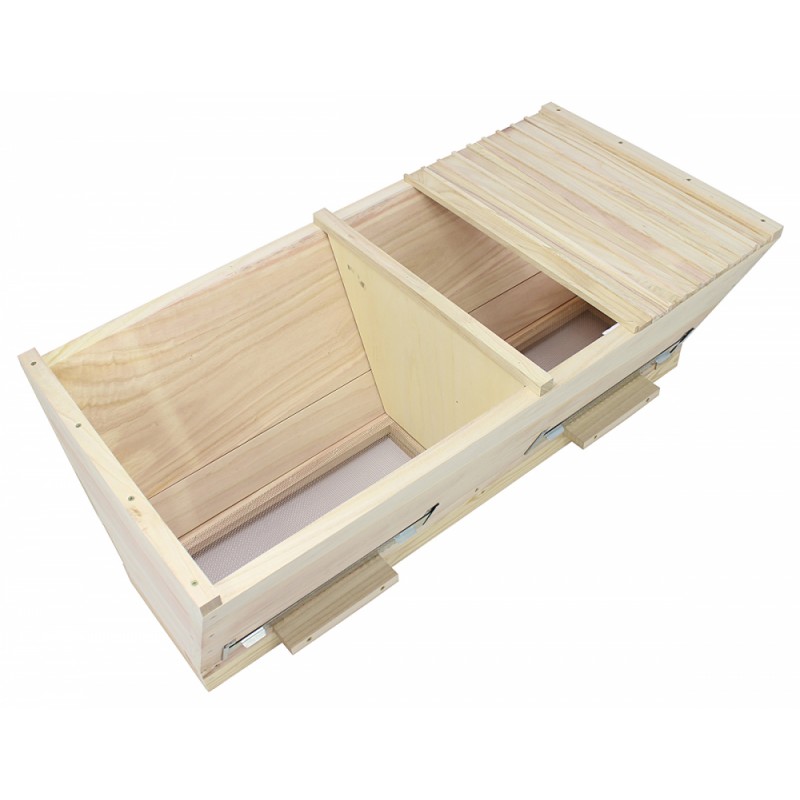
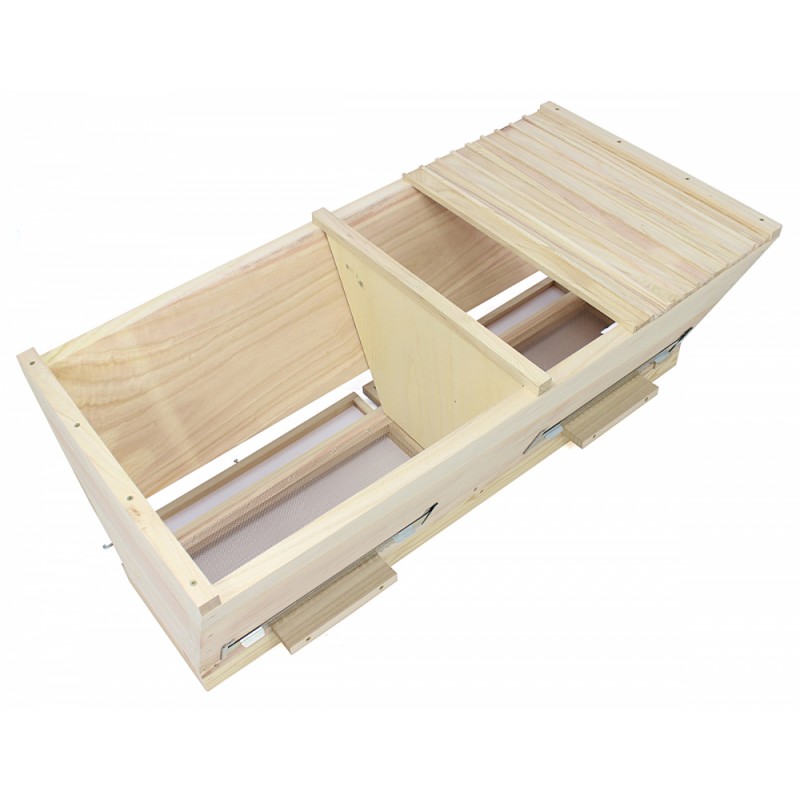
Horizontal Top Bar hive, double body, 26 bars, two screened floors and a one-piece metal roof. No foundation, no wire, no supers.
It is not a Layens under another name: there are no frames here, there are bars. And that decides how it is worked, how it is harvested and what you take out at the end of summer.
01 · THE V SHAPE IS NOT DECORATION
Bees build hanging comb, and left alone they give it a curve that pulls away from the walls on its own. The V-shaped walls reproduce that geometry: the comb hangs from the bar and never reaches the sides.
That is why the bar is bare, with no wire and no foundation: the bee decides cell size and orientation. It is what brings this hive close to a wild swarm, and also what makes it slower to work.
02 · WHAT YOU MUST GET RIGHT
This is the mistake that ruins the first year and almost nobody mentions: if the hive is not level, the bees build on the diagonal and the comb ends up attached to two bars at once. From then on you cannot lift a bar without breaking something.
Level it before the bees go in, lengthways and crossways, and check the building every few days for the first weeks. Cross-comb is fixed early with your hands; a month later, with a knife.
03 · THE MANAGEMENT
Growth runs end to end, not upwards. As the colony grows you move the follower board and add bars; after the harvest you shrink the space, so that in winter the cluster is not heating empty volume.
The body is double and comes with two follower boards: it can be split into two independent colonies with their own entrances. It asks for little kit — no excluder, no supers, no wax — but it does ask you to stay on top of the space.
04 · THE HARVEST
Top Bar combs do not go into an extractor: they are cut off the bar and pressed or crushed. Every harvest destroys the comb and the colony rebuilds it — and building wax costs honey, several kilos of honey per kilo of wax.
In exchange you get what a conventional hive barely yields: virgin wax from new comb, with no recycled foundation and no residues from old comb. For many people that alone makes up for the smaller honey crop.
When the bees stick the comb to the wall — it happens, even with the V — run a hive tool along the edge before lifting the bar.
05 · BEFORE YOU BUY
This is a hobby hive with a naturalist approach: it gives less honey than a Langstroth or a Layens, and a great deal more wax.
| ✓ RIGHT FIT | Anyone who wants little kit, natural comb building and virgin wax at harvest. |
| ✕ WRONG FIT | Production: it will not go in a centrifuge and combs cannot be swapped between hives. |
| ⚠ NOT INCLUDED | Bees, stand or press. Honey comes out by pressing the comb. |
| Type | Horizontal Kenyan / Top Bar hive, double body |
|---|---|
| Bars | 26 (no wire, no foundation) |
| Follower boards | Two, to split into two colonies |
| Floor | Two screened floors with tray |
| Entrances | Two, with guards and landing boards |
| Cover | Wooden inner cover and one-piece galvanised metal roof |
| External size | 112 × 58 cm · height 43 cm |
| Weight | 25 kg |
| Does not need | Foundation, wire, supers or excluder |
| Extraction | By pressing or crushing the comb — no extractor |
Horizontal Kenyan Top Bar hive made of wood, with all its elements. Double size. Ideal for amateurs curious about this type of handling, not recommended for professional beekeepers.
check_circle
check_circle