
-
Beehives
- Complete beehive
- Accessories
-
Nuc hives
- Nucs by format
- With bees & mating
- Spare parts
-
Bee equipment
- For the apiary
- For the beekeeper
-
Clothing
- Clothing Accessories
-
Beeswax
-
Pure beeswax
- Beeswax and foundation
- Beeswax foundations
- Melting and rolling beewax
-
Pure beeswax
-
Bee feed
- Accessories and source materials
- Utensils
-
Bee health
- Varroa Treatments
- Diseases control
- Nutraceuticals
-
Extraction and bottling
- Before extraction
- Honey extraction
- After extraction
-
Bee pollen
- Harvest
- Indicted
-
Honey packaging
- Flasks per utility
- Flasks by size
- Other packaging
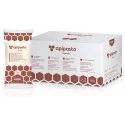 Apipasta with vitamins 15kg
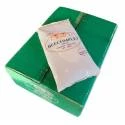 Beecomplet® Spring 14Kg
 Beekeeper suit with round veil
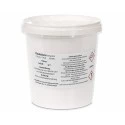 Oxalic acid 1kg
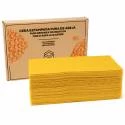 Beeswax Foundation 5kg
 Fresh royal jelly 20g
 Classic honey jar 1kg comb-lines TO77 - Pack of 16 units
 Promotor L Apis 1 litre
Bee Waterers
Clean water within 300 m of the hives: that is the distance to aim for when there is no natural source nearby. Three answers depending on whether you have a water supply at the apiary or not — two constant-level models that connect to mains or a drum, and a standalone 30 L tank. From €39 to €45.75.

Water is the input everyone takes for granted
Of everything an apiary needs, water is the least planned for and the fastest to show when it is missing. In spring it is rarely a problem, because there is damp and there are puddles everywhere; the problem arrives in July and August, when it all dries up at once. And the colony needs water for the opposite of what you would guess: not so much to drink as to cool the hive and carry the brood through. When the inside reaches 40 ºC, the bees drop whatever they are doing and every one of them starts fanning. On that day you are not short of honey: you are short of water within reach.
My rule is simple: water within 300 m if there is no natural source, and never dry for a day. The second half matters more than the first, and it is where nearly everyone falls down. Bees fix on a water point with a persistence that surprises you, and if they find it empty once they go looking for another and do not come back, even if you refill it the next day. So if the site has mains or I can leave a drum, I would rather have a constant-level waterer than a big tank: the 30 litre tank gives you autonomy, but the constant-level one gives you the guarantee that it will not empty. If the site has nothing at all, then yes, a tank — and the visits written in the calendar, not left to memory.
And one thing that is not technical but has solved more problems for me than anything else: the waterer is what keeps your bees out of the neighbour's pool. Most of the complaints I have seen against apiaries do not come from stings in the field, they come from bees in somebody else's water. Putting out your own water, close by and clean, and putting it out before the heat sets in, is the cheapest piece of good-neighbourliness there is. It has saved me more than one awkward conversation.
Bee Waterers
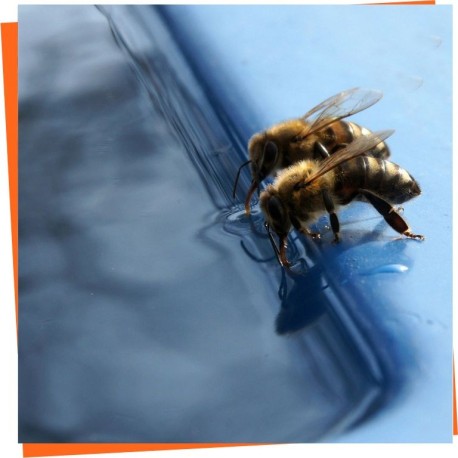
Bees do not haul water for the fun of it: they use it to cool the hive and to prepare brood food, and consumption climbs sharply with the heat. If the inside goes past 40 ºC, the colony drops whatever it is doing and puts everything into fanning. In July and August water is not an accessory: it is the apiary's bottleneck.
Distance comes before the model
The working rule is water within 300 m of the hives when there is no natural source nearby. Every water trip is forager time: the further the source, the more bees carrying water and the fewer available for nectar and pollen.
There is also a neighbourly reason. If you do not provide the water, your neighbours end up providing it without meaning to: swimming pools, fountains, livestock troughs and dripping taps become the apiary's water point, and that is where most friction with the surrounding area starts. Your own waterer, close by and never dry, is the cheapest way to avoid it.
The question that settles the purchase
Do you have a water supply at the apiary, or not? That decides the model — not the litres.
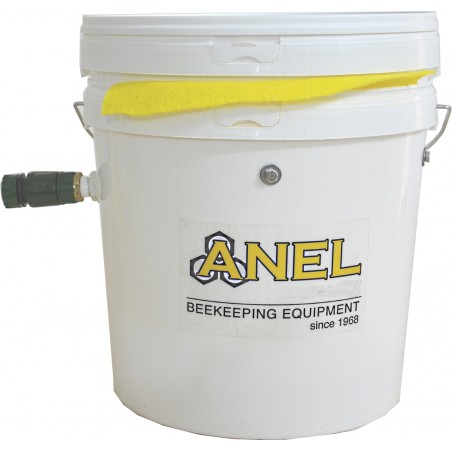
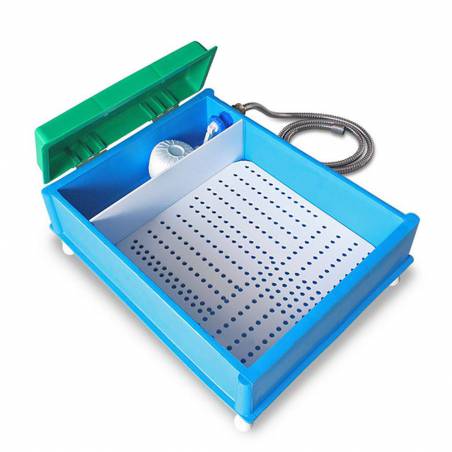
- If you have mains or can leave a drum — the two constant-level models feed from it and never need filling. The continuous-feed one (€42.89) has an internal float and brings the water up to the surface of an absorbent cloth: the bee drinks from the damp cloth rather than from open water, so the drowning risk is close to nil. The 10 L portable (€39.00) holds its level with a float and pipe — and the level is adjustable — couples to Ø 12 mm hose with a honey drum as the reservoir, and carries a perforated PVC sheet for the bees to stand on and drink without falling in. It measures 50 × 39 cm and 15 cm high, in food-grade BPA-free polypropylene. This is the migratory one: it moves from site to site with nothing to dismantle.
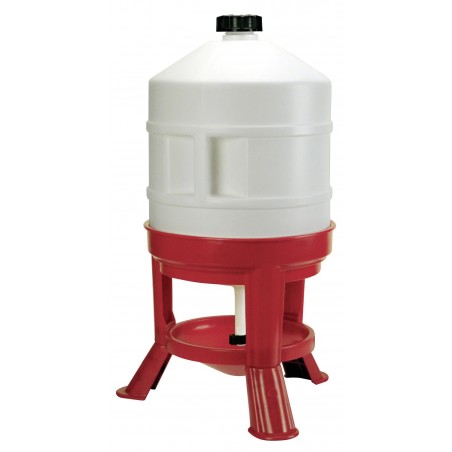
- If there is nothing on site — the 30 L tank (€45.75) is standalone. It fills from the top through a cap, with no tipping or dismantling; the legs hold it off the ground so soil does not get in; the white inner vessel slows algae down and the plate lifts out for cleaning. Ø 45 cm, 70 cm high and 3.40 kg empty.
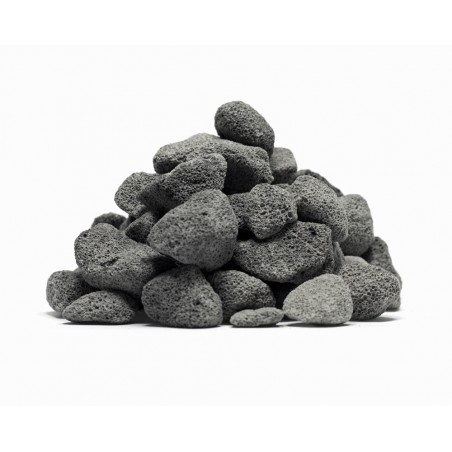
- Drowning is solved by design, not by supervision — in a waterer the water surface is open, and open water with smooth walls drowns bees by the hundred. Each model answers it differently: absorbent cloth, perforated PVC sheet or removable plate. If you improvise with a tub, put in stones, cork or twigs — and look again when the level drops, because what stood clear with the tub full stops standing clear half empty.
- It must never run dry, not for a single day — this is the costliest mistake and the least obvious. Bees fix on a water point with real persistence; find it empty once and they go looking elsewhere and do not come back, even if you refill it the next morning. A waterer that works half the time is worse than none, because it sends the bees off to find water in the very week they need it most.
- Clean water, not just water — sun, standing water and summer make algae, and dirty water gets abandoned just like absent water. Count on rinsing it every few weeks in season, and weigh that upkeep when choosing: the cloth gets replaced, the plate lifts out, a tub has to be scrubbed.
How far from the apiary should the water be?
Within 300 m of the hives when there is no natural source nearby. Every water trip is forager time: the further the point, the more bees hauling water and the fewer on nectar and pollen. In summer that arithmetic ends up showing in the crop.
How do I stop bees drowning in the waterer?
By design, not by supervision. What drowns them is open water combined with smooth walls. You need either a damp cloth they drink from without landing on water, or a perforated sheet to stand on, or material that stands clear: stones, cork, twigs. And look again when the level drops, because what stood clear with the waterer full stops doing so half empty.
Which suits me, constant-level or the 30 L tank?
It depends on whether you have a water supply at the apiary. With mains or a drum, the constant-level model refills itself and never runs dry. With none of that, the 30 L tank gives you several weeks of autonomy, but you depend on remembering to fill it.
My bees go to the neighbour's pool — will a waterer fix that?
It helps, but you win this one on persistence. Bees fix on the water point they already know, so a new waterer takes time to displace an established source. Set it up before the heat starts, never let it run empty for a day, and place it closer to the apiary than the source you want to replace.
How often should the waterer be cleaned?
Every few weeks in season. Standing water in the sun makes algae, and dirty water gets abandoned just like absent water. The 30 L tank has a white inner vessel to slow algae down and a removable plate; the other two rinse out by hand, and the absorbent cloth gets replaced when it fouls.