
-
Beehives
- Complete beehive
- Accessories
-
Nuc hives
- Nucs by format
- With bees & mating
- Spare parts
-
Bee equipment
- For the apiary
- For the beekeeper
-
Clothing
- Clothing Accessories
-
Beeswax
-
Pure beeswax
- Beeswax and foundation
- Beeswax foundations
- Melting and rolling beewax
-
Pure beeswax
-
Bee feed
- Accessories and source materials
- Utensils
-
Bee health
- Varroa Treatments
- Diseases control
- Nutraceuticals
-
Extraction and bottling
- Before extraction
- Honey extraction
- After extraction
-
Bee pollen
- Harvest
- Indicted
-
Honey packaging
- Flasks per utility
- Flasks by size
- Other packaging
 Apipasta with vitamins 15kg
 Beecomplet® Spring 14Kg
 Beekeeper suit with round veil
 Oxalic acid 1kg
 Beeswax Foundation 5kg
 Fresh royal jelly 20g
 Classic honey jar 1kg comb-lines TO77 - Pack of 16 units
 Promotor L Apis 1 litre
Reversible Extractors
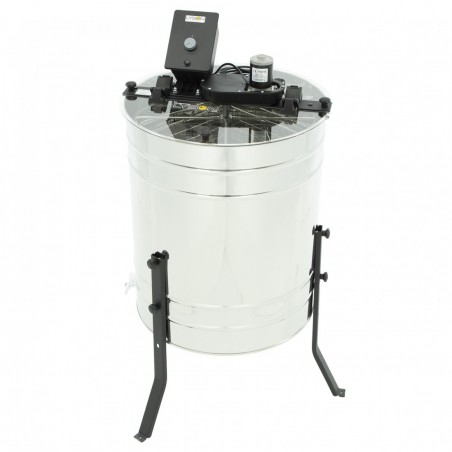
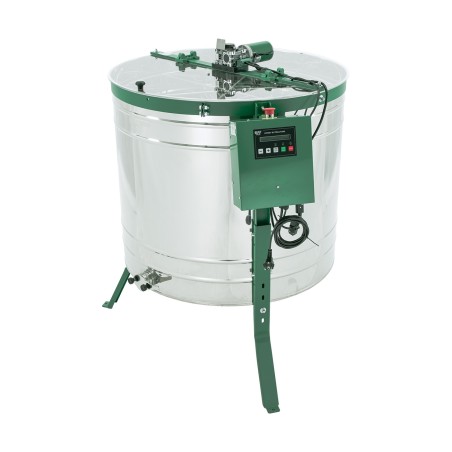
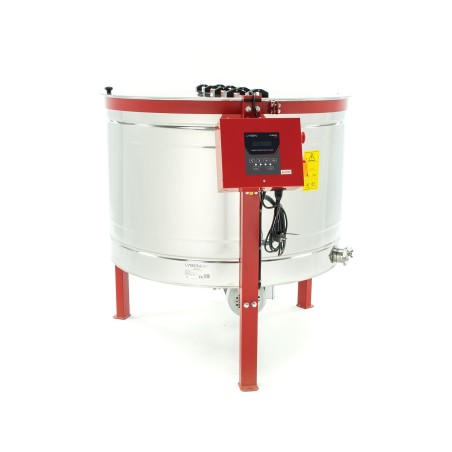
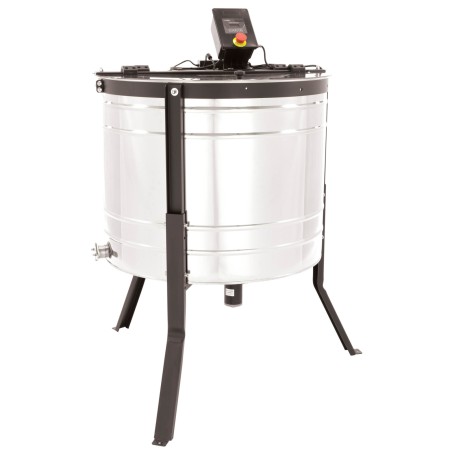
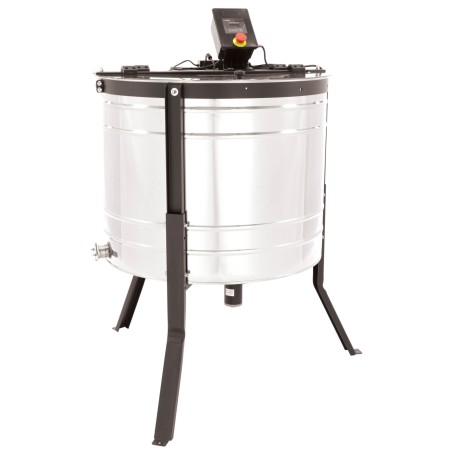
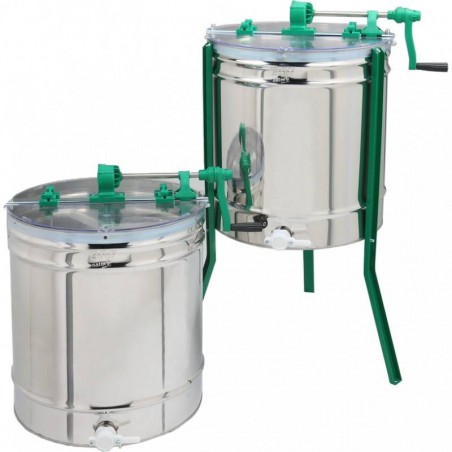
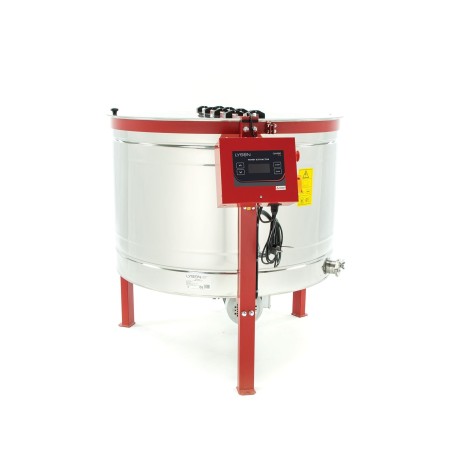
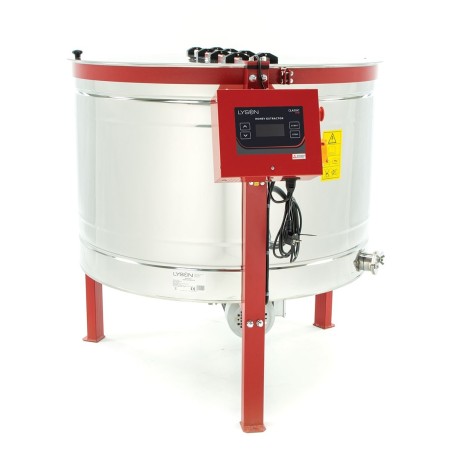
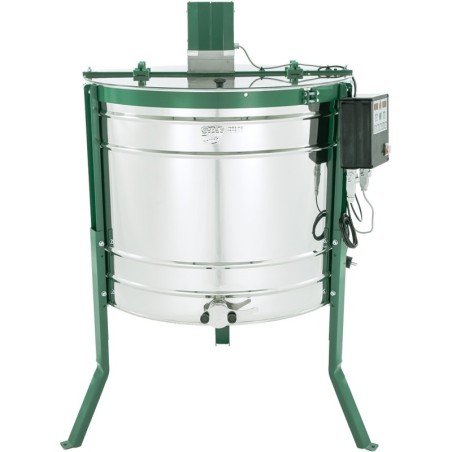
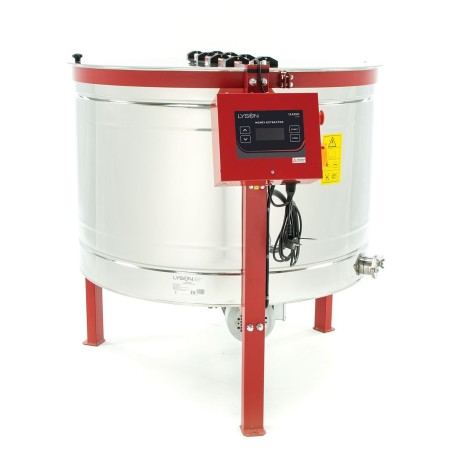
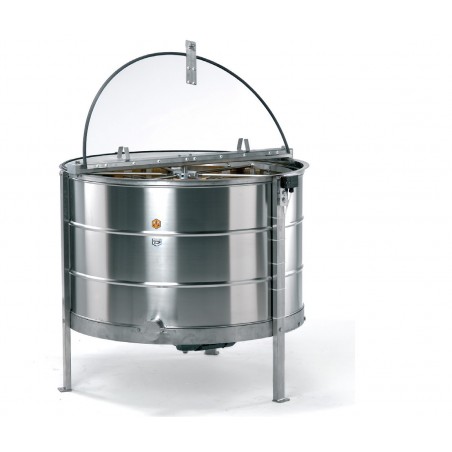
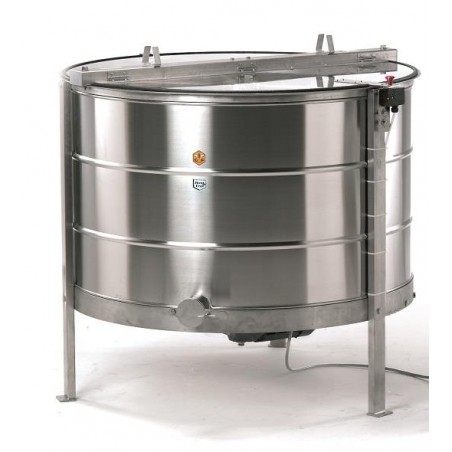
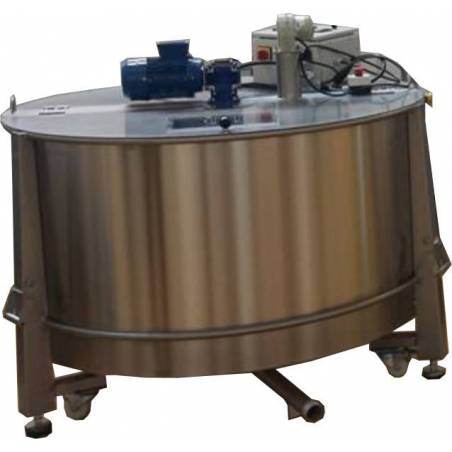
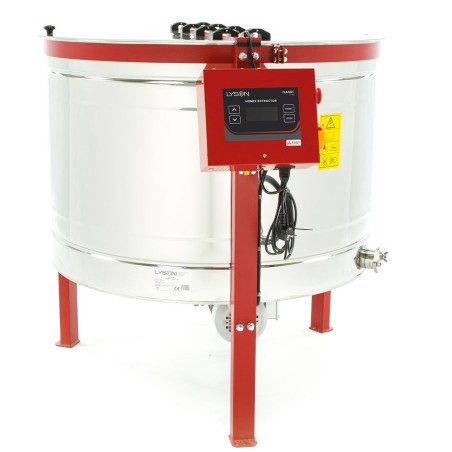
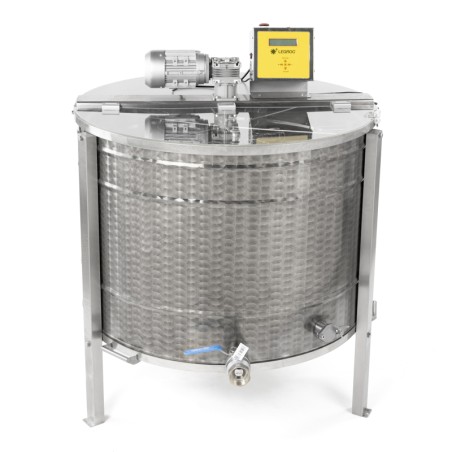
Manual, electric and automatic reversible tangential honey extractors for 4 to 20 brood frames, with different capacities for shallow super frames. Before choosing, check the frame format, reversal system, drum diameter, power supply and outlet height.
Type
Functionality
Brand
Price
-
€813.00 - €11,199.00

When to choose a reversible extractor
The reversible extractor strikes me as one of the most balanced options once you're after more comfort, more output and less handling in the extraction room. It keeps the advantages of the tangential system, especially useful with large frames or denser honeys, but avoids having to take out and turn each frame by hand. That makes a big difference during the season: you work more smoothly, reduce physical effort and save time without losing control over the extraction.
For me, it makes particular sense for beekeepers who work with Layens, Dadant brood frames or a medium-to-high number of hives. If you only do a few extractions a year, it probably wouldn't be the first investment I'd make. But if you already have a certain volume or want to take a step up in comfort and working pace, it's usually a very sensible buy. Before choosing a model, I'd look above all at the sturdiness of the basket, the quality of the reversing system, the motor control, the stability of the machine and the availability of spare parts. With this type of extractor, saving too much usually ends up costing you: it's better to buy a machine that will last you years and genuinely makes your work easier.


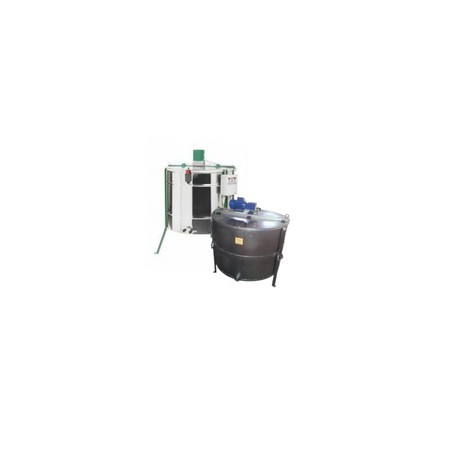
Reversible Extractors
Manual, electric and automatic models
Manual or assisted-reversal models. These are the entry point to the category: the drive may use a hand crank, or the operator may need to change the basket's orientation. A reversible extractor does not necessarily run the whole cycle by itself.
Electric and programmable models. The active range runs from compact four- or six-frame units to machines holding up to twenty brood frames. Depending on the model, the controller can regulate speed, time and direction or run automatic programmes.
Universal and format-specific models. Some accept Layens, Dadant and Langstroth frames; others accept only certain brood-frame formats. Capacity for shallow super frames is stated separately and must not be confused with brood-frame capacity.
What makes a reversible extractor different
It works tangentially: each face of the comb is positioned towards the drum wall for extraction, after which the basket changes position to work the opposite face. This avoids taking out each frame to turn it over, although the degree of automation depends on the machine.
Five checks before buying
- Maximum frame format. Check the basket dimensions, not just the word “universal”. A model compatible with Dadant or Langstroth does not accept Layens unless its product page explicitly says so.
- Actual capacity. Read brood frames and shallow super frames separately: a 6/12 capacity usually means six large frames or twelve shallow super frames, not twelve brood frames.
- Working space. Add the open lid, loading clearance and room to move around the machine to the drum diameter. Also check that the honey gate will sit above the settling tank or receiving container.
- Drive and power supply. Distinguish between a hand crank, a 12 V motor and a 230 V connection. Check power, controller and programmes on the individual product page, as they are not common to the entire category.
- Progressive extraction. Balance frames of similar weight and start at low speed before reversing and increasing the rotation. Viscous honey may need slower cycles; honey that has already crystallised cannot be extracted simply by increasing the speed.
What is a reversible honey extractor and how does it work?
It is a tangential extractor with baskets that can orient each frame towards one side and then the other, emptying both faces without removing it from its holder. Reversal may be manual, assisted or automatic depending on the model. “Reversible” therefore describes the change in basket orientation; it does not by itself mean that the extractor is electric or programmable.
What are the advantages of a reversible extractor?
It reduces handling because each frame does not have to be removed to work the second face, retains the control of tangential extraction and makes progressive cycles easier with large frames or viscous honey. The time saving depends on capacity and degree of automation. It does not remove the risk of comb breakage: balance, speed, honey temperature and the condition of the wax also matter.
When is a reversible extractor worth choosing?
It is worthwhile when you want to extract tangentially while reducing manual turning of frames—for example, with large brood frames, viscous honey or frequent batches. The decision does not depend only on the number of hives: frame format, kilograms processed per day, available time and level of automation also matter. For occasional extraction, a manual model may be enough. Honey that has already crystallised cannot be recovered simply by increasing the extractor speed.
How should a reversible extractor be cleaned and maintained?
After each use, drain the honey, remove wax and debris, and clean food-contact areas using the products and method permitted by the manufacturer; then rinse and dry. Do not wet the motor, controller or bearings unless expressly instructed. Inspect the baskets, fasteners, lid, honey gate, wiring and welds before the season. Lubricate only the points specified in the manual, using the stated product and frequency, and a food-grade lubricant wherever contact is possible. Store the extractor dry and disconnected from the power supply.