
-
Beehives
- Complete beehive
- Accessories
-
Nuc hives
- Nucs by format
- With bees & mating
- Spare parts
-
Bee equipment
- For the apiary
- For the beekeeper
-
Clothing
- Clothing Accessories
-
Beeswax
-
Pure beeswax
- Beeswax and foundation
- Beeswax foundations
- Melting and rolling beewax
-
Pure beeswax
-
Bee feed
- Accessories and source materials
- Utensils
-
Bee health
- Varroa Treatments
- Diseases control
- Nutraceuticals
-
Extraction and bottling
- Before extraction
- Honey extraction
- After extraction
-
Bee pollen
- Harvest
- Indicted
-
Honey packaging
- Flasks per utility
- Flasks by size
- Other packaging
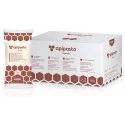 Apipasta with vitamins 15kg
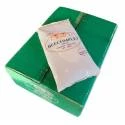 Beecomplet® Spring 14Kg
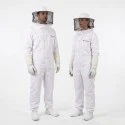 Beekeeper suit with round veil
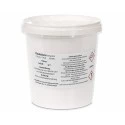 Oxalic acid 1kg
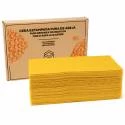 Beeswax Foundation 5kg
 Fresh royal jelly 20g
 Classic honey jar 1kg comb-lines TO77 - Pack of 16 units
 Promotor L Apis 1 litre
Bee pollen
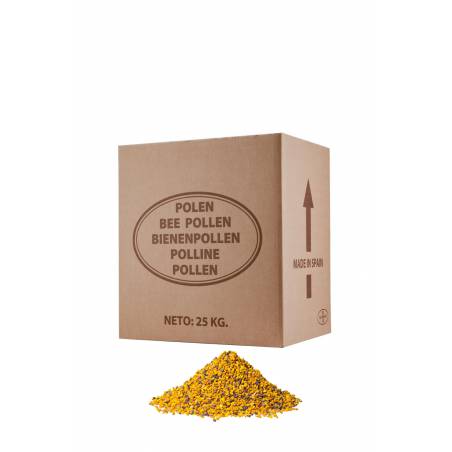
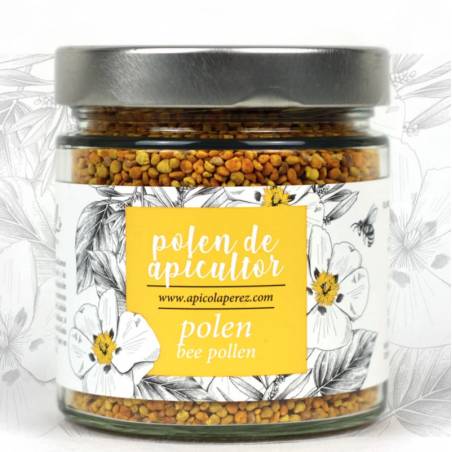
Dry multifloral bee pollen harvested in Spain, in Salamanca and Ciudad Real, and vacuum-packed. Available in a 200 g jar and in a 25 kg box.
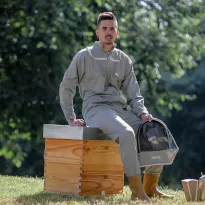
My advice on pollen: quality is decided in the apiary, not on the shelf
Spain is the largest pollen producer in the EU, between 1,000 and 1,500 tonnes a year depending on the weather, and almost all of it comes from wild flowerings. Rock rose gives a sweet, fruity pollen in May and June; before that come the borages, after them thistles, maize or heather. That is why a multifloral does not always taste the same: it changes with the month and with the year. That variation is not a defect, it is the signature of pollen that comes from the field. The only granules to look at differently are the almost-black ones, from viper's bugloss, under a legal limit since 2022 and which producers stop harvesting as soon as they show up in the trap.
What decides quality happens well before the jar. The trap has to be emptied daily, because damp and warmth together degrade pollen within hours, and from there it goes to the freezer or to the drier: dry air at 40 ºC, layers under two centimetres, down to 8 % moisture, and a pass of cold air for ten or fifteen minutes before taking it out so it does not come out warm and pick moisture straight back up. And there is one constraint almost nobody imagines: while pollen is being harvested the hive cannot be treated against varroa, because the acaricide stays on the bee's hairs and ends up in the granules.
For you, buying, this comes down to two things. Shelf life is around a year for dry or frozen pollen and up to two years vacuum-packed, so the big box is not only cheaper per kilo: it keeps longer sealed. And once it is opened the clock starts: pollen is excellent food for moths and weevils, so an airtight container, always. If you want the whole process in detail, it is on the blog, in «Bee pollen: production, handling and marketing».
Bee pollen
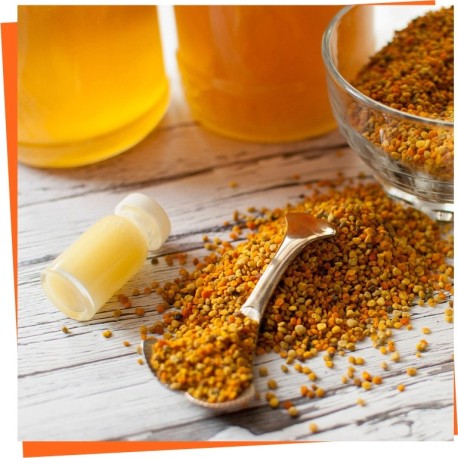
Pollen is the load worker bees carry back from flowers on their hind legs, packed together with nectar and their own enzymes. A trap fitted at the hive entrance holds it back as they pass, and from there it goes to drying. What you will find here is multifloral: the range of colours within a single jar shows the bees visited different species.
The two formats and what each kilo costs
- 200 g jar — works out at around €44 per kilo. This is the consumption format: you open it, you use it, and it has no time to degrade.
- 25 kg vacuum-packed box — works out at around €24 per kilo, practically half. It pays off if you repack for resale, supply a shop, or consume a lot and have freezer space.
The price-per-kilo gap between the two is close to 45%, so the real decision is not which one to buy but how much you will get through before it loses quality.
How to recognise well-handled pollen
- Moisture is what matters. Pollen leaves the trap at 20-30% water and has to be brought down to 6-8%. Above 10% there is a risk of fermentation; below 6% it turns too dry and the palate notices.
- The range of colour is information, not decoration. Yellows, oranges and ochres in the same batch point to several floral sources, and a single-tone batch comes from one dominant bloom. Light purples, from bellflower or thistle, are normal; almost-black granules are viper's bugloss and are better absent.
- Cleanliness. Well-processed pollen arrives without plant debris or fragments: it has been sieved or air-cleaned after drying.
What is inside, and why it varies so much
Each pellet weighs around 8 mg and the bee has visited some 200 flowers to gather it. That is where most of the confusion around pollen analyses comes from: composition is not a constant, it is the average of a few particular flows. The ranges used as a technical reference are deliberately wide.
- Protein: 10 to 40 g per 100 g. It is the figure that shifts most between flows and the one used as a quality criterion: below 15 g/100 g a pollen is reckoned poor.
- Sugars: 40 g/100 g as an indicative minimum, largely from the nectar the bee uses to pack the load into her pollen basket.
- Fat: from 1.5 g/100 g. This is the fraction most sensitive to processing: drying at 45 ºC for six hours has been measured to cost 15-25% of the vitamin E and beta-carotene, which is why drying is kept below 30 ºC.
That is why an average pollen analysis says little about one particular jar: what is inside depends on the month, the district and the year. What you will not find here is a list of benefits, however often you see one elsewhere: pollen carries no authorised health claims in the European Union.
How to keep it at home
Dry pollen is stable, but not indefinitely. Store it in an airtight container, somewhere cool and out of the light: ambient humidity is what spoils it. For the long term, the freezer is the safest route; once defrosted, use it up fairly quickly and do not leave it out for hours at room temperature, because that is where it picks moisture back up.
If what you are after is producing pollen rather than buying it — traps, collection frequency, drying, cleaning and marketing — we cover that in depth on the blog, in Pollen: production, handling and marketing.
How is bee pollen taken?
Dry pollen comes as granules that chew somewhat floury and cling to the palate, with a floral flavour that shifts from batch to batch depending on the flowers it came from. Because of that texture it is usually taken stirred into something — a yoghurt, a juice, a smoothie or scattered over toast — rather than on its own. Letting it sit in the liquid for a few minutes softens the outer coat of the grain and makes it easier to eat; some people grind it and stir it in as a powder.
The amount and the pattern of use are those given by the manufacturer on each product label: read it before you start. If you are allergic to pollen or to hive products, if you are pregnant or breastfeeding, or if you are on any treatment, consult a healthcare professional first.
How do I store bee pollen so it does not lose its properties?
Bee pollen is highly sensitive to heat, moisture and light, all of which can affect its nutritional and microbiological composition.
Dried pollen should be kept in an airtight container, somewhere cool, dry and protected from direct sunlight, avoiding sharp temperature swings.
For fresh pollen, keeping optimum quality means refrigerating it between 2 ºC and 5 ºC, or freezing it at −18 ºC to extend its shelf life.
What is the difference between fresh and dried pollen?
Fresh pollen is collected straight from the traps fitted to the hive and chilled immediately, keeping all its nutritional and enzymatic properties intact, at a moisture close to 20-30 %. It has a soft texture, a more delicate flavour and a limited shelf life if not properly refrigerated. Dried pollen, by contrast, goes through a dehydration process that brings its moisture below 10 %, allowing prolonged storage at room temperature, though sacrificing some heat-sensitive vitamins and enzymes. It has a firmer, crunchier texture and a more intense, concentrated flavour.
Does bee pollen have any contraindications?
Although bee pollen is a nutritional supplement that is safe for most people, it can cause allergic reactions in sensitive individuals, especially those allergic to environmental pollen, to hive products or to bee stings. Particular caution is advised in people with a history of asthma or severe food or environmental allergies. In those cases, consult a doctor or allergist before taking it.
What is the difference between the 200 g jar and the 25 kg box?
It is the same dry multifloral pollen; what changes is the price per kilo and the logistics. The 200 g jar works out at around €44/kg and the 25 kg box at around €24/kg, practically half.
The box is vacuum-packed and intended for repacking, for supplying a shop, or for high consumption with freezer space available. For household use, the jar costs more per kilo but gets finished before the pollen picks up moisture, which is what actually spoils it.