
-
Beehives
- Complete beehive
- Accessories
-
Nuc hives
- Nucs by format
- With bees & mating
- Spare parts
-
Bee equipment
- For the apiary
- For the beekeeper
-
Clothing
- Clothing Accessories
-
Beeswax
-
Pure beeswax
- Beeswax and foundation
- Beeswax foundations
- Melting and rolling beewax
-
Pure beeswax
-
Bee feed
- Accessories and source materials
- Utensils
-
Bee health
- Varroa Treatments
- Diseases control
- Nutraceuticals
-
Extraction and bottling
- Before extraction
- Honey extraction
- After extraction
-
Bee pollen
- Harvest
- Indicted
-
Honey packaging
- Flasks per utility
- Flasks by size
- Other packaging
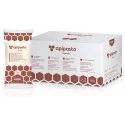 Apipasta with vitamins 15kg
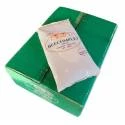 Beecomplet® Spring 14Kg
 Beekeeper suit with round veil
 Oxalic acid 1kg
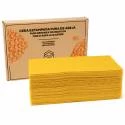 Beeswax Foundation 5kg
 Fresh royal jelly 20g
 Classic honey jar 1kg comb-lines TO77 - Pack of 16 units
 Promotor L Apis 1 litre
Maintenance feed
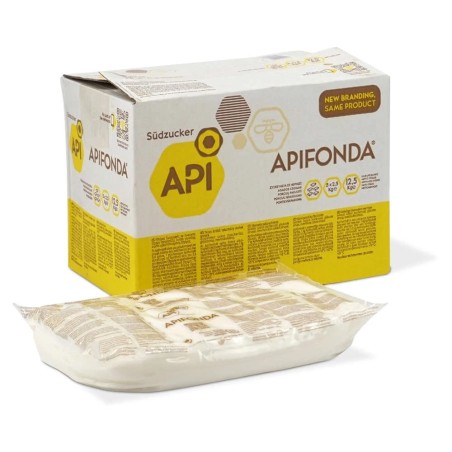
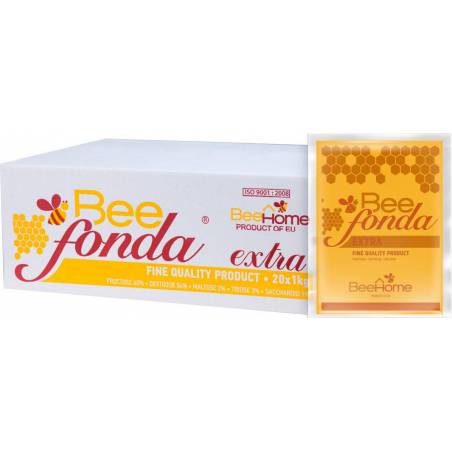
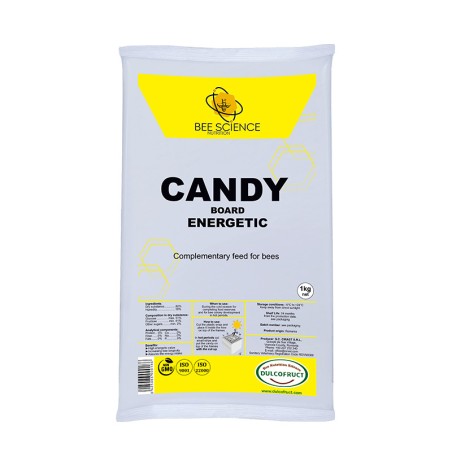
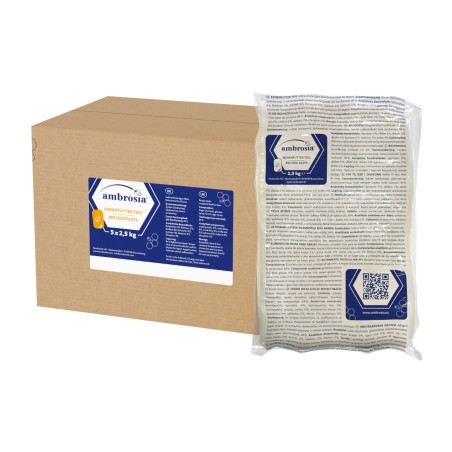
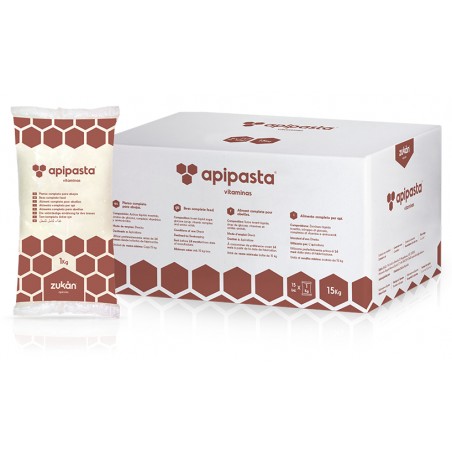
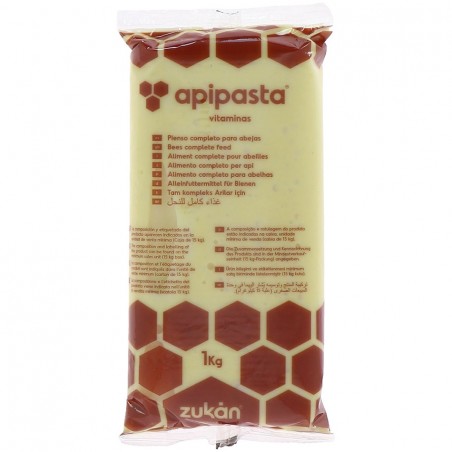
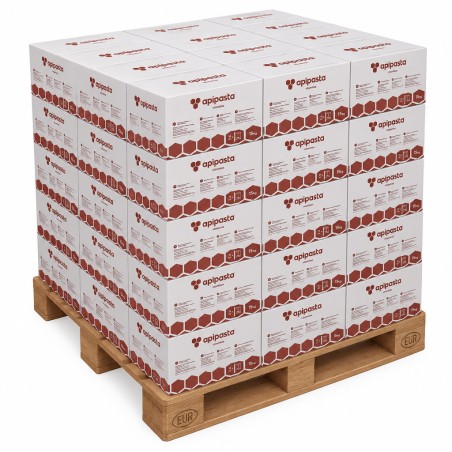
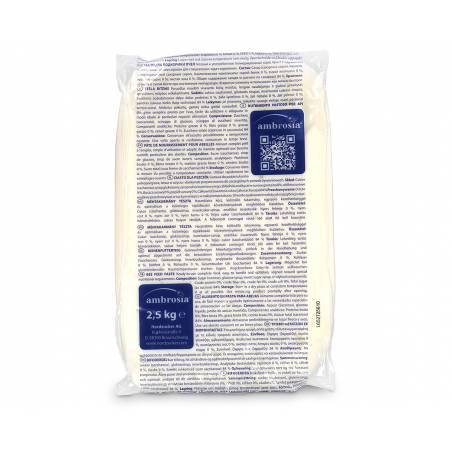
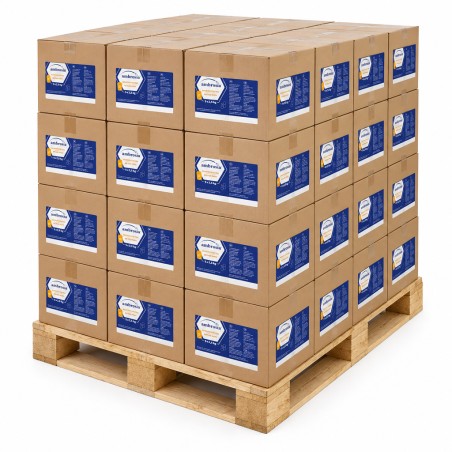
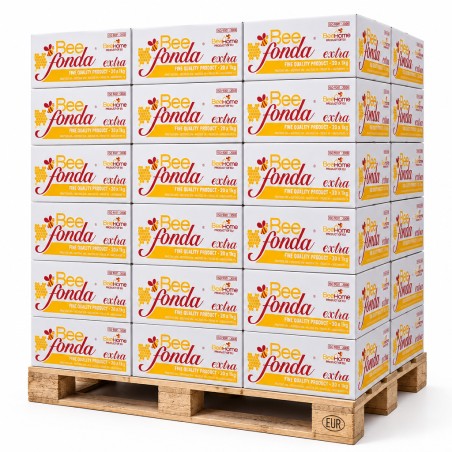
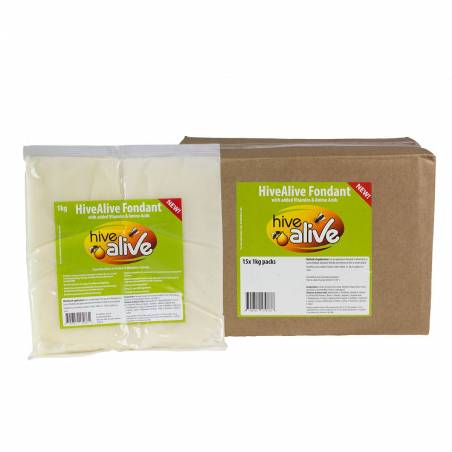
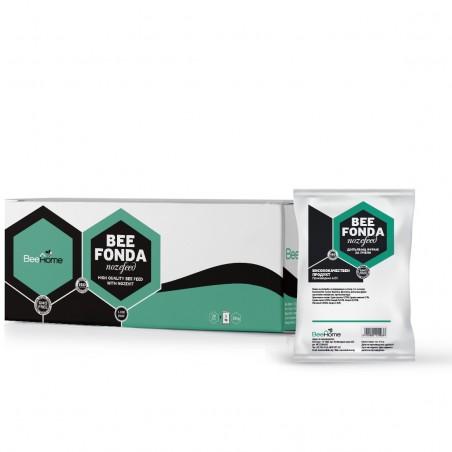
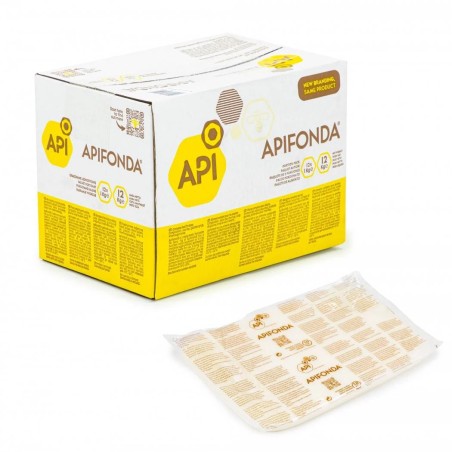
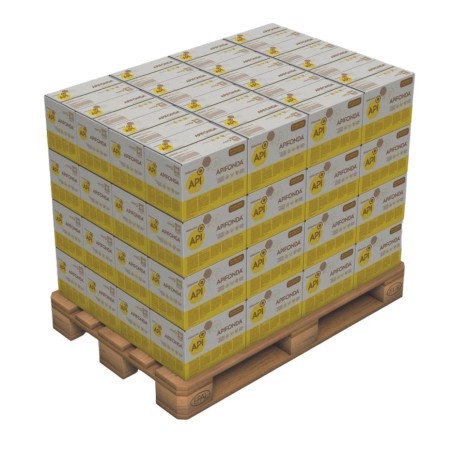
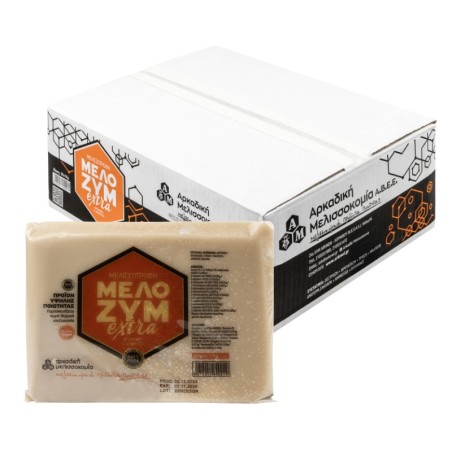
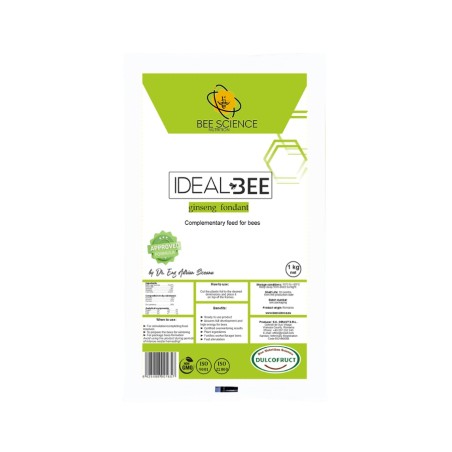
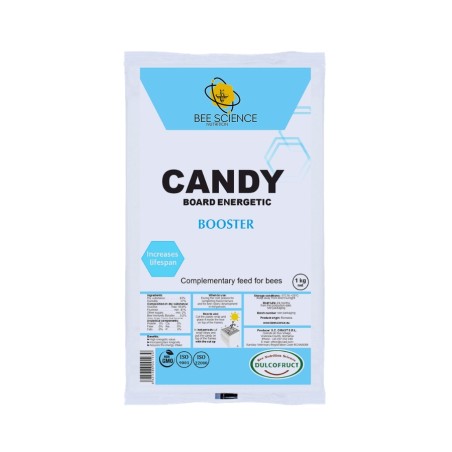
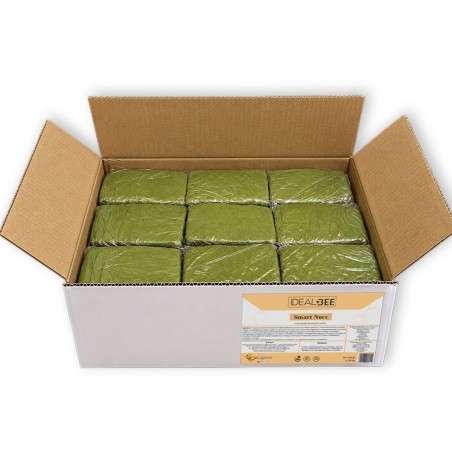
Fondant and candy for overwintering: Apifonda and Ambrosia from European beet sugar, Apipasta recrystallised to 15 µm, inverted-sugar BeeFonda and energetic candy. In 1 kg bags, boxes or full pallets.

When and how to use maintenance feeding
Maintenance feeding isn't about “stimulating just to stimulate”, but about helping the colony meet its needs when not enough nectar is coming in: autumn, winter, droughts or long gaps in flowering. At those times, I usually prefer a solid paste or candy (fondant) over a liquid syrup, especially if it's cold or the colony has little activity. Solid feed provides energy in a more stable way, creates less moisture to manage inside the hive and lets the bees consume it little by little, as long as it's well placed and the colony is strong enough to reach it.
My advice is to choose the paste according to the real state of the hive, not just the price. For pure maintenance, I'd prioritize a stable feed, with low moisture, fine texture, good palatability and HMF control. It's also important to place it close to the cluster, because in the cold a weak colony can starve even with feed just a few frames away. If on top of that there's a shortage of pollen or you want to prepare the wintering better, an enriched paste or one with a moderate protein content can make sense, but I wouldn't use it as a rule in every hive. First you have to look at stores, population, brood, available pollen and the time of year. Good maintenance feeding doesn't replace good management, but it can make the difference between a hive that only just makes it and a colony that goes into the next season strong.
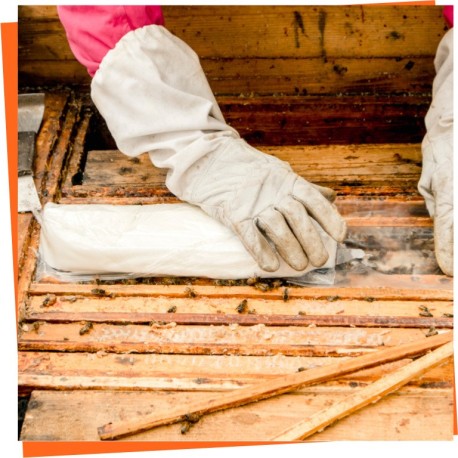
Maintenance feed
The fondants on this page are not the same product under different labels. The base sugar, the crystal size and the temperature they hold up to on the frames all change, and that is what decides which one suits you.
What changes from one fondant to the next
- Apifonda and Ambrosia: European beet, soft fondant. Apifonda is made by Südzucker and Ambrosia by Nordzucker; both start from beet sucrose and come in a 12.5 kg box. Ambrosia declares a maximum of 25 mg/kg HMF on dry matter — the figure worth checking in a feed that will sit inside the hive for months.
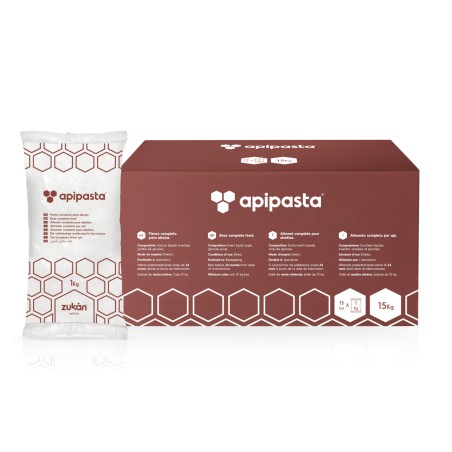
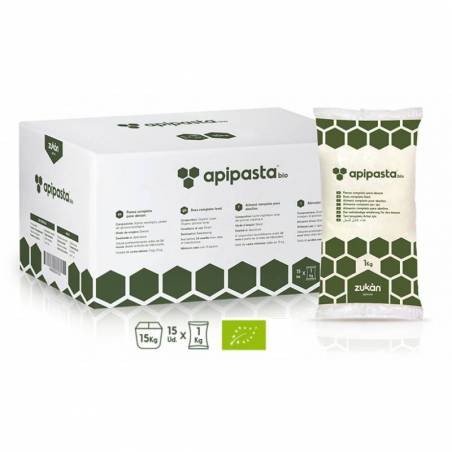
- Apipasta: 15 µm crystal and 10 % water. Zukán recrystallises the sucrose down to an average 15-micron crystal and declares under 10 ppm HMF. At that moisture it neither runs in summer nor sets hard in winter. There is a version with vitamins and free amino acids, and an organic one with batch certificate on request.
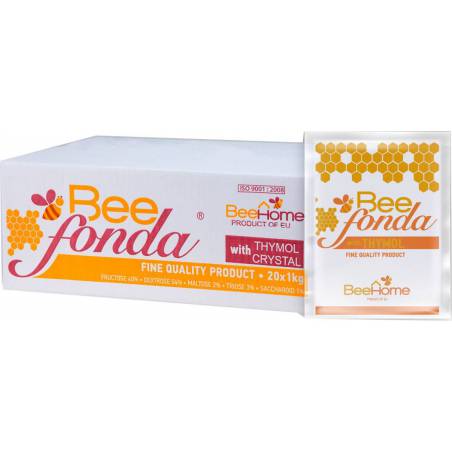
- BeeFonda: inverted sugar, and mind the 25 °C. Lyson starts from already-inverted sugar — 54 % dextrose and 40 % fructose in the thymol version — so the bee spends no invertase breaking it down. In exchange, above 25 °C it liquefies and runs inside the hive: not the fondant to leave on with a heatwave coming. It comes as flat 1 kg patties, and the Mini Extra variant fits a Layens without trimming.
- Energetic candy: semi-solid, 91-92 % monosaccharides. Softer than a classic fondant and with the sugar already split, for a weak colony or weather too cold for the bees to work the feed.
Winter bee feed: the sum that decides the pack size
The expensive question is not which brand, it is how much. As a reference, IdealBee gives 1 to 1.5 kg per colony per month for its ginseng fondant through overwintering. On that range a 12.5 kg box covers about ten colony-months: twenty colonies supported from December to March get through some 100 kg, eight boxes. An 800 kg pallet only starts to pay off at around 160 colonies at the same rate. And the single 1 kg bag is not just for small beekeepers: it is a full ration for a nucleus, and it shows you which colony is eating and which is not.
The real spend does not fall in December. It falls at the end of winter, when the stores run out: February and March kill more colonies than December, and that is when the fondant needs to be on your shelf rather than on order.
Two things on this page that are not fondant
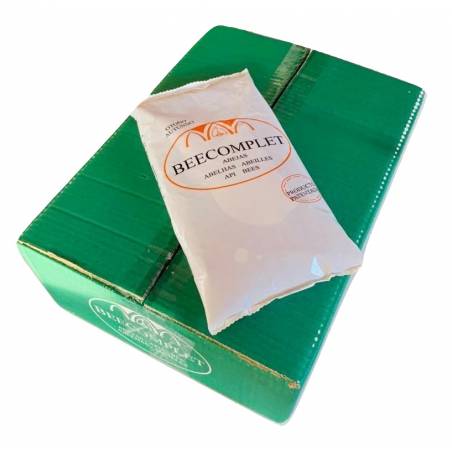
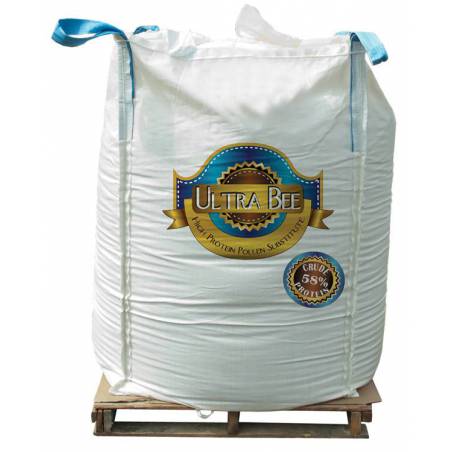
Beecomplet Winter is a syrup, not a paste: 75 % carbohydrates with plant extracts, in a 1 kg bag laid on the frames with just a few small cuts — with many, the bees get in and drown. And Ultra Bee is a pollen substitute with a minimum 50 % crude protein: raw material for making up patties, not maintenance feed. The rest of the protein is in protein feed, the syrups in stimulation feed and the feeders in bee feeders.
What is the difference between maintenance feed and stimulation feed?
The main difference is the objective. Maintenance feed replaces or reinforces energy stores when a colony cannot forage enough; it is often supplied as a low-moisture paste or fondant for gradual consumption. Stimulation feeding mimics a continuing nectar intake to bring brood development forward; it usually uses small, repeated portions of liquid feed, with about 50% sugar and 50% water as a reference for a homemade mix.
Protein does not define stimulation by itself. It should be added only when available pollen is inadequate, using a diet formulated to cover fats and micronutrients as well. In both cases, adjust the programme to stores, colony strength, temperature and objective.
When should I use maintenance feed?
Use it when energy stores are inadequate and natural forage cannot correct the shortage: for example, after a poor autumn flow, during prolonged bad weather or when a colony enters winter with too little food. The decision should be based on hive weight or an inspection of stores, not on the calendar month alone.
In cold weather, the feed must be within the area the bees can reach without leaving the cluster. Also check that the colony has enough bees and that the underlying problem is not disease. Maintenance feed prevents a shortage; it is not intended to stimulate brood or replace correction of other apiary problems.
What are the main ingredients in maintenance feed for bees?
An energy maintenance feed consists mainly of digestible sugars, usually sucrose or a declared glucose-and-fructose formulation, with low moisture to provide a stable texture and gradual consumption. Some products contain a small protein fraction or other nutrients, but not every maintenance feed is a complete diet.
If pollen is also lacking, the formulation must supply protein, fats, minerals and vitamins in suitable proportions. As a technical reference, a complete maintenance diet may contain around 4% total protein; more is not necessarily better. Compare the declared composition and analytical constituents before choosing.
Can I feed bees their own honey?
The best store is the honey the colony keeps in its own combs. If honey has been removed and is to be returned, it should come from that colony or from a source with known bee-health status. Honey from other colonies, an unknown source or the human food chain may transmit disease spores and its smell may trigger robbing.
When safe stores are unavailable or inadequate, use a bee feed with controlled composition and storage. Do not leave honey exposed in the apiary, and avoid feeding while supers intended for marketable honey are on the hive so that the feed does not end up mixed with the crop.
How is maintenance feed supplied to bees?
Fondant and paste are normally placed above the frames, protected by their wrapper with an access opening, close to the area occupied by the bees. As a guide, the feed should be no more than about 10 cm from the brood or cluster so that the bees can reach it without leaving the warm area.
Support it so that it neither crushes bees nor obstructs ventilation, and match the amount to expected consumption. At each inspection, check that the texture remains accessible and that there is no damp, mould or wax-moth damage. Always follow the manufacturer’s directions for use and storage.