
 Apipasta with vitamins 15kg
 Beecomplet® Spring 14Kg
 Beekeeper suit with round veil
 Oxalic acid 1kg
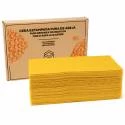 Beeswax Foundation 5kg
 Fresh royal jelly 20g
 Classic honey jar 1kg comb-lines TO77 - Pack of 16 units
 Promotor L Apis 1 litre
Layens Beehives
Layens hives complete and in parts, with a 35 × 30 cm frame and around 68 litres of volume. Plus frames, shallow supers and the special «Castellón» size.
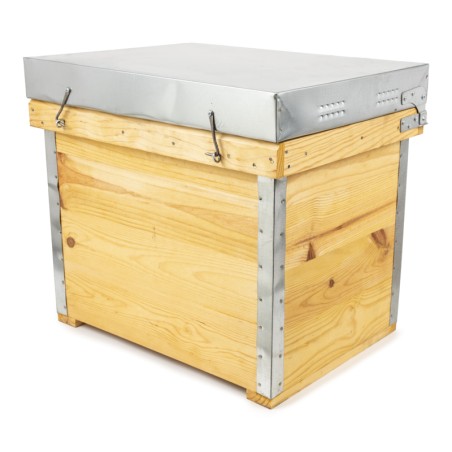
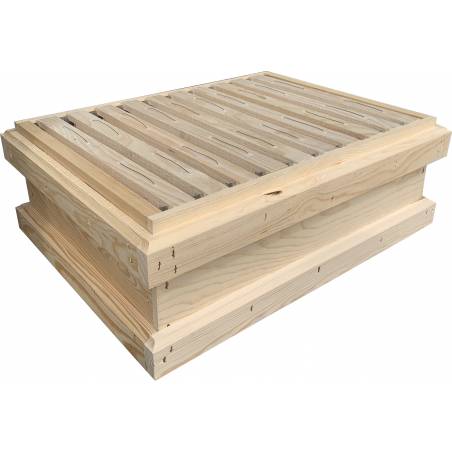
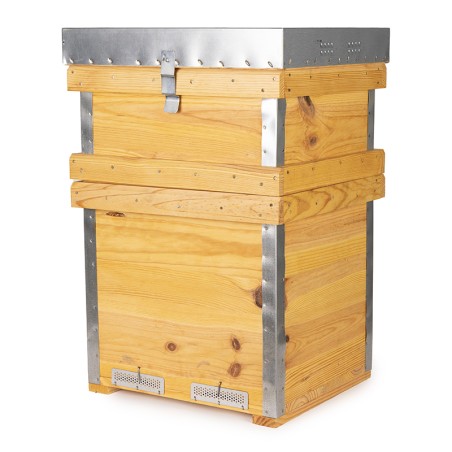
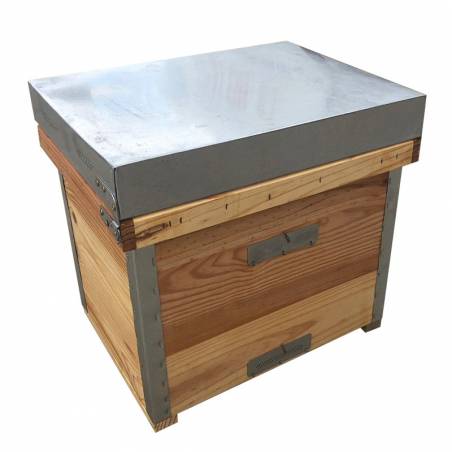
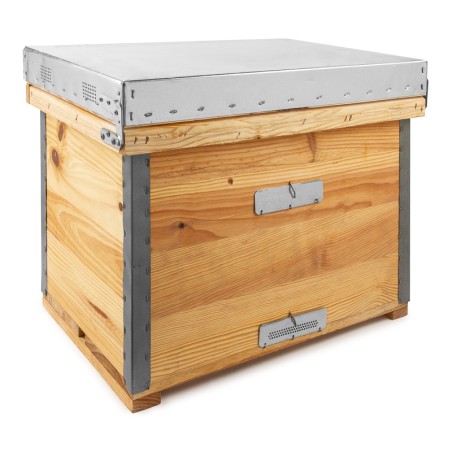
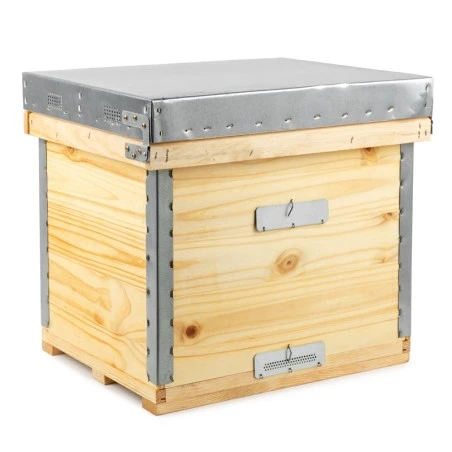
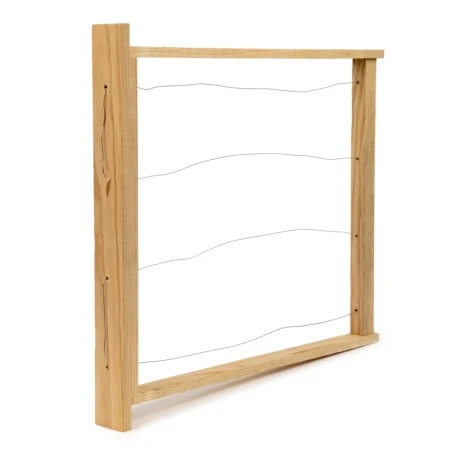
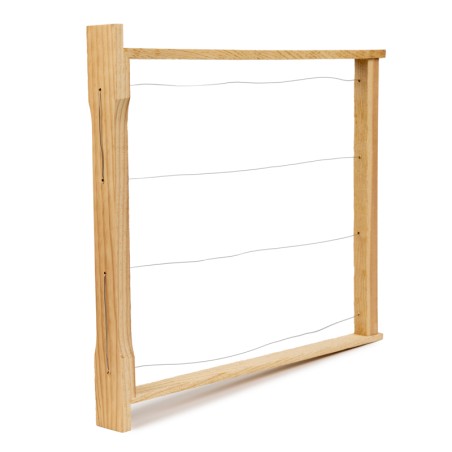
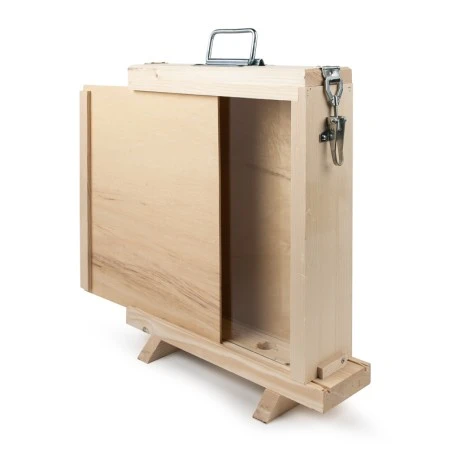
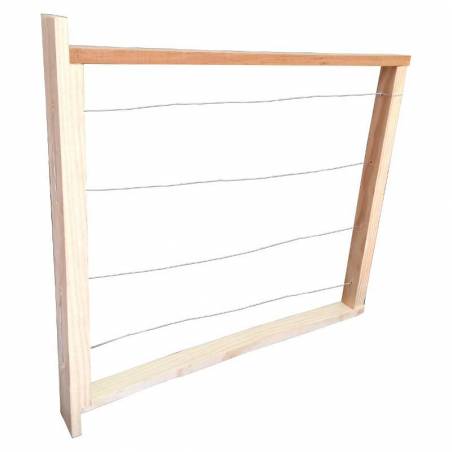
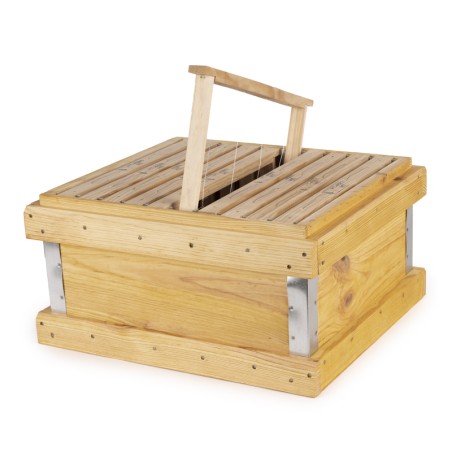
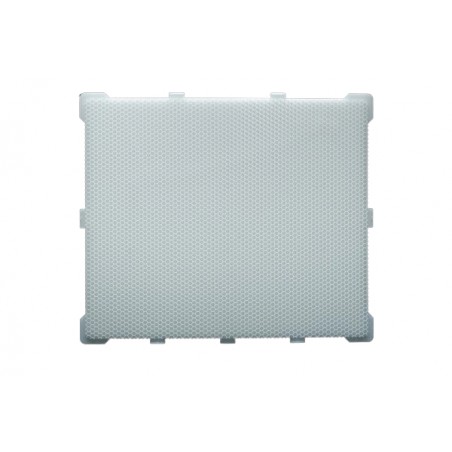
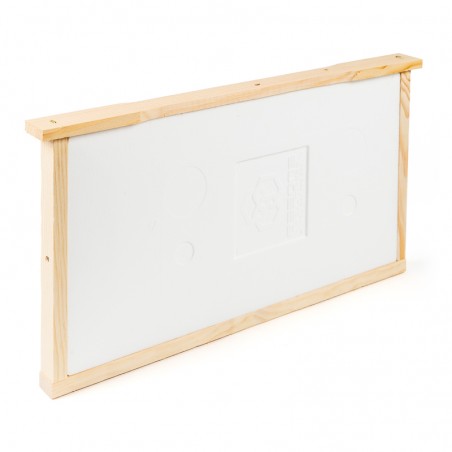
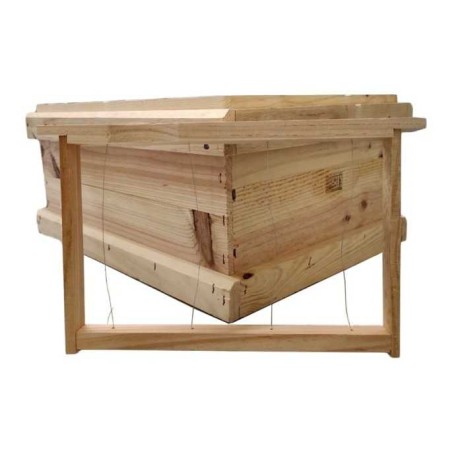

Layens is like that “tried-and-true” tool that many people underestimate, but when used properly, it can deliver great results. The biggest advantage is its ease of management: since it’s horizontal, you don’t have to deal with supers, and inspections go by quickly. For anyone just getting started, that’s a huge plus, because it disturbs the bees less and makes learning simpler.
But, watch out, it’s not a cure-all. Because it doesn’t separate the brood area from the honey area, when you go to extract, you might find frames mixed with larvae—so once you put them in the extractor, you can imagine the mess, you might even end up extracting larvae. Plus, all Varroa treatments end up in the same space as the honey, which carries the risk of residue.
Another thing to bear in mind is that outside of Spain, hardly anyone uses Layens, so finding spare parts or compatible frames can be tougher. It’s also not as modular as a Langstroth or Dadant, both of which are widely used and make life easier if you want to scale quickly or aim for higher honey production.
On top of that, controlling swarming in Layens can be a real headache: because you can’t expand vertically, you have to split the colonies so they don’t get out of hand. Of course, limiting that natural growth affects honey yields. And in spring, if you’re not careful, you’ll notice your bees are eager to swarm because everything’s packed into those 12 frames.
In summary: if you value simplicity, don’t plan on getting huge, and Layens is common in your area (which really helps with sharing experiences and equipment), it can be a good choice. But if your goal is to grow professionally or dive into more intensive production, you might want to consider a vertical (Langstroth or Dadant) and more “international” model. As with anything, it depends on your objectives, budget, and how you prefer to manage your bees. It’s your call!
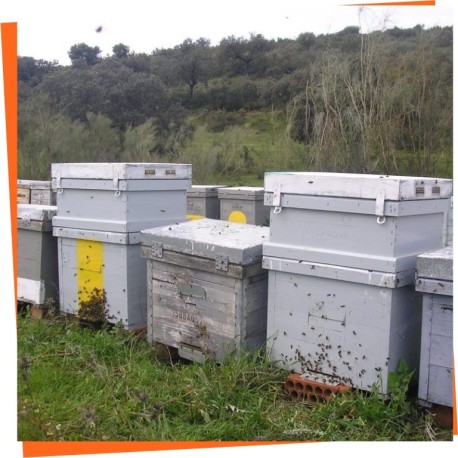
Layens Beehives
The Layens is the most deeply rooted horizontal hive on the Iberian Peninsula. Its frame measures 35 × 30 cm and the body comes to around 68 litres — more volume than a Langstroth or a Dadant, all in a single box.
What it gains and loses against the vertical
It gains in simplicity and transport. There are no supers to handle: you work horizontally, the initial investment is lower and it takes less storage, because there are no combs sitting outside the hive waiting for a season. For own use and apiaries that move, it is hard to beat.
It loses on separation. Brood and honey share the space, which complicates treatment traceability and forces you to harvest at exactly the right moment. It is less flexible for queen rearing and splits, and with a fixed volume you have to make room in time or the colony finds itself with nowhere to go.
Frames and the size to watch
The standard frame starts at €1.29. But watch the special "Castellón" (36) size, at €1.25: it is a regional variant that is not interchangeable with the common Layens. Before ordering foundation or spares, confirm your exact size — with Layens, saying "Layens" is not enough.
There are also Layens shallow supers for anyone who wants to separate some honey without changing system, and models with a screened floor, which is what allows varroa counting without dismantling.
If you are deciding the system from scratch, the full comparison with Langstroth and Dadant is in hives.
How many bees can a Layens hive hold?
The Layens design does not specify a fixed number of bees. The colony size varies greatly depending on the season, the age and quality of the queen, the food supply, the health of the colony and its strength. Two Layens hives of the same size may have very different colony sizes.
To assess a colony, it is more useful to count the frames actually covered by bees, observe the extent and continuity of the brood, and check the reserves and available space. General figures of tens of thousands of bees serve only as an order of magnitude at the peak of the season; they are not a guaranteed capacity of the hive nor a sufficient criterion for deciding on an expansion or a split.
What are the dimensions of a Layens frame?
As a guide, the usable foundation area of a standard Layens frame is around 35 × 30 cm. The outside frame dimensions, top-bar length and rebates can vary by manufacturer, and regional variants also exist, including formats used in Castellón.
Before buying frames, foundation, spacers or a honey extractor, measure the top bar from end to end, the overall height and the usable internal area. A small difference may prevent the frame from sitting correctly or fitting in the basket. The name ‘Layens’ is a useful guide, but commercial compatibility must be confirmed against the dimensions of the specific product.
What is a Layens hive and what are its main features?
The classic Layens hive is a horizontal hive: the brood chamber and honey stores are organised within a single body of deep frames, and its standard volume is fixed. It is widely used in Spain and is well suited to operations that value a compact hive and simple logistics, particularly in transhumance.
Its main advantage is that it uses a single frame size within the hive body. On the other hand, it offers less flexibility than a vertical hive when it comes to adding space, separating brood and honey, or carrying out certain management tasks. When choosing this hive, it is important to check the number of frames, closures, ventilation, base and dimensions, as ‘Layens’ includes versions with 10, 12 and 14 frames, as well as special designs.
How many frames does a Layens hive with a fixed bar have?
The most common setup is 12 frames, but that's not the only option. There are also 10-frame Layens, 14-frame models and special versions. 'Fixed bar' describes the separation or support system between frames, not a universal capacity.
Always check the specific reference as the number of frames affects the available volume, the loaded weight, the separator, the feeder and the transport equipment. When replacing parts the head length, height and frame width must match; just because two hives have 12 frames doesn’t automatically mean their parts are interchangeable.
What materials are used in Layens hives?
Most complete Layens hives are made of wood, but the species, thickness, auxiliary boards and fittings vary depending on the model. They can also include sheet metal on the lid, metal fastenings, ventilation grids or plastic parts.
To compare, it's not enough to just read 'wood': check wall thickness, joints, exterior protection, base, lid, ventilation and the possibility of repairing parts. Boards like plywood or fibre don’t equate to solid wood and need their own description. Any paint or protective coating should be applied according to the material and, unless otherwise documented, only on exterior surfaces.
What are the differences between a Layens hive and a Langstroth or Dadant?
The classic Layens grows horizontally within a body of nearly fixed volume; Langstroth and Dadant grow vertically using bodies or supers. In Layens, brood and honey can share the same type of frame. In Dadant, deep brood frames and medium supers are usually used; in Langstroth, there’s more interchangeability between elements of the same format.
The choice affects how you expand space, harvest, renew wax, transport and choose an extractor. There’s no one system that’s best for everyone: it’s wise to prioritise the material available in your area, your management style, how much weight you can handle and future compatibility. Don’t mix frames or components just based on the model name.
What specific care does a Layens hive require?
Since it has a horizontal body and fewer expansion options, you need to keep an eye on the free space, blockage of the nest by stores, and signs of swarming. During transfers, you have to compress and secure the frames properly, maintain sufficient ventilation, and check closures and the bottom.
The rest of the maintenance depends on the material and the colony: protect the exterior of the wood, check for moisture and deformations, gradually renew the wax and carry out health checks. It doesn’t need to be opened more often just because it’s Layens; the inspection frequency should depend on the season, the colony’s strength, and the goal, avoiding unnecessary handling.
Is the Layens hive suitable for beginners?
It can be if it's the main system in your area and you have access to swarms, frames, wax, extractors and compatible training. Working with a single body makes some tasks easier and avoids handling supers, but beginners need to learn how to manage horizontal space and distinguish between brood, stores and honey frames.
The best choice is the one you can consistently maintain over the years. Before deciding, seek local guidance and compare weight, spare parts availability, migratory beekeeping possibilities and extraction methods. Starting with two or more hives of the same format makes learning easier; mixing Layens, Langstroth and Dadant right from the start usually complicates the equipment and management.
Can the capacity of a horizontal Layens hive be increased?
Only if the model is designed for it. The classic Layens operates with a fixed-capacity body; some systems include supers or specific accessories, but pieces should not be improvised by removing parts, modifying recesses, or placing a box that alters the bee space.
Before expanding, confirm that the hive, super, frames and the separator are compatible according to the manufacturer. If the body is congested and the model does not allow extension, management options may include reorganising space, removing honey frames, or carrying out a planned split. The decision depends on population, brood, reserves, season, and the availability of a queen or viable cell.
Which is better to choose: a 12 or 14 frame Layens?
The 14-frame model offers a larger fixed volume and can delay space shortages in strong colonies, but it is also heavier when loaded and takes up more space in transport. The 12-frame model is the most common configuration and usually facilitates standardisation of trailers, spare parts and handling. There are also 10-frame versions for specific needs.
More frames do not automatically mean more bees or more honey. Choose according to the usual strength of the colonies, type of flowering, frequency of inspection, weight you can handle and available materials. Also check the dimensions: two Layens with different capacities can use compatible frames, but this should not be assumed without checking the specifications.