-
Beehives
- Complete beehive
- Accessories
-
Nuc hives
- Nucs by format
- With bees & mating
- Spare parts
-
Bee equipment
- For the apiary
- For the beekeeper
-
Clothing
- Clothing Accessories
-
Beeswax
-
Pure beeswax
- Beeswax and foundation
- Beeswax foundations
- Melting and rolling beewax
-
Pure beeswax
-
Bee feed
- Accessories and source materials
- Utensils
-
Bee health
- Varroa Treatments
- Diseases control
- Nutraceuticals
-
Extraction and bottling
- Before extraction
- Honey extraction
- After extraction
-
Bee pollen
- Harvest
- Indicted
-
Honey packaging
- Flasks per utility
- Flasks by size
- Other packaging
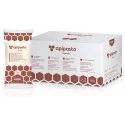 Apipasta with vitamins 15kg
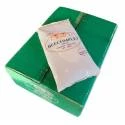 Beecomplet® Spring 14Kg
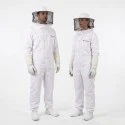 Beekeeper suit with round veil
 Oxalic acid 1kg
 Beeswax Foundation 5kg
 Fresh royal jelly 20g
 Classic honey jar 1kg comb-lines TO77 - Pack of 16 units
 Promotor L Apis 1 litre
Bee suits
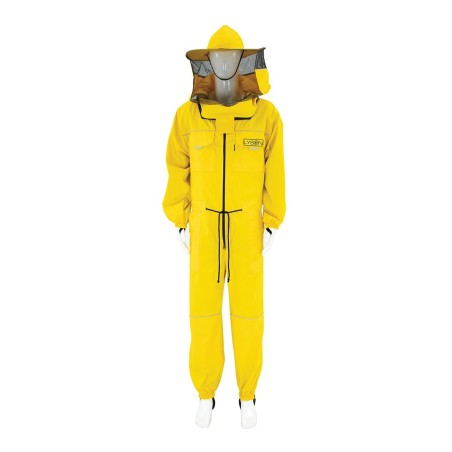
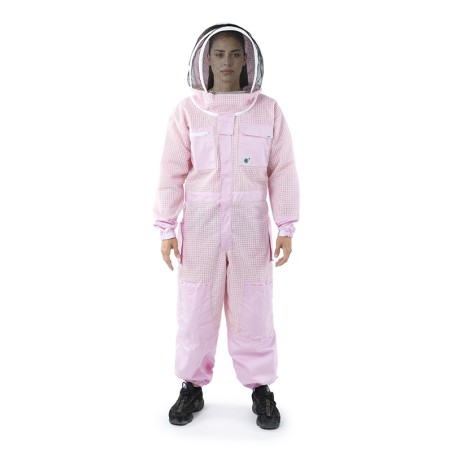
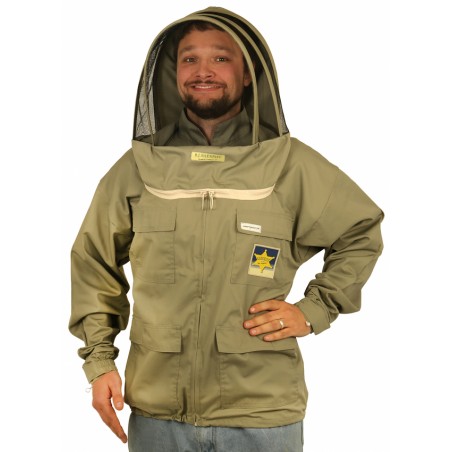
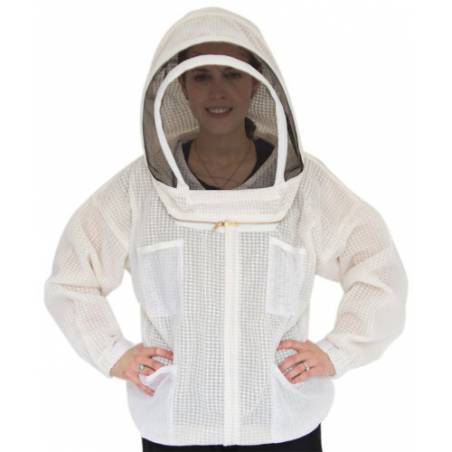
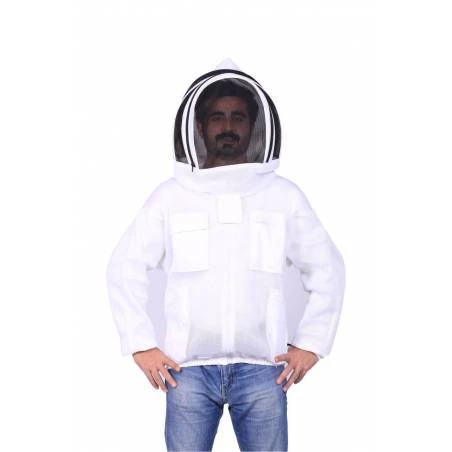
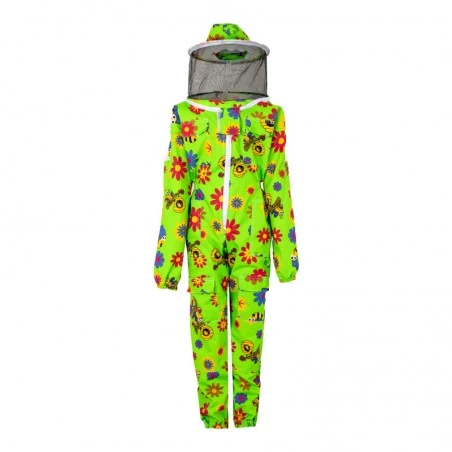
Beekeeping suits from €16.95 to €425: trousers, jackets and full suits, in cotton, double polyamide and ventilated fabric, with round, square or fencing veil.
Brand
Glove and suit material
Price
-
€12.00 - €370.00
How to choose the beekeeping suit
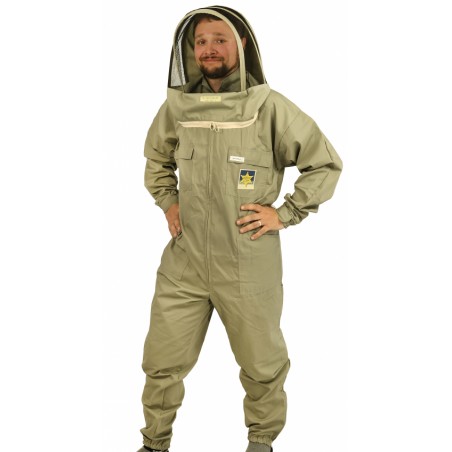
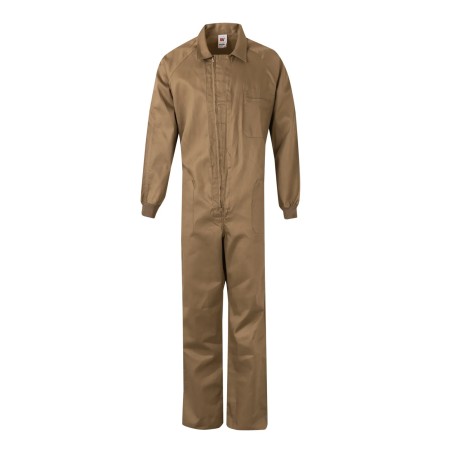
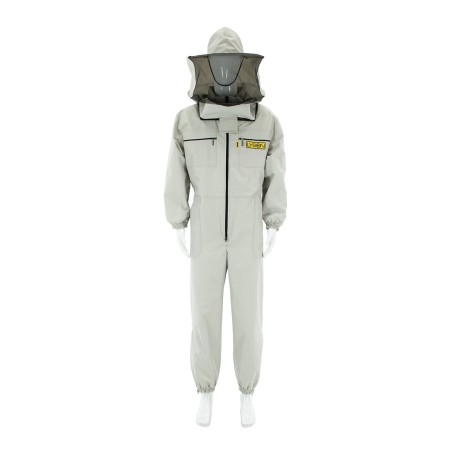
A beekeeping suit isn't chosen just for “not getting stung”. It's chosen for the balance between protection, comfort, ventilation and freedom of movement. To start with, I usually recommend a full suit over a smock, because it closes better at the ankles, waist, wrists and neck, which are the points where bees most tend to sneak in. If you work few hives and in areas that aren't too hot, a simple cotton or cotton-polyester suit can be enough. Cotton is usually more pleasant and breathable, although when you sweat a lot it absorbs moisture and can become heavy. Fabrics with polyester or polyamide usually dry faster and stand up to use well, but it's worth checking that the design ventilates well.
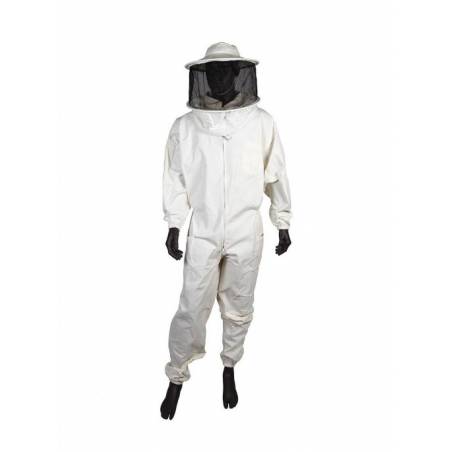
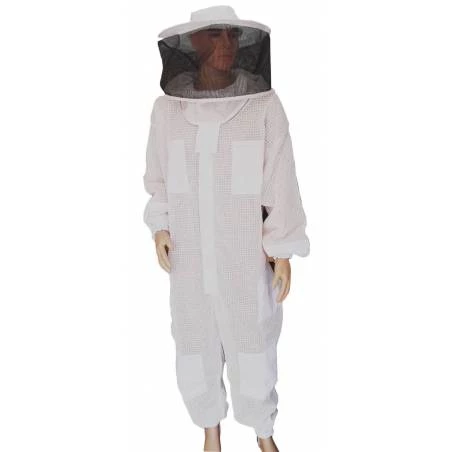
My advice is not to look only at the thickness of the fabric. There are details that matter much more: reliable zippers, velcro that closes well, a veil with good visibility, snug cuffs, a comfortable waist, well-protected ankles and strong seams. The round veil gives good separation from the face and is usually comfortable; the fencing type offers very good frontal visibility and is practical for working with precision. If you inspect many hives in summer, I'd go for a ventilated suit without hesitation: working in the heat makes you rush, make mistakes and disturb the hive more. And here I'll take a clear stand: I wouldn't buy the cheapest suit if you then feel uncomfortable or unsafe. A good suit doesn't make you a better beekeeper, but it lets you work more calmly, more slowly and with fewer mistakes. For velutina or nest removal, I'd use specific protection, not normal beekeeping clothing.

Bee suits
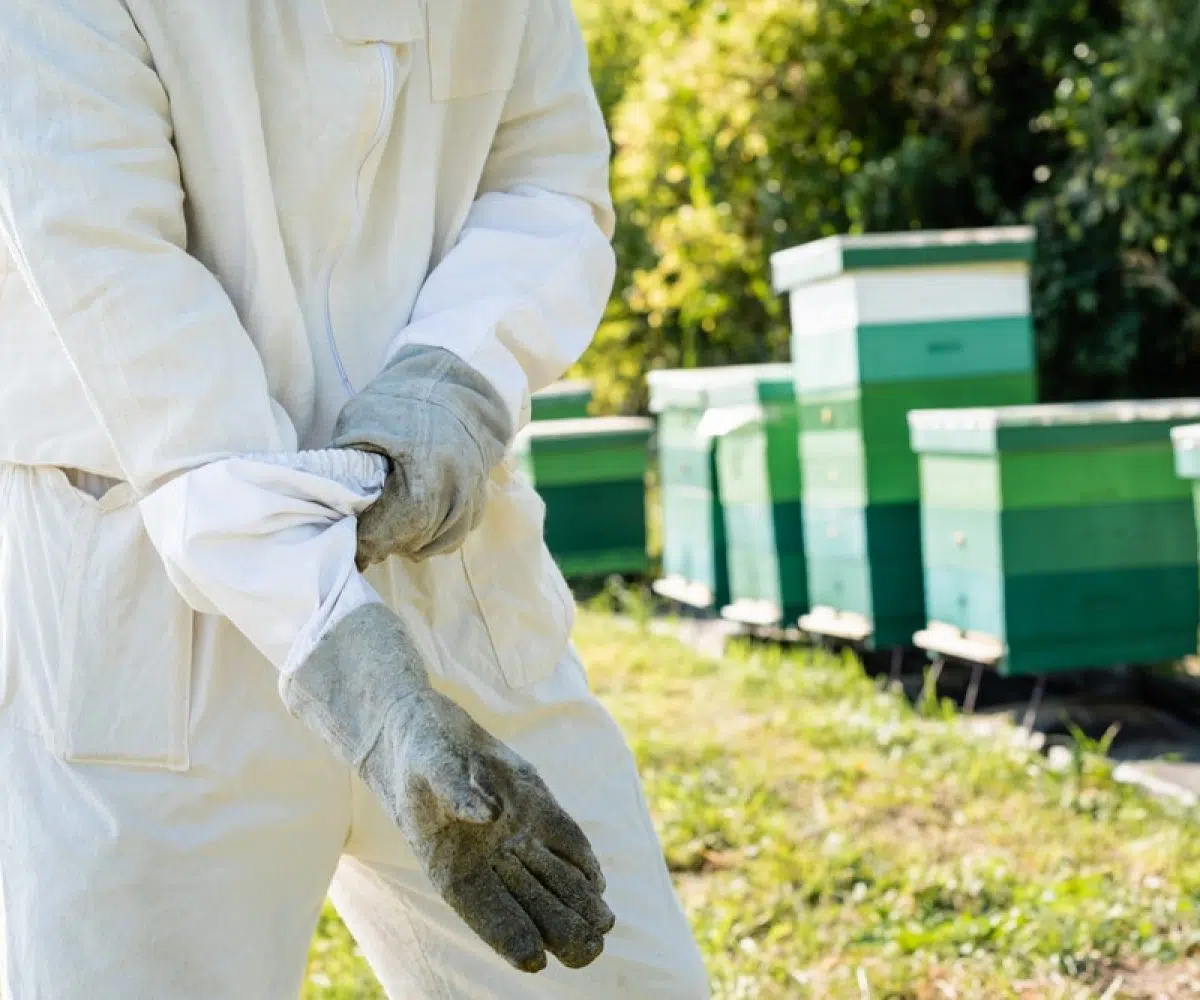
What decides here is not the thickness of the fabric: it is where it closes. Most stings that suited beekeepers take come in at the wrists, the ankles and the join between veil and collar. Before looking at the price, look at those three points.
How much coverage you need
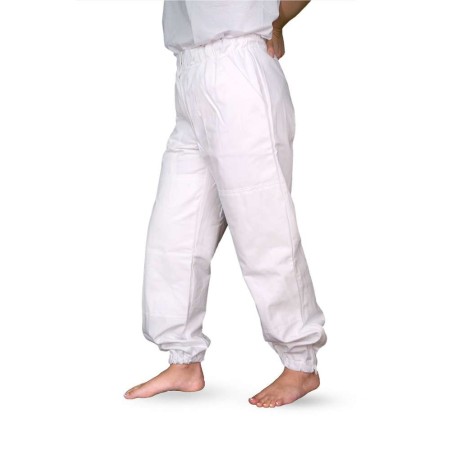
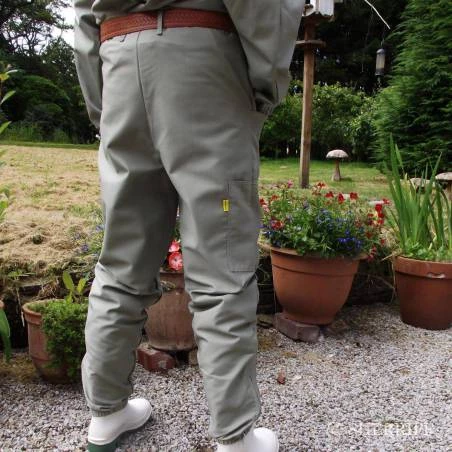
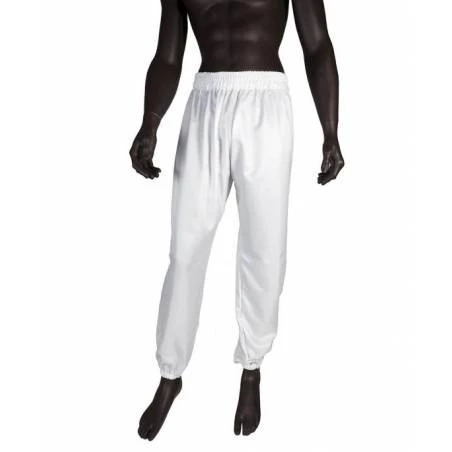
- Trousers on their own (from €16.95) — for anyone who already has a jacket or only wants to replace the bottom half.
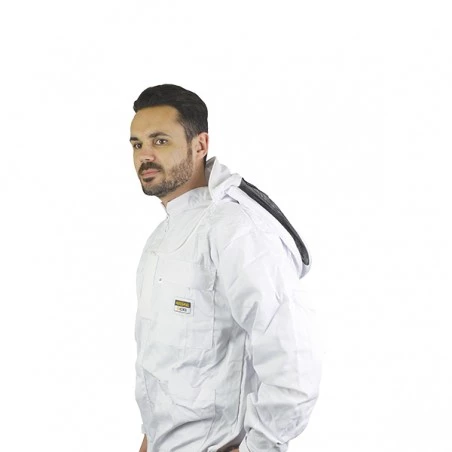
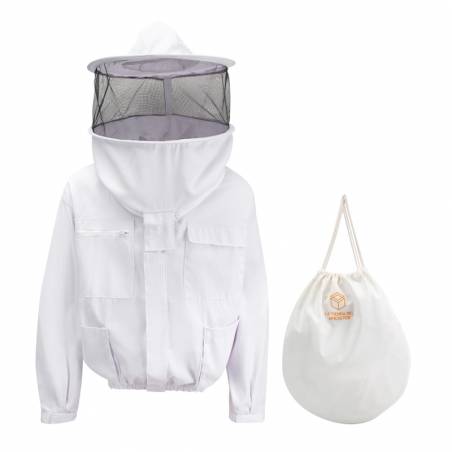
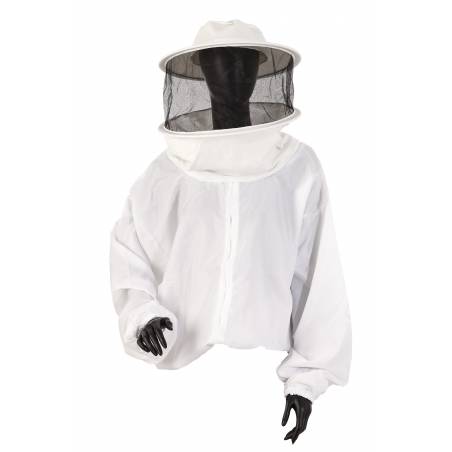
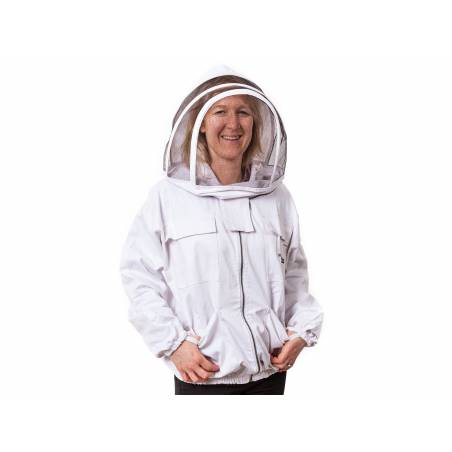
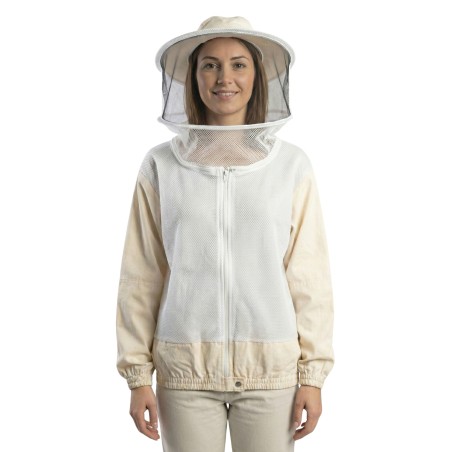
- Jacket (from €28.50) — covers from the waist up with an integrated veil. Quick on and off, and what most people use for a short inspection.
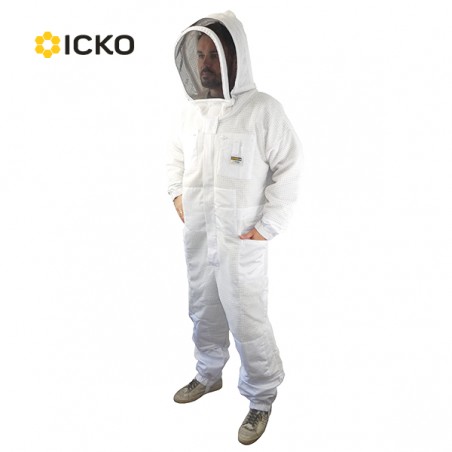
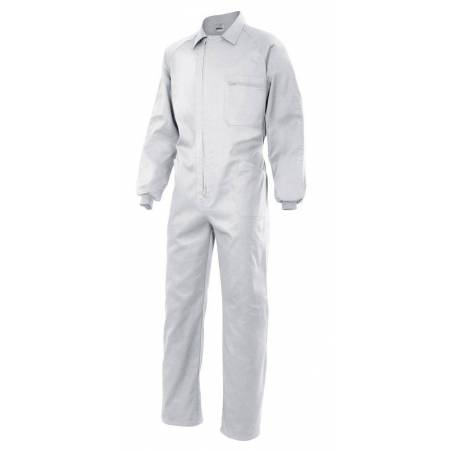
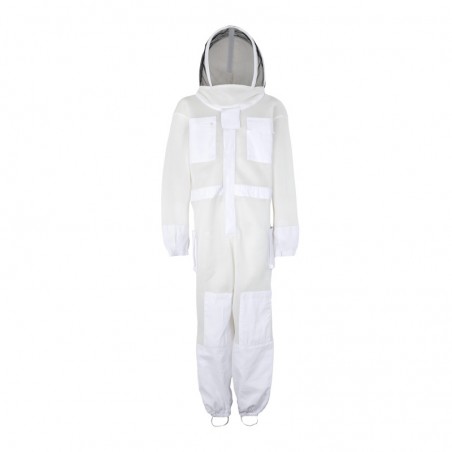
- Full suit (from €27.95 in cotton, €42 in polyamide) — one piece, no join at the waist. Worth it if you will be out for hours or the colony is edgy.
The fabric matches the temperature, not the safety
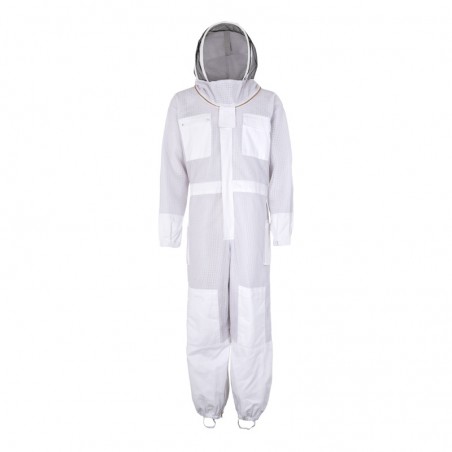
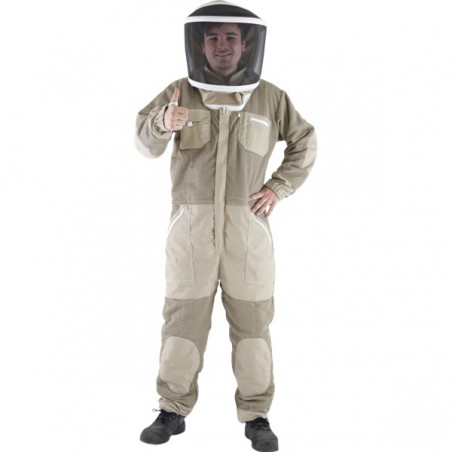
Cotton is the classic: cheap, washable and cool in the shade, but it soaks with sweat. Double polyamide holds up better and dries faster. And ventilated suits (€49.95 to €199.75) use a three-layer mesh that lets air through. None of the three makes you immune to stings: they change the comfort and how long you can work, not the guarantee.
Choose the veil by visibility
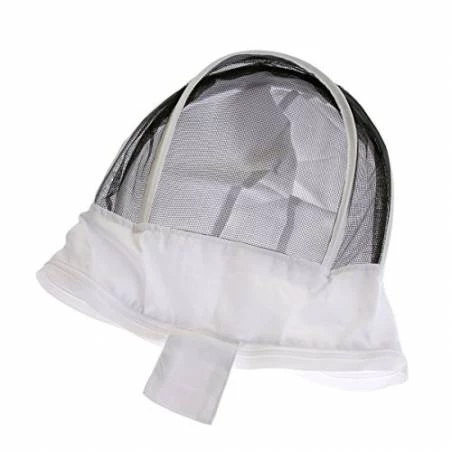
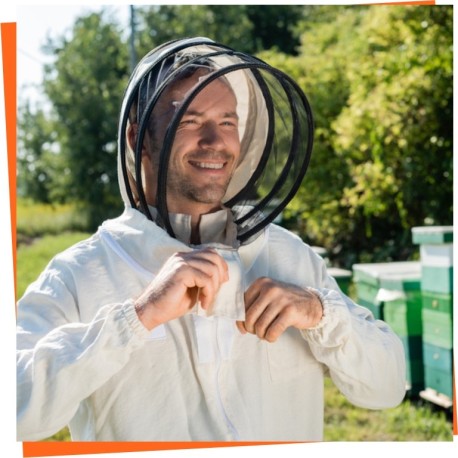
The round one gives a full field of view and holds the mesh well away from the face. The square is more compact and gets in the way less between supers. The fencing veil is rigid, does not drop onto the face and is what almost every ventilated suit carries. They are sold separately in veils and accessories, from €8.90.
Special cases
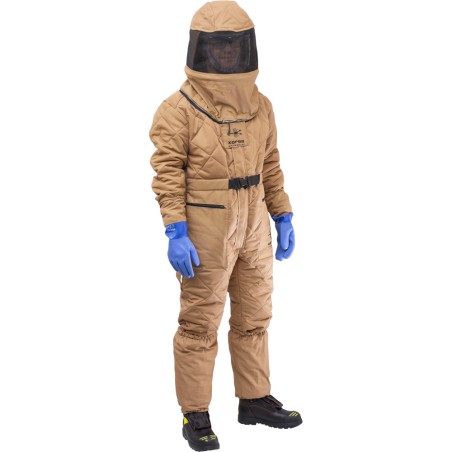
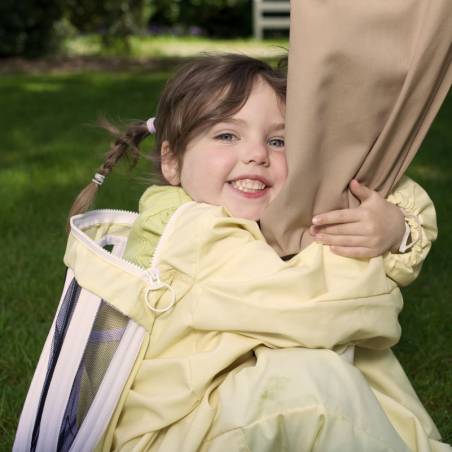
If you work under Asian hornet pressure, an ordinary beekeeping suit is not enough: there are specific anti-velutina suits from €369.95, and the jump in price has a concrete reason. For children there are junior sizes, and the outfit is not complete without boots that let you close the trouser hem.
What is a beekeeping suit?
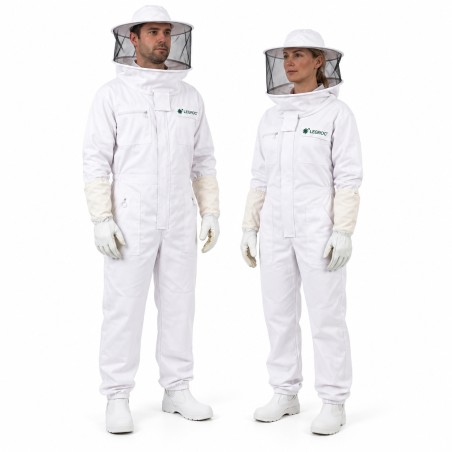
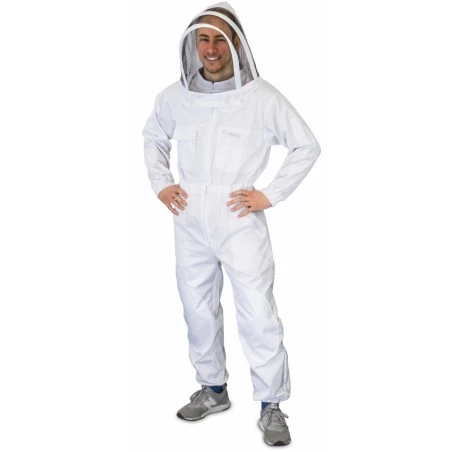
A beekeeping suit is a specialised garment designed to protect the beekeeper from bee stings while working the hives. These suits cover the whole body and are made of materials the bees cannot easily pierce with their stings. They usually include a mesh or screen around the head and face, allowing visibility while protecting face and neck.
Suits should always be worn with protective gloves to cover the hands, together with gaiters and high boots to protect the ankles and feet.
Beekeeping clothing varies in design, but all of it aims to give maximum protection against stings.
Why is the beekeeper's suit white?
The beekeeper's suit is white for two main reasons:
How bees see: Bees cannot see the colour red and are sensitive to colours in the ultraviolet, blue and green range. They perceive white or light colours as less threatening than dark ones. The bees' natural predators, such as bears and badgers, tend to be dark, so a white suit reduces the chance of being read as a threat.
Temperature control: White reflects sunlight rather than absorbing it, which helps keep the beekeeper cooler under a strong sun. That matters particularly in beekeeping, since the work is often done in hot weather and a full suit can be fairly thick and warm.
So the beekeeper's suit is white both to minimise the threat the bees might perceive and to keep the beekeeper cool at work.
What is the beekeeper's suit called?
The garment the beekeeper wears goes by several names depending on where you are and on which part of it you mean.
Bee suit or beekeeping suit is the everyday term for the full-body garment. You will also see coverall or overall, which stress that it covers you from ankles to neck in one piece.
When only the upper half is meant — the part with the veil attached — the usual word is beekeeping jacket or bee jacket. And the mesh that protects the face is the veil, which may be round (a fencing veil) or square.
In Spanish-speaking countries you will hear buzo de apicultor in Spain and much of Latin America, and chamarra de apicultor for the jacket in some regions.
What kind of fastenings do beekeeping suits have?
Beekeeping suits are designed for maximum safety and comfort. They usually feature high-quality zips, combined with flaps and hook-and-loop fastenings to prevent accidental openings. They also have elastic at the wrists and ankles for a snug fit that keeps bees from slipping in.
Does the suit include gloves and footwear?
Generally the beekeeping suit is sold separately, so that each beekeeper can choose the gloves and footwear that best suit their needs and preferences.