
For routine apiary work, start with protective clothing and gloves, a smoker with suitable fuel, a hive tool, a bee brush, the hive and its frames — and, above all, sound judgement. This is a practical starting list, not a complete safety checklist. Add the kit needed for safe working and colony health from the outset; specialist equipment can follow when you know what you will use.
The basic kit for your first inspection
| Equipment | Purpose | What to look for |
|---|---|---|
| Veil and protective clothing | Reduce exposure to stings, especially around the face and neck. | Secure closures, clear vision and a fit suited to your climate and work. |
| Gloves | Protect your hands while handling frames. | Fit, dexterity, cuff coverage and ease of cleaning; no glove is sting-proof. |
| Smoker | Help manage the colony’s defensive response. | Sound construction, reliable bellows and a protective guard. |
| Hive tool | Separate frames and boxes stuck together with propolis. | A comfortable grip and controlled leverage. |
| Bee brush | Move bees gently when necessary. | Soft bristles and a design you can keep clean. |
| Hive and frames | House and manage the colony. | Compatible dimensions and a system you understand. |
Equipment at a glance
- gloves;
- bee suit and veil;
- hive tool;
- books and training;
- smoker;
- hive components;
- bee brush;
- sound judgement, the most important tool of all.
Beekeeping gloves
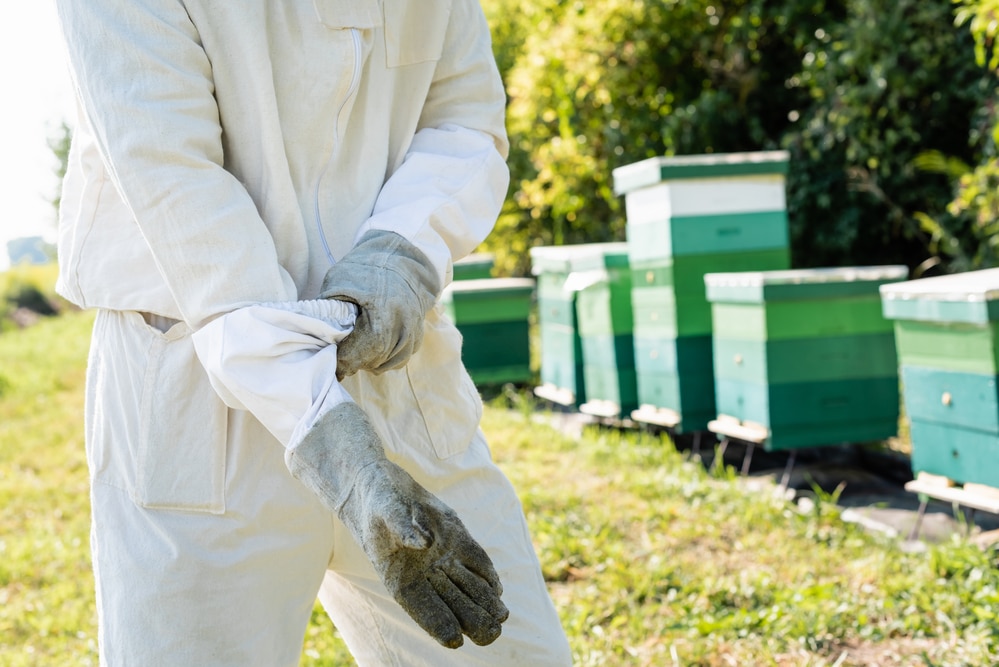
Beekeeping gloves come in leather, nitrile-coated fabric, rubber and other materials. Leather gloves can feel reassuring, while nitrile-coated beekeeping gloves offer a washable outer surface. Do not confuse these thicker work gloves with thin disposable nitrile gloves: they differ considerably in feel, construction and protection.
Choose a fit that lets you handle frames confidently, with cuffs that close the gap at your wrists. Gloves should be clean and free from strong odours; neither thick gloves nor disposable ones make your hands sting-proof.
Clean reusable gloves as their manufacturer recommends and let them dry fully before storing them. Leather is difficult to clean thoroughly, so consider hygiene as well as comfort. Keep a clean spare pair available and avoid carrying contamination from one colony to the next.
TIP: Look after your gloves and replace damaged pairs. Thin disposable gloves can be useful for hygiene and dexterity, but offer limited protection from stings. Household rubber gloves are not identical to bare hands; their suitability depends on fit, condition, cuff coverage and how they are cleaned between colonies. Ask an experienced beekeeper to help you choose a sensible starting combination.
A bee suit or jacket with a veil
A bee suit may make you feel like a superhero, but it does not make you invulnerable. Choose clothing that covers you properly and allows you to work calmly, without leaving gaps through which bees can enter.
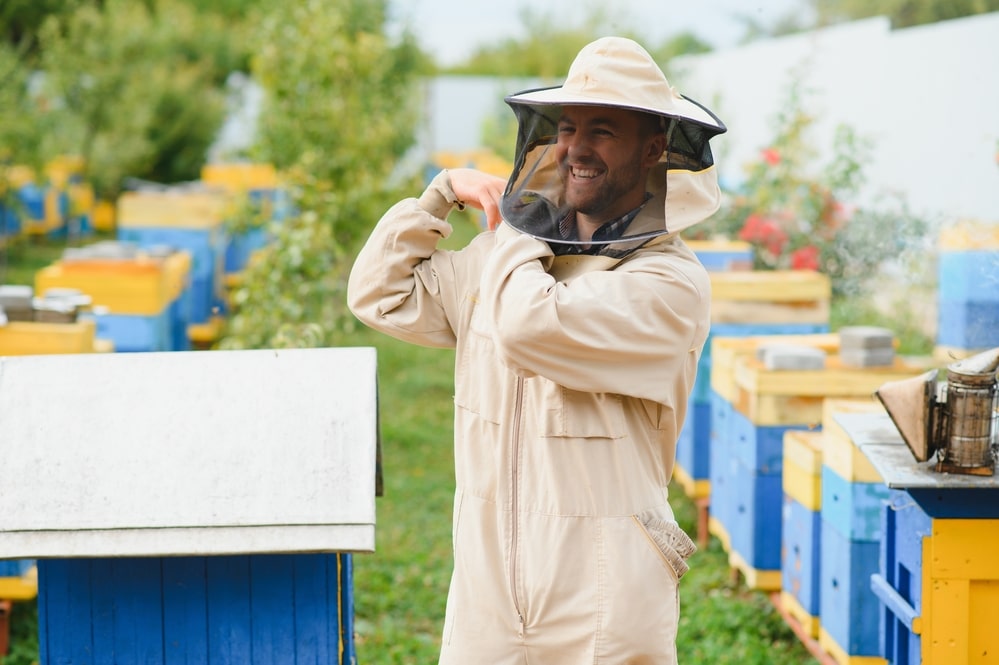
Bee suits are made from cotton, synthetic fabrics and ventilated mesh constructions. Fit, coverage and suitability for your climate matter more than the label alone. Follow the washing instructions, inspect seams and zips, and replace damaged fabric or mesh.
A beekeeping veil may be round, fencing-style or another shape. Choose one that gives you clear vision, stays away from your face and fastens securely to the rest of your clothing.
Light-coloured protective clothing is a practical choice. Wear secure, comfortable footwear and close the gaps at your ankles and wrists. Loose fabric should allow movement without catching on equipment or pressing the veil against your face.
TIP: Heavy everyday winter clothing is not a substitute for suitable beekeeping protection, especially in hot weather. Plan water and cooling breaks, work in cooler conditions where possible, and move safely away from the bees before opening protective clothing. If you feel faint or weak, stop work and get to a cool place.
The hive tool
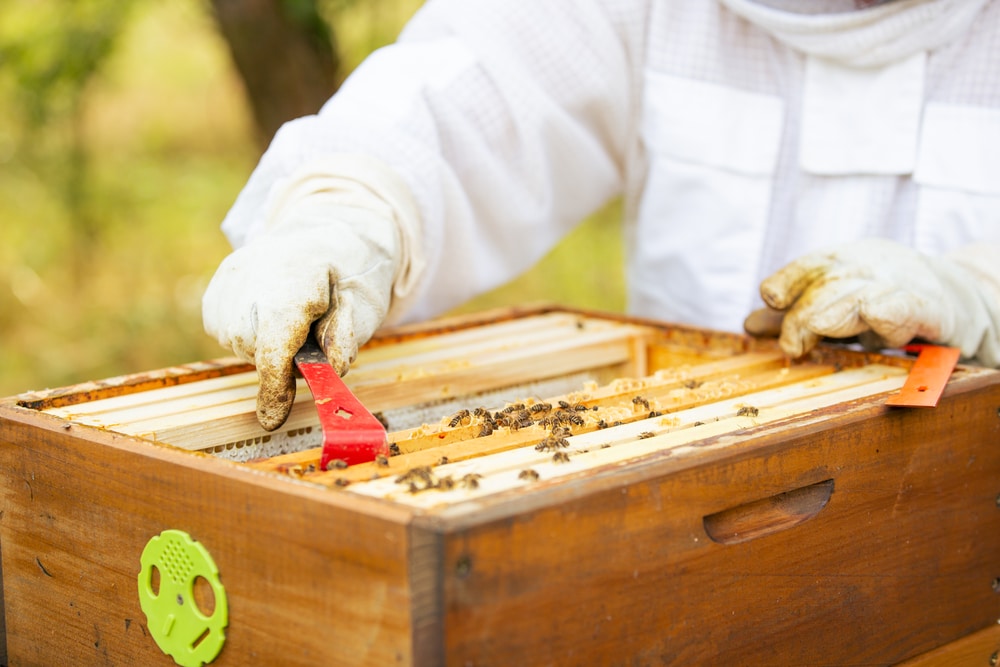
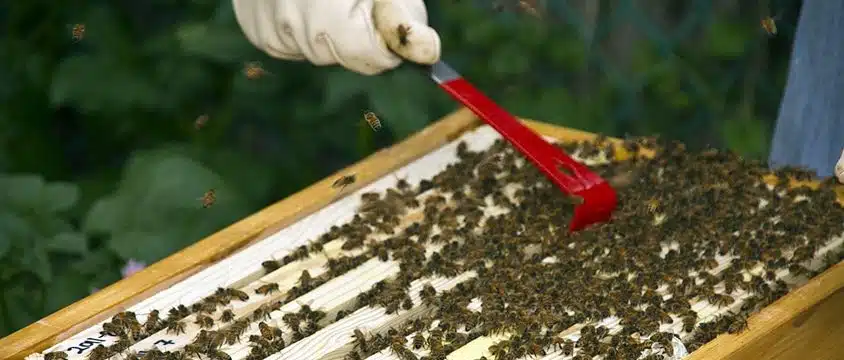
The hive tool is wonderfully simple — and surprisingly good at disappearing just when you need it. Give it a regular place in your kit so that an inspection does not begin with a search through the grass.
Use it to separate propolised hive components, loosen frames and scrape away unwanted deposits. Flat and hooked designs suit different hands and hive arrangements. A sound tool should last well if it is kept clean and used carefully. As for long summer sessions, pack drinking water; beer is not a rehydration strategy.
TIP: Check the blade length, grip and leverage before buying. The aim is to loosen components with controlled movements, not to force them apart, damage frame lugs or crush bees. Learn where to place the tool from someone familiar with your hive design.
Books and practical training
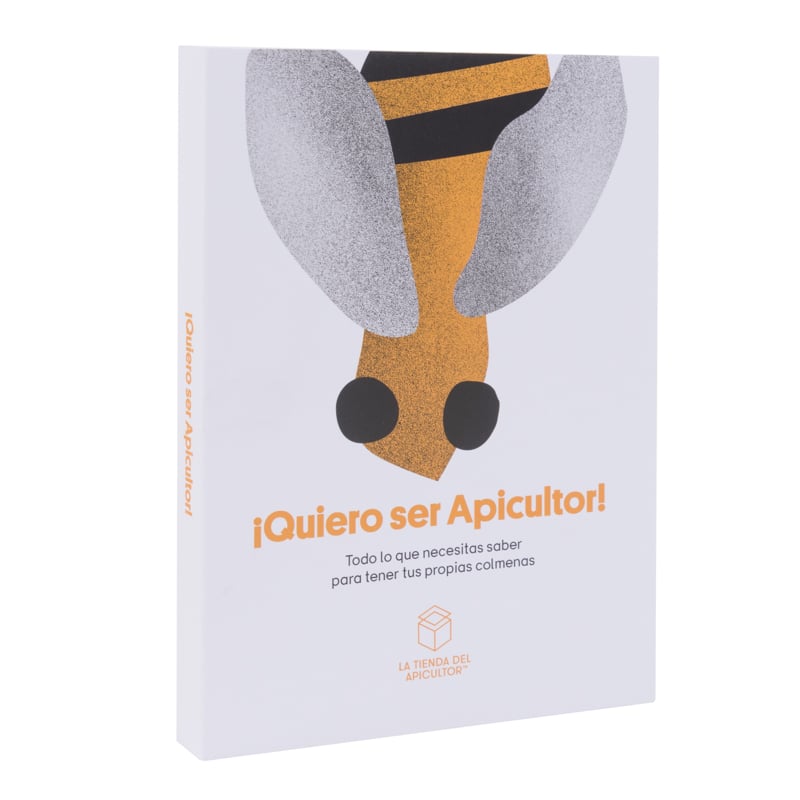
Books and practical training belong alongside the physical tools. Understanding bee biology, colony development and safe handling makes the equipment useful; buying more kit cannot replace learning how and when to use it. The book pictured here is in Spanish.
Choose clear, reliable material suited to your experience, climate and hive system. A beginner’s course or time with a local mentor is particularly valuable before your first solo inspections. Check the language of books and courses before ordering: a link from an English article does not mean the product itself is in English.
Good beekeepers never stop learning — or comparing what they have read with what is actually happening in the hive.
The smoker
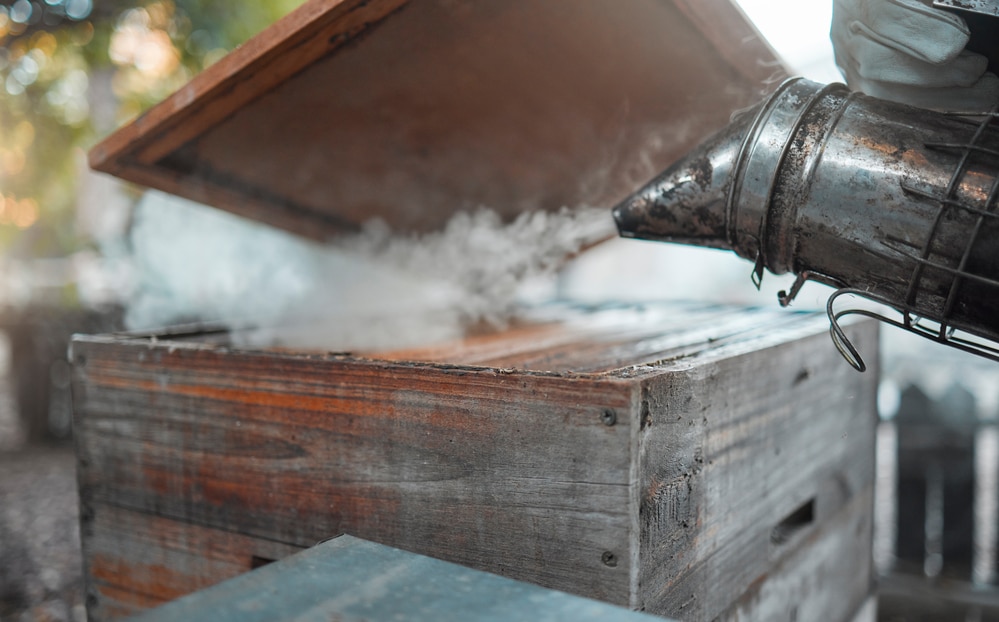
A bee smoker is worth choosing carefully. Look for a sound barrel, dependable bellows, a secure lid and a protective guard. Price alone does not tell you how well it will work. Choose a model you can handle comfortably, keep clean and maintain, remembering that it contains smouldering fuel and remains hot after use.
TIP: Use suitable, clean smoker fuel and check that the smoke reaching the bees is cool, not a blast of heat or sparks. Apply only as much smoke as needed for calm handling. Keep the hot smoker on a secure, non-combustible support, take suitable fire-control equipment and check local fire restrictions before lighting it. Extinguish the fuel fully and let the smoker cool before transport.
The hive and its components

The hive houses the colony and supports the way you intend to manage it. Boxes may be made from timber, polystyrene or other materials, but first choose a system: Langstroth, Dadant or Layens, for example. Warré and other hive designs are also available. Check the actual component dimensions: a familiar model name does not guarantee that every manufacturer’s frames and boxes fit together.
If you are comparing systems, see which beehive to choose and the more detailed guide to hive types, dimensions and technical differences (in Spanish).
Pay attention to the hive floor or bottom board. Dead bees, wax debris and fallen mites can accumulate there. Keep it serviceable and inspect what it tells you about the colony, but do not mistake a clean floor for proof that the bees are healthy. Hygiene supports, rather than replaces, colony assessment and disease management.
Two more tools deserve a place in this list: one you can buy, and one you bring with you.
Their basic designs have stood the test of time. Used well, they help you handle bees with care and avoid needless mistakes. Both may have bristles or hair on top — although one is rather more likely to lose them with age.
Here they are:
The bee brush
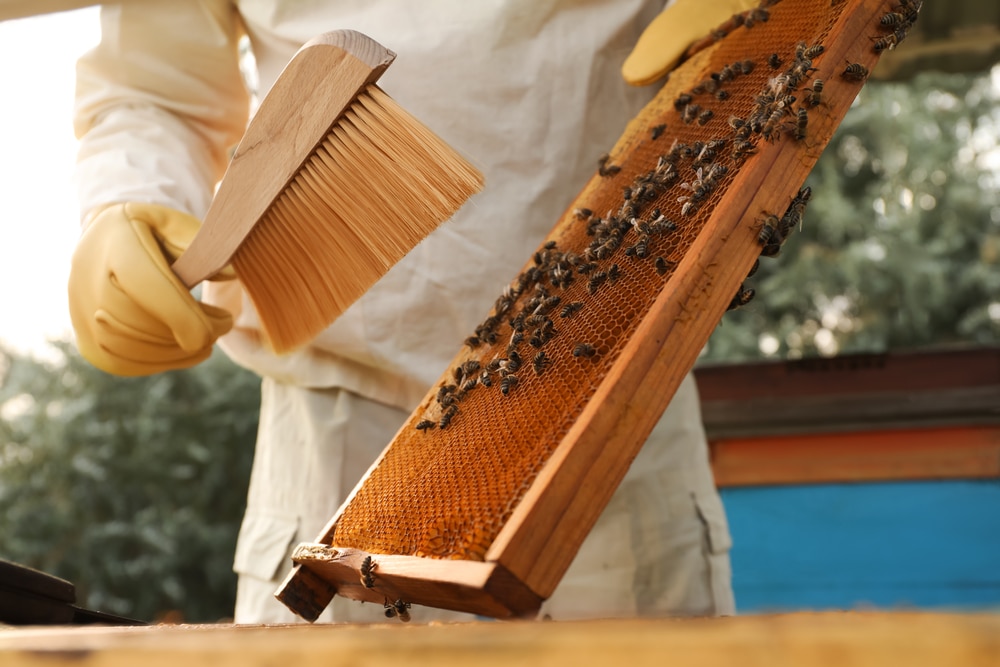
A bee brush helps move bees gently away from a frame or a surface you need to close. Use soft bristles and controlled movements rather than scrubbing the bees against the comb.
Check where the bees — and especially the queen — are before brushing. A brush is one useful handling aid, not a reason to hurry. Keep it clean and avoid transferring contaminated material between colonies.
TIP: If you have forgotten the brush, do not simply push the lid down on bees gathered at the rim. Give them time and use a gentle handling method appropriate to the situation. The aim is to close the hive without crushing bees, not to improvise a tool that drags or traps them.
And finally, the tool that brings all the others together:
Your most important tool: judgement
Your judgement can solve problems — provided you keep it open to new information. Observe before acting, know why you are opening the hive and ask for help when you are unsure. It is the one tool worth using on every visit.

Frequently asked questions about beekeeping equipment
What equipment do I need to start beekeeping?
For routine inspections, begin with suitable protective clothing and a veil, gloves, a smoker and fuel, a hive tool, a brush, and the hive with compatible frames. Add hygiene and safety supplies appropriate to your work. Learn with an experienced beekeeper before working alone; extraction and specialist queen-rearing equipment can wait until needed.
Is a full bee suit better than a jacket and veil?
A full suit covers more of the body and may help beginners feel more confident. A jacket and veil must be worn with suitable trousers and secure joins. Neither option guarantees protection from every sting. Fit, intact mesh and fastened closures matter, as does avoiding excessive heat.
Should I choose leather or nitrile gloves?
Compare the actual glove, not just its material name. Nitrile-coated work gloves differ from thin disposable nitrile gloves. Leather is harder to clean thoroughly; disposables can help limit contamination but give limited sting protection. Choose suitable coverage and dexterity, and keep reusable gloves clean between colonies.
What fuel should I use in a bee smoker?
Use suitable, clean, untreated fuel that produces cool smoke. Purpose-made beekeeping smoker fuel is one option. Avoid plastics, treated materials and contaminated fuel. Check for hot smoke or sparks, comply with local fire restrictions and fully extinguish the smoker before transporting it.
How much does basic beekeeping equipment cost?
The total depends on the hive system, protective clothing and equipment quality. Prioritise sound, usable kit for every inspection and essential safety supplies. Check current prices and compatibility before buying; do not spend on specialist equipment until you know why you need it.
Where to go next
- Not sure where to begin? Read how to start beekeeping from scratch.
- Comparing hive systems? See which beehive to choose.
- Avoid familiar pitfalls with mistakes I would avoid if I were starting again.
- When it is time to open the hive, follow our guide to inspecting a bee colony.

ISNI 0000 0005 1801 1100 | Joshua Ivars is the manager of LA TIENDA DEL APICULTOR and the author of this blog, where he shares technical and practical guidance for beekeepers. Drawing on extensive experience in the beekeeping sector, he offers advice and solutions based on beekeepers’ real needs, sharing his knowledge of equipment and essential beekeeping practices.


