
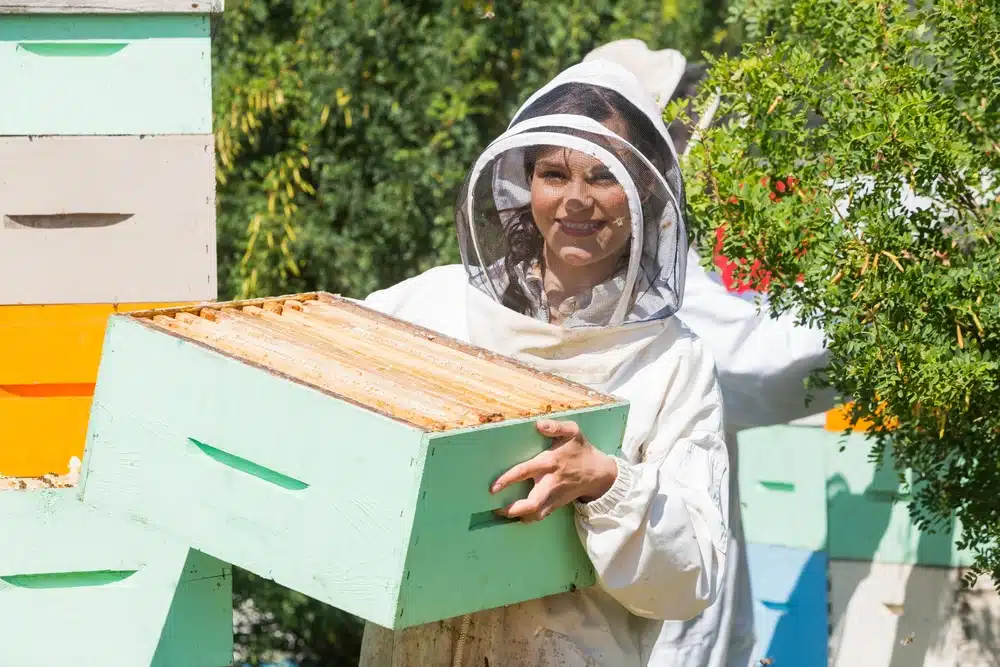
There is no single best beehive: the right choice fits your local conditions, available time and goals. This guide compares Layens, Langstroth and Dadant, with a useful starting question: horizontal or vertical? A vertical system expands by adding boxes and allows separate honey supers. A conventional horizontal Layens keeps brood and stores within one body. Those differences affect handling, but neither design guarantees a particular honey yield or residue-free honey.
The three hive systems compared
| Feature | Layens | Langstroth | Dadant |
|---|---|---|---|
| Expansion | Horizontal in the conventional model | Vertical, with additional boxes | Vertical, with additional supers |
| Configuration compared | 12 deep frames in one body | 10 frames per box; several box depths available | 10 deep brood frames with shallower supers |
| Local fit | Check support for the Spanish Layens format | Check the regional frame and box standard | Check which Dadant variant is used locally |
| Brood and honey | Usually share one body | Brood boxes plus honey supers | Large brood box plus honey supers |
| Frame interchangeability | Within the matching body format | Only between boxes taking the same frame size | Brood and shallow-super frames differ |
| Moving hives | Single-body handling | Secure the stack and plan lifting | Secure the stack and plan lifting |
| Health management | Plan access and treatment placement | Follow the product instructions; supers do not prevent residues | Follow the product instructions; no inherent Varroa advantage |
| Overwintering | Match stores and space to the colony | Choose an appropriate brood-box configuration | Manage colony strength and access to stores |
| Short nectar flows | Build the workforce before the flow | Build the workforce and add space in time | Build the workforce and add space in time |
| Initial cost | A basic setup may cost less | Depends on boxes and accessories included | Depends on variant and supers included |
| Key reason to choose it | One-body workflow and local compatibility | Modularity and flexible box management | Large single brood box with separate harvest supers |
In this guide
- where to start with the decision;
- Layens: advantages and limitations;
- Langstroth;
- Dadant;
- other systems, including top-bar hives;
- how to choose for your situation.
Choosing a hive is one of the first decisions a new beekeeper faces. The beekeepers we speak to value different features, so a useful comparison needs more than a single winner. For the historical background and dimensions, see hive models: history, dimensions and technical differences (in Spanish).
First steps: choosing your hive system
When I ask beekeepers which hive they prefer, their answers usually reflect how they work: the bees they keep, the flows they follow, the equipment they already own and the time they can spend in the apiary. The most useful question is not which hive wins in theory, but which system you can manage well.
The Spanish context matters here. Layens has a long-established place in Spanish beekeeping, alongside vertical systems such as Langstroth and Dadant. Experienced Layens users may have good reasons to retain it. Do not dismiss a system simply because another model is more fashionable; consider local knowledge and compatibility with the colonies you can obtain.
Here are the practical differences to weigh up:
The Layens hive
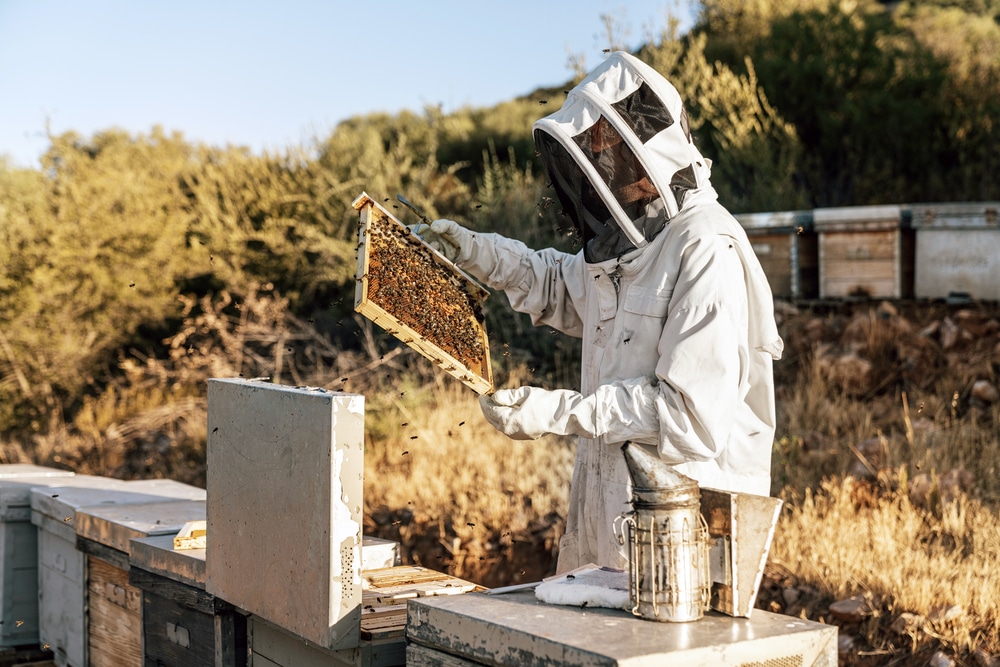
The conventional Spanish Layens described here has 12 deep frames. Their broad top bars meet, leaving no bee passage between adjacent top bars. Other capacities and open-top-bar adaptations exist, including versions designed to take supers. Check the actual design before assuming that all Layens equipment works the same way.
The roof is commonly hinged to the hive body. The usual horizontal arrangement lets you inspect frames without first lifting off a stack of honey supers.
Advantages of the Layens hive
- A conventional Layens can produce a honey crop without using separate supers; results still depend on colony strength, forage and management.
- A single body with no stack of supers can simplify transport arrangements, although an occupied hive still needs safe lifting and secure loading.
- Fewer boxes to handle during routine inspections; this can suit beekeepers who prefer working through one horizontal body.
- A basic setup can cost less initially than a vertical hive supplied with several supers. Compare like-for-like quotations.
- Where Layens is established locally, colonies on compatible frames, replacement equipment and experienced advice may be easier to find.
- Some designs can be adapted to take shallow supers. Check that the frame top bars, bee passage and super dimensions are compatible.
Limitations of the Layens hive
- With brood and stores in the same body, selecting honey combs and planning treatments require care. That does not, by itself, rule out organic certification. In the EU, compliance also covers siting, materials, wax, husbandry and treatments; brood combs must not be used for honey extraction. Confirm your proposed system with your control body.
- Without removable honey supers, frames selected for harvest need suitable bee-tight transport boxes or compatible spare bodies if extraction takes place away from the apiary.
- A single-body system does not offer the same box-by-box workflow as stackable hives. For an expanding business, consider whether your harvesting and loading equipment suits it; professional use of horizontal hives is not inherently excluded.
- Purchase price is only one cost. A vertical system may justify extra investment through labour savings or additional production, but payback in one nectar flow cannot be promised. Compare realistic costs and yields over several seasons.
- Cleaning, comb renewal and inspections need a workable routine for the chosen layout. No hive model removes the need for good hygiene.
- Closed top bars affect access between the frames and the space above them. Understand the bee space and follow the authorised treatment’s placement instructions; do not improvise an application because access is awkward.
- Closed top bars can make it harder to judge how many frames are covered with bees simply by lifting the roof. A proper inspection may require moving frames.
- Before extending an apiary, check the availability of compatible colonies, frames and accessories in your area rather than relying on national trends.
- In its conventional form, horizontal expansion is limited by the body capacity. Vertical systems offer a different way to add space, but neither layout sets a fixed honey yield.
The Langstroth hive
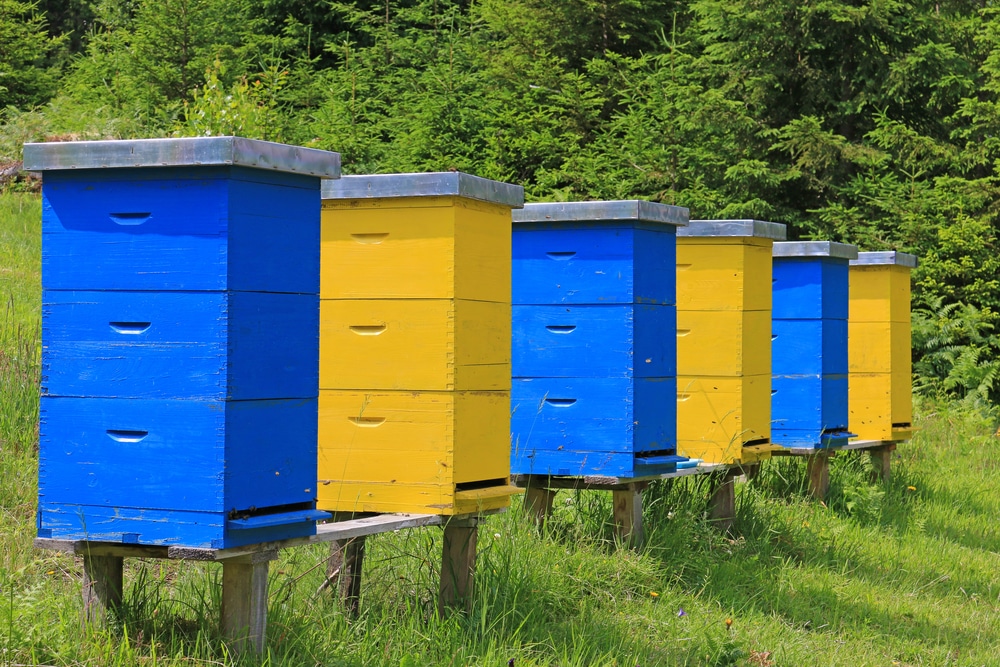
The Langstroth is a modular, vertically expanding hive. The version discussed here uses 10 frames per box. Brood boxes can be combined with full-depth, medium or shallow honey supers, depending on the equipment system. Frame interchangeability applies only when the dimensions match; different box depths require different frames.
Advantages of the Langstroth hive
- Vertical expansion lets you add supers as the colony and nectar flow require; modular boxes can also fit organised migratory beekeeping workflows.
- Matching boxes and frames support a wide range of manipulations, including changes in brood-box configuration.
- Separate supers can help organise harvests around individual nectar flows. Producing a monofloral honey still depends on forage and crop separation, not the hive name.
- Separate honey supers can make it easier to keep the harvest apart from brood-area work. This is not a guarantee against residues. Follow the current locally authorised product instructions, including restrictions on honey supers, treatment timing and honey intended for consumption.
- Timely addition and removal of boxes can help you use a strong flow effectively. Any yield advantage over another system depends on conditions and management.
- Frames of the same dimensions can fit matching brood boxes and full-depth supers. They are not interchangeable with shallower frames simply because both are called Langstroth.
- Honey can be harvested by clearing bees from selected supers and removing the boxes for extraction, with suitable handling equipment.
- Brood-box configuration can be adjusted for the colony. Successful overwintering depends on healthy bees, adequate accessible stores and appropriate hive conditions, not an automatic advantage over Dadant.
Limitations of the Langstroth hive
- You need to judge when to add space, how to arrange the brood boxes and which accessories suit the colony.
- A single brood box may provide too little room for a strong colony at peak development. A queen excluder can keep the queen out of honey supers, but does not create extra laying space. Brood-box configuration and timely management still matter.
- Full boxes can be heavy. Mechanical assistance can help at scale, but is not a requirement for every small apiary.
- Avoid congestion and provide suitable siting and ventilation. A single Langstroth brood box is not inherently destined to overheat; the colony, weather and setup need to be assessed together.
The Dadant hive
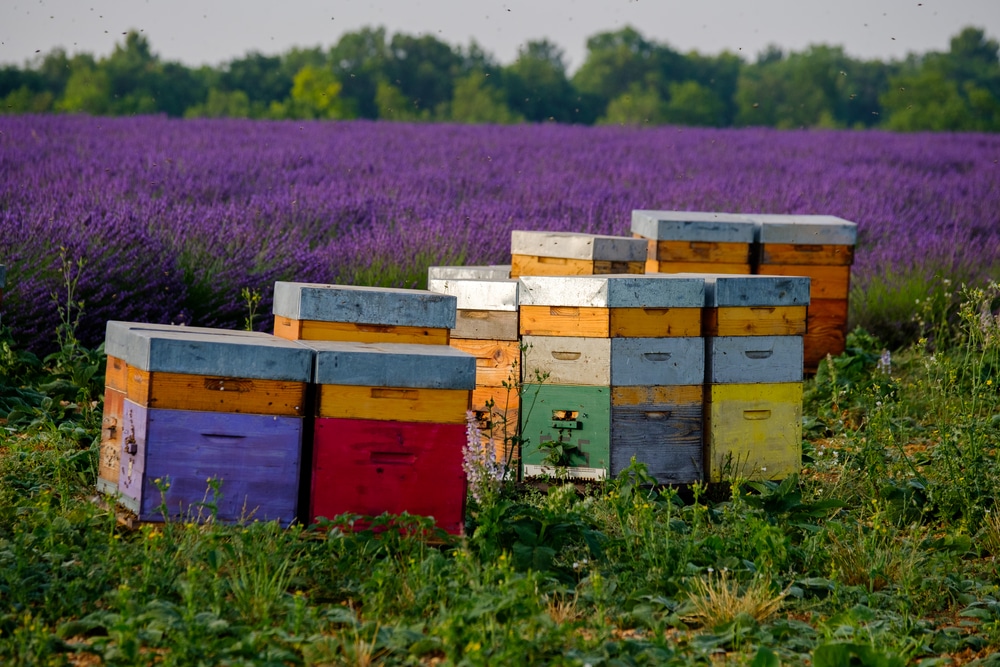
The Dadant is another vertical system familiar to beekeepers in Spain and France. The configuration discussed here has a large brood box with 10 deep frames and shallower honey supers. Regional Dadant variants differ, so check dimensions and compatibility rather than buying on the model name alone.
Advantages of the Dadant hive
- Vertical expansion with shallower honey supers separates the large brood box from harvest boxes and can make crop handling more convenient.
- Compatible lifting and loading equipment can support migratory beekeeping with this system.
- A large brood box provides room to manage the brood nest, but swarm prevention still requires monitoring and an appropriate management plan.
- The layout can accommodate a planned Varroa-control programme. It does not make the bees intrinsically more resistant to mites or replace monitoring and authorised treatment.
- The representative Dadant configuration has a deeper, larger brood box than the Langstroth configuration compared here. This provides more brood space in one box; queen excluders may still be used to keep brood out of supers.
- It can be a productive system when colony strength and supering are matched to the flow. No universal ranking of average honey yield follows from the box dimensions alone.
Limitations of the Dadant hive
- A brood box supplied with supers can require more initial investment than a basic Layens. Check what is included in the price.
- Moving many hives, especially with loaded supers, requires a safe handling and transport plan. Lifting aids can reduce the physical burden.
- In the configuration described here, deep brood frames and shallow super frames are not interchangeable. Keep compatible spares for both.
- Different brood and super frame sizes limit manipulations that rely on moving the same frame between boxes. Other management techniques remain available.
- Match the space to colony strength and ensure that the winter cluster can reach its stores. A large brood box does not, by itself, prove that a colony will overwinter worse than one in a Langstroth.
- For short or early flows, colonies must already have enough foragers when nectar becomes available. A large brood box does not guarantee slower spring build-up; queen performance, weather, food and prior management all affect readiness.
Other hive systems
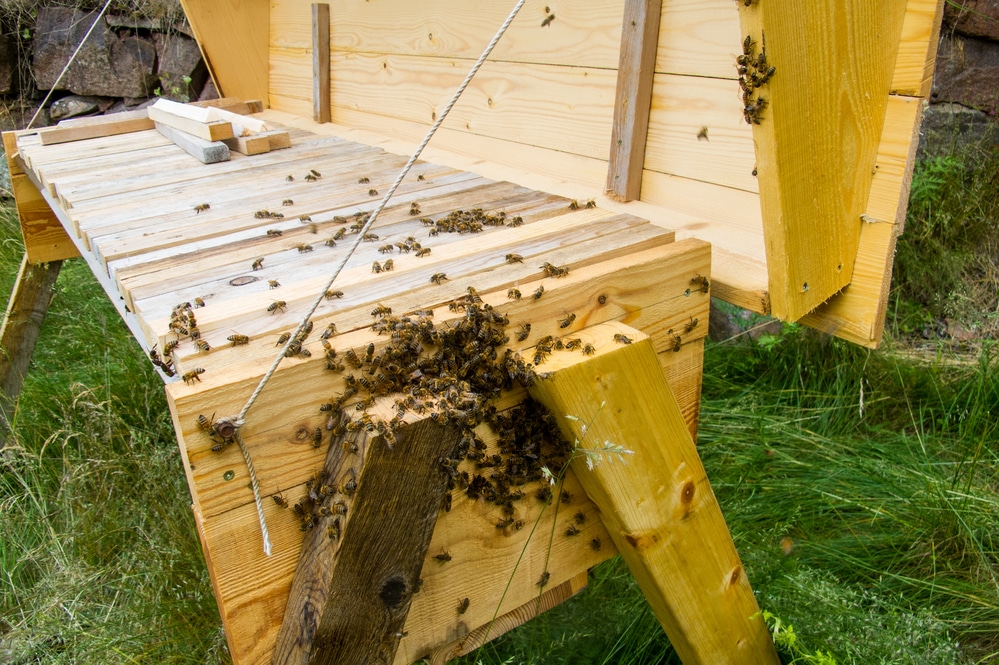
The Kenyan top-bar hive
The Kenyan top-bar hive, or KTBH, is a horizontal movable-comb system associated with accessible, locally made beekeeping equipment. Bees build comb beneath removable wooden bars instead of inside four-sided frames. Full sheets of wax foundation are not normally required. Its sloping sides do not eliminate the need to check for comb attachments; capacity and wall angles vary between designs.
A top-bar hive can reduce dependence on precision-made frames and full foundation sheets, and may suit small-scale production with locally available materials. It is not automatically easier to manage: unsupported comb needs careful handling, particularly when new, heavy or warm. Siting and stands still need to address local predators and pests.
Harvesting commonly involves cutting and crushing or pressing the honeycomb. Unsupported comb is not normally spun in a conventional frame extractor, and comb removed at harvest must be rebuilt. This changes the balance between honey, wax and labour; it does not prove that every top-bar colony will yield less. Moving occupied hives also requires care to prevent comb breakage.
How to decide
We often recommend Langstroth for its flexibility, but no hive system is right for every beekeeper. Layens, Langstroth and Dadant each involve trade-offs. Before investing, match the system to your circumstances rather than expecting the box itself to solve management problems. Consider:
- Local compatibility and support: can you obtain healthy colonies on suitable frames, replacement parts and advice from nearby beekeepers?
- The time you can devote to inspections and seasonal work.
- Your lifting capacity, help with transport and budget for the complete setup.
- Whether the apiary is a hobby for your own honey or part of a plan to earn an income.
- Whether you intend to expand into professional beekeeping or seek organic certification; discuss certification requirements before buying equipment.
- Whether you plan to practise migratory beekeeping and how the hives will be secured and moved.
Use these points to compare the whole system over several seasons, including replacement frames, supers, extraction equipment and your own time. A manageable hive with good local support is a stronger starting point than an impressive specification you cannot put into practice.
At La Tienda del Apicultor, we can help you compare compatible equipment and plan your first apiary.
Frequently asked questions
Which beehive is best for a beginner?
There is no universal winner. We often recommend Langstroth for its modularity, provided you can obtain compatible colonies and local advice and handle the boxes safely. An established local system that you can manage well may be the better choice.
What is the difference between Layens and Langstroth?
A conventional Spanish Layens expands horizontally within one body; Langstroth expands vertically with brood boxes and honey supers. Separate supers make harvesting and some management tasks easier, but do not guarantee residue-free honey. Layens adaptations with supers also exist.
How does Dadant differ from Langstroth?
The Dadant setup compared here has a larger, deeper brood box and shallower honey supers, so brood and super frames differ. Langstroth frames can be exchanged only between boxes with matching dimensions. Neither system is automatically better for wintering or early flows.
Should I choose the cheapest hive?
Compare the cost of the complete system, including colonies, frames, supers, extraction, transport and labour. A lower purchase price may be useful, but neither a higher yield nor payback within one nectar flow can be guaranteed.
Which hive should I use for organic beekeeping?
Hive model alone does not establish organic eligibility. In the EU, the rules also cover location, materials, wax, husbandry and treatments, and prohibit honey extraction from brood combs. Separate supers may help organise the work; confirm your full plan with your control body.
What is a Kenyan top-bar hive?
It is a horizontal hive in which bees build comb beneath removable bars rather than inside full frames. Full foundation sheets are usually unnecessary. Comb needs careful support during inspections, and harvesting commonly involves cutting and crushing or pressing it rather than spinning it in a standard frame extractor.
Further reading
- How to become a beekeeper, if you are starting from scratch.
- Essential beekeeping equipment, beyond the hive itself.
- Shallow supers for Layens hives, an adaptation towards vertical management.
- Painting and protecting beehives, once you have chosen your equipment.

ISNI 0000 0005 1801 1100 | Joshua Ivars is the manager of LA TIENDA DEL APICULTOR and the author of this blog, where he shares technical and practical guidance for beekeepers. Drawing on extensive experience in the beekeeping sector, he offers advice and solutions based on beekeepers’ real needs, sharing his knowledge of equipment and essential beekeeping practices.


