
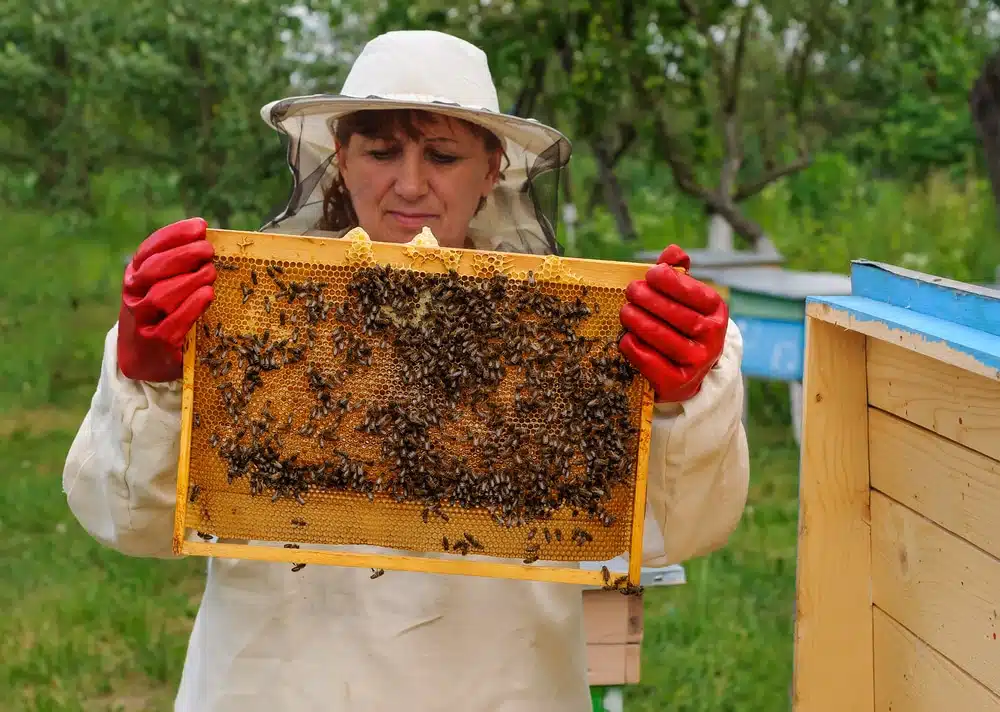
A hive inspection combines observations outside the hive with checks of the colony inside. Entrance activity, dead bees, debris, odour and sound can flag problems, but they do not establish a diagnosis on their own. Inspect apparently healthy colonies before suspect ones, practise hygiene between colonies, and arrange specialist help when the signs suggest disease.
The right order for an apiary visit
- On the journey, note flowering plants near the apiary and whether bees are working them; do not assume this covers their whole foraging range.
- On arrival, once you are wearing protective clothing, walk past every entrance before opening a hive.
- Mark hives showing unusual signs and record their hive numbers for a separate assessment.
- Open healthy colonies first. Leave suspect colonies until last and clean tools and gloves between colonies; inspection order alone does not prevent transmission.
- Choose the right time: mild, dry, calm conditions when bees are flying, with the equipment and time needed for the purpose of the visit.
Match the inspection to the weather and its purpose. Avoid a prolonged brood-frame examination in cold, wet or windy conditions. An urgent check for starvation or another immediate problem may still be necessary; keep it brief and protect the cluster. Reassemble the hive carefully, with no unintended gaps.
In this guide
- good practices for the visit;
- the external inspection and its observation chart;
- the internal inspection and what to assess in each frame;
- the observation chart for what you see inside.
Good practice before an inspection
An apiary visit begins before you arrive. Consider the weather over the previous few days and what is flowering nearby. Looking over the final kilometre or two is useful, but bees may forage farther afield. A varied forage supply is valuable; counting four or five flowering species does not, by itself, prove that the colony has a complete diet or enough food.
At the apiary, put on suitable protective clothing and observe the entrances. Record the identity of any hives showing unusual signs so you can assess them separately. Work from apparently healthy colonies towards suspect ones and clean tools and gloves between colonies. Do not transfer combs, bees or food from a suspect colony to another. If you suspect a notifiable disease, contact the relevant bee-health authority promptly rather than continuing routine manipulations.
External inspection: what the hive entrance reveals
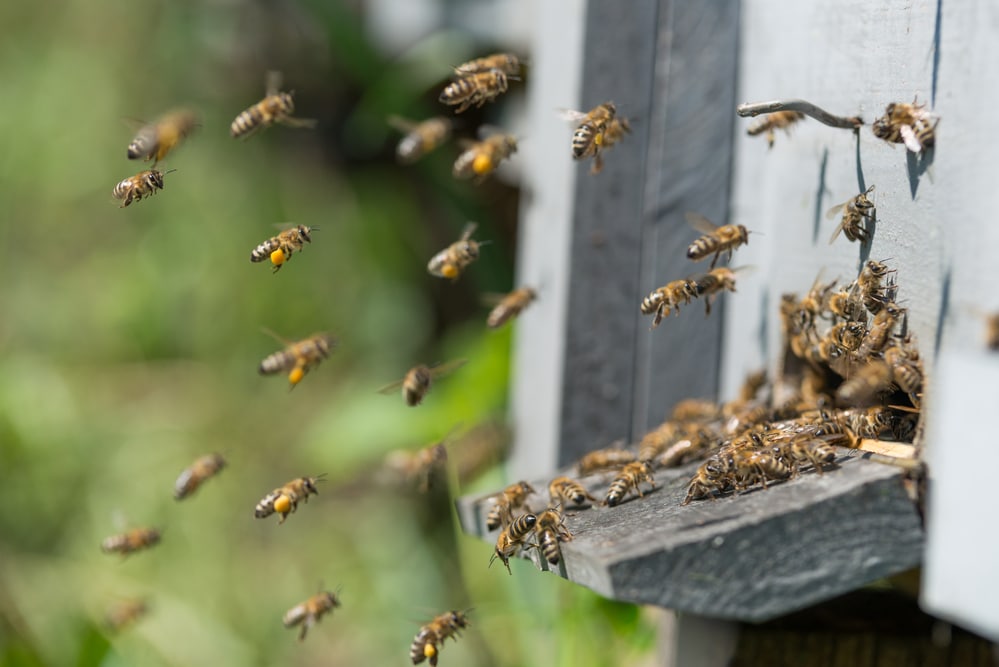
Observe bee behaviour around the hive and at the entrance, including fighting, crawling and unusual flight. Note sound, odour, dead bees and material being removed, such as larvae, pupae, wax or pollen. Interpret these observations against weather, time of day, season and earlier records; entrance activity alone cannot confirm queen status or freedom from disease.
Track weight changes since the previous visit, while accounting for added supers, feeding, harvests and other equipment changes. The trend can help assess stores and nectar intake. It does not directly measure bee numbers, and weighing does not replace brood and disease checks.
External signs: possible explanations
| Observation | Possible interpretation and next step |
|---|---|
| Many dead bees at the entrance | Possible causes include pesticide exposure, disease, starvation and weather-related losses. Record the timing and seek prompt advice on suitable samples; the pile alone does not identify the cause. |
| Bees fighting at the entrance | May indicate robbing, especially with intruders trying to enter at cracks. Distinguish it from normal guard activity. |
| Drones expelled or found dead | Can occur during seasonal contraction or a dearth. Assess the season and food supply; it is not specific to one condition. |
| Shiny, hairless, trembling or crawling bees | Paralysis virus is one possible explanation, but appearance alone is not confirmation. Seek bee-health advice or laboratory testing. |
| Hard, chalk-like brood mummies | Suggest chalkbrood; examine brood and confirm uncertain findings. |
| Dead larvae carried out | Brood removal can follow disease, chilling, nutritional stress or other damage. Examine the remaining brood and its pattern. |
| Pollen being brought in | Shows active pollen collection. It often accompanies brood rearing, but does not prove that a queen is present or the colony is healthy. |
| A cloud of bees flying in front of the hive | May be orientation flights or a swarm. Look at the scale, duration, direction and whether a cluster forms before deciding. |
| Restless bees on the landing board | Non-specific behaviour. Do not diagnose queenlessness from one nervous or disoriented bee. |
| Mouldy pollen or other mouldy debris | May indicate moisture and unused comb or stores. Assess colony strength, water ingress and hive condition, not ventilation alone. |
| Heavy brown faecal staining | Dysentery can be associated with confinement or unsuitable food. Colour and consistency are not a reliable disease test. |
| Dark or watery faecal staining | Nosema may be among the concerns, but staining does not diagnose it and its absence does not rule it out. Follow laboratory advice for testing. |
| Soft, discoloured larval remains | Possible brood disease or damage from chilling, starvation or pests. The appearance needs assessment in context; do not select a treatment from this sign alone. |
Internal inspection: opening the hive and reading the frames
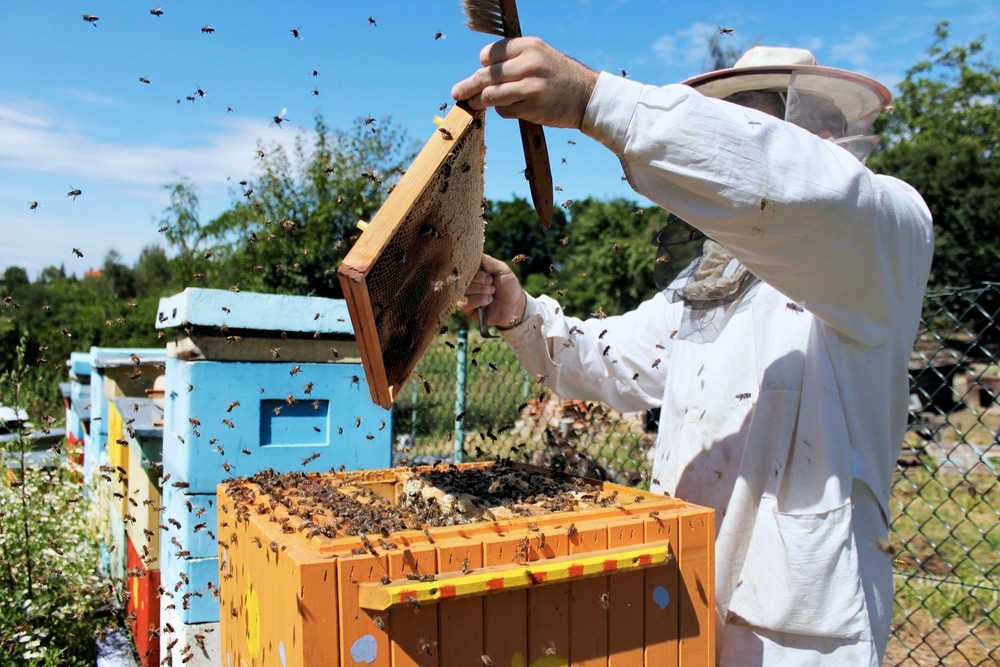
Examining the brood nest provides important evidence about queen activity, brood development, food and colony condition. First assess adult bee coverage, then make enough space to lift frames gently without rolling bees or injuring the queen. Keep frames over the hive where practical and out of prolonged sun, wind or cold. Inspect the frames needed for the purpose of the visit; a thorough disease examination requires a clear view of brood and comb.
Keep inspections purposeful and methodical. A mild, dry, calm period when bees are flying is usually convenient; the right conditions matter more than the clock. Use appropriate protective equipment and smoke sparingly, observing local fire restrictions. Avoid prolonged opening in cold weather, but do not delay essential action for a colony at immediate risk. Replace frames in their original order and orientation unless you have a specific management reason to move them, keep the brood nest together, and close the hive securely.
When examining the frames, assess:
- Look for eggs, young larvae and a developing worker-brood pattern. A queen usually lays one egg per cell, but use several observations together to assess queen status and performance.
- Comb condition, including damaged cells, abnormal brood remains and excessive deterioration.
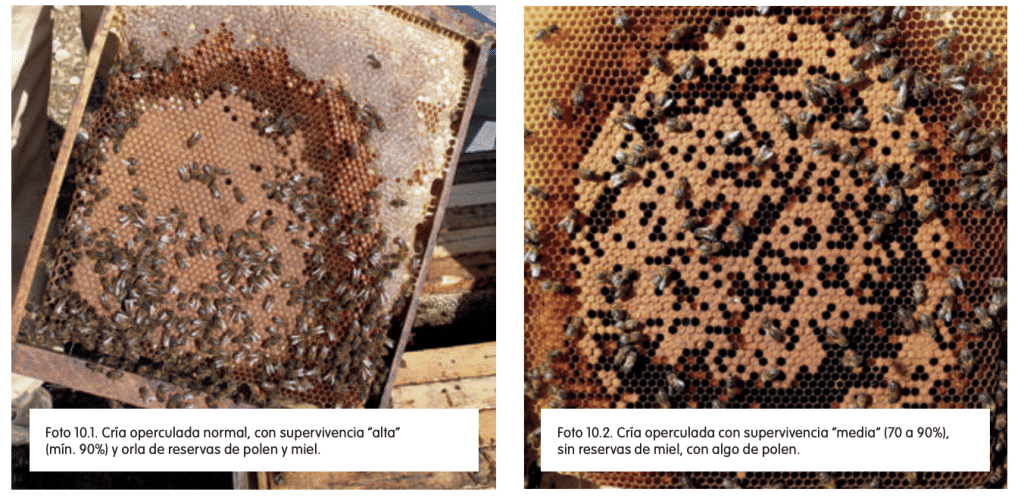
- Brood pattern, larval appearance and cappings, interpreted in the context of season, brood age and colony history.
- Honey and pollen stores, especially during dearths and before winter, to decide whether supplementary feeding is needed.
- Sufficient space for the queen to lay and for storing honey and pollen.
- Any queen cells: record their stage and context. They may reflect swarming, supersedure or emergency queen rearing; do not remove them automatically.
Internal signs: possible explanations
| Observation | What to check before drawing a conclusion |
|---|---|
| No eggs or brood | Check season, recent swarming or queen replacement, food and colony history. Queenlessness or a failing queen are possibilities, not the only explanations. |
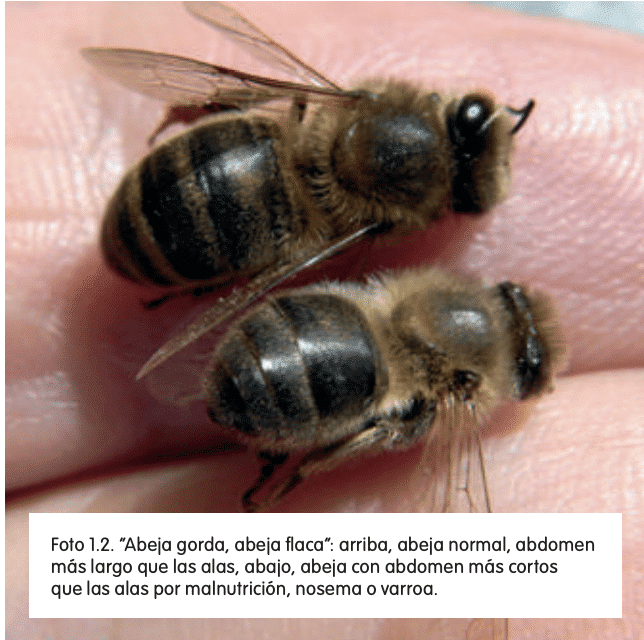
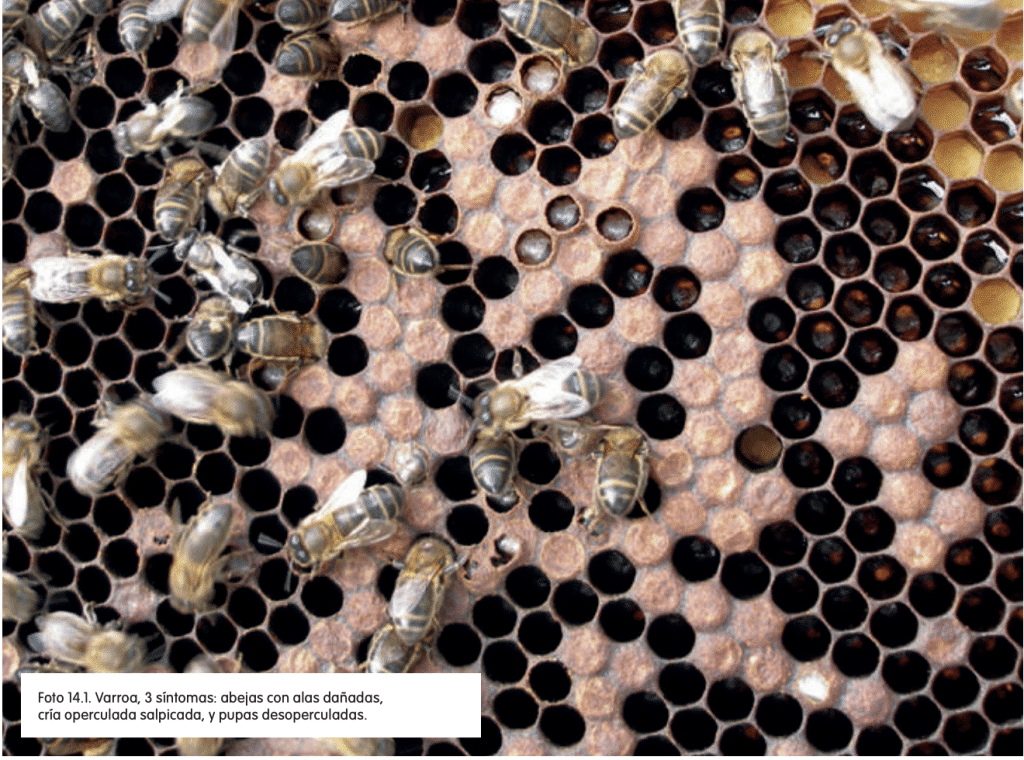
| Deformed wings; or worn, ragged wings | Deformed wing virus is associated with Varroa. Worn wing edges alone may reflect age or injury. Monitor mites rather than diagnosing an infestation level by sight. |
| Several eggs in cells or drone brood in worker cells | Investigate laying workers or a drone-laying queen. A new queen may occasionally lay multiple eggs; check the pattern, egg position and subsequent brood. |
| Patchy brood pattern | Possible contributors include brood disease, Varroa-associated damage, queen problems, nutrition or other stress. Recently emerged cells and nectar stored among brood can also create gaps; examine larvae and cappings, not the pattern alone. |
| Two queens in one colony | Temporary coexistence can occur during supersedure. Do not assume that either queen must be removed without assessing the colony. |
| Small, compact brood area | May reflect a recently laying queen, season, restricted space or a limited workforce. Compare with stores, available cells and earlier observations. |
| Unusual foul odour or abnormal brood | Foulbrood is a concern, but smell neither confirms it nor distinguishes American from European foulbrood. Suspect brood needs prompt expert assessment; prevent transfers and follow local reporting requirements. |
Build sound judgement
Develop evidence-based judgement from careful observation, records and training. If advice does not fit what you see, investigate before acting. Equally, do not let confidence or habit replace testing or advice from an experienced beekeeper, bee inspector or veterinarian when a problem is unclear.
Experience improves your ability to recognise changes in a colony. Record what you observed, what you did and what needs checking next time. Learning from the bees means observing their response and checking your assumptions, not treating any single sign as proof.
Frequently asked questions
How often should a hive be inspected?
Set the interval according to season, colony development and your purpose. Swarm-season and disease checks need regular internal inspections; entrance observations do not replace them. Keep each inspection focused and adjust it to the weather.
What is the best time of day to open a hive?
A mild, dry, calm period when bees are flying is usually convenient, often around midday. Forage conditions, colony temperament, nearby people and the purpose of the visit matter more than a fixed hour.
Can you assess a colony without opening it?
You can gather useful clues from activity, debris, dead bees and weight trends. They cannot reliably confirm queen status, brood condition or freedom from disease. Combine them with appropriate internal checks and testing when needed.
What does pollen entering the hive tell you?
It shows active pollen collection, often associated with brood rearing. It does not prove that brood or a laying queen is present, and it is not proof of a disease-free colony.
Should a hive ever be opened in winter?
Avoid prolonged brood inspections in cold or unsuitable weather. An essential, brief check or intervention may still be needed if the colony risks starvation or another immediate problem. Protect the cluster and close the hive carefully afterwards.
What can cause a patchy brood pattern?
Gaps may reflect disease, Varroa-associated damage, queen or nutritional problems, other stress, emerging brood or nectar stored among brood. Examine larvae, cappings, stores and colony history before deciding on the cause.
Continue reading
- Where is the queen? How to find her during an inspection.
- Hygienic management in hives, the rationale behind the inspection order.
- Diagnosing Varroa, when the signs point in that direction.
- Hive monitoring (in Spanish), to track weight without opening the hive.
Further guidance: the National Bee Unit’s Handling and examining a colony of bees (2025, hosted by SRUC), and UF/IFAS guidance on recognising European foulbrood. For an example of official disease reporting, see UK bee-health guidance; follow the rules and services in your own country. The original diagram labels and the hive-monitoring guide remain in Spanish. This English edition clarifies the limits of diagnosis from visible signs.

ISNI 0000 0005 1801 1100 | Joshua Ivars is the manager of LA TIENDA DEL APICULTOR and the author of this blog, where he shares technical and practical guidance for beekeepers. Drawing on extensive experience in the beekeeping sector, he offers advice and solutions based on beekeepers’ real needs, sharing his knowledge of equipment and essential beekeeping practices.


