
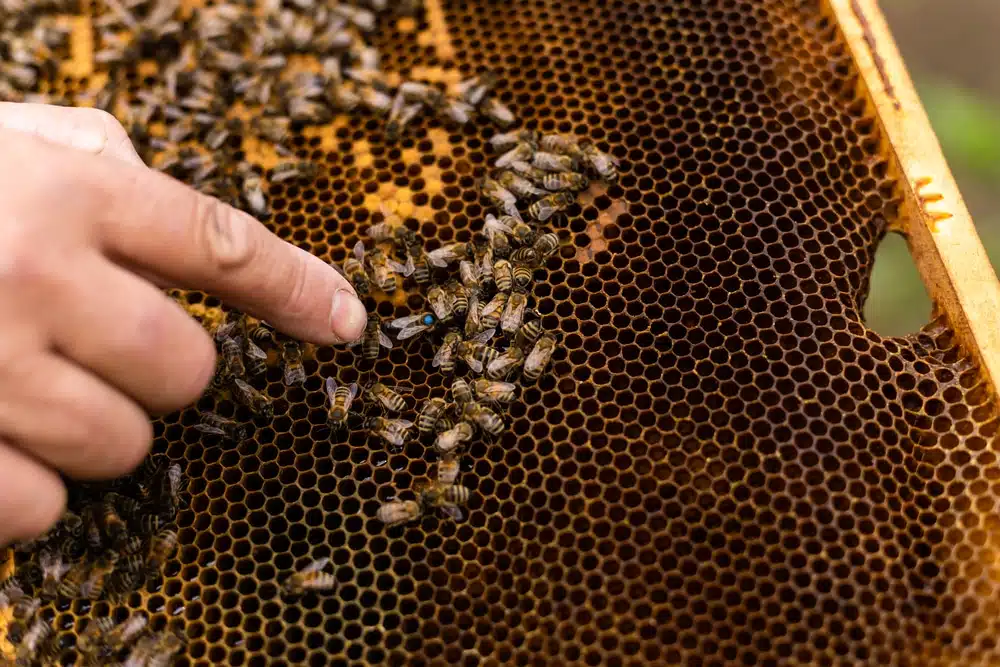
Before searching for the queen, ask yourself why. For a routine check of a normally developing colony, you do not usually need to see her: eggs and a normal worker-brood pattern are useful signs of recent queen activity. Eggs alone do not prove that she is still present. Searching for her at every inspection can soon become frustrating. And when it is necessary, it is worth knowing that she is not always where the books say she is.
Do you need to look for her?
| Your objective | Is it necessary to see the queen? |
|---|---|
| Check for recent queen activity | Not usually. Look for eggs and a normal worker-brood pattern; eggs alone do not confirm her current presence |
| Routine inspection | No. You do not need to locate her at every inspection |
| Making splits or nucleus colonies | It depends on the method. You must establish which part contains the queen |
| Caging the queen to create a brood break | Yes |
| Replacing an old or damaged queen | Yes |
| Marking, clipping, or shipping her | Yes |
In this guide
- where she actually appears;
- when it is necessary to search for her;
- the tips to find her;
- the last resort if she does not appear.
Queens do not know how to read
For some inexplicable reason, beekeepers are taught that the queen will be in the brood nest. And yes, she is likely to be near fresh brood; we will find her on a brood frame or on comb with cells ready for laying.
Many authors insist that she will almost never be found on the outer frames, on honey combs, on wax foundation sheets, or wandering freely in the most unexpected places.
Evidently, the key word here is “almost”. To my surprise and dismay, on more than one occasion I have found my queens:
- On the hive lid that had just been dropped to the ground.
- In an empty super that had been taken back to the storage building.
- On a brood frame after shaking it several times (as someone who produces live bees, I can confirm this has happened more than once).
- In a sleeve of the beekeeping suit.
- Between the inner cover and the roof.
- Walking along the hive walls.
- On the frame top bars.
- On the roof of a neighbouring hive.
Is it really necessary to look for her?
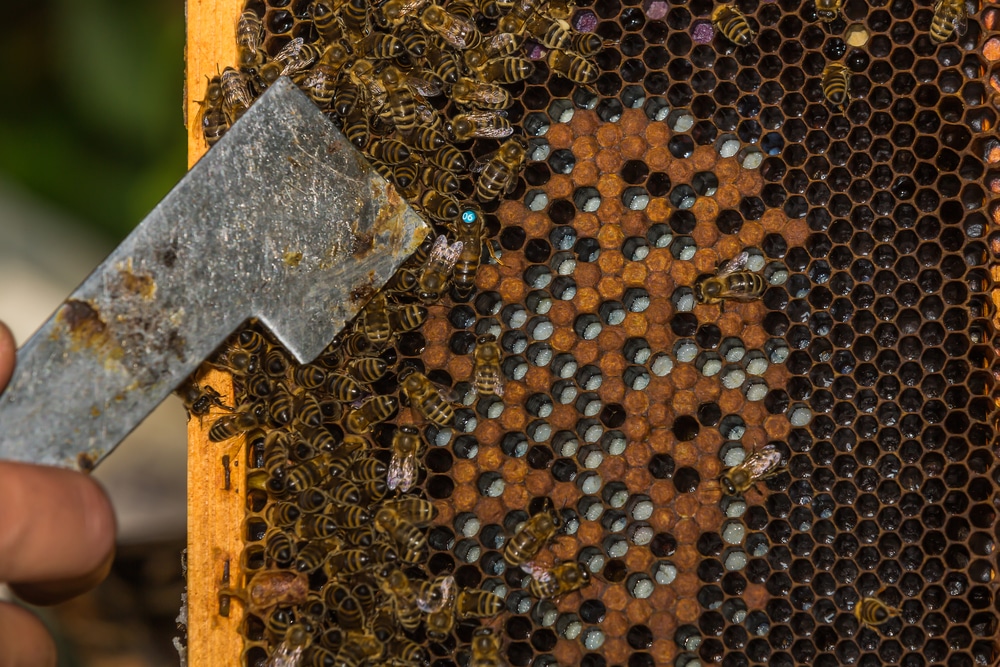
Many reasons lead a beekeeper to search for a queen: curiosity, queen isolation, removal of a defective, old or disabled queen, capture for shipment, introduction into another colony, marking, clipping, and so on.
I have found that many amateur beekeepers become obsessed with finding the queen at all costs during every inspection. This practice can become frustrating, as we have often said, because she is not always found on the first attempt.
We should have a reason before looking for her. During a routine inspection, eggs and a normal worker-brood pattern provide useful evidence of recent queen activity. They do not guarantee that the queen is still present: eggs take about three days to hatch, and workers can also lay eggs in some circumstances. We do not need to find the queen every time we open hives.
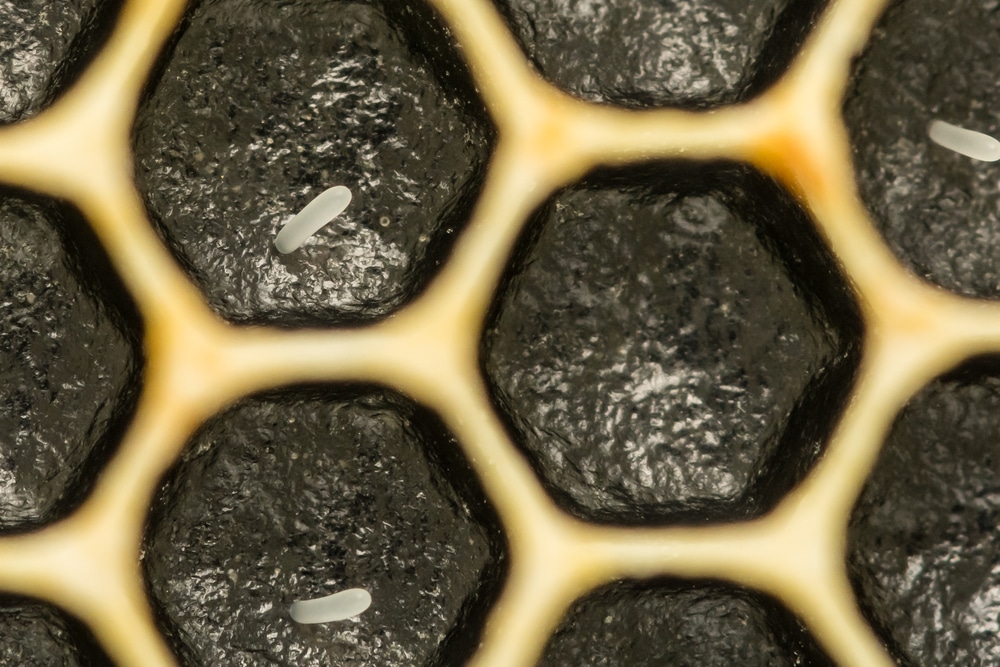
Nevertheless, some operations require us to find the queen, such as caging her to interrupt laying or removing her before requeening. When making splits or nucleus colonies, the need to see her depends on the method: what matters is knowing which unit contains the queen.
Tips for finding the queen
In this case, we recommend searching during the nectar flow. As foragers will be out working, it will be easier to locate the queen due to the reduced number of foragers present.
Some beekeepers use smoke at the entrance to move the bees before searching. However, heavy smoking is not a reliable way to reveal the queen: it can make her run or hide. Use smoke sparingly and handle the frames gently, particularly in mating nucs.
Recently laid eggs indicate the queen’s recent presence, so it is more common to begin searching near brood, although as we have said, do not rely solely on this, as it is not always true.
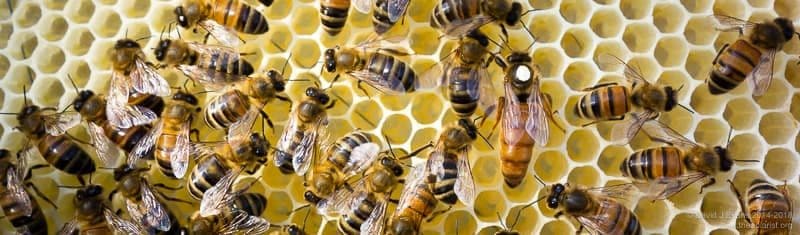
Success is not guaranteed
No method guarantees absolute reliability.
In any case, we must avoid triggering robbing at all costs. Frames should be left outside for as little time as possible. Place them on an upturned hive roof to avoid the risk of losing the queen in the grass.
If finding her is essential and a careful search has failed, an experienced beekeeper may use a queen excluder over an empty brood box to separate the bees. The method relies on workers passing through while the queen is retained, but it is not foolproof and it disturbs the colony. Do not force bees through the grid. If you are inexperienced, ask a mentor to help rather than repeatedly brushing the whole colony.
Frequently asked questions
How can you tell if a colony has a queen without seeing her?
Eggs and a normal worker-brood pattern are useful signs of recent queen activity, so you do not usually need to find her during a routine inspection. Eggs alone do not prove she is still present or identify exactly when she laid.
What is the best time to search for the queen?
During the honey flow, when most foragers are out. With fewer bees on the frames, the queen is much easier to find.
Is it advisable to smoke to find the queen?
Use smoke sparingly. Heavy smoking can make the queen run or hide rather than make her easier to find. Handle the frames gently, especially in small mating nucs.
Where might the queen be if she does not appear in the brood nest?
She may be in unexpected places: on the lid, in an empty super, walking along the walls, on the frame top bars, between the inner cover and the roof, on the sleeve of the suit, or even on the lid of a neighbouring hive.
What should I do if I cannot find the queen?
First decide whether you really need to find her. If you do, an experienced beekeeper can help with a careful search or an excluder-based method. This is not foolproof, and repeatedly brushing the entire colony is not a routine inspection technique.
What precautions should be taken when searching for her?
Keep the frames out for the minimum time possible to avoid triggering robbing, and place them on the lid turned upside down rather than on the ground, to prevent losing the queen among the grass.
Continue reading
- The queen bee, how to recognise her among thousands.
- How to inspect a hive, the framework of every visit.
- A drone-laying colony, if there is no laying or queen.
- Supersedure queens, when she has been changed without notice.

ISNI 0000 0005 1801 1100 | Joshua Ivars is the manager of LA TIENDA DEL APICULTOR and the author of this blog, where he shares technical and practical guidance for beekeepers. Drawing on extensive experience in the beekeeping sector, he offers advice and solutions based on beekeepers’ real needs, sharing his knowledge of equipment and essential beekeeping practices.


