
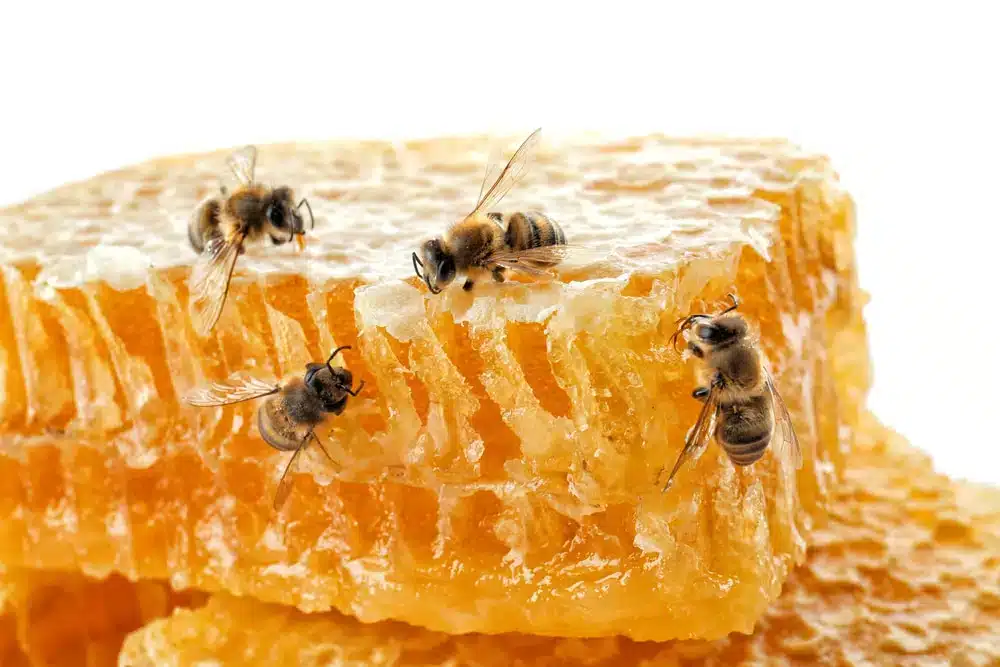
Honey bees search actively for food whenever conditions allow them to fly. Flowers are not their only attraction: exposed syrup, jam, ripe fruit and other sugary substances may also draw foragers. Finding bees on sweet food does not mean it is suitable bee feed, and leaving it accessible near hives can create problems.
When workers enter another colony to take its honey, nectar or syrup, beekeepers call this robbing. It is especially likely during a nectar dearth, when flowers offer little nectar. Robbing is an opportunistic foraging behaviour, not a sign that bees understand ownership or are behaving “badly”.
Exposed honey is a powerful attraction. Sticky comb, wax scraps carrying honey residues and open feeding equipment can all draw bees. Keep these covered. Wax and propolis should not simply be treated as equivalent to an accessible supply of sugar: the practical priority is to prevent bees reaching honey and feed.
A colony with plenty of stores may still rob. Strong colonies can put considerable pressure on small or weak neighbours whose guard bees cannot defend all the available entry points. A well-stocked hive is therefore not automatically a harmless neighbour.
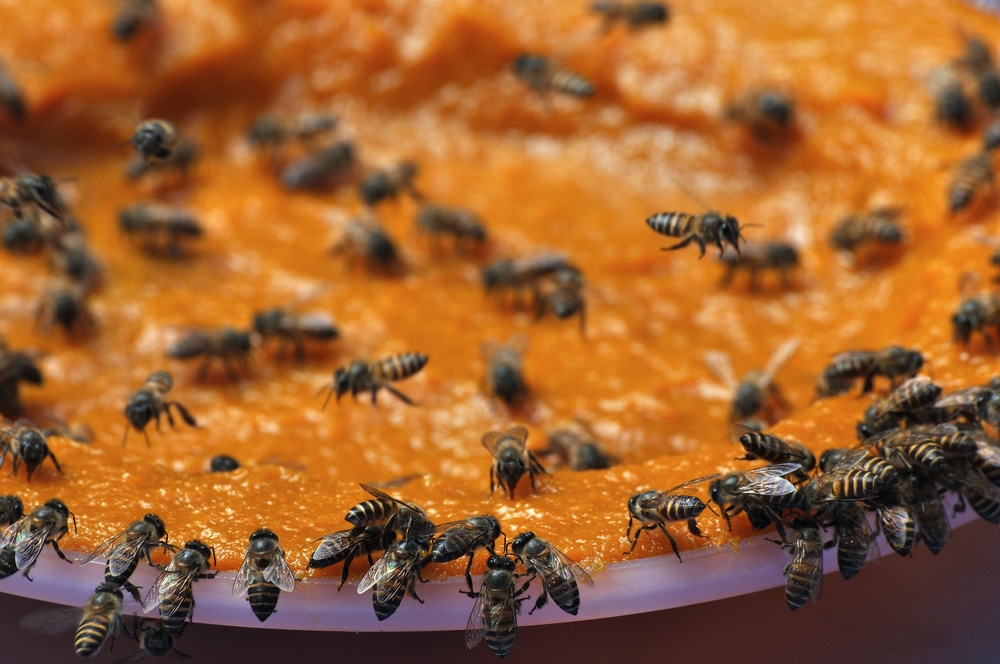
Bee stocks can differ in behaviour, but a subspecies name alone does not predict a robbing outbreak. The original article singles out Iberian and Italian bees; it does not establish that these are universally the most prone to robbing. The correct names are Apis mellifera iberiensis and Apis mellifera ligustica. Assess nectar availability, colony strength and hive management as well as stock.
How to recognise robbing
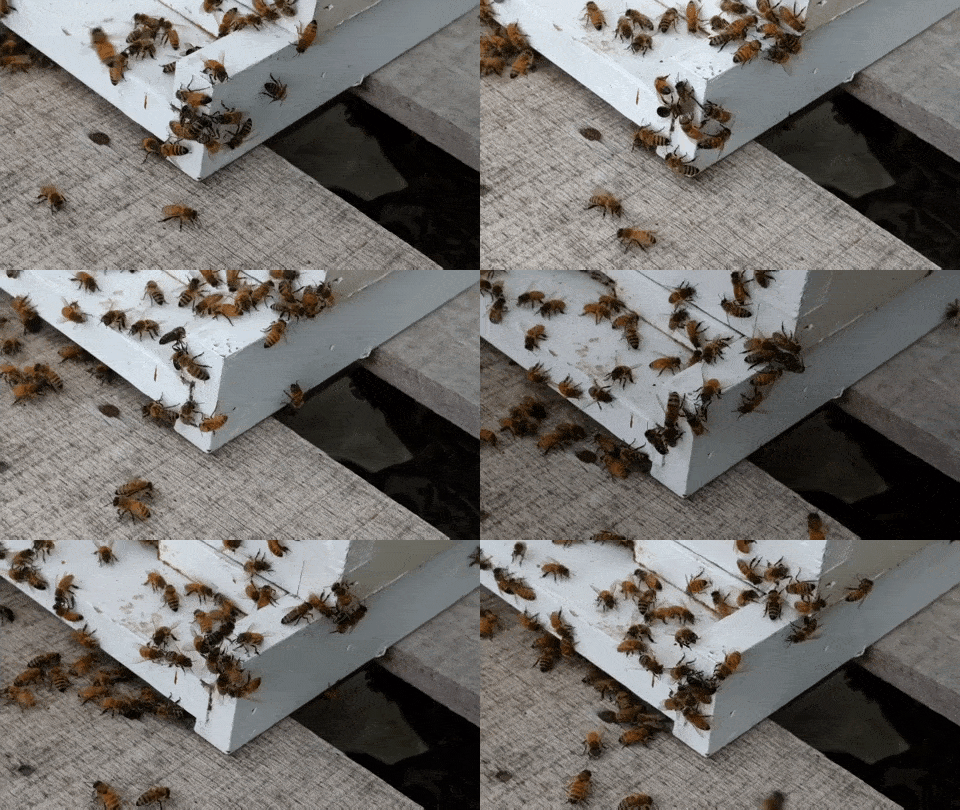
Robbing may begin with a few foragers investigating neighbouring hives. Successful bees recruit others. Look for searching along joints, repeated attempts to get past guards and fighting at the entrance. University of Florida guidance also describes torn wax cappings and increased numbers of dead bees as useful warning signs.
Not all robbing produces an obvious frenzy. A small, persistent flow of intruders may use cracks or poorly fitting joints without conspicuous fighting. This is sometimes called silent or progressive robbing. Watch the entrance and the sides of the hive carefully. Do not dismiss it because it is quiet: repair unintended gaps and make the main entrance easier to defend, while preserving ventilation.
Bees collecting a little spilled honey or syrup from their own hive can also create a temporary flurry of activity. Busy flight alone does not prove robbing. Nevertheless, the spill can attract bees from elsewhere, so clean it up and check the feeder or joint that allowed it to escape.
Young bees on orientation flights often hover facing the hive and fly widening arcs as they learn its position. This can be conspicuous on warm, sunny days during the brood-rearing season. Unlike a robbing attack, it normally involves no fighting at the entrance. Time of day alone is not a reliable distinction.
Paraphrased from the original article’s reference to The Hive and Honey Bee, Dadant & Sons; not a verbatim quotation.
What can happen during a robbing attack?
During a serious robbing episode, colonies may become markedly more defensive, including colonies that are normally gentle. Do not assume that familiar bees will behave as they did on the previous visit. Wear appropriate protection and keep unprotected people and animals away from the disturbance.
Robbing can spread between colonies in the same apiary or involve bees from another site. Severe attacks can rapidly deplete stores and kill bees, leaving the victim colony unable to recover. There is no fixed “one hour” timetable or predictable death toll. Robbing also provides a route for pests and pathogens to move between colonies, making it a health concern as well as a loss of honey.
What can trigger robbing?
Beekeeping operations can trigger or intensify robbing, but they are not its only cause. Nectar scarcity and poorly defended stores can create the conditions for robbing even when no one is opening hives. The useful question is which risks can be reduced, not who is to blame.
Wet supers contain honey left after extraction. If returning them for bees to clean, the National Bee Unit recommends putting each super straight back on its colony of origin, not leaving it outside for communal cleaning. Keep it covered until then and consider the colony’s health. Store cleaned, dry equipment securely; returning a wet super inside its original healthy colony is not inherently the same as exposing honey in the apiary.
Honey frames left outside and spilled feed are common avoidable attractions. Keep extracted combs and honey containers covered, and check feeding equipment for damage or leaks. Handle bee feed carefully rather than allowing syrup to run onto hive walls or the ground.
Prolonged inspections leave stores exposed and guards with more openings to defend. This matters particularly after a honey harvest or during another nectar shortage. Penn State’s seasonal management guidance recommends limiting inspections during a dearth and using robbing screens. A lack of drones early in the season is not, by itself, an established cause of robbing.
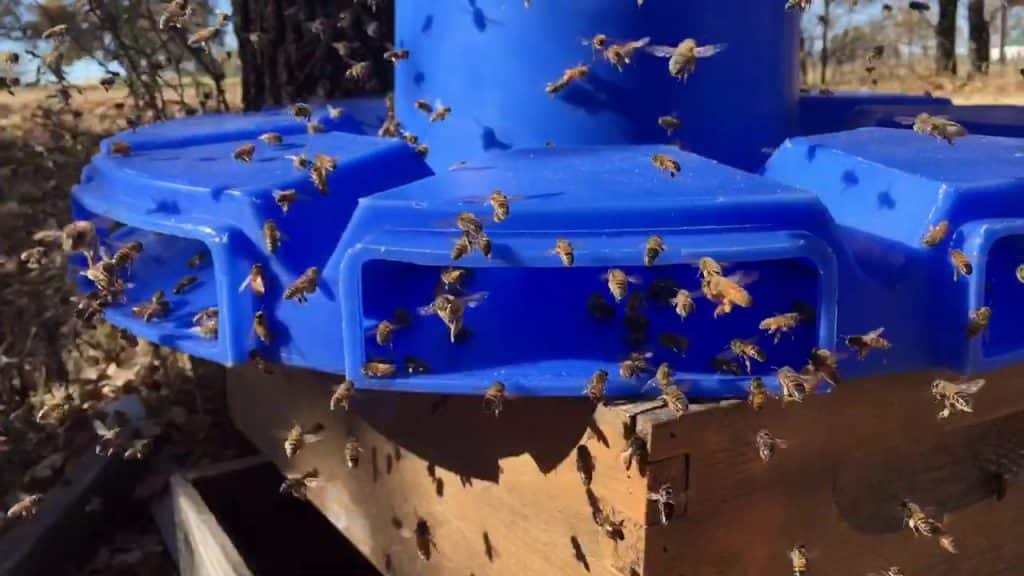
External feeding can create other problems too. Antonio Gómez Pajuelo describes field cases in which dry pollen supplied outside the hives was dropped near the entrances. According to his account, wild boar and free-ranging Iberian pigs were attracted to the spilled material and displaced or overturned hives. This is an attributed observation from particular apiaries, not a claim that every outdoor pollen feeder will have the same result.
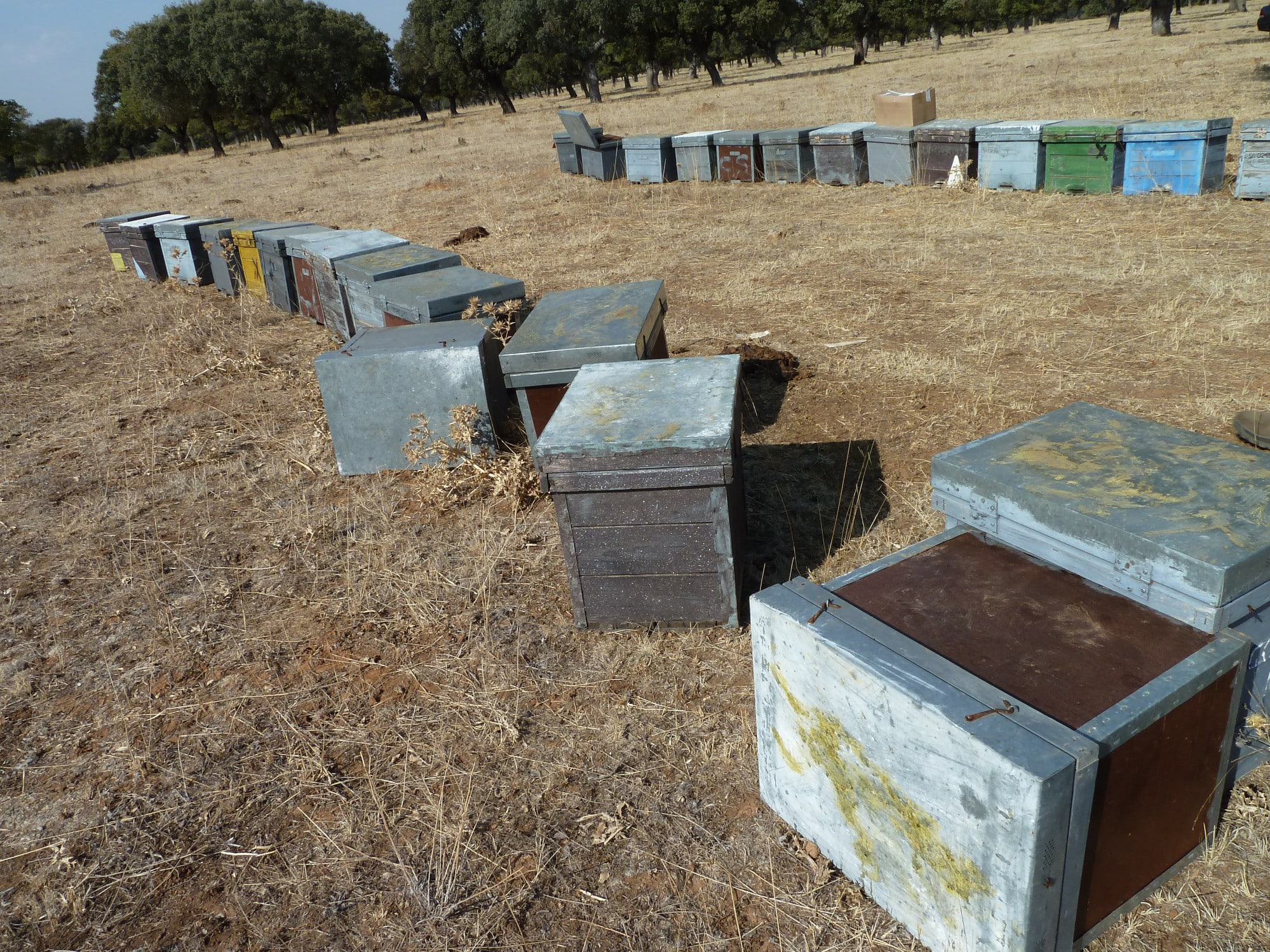
Local wildlife and livestock therefore belong in the risk assessment for outdoor feeding. Pajuelo’s example does not remove the separate concerns about robbing and bees from different colonies sharing a feeding point. The photograph records the damaged apiary; it cannot, on its own, establish which animal caused the damage.
How to prevent robbing
Prevention means reducing both the attractions and the opportunities for robbing. The following checklist is consistent with the Canadian Food Inspection Agency’s bee biosecurity guidance on covered feed, sound equipment and brief inspections:
- Keep necessary inspections brief and organised. Prepare equipment beforehand, work one colony at a time and close it promptly, especially during a nectar dearth.
- Prevent leaks and clean up spills immediately. Check feed bags and feeders for damage and make sure they sit as their design requires; a tilted feeder may leak.
- Never leave honey frames exposed. Cover them as soon as they are removed, even if you intend to return shortly.
- Store unoccupied drawn comb in bee-tight boxes or a secure storage area. This means excluding visiting bees from stored equipment, not sealing an occupied hive airtight.
- If a colony needs feeding, use a suitable internal feeder and supply appropriate feed late in the day. Do not feed honey of unknown health status. Keep the entrance defensible without cutting off airflow.
- If robbing starts, stop inspections, reassemble open hives and remove exposed feed. Reduce the victim colony’s entrance and close unintended cracks, but maintain ventilation. A properly fitted robbing screen can help; it is not a guarantee.
- Consider wind and weather when planning work, and keep removed frames covered. Starting at a particular end of the apiary is not a reliable substitute for controlling exposed honey and keeping inspections short.
- Harvest efficiently in suitable conditions. Work during a practical low-risk period, avoiding prolonged exposure of supers. Morning or later-day working may suit the site, but nectar availability and keeping honey covered matter more than a universal time rule.
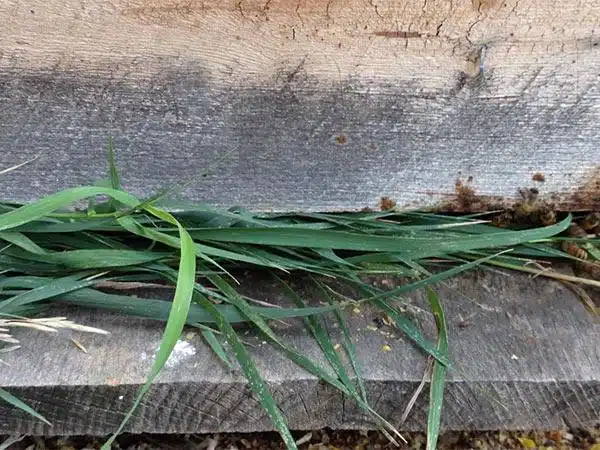
Give small or weak colonies particular attention, but first establish why they are weak: queen status, food and health all need consideration. Keep an entrance they can defend and work them carefully. A separate site may be useful in some circumstances, but do not move a potentially diseased colony or share its combs without appropriate advice. Moving a hive is not a substitute for addressing the underlying problem.
Carry water for removing sticky residues from hands and tools, and use gloves that can be cleaned appropriately. Washing away syrup is not the same as disinfecting contaminated equipment. Follow a proper between-colony hygiene routine; see our guide to apiary cleaning and biosecurity.
When handling honey frames, put them in a covered super or suitable box, with a clean base underneath, such as an upturned roof. A clean damp cloth over the top can provide temporary protection while you work; do not leave gaps that admit bees. This is a way to cover removed frames, not a recommendation to seal a living colony without ventilation.
Would you like to learn more about beekeeping?
Explore our online introduction to beekeeping course.
The course provides a structured introduction to practical beekeeping. Check the course page for the current syllabus and access details. The original promotional video below is in Spanish.
![Introducción al Curso de Apicultura [SÚPER COMPLETO]](https://www.latiendadelapicultor.com/blog/wp-content/plugins/wp-youtube-lyte/lyteCache.php?origThumbUrl=https%3A%2F%2Fi.ytimg.com%2Fvi%2FuJomNRA0UP8%2F0.jpg)

ISNI 0000 0005 1801 1100 | Joshua Ivars is the manager of LA TIENDA DEL APICULTOR and the author of this blog, where he shares technical and practical guidance for beekeepers. Drawing on extensive experience in the beekeeping sector, he offers advice and solutions based on beekeepers’ real needs, sharing his knowledge of equipment and essential beekeeping practices.


