
Good apiary hygiene helps reduce the spread of disease: support healthy colonies and avoid carrying infectious material from one hive to another on tools, gloves, combs or equipment. Drifting and robbing can also spread mites and pathogens. Hygiene is therefore part of a wider biosecurity plan, not a substitute for monitoring, diagnosis or appropriate disease control.
Five practical rules for apiary hygiene
- Support healthy colonies. Investigate weakness before uniting or reinforcing; do not spread suspected disease through a merger.
- Clean tools between colonies. Remove residues, use a suitable cleaning solution and apply the correct disinfection protocol when required.
- Inspect apparently healthy colonies first. Identify suspect hives and keep their equipment separate.
- Renew old comb. Plan replacements to reduce the build-up of infectious material and treatment residues.
- Feed safely. Avoid honey and pollen of uncertain health status; use appropriate carbohydrate feed or a properly formulated pollen substitute.
One easily missed precaution is to secure a dead colony against robbing as soon as you find it. First establish that it really is dead. If bees remain alive, do not simply seal them in. Where an infectious disease is suspected, keep the equipment isolated and seek advice before moving it.
In this guide
- before setting up the apiary;
- in the apiary;
- beekeeping equipment;
- comb and wax, and feeding;
- responding to suspected infectious disease.
Cleaning beekeeping equipment and maintaining good hygiene are important preventive measures. Cleaning removes dirt and residues; disinfection targets infectious organisms using a suitable, validated method. A quick rinse or a clean-looking surface does not establish that equipment is safe after an outbreak.
Hygienic beekeeping practices
Before setting up the apiary
Before choosing a site, find out about nearby apiaries: whether they are actively managed, abandoned, migratory or used for pollination. Varroa mites can arrive on drifting or robbing bees. Infectious material associated with American foulbrood can also move between colonies through drifting bees, robbing and contaminated equipment or stores. These are important routes, not an exhaustive list.
Inspect purchased colonies carefully before accepting them and obtain their health and treatment history. Where possible, keep new arrivals separate while you assess them, using dedicated equipment. The National Bee Unit’s hygiene guidance recommends at least two brood cycles—six weeks—for isolating swarms before mixing them with established stock. A quarantine plan for purchased colonies must also account for their history and local requirements; time alone does not prove freedom from disease.
Know the surrounding crops and maintain contact with growers about planned plant-protection applications, timing and exposure risks. The absence of an immediate visible bee kill does not establish that an exposure is harmless. Follow relevant product restrictions and local pesticide-incident procedures, and record unusual losses rather than assuming their cause.
In the apiary
Aim for well-nourished colonies with enough bees to cover their brood. If one weakens, investigate the reason before reinforcing or uniting it. Never combine a suspect diseased colony with a healthy one simply to make it stronger. A large population does not rule out infection or a damaging mite burden.
Remove treatment strips when the product instructions require it, and collect spent strips, packaging and other residues for the appropriate disposal route. Do not leave them in the apiary or reuse them contrary to the label.
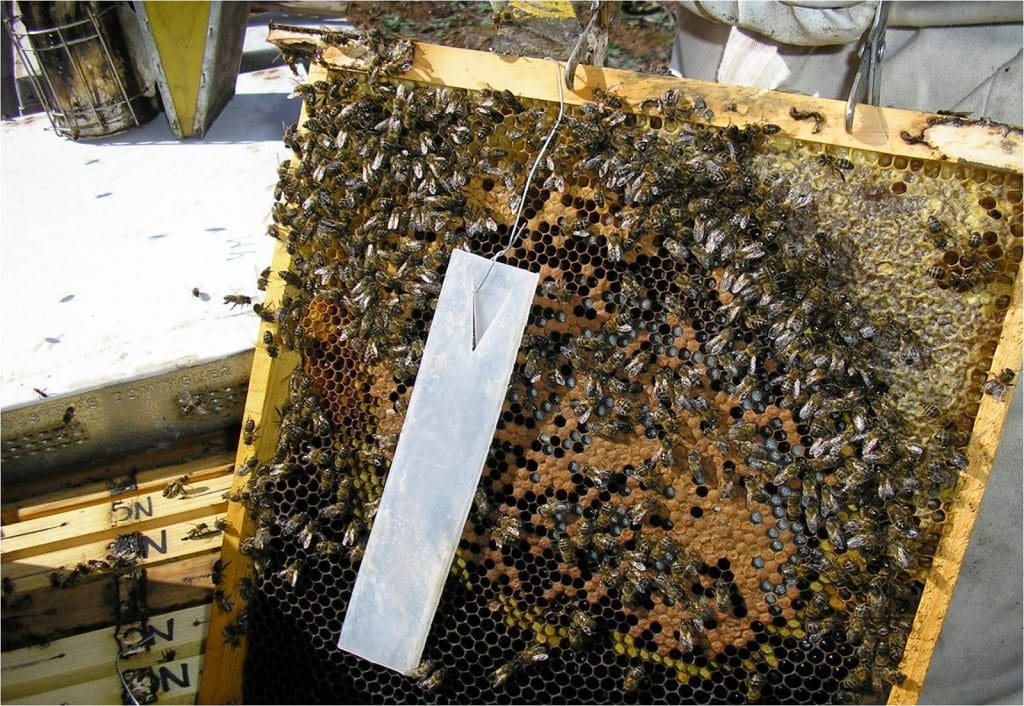
Keep work and storage areas free of exposed honey, syrup and feed scraps that attract robbing bees, ants, rodents or other animals. Close containers and clean up spills promptly.
Use stable hive stands to keep boxes off wet ground, and avoid persistently damp, poorly drained positions. Make entrances easier for bees to distinguish through varied orientation, landmarks or spacing rather than a long, uniform row. Vegetation can provide landmarks, but must not obstruct flight paths or inspections.
Beekeeping equipment
When a colony dies or absconds, isolate its boxes and combs until the cause and risk have been assessed. Do not assume that empty equipment is harmless. The cleaning, disinfection or disposal needed depends on what has happened, the material and any official disease-control instructions.
Start by removing wax, propolis and debris. Suitable wooden equipment may then be treated by controlled scorching or an appropriate disinfection method; plastics and polystyrene need a compatible process and must not be scorched. Hot-paraffin treatment is a specialist procedure requiring controlled equipment, not an improvised cleaning bath. No single method is suitable for every material or every pathogen, and routine cleaning does not replace a foulbrood-control protocol.
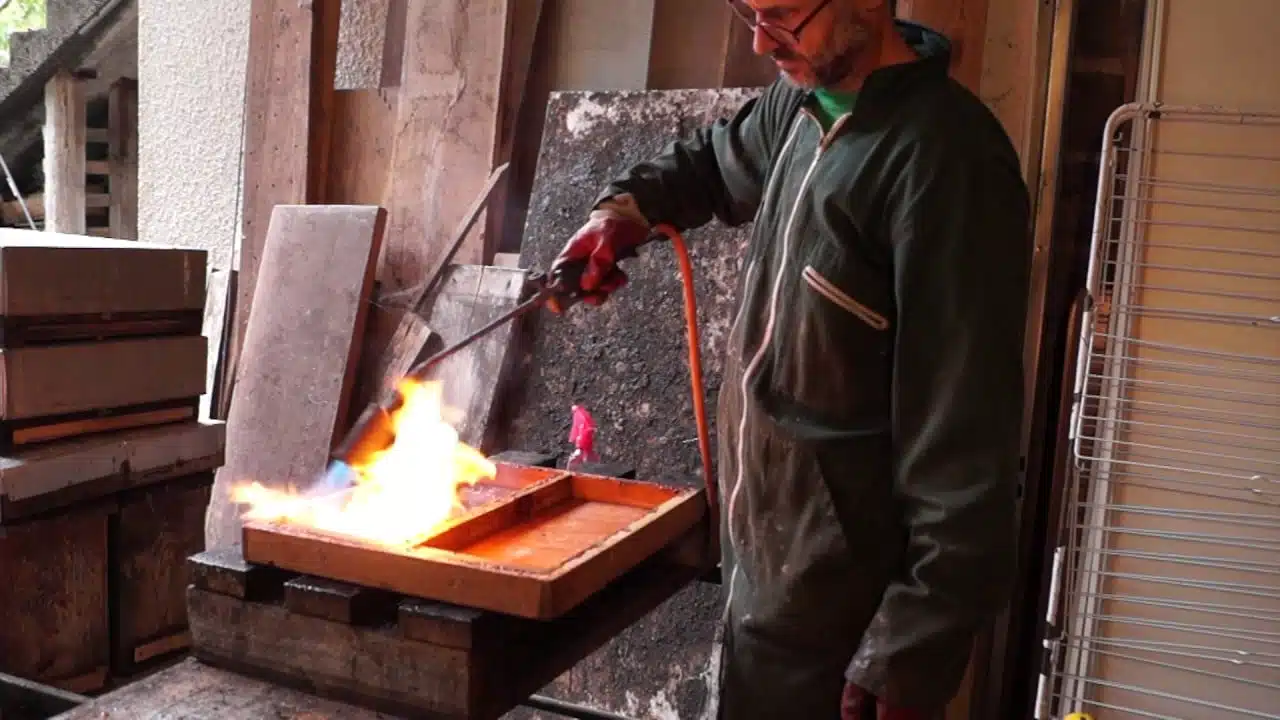
Include floors and removable trays in your maintenance plan: brood debris, cocoons, cappings, pollen and dead bees can accumulate there. Inspect and clean them as required, including during the spring assessment. Do not treat annual blowtorching as a universal requirement; the floor’s material, condition and disease history determine the appropriate method.
Clean hive tools and other frequently shared equipment between colonies, and separate suspect equipment from the clean kit. Keep bee suits and boots clean too. Follow the clothing manufacturer’s washing instructions, especially for veils; replace disposable gloves as needed and clean reusable gloves by a suitable method.
For routine cleaning, the NBU guide gives 1 kg of washing-soda crystals in 4.5 litres of water, used with scraping and scrubbing. Washing soda is sodium carbonate, not caustic soda. Wear chemical-compatible gloves, eye protection and protective clothing; avoid skin contact and splashes, and check material compatibility. For disinfection, choose an appropriate product and follow its specified concentration, contact time and rinsing instructions. An unspecified “2% bleach” mixture and a quick dip are not a validated all-purpose protocol. Never mix bleach with other cleaners or disinfectants; provide ventilation and keep chemicals away from bees, feed and honey.

Comb and wax
Comb is both the nursery and the food-storage area of the colony. Its cells hold developing brood, honey and pollen, so the origin and condition of the wax matter for both bee health and the quality of hive products.
Old comb can retain infectious material and residues from treatments. Clean, traceable cappings wax can be a useful raw material for foundation, but it should not be assumed to be free of pathogens or residues solely because it came from cappings. Check the supplier’s quality controls and keep suspect wax out of the normal recycling stream.
Replace old, dark brood comb progressively with suitable new foundation when the colony has the strength and resources to draw it. Record comb age and replacements. This can reduce accumulated contamination, but is not proof that a colony or its replacement wax is disease-free.
Never leave honey-bearing combs outside for bees to clean out: this encourages robbing and can redistribute infectious material. Keep removed comb and wax scraps in closed, bee-proof containers.
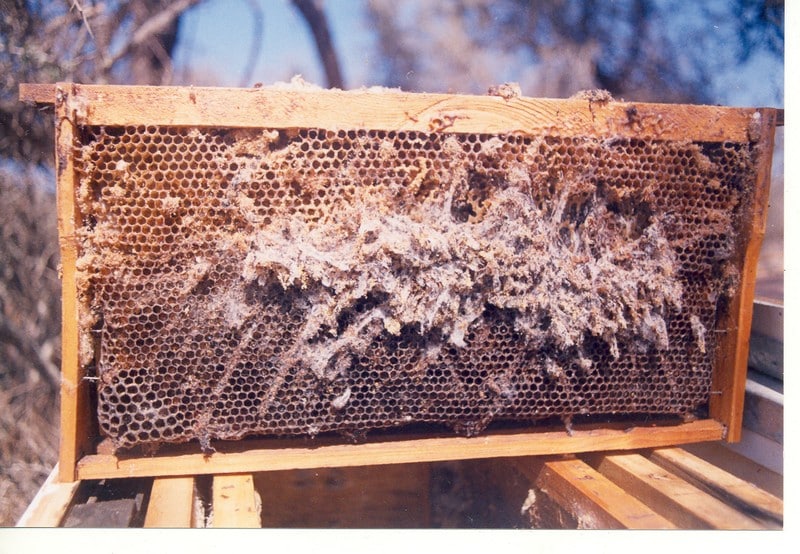
Do not transfer combs from a dead or abandoned colony straight into another hive. Review its history and investigate the loss first; visual inspection alone cannot rule out every infection. Stored honey, pollen and brood remains may all matter when deciding whether equipment can be retained.
If an infectious cause is suspected, keep those combs and their wax isolated. Do not pass them to other colonies or mix them into wax intended for foundation. Obtain disease-specific advice about testing, treatment or disposal; ordinary wax melting is not a reliable way to eliminate every pathogen.
Feeding
Do not make bee feed from honey or pollen of uncertain health status, including material taken from other colonies. Feeding can spread infection. Honey bought for human consumption is not thereby certified safe to feed to bees.
Use feeds suitable for honey bees and for the colony’s actual needs. White-sugar syrup or suitable commercial carbohydrate feed can supply energy; glucose/dextrose and fructose may be ingredients in formulated feeds. Brewer’s yeast or appropriately processed soy ingredients are used in some pollen substitutes, but are not nutritionally interchangeable with pollen or automatically suitable on their own. Choose a proven formulation instead of improvising a mixture.
Check liquid feed and feeders for fermentation or spoilage. Prepare and store feed hygienically, supply an amount the colony can use, and remove unsuitable feed. Cleaning the feeder and checking storage conditions are part of correcting the problem, not just adding fresh syrup on top.
What to do if you suspect infectious disease
Start inspections with colonies that appear healthy and leave already identified suspect colonies until last, using separate equipment where possible. If unexpected signs of a serious infectious disease appear, stop moving combs or tools between hives and seek advice; simply changing the inspection order is not enough.
Clean the equipment used on the suspect colony and keep it separate until the appropriate disinfection has been completed. Do not use a contaminated bucket, brush or reusable cloth to carry material around the apiary. Deal with waste and used solution through the appropriate route, away from bees, watercourses and food-handling areas.
For a genuinely dead colony, secure the entrance and other access points against robbing. Mark the hive and leave its equipment isolated. If foulbrood or another controlled disease is suspected, do not transport the boxes, combs or honey elsewhere before receiving instructions from the responsible authority.
Record the colony ID, date, signs, recent movements, feed and treatments, and contact your bee-health adviser, veterinarian or official bee inspector promptly. UK government guidance on suspected foulbrood, for example, requires reporting and restrictions on removing colonies, equipment or honey. Use the reporting route and requirements for your own jurisdiction.
Frequently asked questions
How should equipment be cleaned between colonies?
Remove wax, propolis and dirt first. Use an appropriate cleaning method between colonies, and follow a disease-specific disinfection protocol when needed. The product concentration, contact time and material compatibility matter; a quick rinse in unspecified diluted bleach is not enough to establish effective disinfection.
How often should hive floors be scorched?
Inspect floors regularly and clean accumulated debris as needed, including during spring maintenance. Scorching is only appropriate for suitable materials and circumstances. There is no universal rule that every floor must be blowtorched annually, and plastic or polystyrene parts must not be scorched.
What should I check when buying second-hand hives or colonies?
Check their health and treatment history and inspect them before purchase. Keep incoming bees and equipment separate while assessing the risk, using a quarantine plan suited to their origin and local advice. A few weeks without obvious symptoms does not certify freedom from disease.
Can comb from a dead colony be reused?
Do not reuse it until the cause of the loss and the health risk have been assessed. A visual check alone is insufficient. If infection is suspected, isolate the comb and wax and seek disease-specific advice; ordinary melting does not make all contaminated wax safe.
Why avoid long, uniform rows of hives?
Long rows of similar hives with identical entrance directions can increase confusion and drifting. Different orientations, landmarks and spacing help bees find their own colony. This reduces one route of spread but does not eliminate robbing, contaminated-equipment risks or the need for health monitoring.
What should I do when I find a dead colony?
First confirm that it is dead. Secure it against robbing, mark it and keep its equipment isolated. If infectious disease is suspected, record the signs and contact the appropriate adviser or authority before moving or reusing anything. Do not seal a living colony in without an appropriate plan.
Further reading
- Cleaning and disinfecting frames and equipment: background on methods; current product labels and disease-specific advice take priority.
- Feeding bees honey and pollen (in Spanish): why the source and health status matter.
- How to inspect a beehive: a structured approach to the visit.
- Drifting bees: causes, consequences and prevention.
Educational guidance, not a diagnosis or a substitute for official disease controls. In Spain, contact your ADS bee-health association or veterinary services; elsewhere, use the relevant local bee-health authority. Reporting and movement requirements vary by jurisdiction and disease.

ISNI 0000 0005 1801 1100 | Joshua Ivars is the manager of LA TIENDA DEL APICULTOR and the author of this blog, where he shares technical and practical guidance for beekeepers. Drawing on extensive experience in the beekeeping sector, he offers advice and solutions based on beekeepers’ real needs, sharing his knowledge of equipment and essential beekeeping practices.


