
Introduction
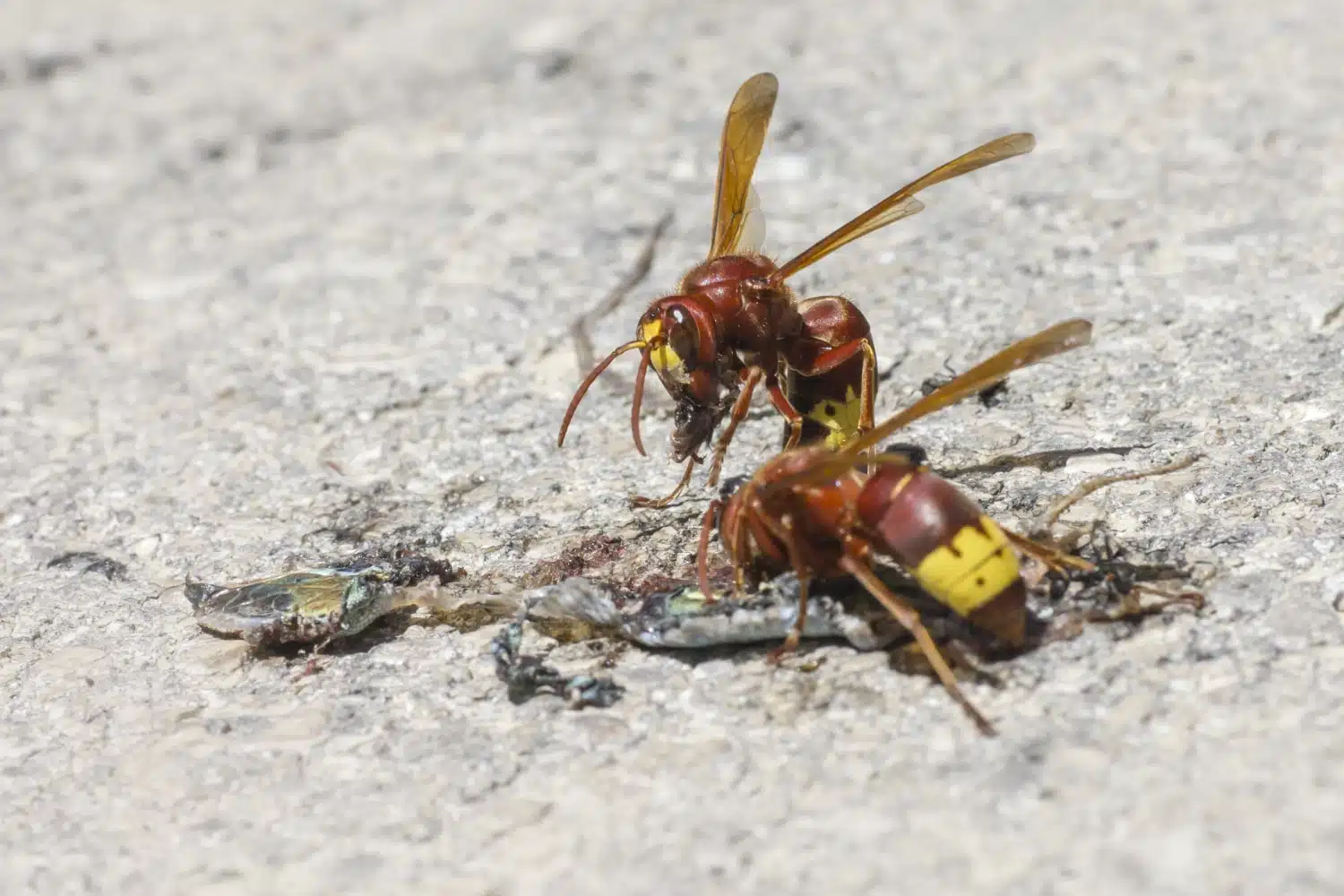
Vespa orientalis, the oriental hornet, is an introduced predator of honey bees in parts of Spain. It has become a serious concern for beekeepers in Cádiz, Málaga and Seville, with records elsewhere in Andalusia and in Valencia. A 2025 report from the Andalusian government describes its expansion during 2023–2024. Distribution continues to change, so consult local monitoring information. This guide explains identification, the annual cycle and practical ways to reduce pressure on colonies.
Life cycle of Vespa orientalis
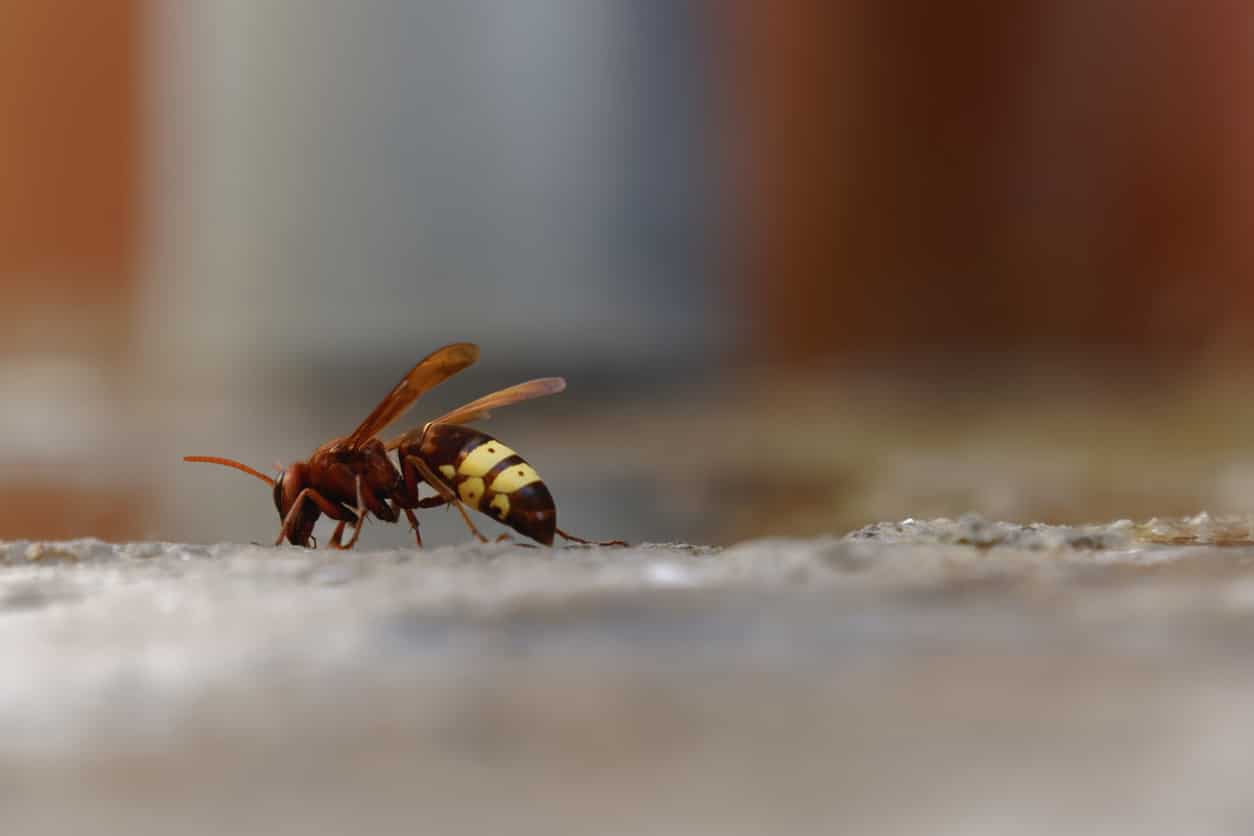
The life cycle of Vespa orientalis follows an annual pattern that begins in spring and culminates in winter:
• Spring: Overwintered, mated queens emerge from sheltered cavities and begin building nests. Early sightings are useful for monitoring. Capturing queens is sometimes proposed as a control measure, but spring trapping should follow local guidance; catches alone do not demonstrate that an area’s hornet population has been controlled.
• Summer and autumn: Hornet colonies grow and pressure at hive entrances can increase. Workers capture honey bees and other insects as protein for their larvae, while adults also use sugary foods, including honey.
• Winter: In temperate climates, the old colony normally declines at the end of the season. Newly mated queens overwinter in sheltered sites and start new nests the following spring; the timing varies with local conditions.
Impact on honey bee colonies
Vespa orientalis can weaken colonies through repeated predation and raids on hive resources. Guard bees must defend the entrance while foragers face attacks on departure and return. A reduction in foraging can compound direct bee losses and leave the colony short of food.
In the talk included below, beekeeper José López describes rapid population losses and pressure on honey production in affected apiaries. His observations are useful field experience, but the outcome and speed of decline depend on the colony, site and intensity of attack.
Control methods and reducing pressure on colonies
1. Trapping: designs, timing and limitations
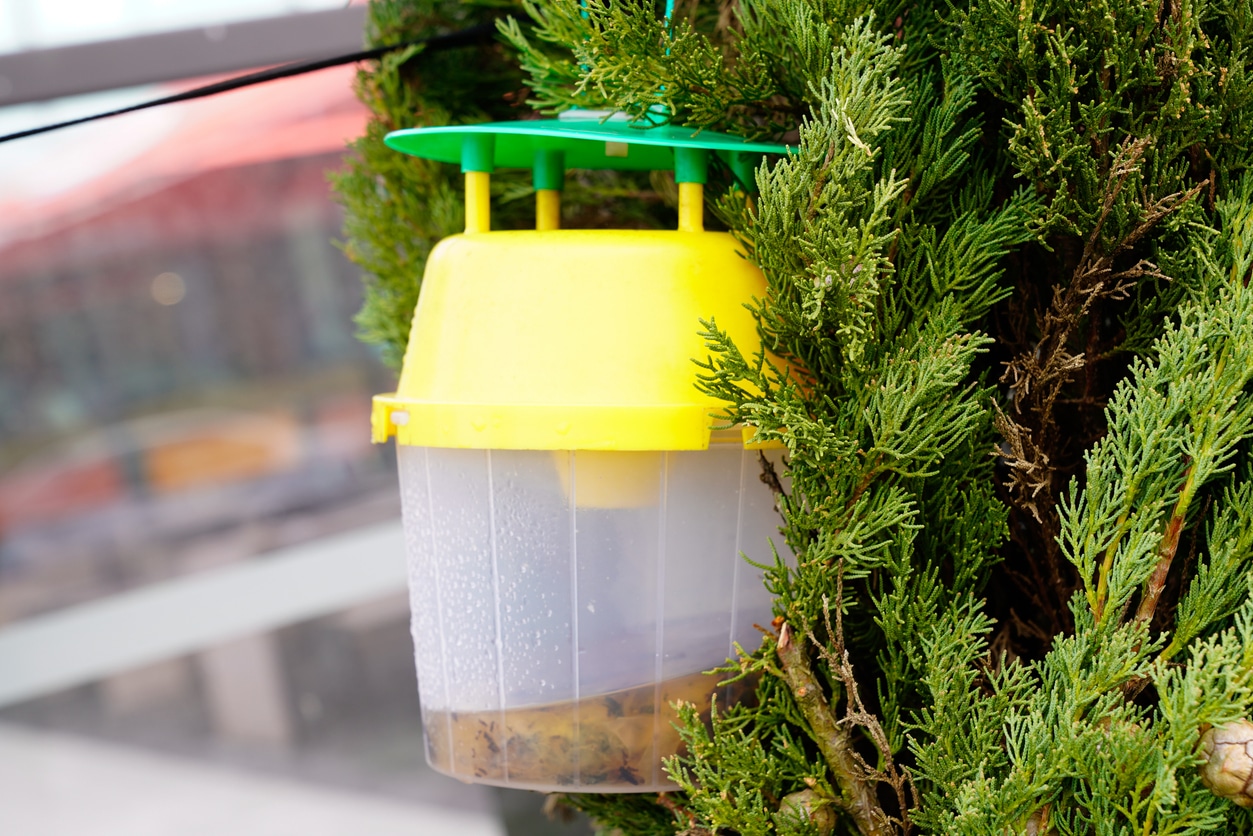
Hornet traps and entrance protection are used by beekeepers, but no design should be presented as a guaranteed solution. The Spanish environment ministry’s technical assessment highlights the limitations of trapping and the difficulty of controlling this species. The following examples need regular checks for bee access, non-target catches and actual reduction in attacks.
• Hanging bait traps: These are used around some apiaries during the active season. Hornets may be attracted to protein or sugary baits, but attraction varies and other insects may also be caught. Follow the relevant local trapping programme and the trap instructions, rather than assuming that a particular height, bait or season guarantees success. Do not add insecticides to improvised baits.
• Entrance traps, including Koldo-type designs: These are fitted around the hive entrance to interfere with hornet attacks while allowing bee traffic. Designs vary. Check that returning bees can enter, ventilation remains adequate and trapped insects can be dealt with safely. Their presence does not ensure that a colony is protected.
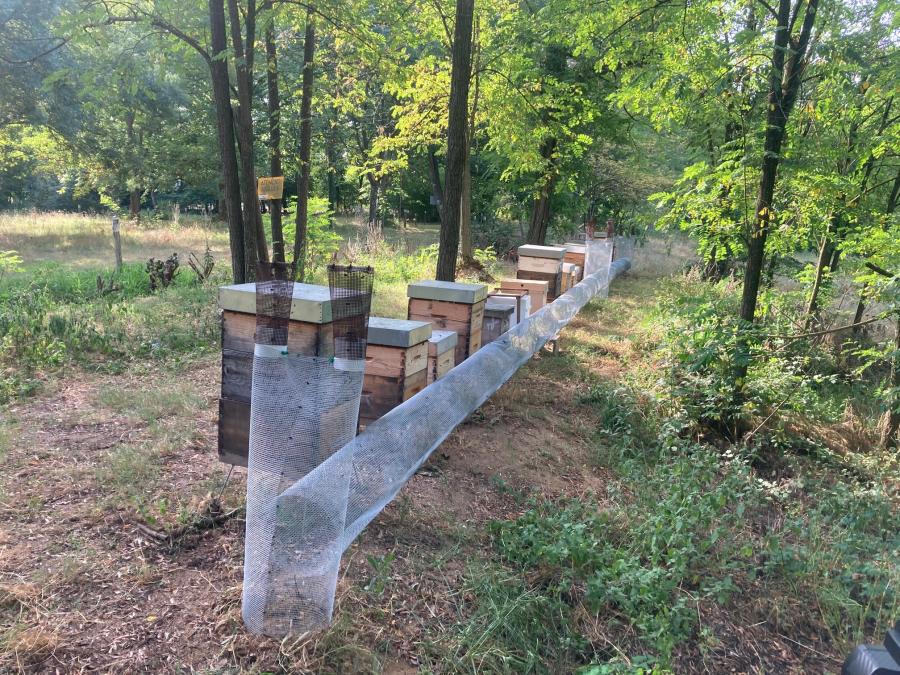
• Funnel traps using empty Langstroth hive bodies: The example shown below uses hive bodies, an inner cover and a funnel to direct hornets towards a capture chamber. A queen excluder provides an exit route for worker bees. Treat this as a particular equipment design, not evidence of universal effectiveness, and follow the manufacturer’s assembly and checking instructions.

2. Reducing hive entrance size
A suitably fitted entrance reducer or protective grille can make it harder for hornets to enter. The original example uses 6 mm openings; this is not a universal specification for every hive or bee population. Check worker and drone passage, ventilation and congestion, particularly in hot weather. Entrance protection may reduce access to the hive but does not stop attacks on bees outside it.
3. Supporting colonies through appropriate feeding
Feeding can support colonies when attacks restrict foraging and stores are inadequate. José López discusses supplementary feeding as part of his apiary management. Base any feeding decision on colony strength, brood, pollen availability and existing stores; feed cannot replace control of hornet pressure.
• Protein patties: These can supplement a shortage of suitable pollen and support brood rearing where the colony can use them. They do not produce an immediate new population of guard bees. Check consumption and remove deteriorating leftovers.
• Carbohydrate feed: Fondant, patties or suitable syrup can help a colony that is short of stores. Use an internal feeding arrangement appropriate to the hive and season, and avoid spills or exposed feed that attract robbing insects.
4. Finding and removing nests safely
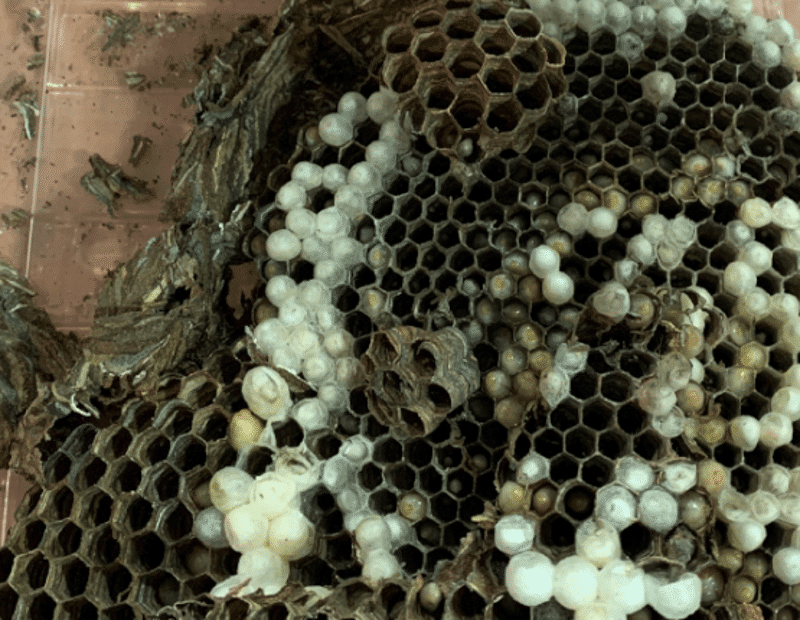
Nests may be hidden underground, in tree cavities or inside buildings, making them difficult to locate. Record the location of suspected activity from a safe distance and pass it to the local authority or trained pest-control team. Thermal cameras, drones or detection dogs should not be assumed to be validated or effective for every concealed nest.
Nest removal is work for trained personnel. The responsible team should assess access, occupants, public safety and the appropriate method under local rules. Report a suspected nest when found rather than waiting for a particular month. Do not open cavities, block an active entrance or attempt to apply products yourself.
Identifying Vespa orientalis
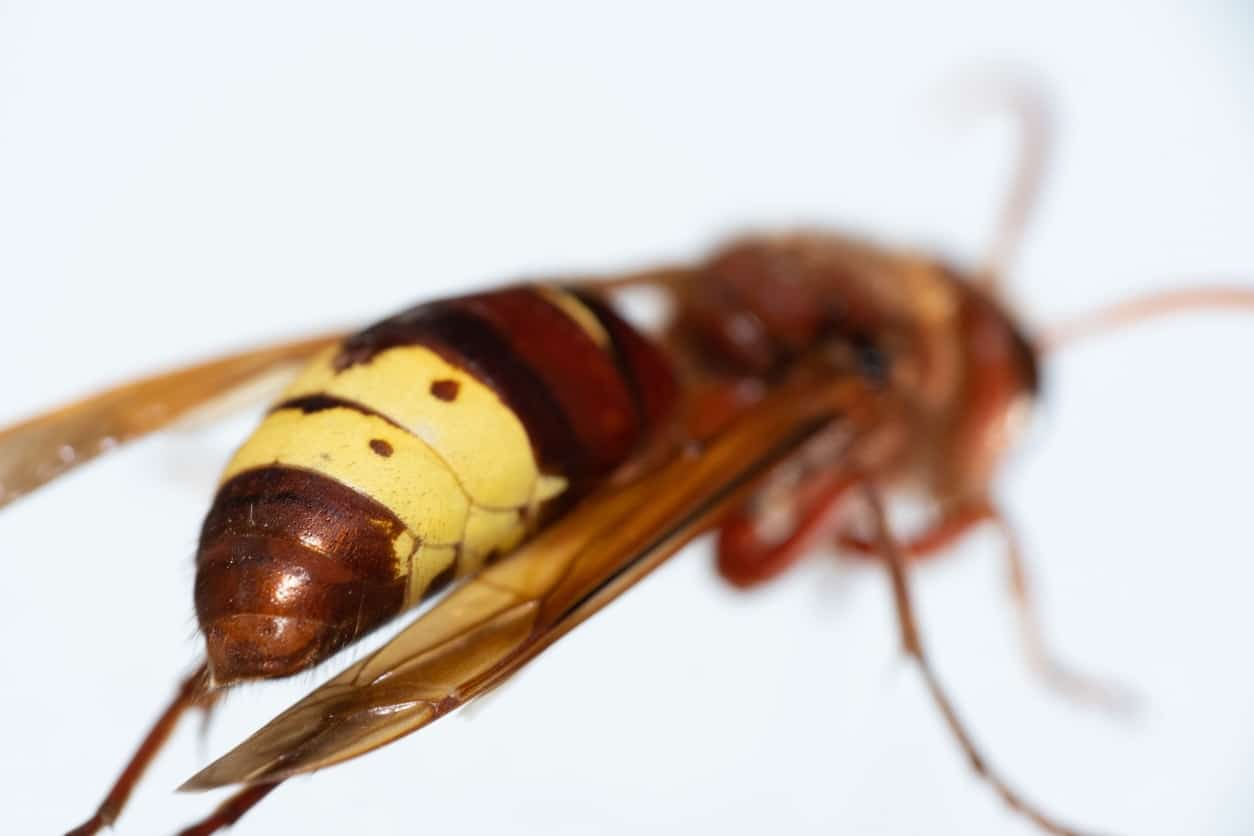
Correct identification helps distinguish Vespa orientalis from Vespa velutina and the native European hornet, Vespa crabro. Look at several features together, ideally from a photograph taken without approaching a nest:
• Size: Adults are typically around 25–35 mm long, with queens generally larger than workers. Size alone is not diagnostic.
• Colour: A predominantly reddish-brown body, a yellow facial patch and a broad yellow band on the abdomen are useful distinguishing features.
• Wings: Like other hornets, it has two pairs of wings. Wing number and fast flight do not distinguish it from similar species.
• Habitat: Prefers warm, dry areas, with nests generally located underground or in protected cavities.
Risks to people
Oriental hornets can sting repeatedly when disturbed, especially near a nest, and stings can be serious for people with venom allergy. Keep people and pets away from suspected nests and contact the relevant local service. A routine sighting should go through the local reporting channel; use emergency services if someone is in immediate danger or develops a severe reaction after a sting.
Conclusion
Reducing the impact of Vespa orientalis combines monitoring, suitable entrance protection, attention to colony nutrition and professional nest management. Traps may form part of a locally coordinated approach, but their results and effects on non-target insects need checking. No single device or feeding programme guarantees protection.
Keep records of attacks and colony condition, share confirmed sightings with the local monitoring service and assess whether each measure is helping. This gives beekeepers and the responsible authorities a firmer basis for adapting their response.
Extra: José López’s talk in Torrelavega about Vespa orientalis


ISNI 0000 0005 1801 1100 | Joshua Ivars is the manager of LA TIENDA DEL APICULTOR and the author of this blog, where he shares technical and practical guidance for beekeepers. Drawing on extensive experience in the beekeeping sector, he offers advice and solutions based on beekeepers’ real needs, sharing his knowledge of equipment and essential beekeeping practices.


