

Drone brood in worker cells can result from either a failing queen or laying workers. A laying-worker colony is usually queenless and has several workers laying unfertilised eggs, which develop into drones. Multiple eggs, eggs on cell walls and scattered domed cappings are useful clues, but the brood pattern and queen status must be assessed together. The key question is not just how to save the colony, but whether rebuilding it is worthwhile.
Decide before acting
| Your situation | A proportionate response |
|---|---|
| Few bees remain and the season is advanced | Consider uniting or disbanding. Assess health before sharing bees, comb or stores. |
| Good population and suitable forage | Consider recovery with appropriate brood support and a realistic queen plan. A shake-out is not a guaranteed cure. |
| Enough bees remain to justify retaining the foragers | Plan the redistribution. Position changes can retain flying bees but do not reliably exclude laying workers. |
| Diagnosis or health is uncertain | Seek experienced advice first. A failed queen and laying workers require different decisions; suspect material should not be distributed. |
In this guide
- why a colony becomes drone-laying;
- how to identify laying workers;
- brood support and requeening, with their limitations;
- retaining foragers, with a practical example;
- what to do if recovery is not justified.
Inspect the brood nest and establish the cause
Inspecting the brood nest is one of the most useful ways to assess a colony’s condition. Look at the eggs, larvae, sealed brood, adult population and recent queen history before deciding what to do.
A honey bee colony contains three adult forms: drones develop from unfertilised eggs, while workers and queens normally develop from fertilised eggs. The feeding and rearing of female larvae determines whether they develop as workers or queens.
A colony may produce abnormal amounts of drone brood for several reasons:
- The queen has exhausted or lost viable stored sperm and can no longer fertilise enough eggs. A drone-laying queen must be distinguished from laying workers.
- A young queen was inadequately mated or failed to mate. Poor weather can interfere with mating flights, but queens do not all mate with a fixed 14–20 drones, and successful supersedure cannot be assumed.
- The queen was lost or accidentally killed, and the colony failed to rear or establish a replacement.
These situations are not identical. A drone-laying queen may still be present, whereas established laying workers usually follow prolonged queenlessness and a shortage of young worker brood. Both queen and brood signals help suppress worker ovary development; queen failure does not mean that every worker immediately starts laying.
Without a functioning queen and suitable brood to rear a replacement, some workers may activate their ovaries and lay unfertilised eggs. Several laying workers can be present. Because this does not replace the worker population, the colony declines unless its queenright status is restored or its bees are incorporated into another colony.
For a small, declining colony, disbanding it or uniting suitable bees with a strong queenright colony may be more sensible than investing in a new queen. First assess health: do not distribute suspect brood, comb or honey among other colonies. If the population, season and available resources justify a recovery attempt, consider the options below.
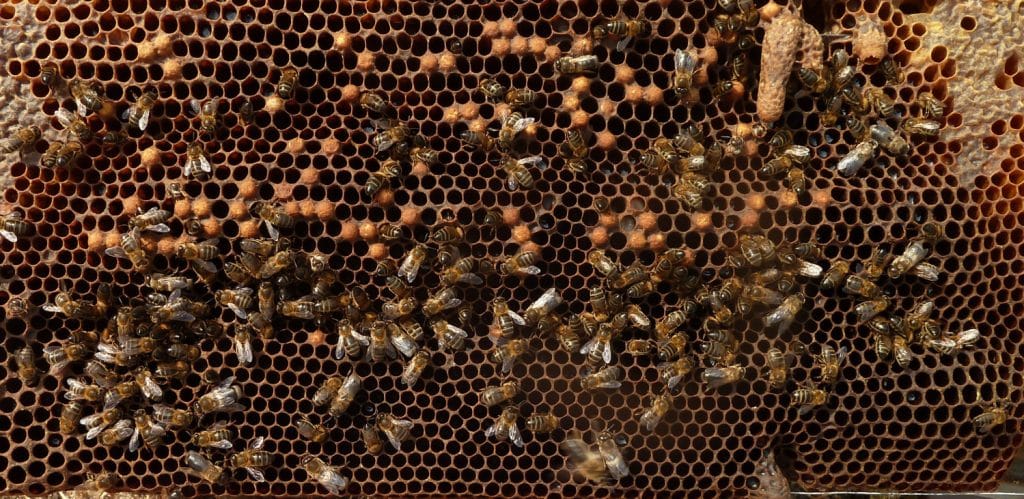
Signs of laying workers
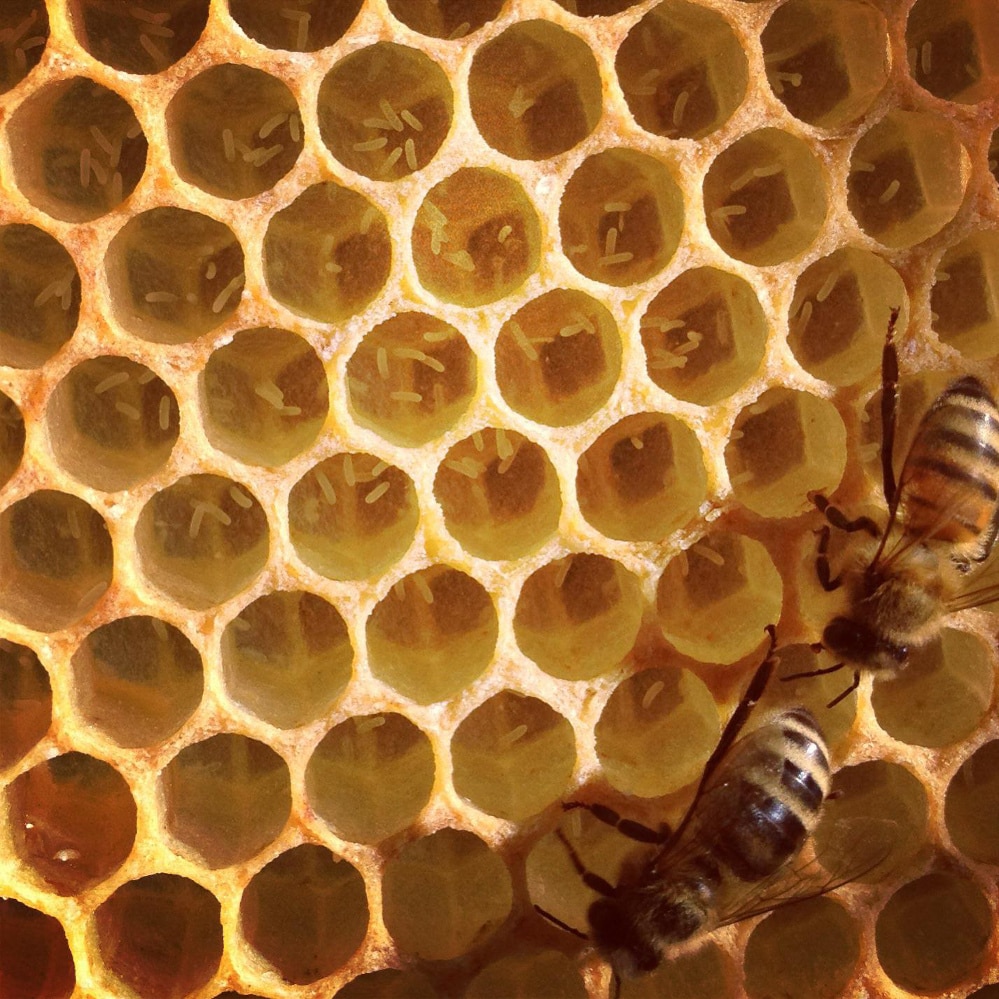
Look for these signs together. A newly laying queen can occasionally put more than one egg in a cell, so multiple eggs alone are not conclusive:
- Several eggs in some cells, often with an irregular distribution.
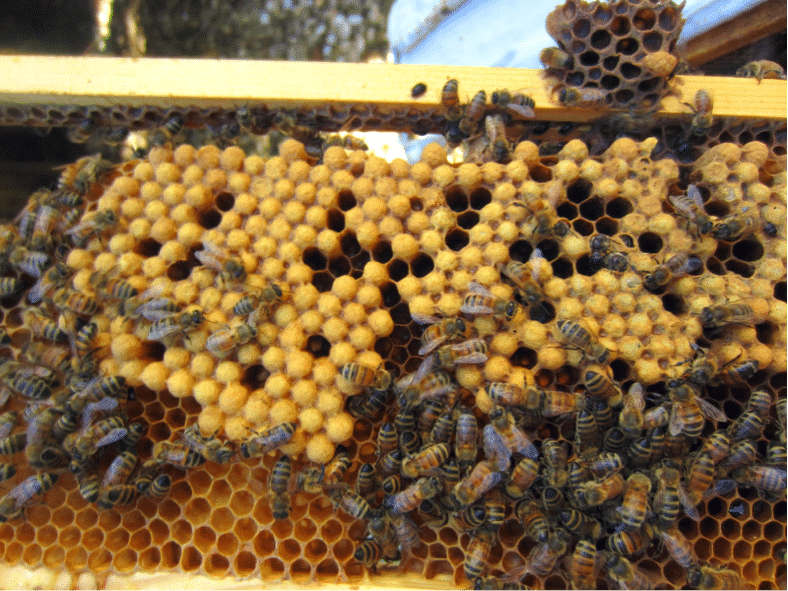
- Drone brood without normal renewal of worker brood.
- Raised drone cappings on worker-sized cells.
- Eggs attached to cell walls rather than neatly at the base.
Possible remedies
Sometimes a colony can be recovered, but success is not guaranteed. Correct diagnosis matters: replacing a drone-laying queen is a different problem from requeening a colony with established laying workers.
Add eggs and very young worker larvae
After checking for a queen or a recently emerged virgin, a frame with eggs and very young worker larvae from a healthy donor may help assess queenlessness and provide brood signals. Suitable larvae also offer the possibility of emergency queen rearing, if enough nurse bees and resources are present.
An established laying-worker colony may need repeated support; one brood frame is not a guaranteed cure. Shaking the bees out is one management option, not a compulsory first step. Removing eggs or scraping drone brood does not by itself switch off the ovaries of the adult laying workers.
Changing a colony’s position can redirect foragers, but it also alters both colonies’ populations. Assess the receiving colony and protect the donor from being weakened. Such a manipulation is best planned with an experienced beekeeper.
Introduce a new mated queen
Introducing a new mated queen may be appropriate, but an established laying-worker colony can reject her. Count the full cost: the queen, delivery, brood taken from other colonies, travel and follow-up inspections. Directly releasing an expensive queen into this situation is a poor gamble.
Is the likely benefit worth the time, resources and risk to the queen? Make that decision before ordering her, not after the introduction fails.
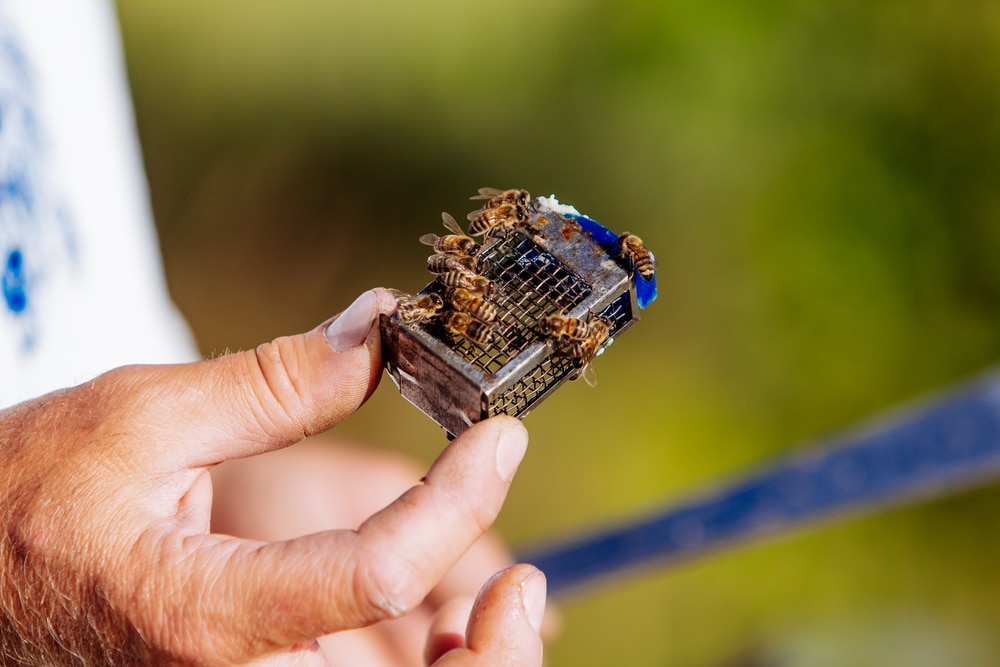
If requeening is justified, the following points help frame a cautious plan; they do not constitute a guaranteed acceptance protocol:
- Confirm the diagnosis and check carefully for any queen before introducing another. Do not assume shaking the bees out or scraping the comb removes the underlying problem.
- Consider healthy open brood, emerging worker brood and young bees where appropriate. Ensure a donor queen is not transferred and avoid moving suspect comb or more brood than the recipients can cover. Follow a suitable queen-introduction method, including a cage where required.
- Check food supply and feed when necessary, avoiding robbing and disturbance. Inspect for acceptance and normal worker brood at the appropriate interval.
Retain the returning foragers
Another approach aims to retain returning foragers while rebuilding the colony. The original article describes a beekeeper’s practical method. The outline below is a qualified summary, not a verbatim quotation or a method that works equally well in every colony.
If enough bees remain to justify the attempt, the hive may be moved a short distance while a suitable receiving box is prepared on the original site. Returning foragers tend to home to the old position, but the redistribution depends on the layout and the bees’ previous orientation.
Some versions include shaking or brushing bees off the combs away from the original site. This does not reliably separate laying workers from other workers. Foraging-age workers can retain functional ovaries, so distance and a supposedly heavy abdomen are not dependable filters.
Use brood only from colonies assessed as healthy, and do not automatically distribute the affected colony’s drone brood elsewhere. A frame of eggs and very young worker larvae may support queen rearing; sealed worker brood can reinforce the adult population as it emerges. The amount must suit the bees’ ability to cover and care for it, without weakening the donor colonies. Reduce the box size if the population cannot occupy it effectively.
A mated queen avoids the delay and uncertainty of rearing and mating a replacement, but she still needs a suitable introduction method and acceptance checks. Adding exactly three frames of sealed brood is not a universal requirement or guarantee; choose support according to colony strength and season.
Returning the receiving hive to the original position can retain foragers, but recovery must be followed through. Check queen acceptance or emergence, subsequent laying and the developing worker brood. If the colony is rearing its own queen, the gap before new workers emerge can outlast many of the existing summer bees. Further brood support may be needed, but only when the colony and its donors can sustain it.
Uniting with a strong queenright colony using newspaper is another established option, not automatically a more dangerous one. Confirm that neither colony has a transmissible health problem, preserve the receiving queen and provide suitable ventilation so bees are not trapped in an overheating upper box. An experienced beekeeper can help choose the arrangement and assess the result.
Conclusions
Beekeeping decisions depend on local conditions, but that does not make every explanation equally reliable. Judge a method by the colony’s diagnosis, the resources required and the outcome—not by whether it is a familiar tradition.
Compare the options, understand the risks and choose the course that best fits the population, season and strength of the rest of the apiary.
If recovery is not justified, disband or unite the colony as appropriate. Clean and reuse sound equipment only after assessing disease risk. Frames, wax and honey are not automatically safe to transfer simply because the queen has failed; suspected disease may require advice before anything is moved.
Above all, keep records and learn from the outcome. Prompt inspections and queen management often prevent a difficult laying-worker problem. For additional context, see the University of Georgia’s guidance on queenlessness and laying workers and Oregon State University extension advice on recovery options.
Frequently asked questions
What is a drone-laying colony?
It is a colony producing drone brood abnormally, often in worker-sized cells. The cause may be a drone-laying queen or laying workers, usually after prolonged queenlessness. Establish which is present before choosing a remedy.
How can you identify laying workers?
Look for multiple eggs, eggs on cell walls, scattered drone brood and domed cappings in worker cells. Assess the pattern and queen history together; multiple eggs alone can occur briefly with a newly laying queen, and drone brood alone does not prove laying workers.
Can a laying-worker colony be saved?
Sometimes, if it has enough bees and the season and donor resources are favourable. Recovery may need repeated brood support and careful requeening. For a weak colony, uniting or disbanding may be more sensible. Reuse comb and stores only after a health assessment.
Why is introducing a queen difficult?
Established laying-worker colonies can be unreceptive to an introduced queen. Young brood and suitable colony support may help, but direct release, a shake-out or a fixed number of brood frames does not guarantee acceptance. Use an appropriate introduction method and check the outcome.
Does shaking the bees out remove laying workers?
Not reliably. Shaking out is used in some disbanding or rebuilding methods, but laying workers are not necessarily unable to fly or return. Do not base queen introduction on the assumption that distance has removed every laying worker.
Further reading
- Finding the queen: establish her presence before deciding the colony is queenless.
- Introducing a mated queen, including acceptance checks.
- How and when to unite colonies (in Spanish), if combining is the better option.
- Inspecting a colony, to detect queenlessness promptly.

ISNI 0000 0005 1801 1100 | Joshua Ivars is the manager of LA TIENDA DEL APICULTOR and the author of this blog, where he shares technical and practical guidance for beekeepers. Drawing on extensive experience in the beekeeping sector, he offers advice and solutions based on beekeepers’ real needs, sharing his knowledge of equipment and essential beekeeping practices.


