
A beekeeping calendar follows the bees, local weather and the flowering season—not dates alone. Temperature matters, but so do rainfall, forage, colony strength, stores and health. This guide follows the four seasons of a temperate northern-hemisphere apiary, with Spanish examples. Adapt it to local conditions; in other climates, nectar flows and wet or dry seasons may be more useful than these seasonal divisions.
A beekeeper manages timing as well as colonies. Keeping a seasonal plan and records helps you understand what your bees need, prepare equipment before it is needed and review which decisions worked. Use the calendar as a checklist, not an instruction to perform every task in every hive.
🗓️ The beekeeping year at a glance
| Season | In one sentence | Main tasks |
|---|---|---|
| ❄️ WINTER | Reflection and workshop | Equipment repairs, external checks, stores monitoring and emergency feeding if needed. Avoid routine brood-frame inspections in cold weather. Plan sales and the coming season. |
| 🌸 SPRING | Hard work | Inspect colonies, renew old comb, make suitable splits, manage or collect swarms, add supers and harvest ripe surplus honey when available. |
| ☀️ SUMMER | Ventilation and water | Check water and heat management, adapt ventilation, harvest ripe surplus honey and feed only where stores and forage are insufficient. |
| 🍂 AUTUMN | The season begins | Follow the local Varroa plan; review queens, colony health and stores, and prepare for winter. Spain’s annual treatment rule is explained below. |
Dates and flowering vary by region and year. Observe each colony and local forage before choosing the timing of any intervention.
❄️ WINTER
Winter offers time to reflect on the past season and prepare for the next. Around the December solstice, northern-hemisphere days begin to lengthen again, but colony development still depends on local conditions. What you have repaired, organised and learned can support the coming season: good preparation comes before the spring rush.
Low temperatures and poor flying weather restrict foraging, although mild spells and winter flowers can provide opportunities in some regions. Use quieter periods to prepare equipment; spring often leaves little spare workshop time.
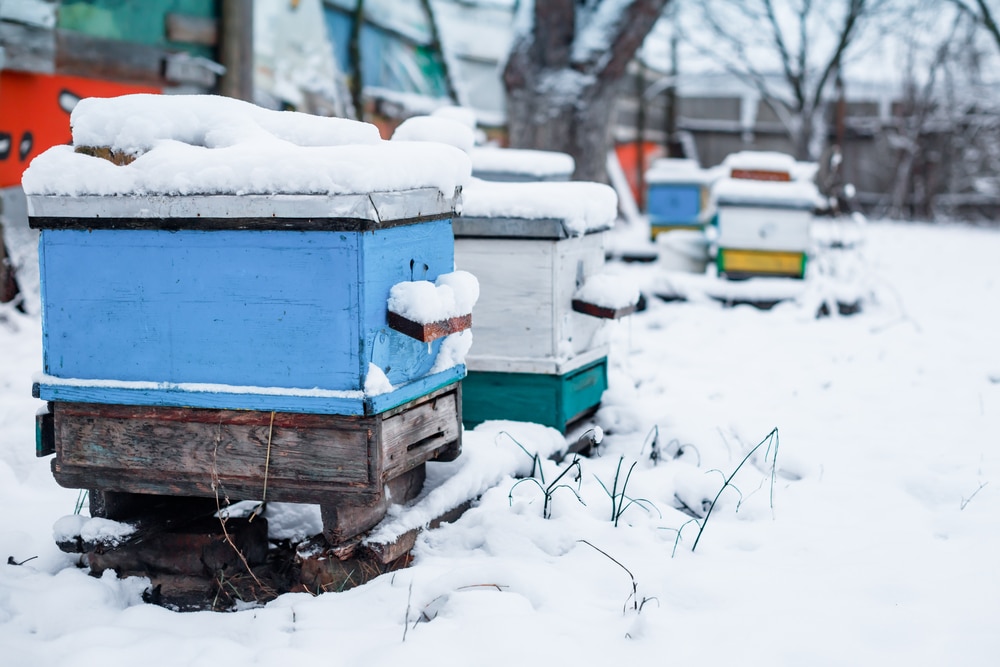
Not every winter brings snow or a complete break in flowering. Honey bee colonies remain alive and active within the hive; a winter cluster is not hibernation.
Avoid routine brood-frame inspections during cold winter weather. Opening the hive disrupts the colony and breaks its seals, so work only when there is a clear need and suitable conditions. Necessary emergency feeding or repairs should not be postponed simply because it is winter: minimise disturbance and replace the cover securely afterwards. Choose the type of check to suit the temperature and the colony’s needs.
Nevertheless, visit the apiary for external checks. Make sure hive roofs and stands are secure, no colony has been overturned, and entrances remain usable. Check entrance reducers and mouse guards where fitted, and look for wind, animal or water damage.
In summary, these would be the main tasks:
- Check roofs, stands and the hive exterior; repair leaks or damage without unnecessary disturbance to the cluster.
- Repair boxes and supers, prepare frames and organise sound spare equipment in the workshop. Melt suitable old wax separately from equipment suspected of carrying disease.
- Clean reusable equipment and follow an appropriate disinfection procedure where needed. Do not distribute suspect comb or equipment among colonies; obtain bee-health advice first.
- On suitable mild days, observe cleansing flights and entrance activity. Some dead bees are normal in winter; unusual mortality or a blocked entrance deserves attention. Flight activity alone does not prove a colony is healthy.
- Early winter: assess stores, for example by carefully hefting or weighing the hive. Feed only where a shortage is identified; do not assume every colony needs routine maintenance feeding.
- Mid-winter: continue checking stores. If emergency feed is necessary in cold conditions, bee fondant accessible to the cluster may be appropriate when bees cannot take and process syrup. Do not stimulate brood rearing automatically one month before an expected bloom.
- Late winter: assess progress as conditions permit, clear entrance obstructions and plan the first suitable-weather health inspection. Avoid dismantling the brood nest merely to meet a calendar date.
- Continue learning and plan the coming season. Our beekeeping training catalogue is in Spanish.
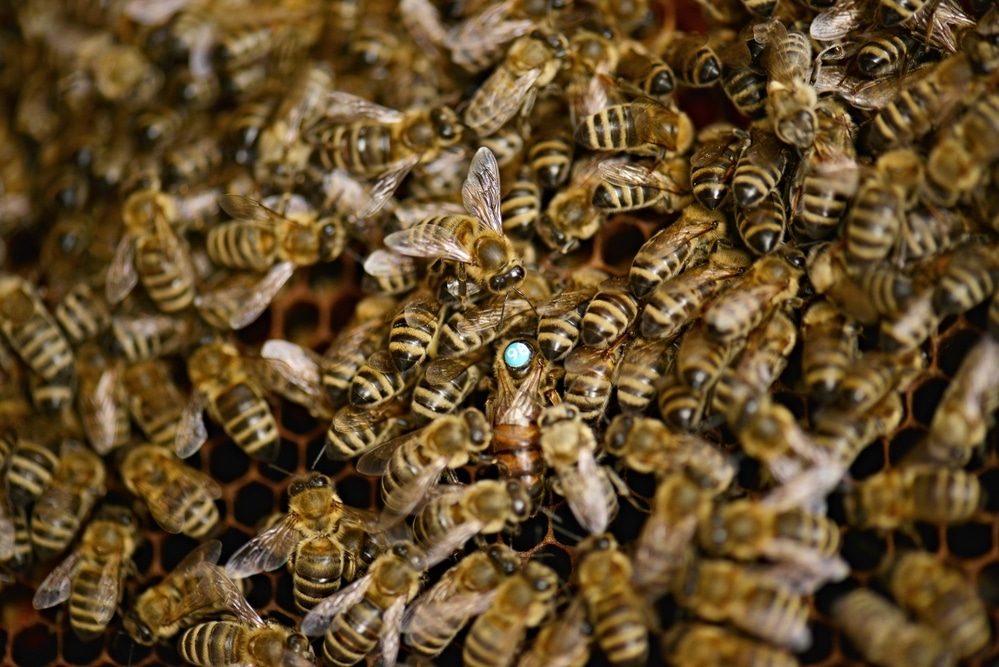
A winter colony needs enough healthy bees and sufficient accessible stores. A larger cluster can conserve heat more efficiently per bee, so the answer to low food reserves is not simply to reduce the bee population. Assess strength, health and food together, and correct deficiencies in time.
Winter can also be a useful time for selling honey and other products, reviewing stock and costs, maintaining customer relationships and planning the business. Demand varies by market; there is no universal winter sales peak that every apiary can rely on.
🌸 SPRING
Spring work gathers pace as temperatures rise and useful flowers become available. In a mild region this may happen much earlier than at a cold or high-altitude site.
At the first suitable spring inspection, record stores, brood, queen status and colony strength. Supplement only where necessary. Feeding to encourage build-up is a management decision, not a routine calendar requirement: consider the expected flow, weather, pollen supply and your objectives. Extra brood also creates extra food demand. Keep supplementary sugar feed out of honey intended for harvest.
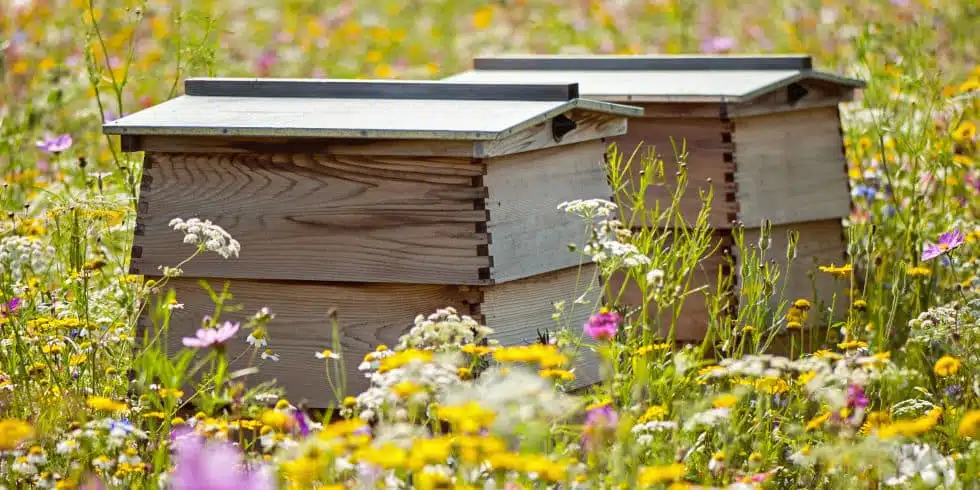
The main tasks will depend on the management approach adopted, but they can broadly be summarised as follows:
Early spring:
- Make nucleus colonies or other splits only from sufficiently strong, healthy colonies, with a workable queen introduction or mating plan and suitable conditions.
- Inspect brood and queen status. If you suspect a drone-laying colony, establish the cause before deciding how to manage it.
- Transfer colonies into suitable sound equipment where needed, avoiding chilling or damaging brood.
- Renew old or damaged brood comb with suitable clean comb or foundation, timed so the colony can occupy and draw it.
- Provide room for brood rearing as the colony expands, but do not split the brood nest with empty frames during cold conditions.
- Monitor pollen and honey stores, especially when prolonged rain prevents foraging during rapid brood growth.
- Check for brood disease, including signs that could indicate foulbrood. Seek diagnosis from the competent bee-health service or veterinarian; do not apply routine preventive treatment just because it is spring. Queen rearing and royal jelly production are separate activities for healthy, suitably strong colonies.
- Adjust entrance size to colony strength, traffic and the risk of robbing or other pests; a fully open entrance does not suit every colony.
Mid-spring:
- Collect accessible swarms safely where appropriate, while managing swarm risk in your own colonies.
- Balance colony resources only after checking health and queen status. Moving brood or comb can also move disease.
- Check nucleus colonies for a functioning queen, developing brood, adequate food and enough space.
- Add supers when colony strength and the nectar flow justify them. Use pollen traps only where collection is an objective and without compromising the colony’s own pollen needs.
- Maintain access and clear entrances of obstructing vegetation, respecting local land-management and fire-safety requirements.
Late spring: harvest ripe surplus honey when the local flow and colony stores permit—for example, orange blossom or acacia honey in suitable regions. Check water supplies and remain alert to afterswarms, the smaller swarms that may follow a colony’s first swarm.
☀️ SUMMER
Depending on the region, this may be a dry season with little or no flowering, or conversely, in high mountain areas, a period of abundant flowering.
Pay attention to water and heat management. Bees use water and fanning to cool the nest, while ripening nectar adds moisture that must leave the hive. Adapt shade and ventilation to the climate, hive design and colony strength. Where the floor design requires it, a slight forward tilt helps rainwater drain out; tilting a hive is not a remedy for every ventilation problem.
Early summer:
- In very hot locations, consider suitable shade, particularly from intense afternoon sun, while retaining a well-drained site and appropriate airflow.
- Monitor colony health and Varroa levels; do not wait for a particular season if checks indicate a problem.
- Manage dry vegetation around the working area where permitted, and observe current local wildfire restrictions, including restrictions on smoker use.
- Adjust entrance and floor ventilation to the hive design and conditions. Do not automatically remove the floor or open every entrance fully; consider colony strength, robbing and pest pressure.
Mid–late summer:
- Harvest ripe surplus honey where a suitable flow occurs, such as sunflower in some regions, while leaving adequate stores for the colony.
- Check that a dependable supply of clean water remains available, with safe landing places for the bees.
- Check food reserves during drought or other forage gaps and feed if needed. Drought alone is not proof of starvation, and syrup must not enter a crop intended to be sold as honey.
⚠️ Heat management: provide water and assess shade, ventilation and colony conditions during extreme heat. Severe overheating can damage comb and brood, but fully opening every entrance is not a universal solution. A beard of bees outside the hive is not, by itself, evidence of impending colony death.
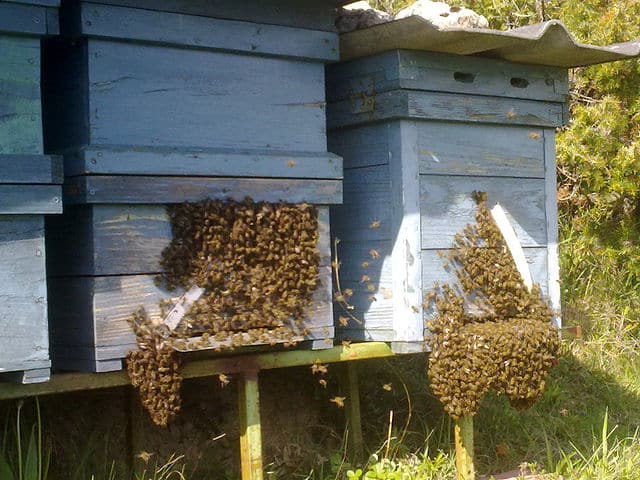
Bearding is the cluster of bees hanging outside the entrance or across the hive front, often on warm evenings. It can be a normal response by a strong colony in hot weather, not proof that ventilation has failed. University of Florida bee specialists discuss this behaviour in their summer-management discussion.
Bearding alone does not diagnose swarming. Assess colony congestion, occupied space and queen cells during an appropriate inspection rather than adding boxes or making splits solely because bees are clustering outside.
🍂 AUTUMN
For practical planning, preparations for the next beekeeping season begin before winter. In many temperate regions, important decisions must already be made in late summer, before autumn is well under way. Timely preparation gives the bees that will overwinter a better starting point.
Review queen performance, brood pattern, colony strength and health while there is still time to act. Requeening or uniting colonies late in the year requires suitable conditions; do not assume that an autumn date guarantees a supply of drones or successful queen mating.
Aim for adequate accessible stores and healthy colonies. A useful late flow may supply pollen and nectar and reduce supplementary feeding, but it is not guaranteed. Measure the result in the hive rather than assuming nearby flowers have provided enough winter food.
In summary, key tasks to carry out include:
- Varroa control in Spain: Royal Decree 608/2006, Article 6 and Annex II requires at least one annual treatment. Its baseline period is September–November, but the competent autonomous-community authority may change those dates for local conditions or migratory beekeeping. Follow the regional programme, veterinary oversight, authorised product instructions and treatment-record requirements. Additional treatment may be needed and is subject to the decree’s notification provisions. This is a Spanish rule, not an international calendar; monitor throughout the season and do not postpone necessary control until autumn.
- Collect propolis where this forms part of your production plan and is compatible with colony preparation for winter.
- Continue queen rearing or royal jelly production only where local conditions, colony strength and resources still support them; these are not automatic autumn tasks.
- Replace poorly performing queens when justified, using an appropriate queen and introduction method at a suitable time.
- Harvest a late crop only if the flow produces a genuine surplus after the colony’s needs have been met.
- Balance or unite colonies only after checking health and queen status. Do not combine a colony with suspected disease into a healthy one.
- Work through our apiary winter-preparation checklist.
WOULD YOU LIKE TO KNOW MORE ABOUT BEEKEEPING?
Discover our online beginner beekeeping course, taught in Spanish.
If you would like structured training, review the course syllabus, instructors and format to see whether it suits your experience and objectives. The introduction below is also in Spanish.
![Introducción al Curso de Apicultura [SÚPER COMPLETO]](https://www.latiendadelapicultor.com/blog/wp-content/plugins/wp-youtube-lyte/lyteCache.php?origThumbUrl=https%3A%2F%2Fi.ytimg.com%2Fvi%2FuJomNRA0UP8%2F0.jpg)

ISNI 0000 0005 1801 1100 | Joshua Ivars is the manager of LA TIENDA DEL APICULTOR and the author of this blog, where he shares technical and practical guidance for beekeepers. Drawing on extensive experience in the beekeeping sector, he offers advice and solutions based on beekeepers’ real needs, sharing his knowledge of equipment and essential beekeeping practices.


