
Spring and early summer often bring rapid colony growth and swarming, although timing depends on local climate and forage. This article introduces swarm collection with guidance from beekeeper Juan Sebastián and explains the bee behaviour behind it. Collecting a low, accessible swarm is not the same job as removing an established colony from a building. If you lack training, protective equipment or safe access, contact an experienced swarm collector.
Bees in the ecosystem
Honey bees contribute to the pollination of many crops and wild plants, alongside other pollinators. Protecting pollinator habitat and reducing avoidable harm supports these services. Beekeeping also provides honey, beeswax and propolis, each with different uses; collecting a swarm is one way to establish a managed colony, not a substitute for wider pollinator conservation.
Biology and behaviour of bees
Honey bees are social insects. A colony normally has a queen, female workers and, seasonally, male drones. The queen is the main egg-layer; workers carry out foraging, brood care, comb building and defence, while drones mate with virgin queens. Workers can also lay unfertilised eggs, particularly after a colony has been queenless for some time, so it is not correct to say that only queens can lay eggs.
Pheromones help coordinate colony life. Queen and brood signals influence worker behaviour and reproduction, but a colony cannot always replace a lost queen unaided: emergency queen rearing requires suitable young brood. A queen’s age, condition and the colony’s seasonal state all contribute to decisions about queen replacement and swarming.
Swarming
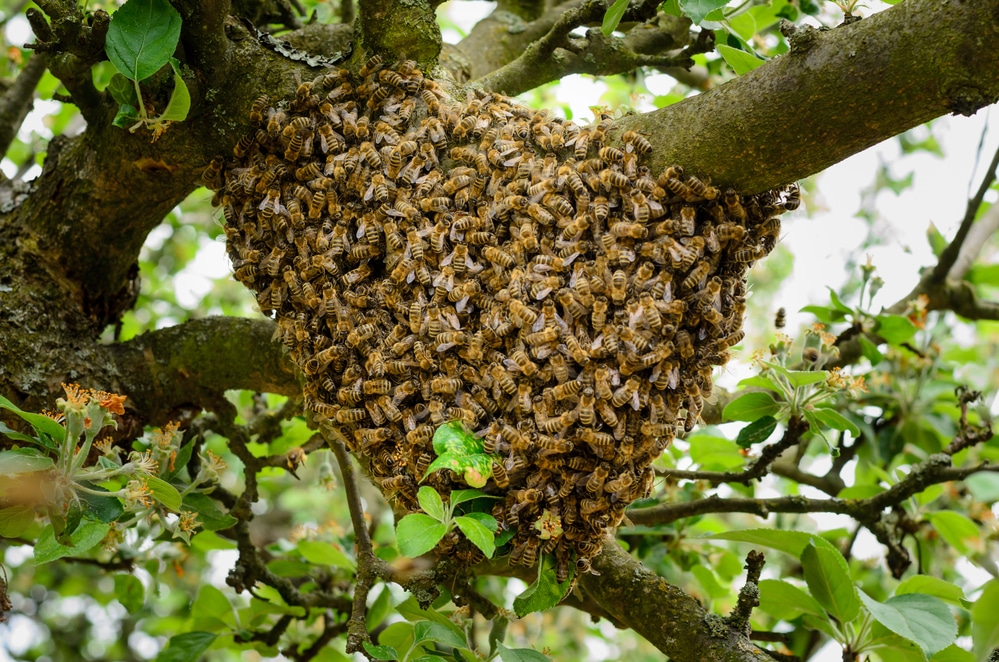
Swarming is colony reproduction. A primary swarm usually leaves with the old queen and a substantial proportion of the adult bees, while queen cells remain in the parent colony. The departing proportion varies; it is not a fixed 60%. The swarm may form a temporary cluster while scouts search for a nest site. Crowding can contribute, but swarming is not simply an automatic result of a hive becoming too large.
Methods for catching swarms
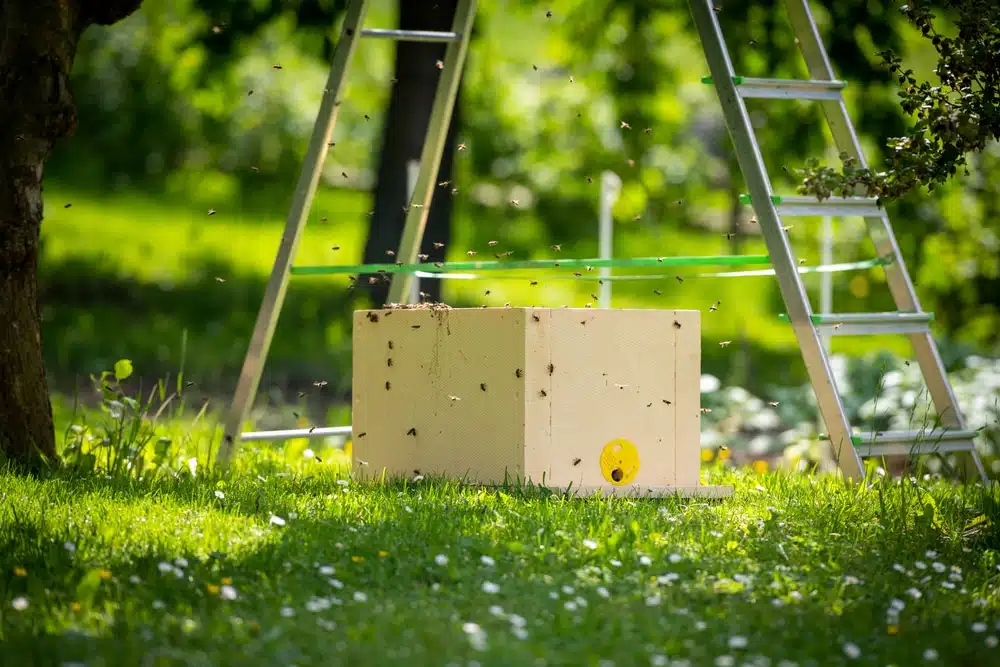
An accessible clustered swarm: first identify honey bees, obtain the property owner’s permission and keep bystanders and pets away. Wear suitable protective clothing and work from stable ground. An experienced collector can place a secure collection box or nuc beneath a low branch and gently shake or brush the cluster into it, allowing remaining bees to join through the entrance. Keep the box shaded and observe whether the bees settle; a returning cluster may mean that the queen was missed. Move it when flight has subsided, with the box secured and its entrance screened for transport without cutting off ventilation. Do not improvise access to balconies, high branches or electrical equipment.
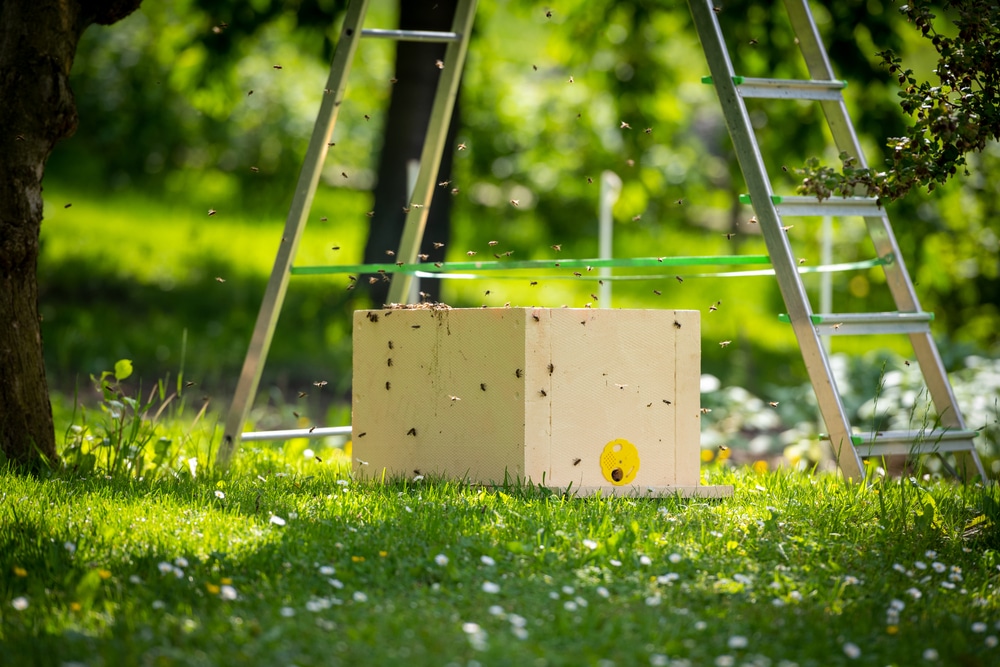
Bait hives and swarm traps: a suitable empty nuc box or bait hive can offer scouts a potential nest cavity. Site it securely where inspection and removal are safe, with the owner’s permission. If using drawn comb, use material from a known healthy source; do not bring suspect comb, brood or food stores into a trap. A purpose-made swarm lure may be used according to its instructions, but no lure guarantees occupation. Check regularly and transfer an occupied trap carefully, allowing for the bees’ orientation to its location.
Bees in walls, chimneys or other cavities: comb and brood indicate an established colony, not simply a resting swarm. Live removal may require a trained bee-removal specialist and a building contractor to expose the nest, recover bees and brood comb, remove remaining wax and stores, and repair the opening. Do not light a fire, force smoke into a cavity or dismantle a structure as a beginner’s collection method. Electrical services, falls, defensive bees and damage to the building need a proper assessment. Capturing a queen is not a reliable shortcut to removing every bee and all the comb.
Foragers can learn and revisit rewarding food sources. Through the waggle dance, a worker can communicate information about the direction and distance of a resource to other bees. Swarm scouts also use dances when evaluating potential nest sites.
A collected swarm still needs suitable housing, food assessment, queen and brood checks, and bee-health monitoring. Its unknown origin is a reason for caution, not proof that it is healthy or disease-resistant. Keep records and seek local bee-health advice if you find signs of disease. Respect access limits: leaving a difficult removal to a qualified specialist protects both the bees and the people nearby.
Further reading: UC IPM on swarms and established colonies, University of Florida guidance on live bee removal, and Penn State on queen development. These sources explain biological and practical principles; follow the rules and professional guidance that apply in your own area. The linked shop category is in Spanish.

ISNI 0000 0005 1801 1100 | Joshua Ivars is the manager of LA TIENDA DEL APICULTOR and the author of this blog, where he shares technical and practical guidance for beekeepers. Drawing on extensive experience in the beekeeping sector, he offers advice and solutions based on beekeepers’ real needs, sharing his knowledge of equipment and essential beekeeping practices.


