
Step 1. Understand swarming
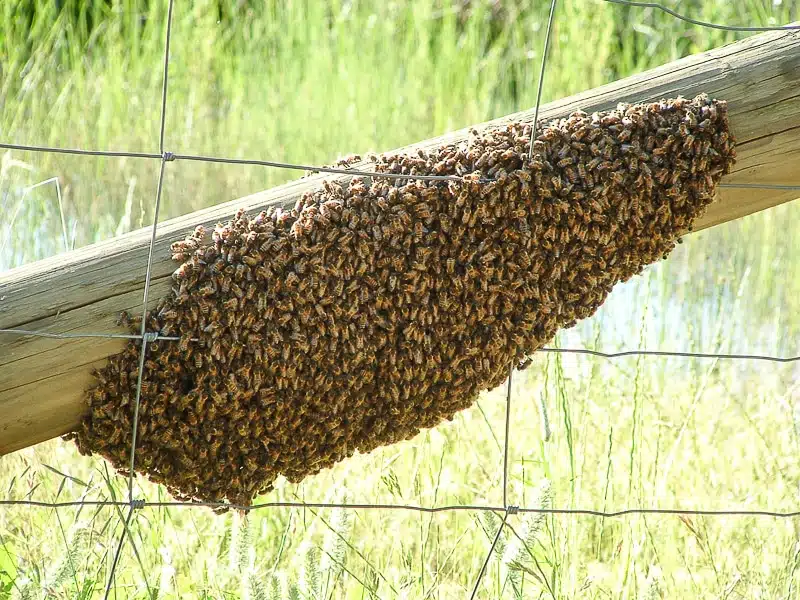
Understanding why honey bees swarm helps when collecting a cluster that could become a new colony in your apiary. It is also a fascinating introduction to beekeeping. Knowing when swarming is likely and what drives it helps you recognise the signs and choose an appropriate response.
As spring forage improves, colonies can build their stores and populations. Strong colonies may then prepare to reproduce by swarming. Lack of space is one contributing factor, but it is not the only one: colony strength, queen and brood signals, food supply and inherited traits also matter. Swarming divides a colony, whereas drone production provides another route for its genes to reach the next generation. In our courses at La Tienda del Apicultor, we discuss how pheromones, pollen supply and worker nutritional physiology interact. Vitellogenin is part of that physiology, but its level is not a practical stand-alone test for predicting a swarm.
Producing a swarm is a major investment: part of the workforce leaves to establish a new nest, while the parent colony must recover and replace its queen. Rearing drones is also costly, but allows a colony to contribute genetically without dividing. Drones may mate with virgin queens from other colonies; their presence creates an opportunity for reproduction, not a guarantee of mating success.
Step 2. Recognise the signs without panicking
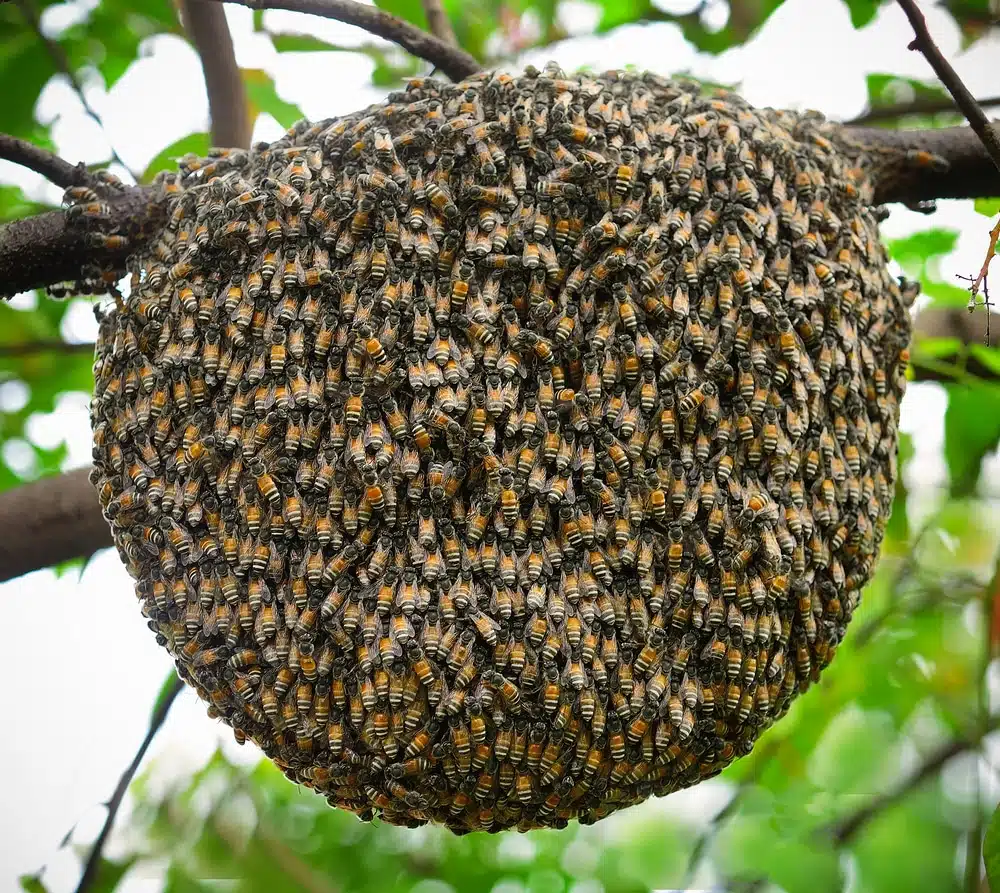
New beekeepers—and experienced ones worried that their colonies will swarm—should avoid drawing conclusions from drones alone. Drone rearing commonly increases when colony size and food supply support it. Nurse bees, pollen nutrition and queen and brood pheromones all contribute to colony development, but they do not form a simple visible chain that proves swarming is imminent. During a shortage, colonies may reduce drone rearing or expel drones. Check the brood nest, available space and developing queen cells rather than treating any one sign as decisive.
Step 3. Collect the swarm safely
A newly emerged swarm is often less defensive than an established colony, but it can still sting. Do not promise callers that it is harmless or that temperament changes on a predictable timetable. Ask people to keep their distance, bring children and pets away, and avoid disturbing the cluster. Swarm collection is also an opportunity to explain beekeeping, honey-bee behaviour and the work involved in keeping colonies healthy. A calm explanation and sensible precautions make a better impression than taking risks to demonstrate that bees are gentle.
The main distinction is not simply between a rural and an urban location, but between an accessible cluster and bees established inside a structure. A swarm on a low branch may be straightforward to collect; bees inside a roller-shutter box, wall cavity or other enclosed space require a different assessment. Once comb and brood are present, this is an established colony, not just a hanging swarm.
Wear appropriate protective clothing. It protects the beekeeper and shows bystanders that bees can sting and that precautions matter. Obtain the property owner’s permission, assess access and keep the public clear. Do not attempt a collection that involves an unsafe height, unstable footing or other hazards beyond your training and equipment.
Do not use the height of the cluster to estimate the queen’s age. The traditional observation that older queens settle lower and younger queens higher is not a reliable field test. Base the collection method on the swarm’s actual position and accessibility, and assess queen performance after the colony is established.
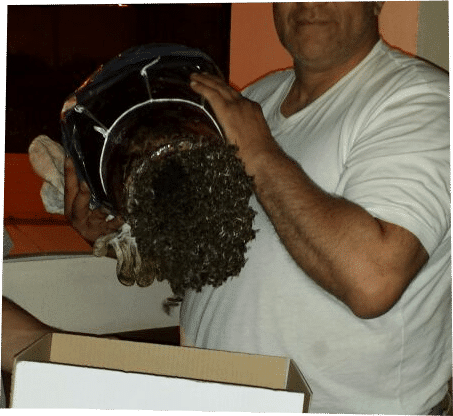
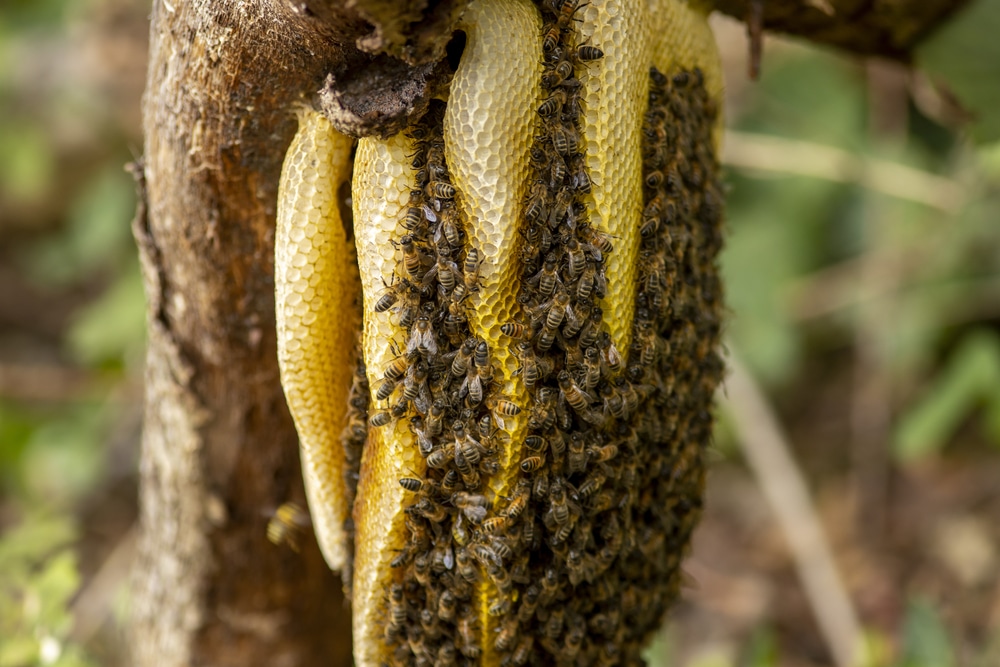
For a swarm hanging from a tree or other support, establish a safety perimeter and prepare a nuc box or another suitable collection container. A robust cardboard box can be useful, but it must be secure and ventilated for transport. Do not seal bees into an airtight bag or box, and keep the container shaded: a crowded swarm can overheat. Improvise only where the substitute is genuinely safe and suited to the job.
For an accessible hanging cluster, position the container beneath it and assess whether a controlled sharp shake of the branch will bring the bees into the box. This is not suitable for every support or location. Avoid damaging the structure or dropping the container, and ask permission before cutting vegetation. Bees that miss the box may gather near it, so keep the area clear while they settle.
An accessible cluster on an exposed surface can sometimes be gently brushed into a container with a suitable bee brush. Work carefully to avoid crushing bees or injuring the queen. A cavity colony cannot be dealt with simply by brushing the bees visible at its entrance.
If bees are inside a building, first establish whether removal is safe and practical. The work may involve access to comb, building repairs and services concealed in the wall. Consult an experienced removal specialist and the owner before opening anything. Do not assume that destructive work or killing the colony is inevitable, and do not seal an occupied entrance as an improvised solution.
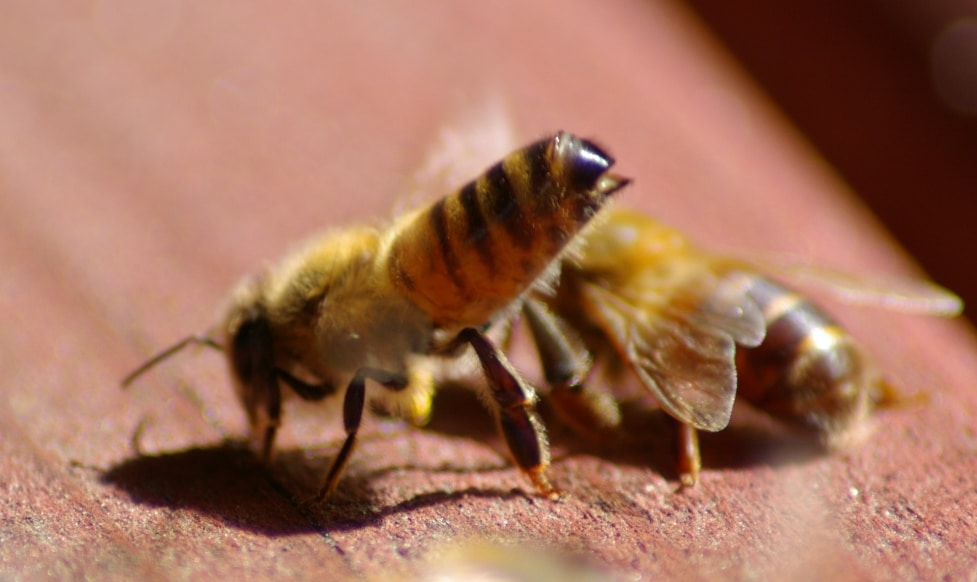
The aim is to collect the queen along with the bees. Workers gathering at the container entrance, raising their abdomens and fanning to disperse Nasonov pheromone are an encouraging sign that the swarm is assembling there. This is useful evidence, not absolute proof that the queen is inside. Observe whether the cluster settles or returns to its original position.
Some bees may continue flying around the original position. Where the site is safe, give them time to regroup before moving the container, preferably during a cooler part of the day. Maintain the perimeter and explain the situation to the property owner. Do not assure them that any bees left behind cannot sting; agree how to deal with a persistent cluster or continued public exposure.
House the collected swarm in a clean hive or nuc box with suitable frames and wax foundation. Assess forage and stores, and feed if needed under appropriate husbandry guidance. A captured swarm is not automatically healthy: its origin, queen quality and pest status may be unknown. Keep it separate from established colonies where practical, inspect its brood and monitor development before sharing bees or equipment. Requeening may be appropriate if the queen performs poorly or has undesirable traits. If you prefer a known starting point, consider selected swarms, nucleus colonies and queens from a reputable source.
Swarm collection combines an understanding of bee behaviour with careful practical work. The coordination of a swarm is fascinating in its own right: bees use several kinds of communication, and the broader concept of stigmergy describes coordination through changes made to a shared environment. It should not be used as a single explanation for every decision a swarm makes. For practical collection and aftercare, see the National Bee Unit’s swarm-collection guidance.

ISNI 0000 0005 1801 1100 | Joshua Ivars is the manager of LA TIENDA DEL APICULTOR and the author of this blog, where he shares technical and practical guidance for beekeepers. Drawing on extensive experience in the beekeeping sector, he offers advice and solutions based on beekeepers’ real needs, sharing his knowledge of equipment and essential beekeeping practices.


