
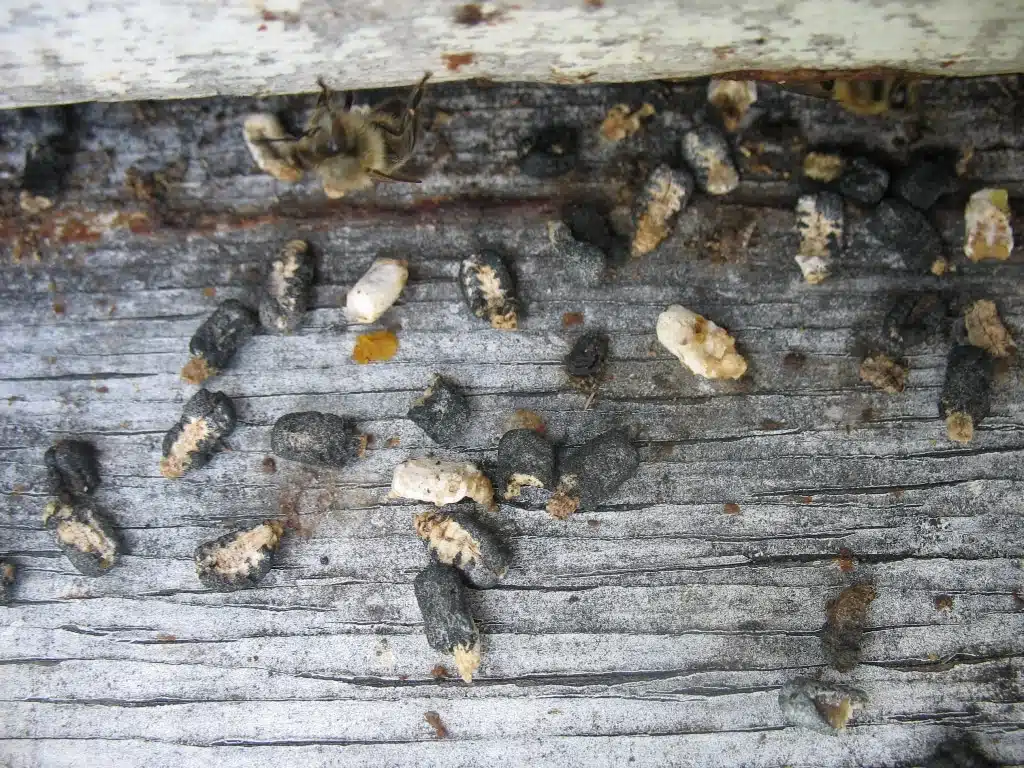
Chalkbrood is a fungal disease of honey bee brood caused by Ascosphaera apis. Affected larvae die and dry into the characteristic chalk-like mummies, which may be white or dark. Brood chilling, colony stress, nutrition and the bees’ genetic background can all influence disease expression. Management aims to help the colony recover and reduce contamination, not to promise a fungicide cure or assume that every affected colony must be destroyed.
The mechanism in brief
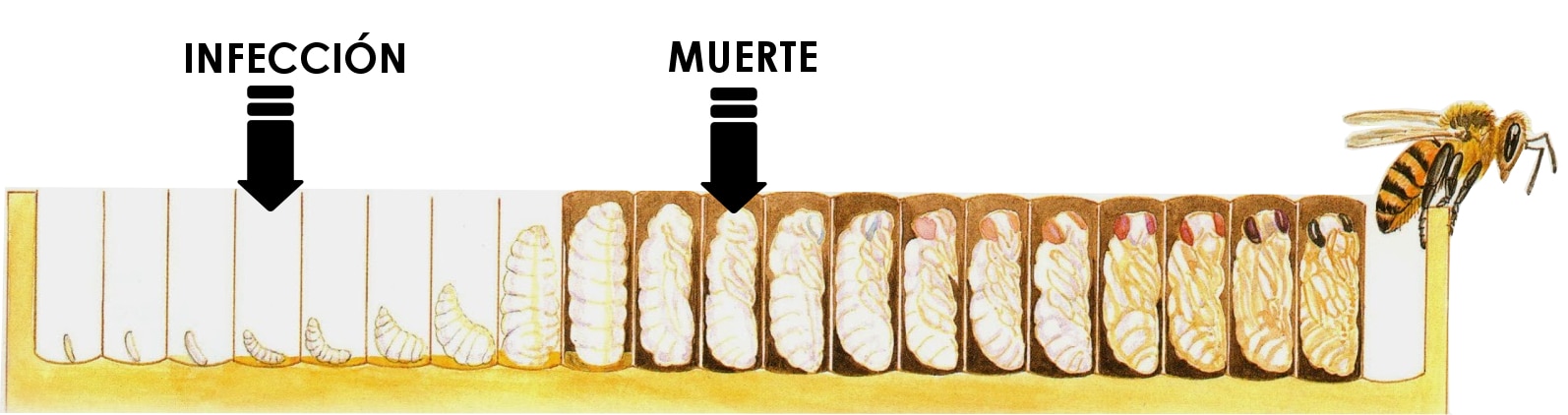
Larvae become infected after ingesting fungal spores with their food. Under conditions that favour disease, the fungus develops in the larva and eventually produces the visible mummy. Chilling can increase susceptibility, but the process is not adequately explained by a fixed temperature drop delaying defecation, nor does normal brood temperature guarantee that all spores pass harmlessly out of the gut.
The practical lesson is to avoid leaving more brood than the bees can cover and care for, particularly during unsettled spring weather. Chilling is an important risk factor, not the only possible explanation for chalkbrood.
In this guide
- Recognising chalkbrood and interpreting mummies;
- Predisposing factors that may contribute;
- Prevention and risk reduction;
- The Australian research and its limitations;
- Practical management to support recovery.
Chalkbrood affects developing brood rather than causing the same infection in adult bees. Adults can nevertheless carry contamination within and between colonies. Visible disease often becomes apparent around the time the cells are capped, and the dead larvae later shrink and harden.
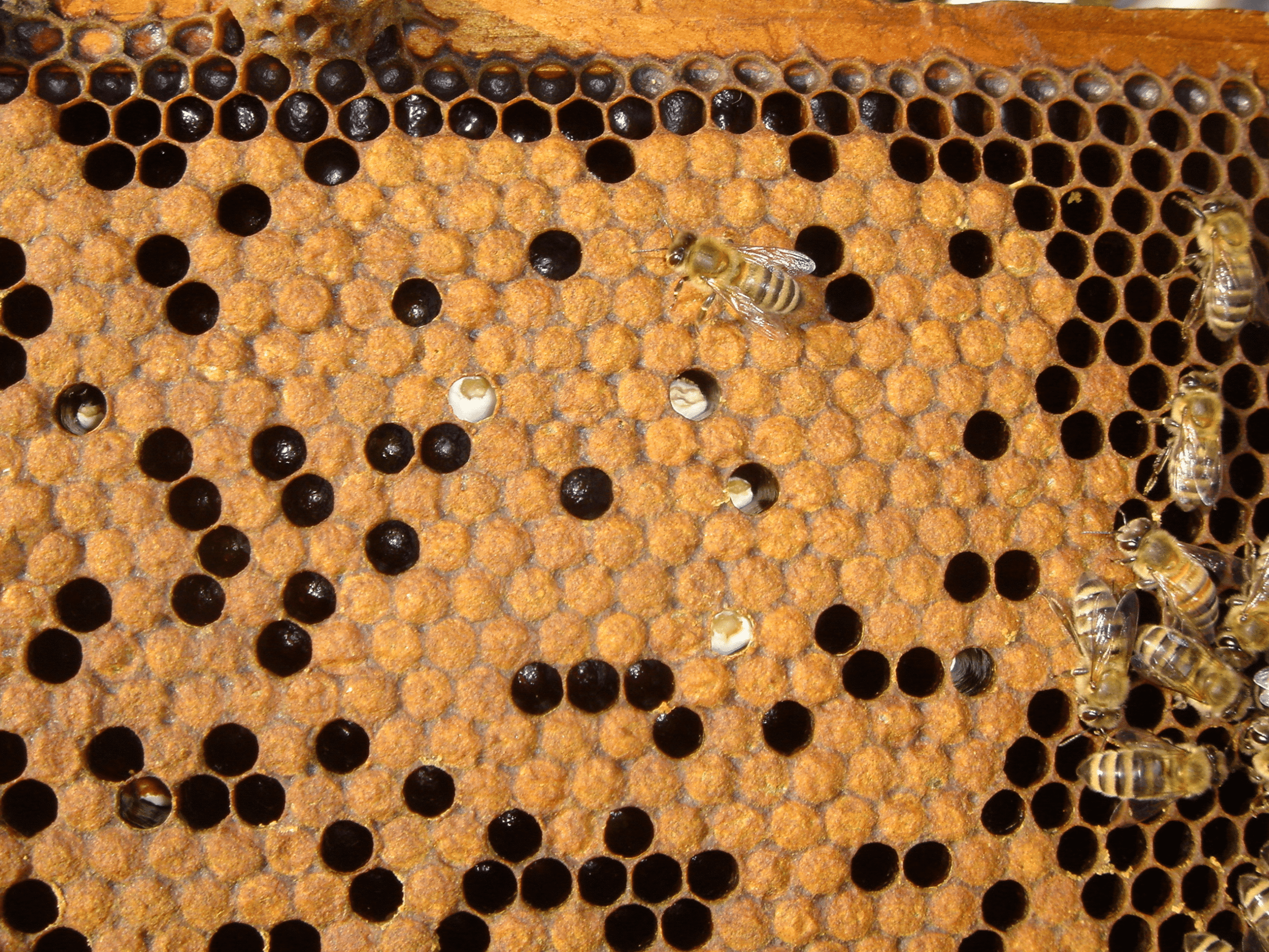
The name describes the appearance of the dried larvae: small, chalk-like mummies. A patchy brood pattern is a reason to investigate, but it does not by itself identify chalkbrood. Other brood disorders, including foulbrood, must not be overlooked.
Honey bee larvae retain waste during the feeding stage and empty the gut as they prepare for pupation. That normal developmental change should not be turned into a simple on/off explanation for chalkbrood: exposure to spores, larval susceptibility and colony conditions all matter.
Stable brood rearing depends on enough healthy adult bees and suitable hive conditions. Do not treat one temperature reading as a diagnostic test or try to cure the disease by artificially overheating a hive. Correct avoidable chilling, damp and colony imbalance, then monitor the response.
Contamination can pass between hives through drifting bees, robbing and the transfer of contaminated material. A nectar-laden bee is not automatically accepted by any colony, and introduction of spores does not guarantee visible disease. Reducing avoidable transfer remains worthwhile.
Spores can persist in honey, pollen, wax and hive equipment. They are widespread, but it is not justified to say that every colony always contains the fungus. Sound biosecurity reduces exposure, while good husbandry helps the bees cope with the conditions that favour disease.
How to recognise chalkbrood
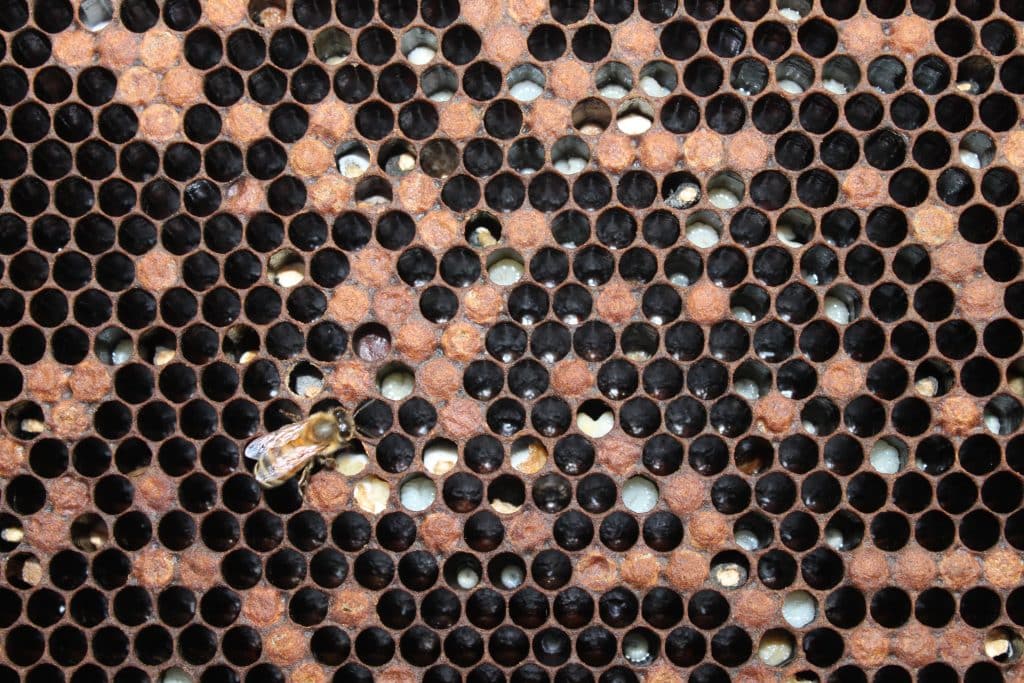
An affected brood frame may have a patchy pattern, with empty cells among capped brood, cells containing white or dark mummies, and fragments left after workers have attempted to remove them. Inspect the brood itself rather than diagnosing from the pattern alone.
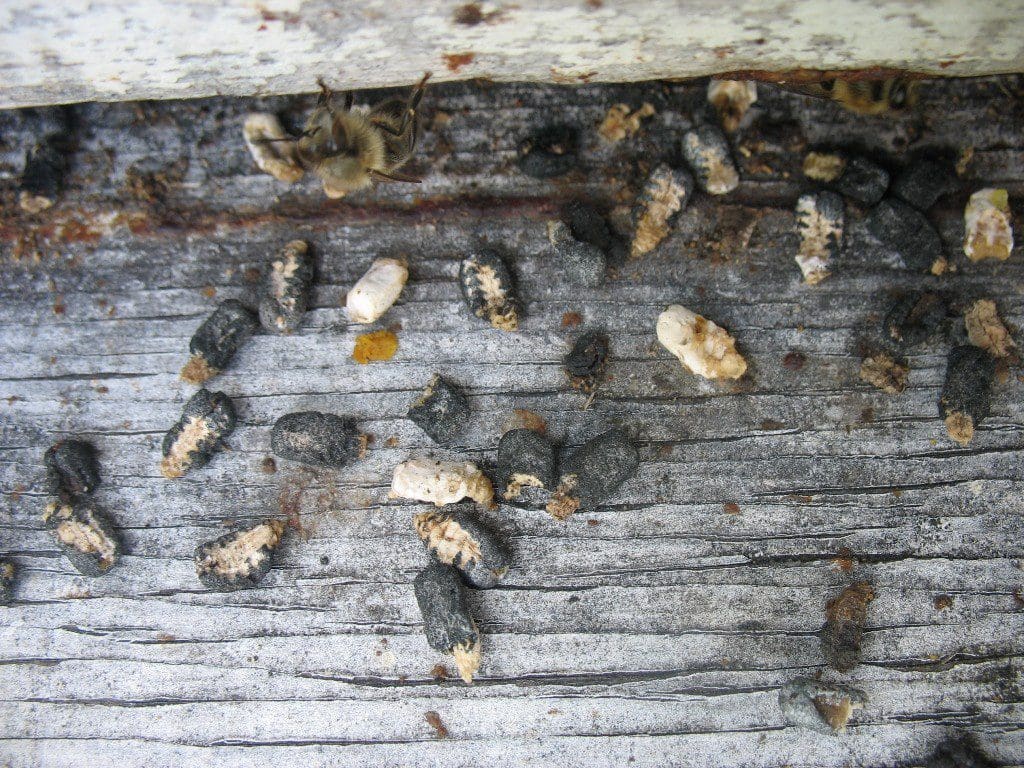
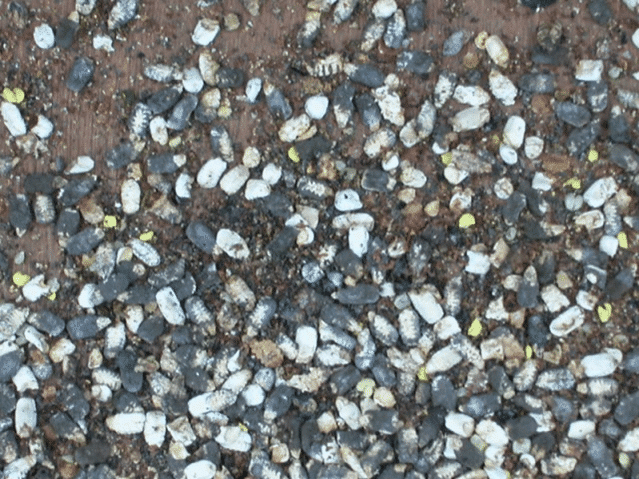
Mummies may also be visible on the hive floor or outside the entrance. Finding them there shows that material has been removed; it does not prove that all affected brood has been cleared or that the outbreak is over.
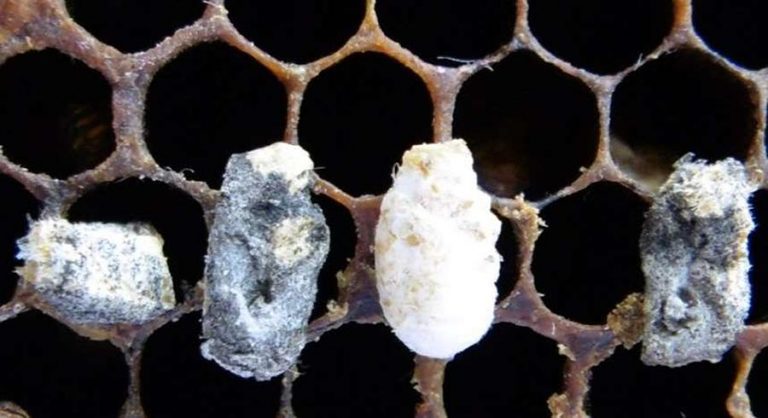
- White mummies: affected larvae with visible fungal growth. Their colour does not establish an exact age or prove that the material is free of spores.
- Grey or black mummies: the dark appearance is associated with spore-bearing structures. Do not infer an exact twenty-day timeline or diagnose poor hygiene from colour alone.
| What you see | Timing | How to interpret it |
|---|---|---|
| White mummies | Variable | Affected larvae with fungal growth; colour alone cannot establish age or freedom from spores |
| Grey or black mummies | Variable | Dark areas indicate the development of spore-bearing structures |
| Mummy fragments | — | Remains that may have been broken up during removal |
| Mummies on the floor or at the entrance | — | Workers have removed affected material; keep checking for continuing disease |
Predisposing factors
Several predisposing factors can affect whether exposure results in visible chalkbrood. They interact, and their importance varies between colonies and seasons:
- Brood chilling: a recognised risk, especially in unsettled weather when there are too few bees to maintain the brood nest. Avoid prolonged inspections or spreading brood beyond the area the colony can cover; there is no universal temperature threshold that predicts every outbreak.
- Too much brood for the available workers: rapid brood expansion, swarming or making nucleus colonies with too few adult bees can leave brood poorly tended. Match manipulations to population and weather rather than the calendar alone.
- Nutritional stress: inadequate access to suitable pollen and energy sources can impair colony condition. Research into bee-associated microbes is relevant, but it does not establish a simple rule that more of one bacterial group prevents chalkbrood.
- Bee genetics: colonies differ in susceptibility and in their ability to remove diseased brood. Resistance is not the same as complete immunity.
- Management and site: premature stimulation, weak splits, damp or poorly suited sites and stressful moves can undermine brood care. Consider the conditions the bees will actually face after a manipulation.
- Varroa and associated disease: a heavily stressed or depleted colony may struggle to rear healthy brood. Monitor and manage Varroa appropriately; its presence does not, by itself, establish the cause of chalkbrood.
- Other stressors: poisoning, queen problems and other causes of adult-bee loss can worsen colony condition. Investigate unusual losses rather than attributing every problem to the fungus.
There may be more than one contributing factor. A useful assessment considers the amount of brood, adult population, food availability, hive conditions and the colony’s disease history together.
Prevention and risk reduction
You cannot make an apiary sterile or prevent every case of chalkbrood. You can, however, reduce avoidable stress and contamination, identify recurring problems early and select stock that copes better.
- Avoid selecting repeatedly susceptible colonies as breeding stock; assess performance over time and favour suitable hygienic stock.
- When chalkbrood appears, assess the colony and correct the underlying problems. Do not automatically destroy a colony because a few mummies are present; seek advice for a severe, recurring or uncertain diagnosis.
- Maintain enough healthy adult bees to cover and tend the brood. Match hive space to colony strength; insulation or follower boards must not create damp or obstruct necessary ventilation.
- Make splits only when weather, forage and population are suitable, and leave enough bees with the brood in both the new and parent colonies.
- Before moving bees to a colder site, consider brood coverage and transport stress. Do not move diseased material in a way that spreads contamination or breaches applicable restrictions.
- Plan regular brood-comb renewal. Replacing about a third annually is a common approach, but adjust it to the apiary and disease advice; fresh-looking wax is not proof of sterility.
- Plan feeding and Varroa management before seasonal shortages. Correct a real food deficit, monitor mite levels and follow authorised treatment instructions; do not promise a colony can or must be entirely free of mites.
Access to suitable forage may improve nutrition, but moving a stressed or diseased colony is not automatically the right response. Assess the risk of spreading disease, the weather, transport stress and any restrictions before considering a move. Better forage alone is not a proven way to switch on hygienic behaviour.
Commercial feed supplements, including PRO-DFM and similar products, are sometimes discussed in connection with chalkbrood. A nutritional product should not be described as an immune booster or antifungal treatment without evidence for that particular product and use. The research on bee-associated microbes does not justify treating all supplements as equivalent.
Can these products cure chalkbrood? They should not be relied upon as a cure. Appropriate supplementary feeding may help where the colony has a genuine nutritional shortfall, but rapid recovery cannot be promised. Check the product’s intended use and instructions, and do not let feeding delay a brood-disease assessment.
Genetics and hygienic behaviour also influence the colony’s response. If chalkbrood recurs despite reasonable husbandry, requeening with suitable hygienic stock is an established management option. That is a separate decision from whether a feed supplement is useful.
A 2020 study of bee-associated bacteria found associations with chalkbrood and tested antifungal activity in the laboratory. It did not establish that adding a commercial supplement cures infected colonies. Support adequate nutrition without assuming that a product will reliably rebuild a protective microbiota.
Routine biosecurity means not transferring suspect comb, food or contaminated equipment to healthy colonies. Separate affected material and use a cleaning and disinfection method appropriate to the item and the disease risk. Simply putting a colony into a clean box does not remove all contamination from its comb and bees.
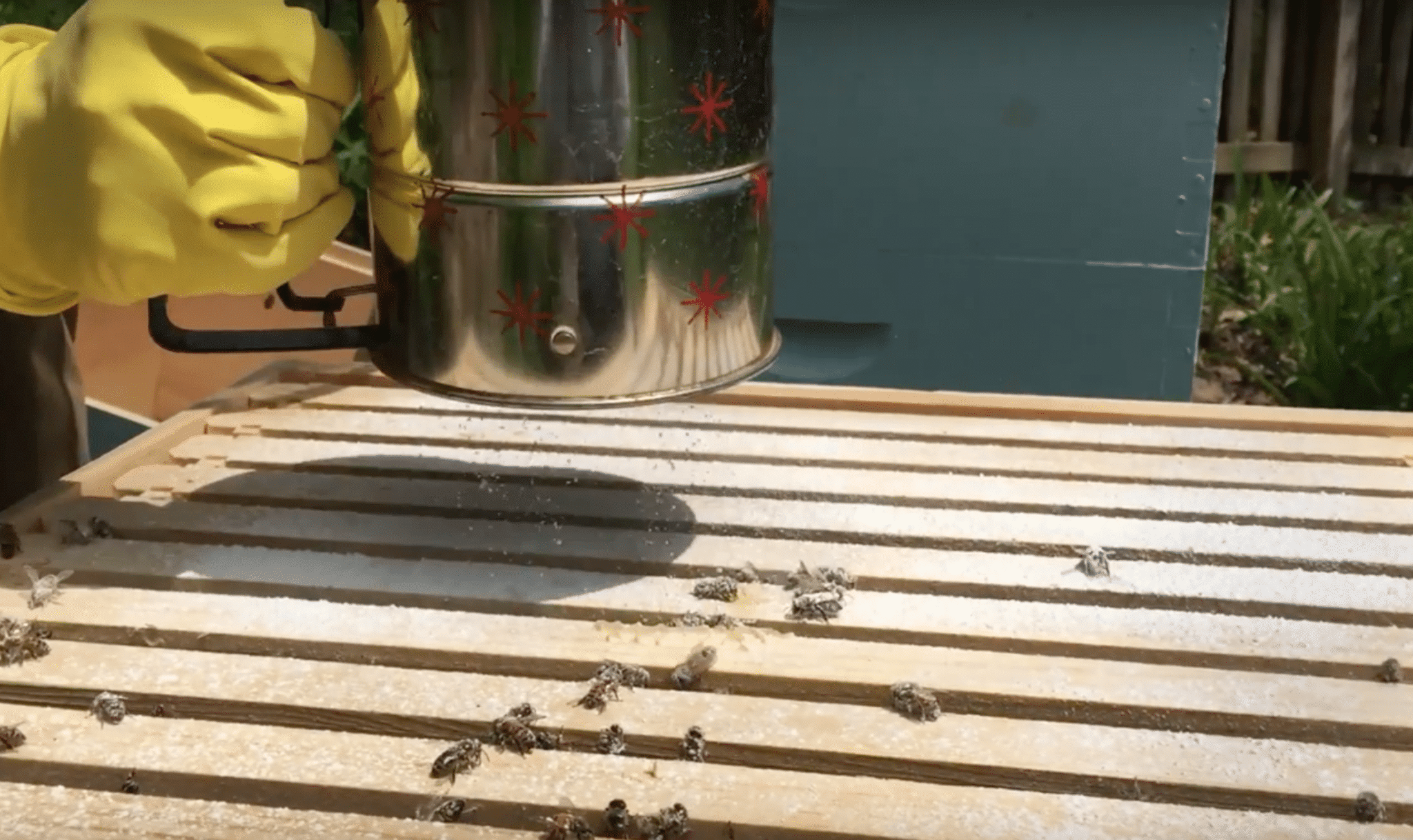
Clean hive tools and other equipment between apiaries and after work on affected colonies, following an appropriate, validated procedure. A quick pass through a flame is not a universal disinfection method, and scorching is unsuitable for some materials. Handle any flame, including the smoker, in accordance with local fire restrictions and equipment instructions.
Clean protective clothing is part of good apiary hygiene and food-production practice. It cannot, on its own, prevent chalkbrood from entering an apiary.
In particular, do not feed honey or pollen, or transfer comb, from affected colonies to healthy ones (in Spanish). Unknown health status is also a reason for caution when sourcing feed and used equipment.
The Australian research: what it does and does not show
A 2021 Australian study investigated whether fungal genetic variation or readily observed colony conditions explained chalkbrood severity. It found six genetic variants, including two not previously reported elsewhere, but neither the variants nor the obvious colony or apiary characteristics predicted infection levels. The study did not demonstrate that newly emerging, more virulent strains explained the problem.
The findings suggested that the bees’ genetic background may be important. They did not establish eucalyptus pollen as the cause of Australian chalkbrood. Pollen quality varies between plant species and diets, so it is too broad to label all eucalyptus pollen amino-acid deficient or to use that as a diagnosis for a particular apiary.
The lesson is to keep the evidence in proportion: assess nutrition and husbandry, select for resilience and monitor disease, but do not claim that a quick visual appraisal of a colony predicts its susceptibility. Local experience is valuable; it does not replace confirmation of the cause of abnormal brood.
Helping the colony recover
Even a noticeably affected colony is not automatically beyond recovery. Chalkbrood can reduce population and productivity, and severe or persistent cases need prompt attention. There is no recommended routine chemical cure in the guidance cited here: focus on diagnosis, husbandry and, when appropriate, requeening rather than applying an improvised fungicide.
Workers that detect and remove affected brood promptly can reduce the amount of contaminated material remaining in the nest. Hygienic behaviour is an important part of resistance, although no stock or management measure guarantees that chalkbrood will never occur.
A colony that is adequately fed and able to rear brood normally is better placed to recover. Continue checking the brood pattern and the number of new mummies: an improvement during a nectar flow does not prove that nectar itself is a treatment.
Access to nutritionally adequate, uncontaminated food supports colony health. The relationships among diet, microbes, propolis and disease resistance are complex. Neither diverse pollen nor natural propolis should be promised to eliminate a fungal infection, and supplements must not be used as substitutes for sound management.
References and further guidance
Ponting, S. and Stainton, K., National Bee Unit. Chalkbrood, BBKA News, July 2020.
Sanford, M. T., Ellis, J. and Jack, C. J., University of Florida IFAS Extension. Chalkbrood Recommendations.
Gerdts, J. and colleagues (2021). Genetic variation of Ascosphaera apis and colony attributes do not explain chalkbrood disease outbreaks in Australian honey bees. Journal of Invertebrate Pathology, 180, 107540. The USDA research summary is linked in the Australian section above.
Flores, J. M., Spivak, M. and Gutiérrez, I. (2005). Spores of Ascosphaera apis contained in wax foundation can infect honeybee brood. Veterinary Microbiology, 108, 141–144.
Frequently asked questions
What is chalkbrood?
Chalkbrood is a disease of honey bee larvae caused by the fungus Ascosphaera apis. The affected brood dries into white or dark chalk-like mummies. A patchy brood pattern alone is not enough to distinguish it from other brood disorders.
Why does chalkbrood appear?
Disease expression depends on exposure to spores and the susceptibility of the brood and colony. Chilling, poor brood coverage, damp conditions, nutritional stress and genetics can all contribute. A particular temperature reading neither proves nor rules out chalkbrood.
How is chalkbrood managed?
Management, rather than an improvised fungicide, is the main approach: correct avoidable stress, maintain adequate brood coverage and nutrition, avoid transferring contamination, and consider hygienic stock if the problem recurs. Affected colonies are not automatically lost; severe or persistent cases need veterinary advice.
What is the difference between white and dark mummies?
White mummies show fungal growth; grey or black areas are associated with the development of spore-bearing structures. Colour is not a reliable clock, so the often-repeated ten-day and twenty-day rules should not be used to date the infection. Both white and dark mummies should be treated as suspect material.
Do nutritional supplements cure chalkbrood?
Commercial nutritional supplements, including PRO-DFM, should not be relied upon to cure chalkbrood. Feeding may help correct a nutritional deficit, but laboratory findings about bee-associated bacteria do not establish clinical effectiveness for a particular commercial product.
Can comb from a colony with chalkbrood be reused?
Do not transfer affected comb to a healthy colony. Contaminated foundation can also carry a disease risk, and normal wax processing should not be assumed to sterilise it. Ask your veterinary adviser about appropriate handling and replacement; use traceable, suitable foundation.
How much brood comb should be renewed each year?
Replacing roughly a third of the brood comb each year is a common planned renewal approach, not a guaranteed treatment or a universal legal requirement. Adjust the programme to comb condition, disease history and the colony’s ability to draw replacement comb. Heavily contaminated material may need earlier action under veterinary advice.
Further reading
- How to inspect a hive, including assessment of the brood pattern.
- Drifting in honey bees, one route by which contamination can move between colonies.
- Cleaning and reusing beekeeping equipment; select a method appropriate to the material and disease risk.
- Protein supplementation, as part of assessing nutritional needs rather than a promised antifungal cure.
This is general beekeeping guidance. If brood losses are substantial, persistent or uncertain, consult your veterinary adviser, animal-health association or official veterinary service. Rule out other brood diseases, especially American foulbrood, and follow the notification and control requirements that apply. Do not move suspect material to another colony while awaiting advice.

ISNI 0000 0005 1801 1100 | Joshua Ivars is the manager of LA TIENDA DEL APICULTOR and the author of this blog, where he shares technical and practical guidance for beekeepers. Drawing on extensive experience in the beekeeping sector, he offers advice and solutions based on beekeepers’ real needs, sharing his knowledge of equipment and essential beekeeping practices.


