
![Protein supplementation for bees [Complete guide] - BEE FEEDING](https://www.latiendadelapicultor.com/blog/wp-content/uploads/2025/02/mmmnn.png.webp)
In a world where climate change and environmental degradation are becoming increasingly evident, bees face unprecedented challenges to their survival. Phenomena such as global warming, unusually warm winters, forest fires and pollution have drastically altered the availability and quality of the essential food for these tireless workers: pollen and nectar. This situation leads us to reconsider how we support our hives, particularly focusing on protein supplementation, a fundamental pillar for the development and strengthening of the bee population.
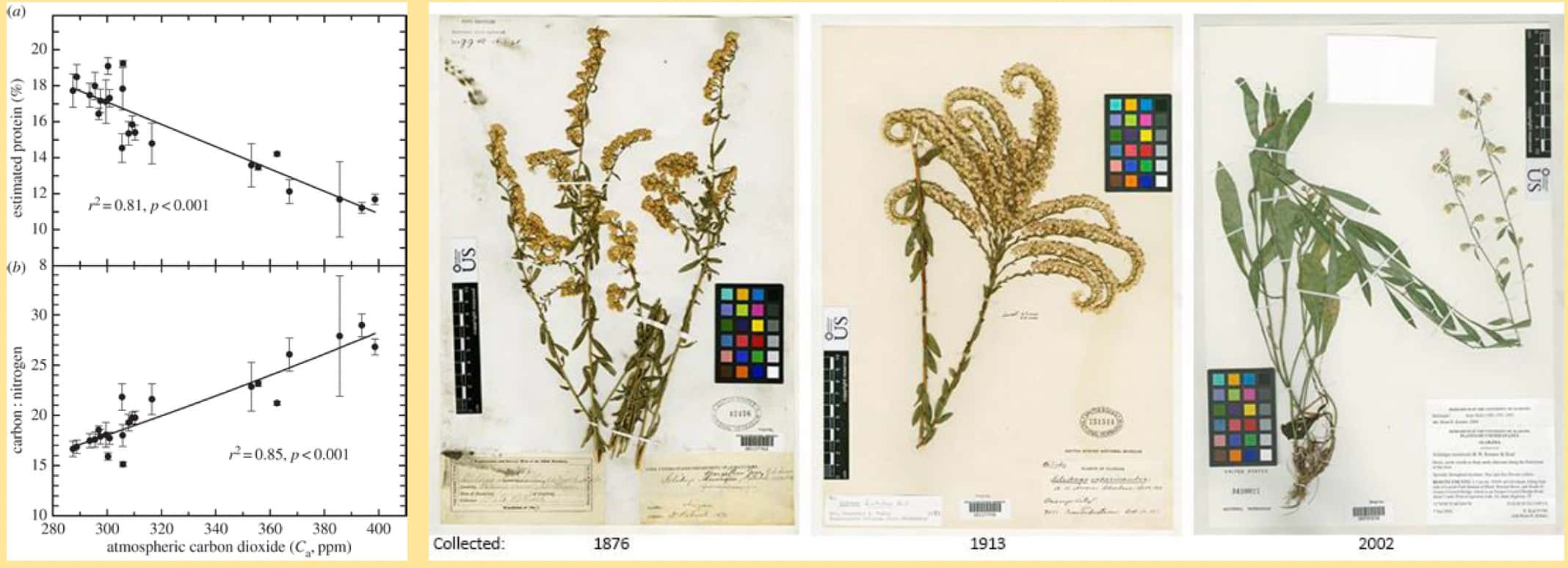
What do bees need?
Bees require a balanced diet that includes:
- Proteins, mainly from pollen, essential for brood development and royal jelly production.
- Carbohydrates, obtained from nectar and converted into honey, provide the energy required for their activities. That is why patty and sugar go together: with no nectar coming in and no honey in the comb, part of the protein gets burnt as energy, so pair the patty with light syrup in small feeds; if the hive has honey stores, the patty goes on alone. It doesn’t work the other way round: syrup on its own only builds stores, it doesn’t rear bees.
- Lipids, vitamins, minerals and propolis, also derived from pollen and other collected materials, crucial for their immune system and development.
- Water, indispensable for hive life. In a dry summer, water close to the apiary: royal jelly is more than two-thirds water.
Why feed bees with protein?
Protein supplementation becomes a key tool for:
- Keeping the brood going and preparing the colony when no pollen is coming in: the patty holds the brood nest together and, if the weather plays along, the colony grows; in the middle of a dry, hot spell the norm is that it simply holds on until things cool down.
- Preparing hives for mass pollination events or intense nectar flows.
- Supporting colony development during periods of scarcity.
- Facilitating recovery after exposure to pesticides or Varroa infestations.
- Keeping some brood going in adverse conditions (dry heat, an autumn with nothing coming in), even if the brood nest stays small until the weather changes.
- Getting the winter bees to emerge with a full fat body: the patty isn’t stored in the comb, it’s stored in the bee, so it has to go on while there are still bees emerging to eat it.
History of protein supplementation for bees
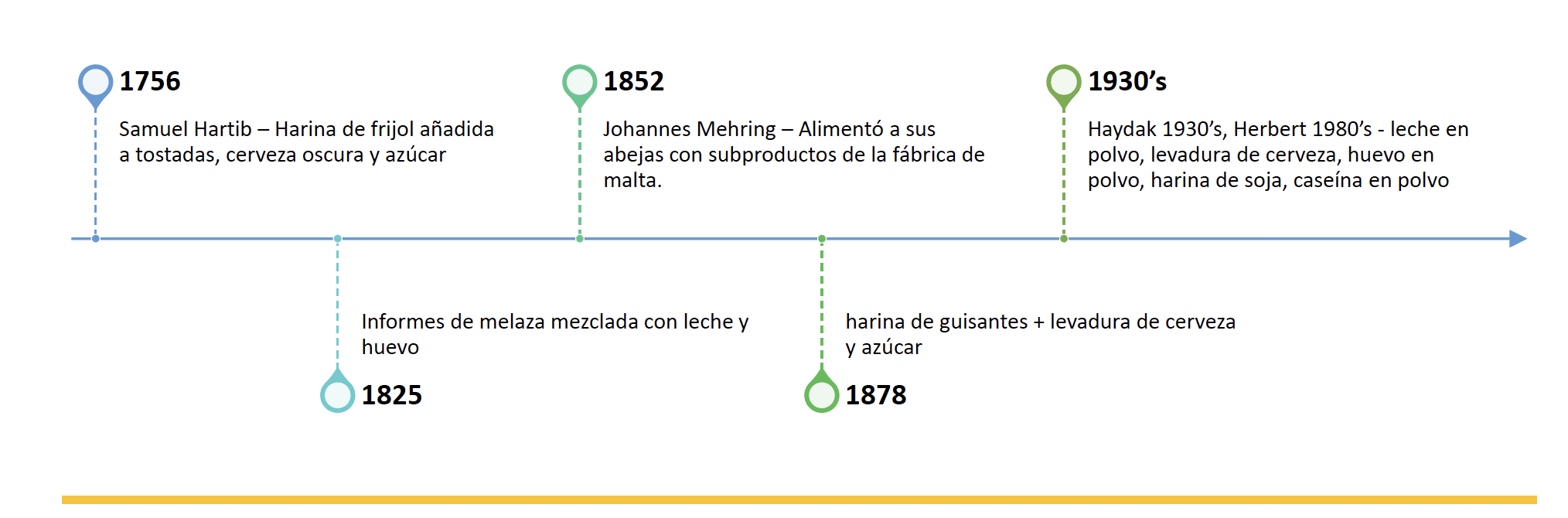
The history of protein supplementation for bees began in 1756 with Samuel Hartlib, who experimented with bean flour on toast, dark beer and sugar, marking the start of the search for the ideal protein food. Over the years, researchers such as Haydak and Herbert in the 1930 and 1980 decades respectively experimented with ingredients such as milk powder, yeast, dried egg, soya flour and casein. These efforts were complemented by De Groot’s research on the ideal amino acid ratio, highlighting the importance of meeting the specific nutritional needs of bees.
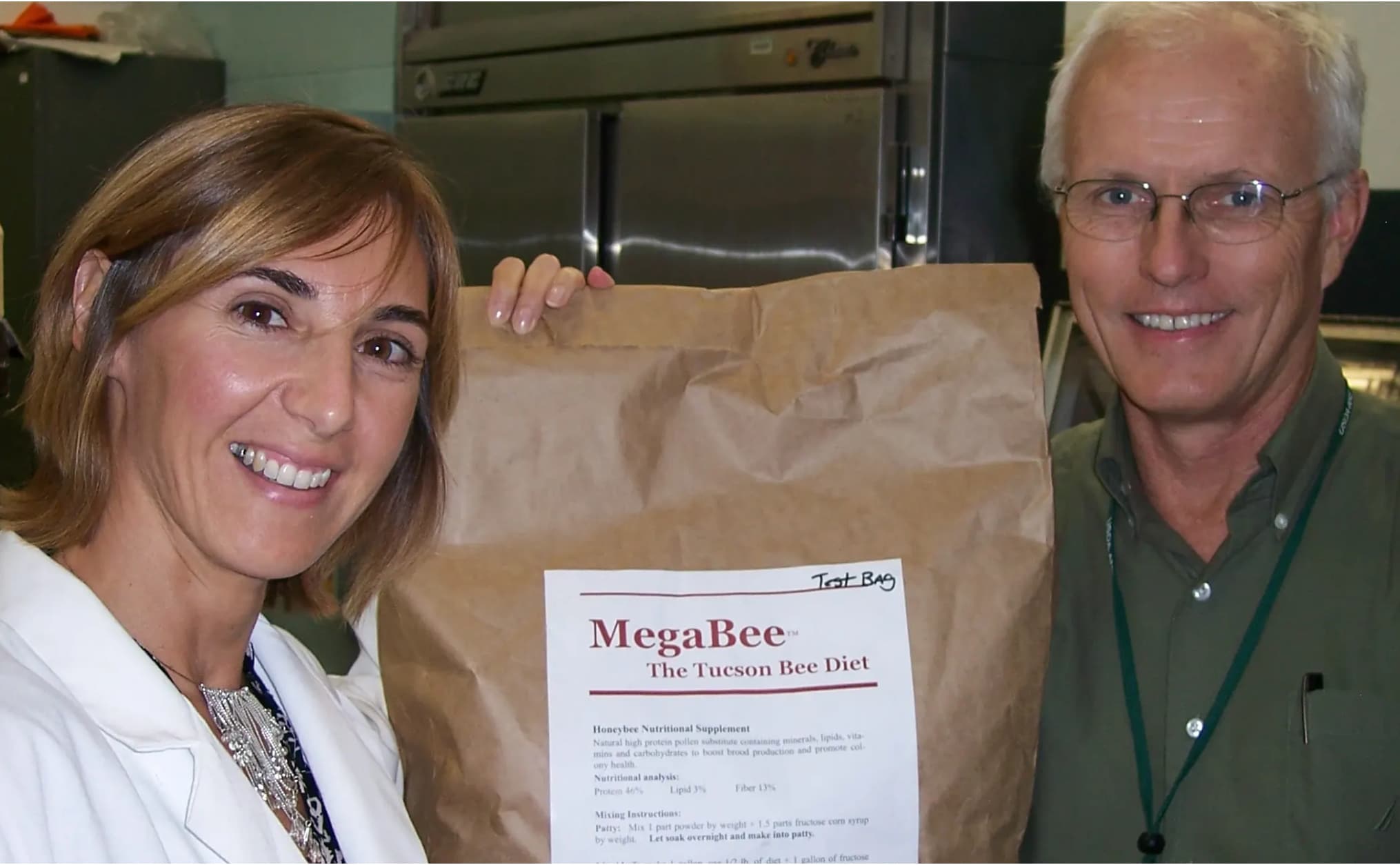
An important milestone in this evolution was the work of Dr. Gordon Wardell, whose meticulous research over several years in collaboration with the USDA ARS Carl Hayden Bee Research Center led to the development of MegaBee, one of the first commercial pollen subs to come out of a public bee research centre. Wardell took on the challenge of formulating a supplement that would fill the pollen gap as well as possible and that, on top of that, the bees would actually want to eat; no substitute, his included, matches natural pollen, and that is worth keeping in mind when you use one. His innovative approach considered the ideal composition and characteristics of a protein food, focusing on crucial aspects such as particle size, avoiding raw materials with potential antinutritional factors such as soya, and selecting ingredients that are palatable. Moreover, Wardell paid special attention to measuring the supplement’s impact on protein levels in the bees’ bodies, ensuring that the final product was not only theoretically superior, but also demonstrated its effectiveness in practice.
Antinutritional factors and their impact
Antinutritional factors are substances present in some foods that may interfere with nutrient absorption or have toxic effects on bees. Raw soya flour carries trypsin inhibitors and sugars (stachyose, raffinose) that bees digest poorly; that is why serious pollen subs use toasted or extruded soya, finely ground, and what you need to avoid is raw soya or stale flour. Raw egg carries avidin, which locks up biotin; pasteurised egg powder has no such problem, and its albumen is one of the most complete proteins you can put in a patty.
Characteristics of the ideal protein food
The ideal protein food for bees must have certain essential characteristics to be effective:
- Small particle size: This increases nutritional absorption.
- Free from antinutritional factors: To avoid negative effects on bee health, such as the protein blockage that raw soya flour or raw egg can cause.
- Protein content matched to the goal: for the Iberian bee, the good-practice manual by Pajuelo Consultores (Spain) recommends patties of around 10 % to build up colonies and 4 % to maintain them, as this bee is slow to take higher percentages. More protein is not better in itself: first, the bees have to eat it, and second, the protein has to be balanced, because a patty can vanish entirely and still not deliver.
- Balanced profile of essential amino acids: the classic reference is De Groot (1953), which gives ratios between amino acids rather than fixed figures; what limits uptake is the amino acid that is missing, which is why a patty blends several protein sources instead of relying on just one.
- Balanced pH: Essential for bee digestive health.
- Versatility: Available in different forms to suit various conditions and needs.
- Soft, moist texture: bees prefer a moist patty, and they only eat a hard or dried-out one when they are desperate. Keep it sealed and cool and, once opened, use it within a few days; old or spoiled patty goes in the bin, not in the hive.
- Palatability: It must have a pleasant flavour, so bees consume it voluntarily.
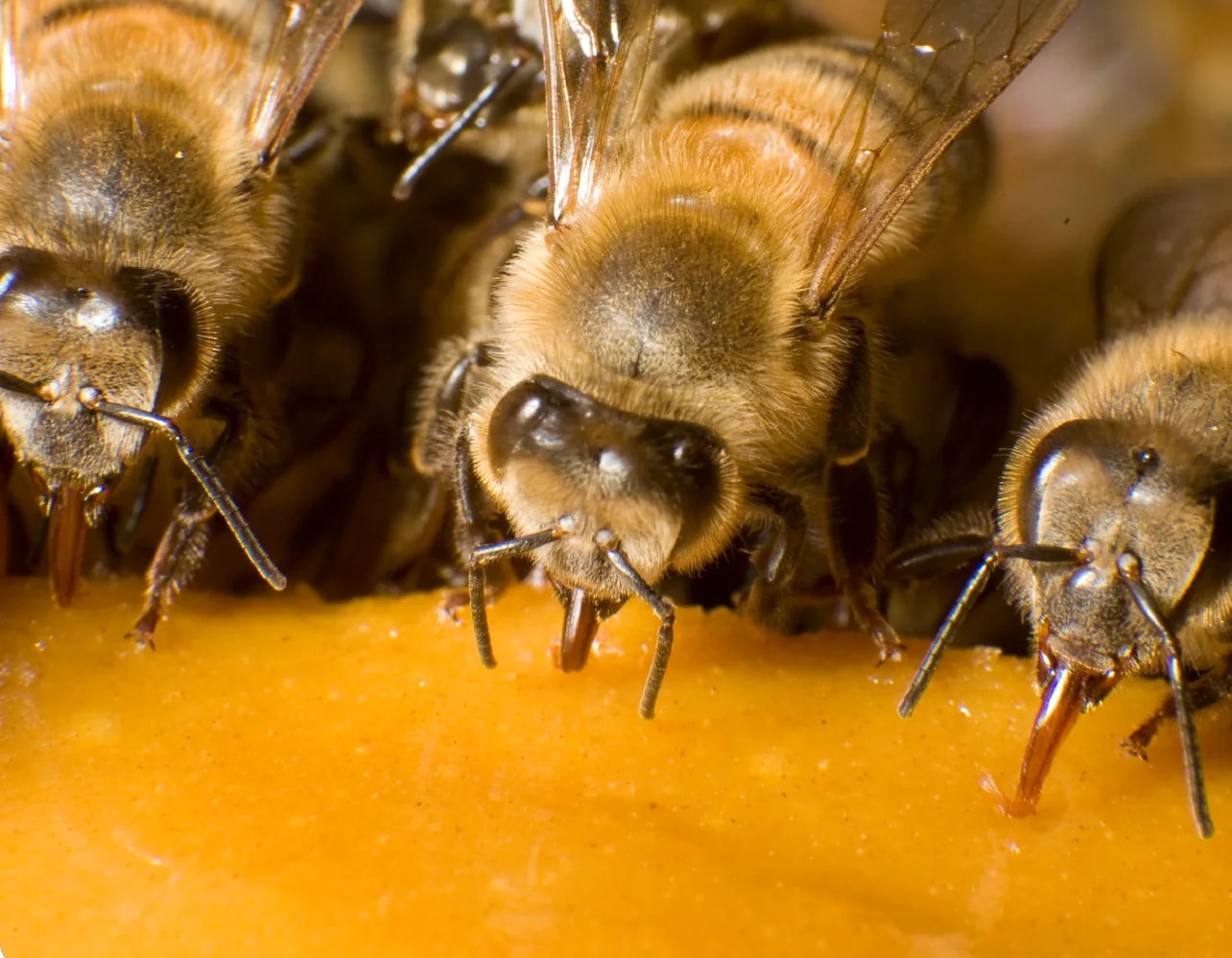
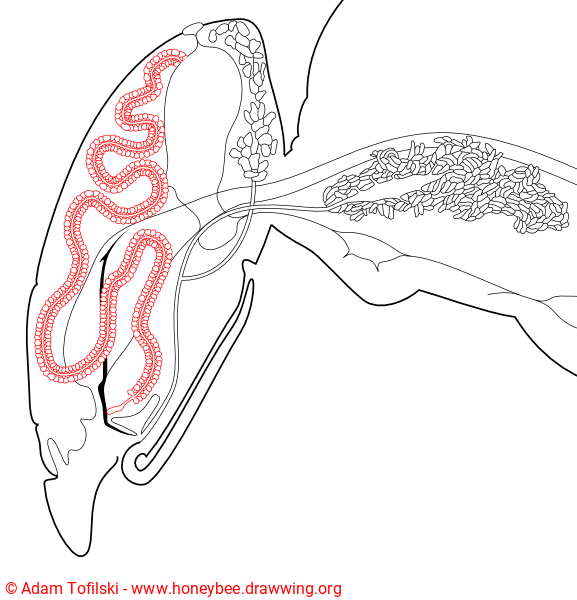
Bees take in food through the proboscis in much the same way as we drink a slush through a straw. If protein food particles are too large (most of the pollen grains bees collect are under 50 microns), they act like pieces of ice in a slush that block the straw, and the bees carry them out of the hive instead of eating them. This phenomenon explains why protein food residues are sometimes found at the bottom of the hive: bees cannot effectively assimilate large particles, preventing proper nutrition.
The Four P’s: Pesticides, Parasites, Pathogens, and Poor Forage
These factors can significantly reduce bee lifespan, affecting their health and productivity. An appropriate protein feeding programme can help mitigate some of these effects, providing bees with the nutrients needed to resist and recover from these threats.
Protein = Longevity
Proteins play a crucial role in bee health and colony development, directly influencing several vital processes. One of the most important functions of proteins is their role in activating the hypopharyngeal glands of nurse bees. These glands are fundamental for royal jelly production, an essential component for healthy larval and queen development.
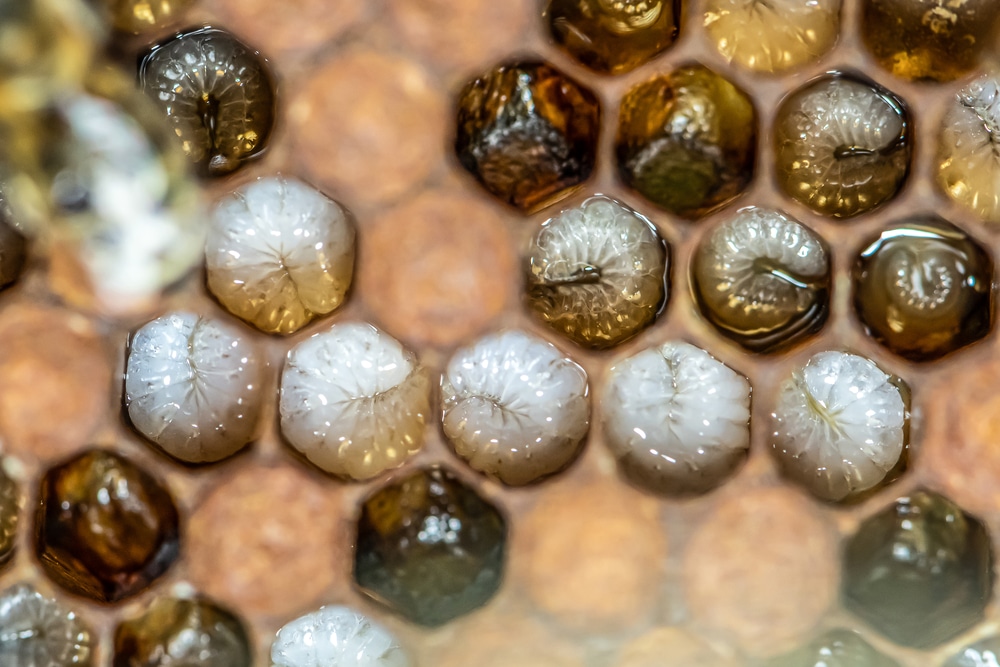
Royal jelly not only nourishes the queen throughout her life, but also is vital for larvae in their early developmental stages. It is a nutrient-rich substance containing proteins, vitamins, minerals and essential fatty acids, all necessary for optimal development of young bees.
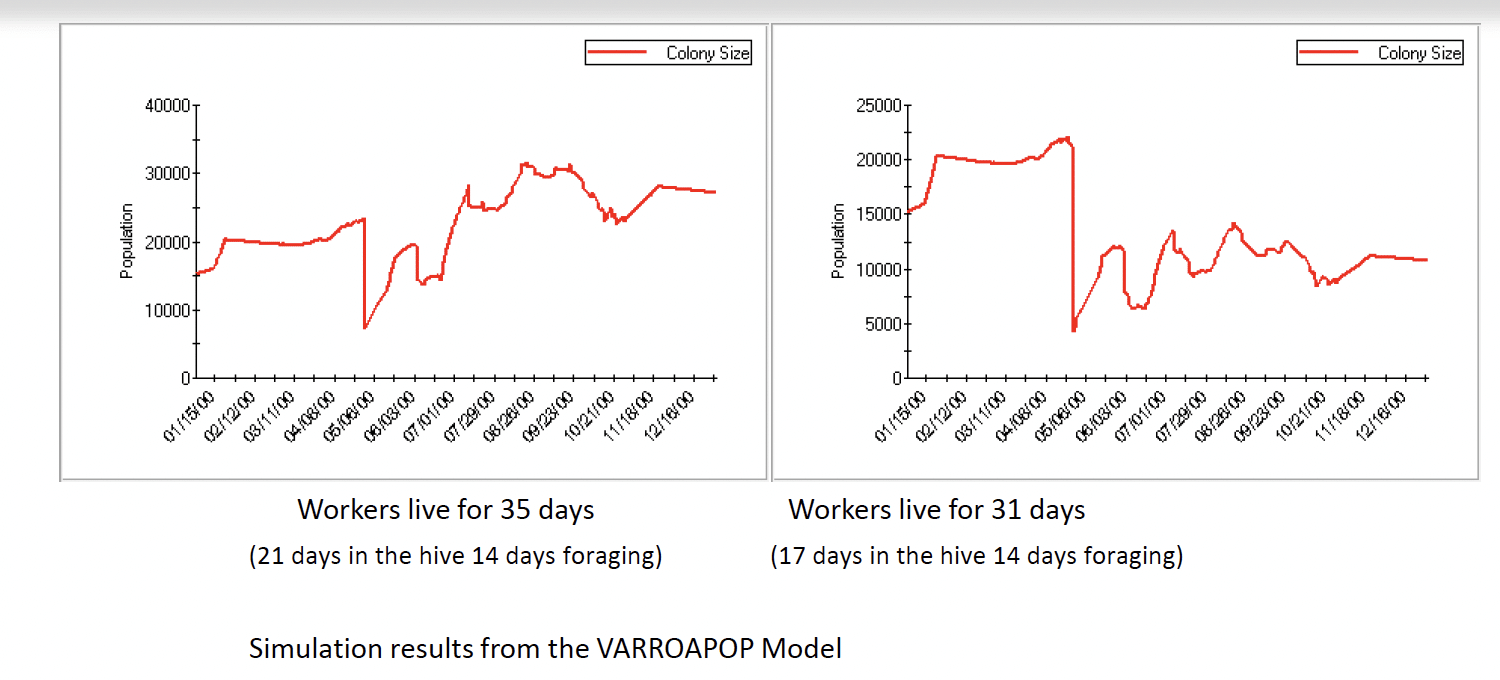
Bees that reach autumn with good protein reserves in their bodies live longer; but too much also shortens their lives, which is why protein is always given together with sugar and in patty form, never neat. Getting them to live longer is a primary objective in beekeeping, as the aim is to maintain strong and healthy colonies for as long as possible. Foragers stop digesting pollen (their glands no longer produce the enzymes that break it down) and carry hardly any pollen in their gut; nurse bees and house bees, on the other hand, eat it every day, and winter bees carry on eating it for weeks after they emerge. Therefore, the only way foragers can obtain the necessary proteins is through trophallaxis, a reciprocal feeding process in which nutrients such as royal jelly are transferred between individuals within the colony.
For trophallaxis to occur effectively and for adult bees to receive sufficient protein, it is essential that there is an excess of royal jelly. This excess is achieved by stimulating nurse bees to produce more royal jelly through protein supplementation. When larvae are immersed in abundant royal jelly, not only is their optimal development ensured, but the nurse bees are also encouraged to share the surplus royal jelly with adult bees and worker bees via trophallaxis. That surplus jelly feeds the adult bees too and lengthens their lives; if the weather and the nectar coming in play along as well, the colony grows, and with it the number of foragers.
In addition, a protein-rich diet prevents nurse bees from prematurely shortening their active period in that role. Under normal conditions, a nurse bee becomes a forager once it has completed its life cycle within the hive. However, when the hive is weak and there is a shortage of foragers, nurse bees may be forced to abandon their vital role prematurely in order to compensate for the lack of collectors. This can have negative consequences for the hive, as it reduces the ratio of nurse bees to larvae, affecting the production of royal jelly and the development of the brood. A weak brood pheromone, resulting from underdeveloped brood, may disrupt the balance and overall health of the colony.
A protein-rich diet is essential to stimulate royal jelly production, ensure healthy larval development, extend the lifespan of adult bees, and maintain an appropriate ratio between nurse bees and brood. This in turn strengthens the colony and contributes to the overall health of the bee colony.
When is the best time to feed protein cakes to bees?
Protein supplementation for bees is a strategic tool that must be applied with precision and at the right time, always adapting to the specific conditions of each hive, geographical area, and individual situation. Below are some key principles and timing guidelines for effective protein feeding, presented in a clear and practical manner.
- Strategic Use: Protein supplementation should only be applied when strictly necessary. Not all situations require protein intervention, and its use should be considered as part of a broader nutritional plan.
- Geographical and Temporal Adaptation: The need for protein supplementation varies according to location and the beekeeping calendar. Each key moment depends on the colony’s life cycle and environmental conditions.
- How to Tell if It’s Needed: open up and look at the youngest larvae; if they are swimming in jelly, the colony has plenty and the patty adds nothing; if the jelly is a thin film, the brood is patchy or you see eggs and larvae being eaten, it is time to feed. If they are rearing drones, they are not short of protein. Check first that the queen is laying and that there is comb to rear brood in: the patty won’t fix that. And don’t go by the band of pollen in the comb alone: that is what was left over, not what they are eating.
Key Moments for Protein Supplementation
- Preparation for Wintering: in late summer and autumn, while the queen is still laying and the winter bees are emerging, and only if no pollen is coming in. Feeding at that point aims to get the diutinus bees, the long-lived winter bees, to emerge with a fat body loaded with vitellogenin; once the cluster has formed and laying has stopped, there is no point. What the trials say about this window, a little further down.
- Late-Winter Build-Up: about six weeks before the flow you want to work (two brood cycles), once the colony is flying again and the queen has resumed laying, and only while no pollen is coming in from the field; as soon as the bloom starts bringing pollen in, the patty is surplus to requirements. It is a tool for those who need population early (almonds, migratory beekeeping); a colony that went into winter weak won’t be lifted by a patty in January. Watch out if you have no particular flow to work: stimulating in spring without giving space in time very often translates into earlier swarms, not more honey.
- Support for New Nuclei: The formation of new nucleus colonies temporarily reduces the number of available foragers. Providing a protein source right up against the brood helps the nuc keep its rhythm; in spring, with a flow on, a five-frame nuc becomes a colony in a couple of months, whereas nucs made in the middle of a dry summer barely grow even when given patty, so there the aim is for them to hold on until autumn.
- Post-Stress Recovery: Periods of high stress for the colony, such as Varroa treatments or intense pollination periods, can weaken bees. Supplementation helps restore their vitality and strength.
- Pollen Diversity: when the field gives poor pollen or pollen from a single plant (sunflower, eucalyptus, lucerne), a patty with several protein sources makes up for what that pollen lacks.
Autumn and build-up: what the trials say
In the United States patties go on mainly at two times: in late summer and autumn, so that the winter bees emerge in good shape, and in late winter, to arrive at almond pollination in February with population. Randy Oliver measured it in California between August and February 2013-2014 with 162 hives: those that received the best pollen subs arrived at the almonds as strong as those fed natural pollen, and those that received nothing didn’t get there (17 of the 18 hives in the pollen group made grade for rental; none of the unfed group made grade). His other conclusion matters just as much: with plenty of pollen in the field, the patty is ignored and it is money down the drain.
In Canada the result was different. Mattila and Otis gave large Ontario colonies one pollen patty a week for four weeks, between September and October: they got a short-term boost in brood, but neither more winter bees nor longer-lived ones. The signal that makes a colony start rearing winter bees is pollen ceasing to come in; while you keep feeding it, it carries on rearing summer bees. That is the nuance behind the “only if no pollen is coming in”: in an autumn with a flow on, the patty doesn’t make winter bees, it delays them.
And a third piece of data, from Arizona. DeGrandi-Hoffman and her team compared, from November to February, colonies foraging on a sown stand of Brassica rapa in flower with others that received only pollen sub. They grew the same, but the pollen-sub colonies had more black queen cell virus, more nosema and more queen losses. The sub fills the gap; it doesn’t match the field.
Translated to our calendar: the dry summer of Mediterranean Spain is the California case, not the Ontario one. If autumn brings no rain and no pollen is coming in while the queen is still laying, the patty makes sense from late August to October depending on the area, with more than 18 °C over the course of the day and in rations that get finished within a few days; as soon as the cold forms the cluster and the bees stop flying, the patty is left untouched and doesn’t go on (Oliver, who in 2007 spoke of not fighting their instinct between November and the solstice, qualified that in 2021: what holds them back is not the calendar but a cluster with no flight; as soon as they are flying and rearing brood again, the patty gets eaten again). The second window is coming out of winter: six weeks before the flow you want to work, the almond in January-February in the Levante (Spain’s eastern seaboard) and the spring flow elsewhere, kept up until fresh pollen comes in. With the wet autumn of the north, with ivy and heather, the norm is that it isn’t needed.
On the percentage: the American patties Oliver tested ran from 13.2 to 20.2 % protein, and the natural-pollen one, at 9.1 %, was the most eaten and performed as well as the best. The Pajuelo Consultores manual gives around 10 % for the Iberian bee because above that it is slow to take them, and in its own comparative trial it used a 15 % patty: the figure is a reference for acceptance, not a ceiling. What decides it is that they eat it and that the programme isn’t cut short: try it on about ten hives.
Sources: Randy Oliver, A Comparative Test of the Pollen Subs (2014) and Fat Bees, part 4, scientificbeekeeping.com; Mattila and Otis, Manipulating pollen supply in honey bee colonies during the fall does not affect the performance of winter bees, The Canadian Entomologist 139 (2007), doi 10.4039/n06-032; DeGrandi-Hoffman et al., Honey bee colonies provided with natural forage have lower pathogen loads and higher overwinter survival than those fed protein supplements, Apidologie 47 (2016), doi 10.1007/s13592-015-0386-6; Gonell, Pitarch and Gómez Pajuelo, Buenas prácticas en sanidad y alimentación de las colmenas, 4th ed. (2025), pp. 38-41.
Implementation of Protein Cakes
Allow for at least two brood cycles (about six weeks) and don’t cut the programme short while no pollen is coming in from the field: the patty goes on in rations that get finished within a few days, topped up before it runs out completely; in American practice, a patty of about 450 g every one or two weeks depending on consumption; with our house reference, about 250 g a week, adjusted to what you see.
When analysing the following graphs showing protein levels in adult bees at three and six weeks, it becomes clear that significant differences appear at six weeks. This highlights the importance of completing the full supplementation cycles, avoiding shortening or reducing these periods to ensure a positive impact on bee health.
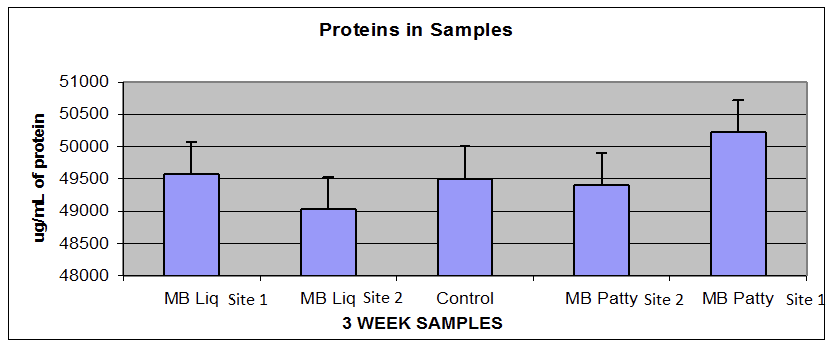
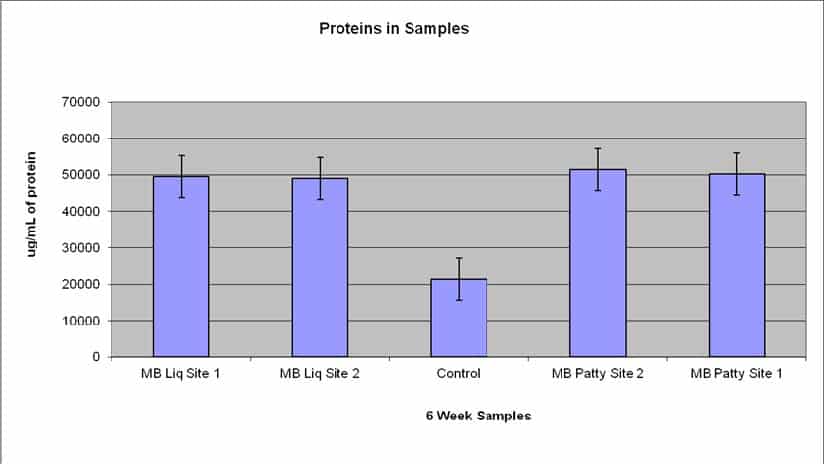
These trials come from MegaBee, a US powder at 46 % protein that is fed as a patty (around 13-15 % once mixed with sugar) or dissolved in syrup; the percentage on the sack is not that of the patty, and the latter is the figure to compare with the patties sold here. For the Iberian bee, our reference is lower: around 10 % to build up colonies (Pajuelo Consultores’ manual; in our book ¡Quiero ser apicultor! we put it this way: “our bee rarely takes more than 10 %”). Before settling on a recipe, try it on about ten hives.
Tips for Successful Feeding Programmes
- Be proactive, not reactive: Anticipate the nutritional needs of bees before problems arise.
- Start in good time: if the colony arrives weak, the first two patties go on replacing what the nurse bees have already used up, and you won’t see more brood until the second or third feed. Eating it quickly says more about how strong the colony is than about how much the patty is making it grow; and in the middle of a dry, hot spell, holding on without losing population is already a good result.
- Strategic use of feeding: It is not necessary to feed constantly, but it is important to know when and how to do so effectively.
- When to stop: as soon as you see pollen coming in regularly, stop putting patty on; if bits of patty turn up in front of the entrance, they are taking the sugar out and dumping the rest. With the cluster formed and no flight, you don’t open up to put patty on. Whatever has dried out away from the cluster gets removed.
- Planning: allow for at least two brood cycles (about six weeks) and keep going while no pollen is coming in; stopping halfway is what makes it “not work”.
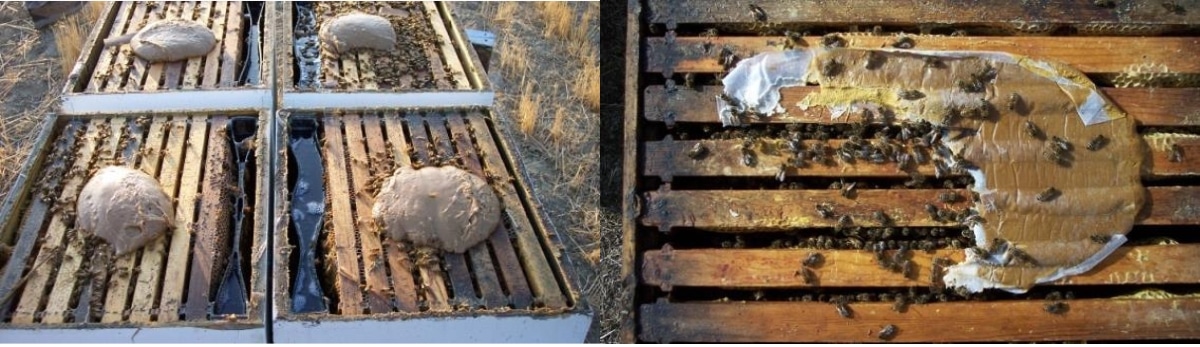
- Location of nutrition: close to the nurse bees, which are the ones that eat it: the patty goes on the top bars of the brood frames, centred over the cluster and touching the bees, less than five centimetres from the brood; in double-brood hives, between the two boxes, never under the lid on top of the super nor in the feeder. Take the wrapper off and, if the patty is soft, break it up and press it down between the frames. If the cluster moves, the patty follows it; whatever dries out away from the cluster gets removed and replaced.
- Feeding efficacy: Dry feeding may be less effective than methods applied directly within the hive.
- Observation: Look for indicators of success beyond the mere disappearance of the feed cake.
To size the purchase: a serious programme is several patties per hive, not one; with our house reference (about 250 g a week for at least six weeks) reckon on a kilo and a half per hive, and more if the dearth drags on; American autumn programmes go up to three or four kilos per hive.
Consult our selection of protein feeds for bees and choose the format according to your objective, the time of year, and observed consumption.
![Protein supplementation for bees [Complete guide] - BEE FEEDING](https://www.latiendadelapicultor.com/blog/wp-content/uploads/optimum-gravatar-cache/dho.png)
ISNI 0000 0005 1801 1100 | Joshua Ivars is the manager of LA TIENDA DEL APICULTOR and the author of this blog, where he shares technical and practical guidance for beekeepers. Drawing on extensive experience in the beekeeping sector, he offers advice and solutions based on beekeepers’ real needs, sharing his knowledge of equipment and essential beekeeping practices.


