
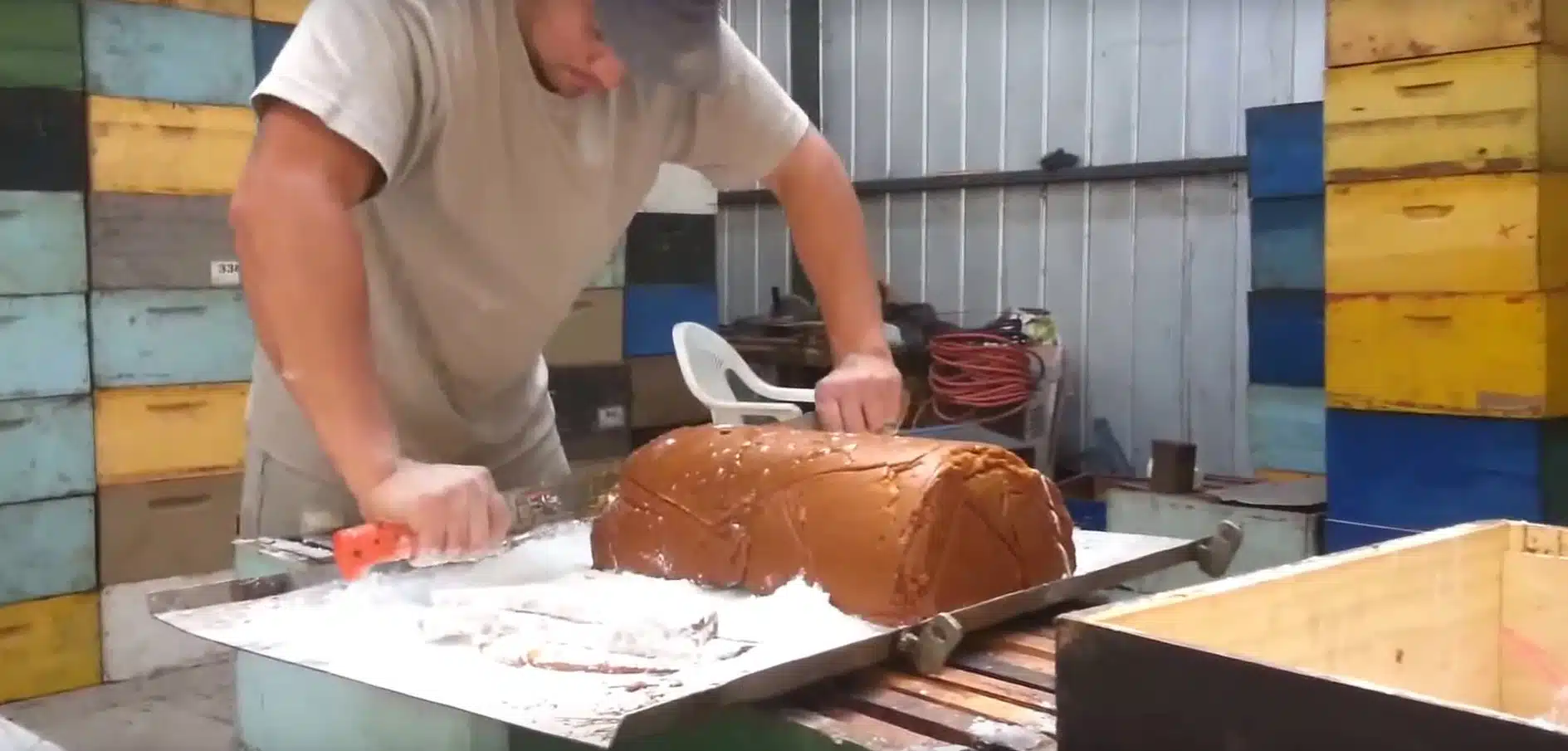
Understand what the colony needs
Honey bees need a dependable supply of carbohydrates, protein, lipids, vitamins, minerals and water. Nectar and honey provide most of their energy, while pollen supplies much of the protein and other nutrients needed for brood rearing. There is no fixed 80:20 honey-to-pollen ration that describes every colony: requirements change with season, colony strength, brood production and the quality of available forage. The following table is a guide to nutritional roles, not a formula to reproduce.
| Nutrient or resource | Main role | What to assess |
| Sugars | Energy for adult bees and colony activity | Accessible honey stores, incoming nectar and need for suitable sugar feed |
| Protein and amino acids | Brood-food production and growth | Availability and quality of pollen or an appropriate supplement |
| Lipids | Essential fatty acids and other physiological functions | Ingredient balance, not an arbitrary addition of cooking oil |
| Vitamins and minerals | Components of normal nutrition | Whole-feed formulation and existing supplementation |
| Water | Colony use and feed preparation | Access to water and hygienic preparation |
| Natural pollen diversity | A varied nutrient supply | Forage availability across the season |
Sugar feed and protein feed solve different problems. A colony short of accessible honey stores needs an energy source; one short of pollen may also need an appropriate protein supplement. A protein patty does not replace carbohydrate stores, and sugar alone does not replace pollen. Moist homemade feed can spoil, so do not infer a safe shelf life from a single moisture percentage. Prepare manageable batches, keep equipment clean and follow the storage instructions for each product. Sugar pastes such as Apipasta Vitamins are not equivalent to a pollen substitute.
Before preparing bee feed, identify the nutritional gap and check the ingredients and instructions. More ingredients do not necessarily make a better ration. This guide reviews the original article’s feeding approaches and includes one clearly attributed recipe from the UK National Bee Unit; it does not provide treatments for bee diseases.
Carbohydrate ingredients
- Commercial glucose or fructose syrups formulated for bee feeding. Check their composition rather than treating all syrups derived from starch as interchangeable.
- Invert sugar syrups intended for bees. Ask the supplier about product specifications, storage and hydroxymethylfurfural (HMF), which can increase when sugar syrups are overheated or poorly stored.
- Powdered fructose, where specified by a complete feed recipe or the manufacturer’s instructions.
- Dextrose, another name for glucose, where the chosen recipe calls for it.
- White granulated sugar (sucrose), a standard ingredient in beekeeper-prepared sugar syrup.
- Honey only from a known, healthy source within your own operation; do not feed bought-in or unknown-origin honey to colonies.
Check the full specification, not just the crude sugar content. A syrup suitable for another animal or for food manufacturing is not automatically suitable for bees. Avoid substituting ingredients without knowing how this changes the finished feed.
Protein, lipid and micronutrient ingredients
Pollen supplements contain pollen; pollen substitutes are intended to supply some of its nutritional functions without pollen. Neither should be assumed to match the diversity of good natural forage. Protein powders are generally offered as a formulated patty or according to their label, not stirred indiscriminately into a feeder of sugar syrup.
Ingredients found in formulated bee feeds include:
- Brewer’s yeast. Its composition and processing vary, so use the supplier’s analysis rather than assuming a universal protein percentage.
- Milk-derived ingredients in some published recipes or commercial formulations. These are not interchangeable with any whey or milk product without checking the recipe.
- Processed plant proteins and protein hydrolysates selected for the intended feed formulation.
- Vitamin and amino-acid supplements, where specifically required by the product instructions. Check what the base feed already contains before adding more.
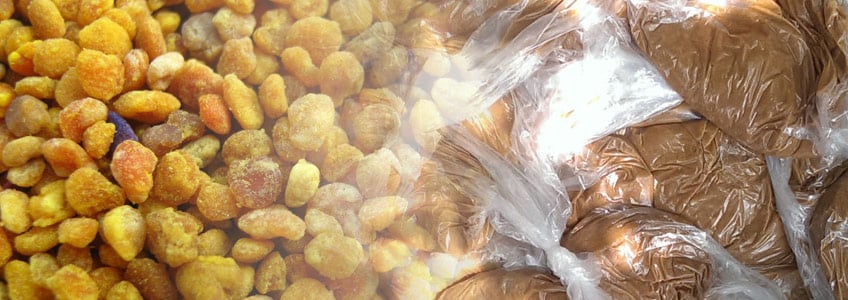
- Pollen of traceable origin. The National Bee Unit’s pollen-feeding guidance advises against using pollen from unknown sources or other beekeepers because of the risk of transferring bee diseases.
Ingredients that need particular care:
- Soya flour or soybean meal: processing, composition and anti-nutritional factors matter. A controlled study of soybean trypsin inhibitor found harmful effects at high experimental exposures; this is not a finding that every soya ingredient is harmful. Conversely, a fine particle size alone does not demonstrate that trypsin inhibitors have been inactivated. Use ingredients and quantities specified in a reliable formulation.
- Egg powders and other unvalidated substitutions: do not assume that an ingredient is suitable just because it is high in protein. Nor is it correct to claim that bees cannot use any animal-derived protein. The practical issue is whether the whole ration, ingredient quality and handling have been assessed. Egg is not needed in the National Bee Unit example below; avoid improvising additions, particularly where honey for harvest could be affected.
Two common misunderstandings
- Vitamin C is not a universal remedy. This article does not recommend a homemade vitamin dose or claim that adding ascorbic acid prevents disease. Vitamin content and stability depend on the product and formulation; check the label rather than asserting that all commercial supplements do, or do not, contain it.
- Particle size is one characteristic, not a complete quality test. Fine, well-dispersed powders may be easier to mix, but a blanket 200-micrometre threshold does not establish nutritional adequacy, digestibility or colony health. Consider formulation, freshness, acceptance and evidence as well.
Choosing a bee-feed formulation
1. Sugar-based feed and mixed patties
During a shortage, assess accessible stores and colony condition before choosing feed. A low-protein patty cannot guarantee winter survival, and a fixed protein percentage does not reliably predict whether brood rearing will increase.
The original Spanish article discussed a mixed-feed approach attributed to Antonio Pajuelo. Its percentage table and worked quantities do not agree, so this English review does not reproduce them as a usable recipe. The ingredient roles remain useful to understand, but a complete, internally consistent formulation is essential:
| Component | Role and check |
| Bee-feeding syrup | Energy and moisture; use a suitable, specified product |
| Powdered sugar ingredient | Energy and texture; quantity depends on the complete formulation |
| Brewer’s yeast | Protein contribution; check the ingredient analysis |
| Oil | Not a routine addition without a validated formulation |
| Vitamin supplement | Only if required by the exact feed instructions |
| Health supplement | Not included as a homemade disease-prevention or treatment dose |
Costing: calculate the cost from today’s ingredient prices and the actual finished batch weight, including packaging and wastage. Historic prices per kilogram or per patty are not a reliable current quotation.
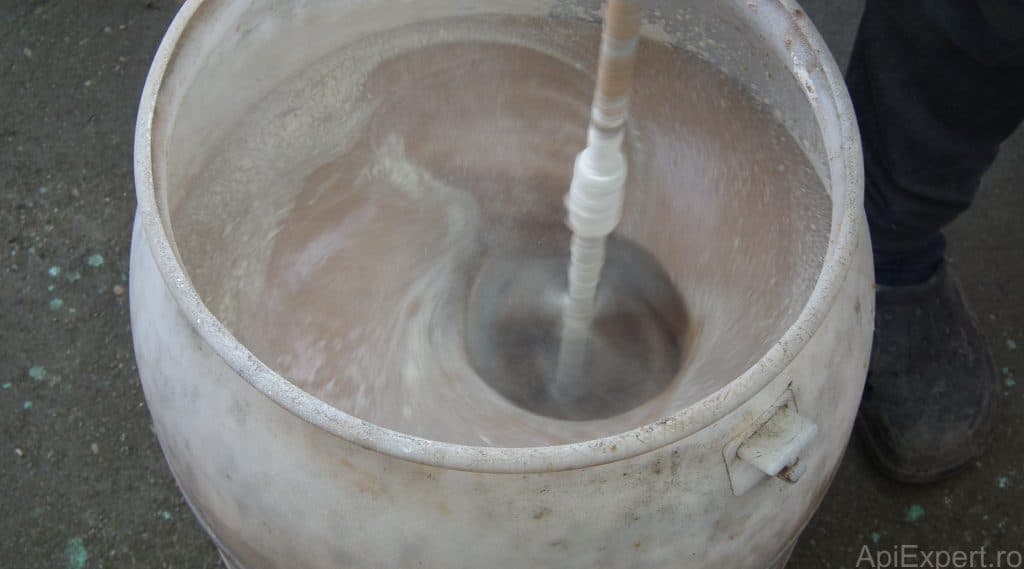
Lipids: pollen supplies essential fatty acids, but that does not justify adding an arbitrary litre of cooking oil to a batch. Oil type, freshness, quantity and the rest of the formulation matter. There is no universal 1.2% fat target established by the simplified honey-and-pollen table.
Access: place suitable feed where the bees can reach it without leaving the occupied part of the hive. Minimise disturbance and spills, and avoid encouraging robbing. In cold conditions, feed that is present but out of reach may not meet the colony’s needs.
Storage: do not improvise preservative doses or use a food additive as proof that feed will keep safely. Follow validated product instructions, make only what can be handled and stored properly, and reject feed that is mouldy, fermented or otherwise deteriorated.
Health products: Nozevit and similar supplements should not be presented here as proven prevention or treatment for nosemosis. Feed is not a substitute for investigation of colony decline or for veterinary advice on any authorised treatment.
Flavourings: lemon, cinnamon and essential oils are not necessary components of this guide. An attractive smell to the beekeeper is not evidence of bee acceptance, nutritional benefit or safety. Do not add unvalidated flavourings to compensate for a poor formulation.
Micronutrients: a balanced ration is more useful than adding a succession of individual supplements. Follow the instructions for the chosen feed, including any restrictions on mixing it with other products.
2. Protein patties for a genuine pollen shortage
Young worker bees need adequate nutrition to develop the glands that produce brood food. A lack of pollen can therefore limit brood rearing. However, not every colony benefits from supplementary protein at every time of year: consider incoming pollen, bee bread, colony strength and the expected forage period. Feeding cannot correct queen problems, parasites or other health issues on its own.
The duration of feeding should follow the colony’s need and the return of sufficient natural pollen, not an automatic six-week rule. The National Bee Unit recommends maintaining support during a shortage rather than abruptly withdrawing it while brood rearing still depends on the supplement.
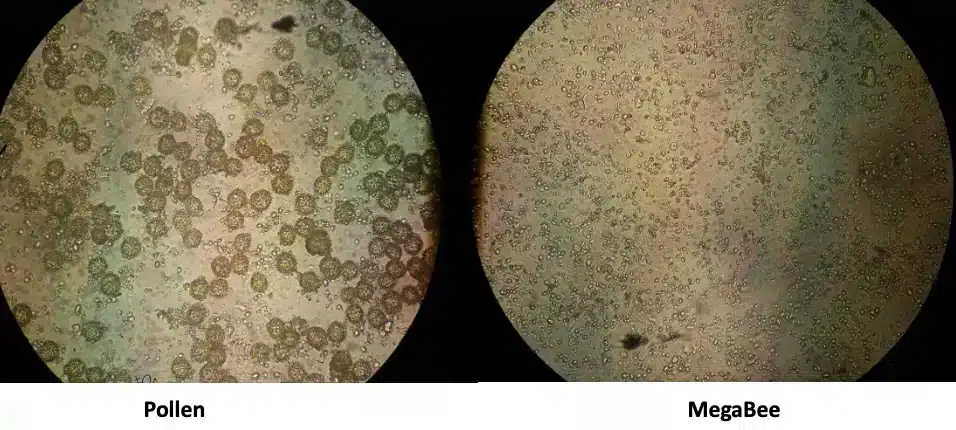
Commercial products such as Ultra Bee, MegaBee and other protein feeds differ in composition and preparation. Use the instructions for the exact product and version you have; a powder intended for mixing is not the same as a ready-to-use patty.
Using a commercial powder: check the complete recipe
| Component | What to verify |
| Commercial protein powder | Exact product, batch, composition and current mixing instructions |
| Syrup | Type and quantity specified for that product |
| Additional sugar | Whether required at all, and the complete finished-batch quantities |
The crude protein percentage is only part of the picture. Amino-acid balance, ingredient quality, consumption and local conditions also matter; field research comparing supplemental diets does not support a universal ‘highest protein equals best feed’ rule.
Practical preparation: obtain the current mixing instructions, weigh each ingredient and record the batch. The old Ultra Bee percentage table totals 95%, while its worked example gives different proportions. Neither is reproduced here as an instruction. Do not fill in the missing percentage by guesswork or apply one brand’s recipe to another.
Compare like for like: work out the cost of the prepared feed, not just the powder. Water content, the quantity actually eaten and any spoiled leftovers affect the useful cost to the colony.
No recipe can honestly be described as the highest-protein or highest-quality patty of all published recipes without a defined comparison. Choose a suitable, well-documented feed and monitor its use rather than relying on a superlative.
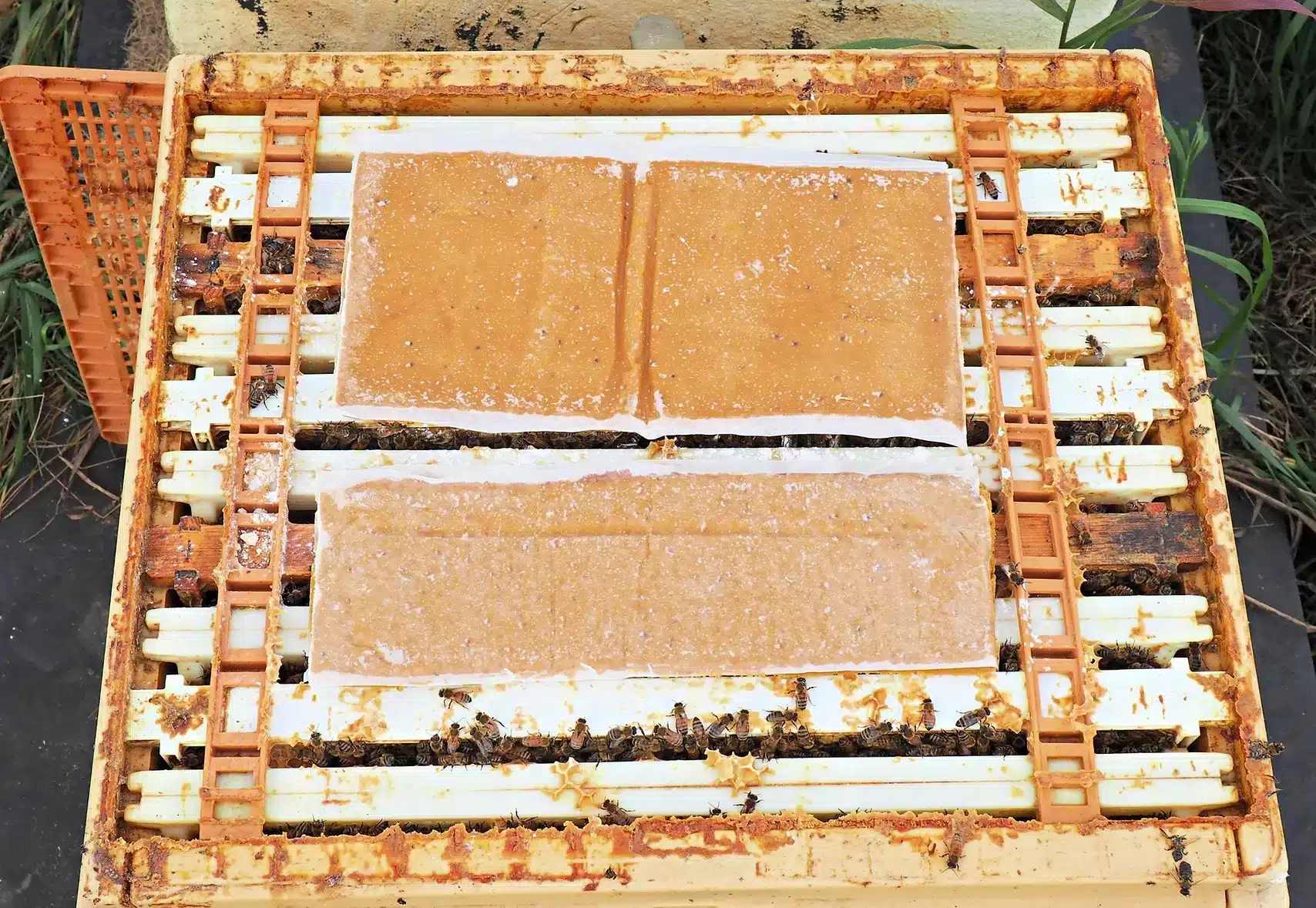
Check carbohydrate stores as well as pollen. Sugar feed may be needed alongside a protein patty when energy stores are inadequate, but liquid syrup is not automatically required merely to make a patty more palatable.
Using Apinúcleo Plus or another branded mixture
| Check | Why it matters |
| Exact branded product | Names and formulations can change |
| Complete ingredient quantities | All quantities must agree with the manufacturer’s instructions |
| Finished texture and handling | Follow the directions for preparing and offering the feed |
| Additional health products | Do not incorporate a disease-treatment dose from an old blog recipe |
| Other supplements | Avoid duplicating vitamins or additives already present |
The original Apinúcleo Plus table and worked batch also disagree. Use the current label or written manufacturer instructions for the exact product instead of copying those historic figures. This guide does not add Nozevit, vitamin products or other supplements to the manufacturer’s formulation.
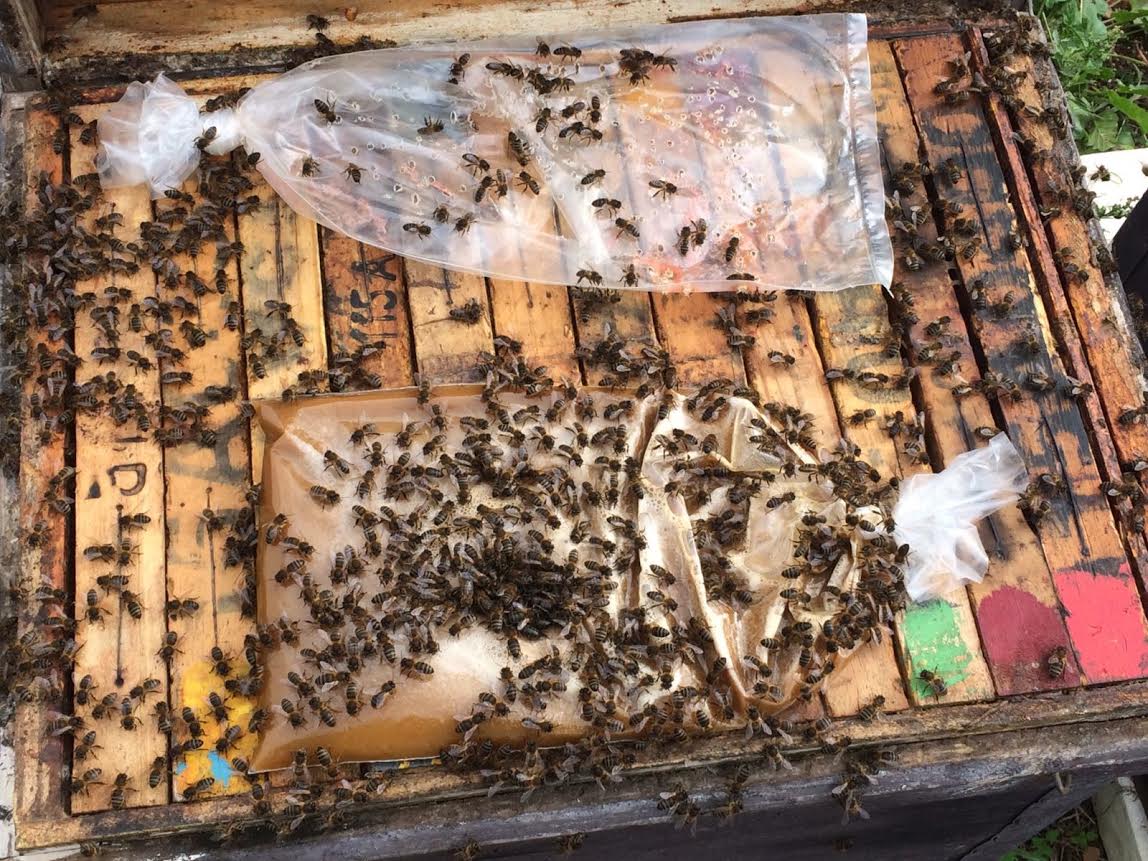
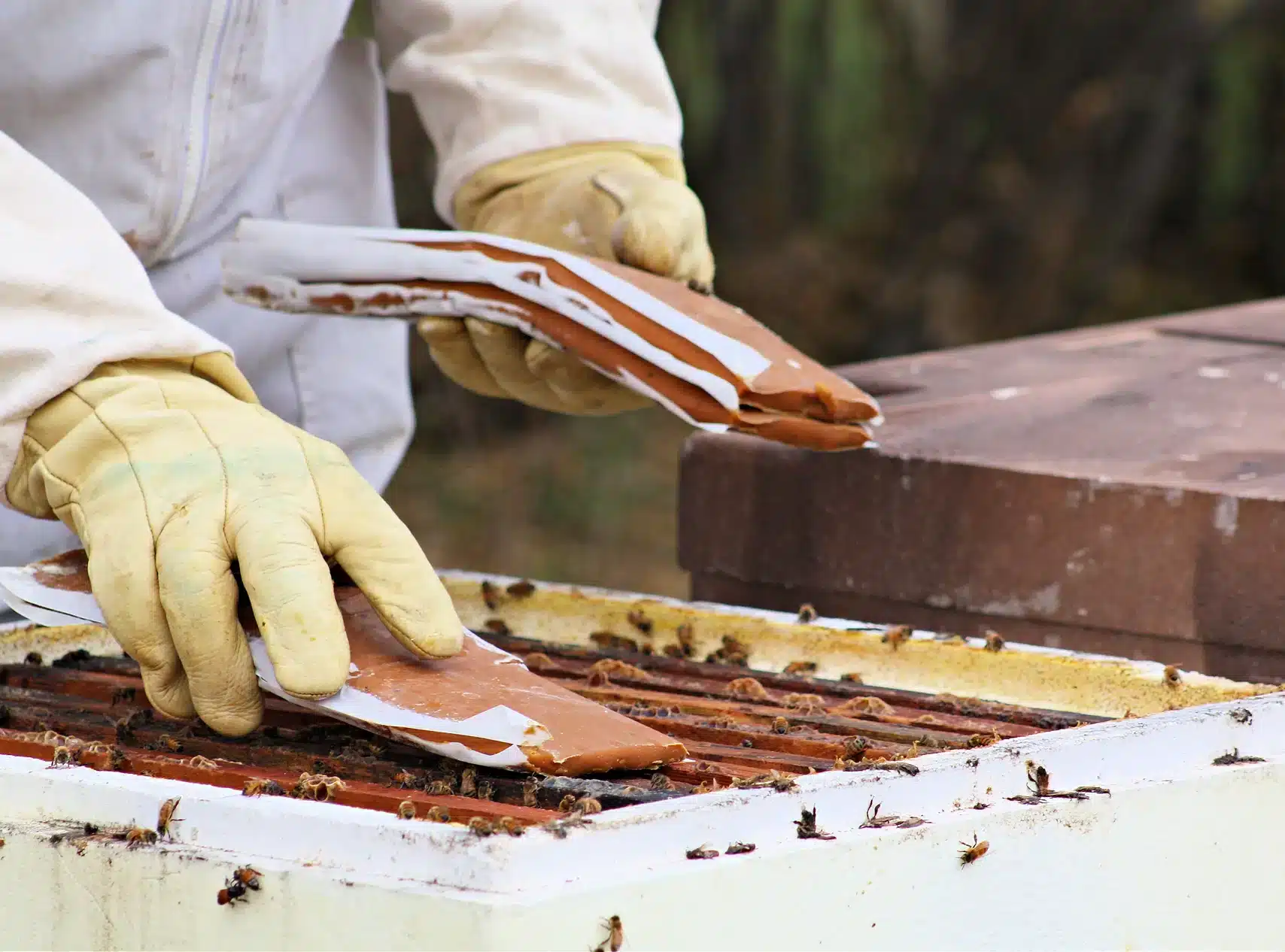
Place patties over the occupied brood area in accordance with the product or recipe instructions, where the bees can reach them. Avoid crushing bees or disrupting frame spacing. The appropriate portion depends on colony strength, temperature and consumption; a fixed distance of three or four centimetres is not a universal requirement.
Open the wrapper as instructed so that bees can reach the feed, while keeping it from drying out or spilling. There is no general rule to turn every bag over after a set number of days. Inspect consumption and condition when normal colony management allows.
If carbohydrate support is also necessary, choose its form for the weather and the colony’s ability to use it. Keep supplemental feed out of honey intended for sale, and do not let feeding during a harvest compromise the authenticity of the crop.
3. Pollen-based approaches and one pollen-free example
The original article described pollen-based ideas attributed to Gilles Fert. Pollen can improve a supplement’s nutritional value and acceptance, but it can also introduce bee diseases. Traceability and colony health matter more than whether the pollen looks fresh. Do not use pollen or honey of unknown origin.
Pollen-free feeds avoid introducing pollen from other colonies, but their performance still depends on formulation and the conditions in which they are used. Brewer’s yeast is a fungus, not a plant protein, and soya and yeast are not automatically inferior in every situation. No lemon or cinnamon additive is recommended here.
If considering a pollen-containing supplement, check these points first:
- Confirm the pollen’s origin and the health status of the donor colonies; do not assume bought-in pollen is safe for feeding.
- Use a complete, documented formulation rather than adding varying percentages of pollen to a generic patty.
- Check storage history and reject degraded ingredients; fresh appearance alone does not establish quality.
- Keep records of ingredients and batches, and assess whether the colony actually needs the supplement.
Fresh versus dried: collection, drying and storage can affect pollen quality, but ‘fresh is always safe’ and ‘dried must never be used’ are both too simplistic. Follow competent local bee-health advice; do not use preservation as a way to make unknown-origin pollen acceptable.
A clearly attributed pollen-free recipe: the UK National Bee Unit’s November 2025 guidance gives the following small-batch example. It is reproduced here as an educational feeding example, not a disease treatment or a guarantee of increased brood production. Use the stated ingredients rather than substituting egg powder or adding medicines, herbs or preservatives.
| Ingredient | National Bee Unit example |
| Soya flour | 240 g |
| Dried brewer’s yeast | 80 g |
| Skimmed milk powder | 80 g |
| Sugar syrup | Prepare from 220 g white granulated sugar and 110 ml water; use the prepared batch |
Honey and ingredient hygiene: this example contains soya and milk ingredients. Handle and store them carefully, keep preparation equipment separate from honey-handling equipment where necessary, and prevent feed from entering honey for harvest. A published feeding recipe does not remove the need for food-safety controls.
- Prepare the syrup from the stated white sugar and water, using warm water to dissolve the sugar; let it cool before mixing it into the dry ingredients.
- Mix the dry ingredients evenly, then add the cooled syrup to make a uniform paste. The National Bee Unit notes that ingredients vary and advises watching how the bees use the feed. Do not turn an unsuccessful batch into an uncontrolled experiment with extra ingredients.
- Divide into portions appropriate to the colony and wrap in greaseproof paper. Following the guidance, expose the underside for access and place the feed over the top bars above the occupied brood area, leaving the paper covering to limit drying. Prepare or store spare portions according to the National Bee Unit’s instructions rather than assuming an indefinite room-temperature shelf life.
Not a chalkbrood treatment: oregano and other herbs are not recommended here to prevent fungal brood disease. If brood looks abnormal, seek bee-health advice; changing a patty recipe is not a diagnostic or treatment plan.
Learn more about feeding bees
The video and linked course are in Spanish. They provide further beekeeping education; check current product instructions and bee-health guidance before using any feeding or health recommendation.
Conclusions
Start with the nutritional problem, choose a complete and documented feed, and keep preparation hygienic. A recipe that does not add up should not be repaired by guesswork. Natural forage, colony condition and actual feed consumption are better guides than blanket claims about a ‘complete’ or ‘best’ patty.
Do not wait until stores are exhausted. Inspect and plan ahead, while recognising that good nutrition is only one part of colony management. More protein is not always better, and feeding does not guarantee a larger harvest or protection from disease.
For further practical guidance, consult the National Bee Unit’s guidance on feeding pollen and substitutes. Its recipe is credited to the Animal and Plant Health Agency, Crown copyright, and used under the Open Government Licence.
If you prefer a ready-to-use option, see our bee feeds and protein feeds for bees.

ISNI 0000 0005 1801 1100 | Joshua Ivars is the manager of LA TIENDA DEL APICULTOR and the author of this blog, where he shares technical and practical guidance for beekeepers. Drawing on extensive experience in the beekeeping sector, he offers advice and solutions based on beekeepers’ real needs, sharing his knowledge of equipment and essential beekeeping practices.


