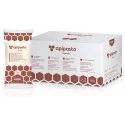
 Apipasta with vitamins 15kg
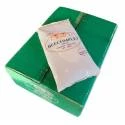 Beecomplet® Spring 14Kg
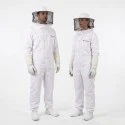 Beekeeper suit with round veil
 Oxalic acid 1kg
 Beeswax Foundation 5kg
 Fresh royal jelly 20g
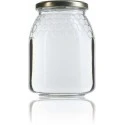 Classic honey jar 1kg comb-lines TO77 - Pack of 16 units
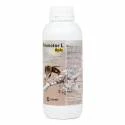 Promotor L Apis 1 litre
Beekeeper Gloves
Beekeeping gloves in nitrile, PVC, leather and Skay, from €2.75 to €47.50. From the fine-touch disposable to the long-gauntlet type for intensive work.
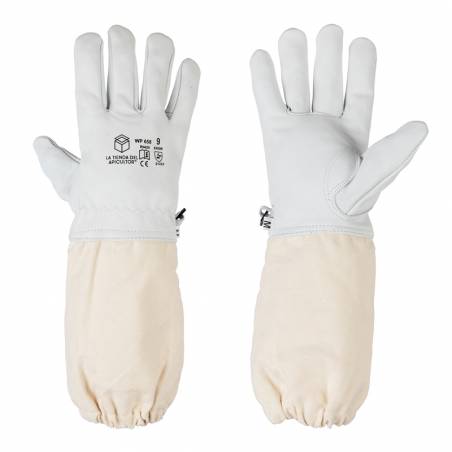
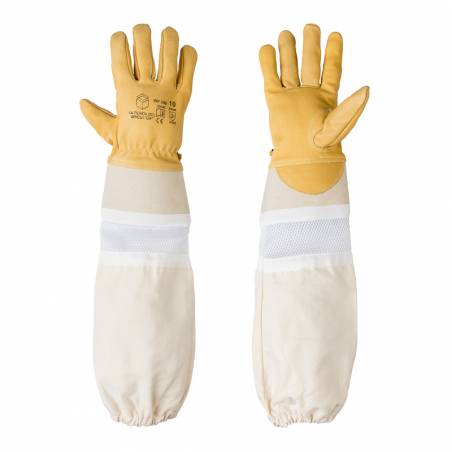
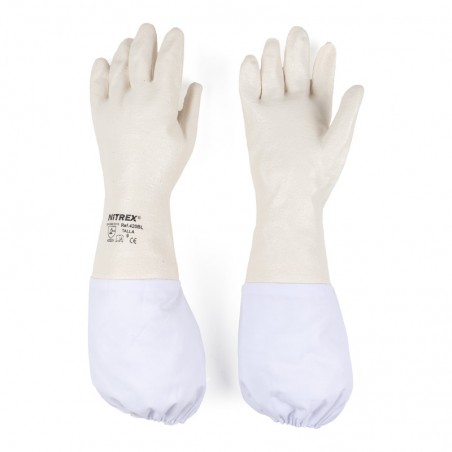
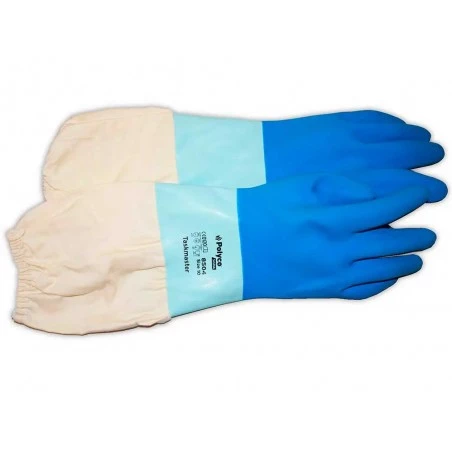
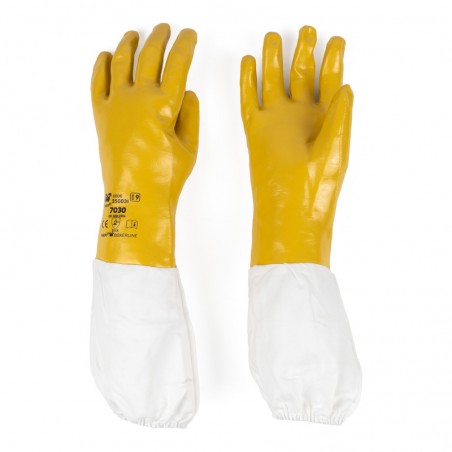
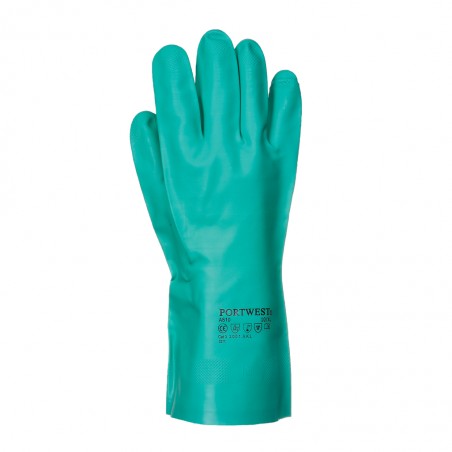
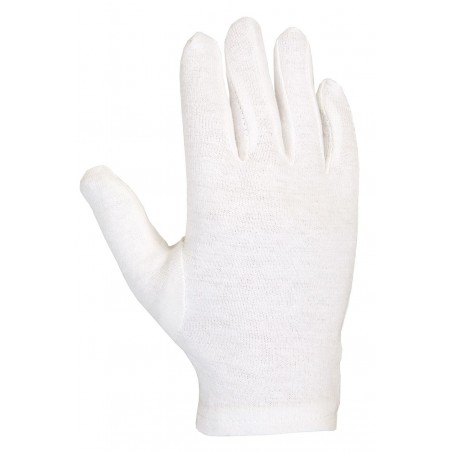
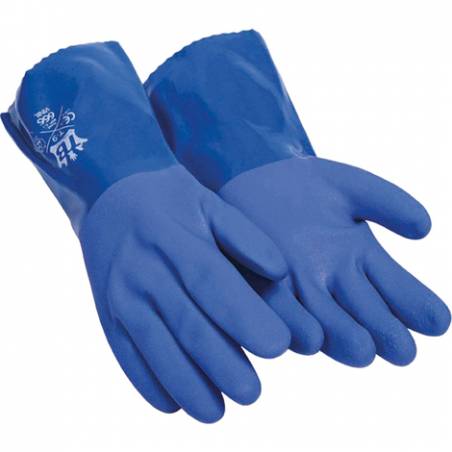
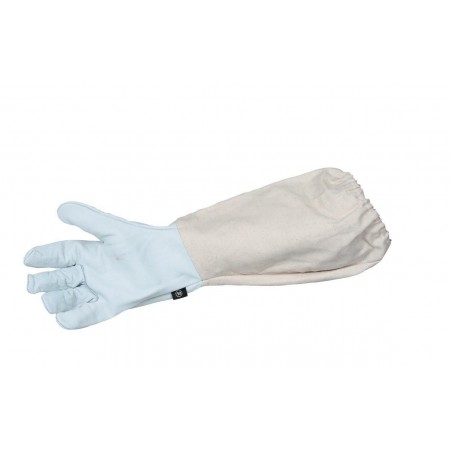
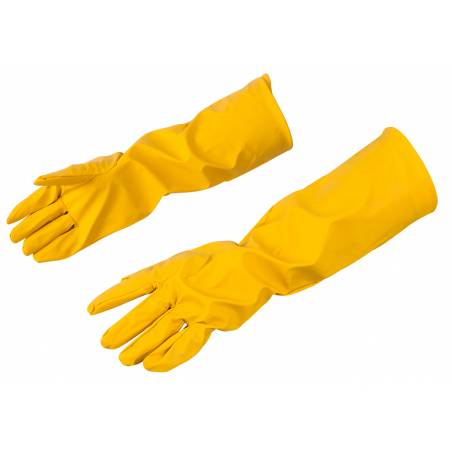
How to choose beekeeping gloves
Beekeeping gloves aren't chosen just for “not getting stung”. They're chosen for the balance between protection, dexterity, comfort and type of work. A very thick glove gives security, especially at the start, but it can also make you clumsier: you handle the frames worse, crush more bees and the colony can get more nervous. For a beginner, I'd usually recommend starting with a leather glove with a gauntlet, because it protects the hand, wrist and forearm well. For a more experienced beekeeper, or for tasks where you need more precision, I'd look at nitrile, latex or thin leather gloves, always assuming that more dexterity usually means less of a barrier against stings.
My advice is to choose the material according to the real use. Leather gloves, especially if they're thin or well-worked leather, give a touch that's hard to match and very good protection; that said, a stinger can stay embedded in the glove's leather and it's worth checking them after working. Nitrile ones work very well for those looking for hygiene, easy cleaning and sensitivity, but if they're thin or too tight they protect less. Latex ones are flexible and comfortable, although they don't always have the same durability. And cotton ones can add comfort and breathability, but I wouldn't use them as the only protection on defensive colonies. Before buying, I'd look at the size, the length of the gauntlet, the wrist fit, breathability, ease of cleaning and the real level of dexterity. For me, the best glove isn't the most armoured one: it's the one that lets you work calmly without losing sensitivity or punishing the colony.
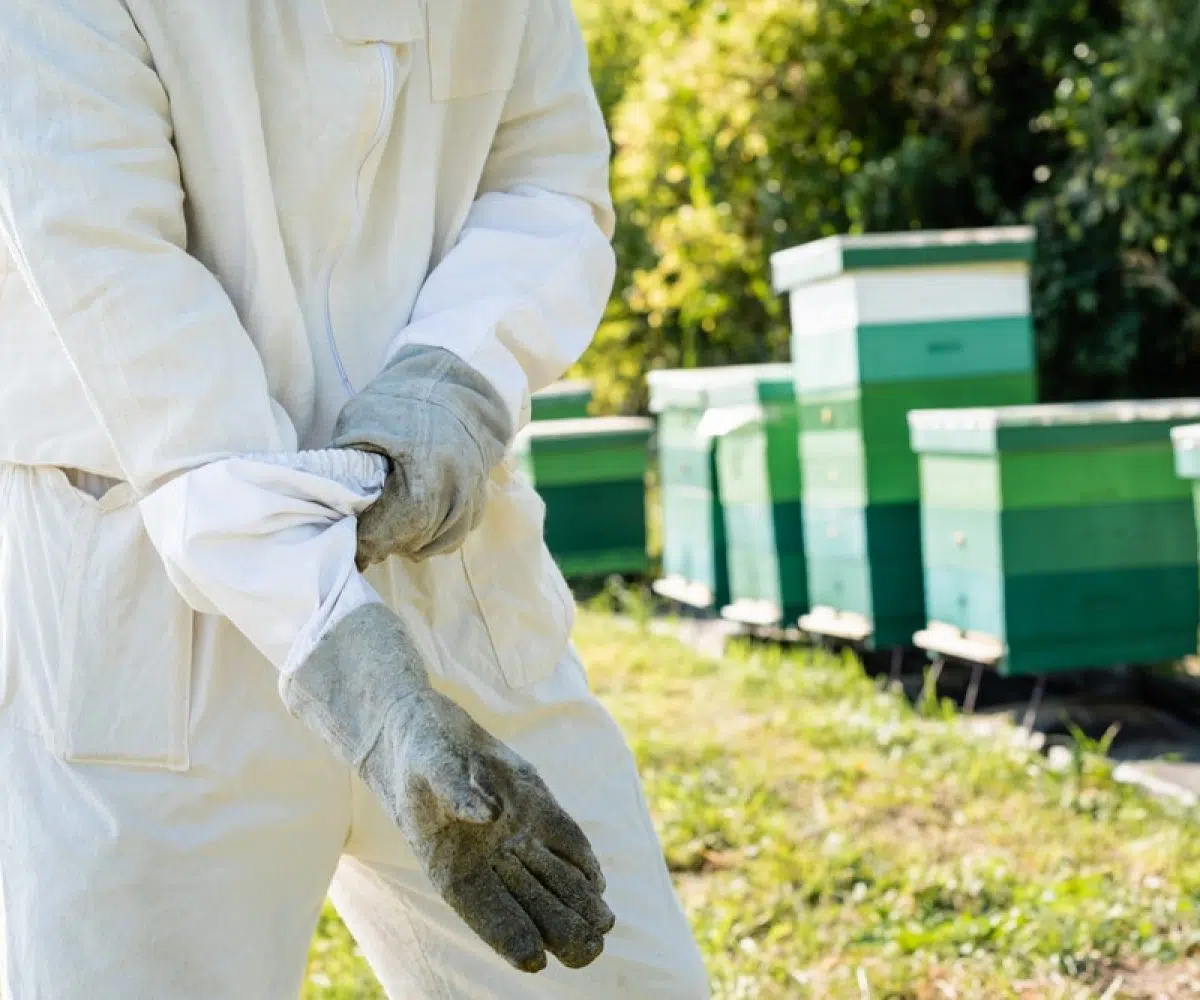
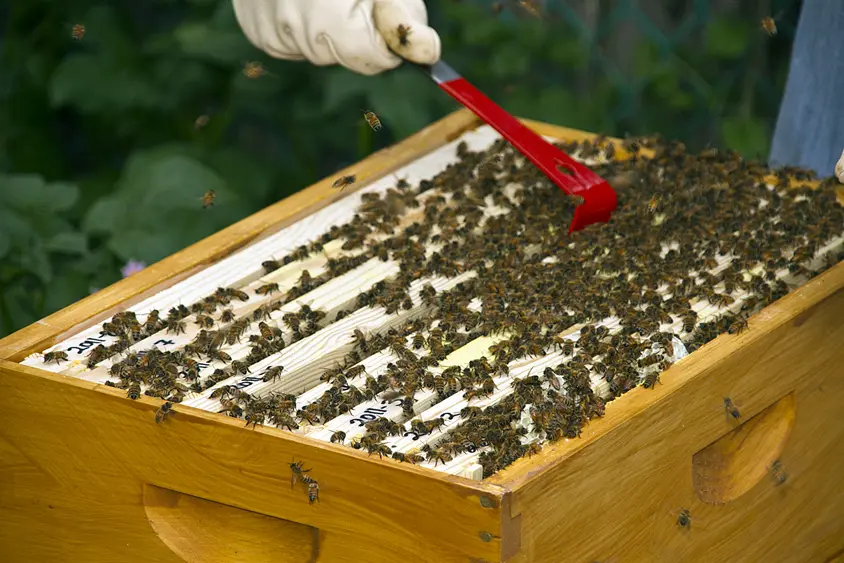
Beekeeper Gloves
The glove is where protection and feel fight each other. The more it protects, the less you feel — and in beekeeping, feeling is not crushing bees.
The materials, from most feel to most protection
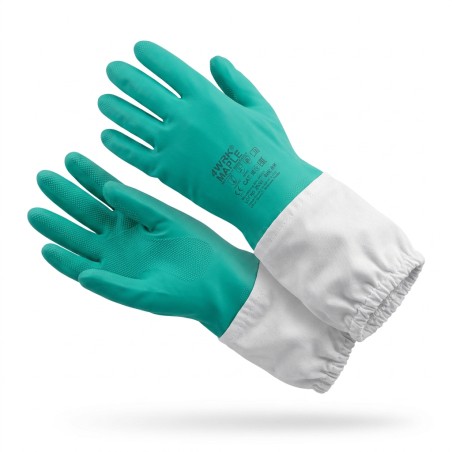
- Nitrile (from €2.75) — the thinnest and the one that gives most feel. Changed often, it holds no smells from one inspection to the next and it is what gets used for handling queens and grafting. It protects little: it works because you handle better and provoke less.
- 0.40 mm thick nitrile (€7.50) — the middle ground, with enough feel and some barrier.
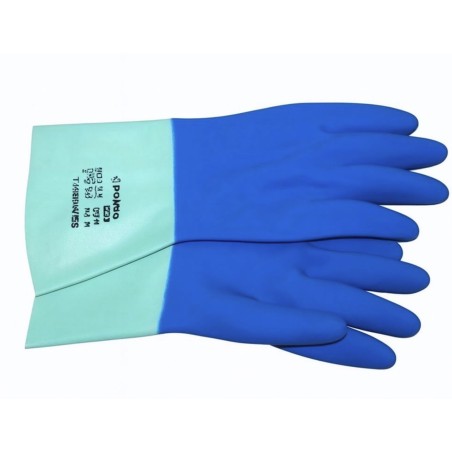
- PVC (€6.90) — washable, waterproof and cheap. It sticks a little with sweat.
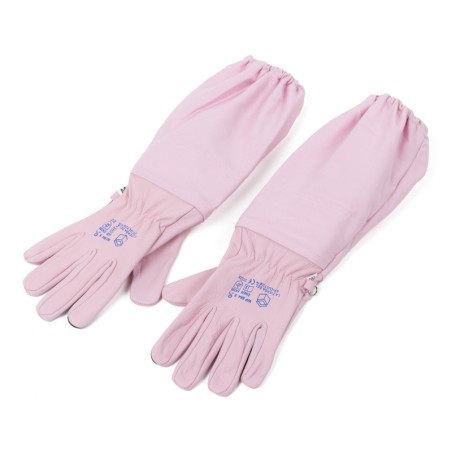
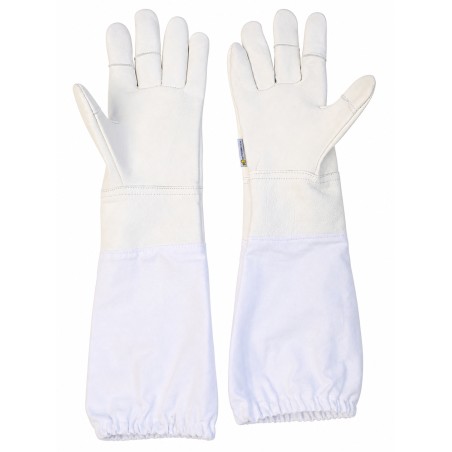
- Leather and Skay with gauntlet — maximum protection, with a long cuff that closes over the sleeve. What you want with a nervous colony or a long intervention.
The detail that decides: the wrist
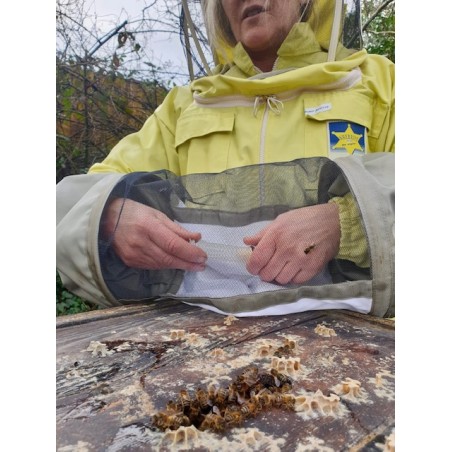
Most stings on the hand do not come through the glove: they come in at the join with the sleeve. A gauntlet glove solves it by design; with a short glove you close it with cotton sleeves or elastic, which are in clothing.
An argument for thin gloves that rarely gets made
A thick glove makes you clumsy, and clumsiness kills bees and irritates them. Many experienced beekeepers work in thin nitrile precisely for that: they take more stings and provoke far fewer. It is not a recommendation for beginners — there confidence matters more — but it explains why the expensive glove is not always the best glove.
And a practical one: leather gloves hold the smell of a sting, which is alarm pheromone. If you get stung, wash them before the next hive. The full outfit is in beekeeping suits.
How do you choose beekeeping gloves?
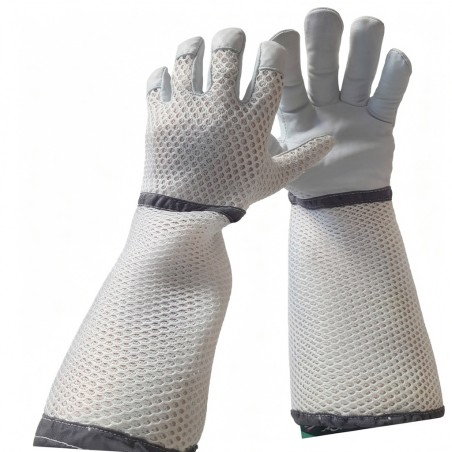
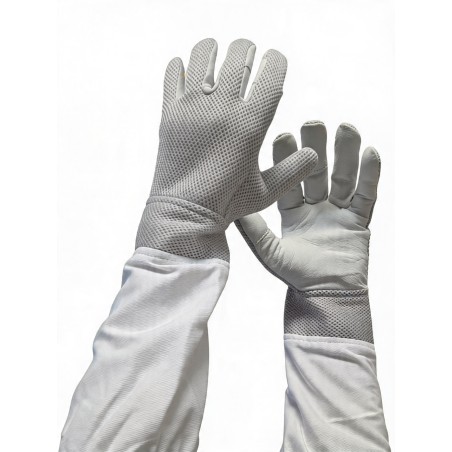
Strike a balance between protection, tactile sensitivity, climate and ease of cleaning. Leather offers good durability, but compromises sensitivity and requires maintenance; nitrile, latex or PVC facilitate hygiene and tactile sensitivity depending on thickness, although they can trap sweat or tear; ventilated models improve comfort in hot conditions.
Size is crucial: a glove that is too loose traps debris and reduces precision; one that is too tight causes fatigue and puts strain on the seams. Measure your hand and consult the size chart for the model, as there is no universal size conversion. Also check the length and fastening of the cuff, which should overlap the suit sleeve properly.
What are gloves used for in beekeeping, and what are their limitations?
They reduce exposure of the hands and wrists to stings, propolis, dirt and handling products, and help you work with greater confidence. They are not impenetrable: the stinger can pierce thin materials, enter through the cuff or reach an area where the glove is pressed against the skin.
Gloves do not prevent an allergic reaction. Anyone who has had a systemic reaction to a sting must undergo an assessment and have a medical plan in place, and carry the prescribed emergency medication; they must not rely on PPE for their safety. At the first signs of anaphylaxis, the prescribed plan must be followed and urgent medical attention sought.
What materials are used in beekeeper gloves?
The most common are leather, nitrile, latex, PVC, technical fabrics and combinations with cotton or synthetic cuffs. Leather resists abrasion well; nitrile offers good tactile sensitivity and relative chemical resistance; latex is flexible but can cause sensitisation; PVC is easy to clean, although it is usually less breathable.
The name of the material alone is not sufficient to compare protection: thickness, seams, lining, cuff length and fit are important. If they are to be used with treatments or cleaners, check the product and glove datasheet to ensure the material is compatible; a beekeeping glove is not automatically a chemical glove.
What type of glove is best for beekeeping?
There is no single best glove for all situations. For delicate inspections and calm colonies, a thin material with good tactile sensitivity is usually valued; for clearing, carrying, or defensive colonies, a sturdier glove may be beneficial. In warm weather, ventilated models reduce sweating, while for cleaning, a washable surface is useful.
Choose according to the actual risk and task, not just thickness. A bulky glove can crush bees and increase agitation. It is advisable to have a second clean, dry pair and to change or sanitise gloves when moving from a suspicious colony to healthy ones.
Do beekeeper gloves provide complete protection against stings?
No. They reduce the risk, but no work glove guarantees the absence of stings. The sting can penetrate thin areas, seams or stretched material, and bees can enter through a poorly closed cuff.
Before each use, check for holes, stiffness, seams and fit with the sleeve. Work with gentle movements and avoid resting your hand on groups of bees. If a task requires more protection, choose a more robust model, but remember that handling technique and the proper closure of the suit are as important as the material.
What size of beekeeper gloves do I need?
The available sizes depend on each model. Measure the circumference of the hand at the knuckles and, if the chart requires it, the length from the wrist to the middle finger. Compare these measurements with the manufacturer's specific guide.
The fingers should reach the end without being compressed and it should be possible to close the hand without tension. Ensure that the cuff overlaps the sleeve even with the arm extended. Do not buy based solely on the size you wear in street gloves: the pattern and lining alter the equivalence.
Are beekeeping gloves unisex?
They are generally sized according to hand dimensions rather than gender. What matters is that finger length, palm width and cuff fit correctly.
Two people with the same hand circumference may need different sizes if finger length or the type of lining differs. Use the model's sizing chart and check the pinching movement and hand closure. A correct fit enhances both safety and dexterity.
How long do beekeeping gloves last?
It depends on the material, frequency of use, sweat, propolis, washing and storage. It is not reliable to promise a duration in years. A lightly used glove can deteriorate sooner if stored damp or in sunlight, and one that is heavily used may need replacement within a season.
Replace it if there are holes, open seams, cracked or stiff material, loss of fit in the cuff, or contamination that cannot be safely removed. Checking them before each visit prevents discovering faults inside the hive.
How should beekeeping gloves be cared for and cleaned?
Follow the material's label. Washable synthetic gloves usually tolerate water and mild soap; leather should not be soaked or treated with disinfectants or heat without confirming compatibility, as it can harden and crack. First remove propolis and dirt without damaging the seams.
Allow it to dry completely in the shade and store the clean pair in a ventilated area, away from chemicals. If you have worked with a colony suspected of health issues, avoid using the same gloves on others until a proper hygiene procedure is applied or change the pair. Do not rely on makeshift washing as complete disinfection.
Can beekeeping gloves be used in hot climates?
Yes, but it is advisable to prioritise fit, breathability and breaks. A thinner glove or one with a ventilated cuff reduces heat and sweat, although it may offer less protection than a thicker glove. The choice should maintain the level of protection required by the colony and the task.
Carry a dry spare pair, avoid rolling up the cuff —this would create an entry point— and stop work if the internal moisture prevents properly gripping tools or frames. The rest of the suit, hydration and the duration of the visit also affect thermal risk.
What is the purpose of a long cuff on gloves?
It covers the wrist and creates an overlap with the suit sleeve, reducing the gap through which bees can enter. It is particularly useful when lifting frames, carrying material or extending the arm, when a short sleeve may move out of place.
It should be kept in place with elastic, fasteners or a snug design without cutting off circulation. Check the overlap with the arm in different positions and avoid folds where bees might get trapped. A long cuff improves the closure but does not compensate for an incorrect size or damaged seams.