
-
Beehives
- Complete beehive
- Accessories
-
Nuc hives
- Nucs by format
- With bees & mating
- Spare parts
-
Bee equipment
- For the apiary
- For the beekeeper
-
Clothing
- Clothing Accessories
-
Beeswax
-
Pure beeswax
- Beeswax and foundation
- Beeswax foundations
- Melting and rolling beewax
-
Pure beeswax
-
Bee feed
- Accessories and source materials
- Utensils
-
Bee health
- Varroa Treatments
- Diseases control
- Nutraceuticals
-
Extraction and bottling
- Before extraction
- Honey extraction
- After extraction
-
Bee pollen
- Harvest
- Indicted
-
Honey packaging
- Flasks per utility
- Flasks by size
- Other packaging
 Apipasta with vitamins 15kg
 Beecomplet® Spring 14Kg
 Beekeeper suit with round veil
 Oxalic acid 1kg
 Beeswax Foundation 5kg
 Fresh royal jelly 20g
 Classic honey jar 1kg comb-lines TO77 - Pack of 16 units
 Promotor L Apis 1 litre
Manual Honey Extractors
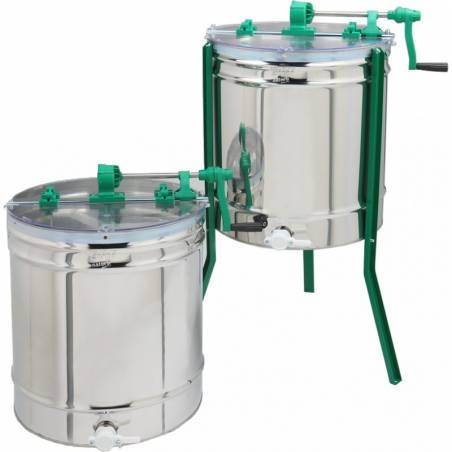
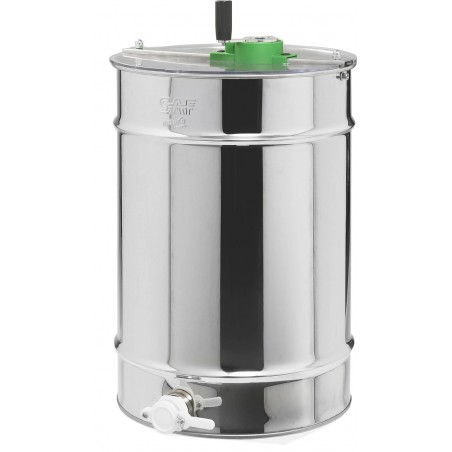
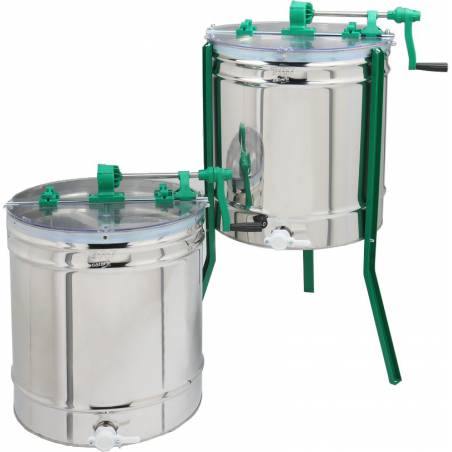
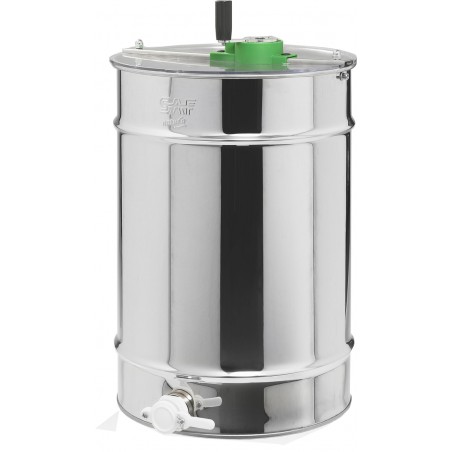
Manual honey extractors from 2 to 4 frames, €119.95 to €847, tangential and universal. No motor: you provide the force and the speed control too.
Type
Basket type
Brand
Price
-
€115.00 - €847.00
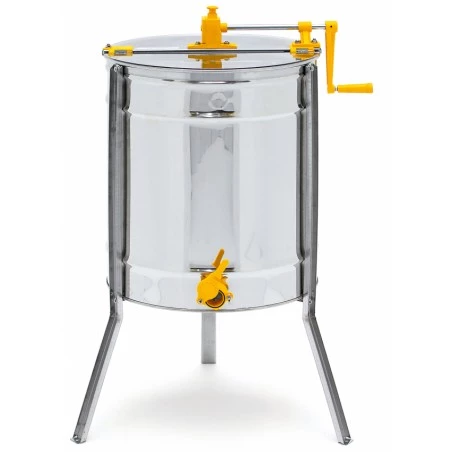
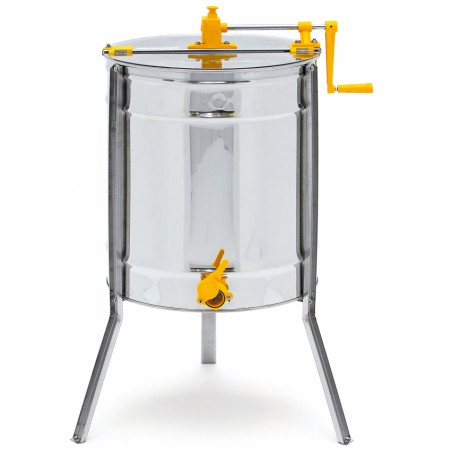
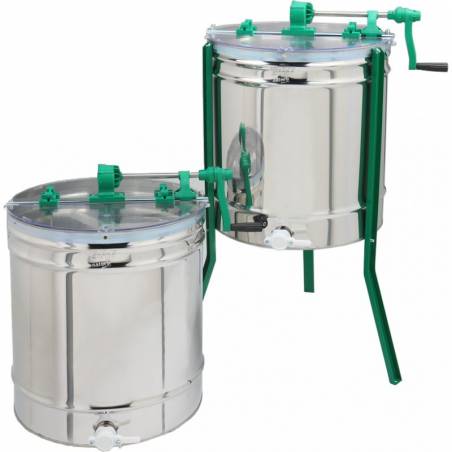
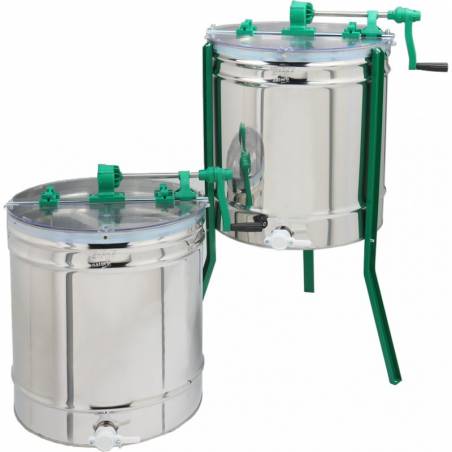
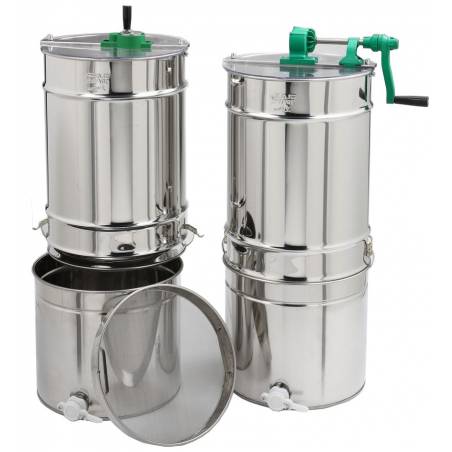
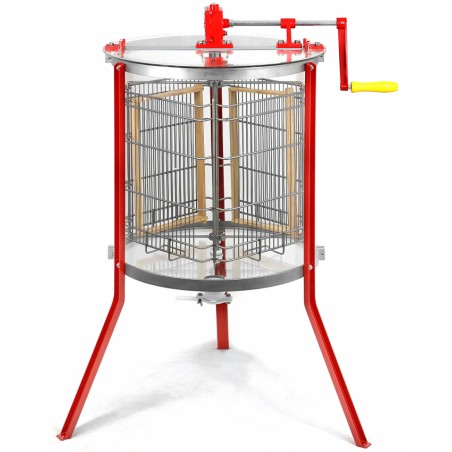
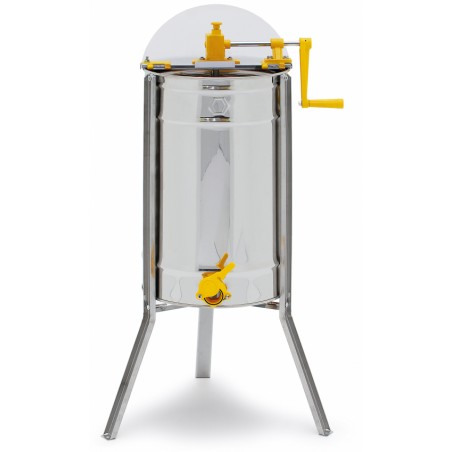
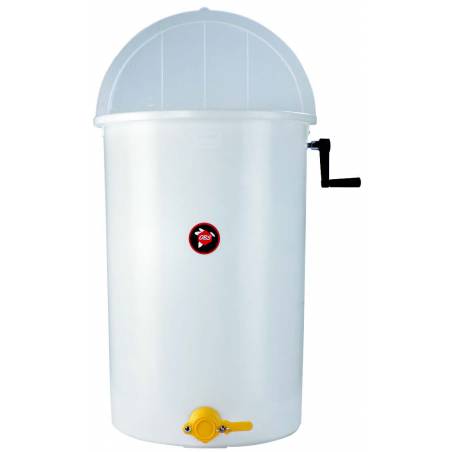
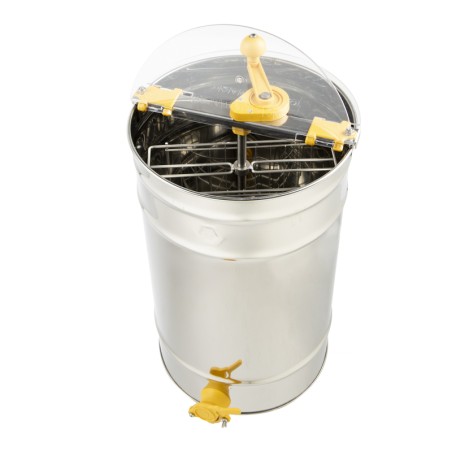
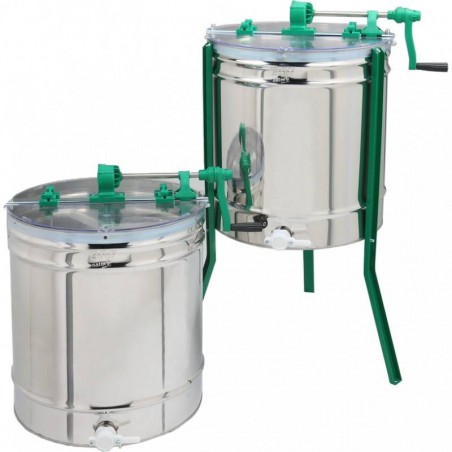
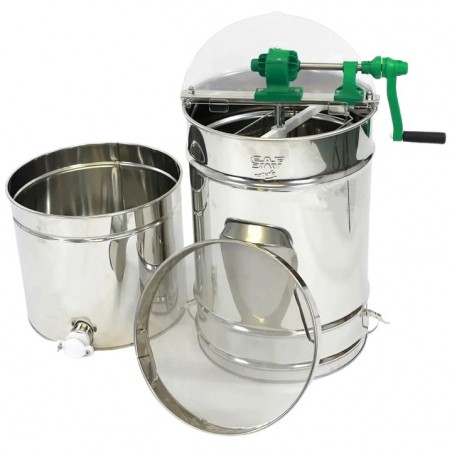
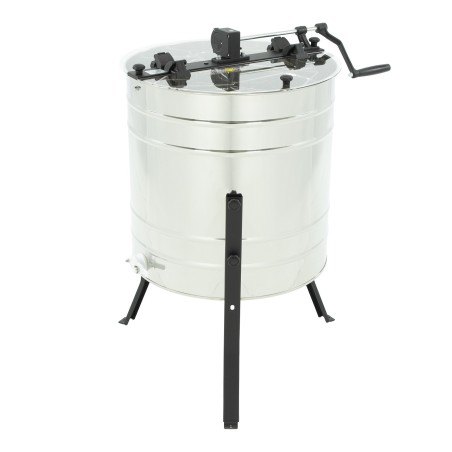
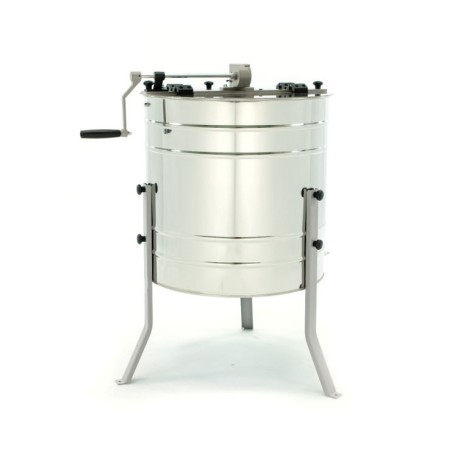
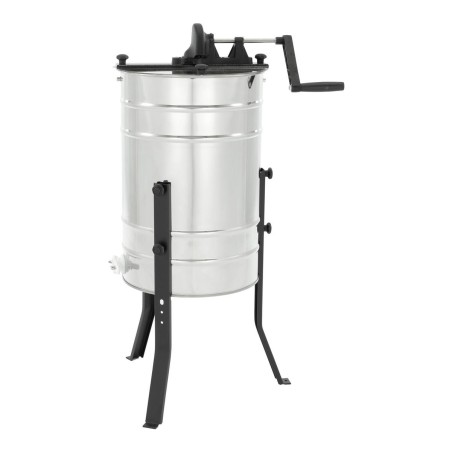
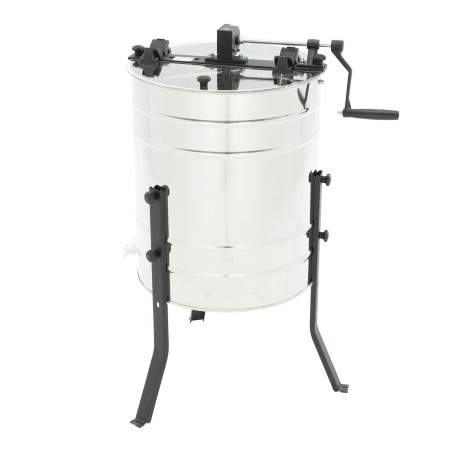
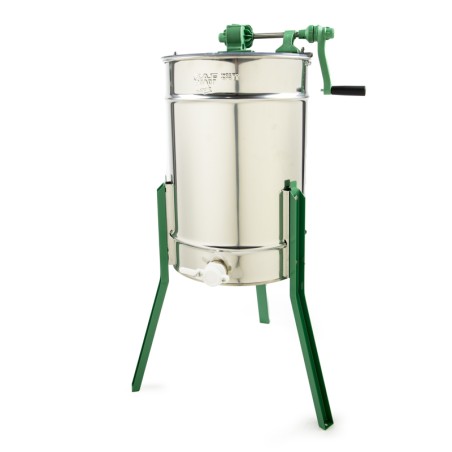
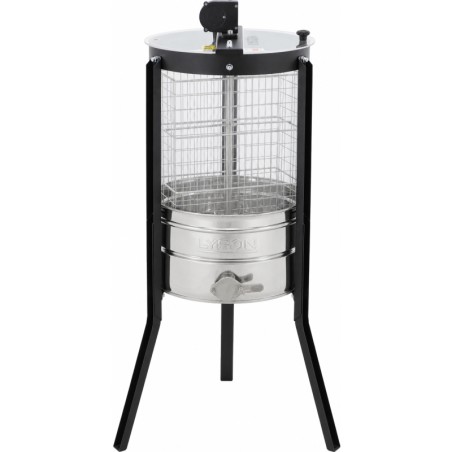

The crank has an advantage a cheap electric makes you pay for
With a hand extractor you decide the acceleration. You start slowly, let the frame lighten and speed up when there is no longer the weight to break it. That is precisely what protects new comb, which is soft and the first thing lost in the early seasons. An electric without a variator does the opposite: it comes in at whatever speed the maker chose and does not ask what you have inside.
That said, the manual has its ceiling and it is worth admitting: for beginners and few apiaries, a 2-to-4-frame manual tangential justifies itself, and below that volume a big machine is money standing still. The day your wrist is the bottleneck — not the extractor — is when the step makes sense, and what to demand then is a variator, not more frames.
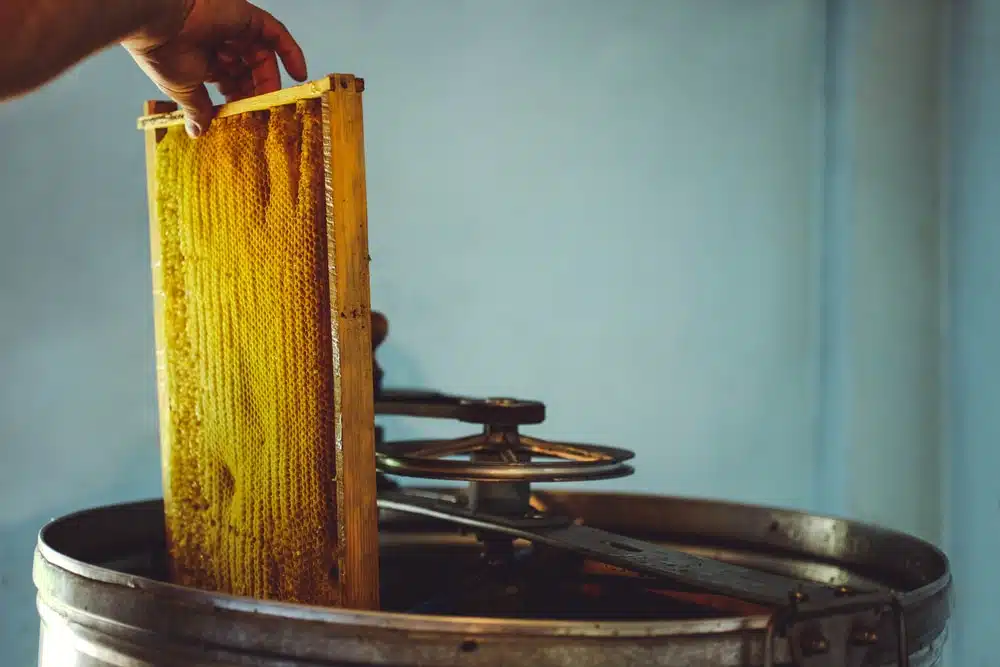
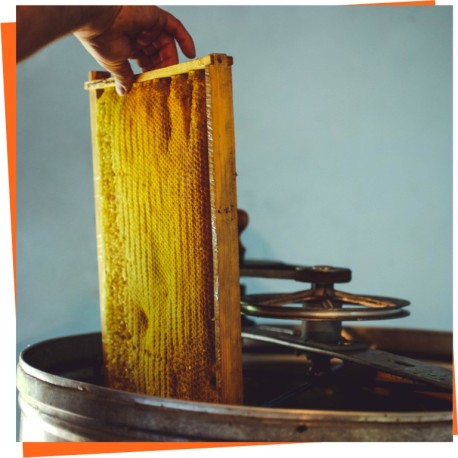
Manual Honey Extractors
The manual one is not "the beginner's model": it is the one with the best speed control there is, which is your own hand. And on new comb, that is worth more than a motor.
What you gain and what you lose
You gain feel. Starting slowly, sensing when the frame has emptied and speeding up afterwards is exactly what stops combs breaking, and with a crank you do it without thinking. You lose stamina: past a certain number of frames the arm decides before the honey does, and that is where the electric starts to pay off.
The real range
- €119.95 — the economy 2-frame. To get going, with few hives and no processing room.
- €200-280 — 2 frames with better build (SAXO®, BASIC Ø400 mm, Quarti® universal). The step up is in the bearing, the stability and the drum finish.
- Up to €847 — 3 and 4 frames and universal cages, for anyone who wants manual but with more load per batch.
Measure before choosing
The two usual measurements: the drum diameter — whether it fits where it goes with room to load — and the outlet height — whether the settling tank fits underneath. And check the cage: look at the largest frame you will extract, because everything smaller fits, but the Layens is a different format and needs a prepared cage.
The other types and the full criteria are in honey extractors.
What is a manual honey extractor?
It is a hand-cranked centrifuge that extracts honey from uncapped frames. It can be tangential, reversible or radial; ‘manual’ refers to the drive mechanism, not the arrangement of the basket.
It is practical for small batches or locations without electricity and allows you to control the speed directly. Before choosing one, check the size and actual number of frames it can hold, its stability, whether it has a brake or freewheel, the tap, the lid and how easy it is to clean.
How do you extract honey using a manual extractor?
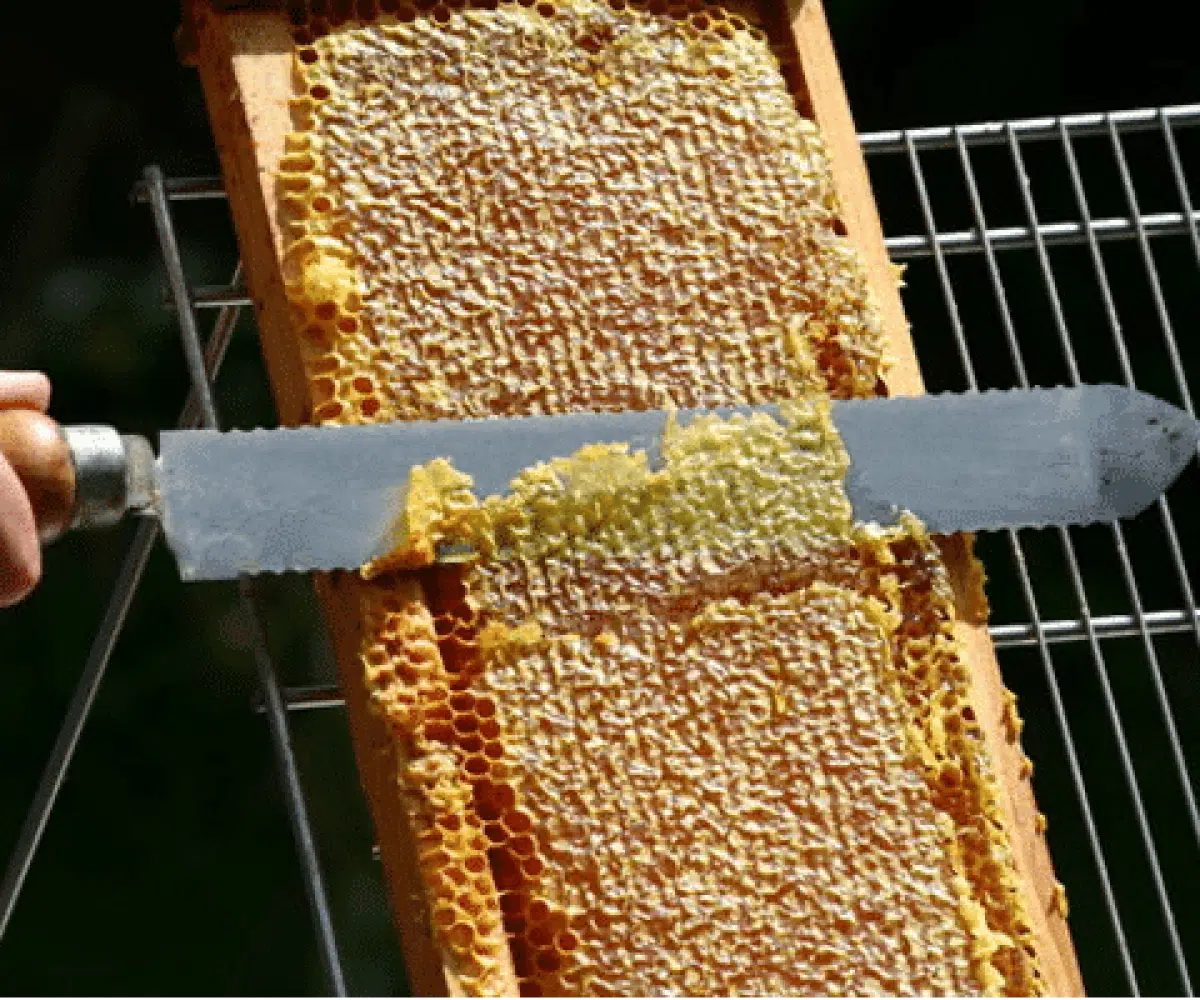
Uncap the frames and load them with similar weights, distributed symmetrically. Close the lid, start turning slowly and gradually increase the speed. With a simple tangential extractor, partially extract one side, turn the frames over and complete both sides without forcing the new combs.
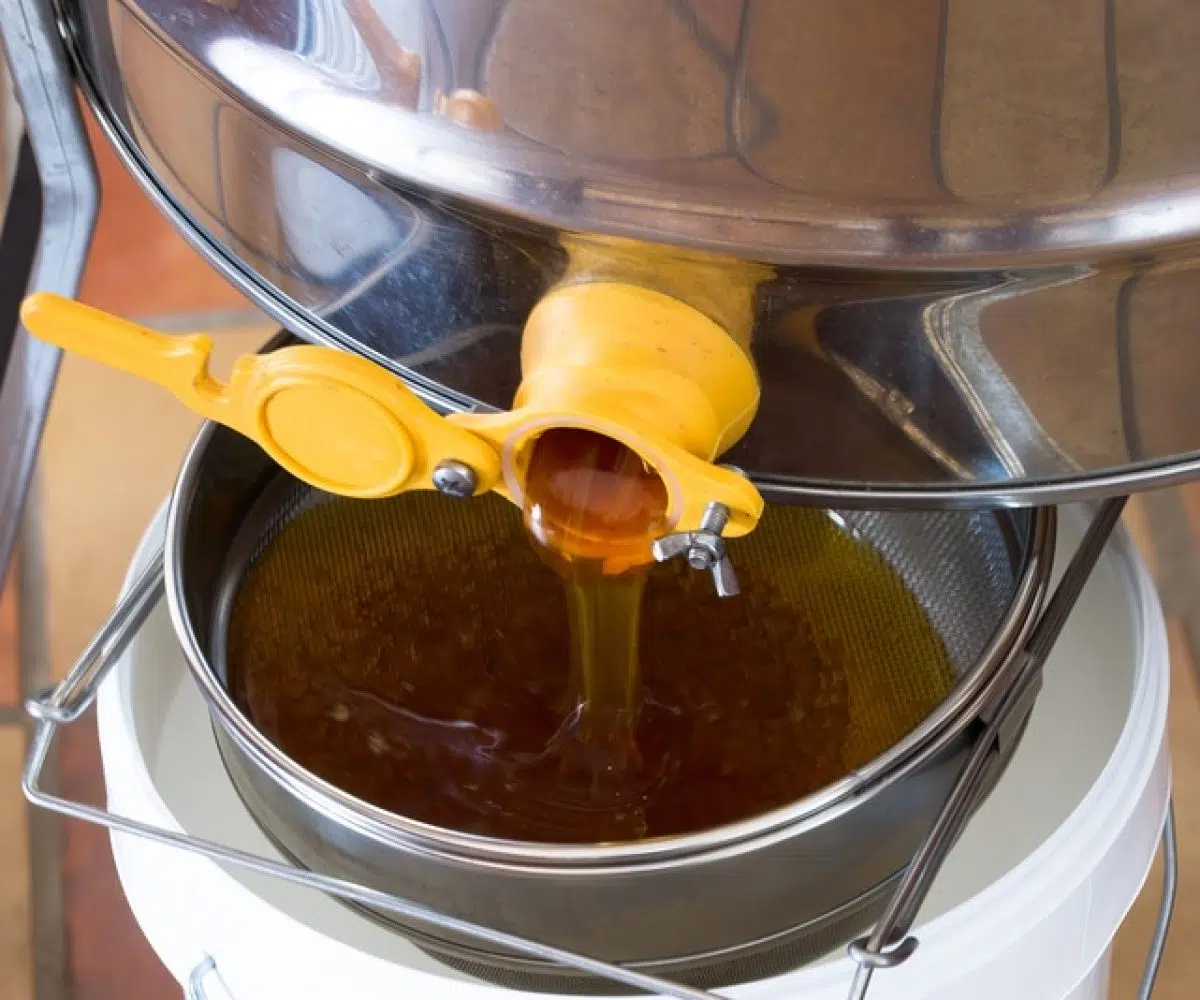
Allow the honey to drain out before it reaches the bottom edge of the basket, pass it through a suitable filter to remove any visible wax, and transfer it to a clean, marked container for settling. Keep the room dry and protected, and clean the equipment at the end of the day.
What are the advantages of a manual extractor compared to an electric one?
It has a simple mechanism, does not rely on the mains supply and usually requires a lower initial investment. It allows the beekeeper to sense any imbalance and adjust the speed for delicate frames, making it well-suited to self-consumption, small numbers of hives or occasional extraction.
On the other hand, it requires constant effort and attention and limits the pace when the volume increases. An electric extractor offers consistency and frees the operator up for other tasks, but involves a motor, controls and maintenance. The choice should be based on the number of frames processed per day, not on a ‘hobbyist’ or ‘professional’ label.
How do you use a manual honey extractor correctly?
Set it up level and stable, check that the basket and crank rotate freely, and load frames of similar weight in opposite positions. Increase speed gradually; if the extractor vibrates or moves, stop and rebalance the load before continuing.
Follow the manufacturer’s specified direction of rotation and freewheel system. In tangential extractors, turn or tilt the frames as required by the design; in radial extractors, they do not need to be turned. Never put hands or tools inside until the basket has stopped completely, and keep the lid fitted while it is rotating.
What is the capacity of manual extractors?
The range extends from small 2-frame models to manual radial extractors with many positions — sometimes around 20, depending on the frame format. These figures are not directly comparable: an extractor may hold more shallow-super frames than deep brood frames.
Read the capacity table for Layens, Langstroth, Dadant brood frames or shallow supers, and confirm the basket’s maximum dimensions. When calculating throughput, include loading time, frame turning if the extractor is tangential, emptying and cleaning; ‘20 frames’ does not mean 20 frames of every type.
What materials are suitable for a manual honey extractor?
Surfaces that come into contact with honey must be certified for food use and be smooth, corrosion-resistant and easy to clean. Stainless steel is commonly used, but the grade — for example, AISI 304 — should only be stated if it is specified in the technical data sheet. Taps and plastic parts must also be food-safe and suitable for cleaning.
Also check the welds, ensure there are no dead spaces, and verify the rigidity of the basket, lid and legs. The material of the container does not compensate for a design that is difficult to sanitise or a mechanism that could contaminate the honey with grease or wear particles.
How do you clean and maintain a manual extractor?
After emptying it, wash the drum, basket and tap in accordance with the manual, using water and a product suitable for the surface; rinse, leave them to drain and dry. Avoid using high-pressure water on bearings or mechanisms, and do not use abrasives that may scratch the interior.
Check the handle, protected gears, shaft, basket, welds, screws, lid and stability. Lubricate only where indicated by the manufacturer, using the specified product and ensuring it cannot come into contact with honey. Before storage, make sure the extractor is completely dry, cover it and keep it in a clean place.