
-
Beehives
- Complete beehive
- Accessories
-
Nuc hives
- Nucs by format
- With bees & mating
- Spare parts
-
Bee equipment
- For the apiary
- For the beekeeper
-
Clothing
- Clothing Accessories
-
Beeswax
-
Pure beeswax
- Beeswax and foundation
- Beeswax foundations
- Melting and rolling beewax
-
Pure beeswax
-
Bee feed
- Accessories and source materials
- Utensils
-
Bee health
- Varroa Treatments
- Diseases control
- Nutraceuticals
-
Extraction and bottling
- Before extraction
- Honey extraction
- After extraction
-
Bee pollen
- Harvest
- Indicted
-
Honey packaging
- Flasks per utility
- Flasks by size
- Other packaging
 Apipasta with vitamins 15kg
 Beecomplet® Spring 14Kg
 Beekeeper suit with round veil
 Oxalic acid 1kg
 Beeswax Foundation 5kg
 Fresh royal jelly 20g
 Classic honey jar 1kg comb-lines TO77 - Pack of 16 units
 Promotor L Apis 1 litre
Ventilated Beekeeping Suits
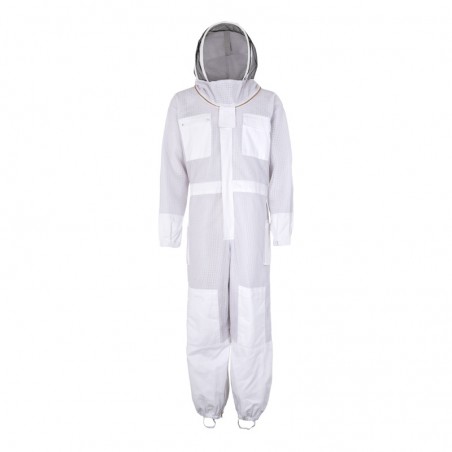
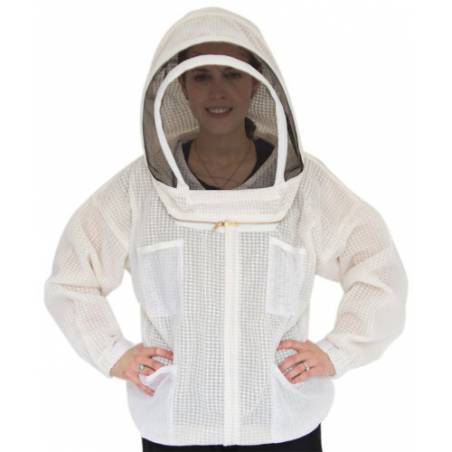
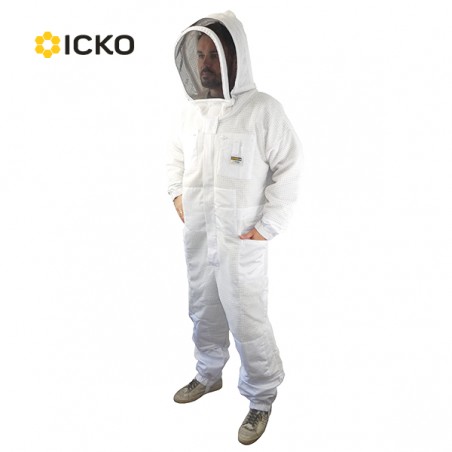
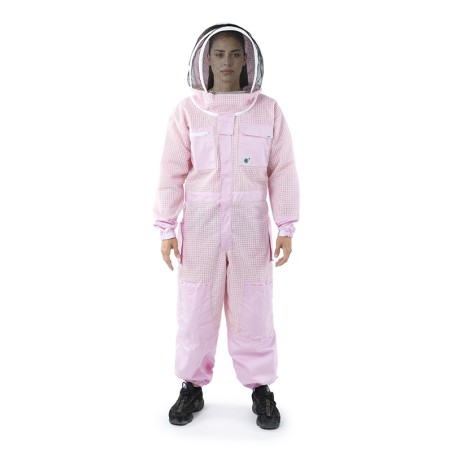
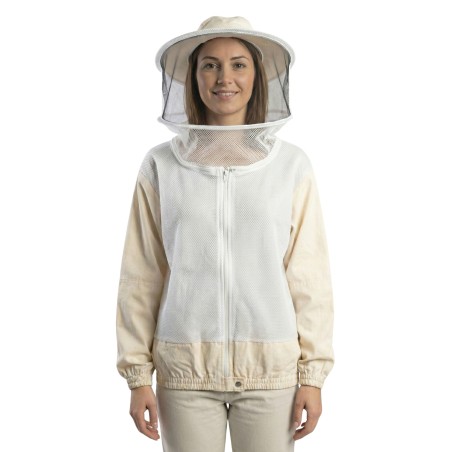
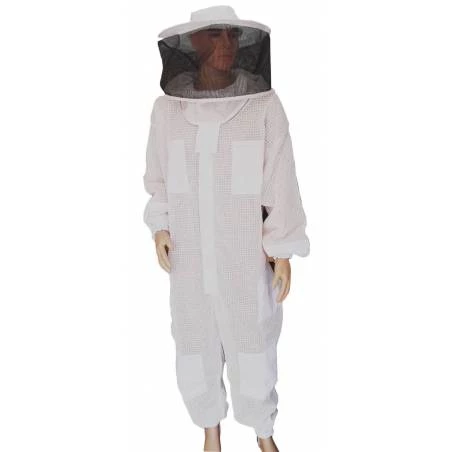
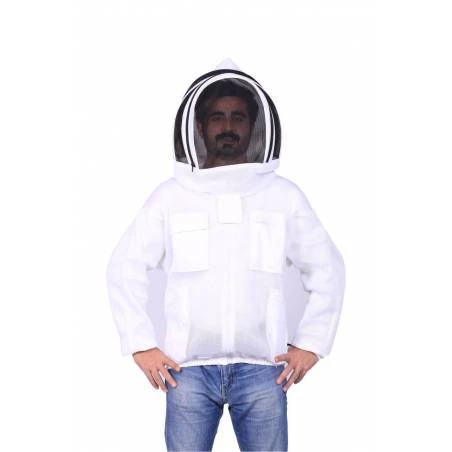
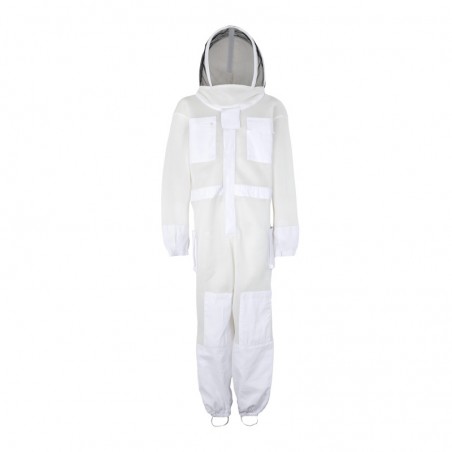
Ventilated jackets and full suits from €49.95 to €199.75, with three-layer mesh and a fencing or round veil. For working hours in summer without the heat calling the shots.
A ventilated suit washes differently, and that is where it gets ruined
A cotton suit forgives a hot wash and a tumble dryer; a ventilated one does not. The three mesh layers are a structure, and heat deforms them: if the separation between layers is crushed, the sting reaches you again. Wash it cold and let it air dry, no dryer and no iron. That is the difference between it lasting years and ending up as ordinary fabric that merely looks ventilated.
The other weak point is snagging. The outer mesh catches on brambles and on the wire of a field gate, and one pull opens a small tear that is barely visible from outside. Check it against the light when you put it away, just like the veil: a two-centimetre tear in the outer layer does not write off the suit, but if you do not see it and it keeps growing, one day that side no longer separates anything. A patch in time costs five minutes.

Ventilated Beekeeping Suits
Eight references, from €49.95 to €199.75. They all solve the same problem — the heat — and differ in two things: how much they cover and how much air they let through.
How the mesh works
Ventilated fabric is three layers: two outer meshes with a spacer structure in between. That gap does the work, because it keeps a physical distance between the outer surface and your skin while letting air circulate. It is the same principle as in anti-velutina suits, applied to heat instead of to a long sting.
The ladder
- AIR jacket with fencing veil, €49.95 — the entry point. Covers from the waist up and is the best seller for summer inspections.
- AIR full suit, €65 — the same fabric in one piece, with no join at the waist.
- Ultra-Ventilation jacket and suit, €115 and €131 — more mesh surface and more airflow. Worth it if you work from June to September in the south or inland.
There are also versions with a round veil and a pink line, in case the criterion is visibility or simply telling your suit apart from everyone else's.
What a ventilated suit does not do
It is not a sting-proof suit, and that is worth saying plainly. It cuts the heat enormously and with it the clumsiness and the rushing, which is where most of the scares come from, but it closes at wrists and ankles like any other and needs checking just the same. If the mesh tears, repair or replace it: the third layer is exactly what you are paying for.
If you work under Asian hornet pressure, this is not enough — that calls for specific suits. And the full range, with cotton and polyamide, is in beekeeping suits.
Does a ventilated suit protect less than a cotton one?
No: it protects on a different principle. Cotton stops the sting because the fabric is dense; a ventilated suit stops it because it is three separated layers of mesh, and the sting does not reach the skin even if it passes the first one. In practice it often gives more margin than a thin cotton suit washed many times over.
What no suit does is make you impossible to sting. The real protection is in the closures — cuffs, ankles, the join with the veil: that is where a bee gets in, not through the fabric.
Jacket or full suit?
The jacket (from €49.95) covers from the waist up and goes on and off in seconds: it is the one for a quick inspection, for the beekeeper who already knows how their colonies behave. The full suit (from €65) covers everything and is what you want at harvest, with upset colonies, or if you will be out for hours.
The practical criterion: with a jacket you depend on what you wear underneath, and thin trousers or bare ankles cancel the advantage. If you are starting out, full suit.