
-
Beehives
- Complete beehive
- Accessories
-
Nuc hives
- Nucs by format
- With bees & mating
- Spare parts
-
Bee equipment
- For the apiary
- For the beekeeper
-
Clothing
- Clothing Accessories
-
Beeswax
-
Pure beeswax
- Beeswax and foundation
- Beeswax foundations
- Melting and rolling beewax
-
Pure beeswax
-
Bee feed
- Accessories and source materials
- Utensils
-
Bee health
- Varroa Treatments
- Diseases control
- Nutraceuticals
-
Extraction and bottling
- Before extraction
- Honey extraction
- After extraction
-
Bee pollen
- Harvest
- Indicted
-
Honey packaging
- Flasks per utility
- Flasks by size
- Other packaging
 Apipasta with vitamins 15kg
 Beecomplet® Spring 14Kg
 Beekeeper suit with round veil
 Oxalic acid 1kg
 Beeswax Foundation 5kg
 Fresh royal jelly 20g
 Classic honey jar 1kg comb-lines TO77 - Pack of 16 units
 Promotor L Apis 1 litre
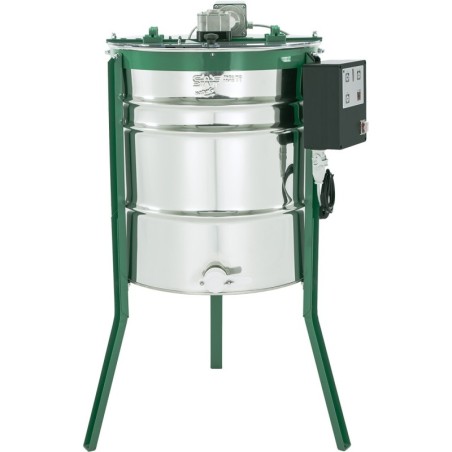
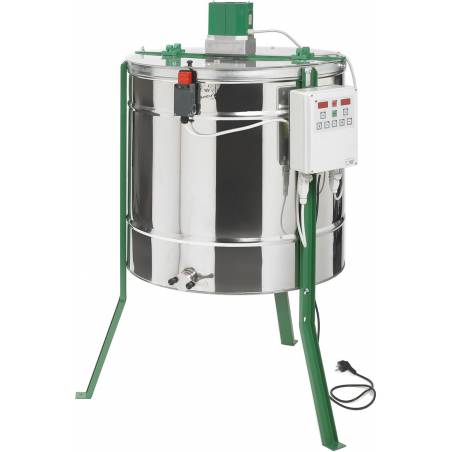
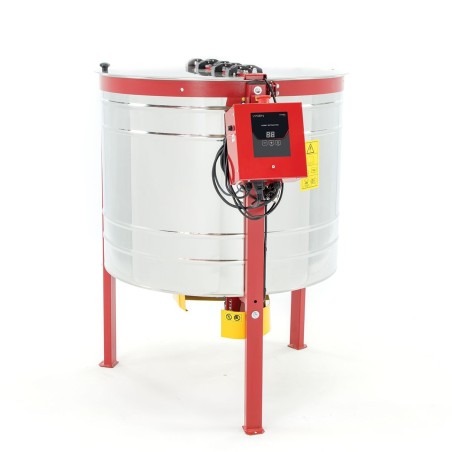
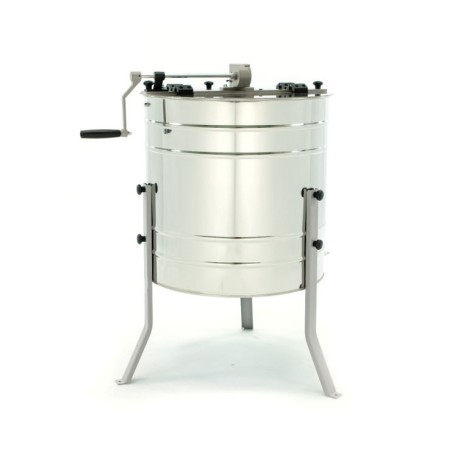
Radial Honey Extractors
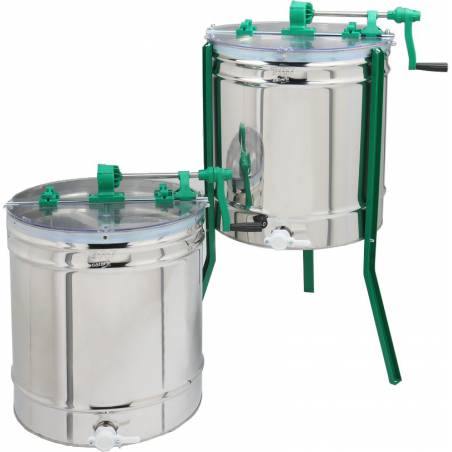
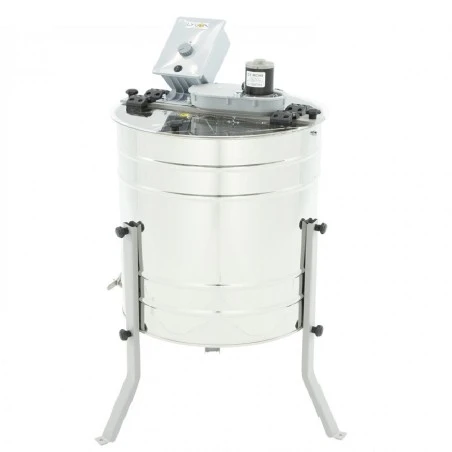
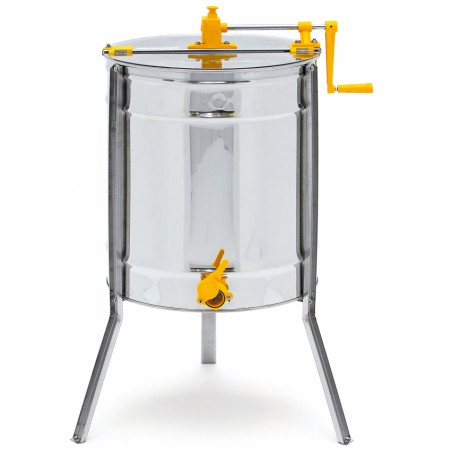
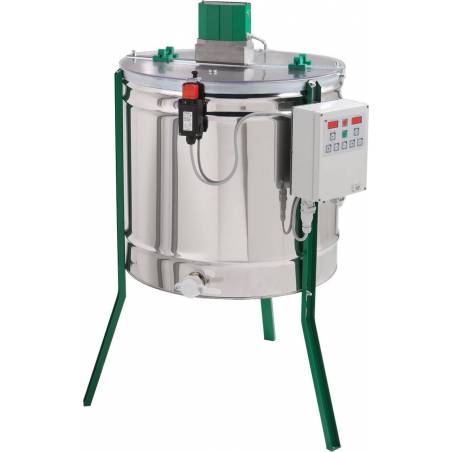
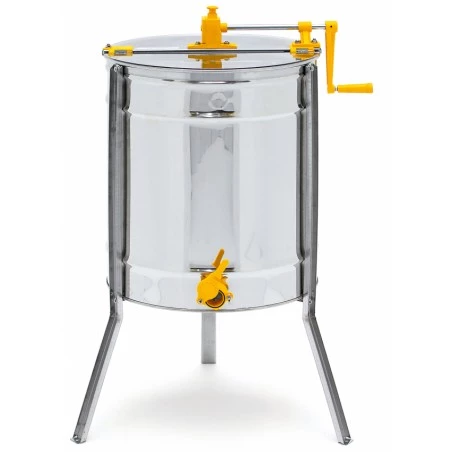
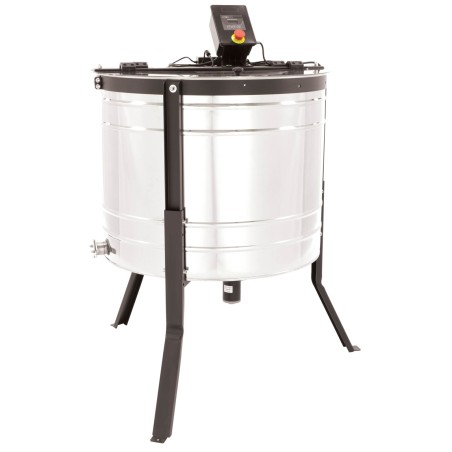
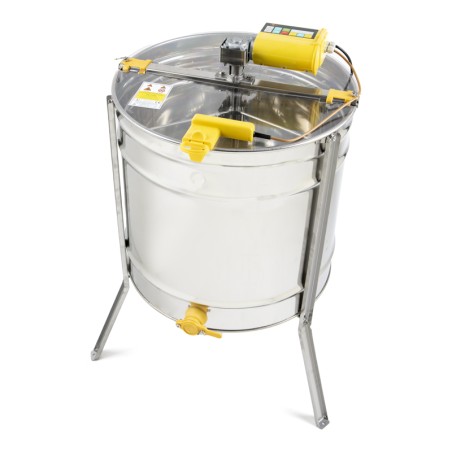
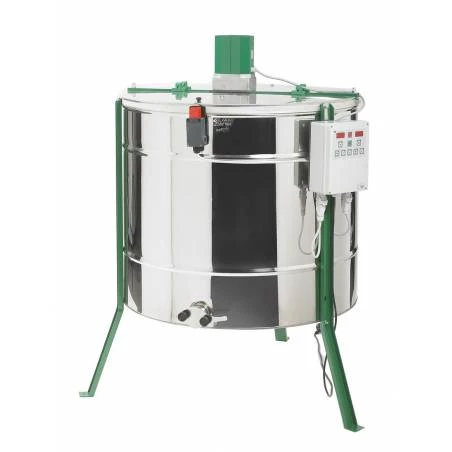
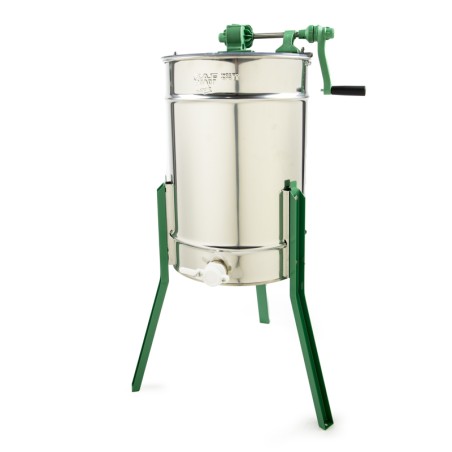
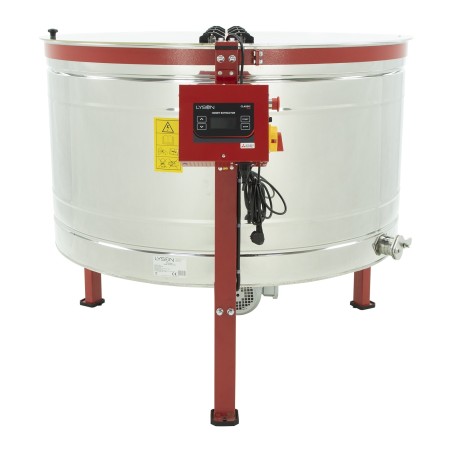
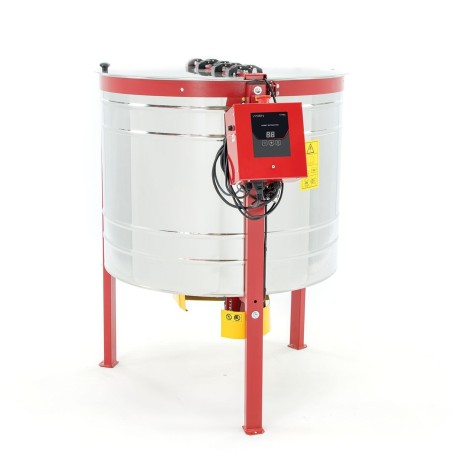
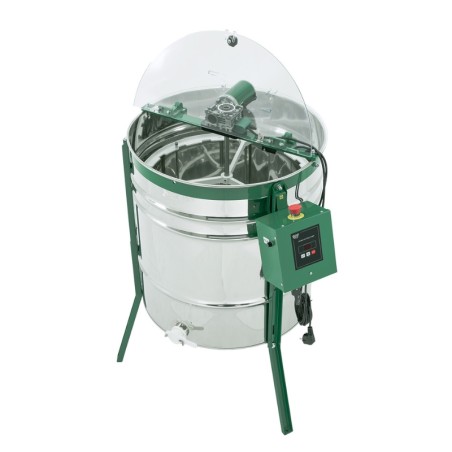
Radial honey extractors empty both sides of the comb without turning the frames. Before choosing by capacity, check the frame formats and dimensions the cage accepts: the stated number of frames can differ for Langstroth and shallow super frames.
Type
Functionality
Brand
Price
-
€383.00 - €3,875.00

When to choose a radial extractor
The radial extractor makes a lot of sense when you work with supers, shallow supers and free-flowing honeys. Its big advantage is that it extracts the honey from both sides of the frame at once, without having to take them out and turn them by hand. That makes a real difference during the season: less handling, more frames per batch and a more comfortable working pace. If you use Langstroth, Dadant super or shallow-super frames, I usually find it one of the most practical options.
That said, I wouldn't choose it by default for everything. If you work with Layens, Dadant brood frames, very dense honeys or delicate new comb, I'd be more careful and would first consider a tangential or a reversible one. With a radial, the key is not to force it: load it well balanced, start slowly and increase the speed gradually. Before buying, I'd check above all compatibility with your frames, real capacity, motor control, the stability of the machine and ease of cleaning. A good radial isn't just the one that holds the most frames: it's the one that lets you extract at a good pace, without fighting the machine and without punishing the combs more than necessary.
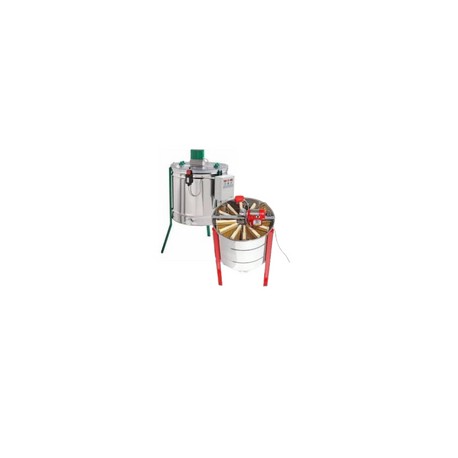
Radial Honey Extractors
When a radial is the right choice
A radial is not "the next level up" from a tangential: it is a system with a different sweet spot. According to our own extractor guide, with half supers it is a very good option and with fluid honey too; with dense honey it performs worse than a tangential, and with Layens or Dadant brood frames it is less advisable. For Dadant supers the rule is simple: radial if the honey is fluid, tangential if it is dense.
If your harvest mixes dense honeys and brood frames, a reversible will give you fewer headaches than a large radial.
Where the price jumps are
From around €400 to nearly €3,900, and there is a quirk worth noticing: capacity and price do not move together. A 20-super-frame manual radial is around €550, while a 15-frame Langstroth automatic is over €2,000. What you pay for is the drive and the automation, not the frame count.
For reference: manuals from about €400; motorised from about €700; 42-frame machines start around €1,600; the 56-frame is over €3,800; and a programmed automatic cycle is paid for separately.
From how many hives
The high-capacity radial appears in the 100 to 150 hive band, and the professional radial above 150. Below that, the advantage of not turning frames is felt less than the cost.
The start-up, which is where frames break
In a radial the risk of breakage is higher if you force it, because the frame rests edge-on and carries the full weight of the honey at the start of the spin. A soft start - well-judged by hand, or a speed controller on electric models - is what stops freshly uncapped frames from blowing out. On automatic models that ramp is already programmed.
What is a radial honey extractor and how does it work?
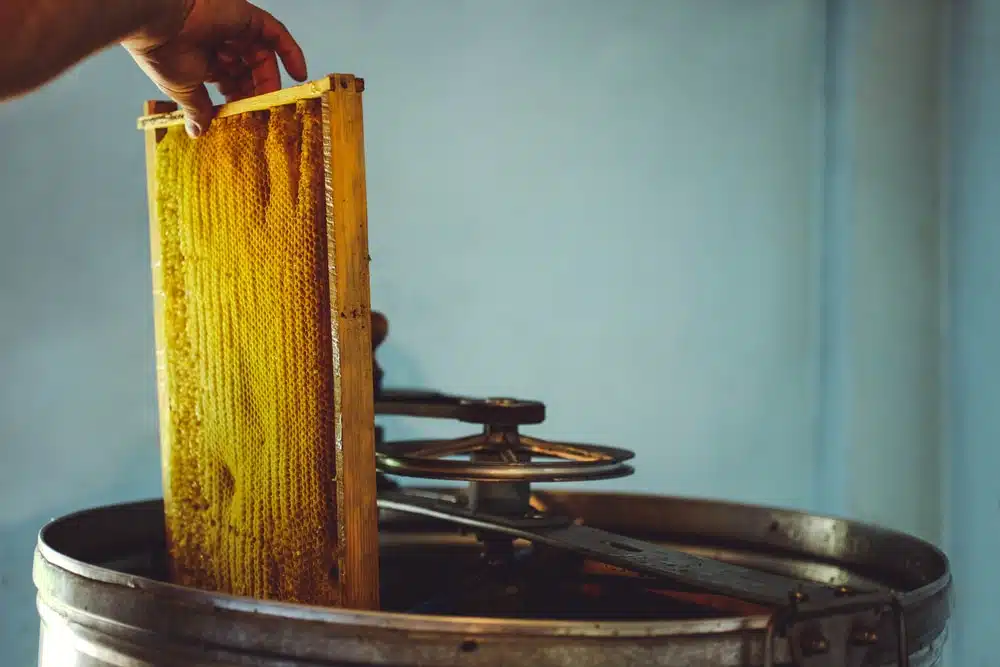
A radial honey extractor arranges the frames like spokes around the shaft, with the comb surfaces facing outwards according to the basket design. As it rotates, the angle of the cells and centrifugal force allow both sides to empty during the same cycle without turning each frame.
It works particularly well with super frames and sufficiently runny honey. The stated capacity applies only to the specified format: the same machine may hold different numbers of Langstroth frames, Dadant shallow-super frames or other sizes.
What are the advantages and limitations of a radial extractor?
It allows more frames to be loaded per cycle and both sides to be processed without turning them over, which improves efficiency when there is a large volume of supers. The load distributed around the shaft also promotes stable rotation if the frames are well balanced.
It is not always the best option for deep frames, new combs or very dense or thixotropic honey. You should start at a low speed, balance the weights and check whether the honey is flowing out before increasing the speed. Greater capacity does not compensate for an incompatible extractor basket or wax that cannot withstand the strain.
How do radial, tangential and reversible extractors differ?
A radial extractor positions the frames like spokes and processes both sides in one cycle. A tangential extractor presents one side towards the drum wall and, in a simple model, requires the frame to be turned. A reversible extractor remains tangential, but its cassettes tilt to change sides without removing the frames.
Radial extractors prioritise capacity with super frames; tangential models provide support and control for large frames or viscous honey; reversible models reduce handling while retaining the tangential principle. Always compare frame format, usable capacity, honey viscosity, wax condition and drive type.
When is it best to choose a radial extractor?
Choose one when you process enough super frames and sufficiently runny honey to benefit from large loads and cycles that do not require frame turning. It may suit both a growing apiary and a professional extracting room; hive count alone does not determine the purchase.
Calculate the frames extracted per day, the main frame format, uncapping time, settling tank capacity and cleaning space. If deep frames, small batches or difficult honeys predominate, a tangential or reversible extractor may offer better control even if it advertises fewer positions.
How do you clean and maintain a radial extractor?
Switch off the power supply and follow the manual. Remove any honey, wash the drum, basket and tap with water and products suitable for food-contact surfaces, then rinse and dry. Protect the motor, bearings, electrical panel and sensors from direct contact with water.
Check that the spokes or housings are not deformed, that the shaft and basket rotate without play, and that the cover, brake, feet and fastenings are working properly. Do not lubricate any parts not specified; if the manufacturer recommends lubrication, use the specified product and quantity away from the contact area. Abnormal vibration requires the machine to be stopped and balanced or repaired.