
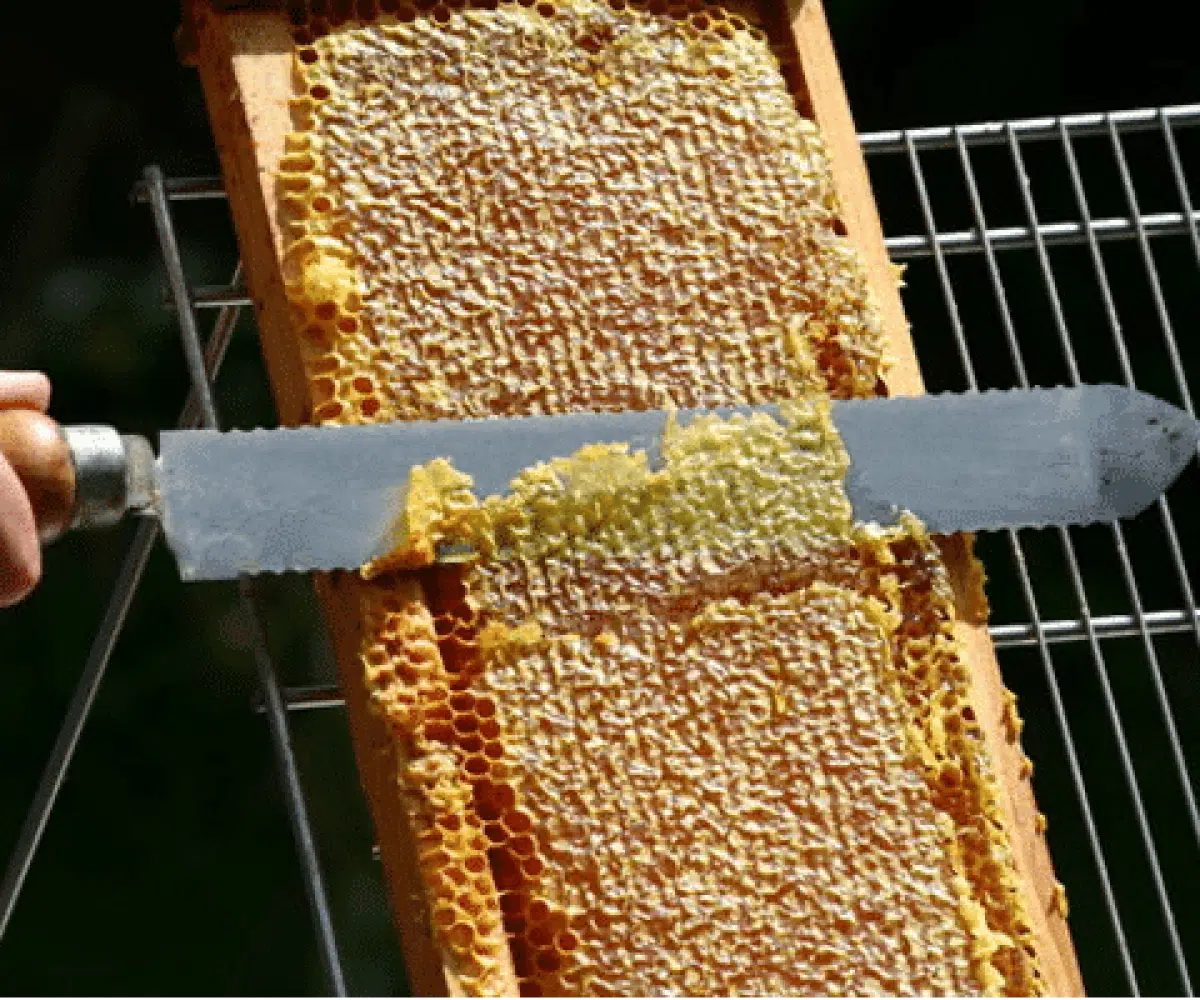
Uncapping opens the thin wax seals over honey-filled cells so the honey can leave the comb in the extractor. It comes before extraction, straining or settling, and bottling. The way you cut affects the amount of wax in the honey, how much cappings wax you recover and how well the comb survives. With heated equipment, controlled heat exposure also matters for quality.
Choosing an uncapping tool
| Tool | Typical use | Useful feature | Watch out for |
|---|---|---|---|
| Uncapping fork | Small batches and finishing patches | Reaches corners and hollows | Slower for whole frames; avoid digging deep |
| Plain or serrated knife | Manual uncapping with practice | A controlled, shallow cut | Sharp blade and secure support; no universal heat setting |
| Electric knife | Sustained manual work | Heating without a water bath | Hot surfaces, burnt residues and electrical safety |
| Spiked roller | Opening wax seals | Pierces cappings without slicing them off | Not automatically a substitute for a heather honey loosener |
| Rotating-chain uncapper | Mechanised processing | Some designs work without heated cutters | Wax fragments and model-specific frame limits |
| Vertical knife uncapper | Mechanised processing | Controlled cutting on both faces | Approved frame sizes, blade settings and heat exposure |
In this guide
- What uncapping means and how to do it;
- Manual tools and their uses;
- Automatic machines and compatibility checks;
- Warming and storage before extraction;
- Recovering honey and wax from cappings.
What is uncapping?
The wax seals are called cappings. Removing or opening them exposes the honey beneath. Aim to leave the drawn comb in good condition for reuse, then move the frame on to extraction and subsequent straining, settling and packing. Uncapping is a processing step, not a substitute for checking that the honey is ready to harvest.
How to uncap a frame
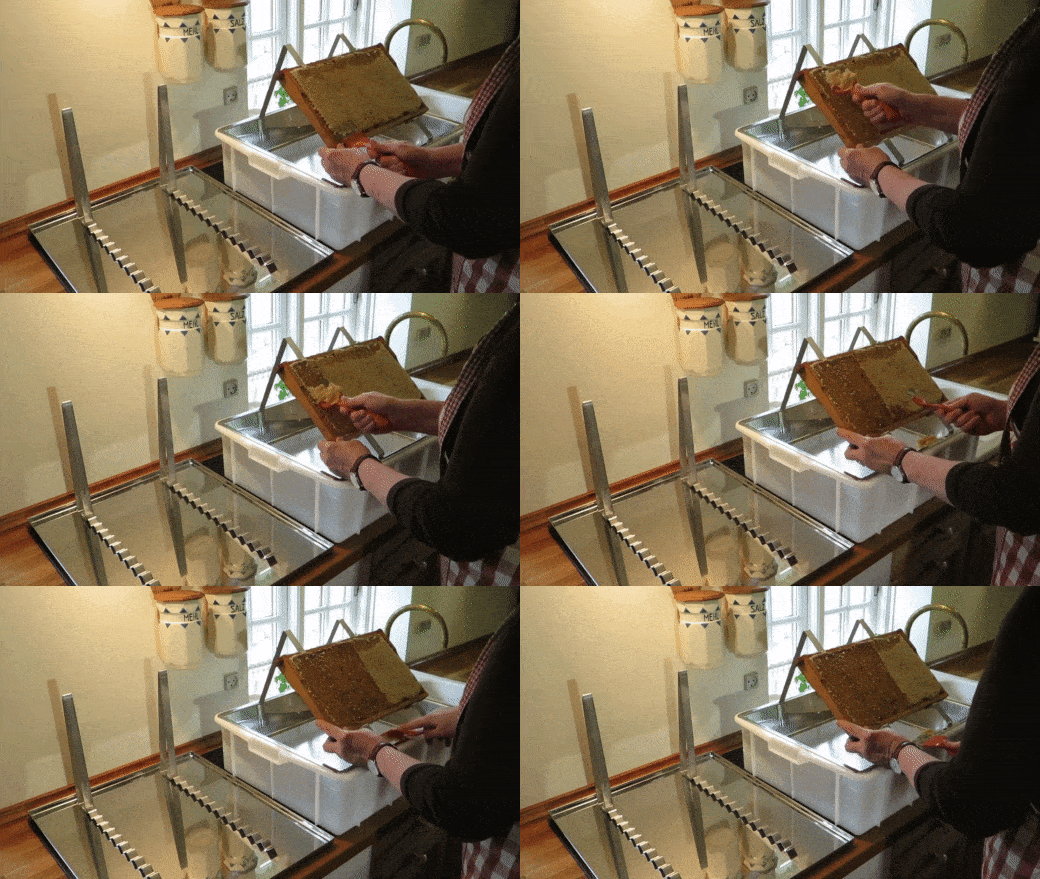
The job takes practice. Set up a clean uncapping tray or bench with a stable frame rest, a way to collect the cappings and a reservoir for the honey that drains from them. Keep the working area clear and use suitable food-contact equipment.
Lift one honey frame at a time from the super by its wooden top bar or lugs. Support it securely on the frame rest above the tray; do not rely on a precarious fingertip grip on a heavy, slippery frame.
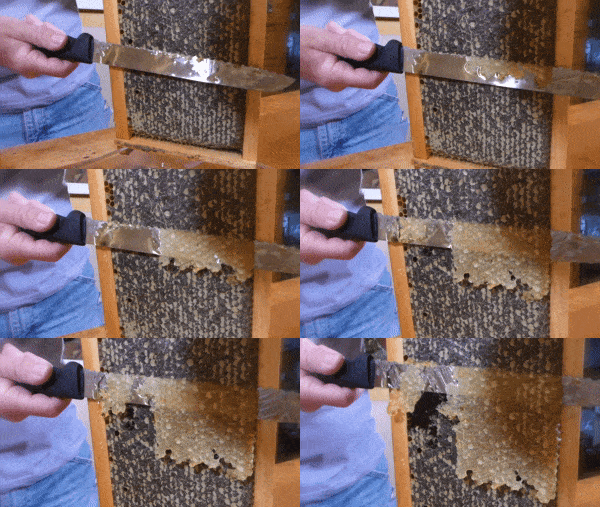
Tilt the comb slightly so the cappings fall into the tray. Take a shallow, controlled cut along the face, following the tool’s instructions and keeping your supporting hand out of its path. Open missed patches with a fork, turn the frame and repeat on the other face before extracting.
Comb condition makes a difference. Hollows, holes and distorted surfaces make even uncapping harder. Review damaged comb as part of your renewal programme and use suitable beeswax foundation when replacement is needed. Colour alone does not determine whether a frame can be worked safely.
What equipment do you need?
There are many types of uncapping equipment: simple hand tools, steam- or electrically heated blades and mechanised lines. Match the equipment to your frames, honey and realistic workload.
Mechanisation should solve a bottleneck in the whole extraction process. A faster uncapper is of limited benefit if there is nowhere to hold frames, the extractor cannot keep up or cappings handling takes all the saved time.
Manual uncapping tools
Uncapping forks
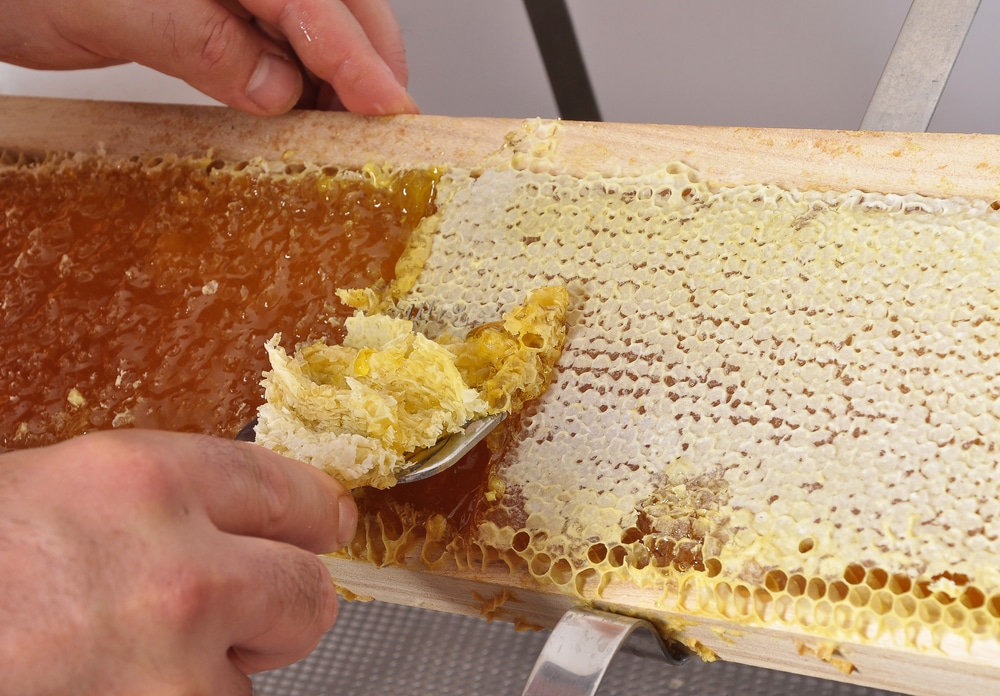
An uncapping fork is an inexpensive, versatile starting tool. It reaches corners and recessed areas well, although working every frame this way can be slower and tiring on the wrist. Use light, controlled strokes rather than digging deeply into the comb.
A fork remains useful beside an automatic uncapper. Where a knife or machine misses low patches, it lets you open the remaining sealed cells without taking another deep cut across the whole surface.
Plain and serrated knives
A sharp manual knife is a straightforward option. The Welsh Beekeepers’ Association guide notes that a suitable sharp knife can work cold. There is no universal requirement to hold every blade at 49°C. If your non-electric tool is designed to be warmed in water, follow its instructions and dry it before contacting honey.
Both plain-edged and serrated knives are used. A well-maintained plain blade can make a clean cut through cappings. Performance depends on sharpness, the comb surface and technique, not simply whether the wax is pale or dark.
A serrated edge may help with tougher or uneven areas. It is not a reason to keep very old brood comb indefinitely or force a blade through obstacles. Keep harvest comb management and tool choice as separate decisions.
If the knife catches, stop and inspect. Pollen, uneven comb, wax build-up or a wooden bar can all interrupt the cut; a snag does not identify pollen with certainty. Clear the blade safely according to its instructions. Do not strike or scrape an electric knife against the tank rim to dislodge material.
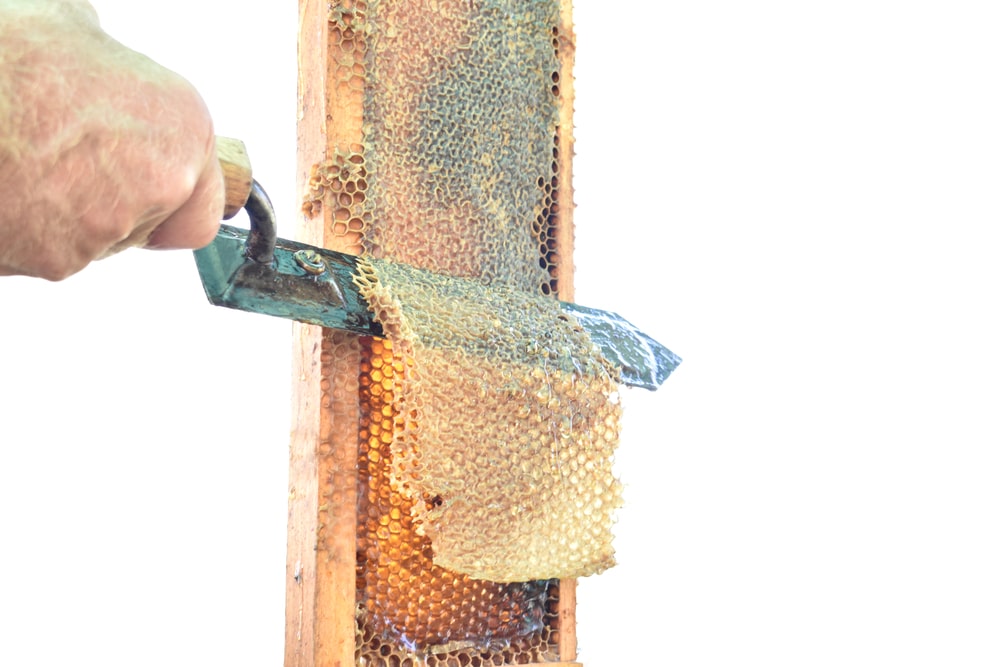
Keep every finger, your supporting hand and your body outside the blade’s travel. Hold the frame firmly on its support, and never use an uncapping knife to lever frames apart.
Electric uncapping knives
An electric uncapping knife supplies heat without repeated warming in water. It can make sustained work easier, but it still needs a clean blade, suitable operating temperature and controlled cutting speed.
Avoid leaving a hot blade stationary against honey or allowing residues to burn onto it. Excessive heating can affect flavour and increase hydroxymethylfurfural (HMF). The effect on the whole batch depends on exposure time, temperature and quantity; normal use of a heated knife does not automatically make the honey defective.
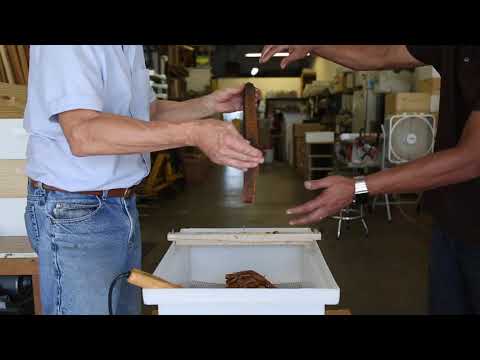
Some models have a built-in thermostat; others use different controls. The Pierce Speed King manufacturer’s manual specifies safe use for its models, including unplugging when finished and not immersing the knife in water. A thermostat does not remove the need for supervision. The original product demonstration above is retained; its title includes Spanish.
Rollers and honey looseners
Distinguish an uncapping roller from a honey loosener. As illustrated by Thorne’s roller, the spikes puncture the wax seals instead of slicing them off. Such a roller can be used for ordinary uncapping; it is not reserved solely for heather honey.
Ling heather honey (Calluna vulgaris) is a different problem: its gel-like, thixotropic consistency means that agitation helps it flow. A suitable loosener works inside the cells. Simply puncturing the caps is not necessarily enough, and not every honey sold under a broad “heather” description has the same behaviour.
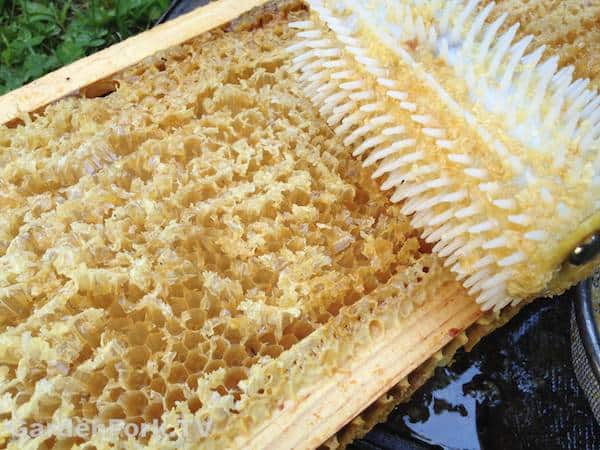
Automatic uncapping machines
Rotating-chain uncapping machines
Rotating chain or flail-type uncappers open the wax mechanically. They can leave more small wax fragments to deal with than a well-adjusted knife cut, so assess the resulting honey and provide adequate straining and settling capacity.
Some designs accommodate several frame formats, but no machine should be assumed to accept every frame. Check the manufacturer’s permitted height, width, lug dimensions, spacing and adjustment range, including compatibility with Hoffman side bars.
A machine that uncaps without heated cutting parts avoids adding heat at that particular step. That does not eliminate heat-related quality changes elsewhere, such as during warming, cappings separation or storage. Treat the complete processing history as relevant.
Vertical knife uncappers
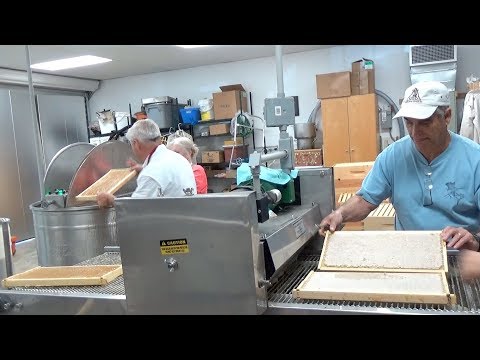
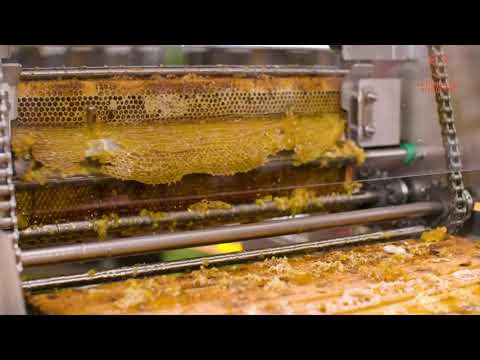
Vertical knife machines feed frames between cutting elements, often using electrically or fluid-heated blades. The layout, movement and feed mechanism vary between designs. Do not confuse a chain conveyor that transports frames with rotating chains that actually open the cappings.
V-shaped blade uncappers are another arrangement, alongside paired or vibrating knife designs. The shape describes the cutting system, not a guarantee about throughput or suitability for all frame sizes.
Frame compatibility is model-specific. The LEGA DV2 manual, for example, identifies particular Dadant-Blatt and Langstroth versions and gives blade and guide adjustments. Do not infer that every vertical machine takes only one format, or that a machine approved for one frame will accept Layens without confirmation. Keep guards fitted and disconnect power before maintenance. The original LEGA demonstration below has a Spanish title.
Honey looseners: the picotosa
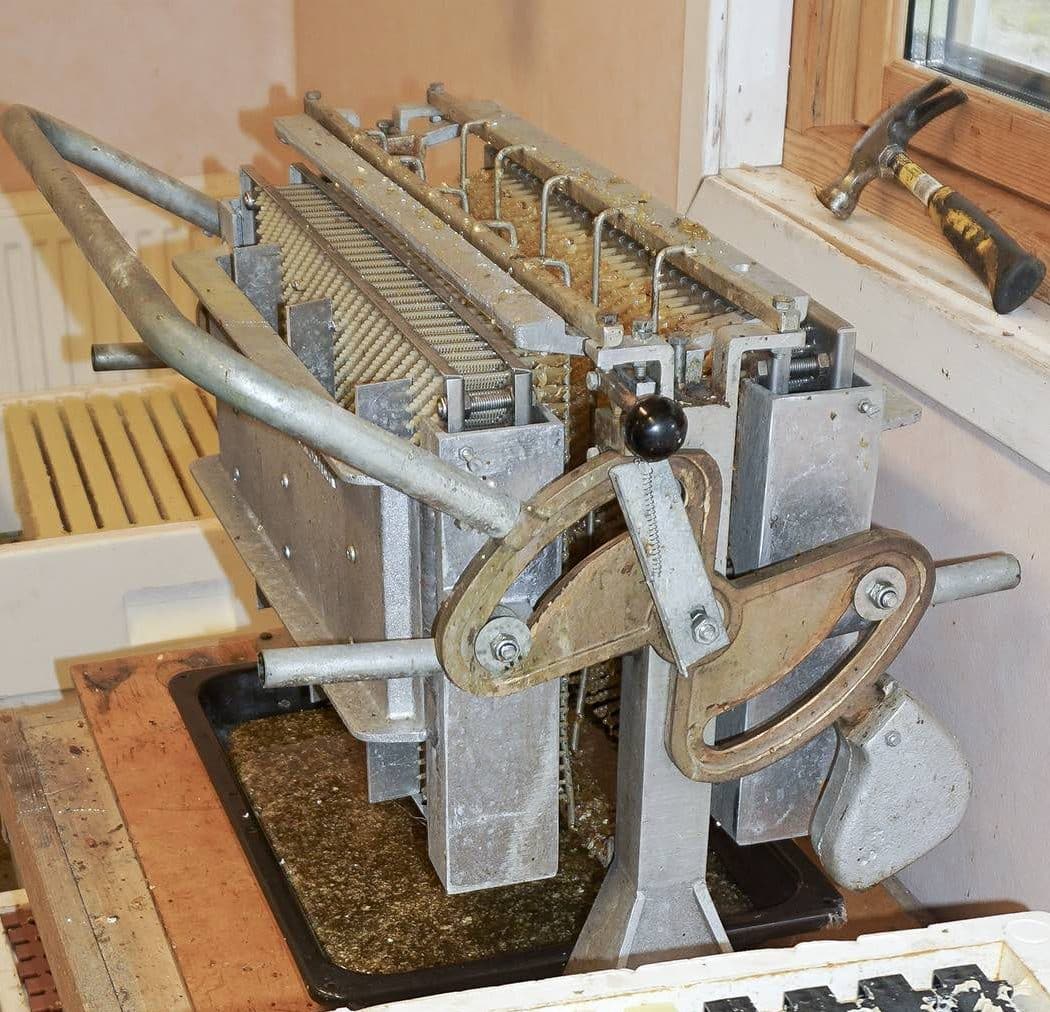
For honey that needs agitation within the comb, a honey loosener—often called a picotosa in Spanish—is the relevant machine. Hand-operated and larger-scale models exist; it is more specific than simply scaling up any uncapping roller.
The pins enter cells and agitate the honey so it can flow during extraction. Set the tool for the comb and follow its instructions; pin construction and the pressure required depend on the model. Abelo’s Heather Loosener Pro is a manual example designed to use weight and gravity to provide gentle agitation, rather than excessive pressure.
Warming and storage before extraction
Warm honey generally flows more readily than cold honey, but distinguish gently warming liquid honey from trying to dissolve crystals inside a comb. A warm room is not compulsory for every harvest. Avoid prolonged heat exposure or temperatures that soften and weaken the wax.
Honey such as oilseed rape can crystallise in the cells, particularly if harvest is delayed. There is no universal 24–48-hour warm-room treatment that guarantees extraction. Assess the degree of crystallisation and the condition of the comb; do not keep raising the temperature or extractor speed to force out solid patches.
Keep waiting supers in a clean, dry, insect-proof place and check honey moisture with a suitable refractometer. Do not deliberately add water or humidify honey to reach an arbitrary 18% target. Drying and moisture control require a controlled process, not a guess based on local climate.
Process supers promptly. Wax moth risk depends on temperature, infestation and comb history; “one week” is not a guaranteed safe storage interval. Inspect any frames that must wait, and keep honey protected from bees, wasps, pests and contamination.
What to do with the cappings
Cappings hold recoverable honey and can provide valuable pale beeswax. Collect them cleanly, avoid unnecessary mixing with old brood comb and plan how to recover the honey before rendering the wax.
An estimate of 1.5kg of wax per 100kg of honey is only a planning guide. FAO’s beeswax chapter gives a broad wax yield of 1–2% for frame-hive beekeeping, not a fixed cappings yield for every harvest. Cutting depth and recovery method alter what you actually collect; wax from retired comb is a separate stream.
Recovering the honey
Start by letting cappings drain over a suitable food-grade screen or tray. A manual cappings press can recover more of the honey that remains. No simple process should be described as recovering every last drop.
A dedicated cappings centrifuge may suit a larger throughput. Smaller operations can consider cappings bags only where the bag and extractor manufacturers permit that use. Secure and balance the load; do not improvise attachments in a spinning basket.
Melting the cappings
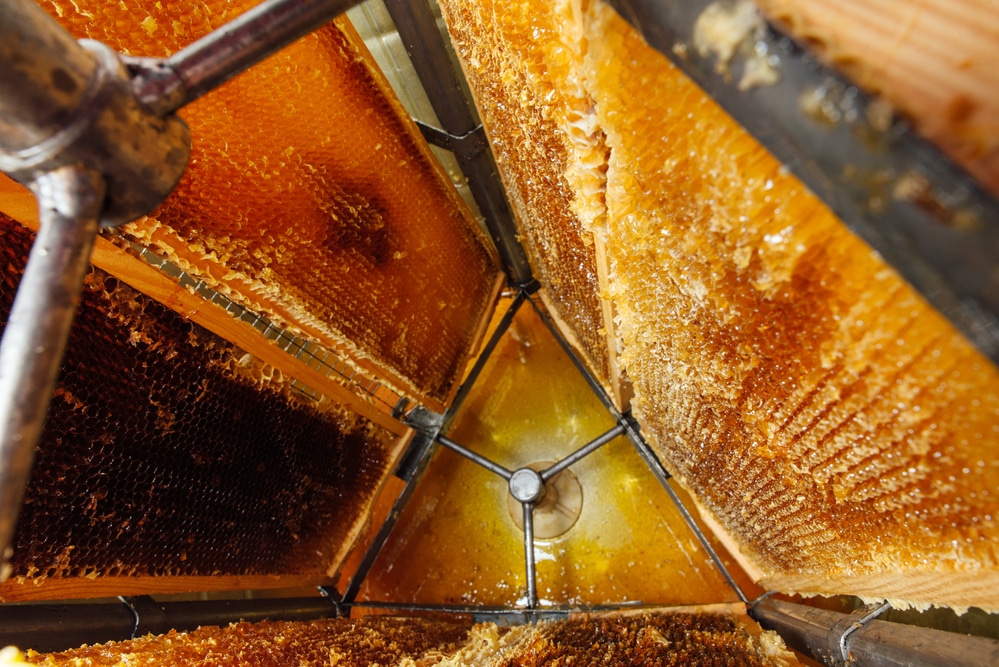
A purpose-built cappings melter uses heat to separate wax and honey and can form part of a continuous line. Recovering honey by draining or pressing first reduces the amount that must pass through the heated process.
For small quantities, a suitable solar wax melter is an option for rendering the drained wax. Protect the equipment from bees and other insects and follow safe wax-handling practice. Do not treat any liquid collected during wax melting as automatically ready for bottling as table honey.
Keep honey recovered through melting separate until its quality is assessed. Colour alone cannot establish its HMF content, and an increase cannot be quantified without testing. In Spain, the honey quality standard provides a separate industrial-use category that can include overheated honey. Classification and labelling depend on the product’s actual condition and applicable rules, not merely the name of the machine used.
Frequently asked questions
What does uncapping honey mean?
It means opening the wax seals over honey-filled cells so that the honey can leave the comb during extraction. A knife or fork removes the cappings; some rollers pierce them instead. The aim is to open the cells with as little damage to the comb as practical.
What temperature should an uncapping knife be?
There is no single setting for every knife. A sharp unheated knife can work; heated knives must be used according to their own instructions. Do not treat 49°C as a universal requirement or immerse an electric knife in water.
Can uncapping increase HMF in honey?
Excessive heat exposure can increase hydroxymethylfurfural, or HMF, and affect honey quality. Time and temperature both matter. A heated blade does not by itself prove a batch has excessive HMF; keep the tool moving, avoid burnt residues and test the honey if its condition is in doubt.
What equipment is used for heather honey?
Ling heather honey, from Calluna vulgaris, can be gel-like and needs agitation to flow. A suitable honey loosener uses pins to stir it inside the cells. An ordinary uncapping roller mainly opens wax seals and is not automatically an equivalent substitute. Not all honeys called heather behave alike.
How much beeswax can be recovered from cappings?
About 1.5kg per 100kg of honey is a rough planning estimate, not a guaranteed yield. The amount depends on comb construction, cutting depth and the recovery method. Keep clean cappings wax separate from old brood comb and other lower-grade wax.
How long can supers wait before extraction?
Extract promptly and keep supers protected from insects, moisture and contamination. There is no guaranteed pest-free waiting week. If honey has crystallised in the cells, assess it separately: a fixed 24–48 hours in a warm room is not a reliable cure for every honey or comb.
Further reading
- Rendering and cleaning beeswax: handling the wax recovered from cappings.
- Straining honey: removing wax particles after extraction.
- Honey moisture: a key check before bottling.
- Wax moth and stored comb: why supers should not be left unprotected.

ISNI 0000 0005 1801 1100 | Joshua Ivars is the manager of LA TIENDA DEL APICULTOR and the author of this blog, where he shares technical and practical guidance for beekeepers. Drawing on extensive experience in the beekeeping sector, he offers advice and solutions based on beekeepers’ real needs, sharing his knowledge of equipment and essential beekeeping practices.


