
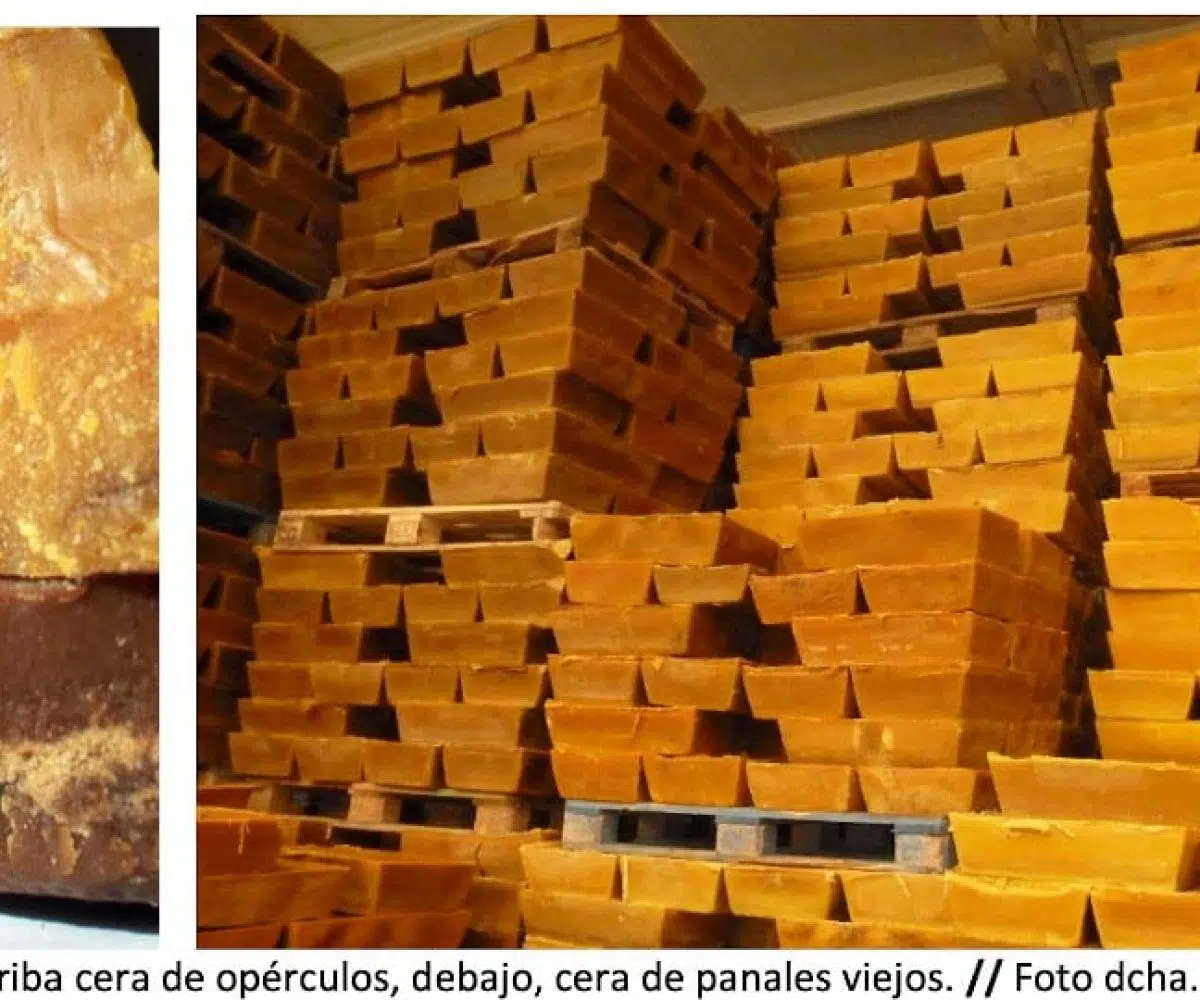
Rendering old comb recovers beeswax and avoids leaving unwanted comb for wax moth to damage. Good results depend on three decisions: which comb to select, how to control the heat, and how to let debris settle. This guide covers all three, including the limits of cleaning: wax that looks clean is not necessarily free of chemical residues or disease agents.
Temperature: melting is not sterilisation
| Temperature or process | Practical meaning |
|---|---|
| About 62–65°C | Typical beeswax melting range; not a universal working-machine setting. |
| Working temperature | Use enough controlled heat for the equipment and charge; follow its instructions and monitor the wax. |
| Hot-water settling | Keep wax liquid in suitable equipment while physical debris separates; no universal time or temperature. |
| Excessive or prolonged heating | Can alter colour, aroma and composition. More heat is not automatically better. |
| Specialist decontamination | Separate validated process; do not attempt it by overheating wax in an ordinary melter. |
In this guide
- which comb to select and what to keep separate;
- how to melt wax with solar, steam and centrifugal equipment;
- cleaning and settling to remove physical debris;
- contaminants and disease risks that melting does not resolve.
Selecting comb for rendering
Start with the intended use of the recovered wax. Wax for new foundation needs a known history and careful selection; do not put every discarded comb into the same batch. The wax sterilisation article below is in Spanish.
- Keep wax with direct treatment exposure or an uncertain history out of the foundation batch. Marking exposed frames helps traceability. The Uruguayan study by Harriet and colleagues compared recycled wax with cappings: several residues were less frequent or lower in cappings, but cappings were not contamination-free. Organic acids such as oxalic acid behave differently from fat-soluble acaricides; their use alone does not certify a whole wax batch.
- Do not include comb from suspected or confirmed American foulbrood, unexplained poisoning or otherwise unassessed disease losses. Keep mouldy or unsuitable material separate and obtain advice rather than treating melting as a cure. See our American foulbrood guide.
- Remove all treatment strips and other treatment material before rendering. Follow their disposal instructions; heating them together with the comb can introduce further contamination.
Rejected wax is not automatically suitable for candles or another use. Keep suspect diseased, pesticide-contaminated or otherwise unsuitable material separate. Ask the relevant bee-health authority or an appropriate processor how it should be handled; changing its intended use does not remove contamination.
Cappings wax is another valuable source. Drain the honey thoroughly before processing it. Washing clean cappings with warm water produces diluted honey, traditionally used in Spanish meloja or arrope, a reduced honey syrup sometimes made with pumpkin. It has also been used as a starting material for mead. Those are separate food-making processes, not a way to use wash water from old, mouldy or suspect comb; use food-safe materials and an appropriate food recipe rather than an improvised lime treatment.
Melting beeswax
Controlling the temperature
Beeswax normally melts over a range of about 62–65°C. It does not need to reach 75–90°C simply to become liquid. A working setup needs enough controlled heat to melt the whole charge and keep wax flowing through its outlet and filter. The COLOSS beeswax methods paper describes sample processing in a higher working range, but that is not a universal setting for every melter. Follow the equipment instructions and measure the wax temperature, rather than guessing from the heater setting.
Avoid excessive heat and unnecessarily long holding times. They can change colour, aroma and composition. The FAO beeswax chapter describes damage from prolonged or excessive heating. There is no single temperature at which every batch suddenly loses its aroma or becomes unacceptable to bees. Do not use high-temperature processing figures as targets for ordinary rendering. Use controlled indirect heat, never an open flame directly beneath a pan of wax, and do not leave heating equipment unattended.
Solar wax melters
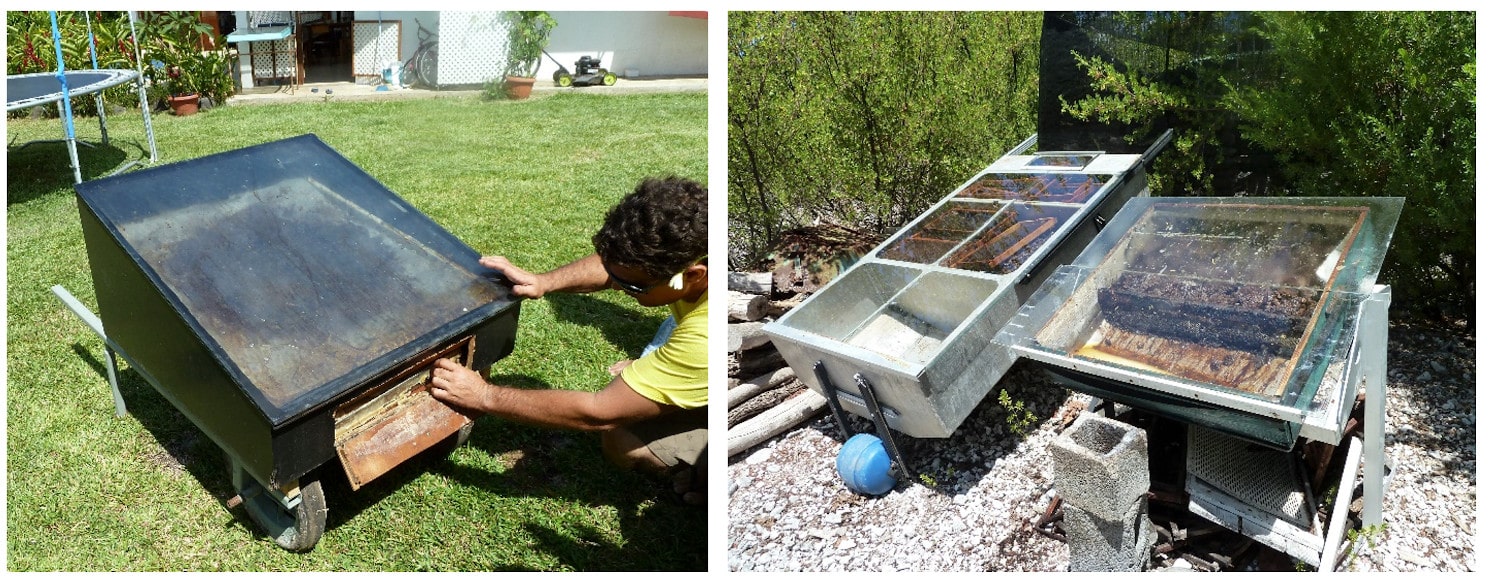
A solar wax melter is usually an insulated or dark-lined box with a glazed lid and a sloping metal tray. Sunshine heats the comb; molten wax runs down through a screen into a collecting container. The screen retains larger particles such as old brood cocoons and pollen clumps. Position and, where the design permits, reorient the unit for the sun without spilling its contents.
Solar heating is not automatically gentle or temperature-controlled. Strong sunshine can overheat the contents, while weak sunshine can leave wax trapped in the debris. Check the equipment and collection arrangement. Neither the colour of the recovered wax nor its smell proves that it is suitable for foundation.
Steam wax melters
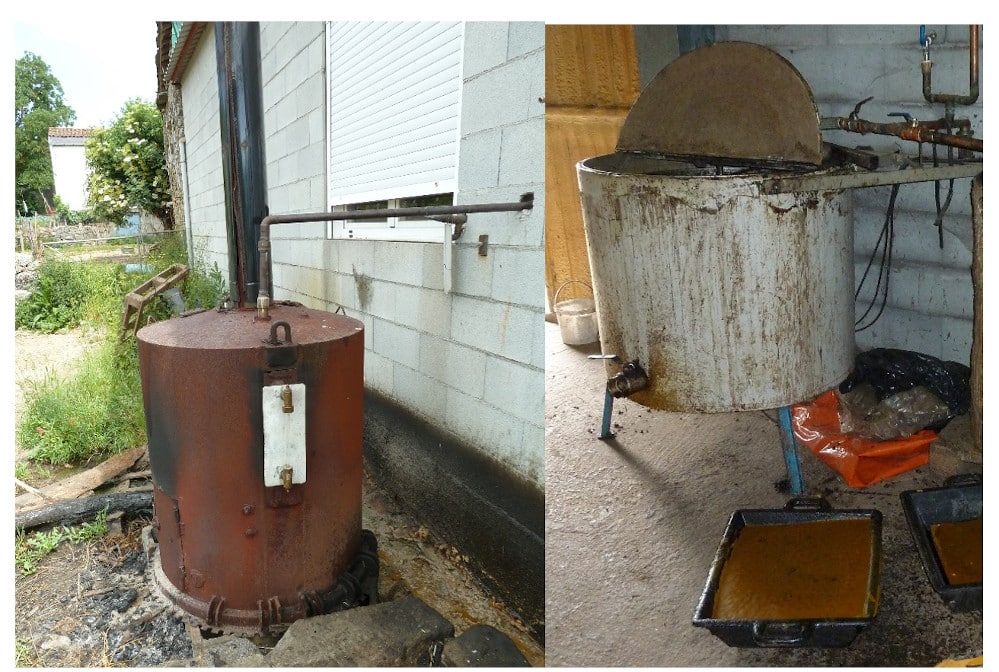
Steam wax melters use hot water or steam to release wax from the comb. One common design has a lower water reservoir and an upper removable perforated basket. Steam heats the comb in the basket; wax and condensate drain through an outlet, while larger debris stays behind. Commercial designs differ, including separate steam generators. Use the specified water supply, outlet arrangement and operating procedure; do not improvise a sealed pressure vessel.
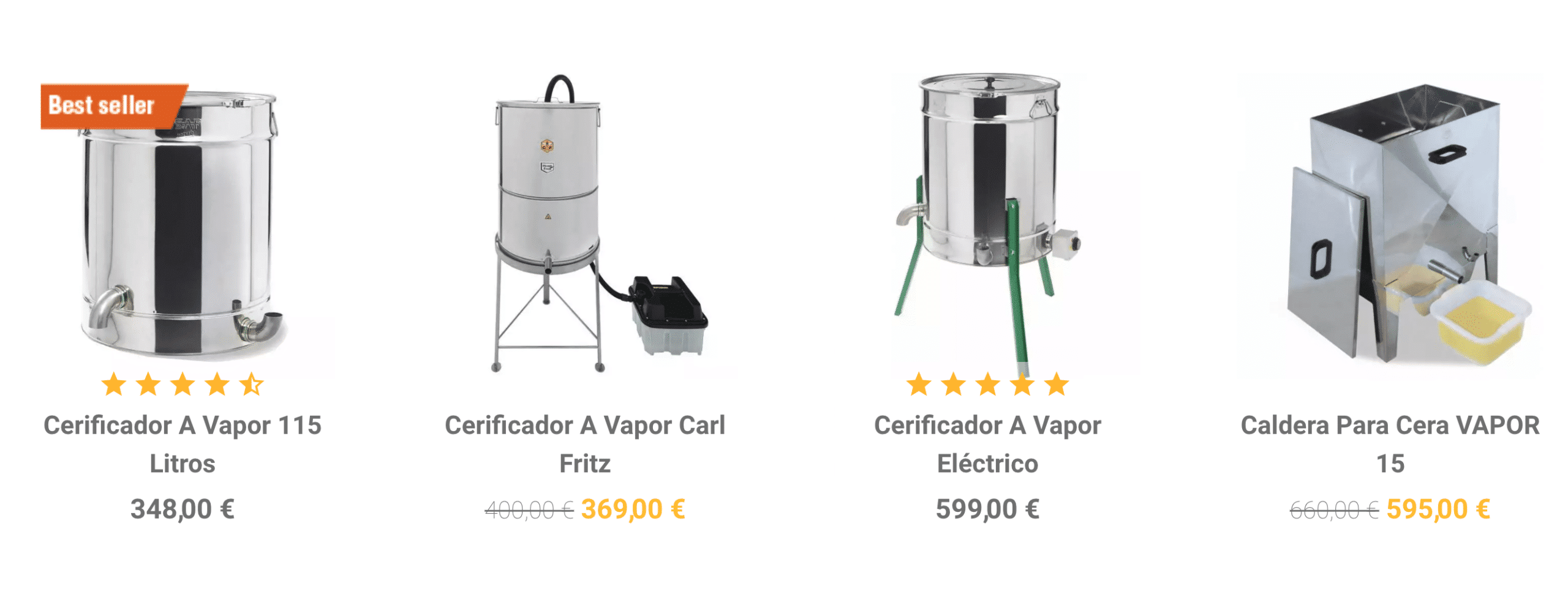
The material left in the basket is often called slumgum. It contains brood cocoons, pollen, propolis and other organic debris, but it may also carry treatment residues or disease contamination. Its organic content is not a blanket recommendation to spread it on soil or feed it to animals. Keep it inaccessible to bees and use a disposal or recovery route appropriate to its history.
Choose a stable, heat-resistant receiving mould that releases a cooled wax block easily. Slightly tapering sides can help; a trapezoidal mould is one useful shape, not the only acceptable design. Leave suitable headroom and protect against hot wax and water splashes.
Where a machine is designed for interchangeable baskets, preparing a second charge can reduce downtime. Swap baskets only using the manufacturer’s safe shutdown and handling procedure. Saving heat never justifies opening equipment under pressure or reaching into hot steam.
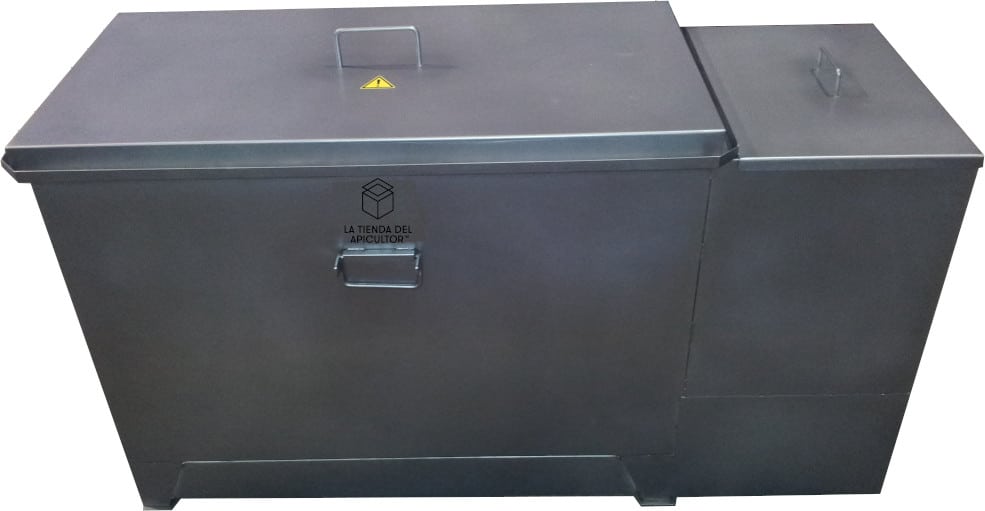
Some installations process whole frames in one compartment and provide a separate hot-water compartment for rinsing the wooden frames. The steam collapses the comb and releases its wax; the rinse removes more adhering material. A rectangular tank often suits the frame shape. The frames may look much cleaner afterwards, but this does not by itself establish that they have been disinfected.
Wax centrifuges
Larger operations may use a steam-heated wax centrifuge. Its perforated basket holds the comb or residues while heat melts the wax and rotation helps separate it. Capacity, basket loading and operating speed are specific to the machine; this is not an ordinary honey extractor used at a higher temperature.
Liquid wax drains from the machine while solid residues remain in the basket. On models with removable baskets, a processed basket can be exchanged for another load. Keep guards and interlocks in use and wait for the specified safe stopping and cooling conditions before unloading.
Improving wax recovery
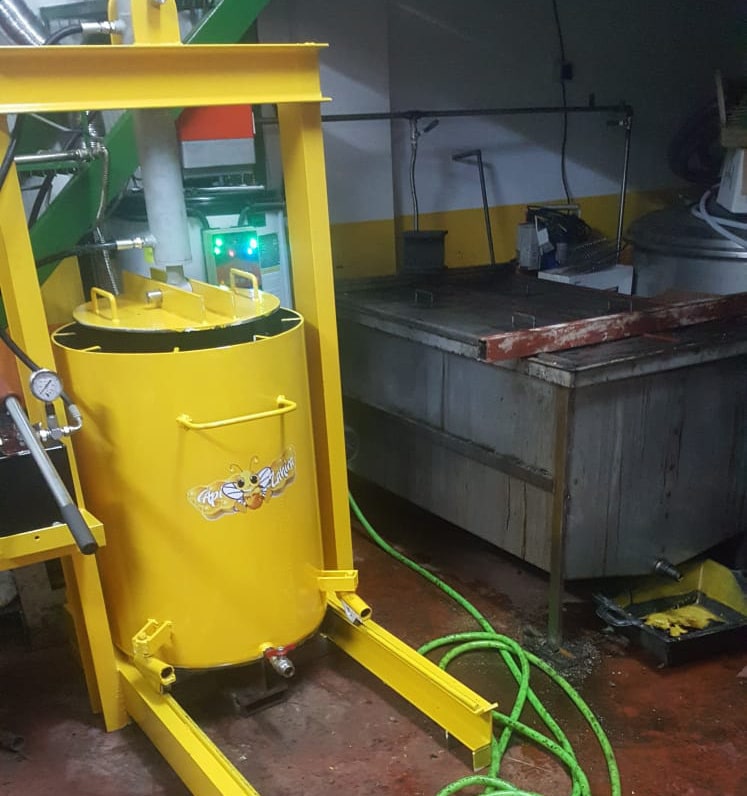
Pressing warm rendering residues in purpose-built equipment can recover wax that would otherwise remain trapped. The extra yield depends on the original comb, retained honey and water, and the efficiency of the first extraction. Old brood comb contains much more non-wax material than clean, well-drained cappings. A universal 50% ceiling is not a reliable planning figure: compare dry recovered wax with a clearly defined starting weight for your own batches.
Cleaning and settling the wax
Cleaning frames before reuse
Remove adhering wax and propolis from reusable frames before returning them to service. Residues are easier to remove while softened, but wait until the frames can be handled safely. Scraping, a suitable hot-water wash or controlled pressure washing can provide physical cleaning. Contain the debris and wash water, prevent access by bees, and avoid splashing contaminated material around the work area.
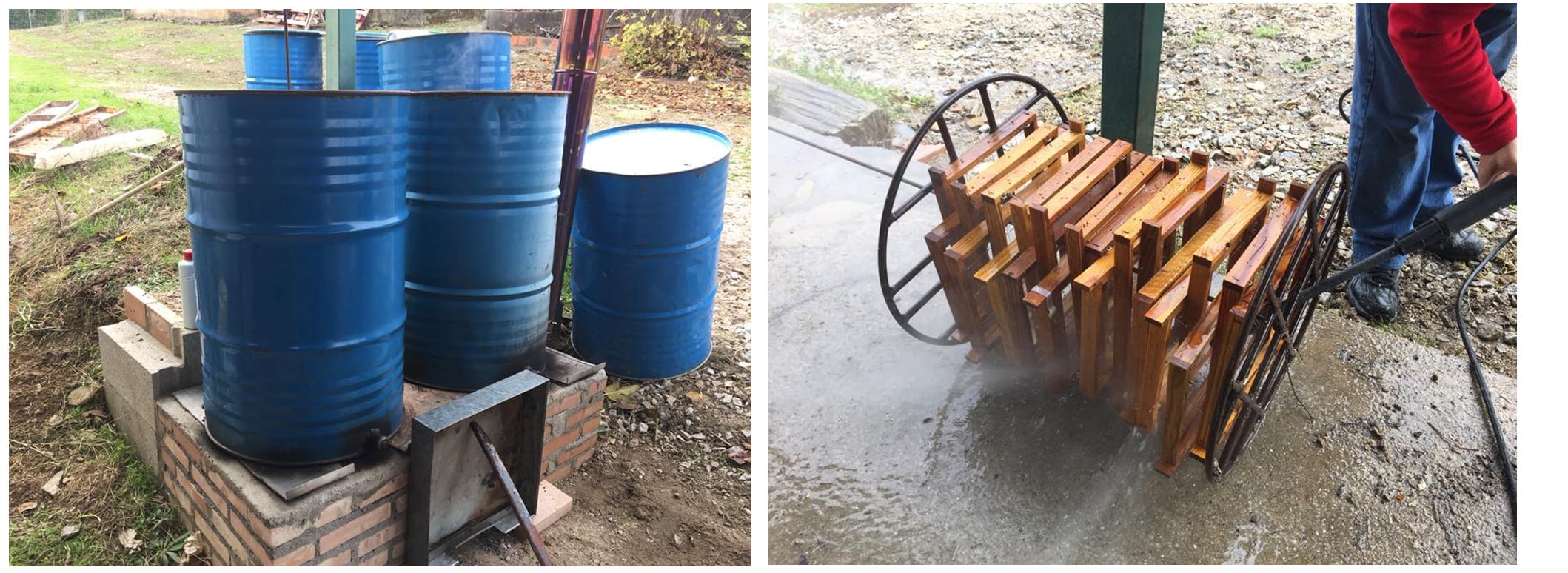
Cleaning and disinfection are separate steps. Caustic soda is corrosive, can damage materials and creates a waste-disposal problem; it is not a casual household addition. Nor should a fixed household-bleach dilution be presented as a universal treatment for wooden frames. Use a product and procedure appropriate to the material and disease, following its label and bee-health advice. CDC chemical-safety guidance explicitly warns against mixing bleach with other cleaners: do not add detergent to bleach.
Letting rendered wax settle
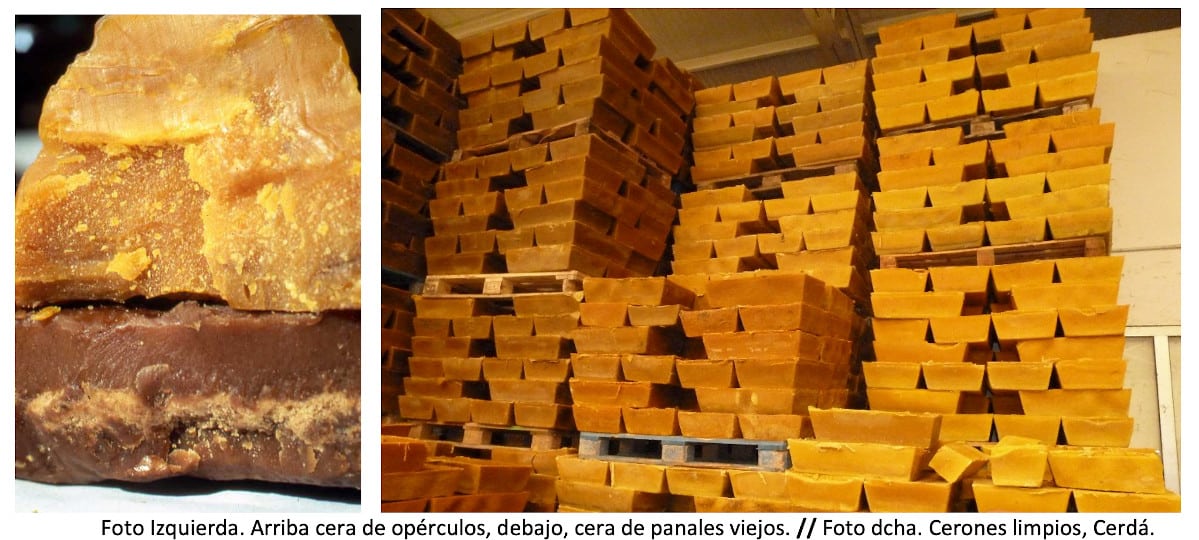
Rendering produces wax blocks with different colours and amounts of physical debris. Dark old brood comb usually gives a different result from fresh comb or cappings. Settling and filtration also affect appearance, but a pale block is not a laboratory certificate of purity.
Settling separates some physical debris from liquid wax. In a suitable heated vessel, wax can collect above hot water because it is less dense. Keep the wax fluid using the approved equipment settings and allow the layers to separate without vigorous mixing. The cleaner upper wax can then be transferred carefully into moulds. Do not pour water into overheated wax or assume that one water temperature or holding time suits every installation.
After a block has cooled completely, debris may be visible on its underside. Scrape off that contaminated layer before keeping the block. Removing visible sediment improves physical cleanliness; it does not remove every substance dissolved in the wax.
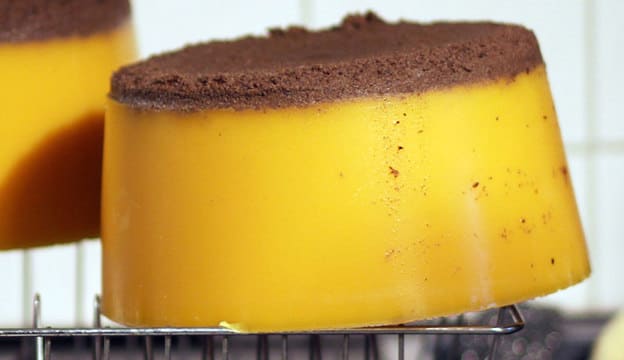
The settling time depends on the starting material, depth of the wax layer, temperature stability and size of the particles. Test small batches in your own equipment and assess the cooled blocks. Extending the holding time indefinitely is not a substitute for good selection or proper separation.
Clean wax blocks can be stored between seasons. Let them dry fully after water processing, label the batch and origin, and protect them from dirt, chemicals and excessive heat. The COLOSS storage guidance emphasises dry wax and suitable packaging. Keep cappings and brood-comb batches identifiable. When choosing beeswax for foundation, age or aroma alone is not a sufficient acceptance test; traceability and quality checks matter more than a promise that freshly rendered wax is always better.
Beeswax colour
Colour alone is not a quality grade. It reflects the comb’s history, pollen and other hive materials, processing and possible contamination. Very dark wax deserves investigation, but pale wax can also contain pesticide residues or adulterants. Judge suitability from its source and, where necessary, analysis.
Beeswax can be lightened by exposure to sunlight or by industrial bleaching processes. These can change its aroma and other properties. Chemical bleaching is not an appropriate do-it-yourself correction for suspect foundation wax: acids and oxidants introduce additional handling and residue questions. A lighter colour does not show that pesticides or disease agents have been removed.
Good settling can make wax visibly cleaner by reducing suspended debris. It cannot guarantee a particular shade, and it is not a chemical decontamination process.
Activated carbon and industrial filtration
Industrial filtration with adsorbents such as activated carbon and filtration earth can reduce some residues, but the result depends on the compound and process. A 2019 industrial-scale study found much stronger reductions for coumaphos and chlorfenvinphos than for tau-fluvalinate; it did not demonstrate universal residue elimination. Such treatment needs suitable equipment and analytical verification, not simply a handful of powder added to a beekeeper’s melting pot.
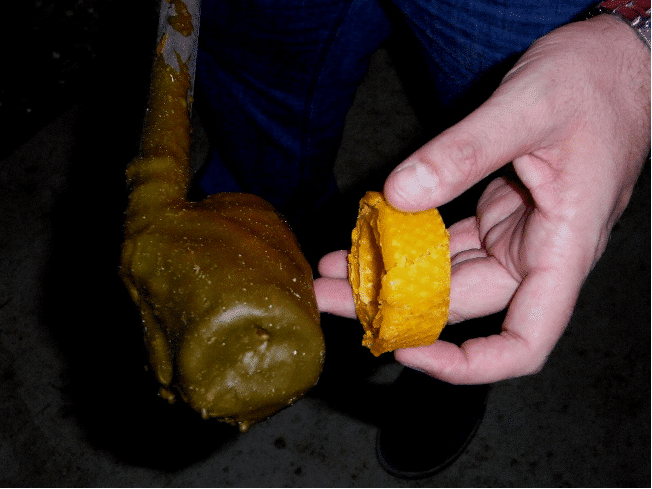
Cappings often provide a lighter starting material for foundation. The flexibility of finished sheets also depends on composition, temperature and manufacturing. Do not mix questionable brood wax into clean cappings just to change handling characteristics or colour. Any blend should use acceptable, traceable wax and meet the processor’s quality requirements.
Contamination and disease risks
Recycling wax into foundation can return contaminants to a colony. Two distinct concerns are chemical residues, including certain mite-treatment products, and infectious agents. Adulteration with other waxes is a further quality issue. These are not reliably detected by looking at a finished sheet.
Ordinary melting and settling are not reliable ways to remove acaricide residues. Agroscope’s research on wax contamination shows why lipophilic substances can remain in the wax cycle. Start with suitable material and keep batch histories; removing treatment strips before rendering prevents an additional source of contamination, but does not undo earlier exposure.
Ordinary wax rendering must not be called sterilisation. In particular, American foulbrood spores can remain a concern after normal melting. The National Bee Unit’s disease-decontamination guidance explains why equipment exposed to disease needs a different assessment from routine cleaning. Do not recycle wax from a suspected or confirmed AFB colony into foundation. Isolate it and follow the competent local authority’s instructions for treatment or disposal, rather than automatically burning or processing it yourself.
European foulbrood is different: its causative bacterium, Melissococcus plutonius, does not form spores. That does not make contaminated equipment harmless. Nosema and chalkbrood involve other organisms with their own survival characteristics. A result obtained in honey or a laboratory preparation cannot be assumed to apply to wax in a working melter. Do not promise that a normal rendering cycle makes wax from any diseased colony safe.
Specialist wax processors may use validated decontamination equipment and controlled processes. That is a separate service from recovering wax with a solar or steam melter. Ask what the process is validated to achieve, what material the processor accepts and how batches are kept traceable.
A clean-looking batch is not evidence that it needs no disease precautions, just as a suspect batch is not a reason to attempt high-temperature sterilisation in improvised equipment. Keep questionable material out of the normal recycling stream until it has been assessed.
Technical references
- Svečnjak et al., Standard methods for Apis mellifera beeswax research — the COLOSS BEEBOOK paper on wax properties, processing, quality analysis and pathogen testing.
- Harriet et al., Agricultural pesticides and veterinary substances in Uruguayan beeswax — a comparison of recycled wax and honey cappings, not a guarantee for every batch.
What ordinary melting does not guarantee
The table below separates the main concerns before recycling wax from a dead colony. It is not a disinfection recipe: ordinary melting, a clean appearance and a quoted laboratory temperature are not interchangeable evidence of safety.
| Concern | What matters | What to do before recycling |
|---|---|---|
| American foulbrood | Resistant spores; ordinary melting is not a reliable clearance step. | Keep suspect wax out of foundation recycling and follow competent bee-health advice. |
| European foulbrood | The causative bacterium does not form spores; contamination still matters. | Do not equate absence of spores with safe reuse. Seek disease-specific advice. |
| Nosema | Different organisms and survival conditions from foulbrood. | Do not treat a general rendering cycle as validated decontamination. |
| Chalkbrood | Results in honey or laboratory material do not establish safety in wax. | Assess the affected material and processing route; avoid a blanket heat-treatment guarantee. |
| Acaricide residues | Melting and settling do not reliably remove fat-soluble contaminants. | Select traceable wax; specialist filtration needs compound-specific analytical checks. |
Frequently asked questions
At what temperature does beeswax melt?
Usually over a range of about 62–65°C. That is different from a machine’s working setting. Follow its instructions, monitor the wax and avoid excessive or prolonged heating; ordinary melting is not sterilisation.
Which comb should not be recycled into foundation?
Keep wax from suspect disease losses, poisoning, direct treatment exposure or an uncertain history separate. Remove treatment strips before rendering. Do not assume rejected wax is suitable for candles or another use; obtain appropriate advice.
How can I obtain cleaner, lighter wax?
Start with suitable comb or well-drained cappings, remove larger debris and allow the molten wax to settle in appropriate equipment. Scrape sediment from the cooled block. Appearance does not prove that residues or disease agents are absent.
Can beeswax be bleached?
Yes, but bleaching changes appearance rather than proving safety. Chemical bleaching should not be improvised to make suspect wax suitable for foundation. Careful selection and settling are preferable starting points.
Does melting remove treatment residues?
Not reliably. Some fat-soluble acaricides remain in the wax cycle. Specialist adsorbent filtration can reduce some compounds more than others, but it needs suitable equipment and analytical verification.
How much wax can I recover?
Yield varies with comb age, non-wax debris, retained honey and water, and equipment efficiency. Clean cappings usually contain a higher proportion of wax than old brood comb. Measure your own batches; a universal 50% limit is not reliable.
Can I use slumgum as fertiliser?
Do not assume it is suitable simply because it contains organic matter. It can carry chemical residues or disease contamination. Keep it inaccessible to bees and choose a disposal or recovery route appropriate to the source material.
Further reading
- Beeswax quality and its effects on bee health — general principles.
- Making beeswax foundation — the next processing stage.
- Wax sterilisation and bleaching — further background (Spanish); specialist processes require validated equipment and advice.
- Wax moth prevention — why unwanted comb should not be left unprotected.

ISNI 0000 0005 1801 1100 | Joshua Ivars is the manager of LA TIENDA DEL APICULTOR and the author of this blog, where he shares technical and practical guidance for beekeepers. Drawing on extensive experience in the beekeeping sector, he offers advice and solutions based on beekeepers’ real needs, sharing his knowledge of equipment and essential beekeeping practices.


