
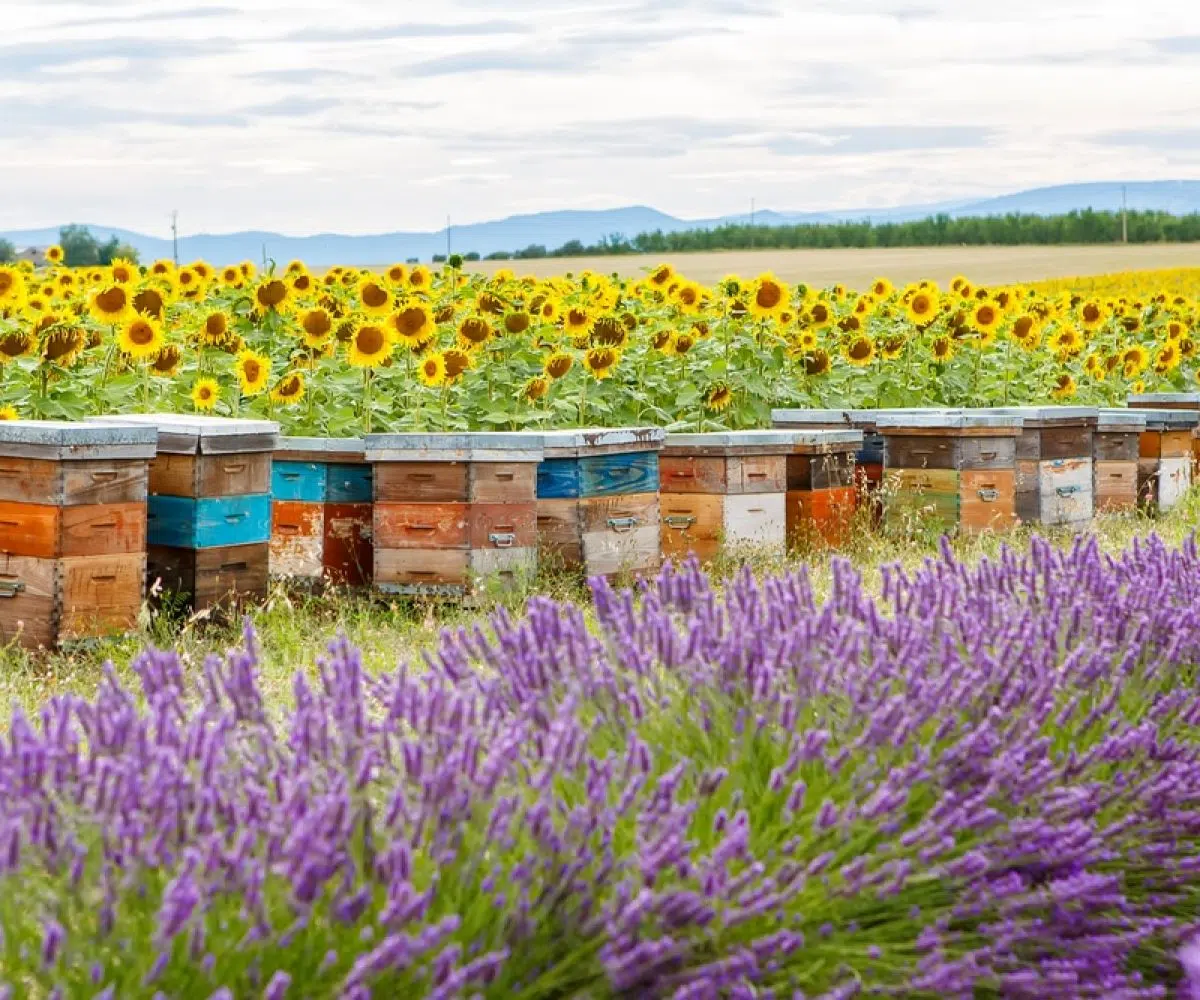
A good apiary site combines reliable forage, vehicle access, well-drained ground, suitable sun and shelter, water, and safe, lawful siting. A beautiful view is not enough: a poor choice can mean disappointing crops, difficult journeys or conflict with neighbours. The practical principles below apply widely, but the legal distances in this guide refer specifically to Spain; they are not rules for every country.
Spanish legal distances at a glance
| Distance | Measured from |
|---|---|
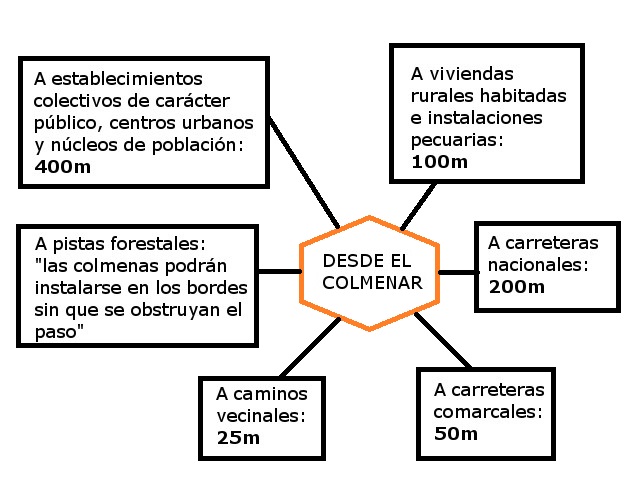
| 400 m | Population centres and public facilities |
| 200 m | National roads |
| 100 m | Occupied rural dwellings and livestock facilities |
| 50 m | Secondary roads (carreteras comarcales) |
| 25 m | Local roads or lanes (caminos vecinales) |
In this guide
- What to look for in a location;
- How to position hives to reduce drifting;
- Public or private land and how to obtain permission;
- What Spanish law states and its conditional exceptions;
- How many hives per apiary.
Where should I put my hives? This is one of the first questions new beekeepers ask. A garden or orchard may suit a few colonies where local rules and public safety permit it. Larger operations usually need a dedicated site, but small apiaries still require the same careful assessment.
An apiary should work for both the bees and the beekeeper. Check the applicable requirements for neighbouring apiaries, roads, homes and other land uses before choosing it. If you use Langstroth or Dadant hives, allow enough firm, level working space to handle their stackable boxes safely.
What characteristics should we look for when choosing a site?
Nectar and pollen through the season. Look beyond a single impressive flowering crop. Nearby forage is valuable, but bees do not have a fixed one-kilometre working radius or a three-kilometre limit. In a three-year study in Sussex, England, average advertised foraging distances varied from about 493 m in early spring to 2,156 m in summer and 1,275 m in autumn. Those are observations from one landscape, not spacing rules. Assess when local plants flower, how long they provide nectar and pollen, and what is available during gaps.
Good vehicle access. Being able to reach the hives makes feeding, inspections and honey harvesting easier, especially in migratory beekeeping. Check access after rain as well as in dry weather, including gates, turning space and the route for carrying heavy supers.
Well-drained, flood-safe ground. Avoid hollows, waterlogged soil and flood routes. A gentle slope can help drainage, provided hive stands remain stable and working access is safe.
Wildfire precautions. Assess surrounding fuel, access and escape routes, and check current local fire restrictions before using a smoker or clearing vegetation. Keep the immediate working area manageable in agreement with the landowner. Required clearance widths depend on the jurisdiction and site: a four-metre cleared radius is not a universal requirement established by the national beekeeping decree cited below.
A suitable microclimate. Avoid exposed, persistently damp sites and cold-air pockets. Morning sun and shelter from prevailing winds are useful; the balance of sun and shade must suit the climate. In very hot conditions, some afternoon shade may help. Nearby landmarks and shrubs can aid orientation or provide places where swarms may settle, but keep entrances and working space clear. Mississippi State University’s site-selection guidance discusses these practical trade-offs; its US legal provisions should not be applied to Spain.
A dependable water source. Bees need water for colony functions and cooling. Arrange a suitable supply without placing hives on wet ground, and consider whether the bees might otherwise visit a neighbour’s pool or another busy area.
Safe for neighbours and lawful. Direct flight paths away from people, livestock and regularly used routes. Do not obstruct footpaths, forest tracks or machinery access. Meeting a numerical setback alone does not remove the need to assess the risk to those using the surrounding land.
Avoid excessive colony density. Nearby colonies share the available forage. The 2–3 km separation sometimes suggested in practice is only a rule of thumb, not a national Spanish minimum or a guarantee against competition, robbing or disease spread. Carrying capacity varies with flowering, season and colony strength. Speak to neighbouring beekeepers and check regional siting rules before committing to a site.
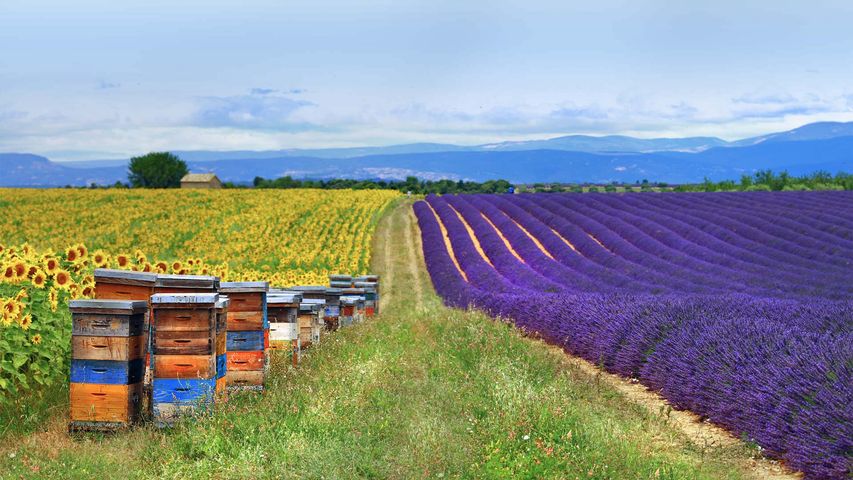
How should hives be arranged on the site?
Arrange hives to reduce drifting: bees returning to the wrong colony. Vary positions, spacing and entrance directions, using staggered groups, arcs or circles where practical rather than a long row of identical entrances. Small groups—sometimes around ten hives—are one layout option, not a proven optimum. East- or south-facing entrances may suit temperate northern-hemisphere sites, but local sun, wind, terrain and safe flight paths take priority. Posts, stones, shrubs, colours and other distinct landmarks help bees recognise their own hive.
Keep hives off the ground on stable stands. Choose a comfortable working height and supports that remain secure under a full stack of supers. This separates the floor from wet soil. Where the floor design calls for it, a slight forward tilt helps rainwater drain out; a three-centimetre drop is an example, not a universal specification. Follow the requirements of the hive and floor design rather than tilting every hive by the same amount.
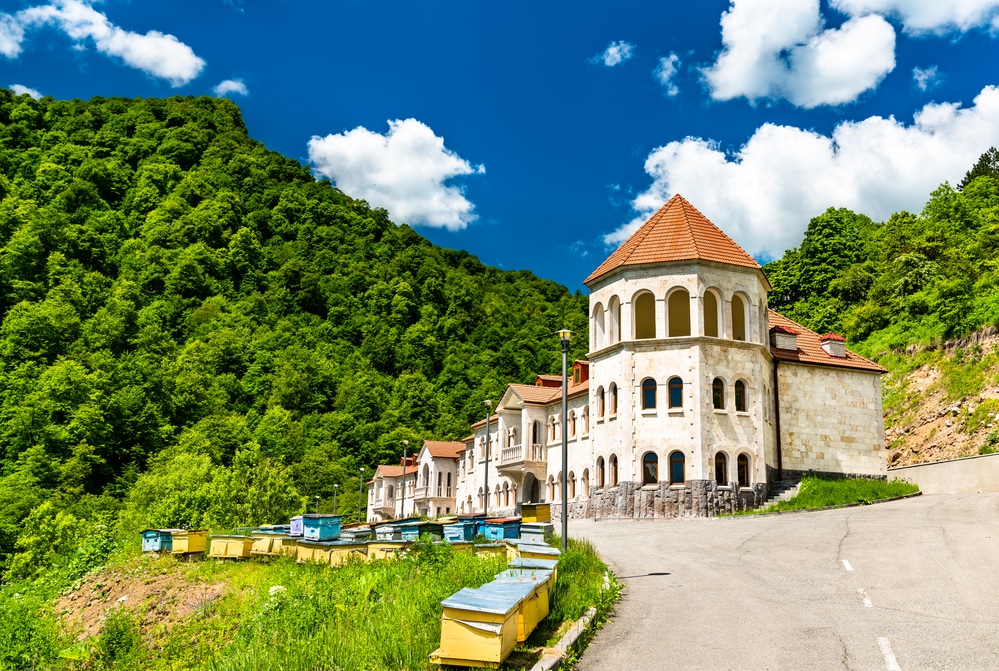
Public or private land?
Every piece of land has an owner, and you must obtain permission. Do not assume that apparently unused land belongs to nobody and place hives there: sooner or later, this is likely to cause problems or disputes.
Land may be publicly or privately owned. First establish ownership and who can authorise use. In Spain, public woodland may be managed by a municipality, provincial authority or autonomous community. Contact the body responsible for that particular site.
Once ownership has been established, you must obtain permission.
On private land, obtain a clear written agreement with the owner. Record the location, access, duration, responsibilities and any payment. Do not assume that a verbal agreement meets every applicable requirement: landowner permission does not replace registration, environmental, forestry or other statutory authorisations.
For public land, follow the procedure specified by the managing authority. There may be a permit, tender, concession or other allocation process, with its own conditions and eligibility criteria. Ask about the current process for that woodland; there is no single auction or points system applicable to every public apiary site.
Local contacts and good working relationships are extremely valuable when looking for new apiary sites and avoiding disputes.
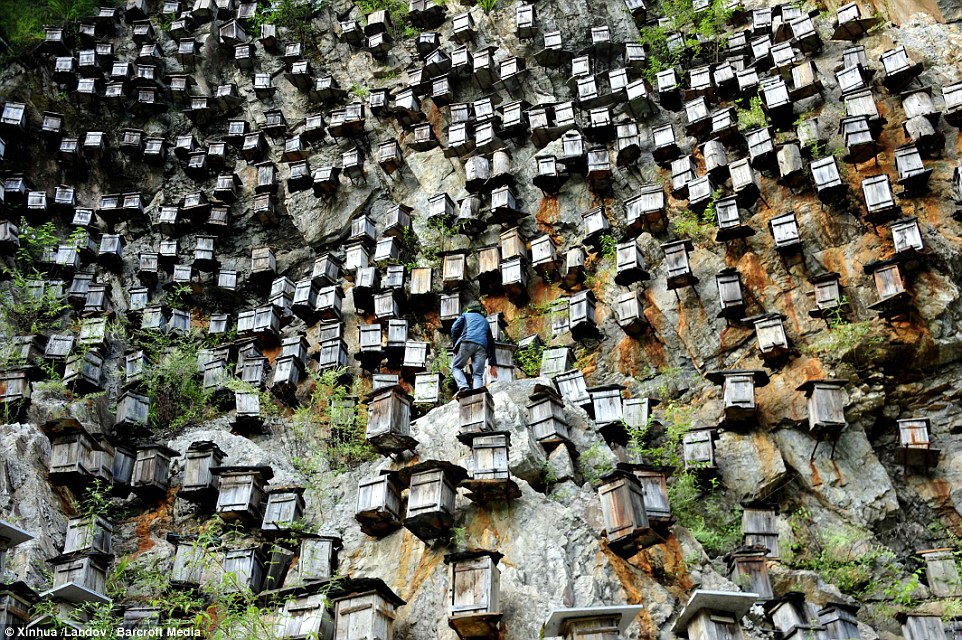
Apiary siting and minimum distances in Spain
The following section concerns Spain. It summarises the national baseline, not an individual site authorisation. Check the current consolidated legislation and the requirements of the competent autonomous community and local authority before installing hives; other countries have their own rules.
Royal Decree 209/2002 sets basic animal-health and management requirements for Spanish beekeeping holdings, including the location, establishment and movement of colonies. The consolidated BOE text consulted for this English review incorporates amendments published on 23 April 2025.
Article 8 gives the baseline setbacks in the table below. Its provisions on distances between apiaries are separate: it does not establish a nationwide 2–3 km minimum between them. The Spanish road terms are retained in brackets to avoid treating informal English translations as a new legal road classification.
| Minimum distance | Measured from |
|---|---|
| 400 m | Public collective facilities, urban centres, and population centres |
| 200 m | National roads |
| 100 m | Occupied rural dwellings and livestock facilities |
| 50 m | Secondary roads (carreteras comarcales) |
| 25 m | Local roads or lanes (caminos vecinales) |
| No numerical setback specified here | Forest tracks: hives must be placed at the edges without obstructing passage |
Conditional reductions and the small-apiary provision
- Slope or elevation. The distance to roads and paths may be reduced by 50% if the apiary is located on a slope and more than two metres above the horizontal level of the road or path.
- Two-metre fence. Distances may be reduced by up to 75% if the apiary has a fence of at least two metres in height on the side facing the road, path, or reference facility. Any material that forces bees to fly above that height counts. This exception does not apply to distances between apiaries.
- Small apiaries. Those with fewer than 26 hives are not used as reference points when determining minimum distances between apiaries. This is not a blanket exemption from other setbacks, registration or permission requirements.
For holdings kept for self-consumption, each autonomous community may establish different minimum distances according to the characteristics of beekeeping in its territory. Check whether that classification applies to your operation; do not assume that every small apiary qualifies.
For clarity, the following points correspond to Article 8(3), (4) and (5). Confirm their application with the competent authority. Do not assume that the two percentage reductions can be added together or that a fence waives other obligations.
- When setting minimum distances between apiaries, apiaries with fewer than 26 hives are not used as reference points for calculating those minimum distances.
- The prescribed distance from roads and tracks in section 2 may be reduced by 50% if the apiary is on a slope and stands more than two metres above the level of the road or track.
- The distances specified in section 2 may be reduced by up to 75% when the apiary has a fence at least two metres high on the side facing the road, track or reference facility used to determine the distance. The fence may be made from any material that forces the bees to begin their flight above two metres.
This exception does not apply to minimum distances between apiaries.
Important: these are Spain’s national baseline rules, not a site-specific legal opinion. Regional and local requirements must also be checked. The express provision allowing different distances for self-consumption holdings means it is incorrect to say that regional distances can only ever be stricter.
How many hives should an apiary contain?
The appropriate number of hives at a site depends on several major and minor factors, including:
- The quality and quantity of bee forage around the site
- How long that forage remains available to bees
- Climate
- The beekeeper’s practical capacity to manage the colonies
There is no universal maximum based on available ground space alone. The following are illustrative operating scales discussed in this guide, not legal limits or recommended stocking rates. A fixed apiary, a temporary nectar-flow site, a nuc-rearing yard and a queen-mating station have different resource demands. Mating nucs should not be counted as equivalent to full production colonies.
| Type of apiary | Illustrative colony or nuc numbers |
|---|---|
| Stationary (fixed) apiary | ~20 |
| Migratory apiary | 50–100 or more; load sizes vary with vehicle and hive format |
| Nucleus colony rearing | up to 100–150 |
| Queen mating | 300–400 mating nucs |
Frequently asked questions
How far should hives be from a house in Spain?
Article 8 of Royal Decree 209/2002 gives a national baseline of 100 m from occupied rural dwellings and livestock facilities, and 400 m from public collective facilities and population centres. Conditional reductions and regional provisions may apply, including different distances for self-consumption holdings. Confirm the current requirements for the specific site; these are not rules for other countries.
Can the Spanish apiary setbacks be reduced?
The decree allows a 50% reduction for roads and tracks when the apiary is on a slope more than two metres above their level. A fence at least two metres high on the side facing the relevant road, track or facility, forcing bees to begin flight above that height, may permit a reduction of up to 75%. The fence exception does not apply between apiaries. Check the conditions with the authority and do not assume the reductions are cumulative.
Can hives be placed in public woodland?
Only through the permissions and procedure required for that site. In Spain, identify the responsible public authority and ask about the applicable permit, concession or allocation process. Apparently unused land is not ownerless, and land-use permission does not replace other required authorisations.
How many colonies should one apiary contain?
Match colony numbers to seasonal forage, colony strength, climate and your capacity to manage them. Illustrative scales such as 20 fixed hives, 50–100 or more migratory hives, 100–150 rearing nucs or 300–400 mating nucs are not legal limits or universal recommendations. Mating nucs and full colonies have different resource needs; evaluate the site rather than filling all available space.
How far do honey bees forage?
Foraging distance changes with the landscape, season and availability of rewarding flowers. A Sussex study found averages of about 493 m in early spring, 2,156 m in summer and 1,275 m in autumn. These averages are neither maximum flight distances nor apiary-spacing rules. Look for a succession of useful forage, not just flowers within an arbitrary one-kilometre circle.
How far should my apiary be from another apiary?
Check the applicable regional rules and assess shared forage with nearby beekeepers. A 2–3 km gap is a practical rule of thumb, not a nationwide minimum under Spain’s Royal Decree 209/2002 or a guarantee against competition. Article 8 says apiaries with fewer than 26 hives are not reference points for calculating inter-apiary distances; it does not exempt them from every other requirement.
Continue reading
- How to become a beekeeper in Spain: registration, REGA, and first steps.
- Drifting bees: why hive layout matters.
- How to transport hives, if you are undertaking migratory beekeeping.
- Insulation, condensation and ventilation, for winter siting.
Educational content. The distances cited are Spain’s national baseline under Royal Decree 209/2002, not rules for other countries. Always confirm the current regulations with the competent autonomous community and local authority before installing the apiary. For self-consumption holdings, the decree expressly permits different regional minimum distances; other regional or local requirements may also apply.

ISNI 0000 0005 1801 1100 | Joshua Ivars is the manager of LA TIENDA DEL APICULTOR and the author of this blog, where he shares technical and practical guidance for beekeepers. Drawing on extensive experience in the beekeeping sector, he offers advice and solutions based on beekeepers’ real needs, sharing his knowledge of equipment and essential beekeeping practices.


