
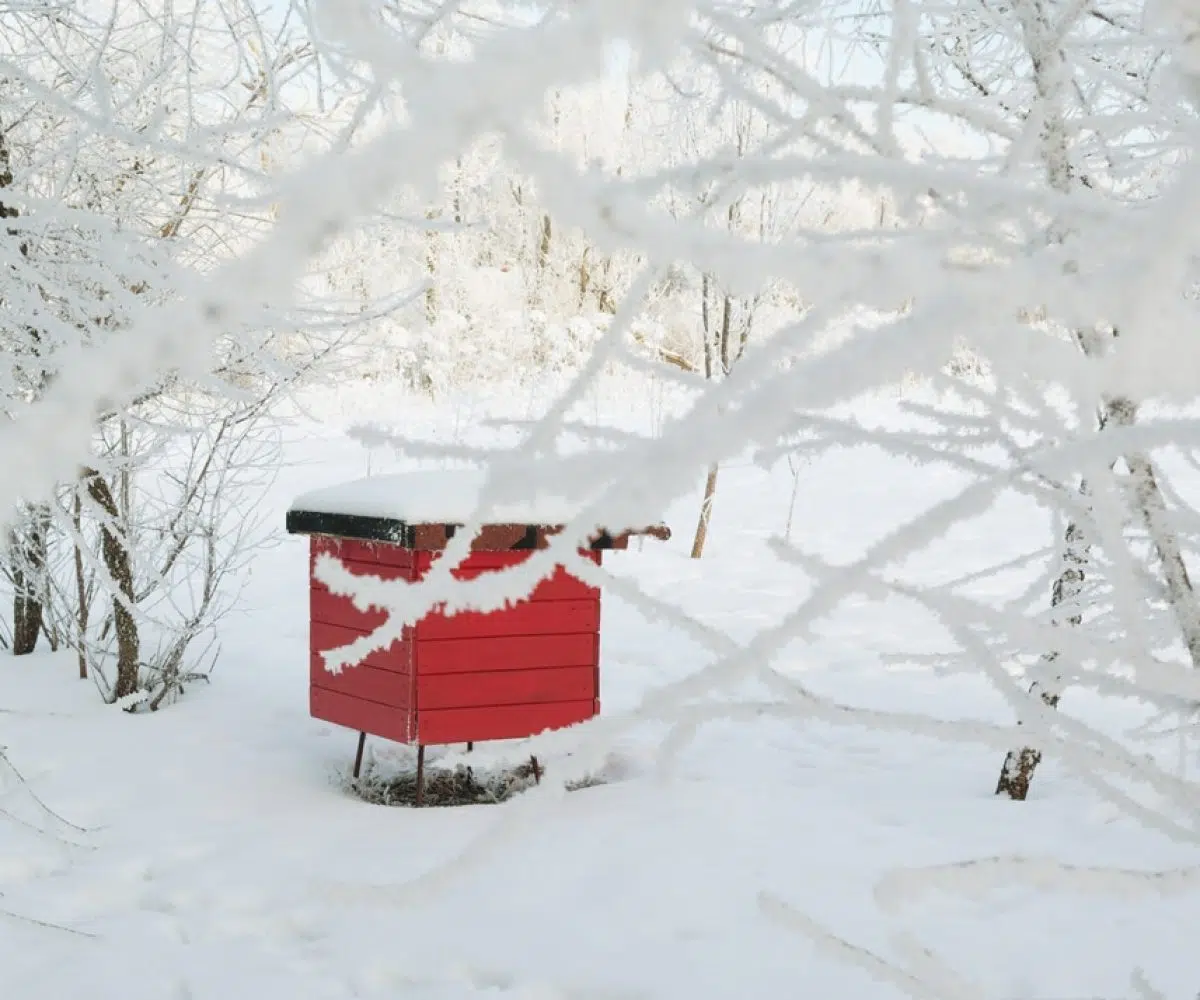
Winter management is a balance between heat loss, moisture and the colony’s ability to cope. Honey bees cluster and use food stores to generate heat, but that does not make cold harmless. Water dripping onto the cluster can add to the problem. The practical question is how to limit overhead condensation and unnecessary draughts while maintaining suitable air exchange—not whether a hive should be made airtight.
Upper ventilation or an insulated top?
| Comparison | Hive with upper ventilation | Insulated hive without an upper opening |
|---|---|---|
| Principle | Provide a controlled route for moist air to leave | Reduce heat loss and keep the ceiling warmer |
| Arrangement | Appropriate lower entrance or floor ventilation, plus an upper opening | Insulated top, with an unobstructed entrance and suitable lower air exchange |
| Potential benefit | Can reduce moisture accumulation | Can reduce draughts above the cluster and overhead condensation |
| Trade-off | Too much airflow can increase heat loss | A poorly insulated ceiling or inadequate moisture management can still cause dripping |
| What matters | Match openings to weather, hive design and colony strength | Use sufficient top insulation and a workable drainage or moisture-management design |
| Practical checks | Inspect for water, blocked entrances and excessive exposure | Check roof condition, insulation and drainage; maintain any purpose-designed moisture quilt |
In this guide
- how they regulate temperature and humidity;
- why condensation is a problem;
- the two approaches, with their precautions;
- how to decide in your case.
Bees actively regulate conditions where they live and rear brood. The beekeeper’s role is to support that regulation with appropriate equipment and management. Sensors can help reveal trends, but readings depend on their position: see our hive-monitoring guide (Spanish). One humidity reading is not, on its own, a diagnosis.
Bees’ capacity to regulate temperature and humidity
Bees employ a range of techniques to regulate temperature and humidity inside the hive:
Fanning their wings
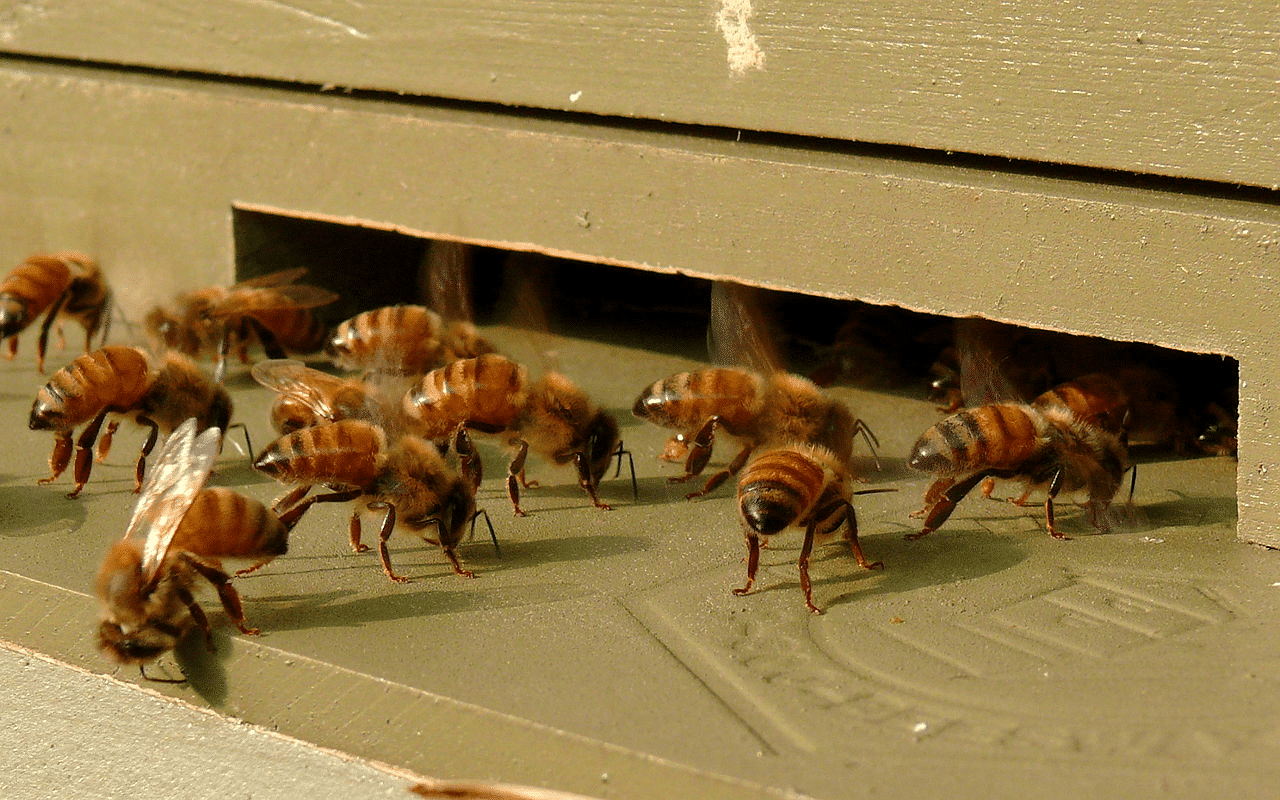
Workers fan their wings to move air, helping cool the colony and evaporate water from nectar. Air movement also depends on hive openings, wind and temperature differences. It is too simple to assign one airflow mechanism to winter and another to summer; bees respond to local conditions and the colony’s activity.
Winter cluster
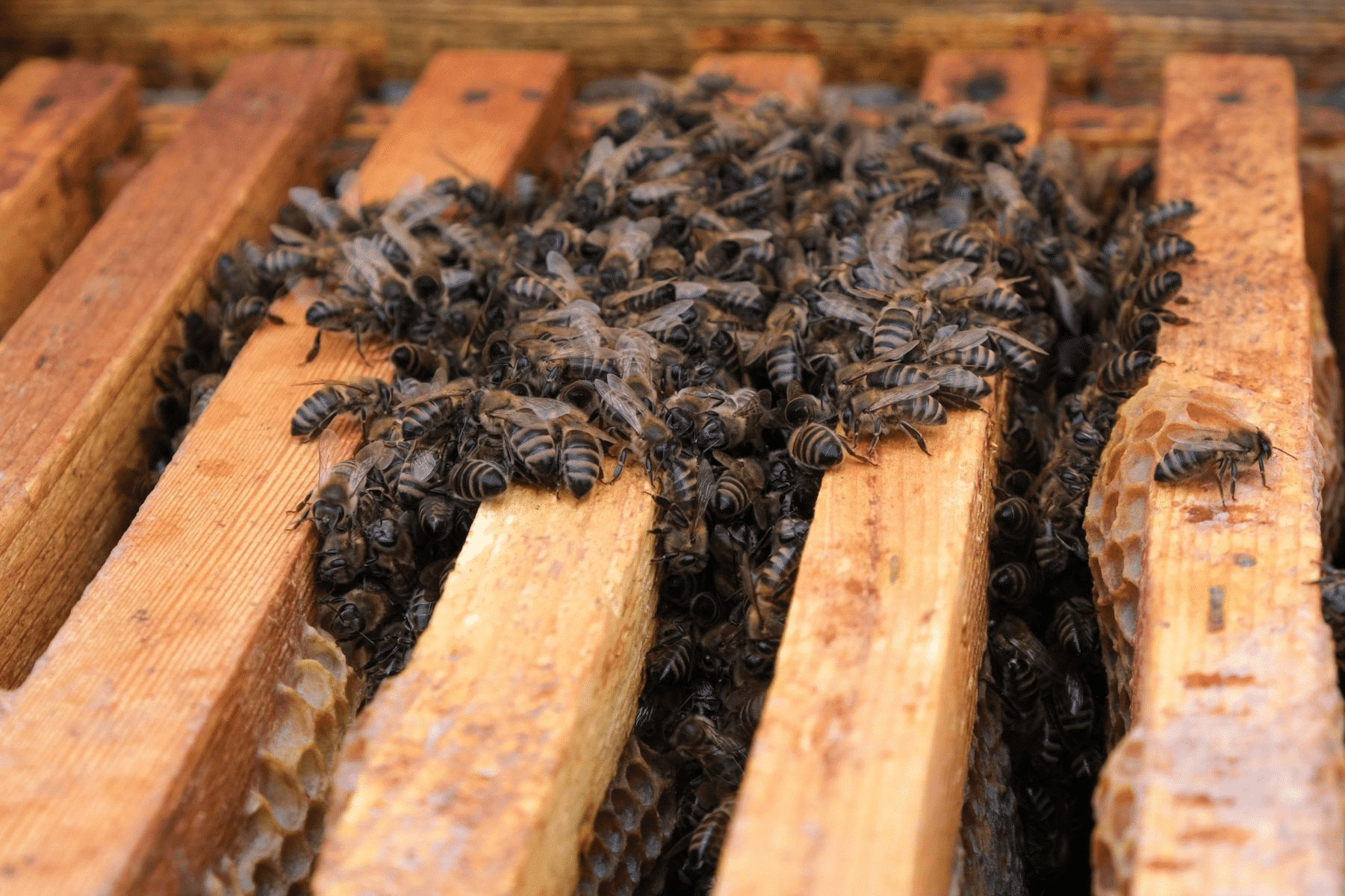
During cold weather, bees form a winter cluster and generate heat using their flight muscles, fuelled by food stores. Conditions in the cluster change with colony size, weather and whether brood is present. Bees maintain the occupied cluster and brood area; they do not keep every corner of the hive at a uniform brood-rearing temperature.
Local regulation
Temperature and humidity vary across the hive. The brood nest, honey stores, outer combs and space near the entrance can have very different conditions. Interpret any measurement in that context, and avoid opening a winter cluster repeatedly just to obtain a reading.
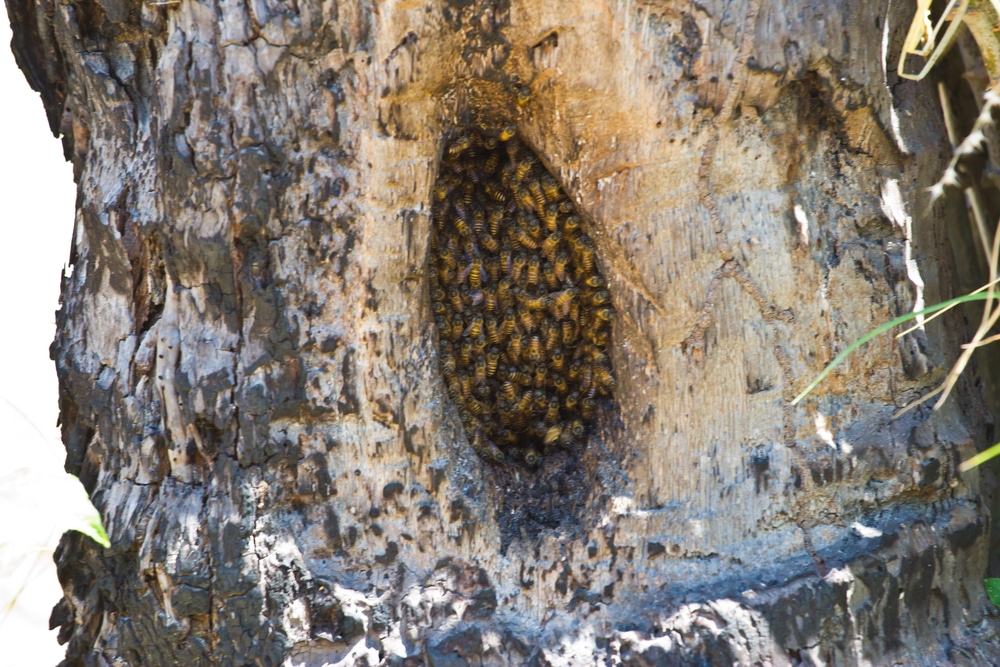
A tree cavity is not a moisture-free hive. Wood can take up and release some moisture, while wall thickness, entrance position and cavity shape influence heat and water movement. These features differ from those of a thin-walled hive box. Copying the absence of an upper opening alone does not reproduce the whole tree-cavity environment.
Condensation and other related problems
Water vapour from colony metabolism and other sources can condense when air meets a surface below its dew point. A cold inner cover above the cluster is a particular concern because droplets may fall onto bees. Persistent damp can encourage mould on comb or equipment, but it does not by itself prove a particular disease or explain every winter loss. Also check for rain leaks: not all water inside a hive is condensation.
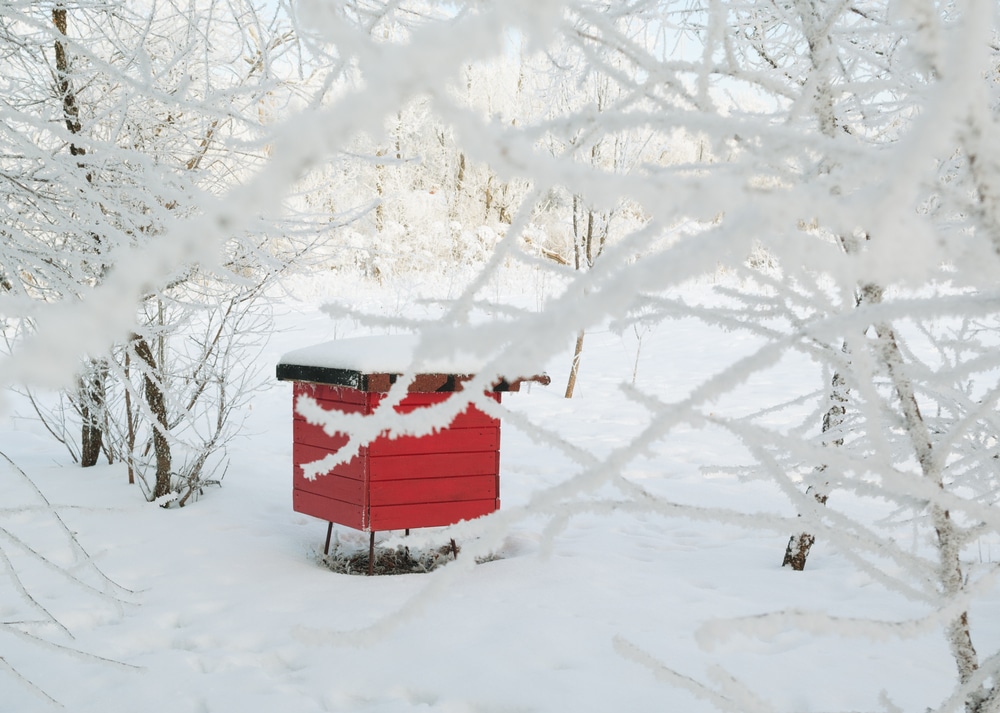
The aim is to prevent damaging water accumulation without making the bees spend unnecessary energy replacing lost heat. Roof condition, site exposure, insulation, colony strength, food access and air exchange all belong in that assessment.
Hive ventilation: yes or no?
Two common winter arrangements are an upper moisture outlet and an insulated top without an upper opening. Neither should mean blocking the entrance or sealing the colony hermetically. The design of the floor, entrance, inner cover and roof must work together. The B-THENET practice summary on ventilation describes the moisture-management trade-offs and the need to adapt equipment to conditions.
Ventilated hives: benefits and precautions
An upper outlet can let moist air escape. However, uncontrolled airflow also carries heat away, especially at exposed sites. The useful opening size depends on the hive and local conditions; more ventilation is not automatically better.
Warm air leaving through a high opening can draw replacement air through a lower one: the stack or chimney effect. Wind also changes airflow. This is a physical consequence of the arrangement, not proof that every upper entrance is harmful. Avoid creating a direct, unnecessary draught across the cluster.
Monitor the outcome: overhead droplets, wet equipment, blocked entrances and unusual food consumption are more useful than allegiance to one method. Adjust cautiously for weather and hive design, using local experience. A weak colony cannot be assumed to compensate for arbitrary heat losses simply because bees can produce heat.
Insulated hives without upper ventilation
The second approach keeps the top well insulated and has no deliberate upper opening, while retaining appropriate lower air exchange. A warmer inner ceiling can reduce the risk of condensation directly above the bees. It does not guarantee that all condensation disappears; any water must be managed without wetting the cluster. Practical points include:
- Insulate to reduce heat transfer, especially through the top. Insulation helps retain an indoor–outdoor temperature difference; it does not work by making the two temperatures equal.
- Keep the entrance and the lower air-exchange route appropriate to the design clear. Do not assume that insulation forces a guaranteed circular airflow. Removing one or two outer frames is not a general ventilation prescription: it changes space and stores and should only be part of a deliberate, locally appropriate setup.
- Where the floor design requires it, use a slight forward tilt on a stable stand so liquid on the floor can drain towards the entrance. Tilting does not prevent condensation on the ceiling and does not replace roof insulation.
- If using a moisture quilt or absorbent board, follow a design that allows it to dry or be checked and replaced. Simply putting absorbent material above an impermeable inner cover may not intercept moisture from below. Keep loose fibres and unsuitable materials out of contact with bees and honey.
So, what should I do?
Start with a weatherproof roof, a suitable site, adequate food stores, a healthy colony and a clear entrance. Then assess insulation and moisture management as one system. Do not use ventilation changes as a substitute for checking colony health or food access.
There is experimental support for insulation, but it should be interpreted precisely. A randomised Illinois trial of 43 colonies found lower food consumption and better survival in covered colonies. The tested setup included top insulation and upper entrance holes; it therefore does not establish that closing all upper openings is always best. It is evidence for that system under the study conditions, not a guarantee for every climate.
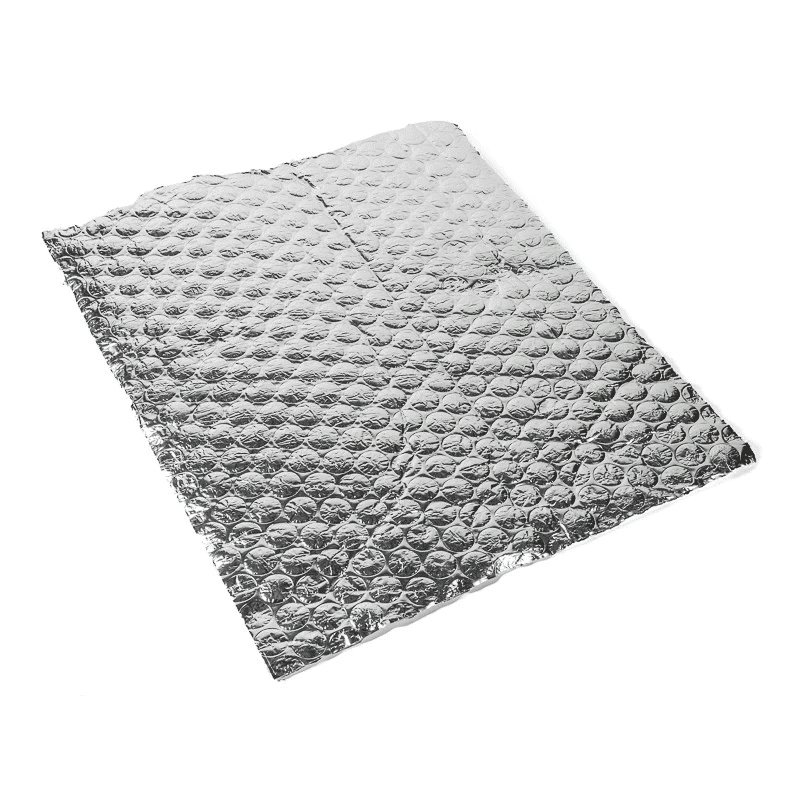
Choose a locally proven arrangement that fits your hive construction and climate, then watch how it performs. A dry, insulated top and controlled air exchange can be complementary. For reflective products, Virginia Cooperative Extension explains the role of the air gap; that is general insulation physics, not a beehive-product performance test. Make changes based on the whole setup, rather than treating either “ventilate” or “seal the top” as a universal rule.
Frequently asked questions
Should hives be ventilated in winter?
They need appropriate air exchange, but the best arrangement is not the same for every hive. An upper outlet can release moisture but also lose heat. A well-insulated top without an upper opening is another approach, provided the entrance and suitable lower air exchange remain clear. Never interpret this as a recommendation to make the hive airtight.
Why does water condense inside a hive?
Water vapour can condense on a surface below the local dew point. A cold inner cover may collect droplets above the cluster. Insulation, temperature, airflow and water production all affect this. Check for roof leaks too: water entering from outside requires a different correction.
What is worse for bees: cold or moisture?
Neither should be dismissed. Cold increases the demands on the colony, particularly when it is small or cannot reach enough food. Dripping water can further compromise the cluster, while persistent damp can encourage mould. Winter survival also depends on health and management; humidity alone is not a complete explanation for losses.
How can I stop condensation dripping onto the bees?
Check the roof for leaks and improve the top insulation as appropriate to the hive. Use a coherent ventilation or moisture-quilt arrangement, keep entrances clear and monitor for persistent damp. A slight forward tilt may drain water on some solid floors, but it cannot stop droplets forming on an inadequately insulated ceiling.
How do bees regulate hive temperature?
They generate heat with their flight muscles, cluster in cold weather and fan to move air when needed. Water evaporation contributes to cooling. Conditions vary between the brood nest, cluster and unoccupied parts of the hive, so one sensor does not represent the temperature of the whole colony.
Are hollow trees free from condensation problems?
No. A tree cavity has different wall thickness, geometry and moisture behaviour from a standard hive. Wood can buffer some moisture, but that does not eliminate condensation or guarantee colony survival. Closing an upper opening in a thin-walled box does not recreate all the conditions inside a tree.
Continue reading
- Preparing the apiary for wintering, the rest of the preparation.
- Hive monitoring (Spanish guide), for trends without frequent opening.
- Choosing an apiary site, including drainage, sun and shelter.
- How to paint and protect hives, external protection.

ISNI 0000 0005 1801 1100 | Joshua Ivars is the manager of LA TIENDA DEL APICULTOR and the author of this blog, where he shares technical and practical guidance for beekeepers. Drawing on extensive experience in the beekeeping sector, he offers advice and solutions based on beekeepers’ real needs, sharing his knowledge of equipment and essential beekeeping practices.


