
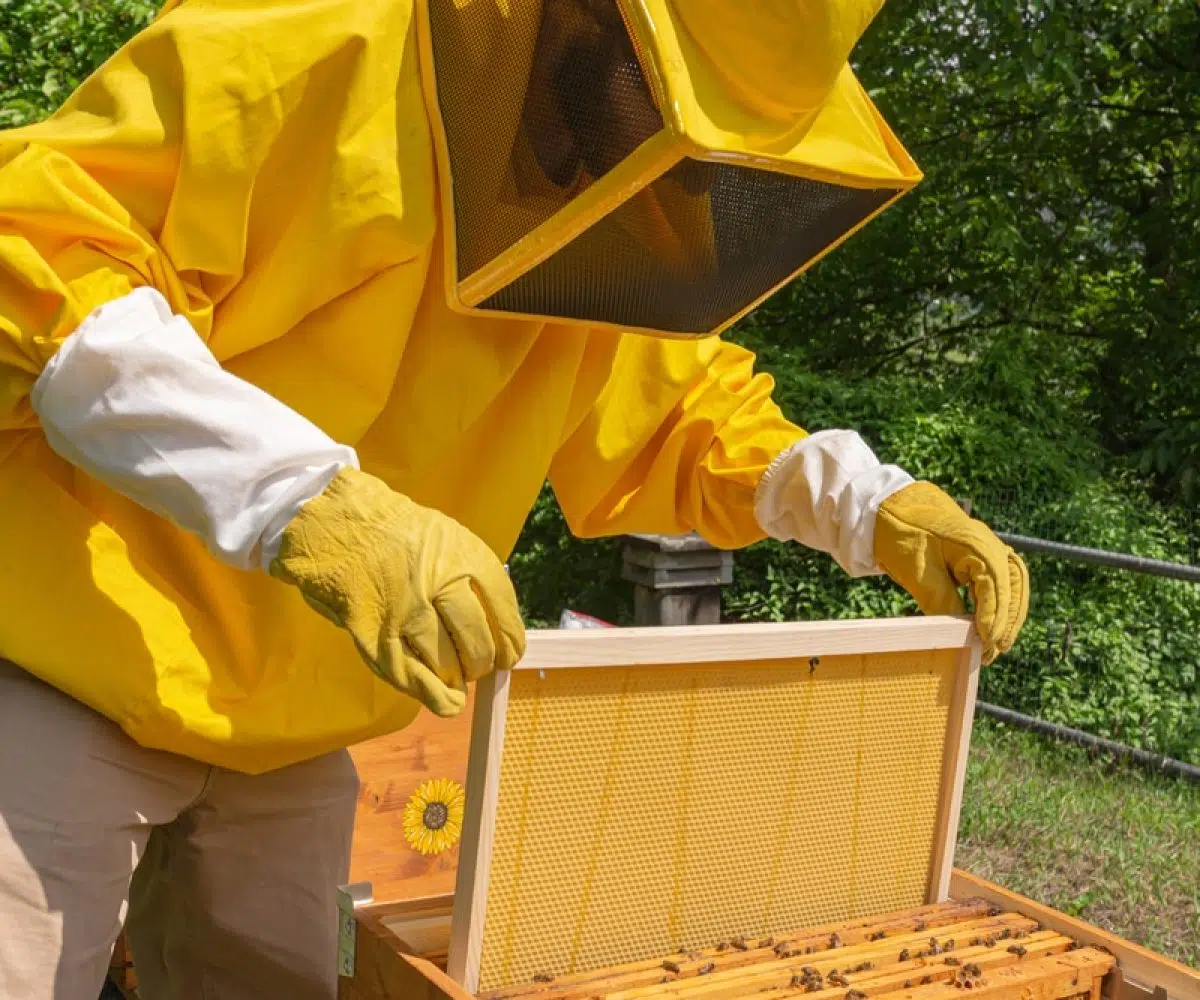
Wax foundation is often readily accepted; plastic can save assembly work and provide a durable base. Neither is best in every apiary. Compare colony response, equipment, comb-renewal plans and the value of your workshop time. Most importantly, distinguish a complete plastic frame from a plastic foundation sheet fitted inside a wooden frame.
| Plastic frames / foundation | Beeswax foundation | |
|---|---|---|
| Bee acceptance | Wax coating and introduction conditions are important | Often readily accepted; colony demand still matters |
| Working life | Base may be reusable; renew old comb and assess hygiene | Renew brood comb systematically; no universal sheet expiry |
| Preparation | One-piece units save assembly; sheets need a frame | Fit and support the sheet as required by the frame |
| Heat | Product-specific limits; may warp or be damaged | Softens and can sag or melt |
| Extraction | Rigid support helps; follow equipment limits | Support the comb and increase speed gradually |
| Residues | A new base is not a guarantee about its wax coating | Wax history and quality controls matter |
| Recovery / disposal | Scrape off wax where suitable; handle plastic separately | Render the wax, not the wooden frame |
| Cold climates | No universal disadvantage established here | Not an automatic guarantee of better winter survival |
Why the choice matters
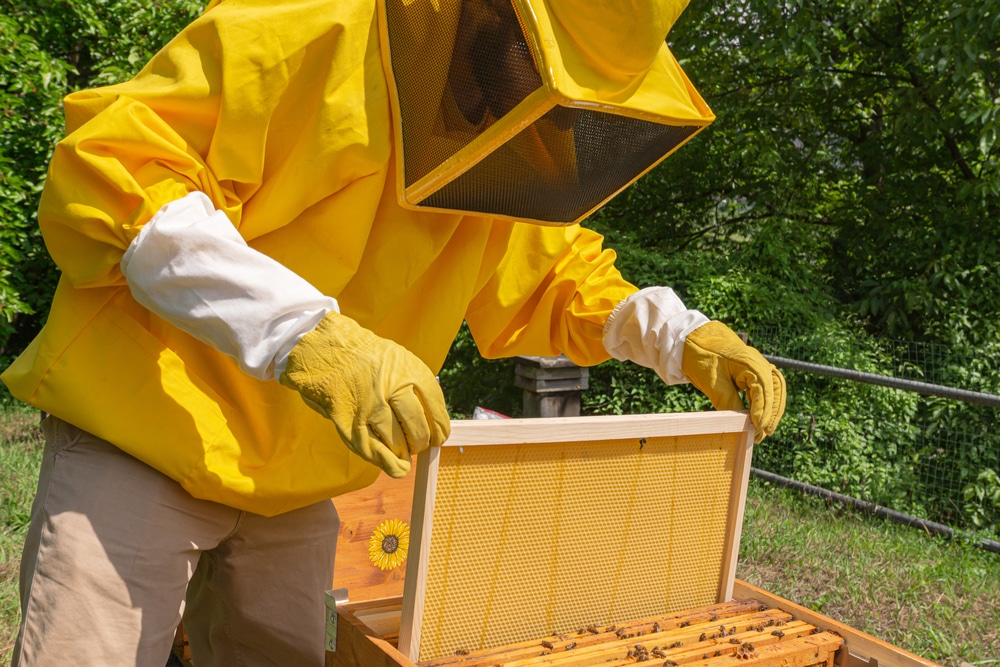
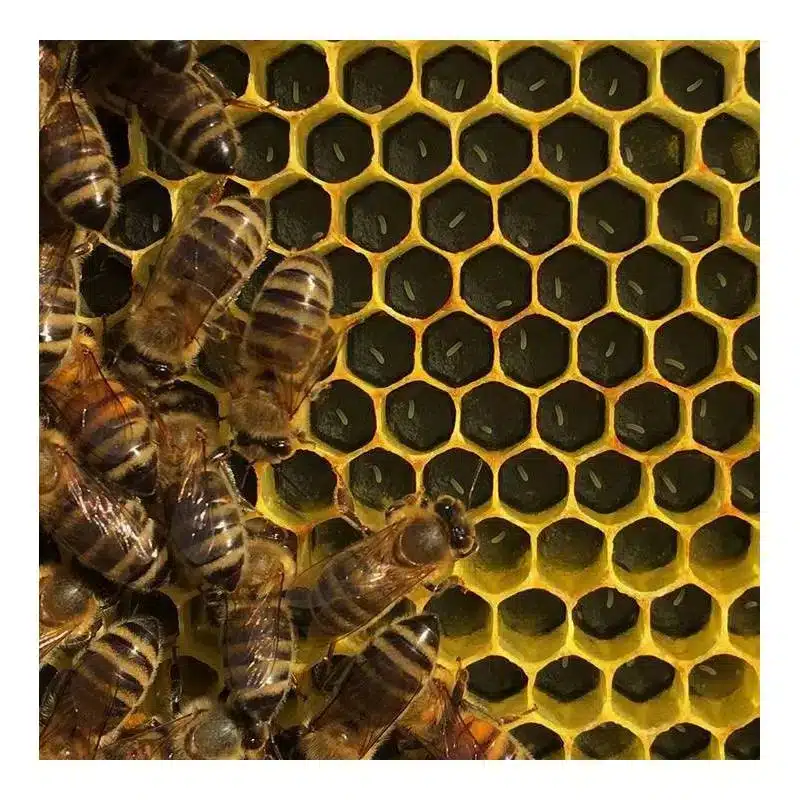
Beeswax foundation provides an embossed starting surface on which bees build comb for brood and stores. Plastic alternatives include both separate sheets and one-piece frame-and-foundation units. Dadant’s component guide distinguishes these formats: a snap-in sheet still needs a suitable frame, while an assembled one-piece unit eliminates frame assembly and wiring.
The practical questions are legitimate: will the colony draw it well, how will it be cleaned and renewed, and what happens at the end of its useful life? The environmental comparison also depends on service life, wax sourcing and local waste handling. Material alone does not establish a complete environmental advantage.
Plastic frames and foundation
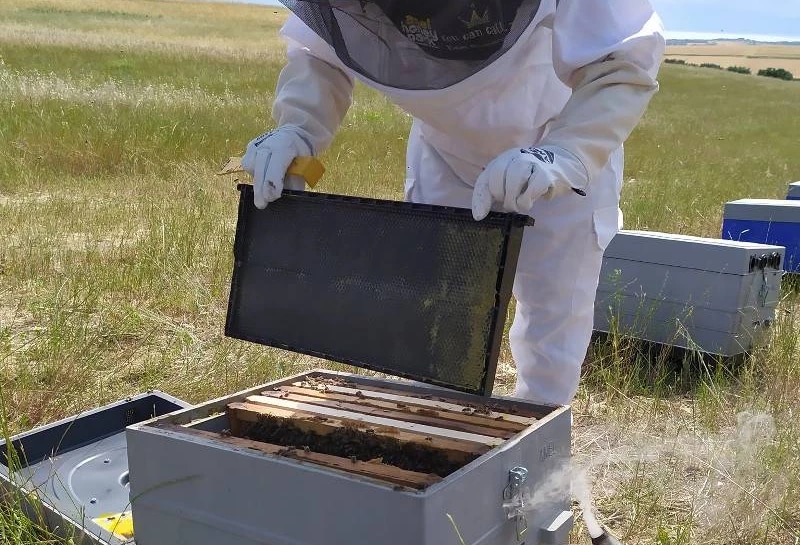
Potential advantages
- Less assembly work. One-piece frames need no assembly or wiring. Plastic sheets snap into compatible wooden frames, although those frames must still be assembled. Check whether the product needs additional wax coating.
- A robust base. Plastic foundation supports the wax comb during handling and extraction. It is not indestructible: heat limits, impact resistance and suitable extractor speeds depend on the product and the condition of the comb.
- Potential for reuse. A sound base may be cleaned and re-waxed, subject to disease precautions and the manufacturer’s instructions. National Bee Unit cleaning guidance warns that flame scorching is for suitable wooden components, not plastic. Do not assume that washing makes diseased equipment safe.
- No old brood history in a new base. That differs from reusing an old comb, but it is not a guarantee of zero residues. Check the source of the wax coating and keep a comb-renewal programme.
- Visual contrast. A dark background can make pale eggs easier to see. Choose colour for inspection needs rather than assuming it improves colony performance.
Limitations and management needs
- Acceptance can need attention. Beeswax coating often helps, as does introducing foundation when the colony is actively building. A nectar flow is favourable, but neither “never without a flow” nor “always accepted once coated” is a reliable rule.
- A fixed central sheet. Bees cannot chew a passage through solid plastic as they can through wax. Use a compatible frame design and correct bee space; do not treat this difference alone as proof that a colony cannot reach its stores.
- Cold-weather management still matters. New comb construction and access to stores depend on colony conditions. The evidence discussed here does not establish that all plastic performs worse in cold climates.
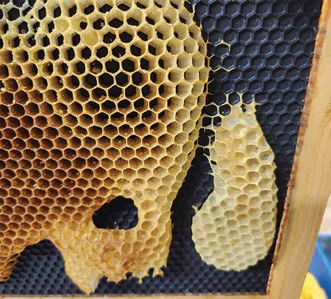
Avoid poor acceptance at introduction
Introducing poorly coated plastic when a colony has little reason or capacity to build comb can lead to delayed acceptance or uneven construction. Check the coating and frame spacing, introduce a manageable amount during suitable comb-building conditions, and inspect the result. Straight drawn comb can provide a guide, but do not split a small brood nest with sheets of foundation in cold weather. Correct awkward comb before it becomes heavily used; failure to draw one frame neatly does not automatically make the whole box unusable.
Beeswax foundation
Potential advantages
- A familiar building surface. Good wax foundation is often readily drawn when the colony needs comb. Acceptance still depends on colony strength, food and correct installation.
- Bees can modify the material. They can reshape wax and make passages, although sensible comb arrangement and access to stores remain necessary.
- Wax can be recovered. Rendering wax from frames means melting out the wax, not melting the wooden frame. Ordinary melting does not guarantee removal of chemical residues or disease spores; keep suspect material out of a clean wax cycle.
Limitations and management needs
- Preparation takes care. Assembly, fitting and support requirements depend on the frame and foundation. Pre-wired sheets and assembled frames can reduce the work.
- A more fragile starting sheet. Wax foundation and new comb can be damaged in storage or handling. Distinguish this physical fragility from the need to renew old brood comb for hygiene.
- Sensitivity to heat. Unsupported wax can sag, soften or melt. Store foundation properly and follow suitable temperature limits when handling comb.
- Stored comb needs pest protection. Wax moth can damage comb, especially used brood comb. Plastic does not make the wax built on it immune to pests.
- Extraction needs a gradual start. Use suitable support and speed for the frame, comb age, honey and extractor. Well-supported wax-foundation comb is routinely extracted; there is no single universally safe “slow” or “fast” setting.
Wax quality matters in both systems. Recycled wax may contain treatment residues or be adulterated with other substances. The consequences depend on the contaminant and its concentration; not every batch has the same risk. Buy traceable wax and ask about quality controls. The thin wax coating on plastic is still wax, so a new plastic base is not proof of a residue-free comb. Our article on beeswax quality discusses this issue further.
What do trials tell us?
In a 1977 study of specific moulded plastic combs, Detroy and Erickson reported greater wax production and slightly less honey in supers containing plastic comb than in supers with the same number of wax combs drawn on foundation. The comparison concerned those designs and conditions, not every plastic foundation sheet sold today. The study also found that changing the number of plastic combs in a super affected yields.
B. F. Detroy and E. H. Erickson, The use of Plastic Combs for Brood Rearing and Honey Storage by Honeybees, Journal of Apicultural Research 16(3), 154–160 (1977). The publisher’s online date of 2015 is not the experiment’s publication year.
Comb construction uses colony resources, but this result does not establish a universal energy cost or honey-yield penalty for plastic. In Grant Gillard’s 2006–2007 SARE-funded field project in Missouri, acceptance changed substantially with placement and additional wax coating. Some comparisons reached similar comb coverage for plastic and wax. It was a practical, limited field project, not proof that one material always outperforms the other; its useful lesson is that management and preparation can change the outcome.
Which option should you choose?
| Your situation | A practical starting point |
|---|---|
| Many colonies and limited workshop time | Trial plastic for labour savings, including coating and follow-up work |
| Small-scale or hobby beekeeping | Wax is a straightforward option if you can fit it properly; plastic can also work |
| Cold climate or long winter | Prioritise stores, colony strength and comb layout; do not choose on a blanket climate claim |
| Your own wax supply | Consider a controlled wax cycle and foundation making, with quality checks |
| A mixed operation | Use both where they fit your equipment and management; record results before expanding |
Combining both systems can be reasonable. Do not choose plastic frames on price alone: include coating, installation, inspection and eventual renewal in the comparison. Betterbee’s foundation guide also notes the value of an extra wax coat and the different fitting requirements. Trial a few comparable colonies, record acceptance and harvest results, and only then consider changing the whole operation.
Do honey bees accept plastic foundation?
Yes, although acceptance varies. A suitable beeswax coating, a colony ready to build comb and adequate incoming food improve the chances of success. Bees do not build solely because foundation is present; check spacing, colony strength and how much new space you are asking them to draw.
How long do wax foundation and plastic frames last?
Separate the life of the frame or plastic base from the hygiene of the comb built on it. Old brood comb needs planned renewal in either system. Two to three years is a common rotation window, not a universal expiry date for every wax sheet or a reason to keep old comb indefinitely on plastic.
Does plastic reduce honey production?
The 1977 Detroy and Erickson trial reported slightly lower honey yield and greater wax yield with the particular moulded plastic combs tested. It does not establish a fixed penalty for all modern plastic foundation. Compare acceptance, yield and labour under your own conditions.
Is wax always better in a cold climate?
No universal climate ranking is established here. Bees cannot chew a passage through a solid plastic base, but that alone does not prove poorer overwintering. Colony strength, access to stores, comb arrangement and ventilation also matter. Avoid splitting a small brood nest with undrawn foundation in cold weather.
Can plastic and wax foundation be used in the same operation?
Yes. Keep frame dimensions and bee space compatible, introduce new foundation at a suitable time and inspect the result. Alternating undrawn wax and plastic can encourage uneven comb if bees favour one surface. Existing straight drawn comb can help guide construction, but do not break up a vulnerable brood nest.

ISNI 0000 0005 1801 1100 | Joshua Ivars is the manager of LA TIENDA DEL APICULTOR and the author of this blog, where he shares technical and practical guidance for beekeepers. Drawing on extensive experience in the beekeeping sector, he offers advice and solutions based on beekeepers’ real needs, sharing his knowledge of equipment and essential beekeeping practices.


