
 Apipasta with vitamins 15kg
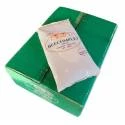 Beecomplet® Spring 14Kg
 Beekeeper suit with round veil
 Oxalic acid 1kg
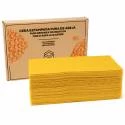 Beeswax Foundation 5kg
 Fresh royal jelly 20g
 Classic honey jar 1kg comb-lines TO77 - Pack of 16 units
 Promotor L Apis 1 litre
Asian Hornet Harps
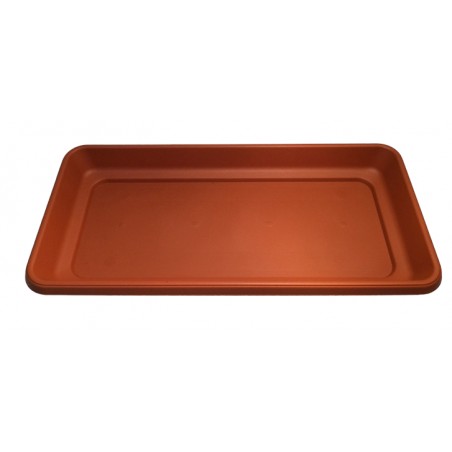
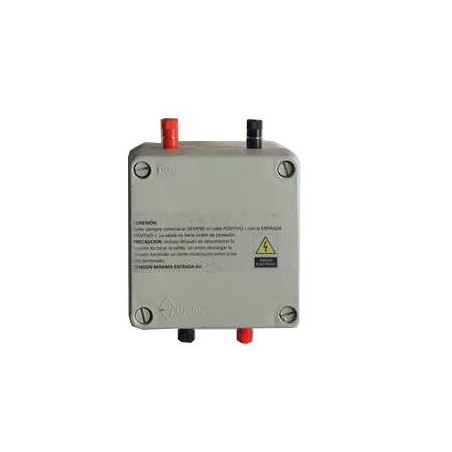
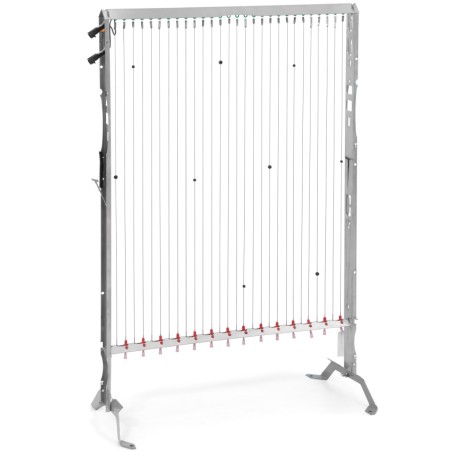
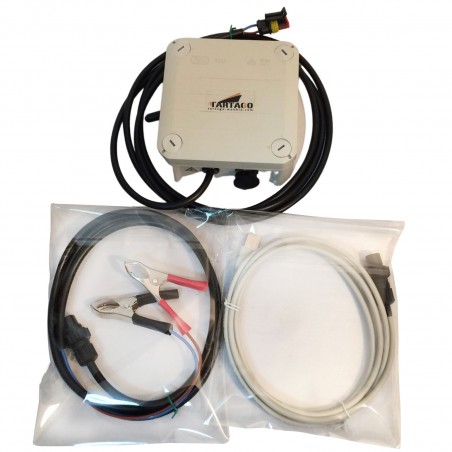
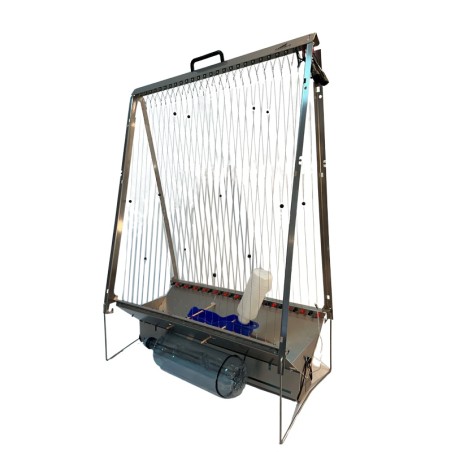
A grid of electrified wires 20 mm apart: a bee flies between them, an Asian hornet touches two at once and takes the shock. Here you will find the harp, the modules that power it — 5 to 10 harps each —, the tray and the extension leads to chain them together. From €12.50 for the tray to €259.95 for the complete kit.

When a harp is worth the money and when it is not
If I have Asian hornets working my hive entrances in August, the harp is the first thing I put up, for one concrete reason: it is the most selective thing I can have running that same afternoon. The Vigo and Santiago studies produced a figure that is hard to argue with about sweet bait — 1 % Vespa velutina out of everything caught, which means almost everything dying in there is pollinators that were bothering nobody — and the harp lifts that to 68 %. That said, I will be honest: there is something more selective than the harp, and that is the self-built entrance trap, which reached 95 % in the University of Girona's measurements. The catch is that you have to build it in winter, with low hives and a clear front. The harp you just plant, and it works.
What I would not do is buy a harp and think the job is done. The harp is local relief, not population control: workers range up to three kilometres, so the ones pressing you do not come from a nest of yours and they do not end at your entrance. What genuinely lowers the population is queen trapping from February to June — in Asturias, areas trapped at eight traps per square kilometre saw nest numbers drop by almost half. Mind how you trap, though: where pressure is brutal, the home-made bottle with old fermented honey works and costs next to nothing; where the hornet is still scarce, I would rather use a commercial selective trap with its own lure, because a bottle of sugar water there does take out what it should not. And in June they come down.
So when does it pay? Not by hive count, which is the usual mistake: the Girona figures say a small apiary can take more pressure per hive than a large one. What does not add up is the cost spread — harp, module and tray put you past €250, and across three hives that is a lot per hive. From ten upwards in an area where the hornet is established, the harp stops being a cost: it is what decides whether the colonies go into winter with a population or go in empty because they stopped flying. And before buying four modules, set the rows with the entrances facing each other and one harp in the middle — it protects up to ten hives.
Two things I would never do. Leave them live all year: during swarming and queen mating I switch them off, because the virgin queen goes out on her flight and the harp does not ask. And trust a harp I have not looked at for a month: I move it every two or three weeks and I count what is in the tray. More than four or five bees per hundred hornets and it is badly sited.
And the one that has cost me the most colonies to watch — which is also what the researchers keep insisting on: management first, hardware second. With a hornet in front of the entrance varroa goes unnoticed, and I have seen colonies written off to velutina that died of varroosis or of starvation. A strong colony, treated and with stores, defends its own entrance — hornets do not take on a well-manned entrance, they wait to one side for the foragers coming back loaded. If I have to choose between buying a harp and going into autumn with healthy, well-fed colonies, I go in with healthy colonies.
Asian Hornet Harps
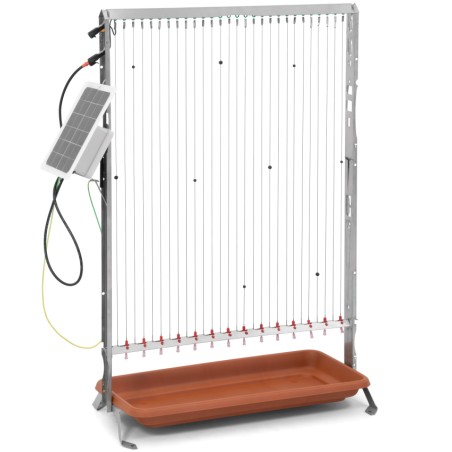
A harp is not a bait trap. It is a grid of electrified wires that stands in front of the hive entrance: tempered wire of Ø 0.30 mm, all but invisible, spaced 20 mm apart. That spacing is the whole mechanism — a bee flies between two wires without touching them, an Asian hornet is wider, closes the circuit and drops.
Selectivity is not a property of the device
This is the most misread point. It is often quoted that in bait traps only 1% of the catch is Vespa velutina — work by the University of Vigo and the University of Santiago de Compostela — and the conclusion drawn is that trapping kills blindly. Yet Asturias's queen-trapping programme, with the right trap and lure and in its season, closed 2025 with 109,000 hornets caught and this breakdown: 90% Vespa velutina, 7% Vespa crabro, 3% other wasps and a negligible fraction of bees.
So the reading is not "this device is selective and that one is not": selectivity comes from the whole set-up — trap, lure, time of year and location. Sweet bait in a wide mouth in August kills everything; a specific lure in spring, in an area with nest-producing queens, lifted in June, barely touches anything else. By that yardstick the harp catches 68% velutina and a well-built entrance trap reaches 95% (25,000 catches measured by the University of Girona). The harp is not the most selective thing out there: it is the most selective thing you can buy ready-made and have running the same afternoon.
What the harp does not fix, and what it does
It does not destroy the nest. Workers range up to 3 km — confirmed by marking them — so the pressure at your entrances does not come from one nest and is not settled at the entrance: what lowers the population is spring queen trapping. If you find a nest, do not disturb it; report it to the competent authority.
What it does fix is the part that actually costs money, and it is not the bees eaten: it is the colony that stops flying. A queen lays on the order of a thousand eggs a day at peak and the hornet takes them one at a time; as long as the bees keep flying, the arithmetic holds. Once the colony shuts down you lose the August and September matings, the late flow never comes in, and colonies have been measured losing 5 kg in three months. A study by the USC with the Portuguese national beekeepers' federation put a price on it: +15% on feeding, −20% honey production and an average of €13.35 per hive per year. And mind the side effect: with a hornet in front of the entrance, varroa goes unnoticed. Plenty of colonies written off to velutina died of varroosis or of starvation.
Where exactly it goes
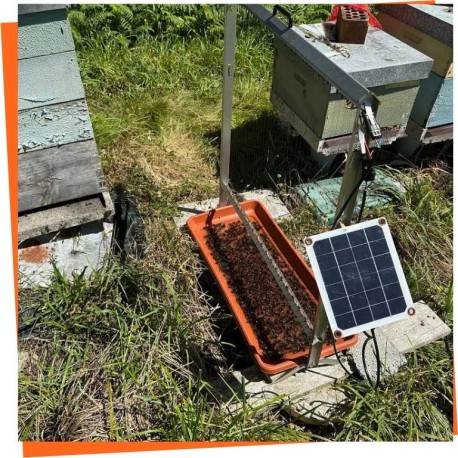
The harp goes parallel to the hive entrances — spanning across in front of them, not edge-on — and 30-40 cm from the entrance. That distance is the balance point: any closer and you start electrocuting your own bees, any further and the hornets simply fly around it. The hornet has to be forced to pass through the wires, and pallets or a side net that narrows the gap will funnel its flight into the harp.
The three parts of the system
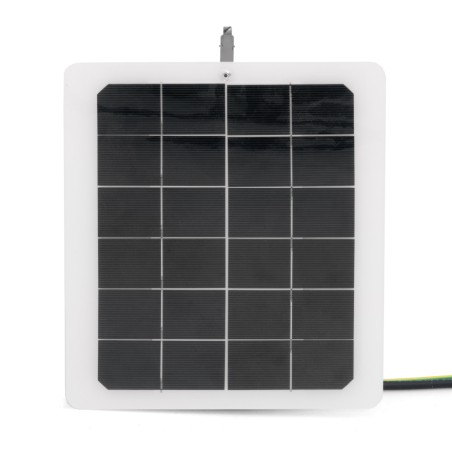
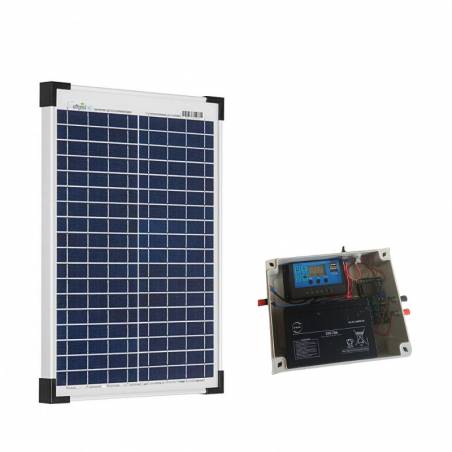
A harp on its own does nothing. You need harp + electrical module + tray. Starting from scratch, the complete kit (€259.95) brings all three with a solar panel; if your harps are already up, what you are buying is the module.
- How many harps each module powers. This is the figure that decides the purchase and almost nobody publishes it. The 1,500 V modules run up to 5 harps: the universal one (€121), which takes mains via USB, a 6 or 12 V battery and any panel from 5 to 32 V, and the 10 W solar one (€145). The 2,200 Vdc modules run 8-10 harps: the standalone board for your own battery (€69.95, IP55 enclosure) and the kit with a 7 Ah battery, 20 W panel and timer (€160).
- Voltage is not enough to decide: check the connector. The Tartago harp works with both 1,500 V modules and also with the standalone 2,200 Vdc board. The one it does not take is the board kit with battery and 20 W panel (€160), which is built for another maker's harps — and it delivers exactly the same 2,200 Vdc as the standalone board, which does fit. A module that will not couple to your harp is the expensive mistake in this category.
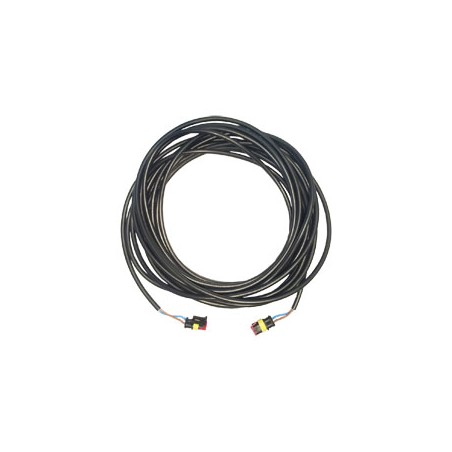
- How many harps your apiary needs. One at the start and one at the end of each row, plus one every five hives. With five hives, three harps: start, middle and end. And the trick that genuinely saves money — set two rows with the entrances facing each other and put a single harp in the middle, and that one harp covers up to ten hives. The 10 m leads for chaining harps to one module cost €44.75; a new module runs €121 to €160.
- The tray tells you whether it is sited correctly. The water should hold 4 or 5 bees per 100 hornets. Above that ratio the harp is too close to the entrance — check the 30-40 cm — or badly oriented, and the answer is to move it. It is the only reliable check you have, and it only works if the tray holds water: an electrocuted hornet falls stunned, not always dead, and in the shade it can come round and fly off. And an honest warning: if an electrical fault drops one bee onto the wire, a ball of bees follows it to the same spot — all the more reason not to leave a harp alone for three weeks.
- When NOT to keep them live. Harps work from June to October, when workers hunt in front of the entrances. During swarming and queen mating it is best to switch them off: the virgin queen goes out on her flight and the harp does not discriminate. And move them every two or three weeks, because hornets learn to avoid a fixed obstacle.
Does the electric harp kill bees?
The wires are 20 mm apart precisely so that it does not. A bee flies between two wires without touching both at once, which is what closes the circuit; the hornet is wider and cannot. Something always falls, so the tray is your reference: 4 or 5 bees per 100 hornets. Above that the harp is too close to the entrance — it should sit 30-40 cm away — or badly oriented, and it needs moving.
How many harps does my apiary need?
One at the start and one at the end of each row, plus one every five hives. With five hives that is three: start, middle and end. If you set two rows entrance to entrance and put one harp in the middle, that single harp covers up to ten hives — the cheapest way to cover a mid-sized apiary.
Which electrical module goes with my harp?
By number of harps and by coupling. The 1,500 V modules run up to 5 harps; the 2,200 Vdc ones, 8 to 10. The Tartago harp takes both 1,500 V modules and the standalone 2,200 Vdc board; the one it does not take is the board kit with battery and 20 W panel, built for another maker's harps. Look at the connector, not just the voltage. To hang several harps off one module you use the 10 m leads.
When do the harps go up and when do they come down?
They go up from June, when workers start hunting in front of the entrances, and they work until October. It is best not to keep them live during swarming or queen mating, because the virgin queen goes out on her flight. At the end of the season the harp comes apart and stores folded.
Does the tray need water in it?
The tray is what closes the system. An electrocuted hornet falls stunned but not always dead: in the shade it can come round and fly off. With water — and a few drops of soap to break the surface tension — the catch is final, ants and birds do not carry it away, and you can count it to see whether pressure in your area is rising or falling.