
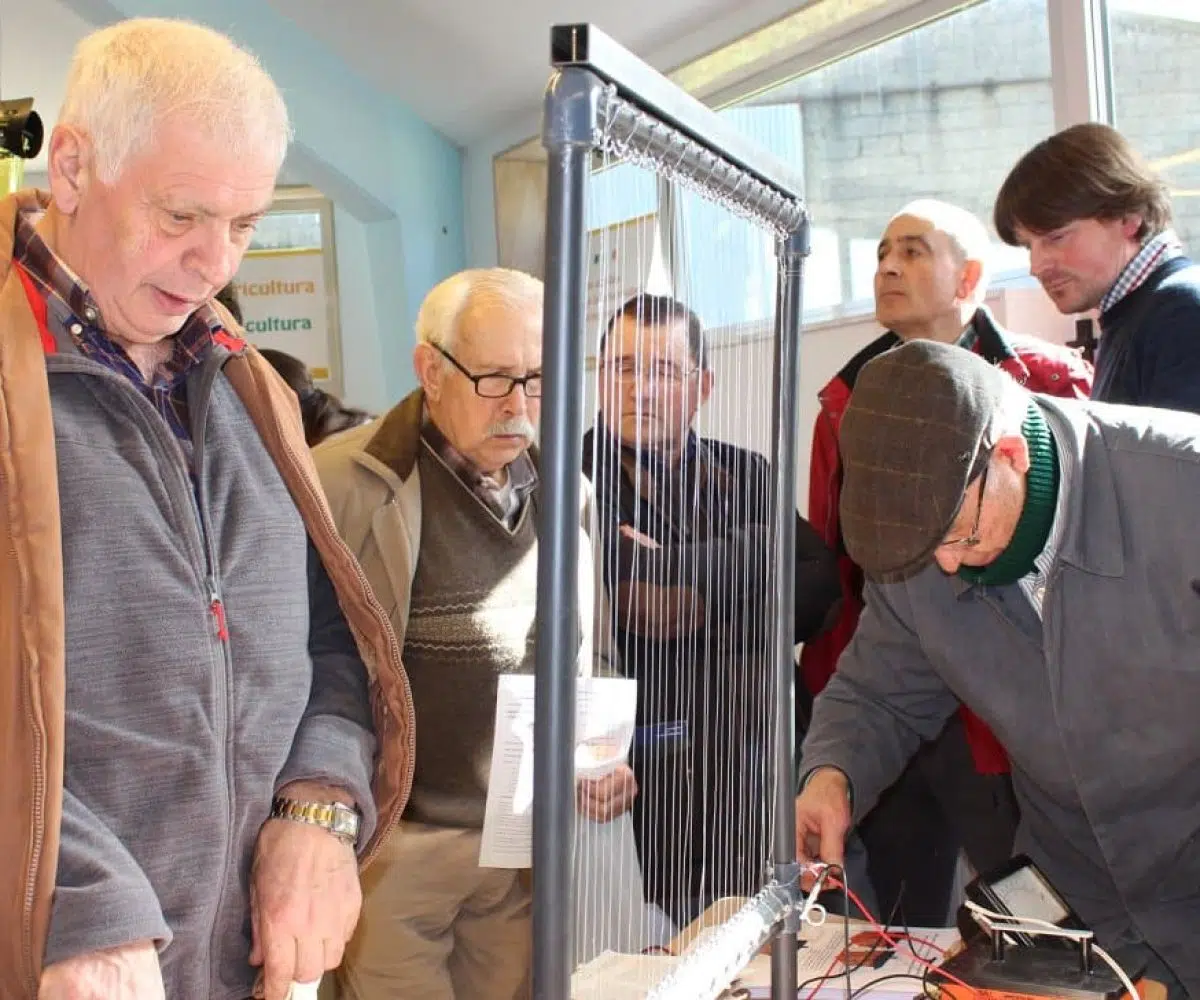
Introduction to trapping Vespa velutina
Since its arrival in Europe, Vespa velutina, also known as the yellow-legged hornet, has become a serious concern for beekeepers in affected areas such as Galicia. Management should focus on measurable protection of colonies, appropriate surveillance and coordinated nest control. Trapping is not automatically effective or selective: the method, season and non-target catch all matter.
Different trapping methods serve different purposes. The seasons below are indicative; local climate, hornet activity and the competent authority’s current guidance take precedence over fixed dates.
🗓️ Trapping calendar at a glance
| Phase | When | What to use |
|---|---|---|
| 👑 Queen trapping | Spring, according to local guidance | Only where monitoring or a coordinated programme calls for it: traps with escape routes for non-target insects. Check captures frequently, ideally daily; do not assume a caught queen equals one nest prevented. |
| 🐝 Worker hornet trapping | When predation occurs, usually summer–autumn | Electric harps can protect attacked hives. Evaluate predation and non-target catch before and after installation; baited traps require their own justification. |
An entrance of 8 mm does not exclude honey bees or smaller insects. Selectivity also depends on separate escape openings and preventing insects from drowning in the bait.
Spring queen monitoring and trapping
The foundress queens emerge after winter and seek nesting sites. Queen trapping may form part of a local monitoring or coordinated control programme, but its value cannot be judged from captures alone. Baited monitoring traps with suitable escape openings are preferable to indiscriminate drowning traps. Check them frequently, release non-target insects safely and follow local rules for handling suspected Asian hornets.
Worker hornet pressure in summer and autumn
As hornet colonies grow, worker hornets hunt honey bees and other insects to feed their larvae. Install electric harps when observations show predation at the hives, not simply because June has arrived. Sugar-based baits can attract workers but also other insects.
During summer and autumn, worker activity often increases. Watch for bees becoming reluctant to forage and for repeated hunting at entrances. Electric harps can reduce this pressure, but their performance depends on layout and local conditions. They do not eliminate every attack or destroy the hornet nest.
Selective trapping and hole size
A trap should be assessed for selectivity, not just for the number of hornets it catches. An entrance of 8 mm also admits smaller insects, including honey bees. They need suitable escape routes, and the bait should be separated from the capture chamber to prevent drowning. Fermented attractants are not species-specific: inspect the catch and stop or modify a trap that harms non-target wildlife.
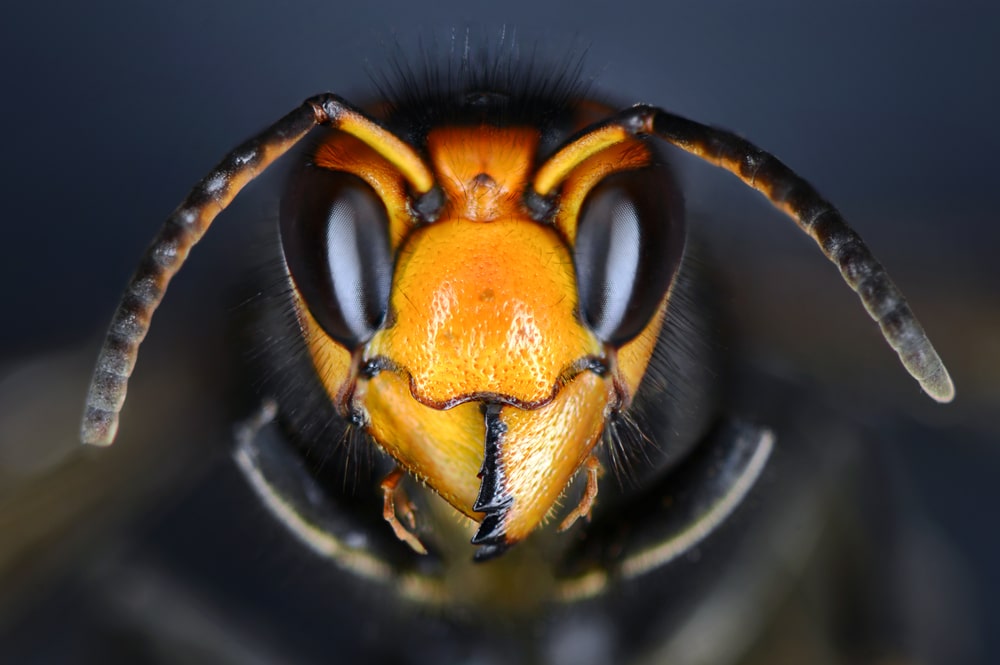
Life cycle of Vespa velutina
The annual cycle of Vespa velutina helps explain when different problems arise. Overwintered queens establish small nests in spring; workers later take over much of the foraging. Some colonies move to larger secondary nests. Males and new queens are produced towards the end of the season; after mating, surviving young queens overwinter. Timing varies with climate, so inspect activity locally rather than relying on a rigid calendar.
Distinguish the purpose of queen trapping from protection against worker hornet predation. Neither capture counts nor a fixed seasonal timetable demonstrate population control. Keep any trap as selective as possible and coordinate suspected nest reports with the appropriate local service.
Types of traps for controlling Vespa velutina
To effectively combat the threat posed by Vespa velutina, it is essential to understand the different tools available. Below, we describe the most common types of traps and how they can be integrated into an effective control strategy.
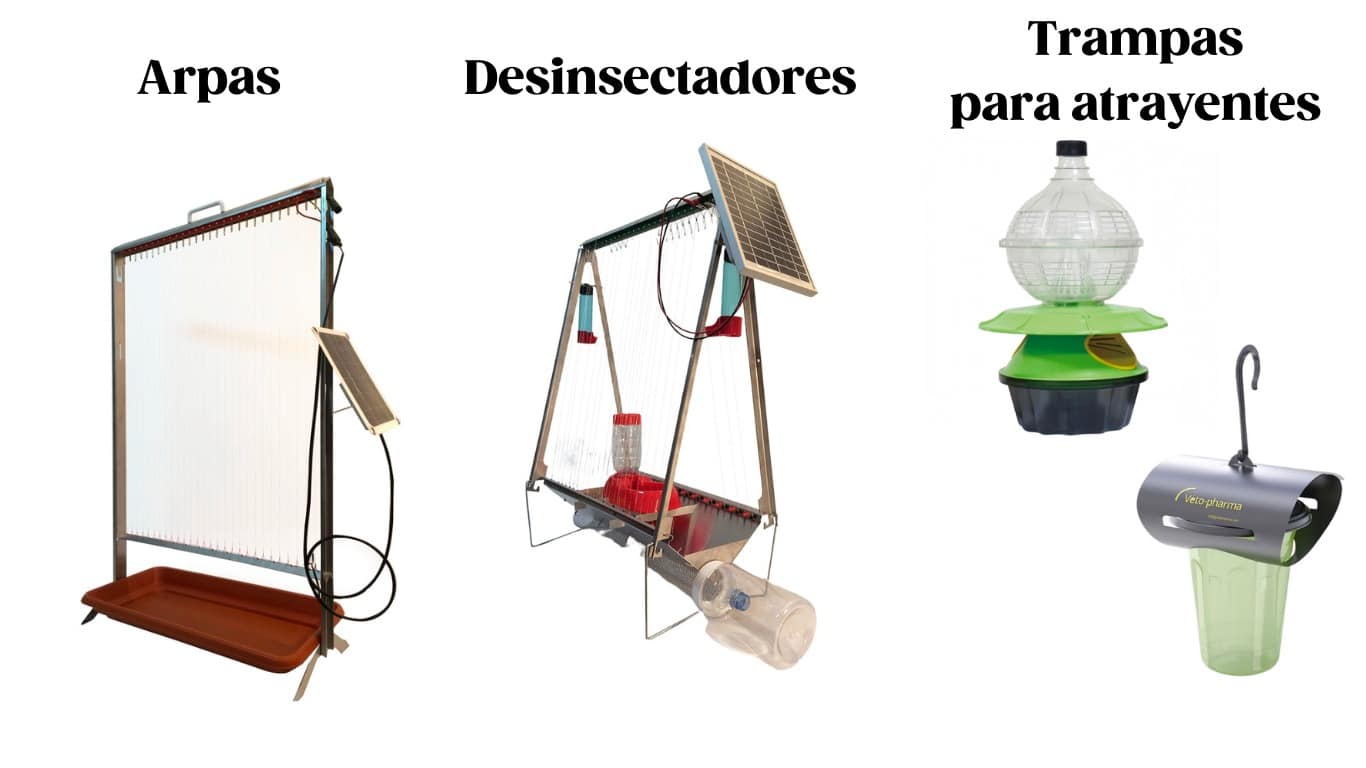
Worker hornet trapping with electric harps
- Trap type: Unbaited interception device
- Usage season: Summer and autumn
- Mechanism: Positioned to intercept hunting hornets. Contact with two adjacent wires completes the circuit and delivers a shock; the collection system must minimise non-target deaths.
- Effectiveness: field trials show that electric harps can reduce immediate predation pressure, although they do not prevent every attack.
Although they do not eliminate Vespa velutina nests, they help reduce the number of active worker hornets near apiaries.
Recommendation: Install harps when observed hornet predation justifies them. A possible deterrent effect is not a substitute for checking bee flight, hornet activity and bycatch. The number and placement of devices should be based on the apiary layout and equipment instructions, not a universal minimum.
One option is the dry electric harp, with a cage or collector below the wires. Shocked hornets fall into the collector, while suitable mesh openings can allow smaller insects to escape. Inspect the collector regularly: this design is intended to reduce bycatch, not to guarantee zero harm.
Dry collection systems can be easier to maintain than water trays because there is no liquid to refill or replace. However, ease of maintenance does not establish effectiveness or selectivity. Check the actual catch and follow the manufacturer’s maintenance instructions.
The most practical and effective arrangement is the one that demonstrably reduces attacks at your hives while keeping non-target catches low. Compare observations before and after installation, particularly during summer and autumn.
Baited monitoring traps
- Trap type: Attractant-baited device
- Usage season: According to the purpose of monitoring and the local control programme
- Mechanism: A food-based lure attracts hornets into a capture chamber. Sugar-based and fermented lures can attract both queens and workers, as well as non-target insects; no simple alcohol-versus-sugar rule guarantees selectivity.
- Effectiveness: Capturing foundress queens can assist monitoring, but captures do not establish how many mature nests have been prevented. Measure non-target catch as well.
Recommendation: Use monitoring traps only where justified by risk, observed presence or a coordinated programme. Inspect them frequently, ideally daily, and follow the manufacturer’s bait-replacement interval. A fortnightly bait change is not a sufficient schedule for checking live non-target insects.
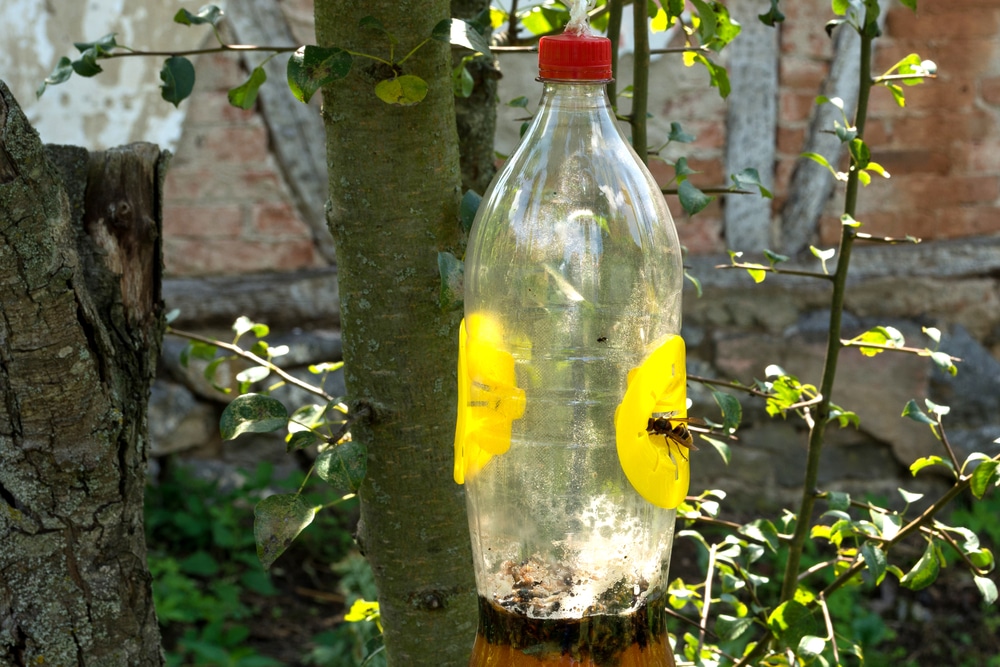
These baited traps do not require added insecticide. Alcoholic and fermented attractants and sugar-based attractants can attract a range of insects. Choose a documented trap design, keep escape routes clear and avoid putting an attractive bait where it increases traffic across hive entrances. There is no universally correct distance from the apiary.
Effective baits and attractants
- Trap type: Attractant-baited device
- Usage season: Depends on the monitoring objective and local hornet activity
- Mechanism: Food lures attract foraging hornets. Queens and workers both require sugars for energy; workers also collect protein for larvae. Trap design and local forage affect the catch.
- Selectivity: Neither alcohol nor sugar makes a lure species-specific. Assess the proportion and identity of non-target insects, not only hornet captures.
Recommendation: Prefer a lure and trap combination supported by the local monitoring protocol. Do not add insecticide to a homemade food bait, and do not assume that a cheap mixture is selective. If non-target insects cannot escape, stop using the arrangement.
Mixtures containing dry white wine, beer or fruit syrup are often used as food lures, but their composition does not guarantee effectiveness or selectivity. Inspect traps frequently, replace spoiled bait and follow a documented protocol. This is not a recommendation to deploy indiscriminate bottle traps.
Weather and local conditions
Weather effects: Temperature and rainfall affect queen emergence, nest development and hornet foraging. A cold or wet period may reduce visible activity without eliminating the population. Weather is not a controllable trapping method or a reliable forecast of the pressure that will develop later.
Recommendation: Record local sightings and weather, and adjust monitoring with the competent service. A quiet spring does not justify either assuming the problem has disappeared or adding more traps without evidence.
Coordinated strategy
An effective response should combine appropriate measures, not automatically combine more traps.
A coordinated strategy includes surveillance, reporting nests, protecting colony entrances and maintaining colony strength. Use baited traps only when the monitoring or control objective justifies them, and electric harps where they reduce observed predation with acceptable bycatch.
Why we do not recommend Trojan methods
So-called ‘Trojan’ methods use live hornets as insecticide carriers. Do not attempt this as an improvised apiary treatment. Releasing a treated insect does not confine the chemical to a known nest, and creates handling, environmental and legal risks.
1. Chemical exposure cannot be confined to the intended nest. A released hornet is not a controlled delivery system: its subsequent route and contacts are uncertain. This creates a risk to other insects and predators. The extent of that exposure cannot be reliably assessed by observing the released hornet alone.
2. Native predators may be exposed to contaminated prey. The European honey buzzard (Pernis apivorus) feeds on vespid brood and has incorporated Asian hornets into its diet. Researchers have documented attacks on hornet nests and a local reduction in worker abundance around honey-buzzard nests. However, this does not mean that the bird will solve the invasion: the 2025 study did not find a significant effect on the density of mature hornet nests. Protecting native predators is compatible with careful integrated management; indiscriminate insecticide use is not.
3. It creates risks for the operator and the apiary. Handling concentrated insecticide or transferring residues on gloves and tools can expose people and bees. Do not improvise treatments near hives or handle live hornets to apply chemicals. Refer nest treatment to trained, authorised operators.
In the EU, biocidal products must be used within the applicable authorisation and label conditions. An exceptional authorisation for a specific, supervised use is not a general permission for private use. Articles 17 and 55 of Regulation (EU) 528/2012 distinguish normal authorised use from limited derogations. Check the current local rules; do not assume that a product authorised for a different pest can be applied to hornets.
Research into biological control, including fungi such as Beauveria bassiana, does not make improvised field application safe, selective or authorised. For routine apiary management, prioritise surveillance, appropriate entrance protection, and strong colonies with adequate food and Varroa management. Any trapping still requires a bycatch assessment.
Research on the European honey buzzard and the Asian hornet: Bird Study (2019), Bird Study (2023) and Pest Management Science.
Technical references: electric-harp field trial (2022); bait-trap effectiveness and selectivity (2020); National Bee Unit monitoring guidance; EU Biocidal Products Regulation; electrical safety guidance.
How does the electric harp work?
An electric harp consists of a frame carrying parallel wires connected alternately to opposite poles of a purpose-built electrical unit. A hornet touching two adjacent wires receives a shock and falls towards the collector. Around 20 mm spacing is used in some designs, but dimensions and electrical characteristics are model-specific; neither spacing nor the word “harp” guarantees safety for bees, other wildlife or people.
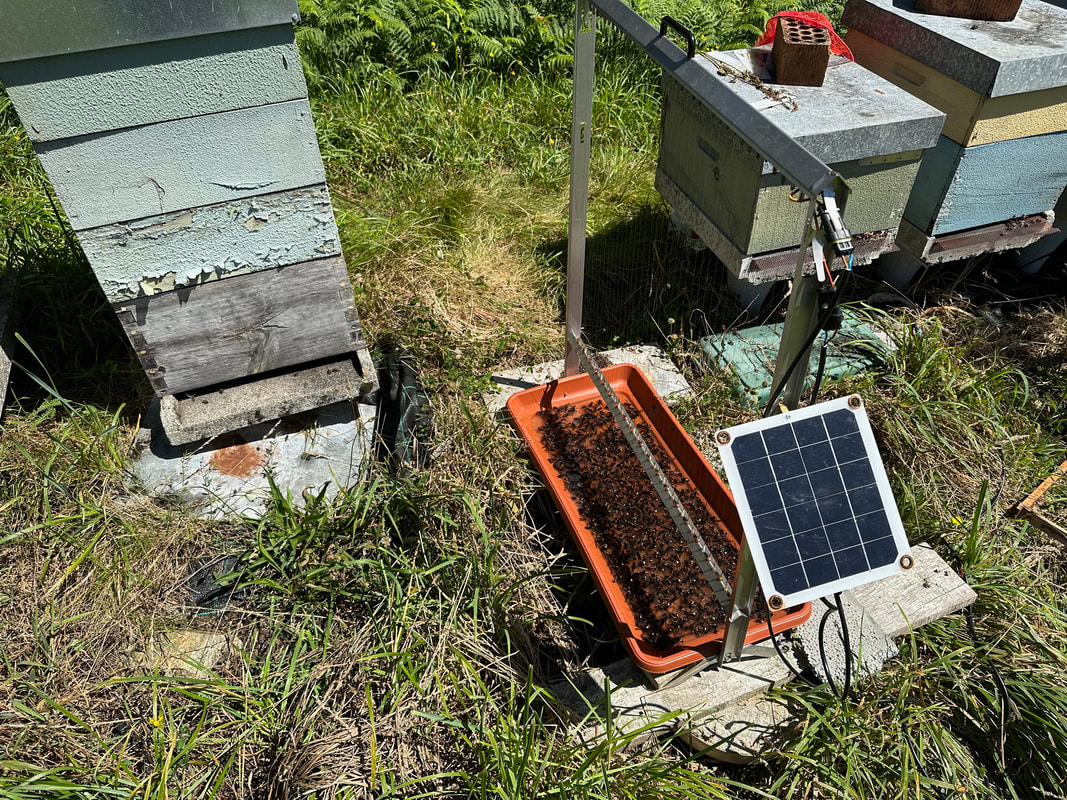
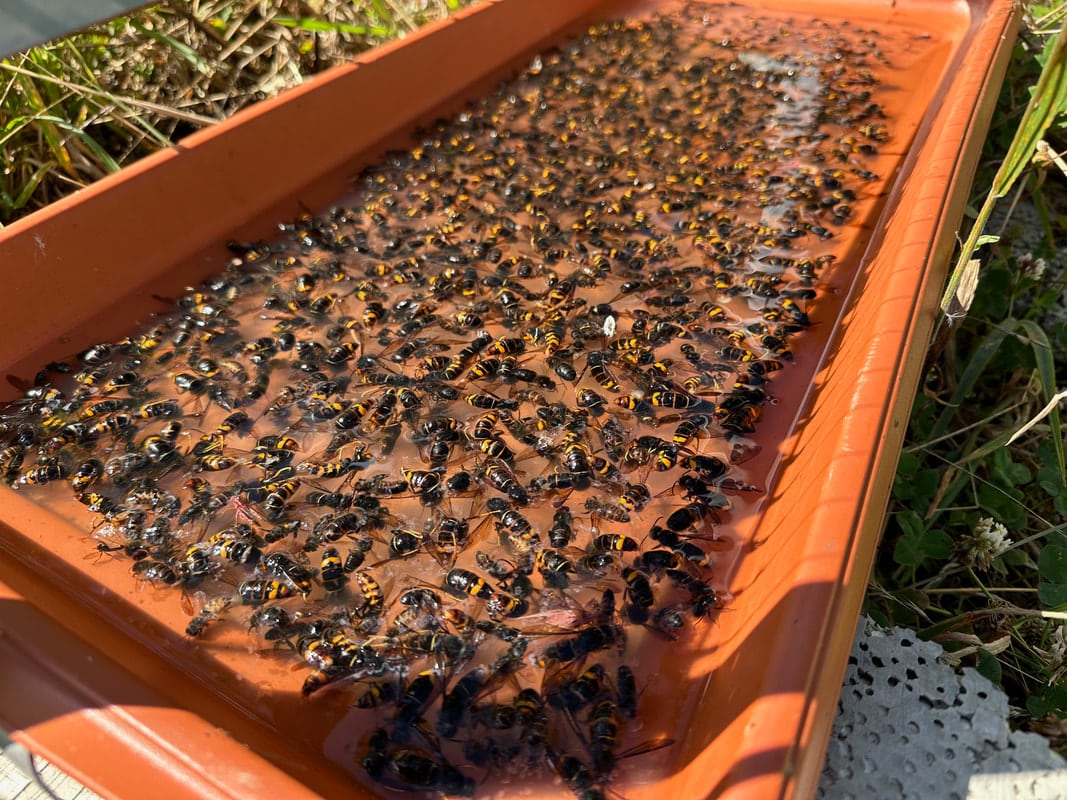
Water harps use a tray below the wires, with a few drops of soap so stunned hornets cannot climb out; anything that falls in drowns, including the odd bee. A well-designed dry collector with escape openings can reduce this risk. Use the collector specified for the device and inspect it regularly; do not assume collection is optional or harmless.
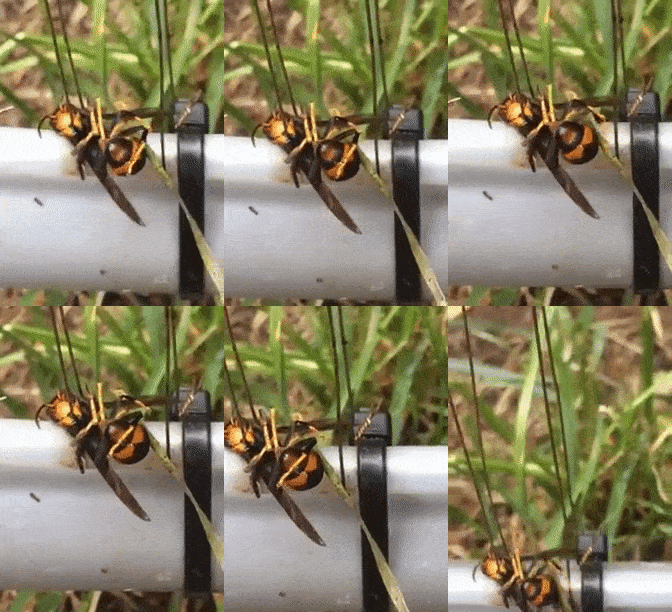
Possible deterrent effect: Harps may alter the behaviour of hunting hornets as well as intercepting them. Judge performance from observed attacks and honey-bee foraging, not solely from reports that hornets appear to avoid a device.
Effects on bees: Smaller worker bees may pass between the wires, but honey bees and other insects are still recorded in harp catches. Pay particular attention to drones and queens, and switch off or reposition a device if it obstructs bee flight or causes unacceptable bycatch.
How does the electric harp differ from other traps on the market?
Two commonly used approaches are attractant-baited traps and unbaited electric harps. They differ in purpose, placement and environmental impact; neither replaces coordinated nest detection and control.
Coordinated strategy
For a proportionate control strategy, distinguish hornet monitoring from protection of bee colonies. Use electric harps when observed predation justifies them, and assess risks to queens and drones whenever they are flying. Honey-bee mating and swarming do not end universally in June.
Effectiveness and selectivity
Published trials show that selectivity varies between devices and sites. A 2022 study in three Galician apiaries found that the electric harp reduced hunting pressure and that over 90% of 4,359 captured insects were Asian hornets. Bait-trap studies have reported substantial non-target catches. These are results from particular studies, not universal specifications: monitor the catch in your own apiary and compare protection against harm.
Precautions
It is important to protect honey-bee queens and drones during mating flights and swarming. Switch off devices where these flights could be intercepted. A coordinated strategy must remain selective and responsive to local conditions; replacing one indiscriminate trap with another is not a solution.
Where to place electric harps in the apiary
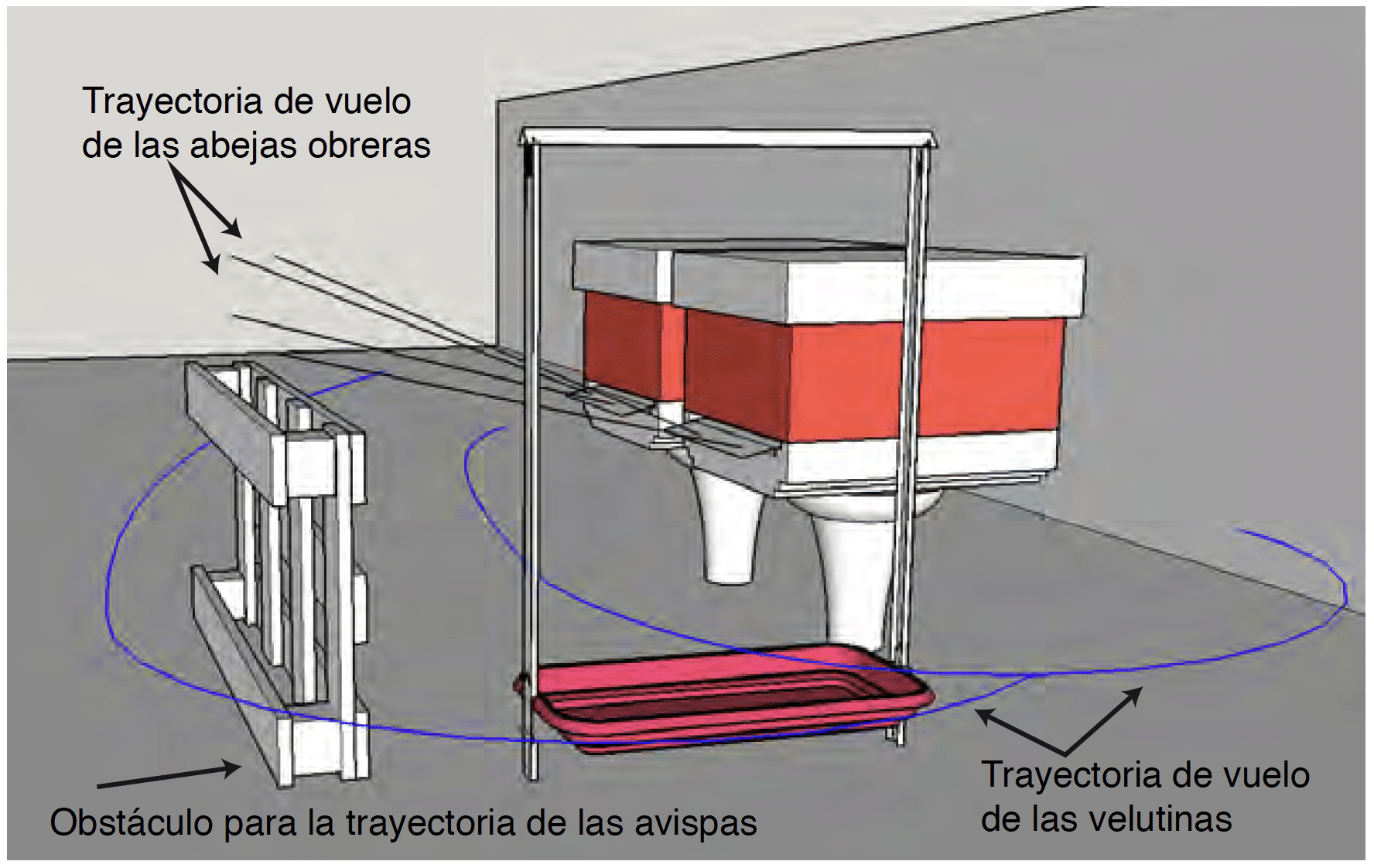
Hive layout. A compact row can make it easier to intercept hornets moving between entrances, but leave safe working access and avoid obstructing bee flight. Spacing depends on the hive stands, terrain, device and management needs; 15–20 cm is not a universal optimum.
Harp positioning. Follow the device’s instructions and observe actual flight paths. In the 2022 Galician trial, harps were placed perpendicular to the entrance line, between adjacent hives, with the hives 20–30 cm apart. Other layouts require separate assessment. Do not confuse hive spacing, stand height and distance from the entrance, or assume that every bee will pass safely through the wires.
Number of harps. Match the number to the gaps and flight paths that need protection. A fixed rule of one harp per five hives is not a validated guarantee. Check whether hornets simply shift to unprotected entrances and reassess the layout.
Apiaries of different sizes
- Small apiaries: Observe each entrance and identify the main hunting routes. A small number of well-positioned devices may help, but there is no universal three-harp minimum.
- Large apiaries: Check protection along the whole row, including the ends. Increase or reposition devices only where observations show unprotected hunting routes.
Reviewing placement
Review placement when predation patterns change, rather than moving every device on a fixed two- or three-week schedule. Record the effect of each change on hornet hunting and bee flight.
Side screens may help redirect hornet flight, but should not entangle wildlife, block ventilation or make it harder for bees to leave and return. Use stable, purpose-suitable barriers and reassess them if traffic accumulates at an entrance.
Planning a large apiary
For large apiaries, plan the layout around bee flight, access and the hunting routes you observe. One harp should not be assumed to protect ten hives. Ask the equipment supplier for a layout suited to the site, then verify the result in use.
When should electric harps be used against the Asian hornet?
Use electric harps only when hornet predation warrants them, and monitor both bee flight and the catch. Keep them off where swarms, drones or mating queens could be intercepted. The relevant periods vary by colony and region; installing in June does not, by itself, remove these risks.
Where hornets are attempting to enter hives, suitable entrance protection may help. Check that it still permits necessary bee traffic and ventilation, and consider how its opening size affects drones and queens. Base timing on observed pressure, not a universal early-August date.
Seasonal management
Spring: nest establishment
In spring, overwintered hornet queens begin establishing nests. Prioritise surveillance and follow the local monitoring or control programme. Queen trapping is not automatically necessary at every apiary, and the number caught does not measure the number of mature nests prevented.
Recommendation: Avoid indiscriminate bottle or drowning traps. Where trapping is justified, use a documented selective design, check it frequently and report suspected Asian hornets through the appropriate local channel.
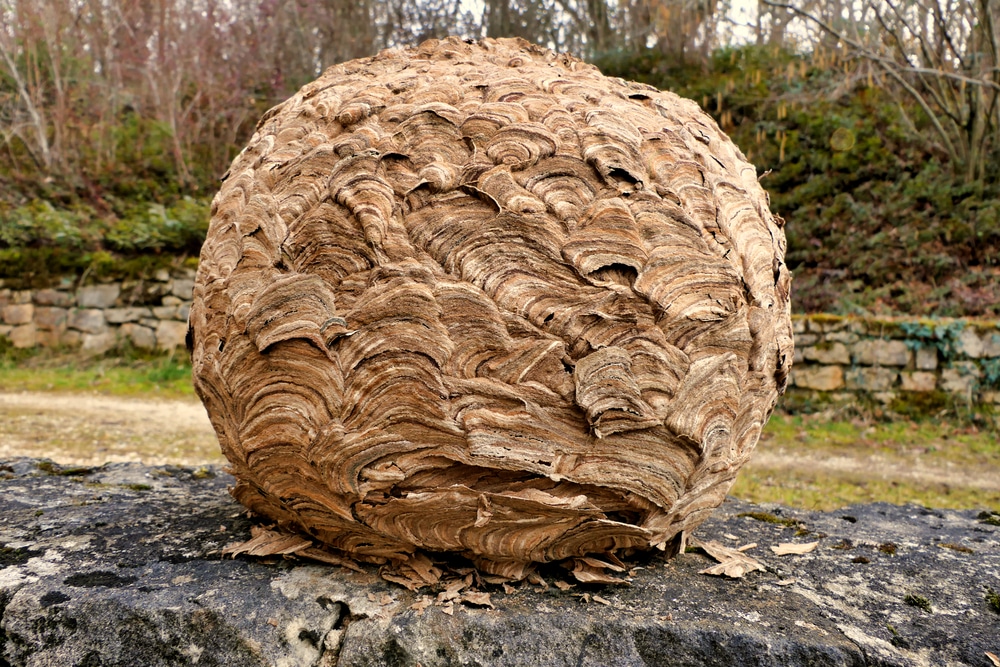
Summer: nest development
As hornet colonies develop, worker predation at hives may increase. Assess whether any bait near the apiary is drawing hornets across bee flight paths. Keep only measures that serve a clear monitoring or protection purpose and have acceptable non-target effects.
Recommendation: Position harps according to the equipment instructions and observed hunting routes. Screens or barriers should guide hornets without trapping bees, obstructing hive ventilation or creating a hazard for people and wildlife.
Autumn: new queens and colony decline
Towards the end of the season, hornet colonies produce males and new queens before declining. Timing varies with climate. Continue to protect attacked colonies and report active nests; do not assume that every autumn trap reduces the following year’s population.
Recommendation: Keep monitoring proportionate to observed activity and local guidance. Do not deploy wax cappings or sweet bait around hives without considering robbing and non-target attraction. Remove unnecessary traps when their purpose has ended.
Additional tips
- Distance and layout: Follow the specific equipment instructions and monitor flight paths. Neither 30–40 cm for a harp nor 500 m for a baited trap is a universally appropriate distance.
- Continuous monitoring: Record hornet activity and adjust the measures as needed.
- Nucleus colonies and weak colonies: Check food, queen status, disease and entrance defence. Do not place extra attractive bait beside them without evidence that it improves protection.
Electric harp components and safe installation
An electric harp combines a mechanical frame, a purpose-built electrical unit and a collection system. The frame-building example below is not a complete electrical design or a certification of safety. Have the electrical installation checked by a competent person and follow the equipment manufacturer’s instructions.
Main components of an electric harp
- Harp structure: It may be made from stainless steel, galvanised steel or PVC and is designed to support metal wires that will be electrified.
- Energiser: This is the ‘brain’ of the system. It supplies the required current and voltage to electrify the harp’s metal wires.
- Power supply: Depending on the energiser, it can be powered by a suitable battery, solar charging system or manufacturer-approved power supply; never connect the harp wires directly to mains electricity.
How the system works
- The electrical unit draws energy from the selected power source and converts it into a specific voltage.
- This voltage is transmitted through the metal wires of the harp’s structure, creating an electrified barrier.
- Hornets contacting two adjacent wires receive a shock; effectiveness and non-target catch must be checked in use.
Configuration options
- Buying a commercial harp: If you want a quick and efficient solution, La Tienda del Apicultor sells stainless steel electric harps that arrive as a kit to assemble (allow an afternoon the first time). They need an energiser and, for water harps, a tray; the kits already include them. Check what each configuration includes and choose a system suited to the site.
- Build the frame yourself: The following photographs illustrate a mechanical PVC frame. DIY skills alone do not qualify someone to design high-voltage equipment. Use a compatible, purpose-built electrical unit and obtain competent advice before commissioning.
Materials required to assemble the economical PVC harp structure
The photographs illustrate a low-cost PVC frame. However, frame material alone does not establish electrical safety: moisture, contamination, inadequate insulation and damaged wiring can cause faults. A purpose-designed frame with suitable insulation must be matched to the electrical unit and its specified outdoor operating conditions.
Do not choose an electrical unit on the basis of a supposed “ideal” voltage or high current. Use a purpose-built unit within its specified limits. Wet or arcing equipment can injure people, damage components or start a fire. Keep people away and, if safe to do so, switch it off and isolate the supply. Have the fault assessed by a competent person. Rain is not a harmless inconvenience, and damage cannot be ruled out.
🔧 DIY PVC or commercial harp?
The original example quoted about €25 for frame materials, excluding the electrical unit, power supply and collector; this is a historical estimate, not a current price. Compare the complete system, insulation, outdoor suitability and maintenance requirements. A commercial purpose-designed frame may simplify assembly, but safe use still depends on following its instructions.
In the shop you will find the stainless steel Tartago harp and the complete kit with electronics, solar panel and tray.
List:
- PVC accessories
- Elbows
- Tee fittings
- End caps
- Rubber sections
- Clamps
- Stainless steel nuts (M5)
- Steel wire 0.4 mm
Frame materials estimate: The original frame-only materials estimate was around €25. Obtain current prices and include the compatible electrical unit, power supply, insulation, collector and safe installation when comparing costs.
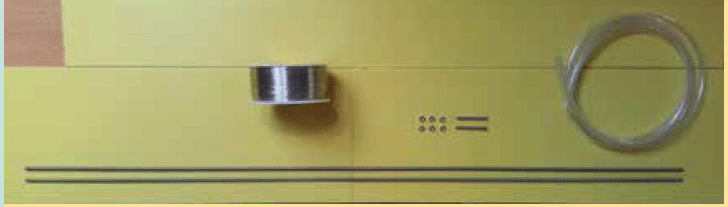

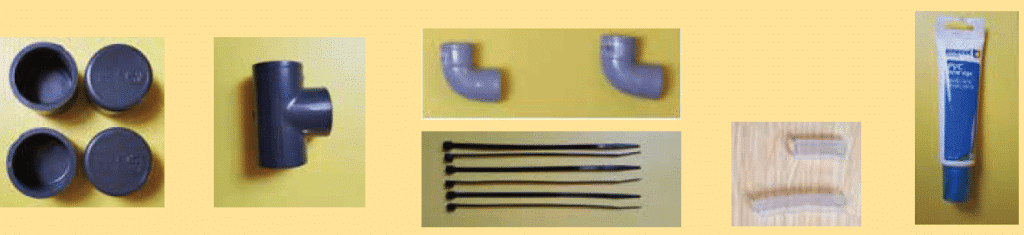
Frame assembly instructions
Glue the end caps onto the 28 cm sections that will form the legs.
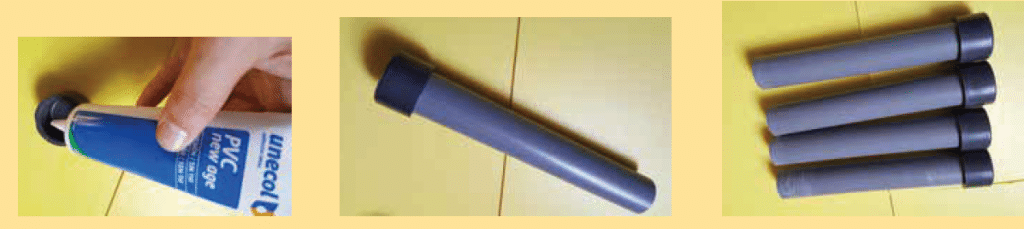
Join these sections at the T-junctions.
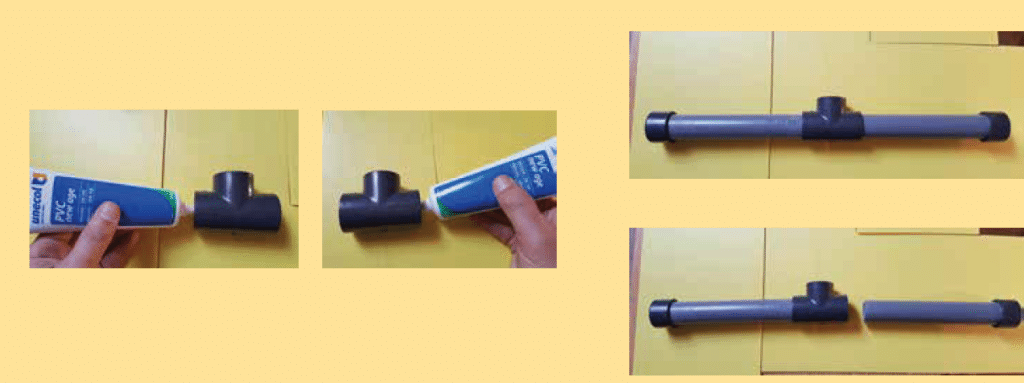
Complete the feet with the remaining short PVC sections. Check the dimensions and dry-fit the parts before gluing; use a complete, verified cutting list suited to your frame design.

We now proceed to assemble the frame that will hold the steel wire.
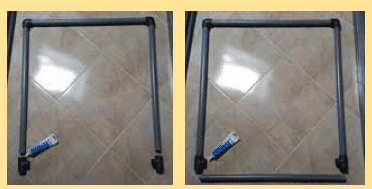
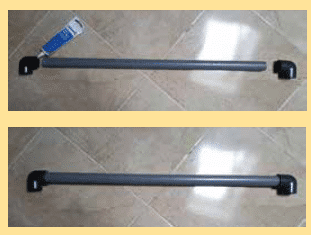
Once the frame has been assembled, drill a hole through the legs and insert a screw as a retaining pin. This keeps the legs removable while preventing them from coming apart when the harp is moved. Use a 5 mm drill bit suitable for the material being drilled.
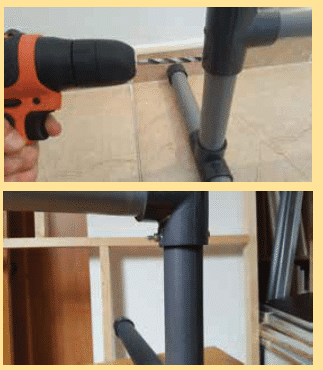
Fit the frame onto the legs (take care not to glue them; it is better to leave the legs loose so they remain removable).
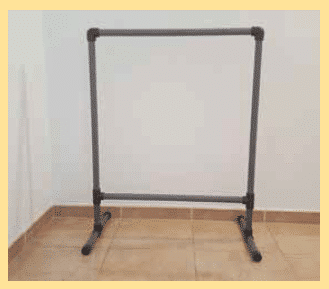
The first step is to cut the threaded rods to approximately 87 cm.

We insert the rods through one end of the frame without reaching the other side, leaving one end free to insert the rubber sections.
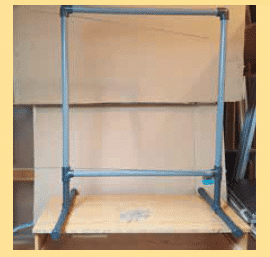
We begin with the pre-drilled holes where the threaded rods will be placed. Use a 5 mm drill bit suitable for the material.

On the upper rod, start with a 2 cm rubber section, then fit the 4 cm sections and finish with another 2 cm section. This makes each steel wire contact the upper and lower rods alternately, so the same wire never touches both rods at once.
Clarification: The lower rod has all rubber spacers of 4 cm, while the upper section starts and ends with 2 cm, and all lower sections are 4 cm.

Once the rods with the rubber sections are in place, we secure them at the top and bottom with cable ties to prevent the wire tension from causing excessive bowing of the rods.
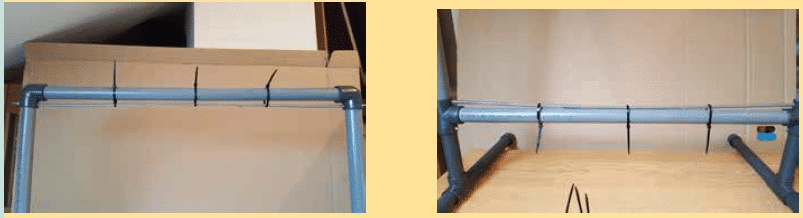
The steel wires can now be fitted. Sections of wire 1.5 m long can be cut in advance. Make sure each wire contacts the rod in the gap between the rubber sections.
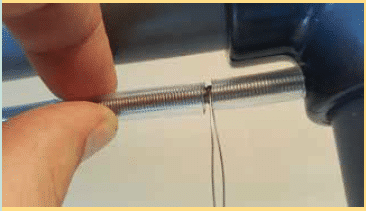
To make assembly easier, join the wire ends over the rubber sections. That is, if the wire contacts the upper rod (located between two rubber sections), we join the ends on the lower side, where they will align over a rubber section.
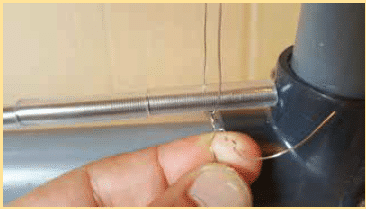
Thus, we will join one wire above and another below in an alternating pattern.
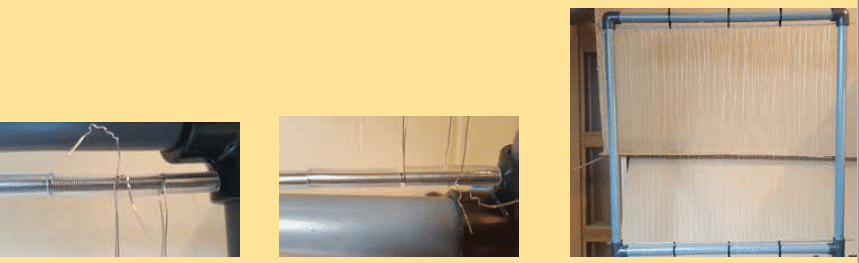
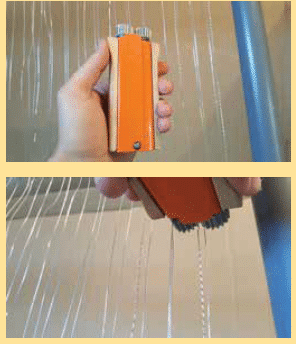
At this stage, we can trim the excess wire and cable ties. It is not necessary to tension the wires tightly during initial assembly; final tensioning will be carried out using a wire tensioner, as used in beekeeping to tension frame wires.
To prevent any wire from coming loose during tensioning, it is essential to tension the wires in the direction of their joined ends. For example, in the image below, we would tension the left wire from bottom to top, and the right wire from top to bottom.
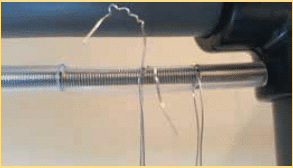
The mechanical frame is now assembled, but it is not ready to energise. Fit the manufacturer-specified collector and have the electrical installation, insulation and outdoor suitability checked before use. Disconnect and isolate all power before adjustments or maintenance.
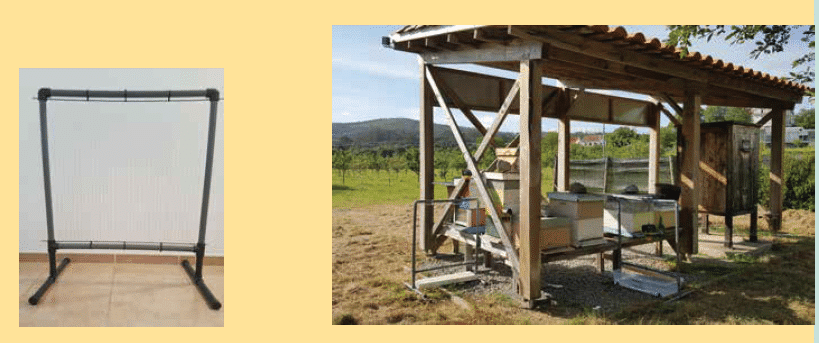
Source of instructions: AGA (Galician Beekeepers Association)
Sources:
- Article from the journal Apicultura Ibérica, edition 23
- AGA (Galician Beekeepers Association)
- Information provided by Fernando Cores (beekeeper and manufacturer of electronic control units)
- Consultations with various beekeepers who use the harp
- Miguel Angel Meizoso Maroño, credited in the original article with developing the method; the original describes it as openly licensed, but does not identify the licence
⚡ Everything you need to build your defence against the Asian hornet
Stainless steel harps, electronic control units, solar panels, trays and connection extensions: compare sets and components in the section on electric harps against the Asian hornet. For attractant-baited traps, consult the range against the Asian hornet. Have questions about which layout may suit your apiary? Contact us to discuss the site and equipment requirements.

ISNI 0000 0005 1801 1100 | Joshua Ivars is the manager of LA TIENDA DEL APICULTOR and the author of this blog, where he shares technical and practical guidance for beekeepers. Drawing on extensive experience in the beekeeping sector, he offers advice and solutions based on beekeepers’ real needs, sharing his knowledge of equipment and essential beekeeping practices.


