 Apipasta with vitamins 15kg
 Beecomplet® Spring 14Kg
 Beekeeper suit with round veil
 Oxalic acid 1kg
 Beeswax Foundation 5kg
 Fresh royal jelly 20g
 Classic honey jar 1kg comb-lines TO77 - Pack of 16 units
 Promotor L Apis 1 litre


 Share in WhatsApp
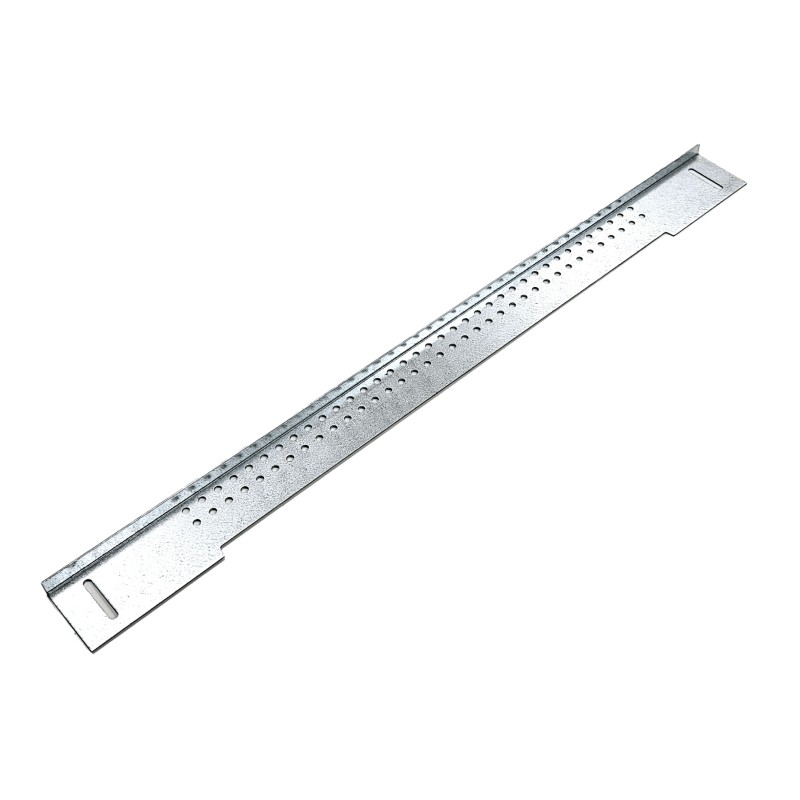
378 / 250 mm TWO DIMENSIONS | 36 mm PART HEIGHT |
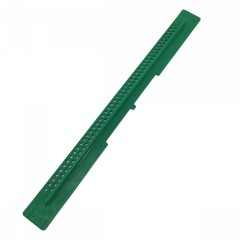
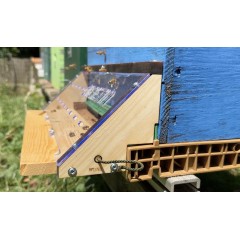
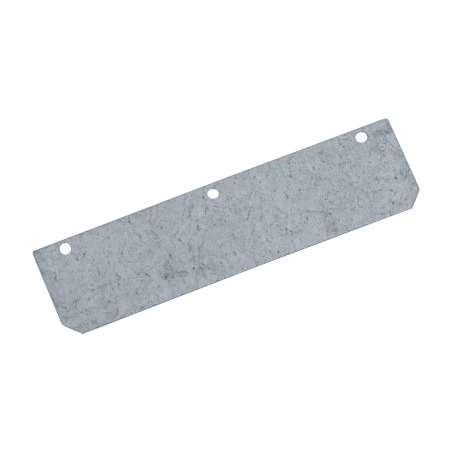
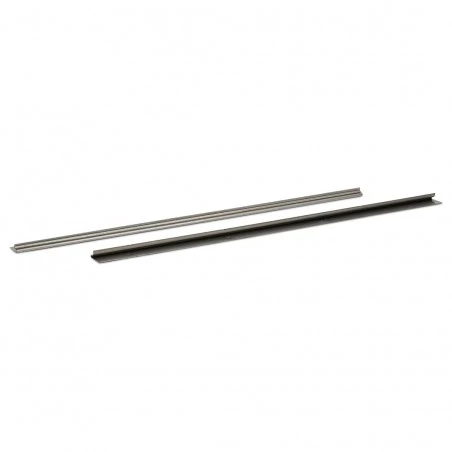
Metal anti-hornet entrance block with calibrated openings: the worker comes and goes normally, the Asian hornet and the European hornet do not fit. 378 mm for hives, 250 mm for nucs.
It closes off access to the inside. It does not stop hawking in front of the entrance.
01 · WHY THEY DO NOT GET IN
The filter is purely geometric. A worker crosses a gap of about 5 mm without slowing the flow of traffic; a Vespa velutina or a Vespa crabro is never under 7 mm and simply does not fit. With that, the predator cannot get in to rob stores or hunt inside, which is where the real damage is done. What the block does not do, and this should be said: it does not stop the hornet hunting on the wing in front of the entrance. That is hawking and no door affects it — the block protects the inside, not the flight.
02 · MEASURE YOUR ENTRANCE
We are often asked «does it fit Layens?», «and Dadant?», and the question is wrongly framed from the start. These blocks mount over the hive entrance, so what decides is how wide that entrance is, not what the model is called. There are two sizes: the long one for hives and the short one for nucs. Take a ruler, measure the entrance you have and pick the one that covers it — if your opening is another width, neither covers it, and that is better known before ordering twenty. On NICOT floors, which have their own slots, the family is a different one: the plastic blocks that clip in.
03 · WHERE IT SITS IN THE FAMILY
All entrance blocks do the same thing — govern who comes in — and differ in how much they let through. Choosing well means deciding the aim first and the size second:
| Close it completely | Blind entrance block — for transport or equipment out of service. |
|---|---|
| Keep the hornet out | ~5 mm gap: the worker passes, the hornet does not. |
| Regulate by season | Angle block: wider during the flow, closed for wintering. |
| Free passage | Season block, filtering nothing. |
04 · BEFORE YOU BUY
Pick the size by your entrance: 378 × 36 mm for hives and 250 × 36 mm for nucs. It is a seasonal piece: fit it when hornet pressure starts and remove it afterwards, because a narrow gap also slows traffic during a flow. And if your apiary is in velutina country, fit them on all of them: leaving half unfiltered concentrates the pressure on exactly those.
| Type | Anti-hornet entrance block, metal |
|---|---|
| Hive size | 378 × 36 mm |
| Nuc size | 250 × 36 mm |
| Lets through | Worker bee (about a 5 mm gap) |
| Stops | Vespa velutina and Vespa crabro (≥ 7 mm) |
| Fitting | Over the hive entrance |
| Use | Seasonal, during hornet pressure |
Data sheet

Before applying this method, always check the health and strength of your hive. This protective approach is particularly effective for weaker hives, such as those lacking guard bees at the entrance.
However, avoid using this method in hives where bees are forming a "beard" (bees clustered at the hive entrance). This behavior is a natural defense against hornets, and additional protection in these cases could do more harm than good.
Practical tips to keep in mind:
• Regularly monitor and remove the reducer as needed to ensure adequate ventilation.
• Neglecting this step could result in dead bees and drones clogging the entrance, potentially causing the hive to suffocate.