
-
Beehives
- Complete beehive
- Accessories
-
Nuc hives
- Nucs by format
- With bees & mating
- Spare parts
-
Bee equipment
- For the apiary
- For the beekeeper
-
Clothing
- Clothing Accessories
-
Beeswax
-
Pure beeswax
- Beeswax and foundation
- Beeswax foundations
- Melting and rolling beewax
-
Pure beeswax
-
Bee feed
- Accessories and source materials
- Utensils
-
Bee health
- Varroa Treatments
- Diseases control
- Nutraceuticals
-
Extraction and bottling
- Before extraction
- Honey extraction
- After extraction
-
Bee pollen
- Harvest
- Indicted
-
Honey packaging
- Flasks per utility
- Flasks by size
- Other packaging
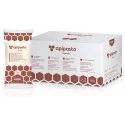 Apipasta with vitamins 15kg
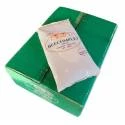 Beecomplet® Spring 14Kg
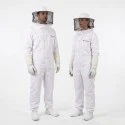 Beekeeper suit with round veil
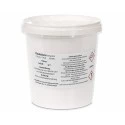 Oxalic acid 1kg
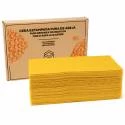 Beeswax Foundation 5kg
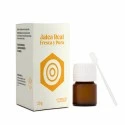 Fresh royal jelly 20g
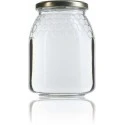 Classic honey jar 1kg comb-lines TO77 - Pack of 16 units
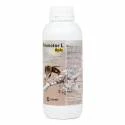 Promotor L Apis 1 litre
Asian hornet suits
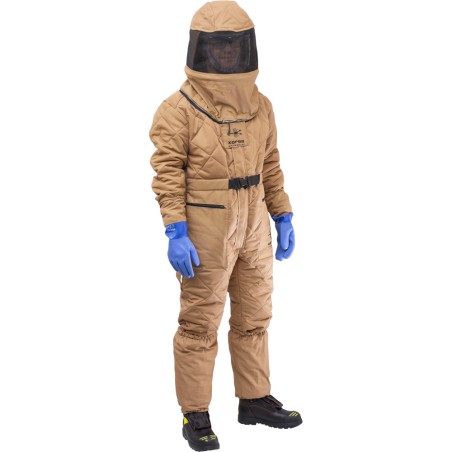
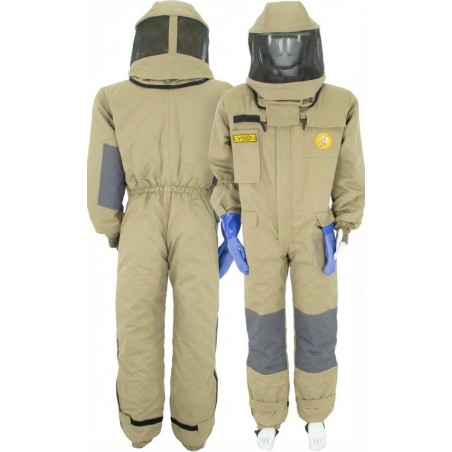
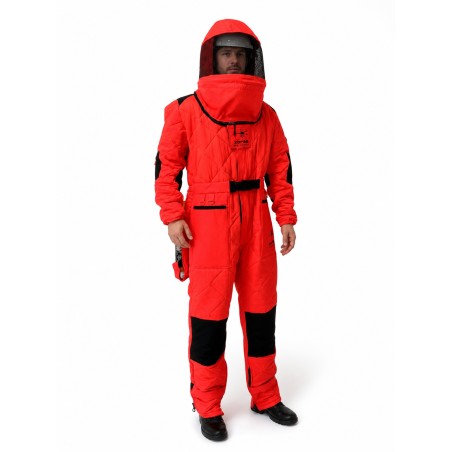
Suits made specifically against Vespa velutina, from €369.95 to €425. A 5 mm sting, reinforcement at neck and wrists and an integrated veil: an ordinary beekeeping suit does not cover this case.
How to choose a suit for the Asian hornet
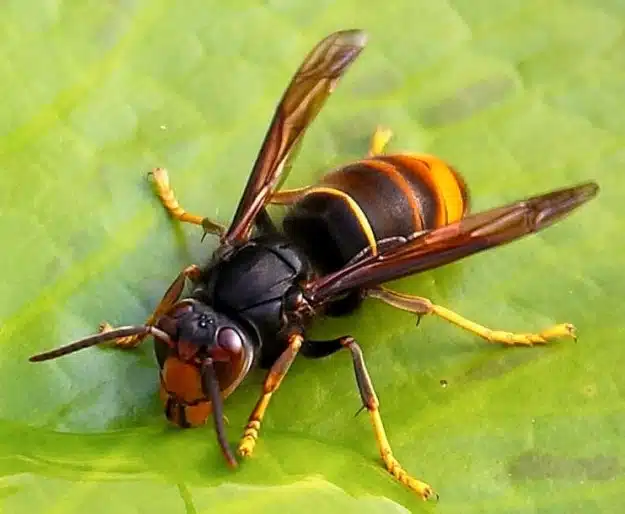
A suit for the Asian hornet (Vespa velutina) shouldn't be compared to a normal beekeeping suit. With bees we aim to work calmly and avoid stings; with Vespa velutina we're talking about much more delicate interventions, especially if there's an active nest, height, dense vegetation or poor visibility. For me, here the priority isn't being comfortable, but being well sealed and protected. I'd look especially at the actual thickness, the layers of protection, a rigid veil with good visibility, the neck closure, the fit at wrists and ankles, compatible gloves, boots or gaiters and the strength of zippers and seams. A small opening in a normal suit can be annoying; with velutina it can turn into a serious problem.
My advice is not to buy this kind of suit thinking that just by wearing it you can already intervene on any nest. The suit helps, but it doesn't replace training, planning or common sense. If you don't have experience, if the nest is up high, in an urban area or you don't know exactly which species you're facing, the prudent thing is to notify the competent authorities or work with trained personnel. And here I'll take a clear stand: I wouldn't use conventional beekeeping clothing to remove velutina nests. Nor would I work alone or without first checking closures, gloves, footwear and visibility. A good velutina suit should give you protection, but also let you move, see well and get out fast if the situation gets complicated. With this product, saving too much doesn't pay off.
Asian hornet suits
Three references, from €369.95 to €425. That is eight to ten times what a full beekeeping suit costs, and it is worth understanding why before deciding.
Why the suit you already own is not enough
The sting of Vespa velutina measures around 5 mm and goes through the fabric of a conventional beekeeping suit, which is designed for the much shorter sting of a honey bee. That is why these suits work with separated layers and a physical gap between the outside and the skin, plus specific reinforcement at neck and wrists, which is where the attack comes in when a nest is being defended.
And there is a way in that fabric does not cover: the hornet can spray venom at a distance, with a risk of eye injury that a beekeeper's veil does not prevent. Its sting is also smooth, so it does not detach and it can sting repeatedly. That is why these suits use a visor rather than plain mesh, and why a conventional veil is not equivalent however well it closes.
When it pays off
This is not seasonal kit: it is area kit. If you are on the Cantabrian coast, in Galicia, northern Catalonia or northern Portugal, or if you are going to work on nests, the arithmetic is simple — one badly protected intervention costs more than the suit. If your velutina pressure is occasional and you only work your own hives, a well-closed beekeeping suit is still the sensible option.
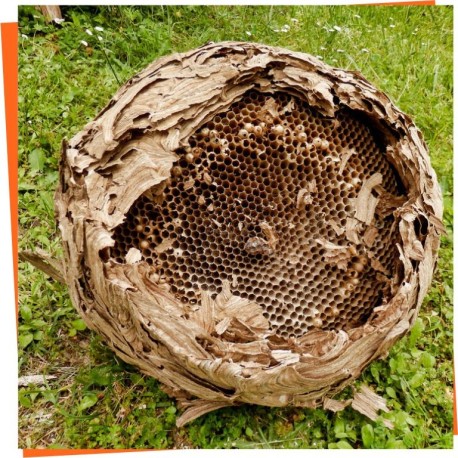
There is also a case nobody mentions until it happens to them: around 10% of nests are on the ground, and the share has been climbing year on year. That is the nest you do not see — the one you find by putting a strimmer into a bramble or stepping onto a bank. There is no warning and no safe distance, and that is the situation where this gear stops being a luxury.
What it does not do
None of these suits makes intervening on a nest safe. They reduce the risk of stings, they do not remove it, and nest removal has its own protocol — in many regions it is reserved for authorised personnel. If the nest is high up or on public ground, the suit is not the answer: calling the competent service is.
For summer work under moderate pressure, look at the ventilated suits too: they last more hours and close just as well at wrists and ankles. And for the full picture of the species — biology, spread and what actually works against it — it is on the blog, in Asian hornet, Vespa velutina nigrithorax.
Is it any use for strimming and clearing work, or only for beekeeping?
It is, and it is one of the uses we get asked about most. Someone clearing scrub is not looking for velutina — they run into it, when the machine goes into a bramble or a hedge with a nest nobody could see. The difference from beekeeping is that you do not choose the moment and cannot back away calmly, so the protection has to be on before you start, not sitting in the van. The buying criteria are the same ones set out above — physical separation between the outer fabric and the skin, and reinforcement at neck and wrists — because the sting it has to stop is the same. What changes is that for clearing work you should also look at how the ankle closure grips, since that is where vegetation gets in.
Does it also protect against common wasps and the European hornet?
Yes, by design. These suits are not calibrated against one particular species: they stop the sting by keeping a physical gap between the outer layer and your skin, so they cover any wasp or hornet that cannot cross that gap. What does change is whether you need this level of protection: for the odd common wasp during a routine inspection it is overkill, and a well-sealed beekeeping suit will do. For working where there is a nest and a collective response, it is not.
What size should I order if I will wear it over work clothes?
One that sits loose on you — this is where people most often get it wrong. These suits protect precisely because there is slack fabric between the outside and your body: take that in, and you remove the gap that does the work, and the sting reaches skin through both layers. Allow for what you will wear underneath — for clearing work that is usually heavy trousers — and if you are between two sizes, take the larger. A roomy suit protects better and ventilates better; a close-fitting one is a worse suit however much it cost.