
-
Beehives
- Complete beehive
- Accessories
-
Nuc hives
- Nucs by format
- With bees & mating
- Spare parts
-
Bee equipment
- For the apiary
- For the beekeeper
-
Clothing
- Clothing Accessories
-
Beeswax
-
Pure beeswax
- Beeswax and foundation
- Beeswax foundations
- Melting and rolling beewax
-
Pure beeswax
-
Bee feed
- Accessories and source materials
- Utensils
-
Bee health
- Varroa Treatments
- Diseases control
- Nutraceuticals
-
Extraction and bottling
- Before extraction
- Honey extraction
- After extraction
-
Bee pollen
- Harvest
- Indicted
-
Honey packaging
- Flasks per utility
- Flasks by size
- Other packaging
 Apipasta with vitamins 15kg
 Beecomplet® Spring 14Kg
 Beekeeper suit with round veil
 Oxalic acid 1kg
 Beeswax Foundation 5kg
 Fresh royal jelly 20g
 Classic honey jar 1kg comb-lines TO77 - Pack of 16 units
 Promotor L Apis 1 litre
Electric Honey Extractors
Electric and motorised extractors from 3 to 20 frames, €599 to €11,199: tangential, radial for shallow supers and universal, with speed control.
Type
Basket type
Brand
Price
-
€575.00 - €11,199.00
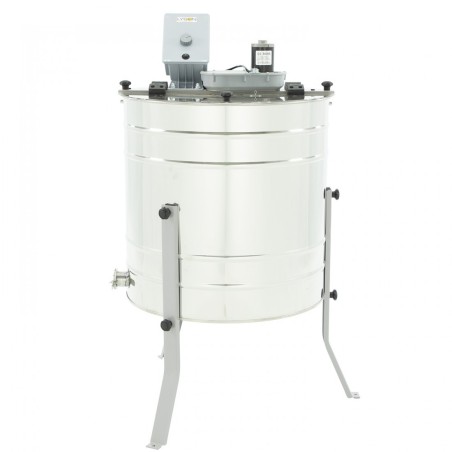
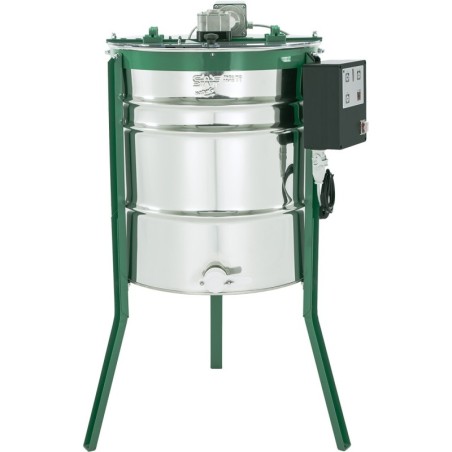
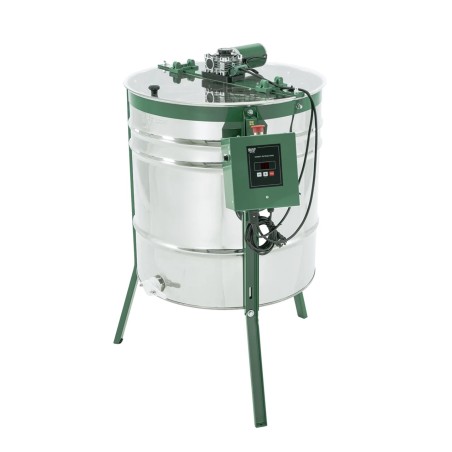
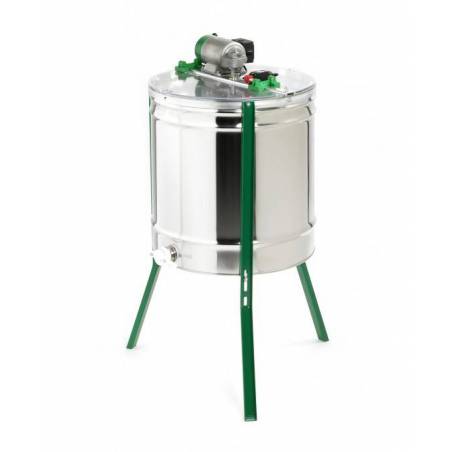
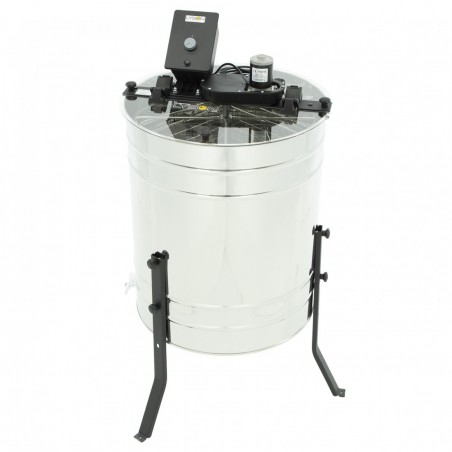
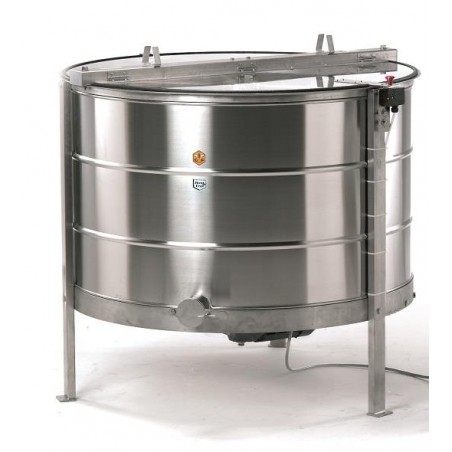
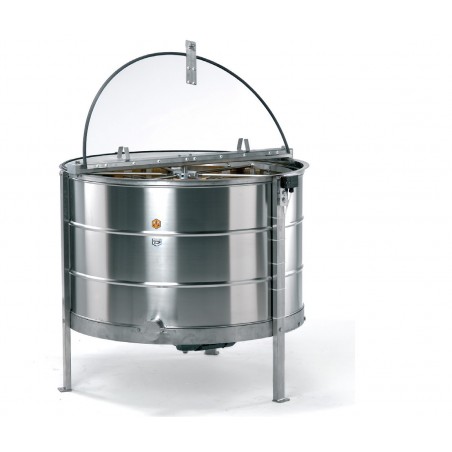
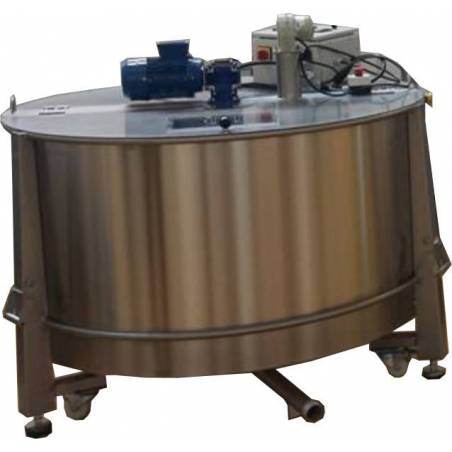
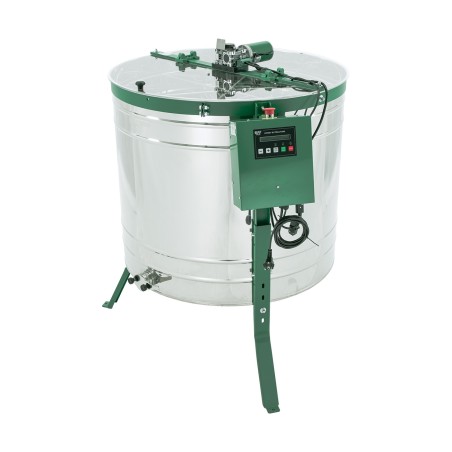
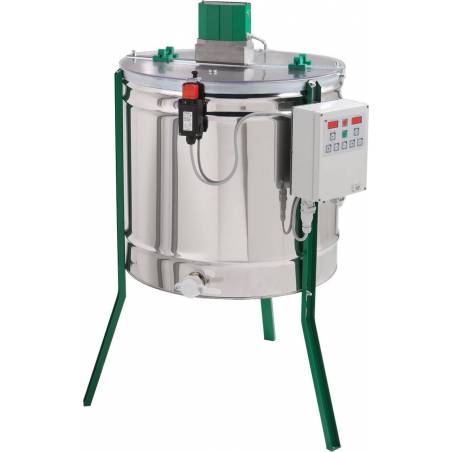
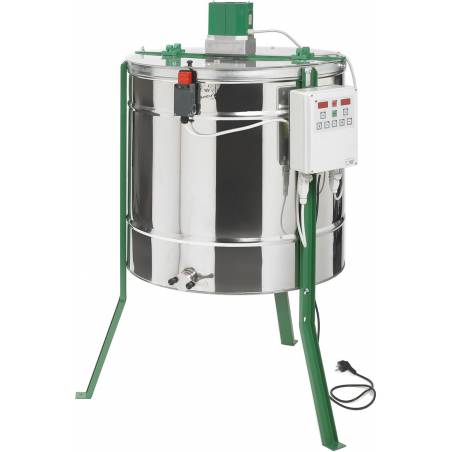
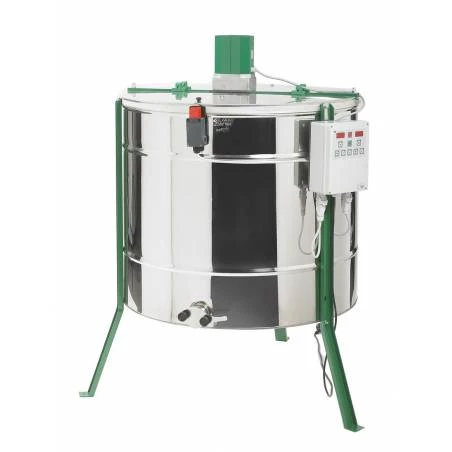
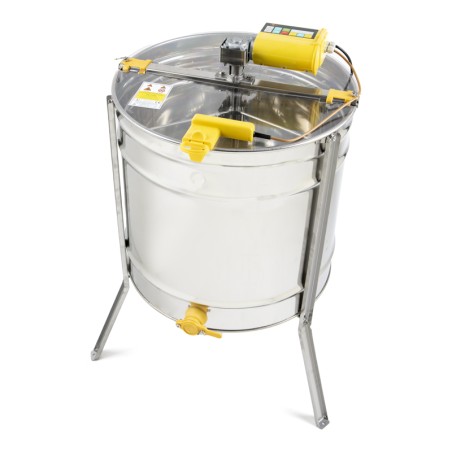
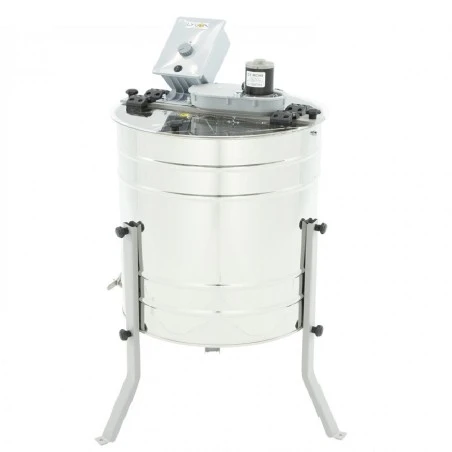
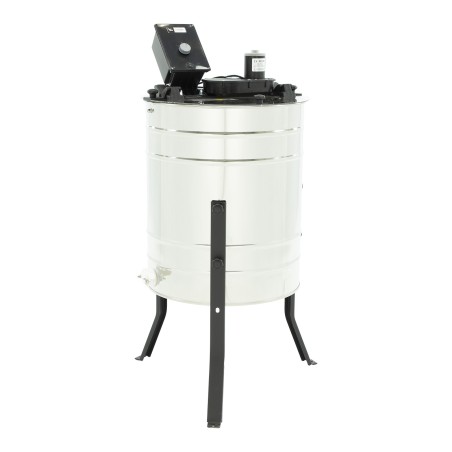
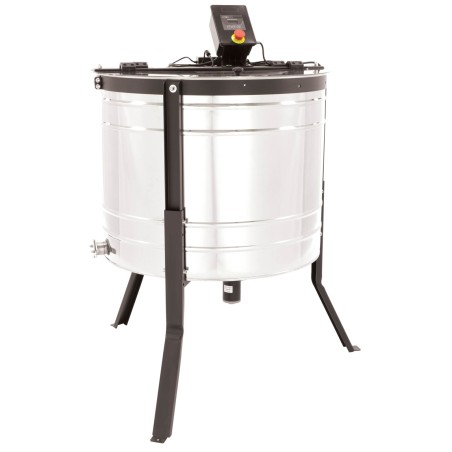
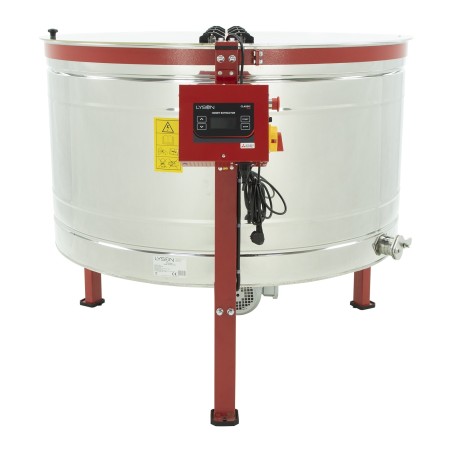
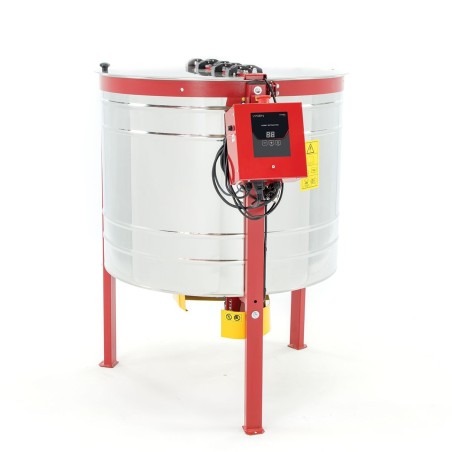
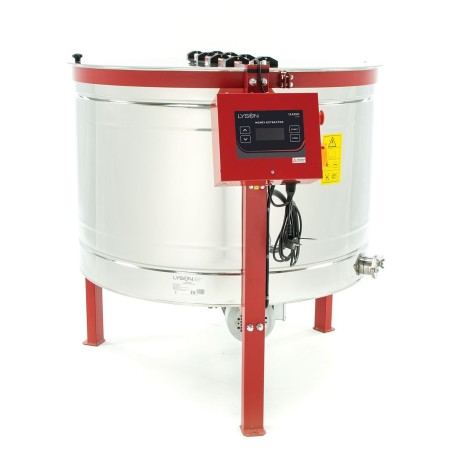
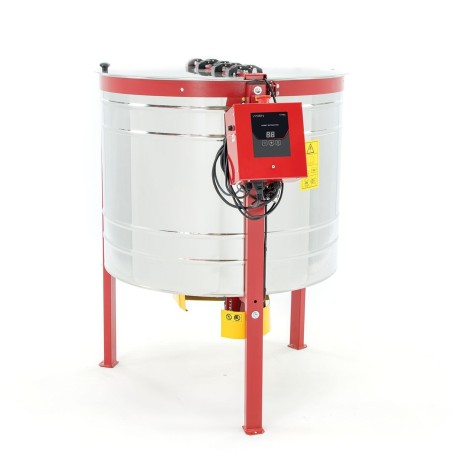
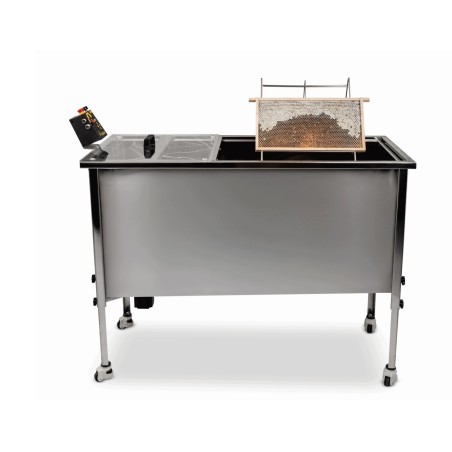
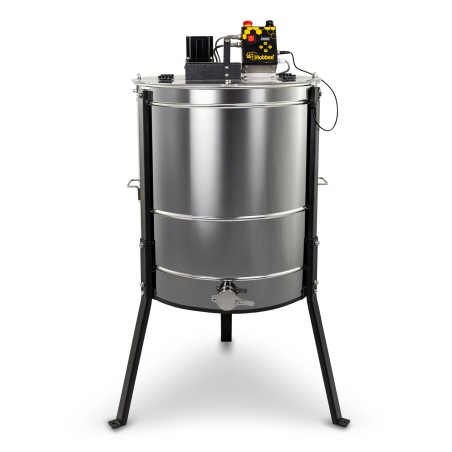

Frame count is the worst way to compare extractors
It is the first thing everyone looks at and the least informative. An extractor is chosen by the frame format you run, the type of honey, the volume you handle in a day and the state of the comb. If you have between 30 and 100 hives, the motor and speed control weigh more than raw size: a four-frame with a variator gives you more than a six without one, because the one without forces you to start at whatever speed the maker decided.
And a warning about the radial, which is what almost everyone recommends on throughput: it extracts both faces at once and works very well with supers and fluid honeys, but it can break combs if you force the speed with new wax or very dense honey, and on large brood frames it leaves the upper part less well extracted. If you run Layens or Dadant brood frames, or if you renew wax every year, look at the reversible tangential before assuming the radial is the natural next step.
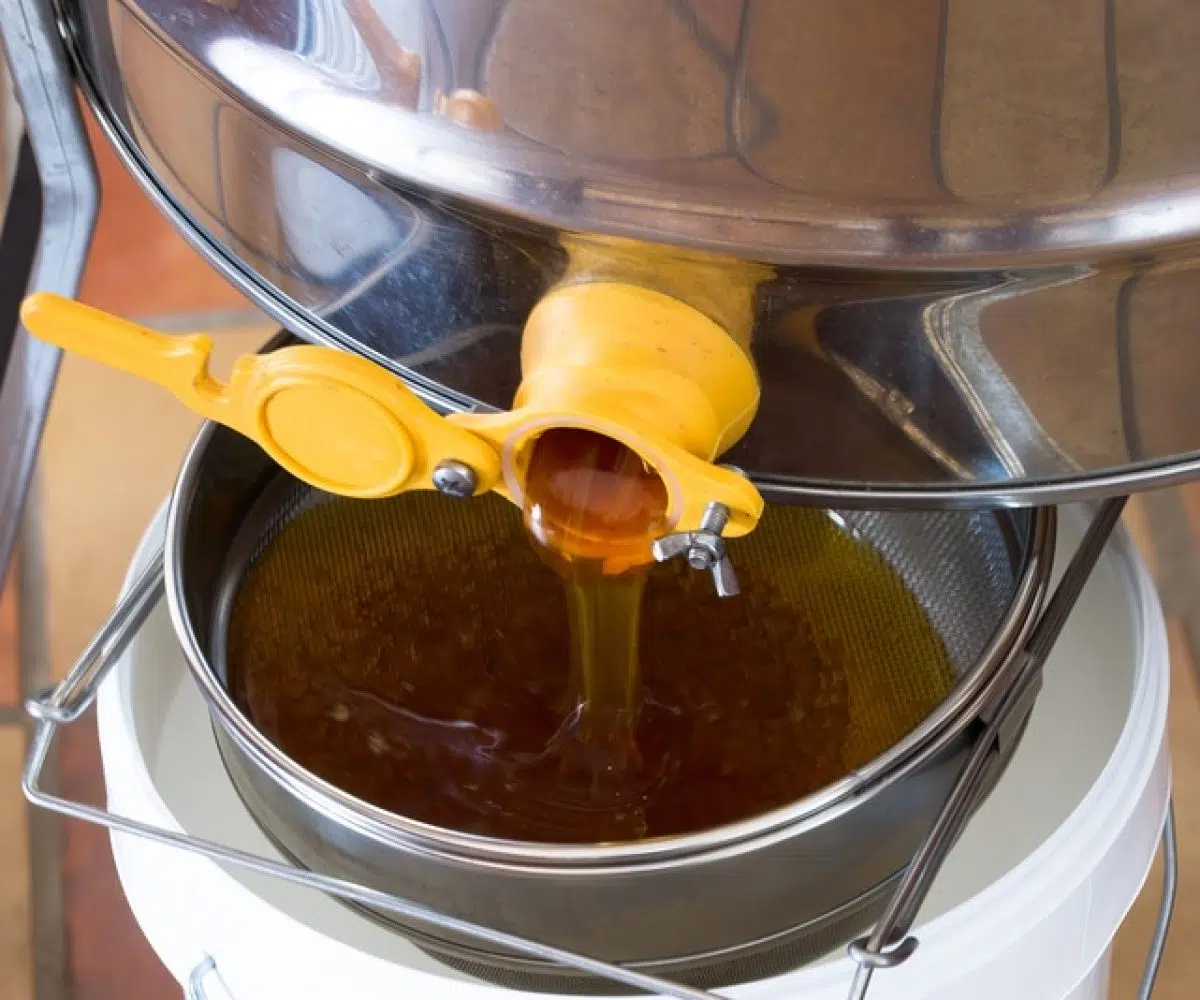


Electric Honey Extractors
You do not buy the motor to go faster: you buy it because it holds the speed constant and because the arm stops being the limit. From there, what decides is the cage.
The speed control is the part that matters
An electric extractor without speed control is worse than a manual one: it starts abruptly and breaks new comb. What to look for is the variable-speed drive, not the power. Starting gently, speeding up once the frame has emptied and braking without a jolt is what separates a clean batch from a cage full of broken comb.
The ladder
- €599-700 — 3 and 4 electric frames, tangential or universal (LYSON BASIC, MINIMA, LEGROC). The natural step up from manual once you pass thirty hives.
- €695 — the 20-frame radial for shallow supers. Watch this one: it changes the logic. If you work supers and fluid honeys, it extracts both faces at once and multiplies the load per batch.
- From €799 — models with ECO motor and workshop-grade build.
- Up to €11,199 — line equipment, for continuous production with an integrated uncapper.
Radial or tangential, again
The motor does not change that decision: radial fits supers, shallow supers and fluid honeys; tangential gets more out of dense honeys and large brood frames. Choosing wrong here is not fixed with more power.
The full criteria, with the fit table and the measurements to check, are in honey extractors. And if you are still unsure whether you need a motor, look at the manual ones.
Can a manual honey extractor be motorised?
Only if the manufacturer provides or authorises a kit compatible with that model. The shaft, coupling, direction of rotation, torque, speed, structure, brake, cover and guards must all match. Fitting a generic motor may result in overspeed, tipping, entrapment or damage to the basket.
The electrical and mechanical installation must be carried out by qualified personnel in accordance with the manufacturer’s diagram and safety provisions. An unauthorised modification may affect the warranty and safety compliance. If no documented kit is available, the safest option is to use an electric extractor designed as a complete unit, rather than selecting a motor based on approximate power or voltage.
What are the advantages of an electric honey extractor?
It reduces the effort of turning the basket and makes speed and cycle times more repeatable. With programmed or progressive control, the operator can spend part of the cycle uncapping frames or preparing the next load.
It does not extract more honey by itself or automatically protect the comb: load balance, acceleration, basket type and honey viscosity remain critical. The real saving appears when its capacity and workflow match the apiary’s volume and the rest of the extracting room.
What should you compare when choosing an electric extractor?
Firstly, the format and usable capacity of the frames; next, radial, tangential or reversible operation, speed range and control, power supply, stability, lid and shut-off systems. Also check the tap, ease of cleaning, materials in contact with the honey, and the availability of spare parts and after-sales service.
Don’t just compare power output or the maximum number of frames. A large basket that’s ill-suited to your frame size, a jerky control mechanism, or a room lacking the capacity for uncapping and decanting can all become bottlenecks. Size the equipment according to the actual number of frames and kilograms processed per day.
How do you install and operate an electric honey extractor safely?
Set it level on a firm floor with the legs secured as specified in the manual. Check the supply voltage, earthing and safety devices; keep cables and controls away from wet areas and do not use makeshift extension leads. Load balanced frames and close the lid.
Start at low speed and increase it only when the load is rotating steadily. Do not override safety interlocks or open the lid until the basket has stopped completely. Disconnect the machine before cleaning, clearing a blockage or adjusting it. Commissioning and any electrical repair must follow the manufacturer’s instructions and be carried out by competent personnel.
What capacities and speed controls do electric extractors offer?
Capacity ranges from compact machines holding only a few frames to high-volume units. The number varies with frame size and arrangement: a basket may hold more shallow-super frames radially than deep brood frames tangentially.
Speed control may be manual with a regulator, semi-automatic, or programmable with ramps and cycles. More positions or automation do not always reduce total processing time. Compare capacity for your frame format, the lowest controllable speed, direction reversal on reversible models, and how easily the cycle can be adapted to the actual honey and wax.
How do you clean and maintain an electric honey extractor?
Disconnect and isolate the power supply before working on the extractor. Wash only the parts and use only the method authorised by the manufacturer; prevent water, steam or detergent from entering the motor, control panel, sensors or bearings. Rinse and dry all food-contact surfaces.
Check the cable, plug, earth connection, lid, interlocks, basket, shaft, legs and vibration. Do not lubricate on your own initiative or open electrical components. Play, unusual noise, overheating or an abnormal smell means the machine must be stopped and serviced before it is used again.