
Apiary theft can deprive a beekeeper of equipment, colonies and an entire season’s work. It adds to the pressures of managing Varroa (in Spanish), nosemosis, the yellow-legged hornet, Vespa velutina, drought, colony losses and harmful pesticide exposure. This article looks at the forms of loss beekeepers have reported and the precautions that can reduce the risk.
Many apiaries are in rural locations with limited regular supervision. Hive siting must also protect neighbours and the public: bees may defend their colony when disturbed, although they do not invariably attack anyone who comes nearby. In Spain, Royal Decree 209/2002, Article 8, sets minimum siting distances with defined exceptions; regional and local requirements must also be checked. These rules do not mean that every apiary must be completely isolated, but security deserves attention when choosing a compliant site.
A populated hive represents much more than the price of a wooden box: it includes the bees, queen, comb, stores and the work invested in establishing the colony. Losing several colonies can also mean lost production and replacement costs. Values and winter losses vary with place, year, colony condition and market conditions; the original article’s illustrative prices and fixed 30% winter-loss figure should not be treated as current or universal estimates.
Beekeepers interviewed for the original article described theft as an increasing concern. Those experiences explain the need for prevention, but they are not a national statistical series. Assess present-day risk with your association, neighbouring beekeepers and the police, rather than assuming that theft is rising everywhere at the same rate.
What can be stolen from an apiary?
The loss may involve complete hives, individual frames, honey or adult bees. Recording what was present before an incident helps establish what is missing afterwards.
Whole hives
When a whole hive disappears, both the colony and its equipment are lost. Keep the required identification legible, photograph your hives and retain purchase and movement records. These can help establish ownership if material is recovered. Current Spanish hive-identification requirements are set out in Royal Decree 787/2023; ask the competent regional authority if you are unsure how they apply to your operation.
The original account describes suspected theft for resale, expansion of other apiaries and pollination work. The motive in an individual case is a matter for investigators, not something to assume about neighbouring beekeepers or greenhouse operators. If buying colonies, check the seller’s identity, ownership documentation and the health and movement requirements that apply.
Established colonies and nucleus colonies may attract particular interest when demand is high, including during spring expansion. That does not make theft a strictly seasonal problem. Keep an up-to-date inventory throughout the year and agree with the landowner or nearby contacts how unusual activity should be reported.
Frames and comb
Sometimes frames and their contents are missing while the marked hive boxes remain. Marking only the outside of a hive does not document every component inside it. Where appropriate, use durable identifying marks on valuable equipment and keep photographs and records. The absence of an obvious external mark does not make stolen material impossible to identify or lawful to possess.
Honey
Honey or honey-filled comb may also be taken, sometimes with damage to the remaining frames. Record the missing crop and damaged equipment as well as any loss of bees. After the police have advised on preserving evidence, assess whether the colony has enough usable comb and food to recover.
Adult bees
Beekeepers have also reported adult bees being removed without the complete hive. The original article linked to a 2017 Spanish television report on bee theft. That historical report should not be read as a current theft-rate estimate.
A colony left with very few adult bees may be unable to care for its brood or maintain normal functions, even if honey remains. Its prospects depend on the bees and queen left behind and the help it can safely receive. A depleted hive is serious, but an unexplained loss of adults is not, on its own, proof of theft.
Smaller losses can be harder to recognise. Compare population, brood and production records with evidence of interference, and consider ordinary explanations such as swarming, disease, pesticide exposure or queen problems. Report concrete observations rather than accusing someone on the basis of a disappointing honey crop. Clear records are useful both for colony management and for any investigation.
What can beekeepers do?
Insurance
Insurance may reduce the financial impact of a theft, but cover must be checked rather than assumed. Ask whether theft of live colonies, equipment and stored honey is included, and clarify exclusions, excesses, valuation rules, security conditions and the documents needed for a claim. A general liability policy is not the same as theft cover.
Compensation depends on the agreed policy and may not cover every consequential loss, such as interrupted production. Keep inventories, invoices and photographs, and follow the insurer’s reporting requirements promptly. Insurance helps manage financial risk; it does not physically prevent a theft.
Surveillance cameras
Surveillance cameras can provide alerts or useful evidence, but performance depends on placement, image quality, power, communications and maintenance. They are one part of a security plan, not a guarantee of identification or prevention. Check coverage and practical operating costs at the intended site before choosing a system.
In Spain, cameras recording identifiable people must comply with applicable data-protection requirements. The AEPD’s installation guidance covers necessity, information notices, security and related obligations. Keep the field of view proportionate; public roads or paths may only be included to the limited extent permitted by the rules. Restrict access to recordings and obtain appropriate advice for the installation. A camera is not simply made compliant by describing it as ‘registered’, nor can its footage be assumed automatically admissible or inadmissible in every case.
GPS trackers
A GPS tracker can help locate equipment after it moves, provided it has power, can determine a position and can transmit its data. Some devices are integrated into hive frames. Check the current model’s coverage, battery arrangements, service charges and alert functions with the supplier, then test it at the apiary. Concealment and tracking do not make recovery certain. If an alert indicates a possible theft, share the information with the police; do not confront suspects or enter someone else’s property to retrieve the hive yourself.
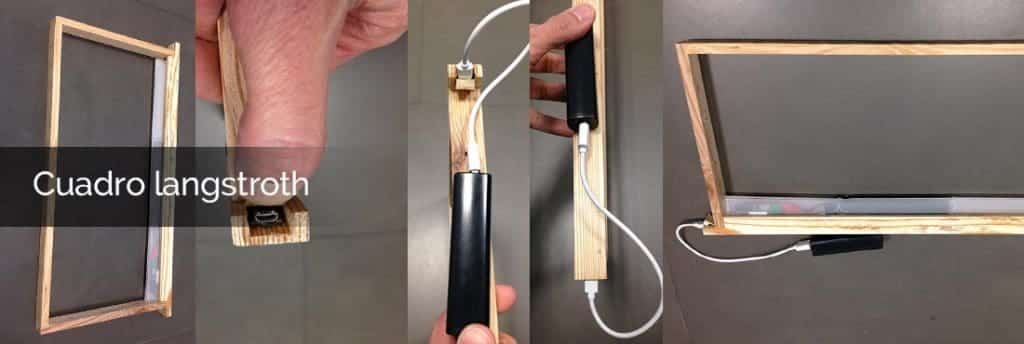
A tracker follows the item carrying it, not every bee or piece of equipment at the site. This limitation is a reason to combine identification, sensible access control, regular checks and suitable detection systems. No single device can prevent every form of theft.
Alarms
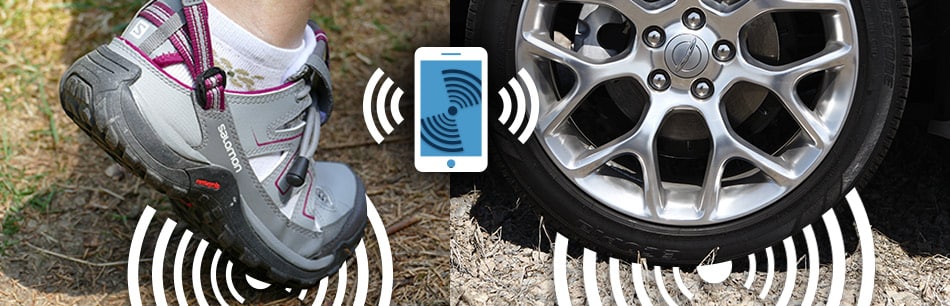
For the original article, Diego Nieto of CENTINELA described a battery-powered system with wireless sensors as part of the company’s apiary security equipment. This is a historical product example, not a promise that a current model makes an apiary theft-proof. Confirm the specifications, installation requirements, communications service and support for the equipment actually being purchased.
Depending on the system, sensors can detect movement or interference with equipment and trigger an audible alarm or a remote notification. An alert may deter an intruder and give the beekeeper earlier notice, but it does not guarantee that the intruder will leave. Plan the response in advance, test alerts periodically and prioritise personal safety. If a theft is in progress, contact the police rather than travelling alone to confront anyone.
Original Spanish-language CENTINELA video. It illustrates the security discussion; confirm current product specifications and follow the safety and legal qualifications above.
Where does apiary theft occur?
In the original interview, CENTINELA reported interest from customers in Spain and several other countries. The article also recorded concerns from beekeepers in Murcia, Almería and other Spanish regions. These accounts show that the issue is not confined to one locality, but they do not establish a current ranking of theft hotspots or prove that any particular industry is responsible. Local information is more useful for planning precautions than an undated list of affected regions.
The practical response is cooperation and prompt reporting. The Guardia Civil’s rural-theft prevention advice recommends identifying valuable equipment, keeping photographs and serial numbers, and reporting suspicious activity. If a theft occurs, preserve evidence and provide the police with locations, inventories and relevant recordings; in Spain, use 062 for the Guardia Civil or 112 in an emergency. Once it is safe and the scene has been assessed, attend to any remaining colonies. Good records, proportionate security and a safe response plan work together.
Further reading

ISNI 0000 0005 1801 1100 | Joshua Ivars is the manager of LA TIENDA DEL APICULTOR and the author of this blog, where he shares technical and practical guidance for beekeepers. Drawing on extensive experience in the beekeeping sector, he offers advice and solutions based on beekeepers’ real needs, sharing his knowledge of equipment and essential beekeeping practices.


