
Why do honey bees need water?
Water demand, temperature and humidity
Honey bees need water for drinking, brood rearing and cooling the hive. The amount a colony needs changes with its population, brood, nectar intake, temperature and humidity. Bees lose water through their body surface, respiration and excretion. Demand can rise sharply in hot weather. The original article gives Pajuelo Consultores’ field estimate of about one litre per colony per week in summer, but this is not a fixed allowance or an upper limit. Check actual use and evaporation, and size the supply so it does not run dry between visits.
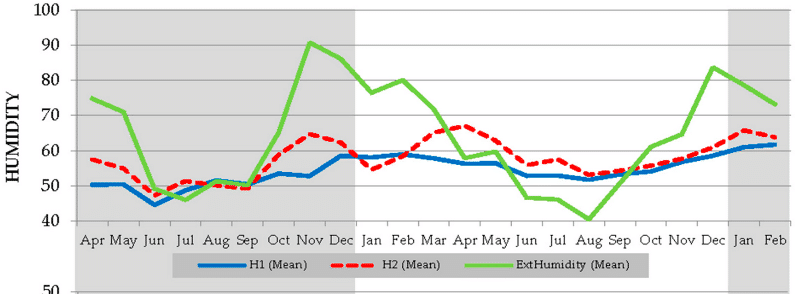
The centre of an active brood nest is commonly kept near 34–35 °C, with variation across the comb and over time. Humidity also varies: Gil-Lebrero and colleagues’ 2020 study, listed by the University of Córdoba, reported mean relative humidity of about 52% in the brood area and 54% in the food area across ten Iberian colonies. These are sensor measurements, not universal settings for every hive or the air immediately surrounding an egg. Eggs and larvae are vulnerable to drying; a single threshold such as 55% should not be used as a complete guide to their needs. Sustained excessive heat puts additional pressure on the colony’s cooling system.
How water is used inside the hive
Bees spread water in the brood area and fan to promote evaporation. As water evaporates it takes up heat, helping cool the nest and its combs. This works alongside ventilation and other cooling behaviours; it is not a reason to pour water over the brood.
Water collection towards the end of winter often accompanies renewed brood rearing. Nurse bees need water to prepare the water-rich glandular food fed to larvae, including royal jelly. Water also helps bees use their food stores, including diluting honey. The composition of royal jelly varies, so its water content should not be treated as an exact, unchanging 67%. Water alone cannot compensate for a shortage of pollen or other food.
A dependable water source helps the colony care for its brood and regulate its nest. In hot, dry weather, a shortage can impair cooling and contribute to reduced brood rearing. Provide accessible water before a heatwave or a dry spell, rather than waiting until colonies are under stress. Water supply belongs on the regular apiary inspection checklist.

Water sources for bees
Where bees find water
Nectar brings water into the colony, but it does not always meet demand. Workers also make dedicated water-collecting trips, visiting damp ground, dew on plants, shallow puddles, stream margins and other suitable places. The balance between nectar-derived water and collected water changes with the season and the colony’s needs.
Providing your own water source
Start with a reliable source of clean, fresh water in a sheltered position near the apiary. Establish it early, before bees develop a habit of visiting a neighbour’s pool or livestock trough. Some bees prefer lightly mineralised water. Zachary Huang’s Michigan State University guidance distinguishes laboratory preference for 0.15–0.3% salt from a practical suggestion of 0.1–0.2% edible salt. If using that optional suggestion, weigh 1–2 g of salt per litre of water; do not rely on a spoonful per litre. Salt is not necessary for every water supply and does not replace cleaning or make contaminated water safe.
Positioning and maintaining the supply
Keep the water close enough to avoid unnecessary flights, in a position that can be checked and refilled easily. There is no universal “few hundred metres” maximum. Provide shallow access or secure landing points; a deep container with slippery sides is a drowning risk. Shelter the supply from intense sun and contamination by droppings, while leaving bees access to the drinking surface. Clean the vessel regularly and prevent run-off from livestock areas entering it. Faecal contamination can carry pathogens; stagnant water should not automatically be diagnosed as the cause of nosemosis or another colony disease.
Choosing a bee drinker
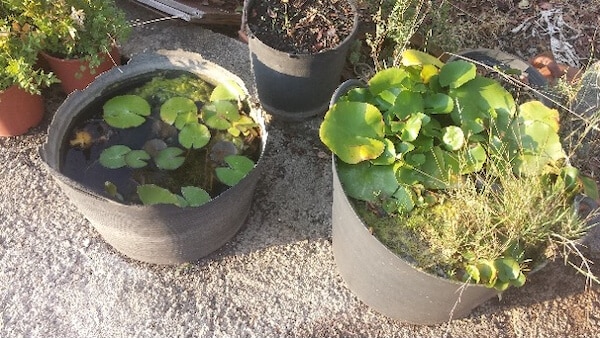
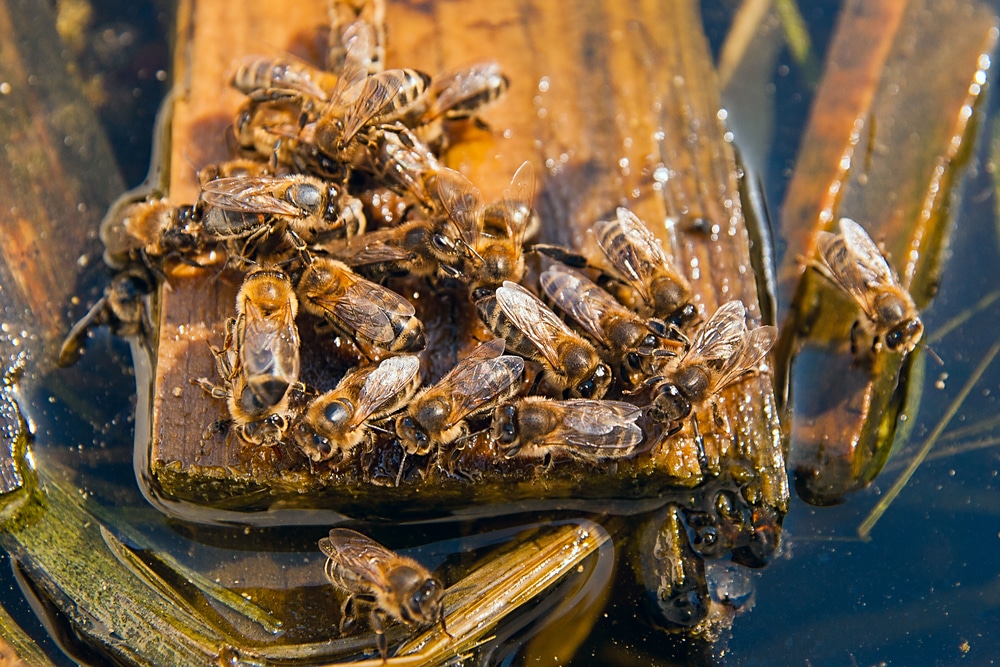
Beekeeping suppliers, including La Tienda del Apicultor, offer drinking systems, but a suitable shallow container can also work. Use clean stones, corks or another stable landing surface that reaches the water. Aquatic plants can provide footholds, as in the photograph below, but choose locally appropriate, non-invasive plants and maintain the container. A reservoir with a float valve can help keep a steady level. Whichever design you choose, make sure the landing surface still works as the level changes, and check that the valve cannot leave bees without water.
Which bees collect water, and how?
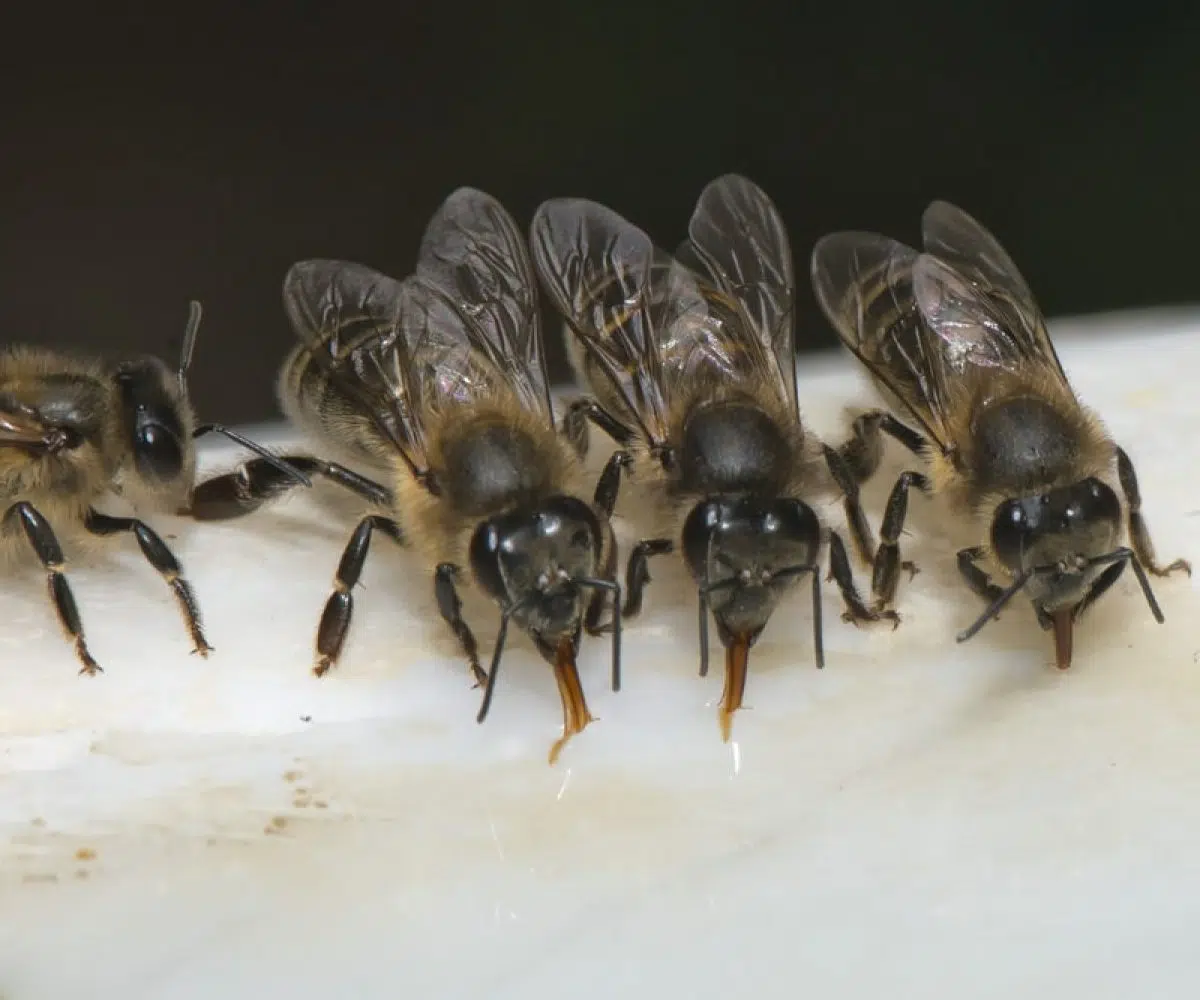
Water foragers are workers whose current task is collecting water. They may be especially noticeable during late-winter brood expansion, hot weather or dry periods; water collection is not restricted to those times.
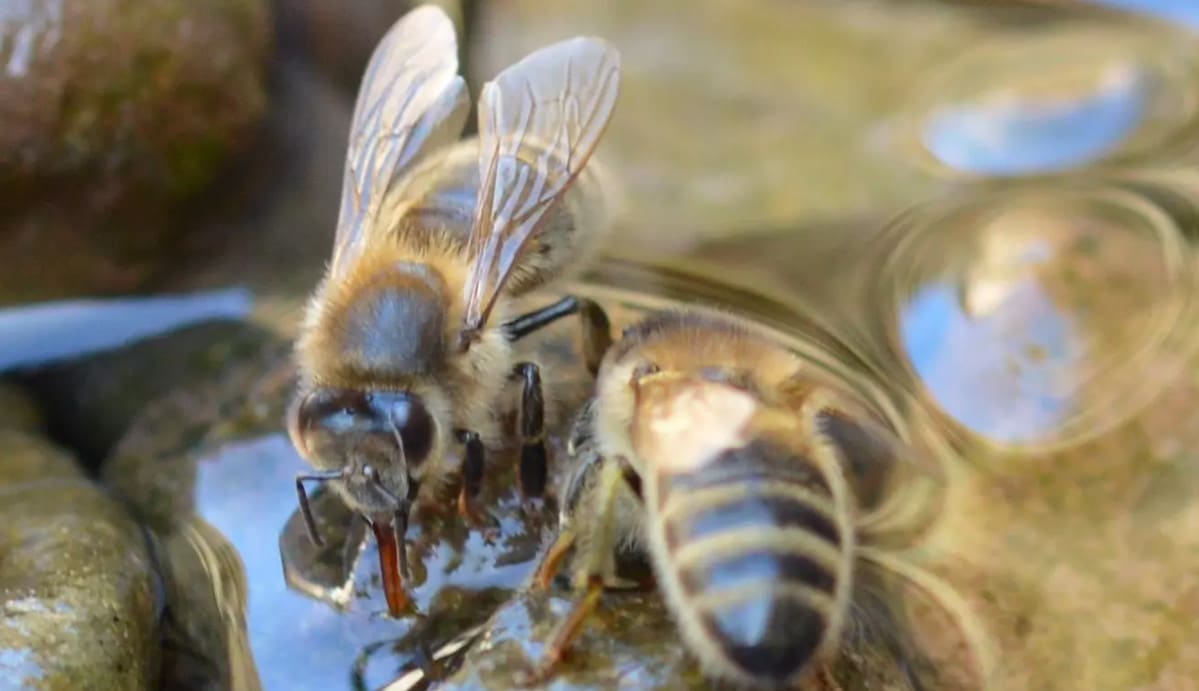
Using their proboscis, water foragers take up droplets or drink at a shallow edge, carrying the load in the crop, also called the honey stomach. Back in the hive, water is passed to other workers or distributed for use. Colony demand helps regulate how actively they collect.
Bees do not maintain large water stores like their honey reserves, but small temporary reserves do exist. Ostwald, Smith and Seeley’s 2016 experiments found water held in workers’ crops and, after heat stress, in comb cells. This short-term buffer does not remove the need for a dependable external supply.
Keep supplied water clean even when bees appear attracted to muddy or strongly scented sources. Their choices can reflect salts and other cues; attraction is not evidence that a source is hygienic. Do not deliberately offer urine, slurry or waste water, and do not assume such sources provide a useful or safe nitrogen supplement.
Problems caused by a lack of water
Longer water-collecting flights use energy that must be supplied by the colony’s food. Providing water is therefore part of sound husbandry as well as practical apiary management. In Spain, Article 9 of Royal Decree 209/2002 (official Spanish text) requires the keeper to meet bees’ physiological and behavioural needs. It does not specify a universal weekly water ration. Requirements and enforcement depend on the applicable rules and circumstances; the absence of a particular drinker is not, by itself, proof of an automatic fine. Check regional requirements with the competent authority.
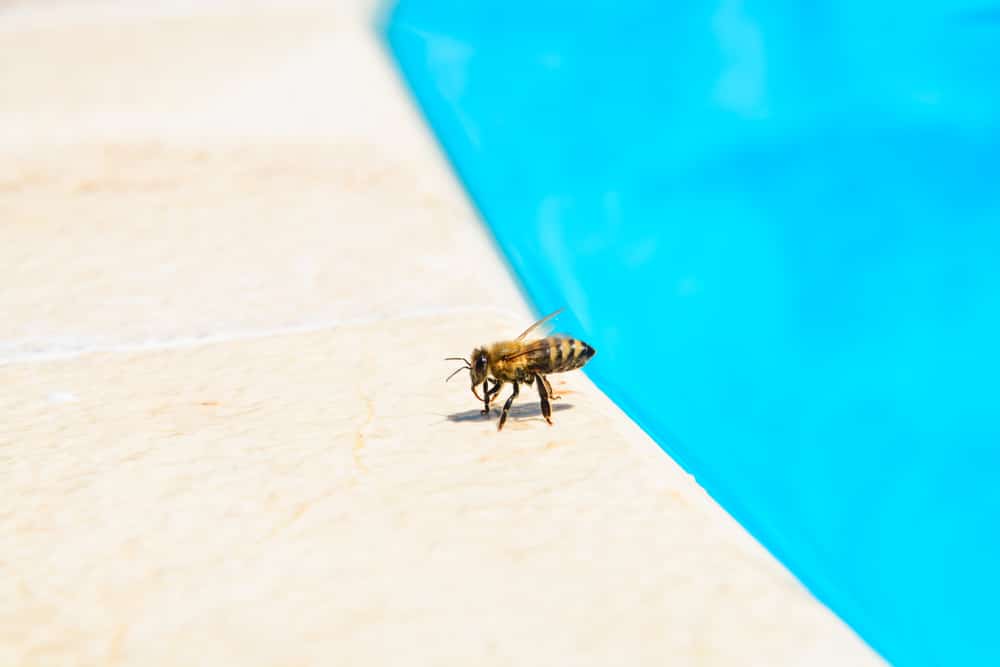
Bees may become regular visitors to swimming pools or livestock drinking troughs, causing concern and sometimes disrupting access for people or animals. Set up your own supply early and keep it available. If a problem arises, speak with the neighbour or livestock keeper and agree practical measures; simply removing their water source can create a new problem. Avoid directing bee flight paths through busy areas.
Water and transporting beehives
Water and heat management also matter when hives are moved. Confinement, agitation and restricted airflow can cause dangerous overheating, particularly in strong colonies during warm weather. Plan the journey, timing and ventilation before closing the hives.
Deaths in a closed hive should not automatically be attributed to thirst alone. Poor ventilation, heat accumulation and damaged or collapsed comb can all be involved. Secure ventilation screens and uninterrupted airflow are essential; water is not a substitute for either.
If a vehicle breaks down, first make the stop safe for people and other road users. Keep the load shaded where possible, maintain screened ventilation and seek experienced help promptly. Cooling measures must suit the load and equipment: do not flood the hives, soak the brood or block ventilation. Adding water cannot guarantee survival in an overheated, sealed load. See our guide to moving beehives and transporting bees for the wider preparation and safety checks.
Would you like to learn more about beekeeping?
Explore our online introduction to beekeeping course.
The course offers a structured introduction to practical beekeeping. Check the course page for the current syllabus and access details. The original promotional video below is retained in Spanish.
![Introducción al Curso de Apicultura [SÚPER COMPLETO]](https://www.latiendadelapicultor.com/blog/wp-content/plugins/wp-youtube-lyte/lyteCache.php?origThumbUrl=https%3A%2F%2Fi.ytimg.com%2Fvi%2FuJomNRA0UP8%2F0.jpg)

ISNI 0000 0005 1801 1100 | Joshua Ivars is the manager of LA TIENDA DEL APICULTOR and the author of this blog, where he shares technical and practical guidance for beekeepers. Drawing on extensive experience in the beekeeping sector, he offers advice and solutions based on beekeepers’ real needs, sharing his knowledge of equipment and essential beekeeping practices.


