The story of pollination is part of the much longer history of life moving between water and land. Some descendants of land-dwelling organisms later returned to aquatic habitats: whales and dolphins are familiar examples, while Mediterranean Posidonia meadows are made up of seagrasses—flowering plants, not seaweeds.
From early plants to pollination
Land plants have a history stretching back roughly 470 million years. Early plants reproduced by spores; modern mosses and ferns retain spore-based life cycles, but should not be treated as a single group that appeared at the same time. Seed plants evolved later. In them, pollen carries the male reproductive stage, and ovules contain the female reproductive structures. Pollen and an ovule are not simply two equivalent sex cells. The Royal Botanic Gardens, Kew overview of seeds explains the distinction between early land plants, gymnosperms and flowering plants.

Gymnosperms include firs, cypresses and pines. Their ovules are not enclosed within an ovary, and their seeds are not enclosed in a true fruit. Conifers bear reproductive cones rather than true flowers. Many release large amounts of pollen that wind carries to receptive female structures. This increases the chance of successful transfer, even though much of the pollen never reaches its destination. Wind pollination is common in this group, but some gymnosperms are insect-pollinated.
Angiosperms are the flowering plants. They were diversifying widely by about 130 million years ago, although their exact origin remains a research question. Their ovules are enclosed in an ovary. Flower structure is important in identifying and classifying plants, alongside other features and genetic evidence. Closely related plants often share recognisable floral characteristics.
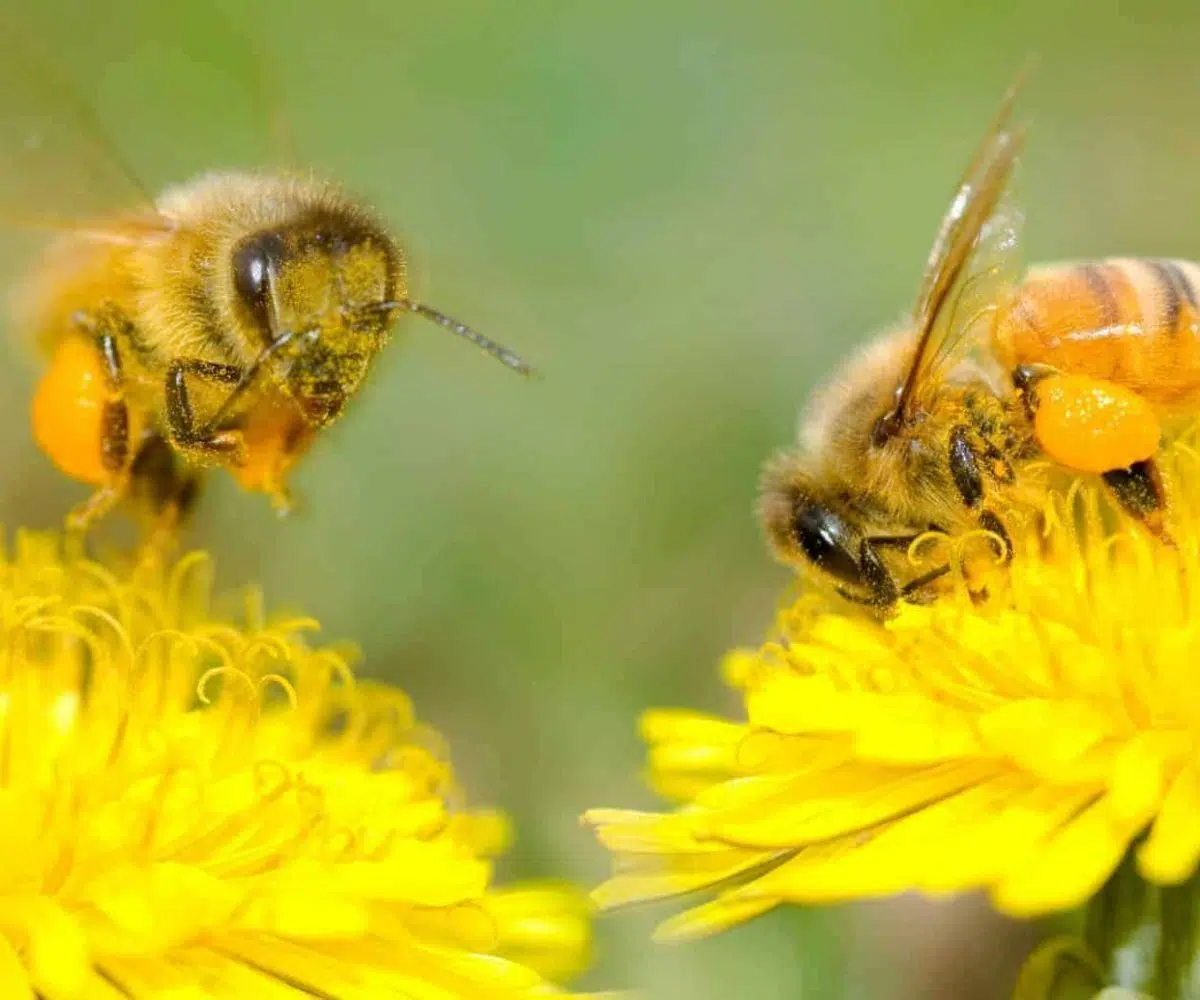
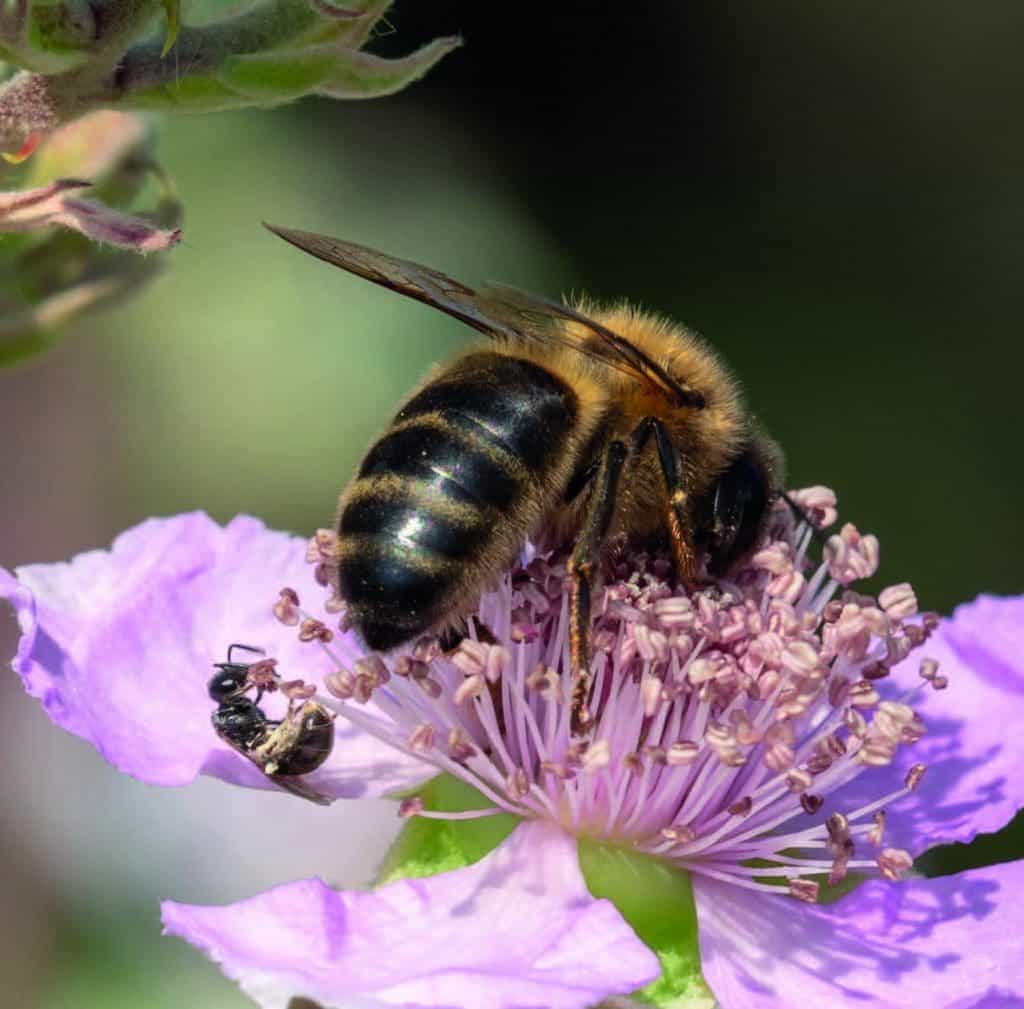
Many flowering plants attract animal visitors through colour, scent, shape and food rewards such as nectar or pollen. As an animal feeds, it may brush against the anthers, where pollen is produced, and then deposit some on a receptive stigma. This transfer is pollination. It can occur within one flower, between flowers on the same plant, or between plants. The stigma is part of the pistil, usually connected to the ovary by a style; it is not simply the exposed top of the ovary. Oregon State University’s guide to reproductive plant parts distinguishes pollination from the fertilisation that may follow.
Fossils give us glimpses of these ancient relationships. A University of Barcelona report published in 2012 describes thrips preserved in Spanish amber about 105–110 million years old, carrying gymnosperm pollen. It was reported as the oldest evidence then known—not a claim that these are the oldest pollinators recognised today, or that they were honey bees.
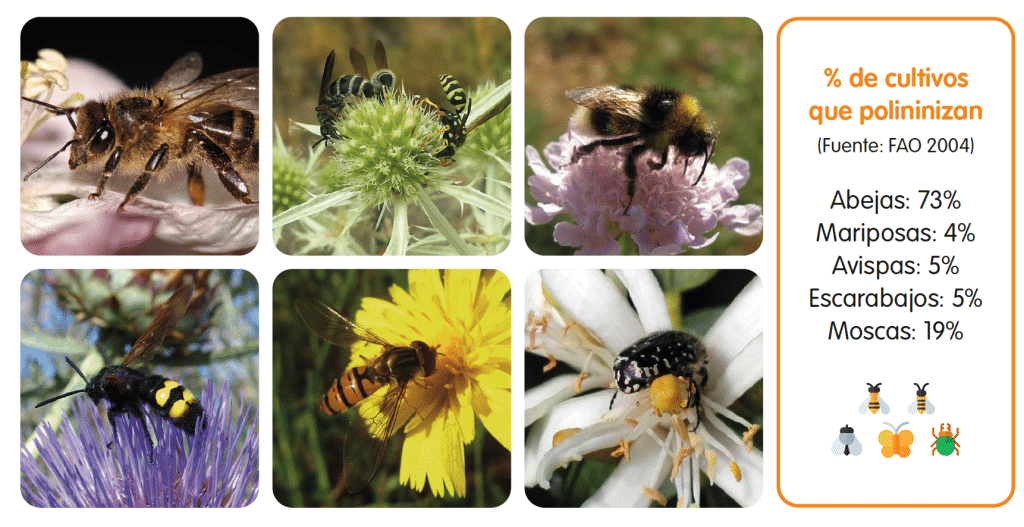
Different plants are pollinated by different animals: bees, flies, beetles, butterflies, moths, birds and bats, among others. Bees are especially important for many crops, but honey bees are only one part of the pollinator community. The FAO’s pollination overview says that about three quarters of major crop plants depend at least partly on animal pollinators. That concerns crop types, not three quarters of all food by weight. The historical percentages in the original graphic above should not be read as a current, universal division of pollination between insect groups.
Insect-pollinated plants and their visitors have influenced one another’s evolution. This is coevolution, not a deliberate agreement. Floral features that can help these interactions include:
- Colours and visual contrasts that help suitable visitors find flowers.
- The arrangement of stamens, petals and other floral parts, which can guide landing and contact with pollen.
- Nectar guides on petals in some species, including patterns visible to bees but not necessarily to human eyes.
- Floral scents associated with receptive flowers and food rewards, helping visitors locate profitable flowers.
- Pollen surfaces that help grains adhere to an insect’s body hairs.
- Changes after pollination or fertilisation, such as fading scent, petal loss or colour changes. These vary between plants and need not involve the same colour shift.
- Different flowering seasons, which can spread food availability and sometimes reduce competition for visitors. Flowering periods can also overlap; plants do not intentionally allocate a calendar.
Insects also have structures and behaviours that affect how efficiently they collect food and transfer pollen. Examples include:
- Mouthparts that allow access to particular flower shapes and nectar depths.
- Branched, feather-like hairs on bees that collect and carry pollen.
- Flower constancy: a forager often visits the same plant species repeatedly during a trip. This can improve pollen transfer, but is not an unbreakable rule that prevents switching flowers.

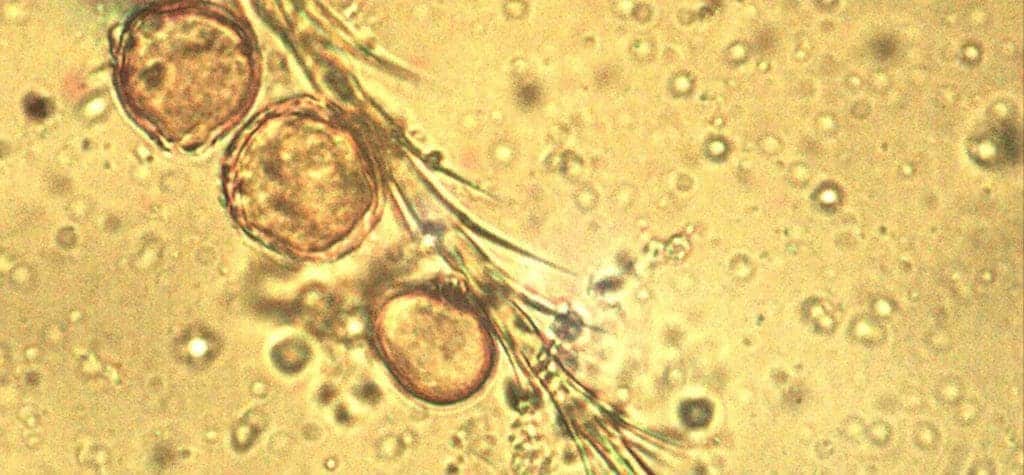
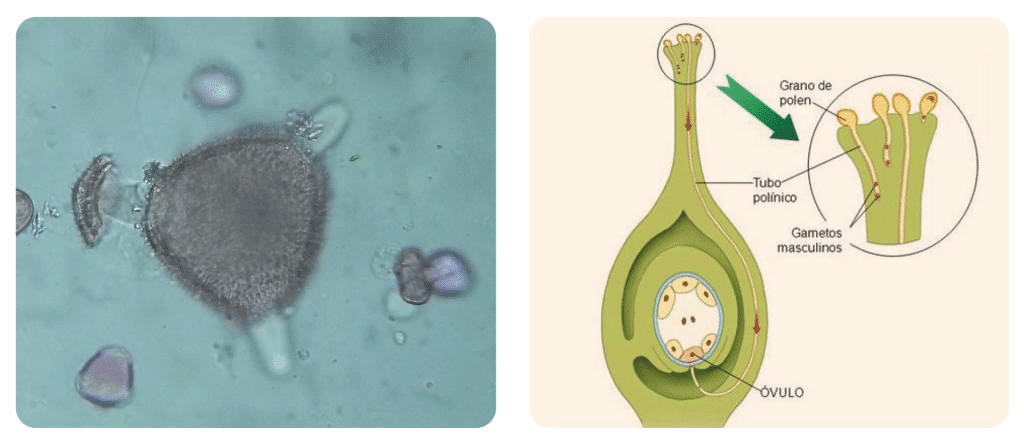
A pollen grain is not a miniature egg. It has a resistant outer wall, the exine, with apertures such as pores or furrows through which a pollen tube can emerge. Inside are living cells involved in the male reproductive stage. After compatible pollen germinates, its tube can grow towards an ovule and deliver sperm cells. The time required varies with the plant and conditions; there is no universal two- or three-day journey.
A pollen grain’s size, shape, apertures and surface pattern help identify the plant that produced it. Identification is sometimes possible to species, but often only to a genus, family or pollen type. These features are particularly useful in examining pollen loads and the botanical origin of honey.
When a stigma is receptive, compatible pollen can adhere, hydrate and germinate. Signals between pollen and female tissues regulate tube growth. Depositing pollen does not guarantee fertilisation: compatibility, viability and environmental conditions all matter. The tube grows through the style towards an ovule; the whole pollen grain does not travel down into the ovary.
After fertilisation, ovules can develop into seeds, while the ovary and sometimes other floral tissues develop into the fruit. Petals may wither or fall as development proceeds. Fruits may be fleshy or dry, and their structures vary: apples and pears include tissue beyond the ovary, while an almond is the seed inside a stone fruit. Not every fruit develops in exactly the same way, and some can form without fertilisation.
The Iberian Peninsula has a rich and varied flora, shaped by its geography, climate and geological history. Mediterranean landscapes, including the Valencian region, offer many flowering habitats. Exact species totals depend on the territory, date and taxonomic treatment; simple comparisons with England or a single account of the last glaciation do not adequately explain this diversity.
Honey bees visit a wide range of wild and cultivated plants in Iberia. Their forage changes with place and season, and the number of plants visited is not a fixed national total. Many food crops benefit from pollination, but that does not mean one third of everything in our cupboards would disappear without honey bees. Some crops depend strongly on animal pollination, others benefit partly, and staple cereals such as wheat and rice do not depend on bees for grain production.
Wild vegetation matters too. Mediterranean scrublands, including landscapes such as Doñana and the Sierra de Aracena, contain many insect-visited plants. Pollination supports their reproduction and the wider food webs that depend on them. Scrub cover also helps protect soil from erosion by rain and wind. The contribution belongs to a community of pollinators; local plant-survey percentages should not automatically be attributed to honey bees alone.
Crop pollination as a service
Managed crop pollination is a practical agricultural service. Beekeepers can place healthy, sufficiently strong honey bee colonies near suitable crops during flowering. Wild pollinators also contribute, including ground-nesting solitary bees, cavity-nesting species and bumble bees. Their contributions can complement one another. The value of bringing in hives depends on the crop, existing pollinators, flowering conditions and colony management—not simply the number of boxes delivered.
Pollinators face interacting pressures, including habitat loss, climate change, parasites, diseases and pesticide exposure. Large areas of a single crop may provide abundant forage briefly and little afterwards; a lack of varied, season-long food can be a problem. Pesticide risk depends on the substance, dose and exposure. Declines have been recorded in some wild pollinator populations, but trends differ between species and regions. Annual losses of managed colonies and the total number of managed hives are different measures.
Spain illustrates why those measures must be kept separate. MAPA’s sector report, using REGA data from March 2025 (Spanish PDF), recorded 2,783,285 hives, around 0.8% fewer than the preceding year. This is a dated administrative count, not a current 2026 census, a measure of individual bee abundance or evidence that wild bees are doing well. Comparisons with another country need matching dates and survey definitions.
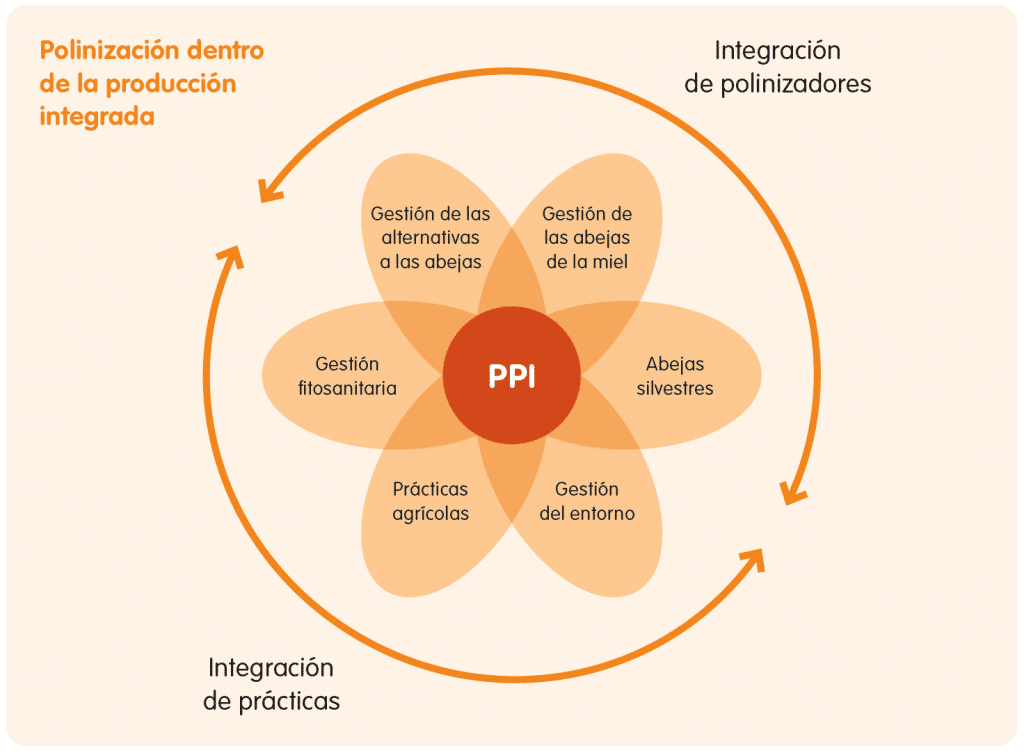
A strong honey bee colony can contain tens of thousands of workers, but only a changing proportion are foragers. They can forage over several kilometres; a radius of 1–1.5 km is not a firm boundary. For crop pollination, growers should assess colony strength and placement, competing flowers, weather and crop requirements. Integrated crop pollination combines managed and wild pollinators with suitable farm practices and habitat. Protect nesting areas, provide appropriate flowering resources and minimise harmful pesticide exposure. Bee hotels suit only some cavity-nesting species and need maintenance; they do not replace undisturbed ground or other habitats. See Isaacs and colleagues’ integrated crop pollination framework.
Commercially reared bumble bee colonies are also used, particularly in greenhouse crops such as tomatoes. Bumble bees can buzz-pollinate, vibrating flowers to release pollen, and some forage in cooler conditions than honey bees. This makes them useful for particular crops, not interchangeable with every other pollinator. University of Minnesota guidance on managed and native pollinators describes these differences. Use locally appropriate managed species and follow supplier biosecurity guidance to limit risks to wild populations.
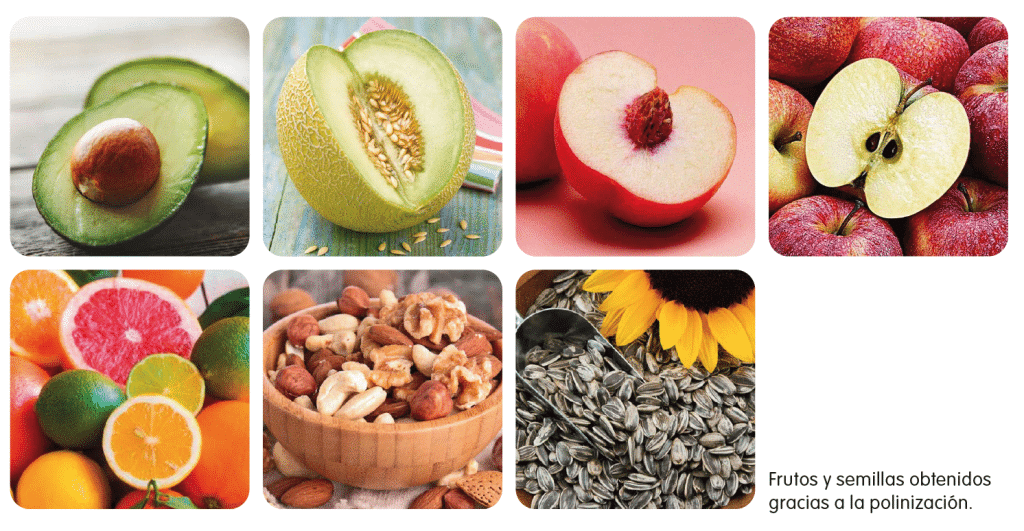
Examples of crops visited or pollinated by bees are listed below. Dependence varies by species, variety and what is harvested: pollination needed to produce seed is not the same as pollination needed to grow leaves, forage or roots.
- Fruit and nut crops: almonds, avocados, blueberries, pumpkins and squash, chestnuts, cherries, plums, strawberries, apples, peaches, melons, blackberries, loquats, pears and watermelons. Their need for insect visits differs; chestnuts, for example, can also be wind-pollinated.
- Legumes: lucerne (alfalfa), clovers, soya beans, vetches and mixed forage species such as sweet clover and bird’s-foot trefoil. Bee visits can be especially important for seed production. Peas, chickpeas and many common beans are largely self-pollinating, so they should not all be described as bee-dependent crops.
- Oilseed crops: oilseed rape (canola) and sunflowers. Insect visits can improve production, with the benefit depending on variety and growing conditions.
Would you like to learn more about beekeeping?
Explore our online introduction to beekeeping course.
The course offers a structured introduction to practical beekeeping with specialist teaching. Check its page for the current syllabus and access details. The original promotional video below is retained in Spanish.
![Introducción al Curso de Apicultura [SÚPER COMPLETO]](https://www.latiendadelapicultor.com/blog/wp-content/plugins/wp-youtube-lyte/lyteCache.php?origThumbUrl=https%3A%2F%2Fi.ytimg.com%2Fvi%2FuJomNRA0UP8%2F0.jpg)
Source and editorial note
The original article credits Pajuelo Consultores Apícolas and was prepared to mark 20 May, World Bee Day. This English adaptation retains that credit while clarifying botanical explanations and the scope and dates of statistics.
Further reading
- Pollination as a professional service (in Spanish)
- Spring forage and flowering plants (in Spanish)
- Beekeeping botany: plants visited by bees (in Spanish)

ISNI 0000 0005 1801 1100 | Joshua Ivars is the manager of LA TIENDA DEL APICULTOR and the author of this blog, where he shares technical and practical guidance for beekeepers. Drawing on extensive experience in the beekeeping sector, he offers advice and solutions based on beekeepers’ real needs, sharing his knowledge of equipment and essential beekeeping practices.


