
20 May is World Bee Day. The UN General Assembly proclaimed it in 2017 following a proposal from Slovenia, and it was first celebrated in 2018. The date honours Anton Janša, a pioneer of modern beekeeping born on 20 May 1734. The FAO’s World Bee Day page explains its origins and purpose.
Three figures that show why pollinators matter
1,000+
bee species and subspecies recorded in Spain’s 2020 conservation strategy
4 in 5
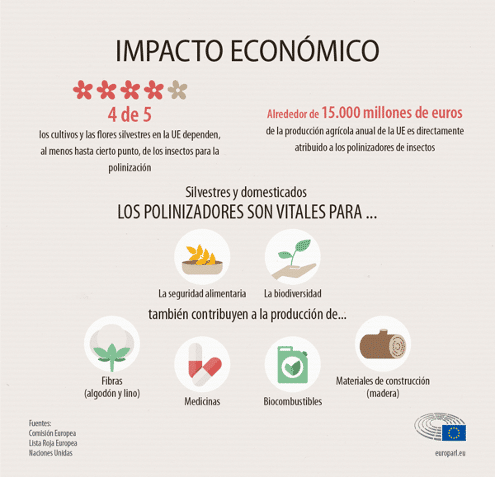
EU crop and wild flowering plant species depend on insect pollination to some degree
€15 billion
in annual EU agricultural output attributed to insect pollination in the 2018 EU initiative
Historical reference points, not live totals: Spain’s 2020 National Strategy for Pollinator Conservation (Spanish PDF), the European Commission’s 2018 EU Pollinators Initiative and the European Parliament’s accompanying information.
A partnership millions of years old
Bees and flowering plants have been evolving together for millions of years. Their relationship is built on a practical exchange:
| Partner | What it provides | What it gains |
|---|---|---|
| The flowering plant | Nectar supplies sugars; pollen supplies protein, fats and other nutrients | Pollen transfer between flowers, helping fertilisation and seed formation |
| The bee | Transport of pollen while visiting flowers | Its main food resources: nectar and pollen |
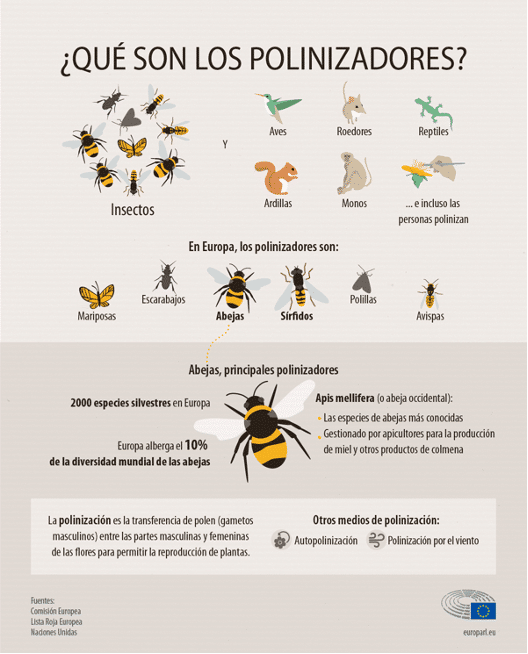
Many insects pollinate flowers, and bees are a particularly important group. Some, including honey bees, live in colonies; others are solitary. They include both stinging and stingless bees. Spain’s 2020 conservation strategy listed 1,105 species and subspecies. European information from this period describes around 2,000 wild bee species across Europe—roughly one tenth of the world total used at the time. These are dated reference figures, not an up-to-date census.
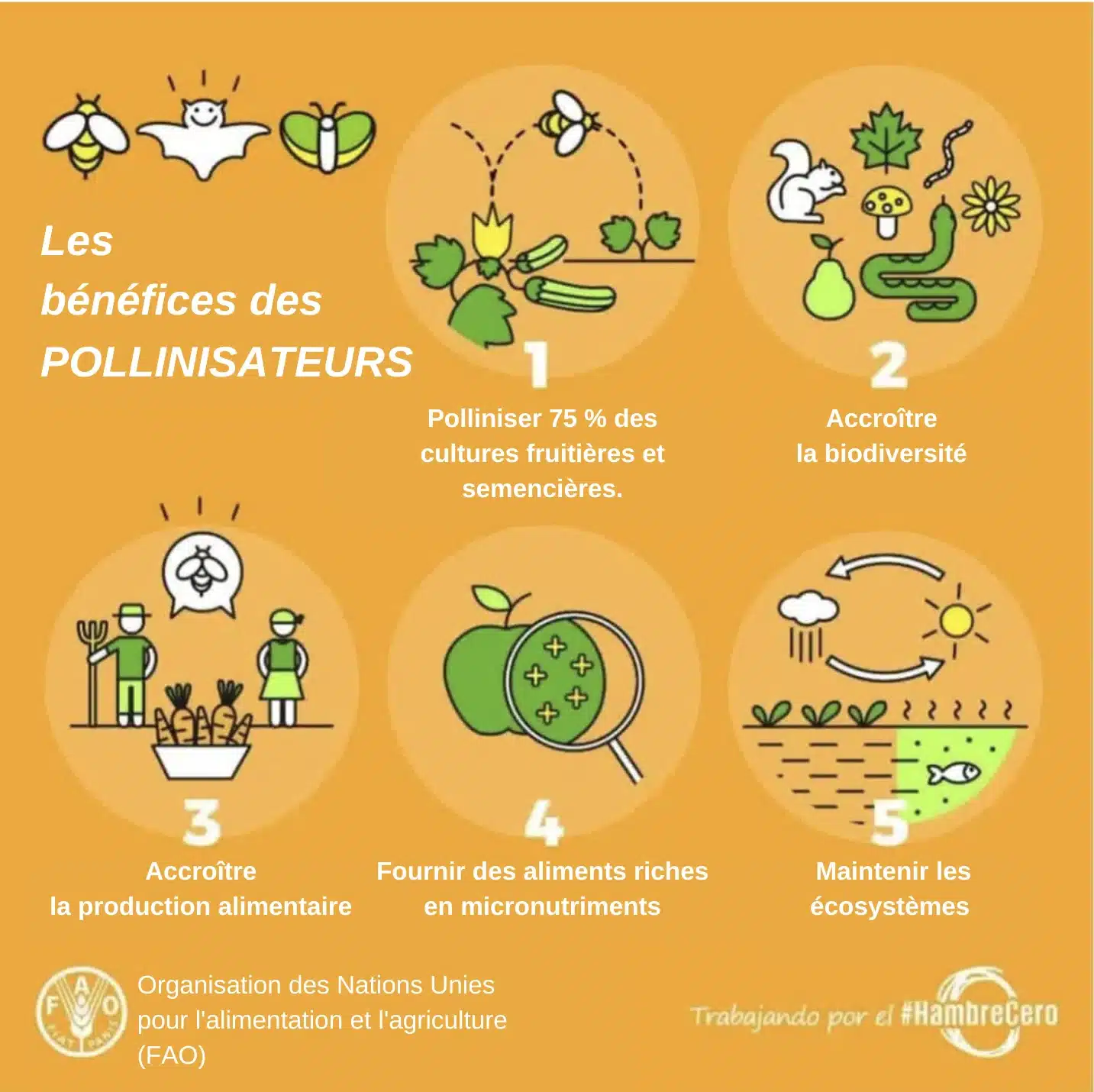
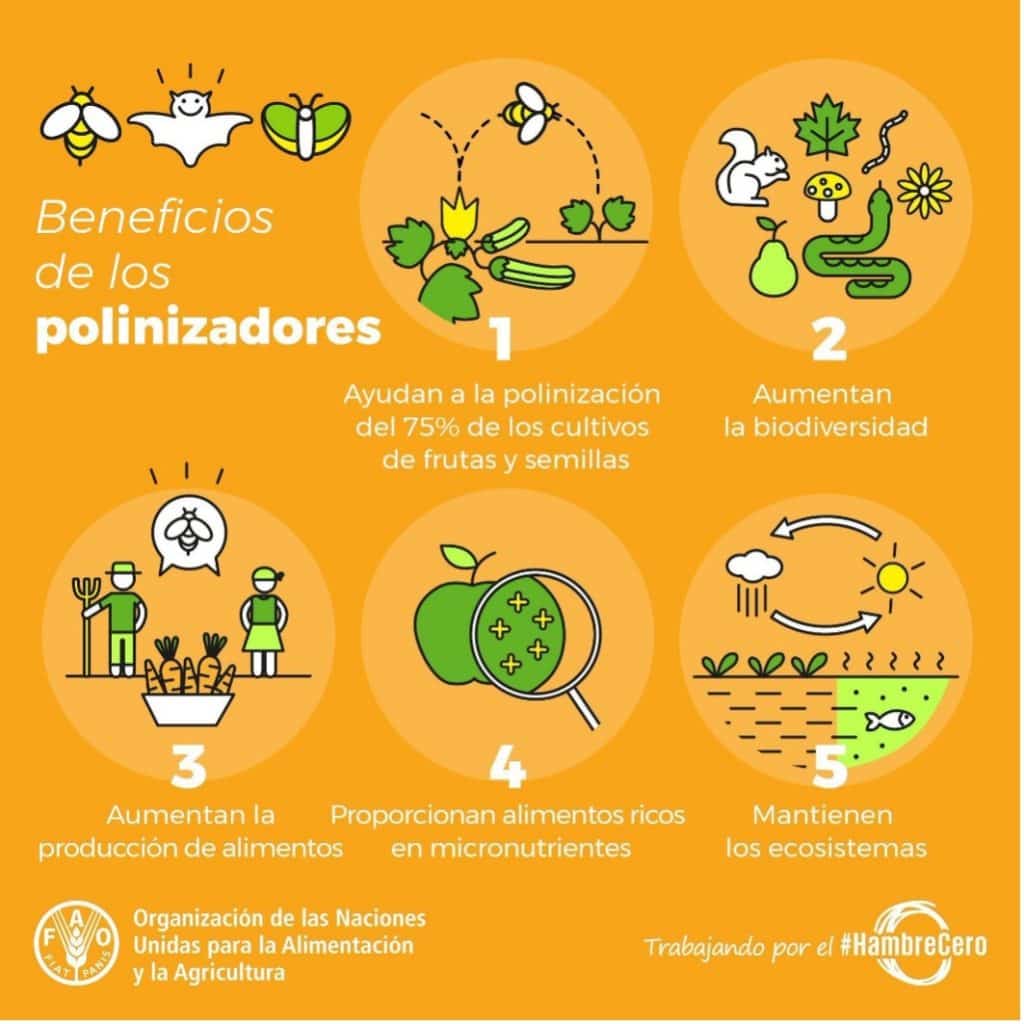
For people, pollination helps provide a varied diet, including many nutrient-rich fruits, vegetables, nuts and seeds. It also supports plants used for some medicines, fibres, fuels and other materials. That does not mean that every crop or every timber species depends on insects: plants can also be wind-pollinated or self-pollinating.
What is putting pollinators under pressure?
| Pressure | How it can affect pollinators |
|---|---|
| Climate change | Changing temperatures and extreme weather can disrupt the overlap between flowering and pollinator activity |
| Land-use change | Urban development and intensive agriculture can remove or degrade habitat, reducing flowers and nesting sites |
| Pesticides | Depending on the substance, dose and exposure, effects may be lethal or sublethal. Herbicides can also reduce flowering food resources; not all pesticides act in the same way |
A mismatch in timing is easy to overlook. It is not enough for both a flowering plant and its pollinator to remain present: their active periods must still overlap for the interaction to work.
The EU’s 2018 public consultation on pollinators received 66,579 responses, from individuals and organisations, according to its consultation factsheet (PDF). It demonstrated strong support among respondents for protection, research and habitat restoration. For an overview of the pressures involved, see the European Parliament’s explanation of pollinator decline.
Farming with pollinators in mind
At the 10th Spanish National Beekeeping Congress in 2022, we attended a presentation entitled “Healthy crops, happy bees” (Cultivos sanos, abejas felices). It described the approach of VERDCAMP, a vegetable-growing business in Tarragona that incorporates pollinator management into its farming practices—not merely as an occasional contracted service, but as part of the production system.
A related professional activity is the provision of managed pollination services (in Spanish). This requires more than simply placing hives beside a crop: colony strength should be assessed, a dependable water supply arranged, and growers and beekeepers should agree how to avoid harmful pesticide exposure during flowering. The practical arrangements must suit the crop, the bees and the products involved.
The beekeeper’s role
Honey bees can be effective pollinators of crops and wild plants, but they are not the best pollinator for every plant and do not replace wild pollinators. Beekeepers help their managed colonies by monitoring health, controlling parasites and diseases, and, where appropriate, moving them to follow flowering and maintain access to forage throughout the year.
Buying honey from local producers can support the people who look after managed honey bee colonies. It is one practical way to mark the day. Supporting wild pollinators also means protecting their nesting sites and providing suitable flowers through the season; keeping more honey bee colonies is not a substitute for that habitat.
For further reading: what pollination is and how bees contribute and, in Spanish, whether bees are disappearing and colony collapse disorder.
Why is World Bee Day celebrated on 20 May?
The date marks the birth of Anton Janša, a pioneer of modern beekeeping, on 20 May 1734. The UN General Assembly proclaimed World Bee Day in 2017 following a proposal from Slovenia. The first celebration took place in 2018.
How many kinds of bees are recorded in Spain?
Spain’s 2020 National Strategy for Pollinator Conservation listed 1,105 bee species and subspecies. This is a dated inventory, not a claim about the exact current number of species. European sources from the same period describe around 2,000 wild bee species across Europe.
How much is pollination worth to European agriculture?
The European Commission’s 2018 initiative cited almost €15 billion of annual EU agricultural output directly attributable to insect pollination. Around four in five EU crop and wild flowering plant species depend on insects to some degree. These are historical estimates, not a new valuation.
What are the main threats to pollinators?
Important pressures include habitat loss and degradation, intensive land use, pesticides and other pollution, climate change, invasive species, parasites and diseases. These pressures can interact. Pesticide risks depend on the substance and exposure; not every product has the same effect.

ISNI 0000 0005 1801 1100 | Joshua Ivars is the manager of LA TIENDA DEL APICULTOR and the author of this blog, where he shares technical and practical guidance for beekeepers. Drawing on extensive experience in the beekeeping sector, he offers advice and solutions based on beekeepers’ real needs, sharing his knowledge of equipment and essential beekeeping practices.


