
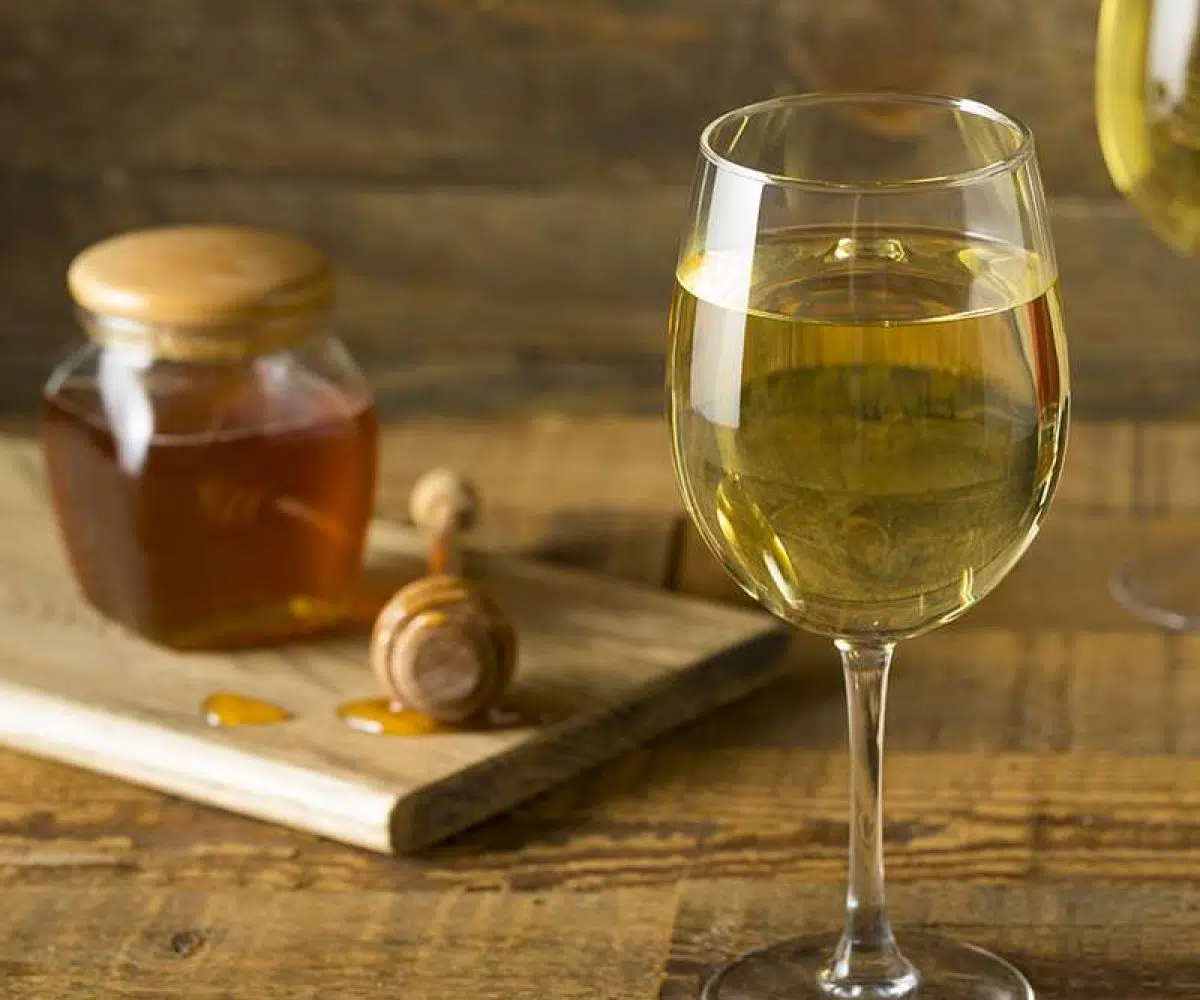
A good mead fermentation is not controlled by the number of bubbles or a fixed calendar. It is controlled by recording density, temperature and sensory evolution, and by providing yeast with conditions consistent with the desired style.
Honey provides fermentable sugars and aroma, but often offers less available nitrogen than grape must. Therefore, selecting the yeast, properly preparing the must and monitoring the process is more important than copying a single proportion or recipe.
The four essential controls
- Density: initial readings and successive measurements indicate how much sugar is being consumed and whether fermentation is progressing.
- Temperature: compared with the recommended range for the yeast strain used; there is no single ideal temperature for all yeasts.
- Nutrition and pH: planned according to the must, yeast and objective, without blind addition of additives.
- Recording: honey lot, yeast, quantities, dates, readings, incidents and tasting. Without a process record, it is difficult to repeat a good result.
Safety rule: do not bottle mead just because bubbling has stopped. Confirm that density is stable, that there is no fermentative activity, and that the chosen stabilisation method is appropriate, especially if residual sugars remain or the mead has been sweetened again.
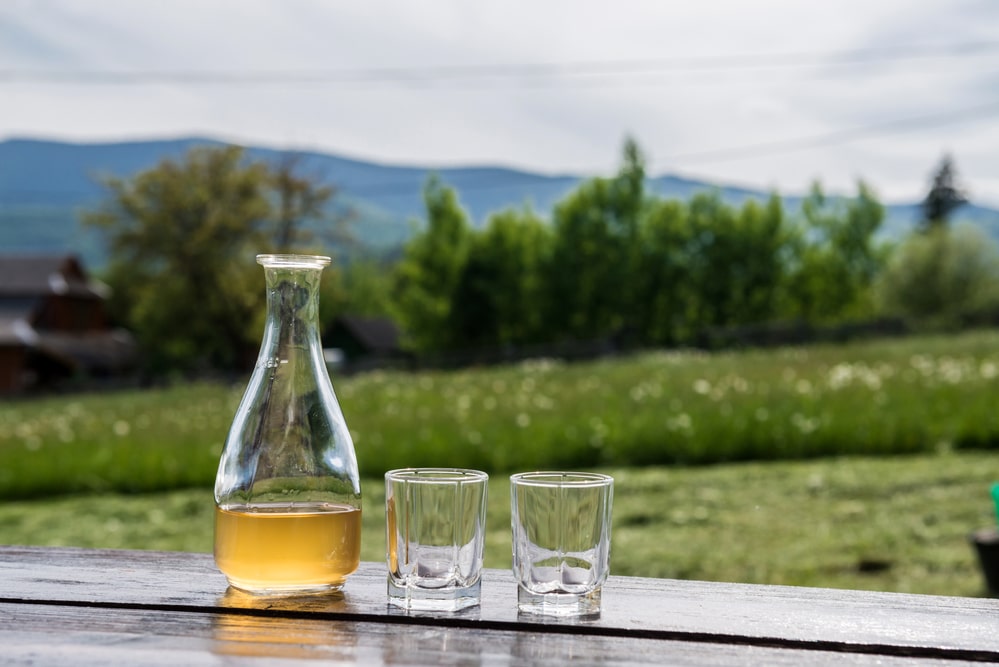
What happens during mead fermentation?
Mead is produced when yeast transforms a large proportion of the sugars in a honey and water must into ethanol, carbon dioxide and numerous secondary compounds. These compounds contribute to aroma and flavour; when yeast works under stress, sulphurous, solvent, volatile acidity notes or other defects may also appear.
Initially, a controlled addition of oxygen helps yeast to form cell membranes and increase population. True alcoholic fermentation produces ethanol and CO₂ under limited oxygen conditions. Therefore, it is not advisable to summarise the process as a first ‘aerobic fermentation’ followed by an ‘anaerobic’ one: cell growth, nutrient consumption and fermentation overlap and vary with each must.
Sugar and alcohol
A high initial density may increase potential alcohol, but also osmotic pressure and stress. More honey does not guarantee a better drink nor a complete fermentation.
Yeast and nutrients
The strain determines alcohol tolerance, thermal range and part of the aromatic profile. Nutrition must meet its needs and the available nitrogen in the must.
Time and stability
Two batches may require different times. The end point is determined by stable readings and product evaluation, not by elapsed weeks or airlock activity.
Before starting: define the style and open a batch record
Before weighing the honey, decide what you want to achieve: dry, semi-sweet or sweet mead; still or sparkling; approximate alcohol level; honey profile; final volume and stabilisation system. This definition allows calculation of a reasonable initial density and selection of a compatible yeast.
Avoid treating a fixed honey-to-water percentage as a universal rule. Sugar concentration varies between honeys, and the result also depends on the final specific gravity. To formulate the batch, measure the must’s specific gravity and use a validated fermentation calculator or technical guidance for the yeast strain. In commercial production, the declared alcohol content must be confirmed using the applicable analytical method and regulatory requirements, not merely a home estimate.
| Batch data | What to record | Purpose |
|---|---|---|
| Raw material | Honey origin and batch, moisture content, aroma, water and any other additions. | Traceability and comparison between batches. |
| Objective | Volume, sweetness, carbonation, estimated alcohol and sensory profile. | Choose concentration, yeast and finish. |
| Inoculation | Strain, lot, date, dosage and rehydration protocol. | Check viability and repeat the start if necessary. |
| Controls | Density, temperature, pH, observations and actions with date and time. | Detect deviations before they become defects. |
| Final stage | Stable density, racking, clarification, stabilisation, tasting and bottling. | Evaluate performance, stability and quality. |
Honey, water, yeast and nutrients: what each contributes
Honey: quality over excess
Use healthy, traceable honey with the aromatic profile you wish to preserve. Fermented honey, with defective aromas or deteriorated by storage, does not automatically become a good drink. Intense and prolonged heat can also reduce aromas and darken the must.
Honey moisture content and composition affect the calculations used to formulate the must. If you need to review how moisture is measured and why it affects stability, consult our guide on honey moisture content and fermentation.
Water: clean, potable and free of sensory defects
Water makes up a significant part of the volume and may introduce chlorine, hardness, salts or odours. It must be potable and pleasant to taste. If treated, this must be documented and the filter material and containers verified as food-grade.
What yeast is used to make mead?
Wine, beer and mead-specific yeasts can all ferment a honey must, but they behave differently. Compare at least their alcohol tolerance, temperature range, ability to ferment at the target gravity, nutrient requirements, flocculation and aroma profile. The manufacturer’s technical data sheet should take precedence over generic instructions.
Bread yeast can produce alcohol, but it has been selected for baking and offers less control over tolerance, sedimentation and sensory profile. It is suitable for experimentation, not the most predictable reference if aiming to repeat a style or commercialise it.
Nutrients: a plan, not a random spoonful
Honey is low in some nutrients that yeast require. A deficiency in assimilable nitrogen, vitamins or minerals may slow fermentation and promote undesirable aromas. However, adding only diammonium phosphate (DAP) does not fix every problem nor replace control of pH, temperature, density and viability.
Choose an authorised nutrient for the intended use, follow its technical data sheet and adjust the dosing schedule to the batch volume, original gravity and yeast strain. Some protocols stagger additions during the first part of fermentation to avoid an excessive initial nutrient load. Do not add nutrients late or without diagnosing the cause of a stall: the yeast may no longer be able to use them, or the problem may lie elsewhere.
Minimum equipment and cleaning of the mead fermenter
The fermenter must be food-grade, easy to clean and large enough to leave room for fermentation foam. A lid fitted with an airlock allows CO₂ to escape while limiting contamination, but airlock activity alone does not indicate whether fermentation is active: a leak can leave the airlock still while the must continues to ferment.
- Primary fermenter and, if needed, a second vessel with minimal headspace for maturation.
- Hydrometer or density meter, measuring cylinder and sampling equipment for taking samples without contaminating the batch.
- Reliable thermometer and, for more comprehensive control, a calibrated pH meter.
- Siphon, tubing and valves that can be fully cleaned and disinfected.
- Cleaning and disinfection products compatible with each surface and used according to label instructions.
Cleaning and disinfecting are distinct operations: first remove dirt; then apply the disinfectant at the recommended concentration and contact time. Alcohol at 70 % may be useful in certain areas, but it is not a universal solution for deposits, hoses or organic residues. Inspect joints, taps and scratches, where dirt is more likely to remain.

How to ferment mead step by step
1. Design the must and measure initial density
Calculate honey and water based on batch volume and target, mix thoroughly and measure original gravity —OG— using the calibrated instrument. This reading is far more useful than working solely with a honey percentage, as it allows tracking of sugar consumption and estimation of alcohol content.
The standard formula ABV ≈ (OG − FG) × 131.25 provides an estimate when OG and final gravity —FG— are expressed as specific gravity. Its accuracy decreases in highly concentrated fermentations or complex processes; it does not replace laboratory analysis if the figure is used for labelling or legal control.
2. Prepare the must without destroying what you wish to preserve
Dissolve the honey with warm water if necessary, avoiding hot spots. Boiling the must reduces part of the microbial load, but may also remove aromas, generate foam and alter colour and flavour. Producing without boiling better preserves the character of the honey, although it requires suitable raw material and strict hygiene. There is no single treatment for all producers: define your method, record time and temperature, and assess sensory impact.
3. Rehydrate and pitch as directed for the selected yeast
Check the expiry date and storage conditions. Rehydrate the dry yeast with the volume, temperature and time specified by the manufacturer; some strains and formats are added differently. Avoid leaving rehydrated yeast unattended for hours without food, or abruptly acclimatising it to a very concentrated must. If there is a large temperature difference, follow the recommended acclimatisation protocol.
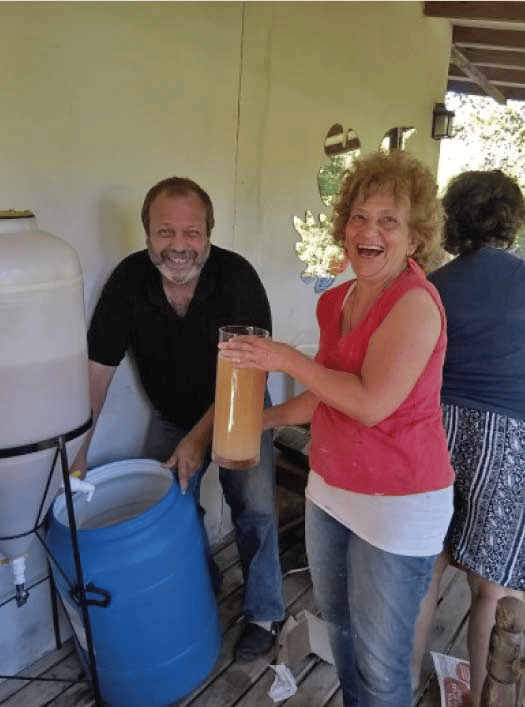
4. Manage oxygen, nutrients and temperature at the start
Controlled homogenisation or aeration at the beginning may support yeast growth. Once fermentation is underway, limit oxygen to reduce oxidation risk. Apply the chosen nutrient programme within the recommended window, using clean equipment and avoiding abrupt CO₂ release when stirring.
Measure the liquid temperature, not just room temperature: active fermentation can raise the temperature above ambient levels. If approaching the strain’s limit, correct gradually; abrupt changes can also stress the yeast.
5. Monitor the density curve
During the first few days, it is advisable to observe the batch and take measurements at a frequency that allows tracking the trend without unnecessary opening. Always take a representative sample, record the temperature, and do not return the sample to the fermenter. Speed may vary, but a descending curve indicates sugar consumption; a single reading does not.
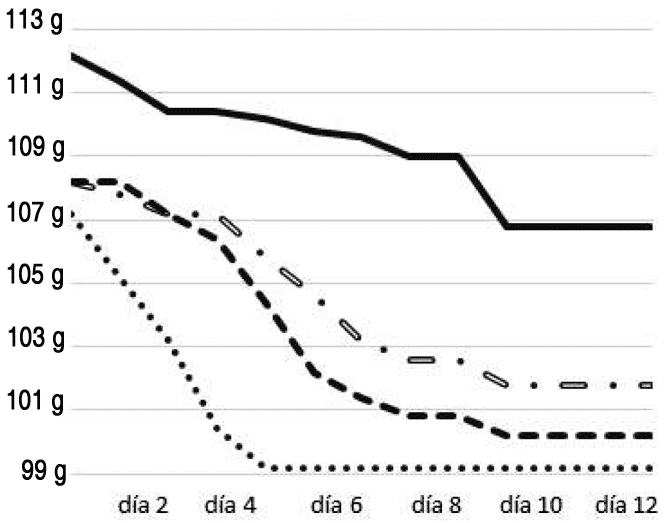
6. Confirm completion before racking or bottling
The absence of bubbles may indicate finished fermentation, a leak, a temperature change or a pause. Measure the density and repeat the reading several days later under the same conditions. When stable and consistent with the yeast’s tolerance and intended style, assess aroma, flavour and appearance before deciding the next step.
The process, at a glance
1. Design
Objective, volume, honey, yeast and initial density.
2. Prepare
Cleaning, homogeneous must and initial measurements.
3. Inoculate
Viable yeast and manufacturer’s protocol.
4. Control
Density, temperature, pH, aroma and nutrition.
5. Finish
Stability, racking, clarification and protection.
6. Verify
Tasting, stability and safe bottling.
How to measure density, temperature and pH
Hydrometer or refractometer
This is the most direct tool for monitoring fermentation. Disinfect sampling equipment, fill the cylinder, remove bubbles adhering to the instrument, and read the meniscus according to its instructions. Correct the reading for temperature if the sample is not at the instrument’s calibration temperature. Always compare data taken using the same criteria.
Refractometer
Requires a very small sample and is useful prior to fermentation. Once alcohol appears, the °Brix reading no longer directly corresponds to remaining sugar: a correction using the initial value must be applied. Without correction, it may appear that more sugar remains than actually does. For confirming stability during fermentation, a hydrometer is usually easier to interpret.
Temperature and pH
Record the temperature alongside each density reading. pH provides another signal about the yeast environment, but should not be routinely corrected: first verify calibration, repeat the measurement, and compare the value with the strain and batch protocol. Incorrect addition of acids or salts may alter flavour and not resolve the underlying cause.
Stalled fermentation and other defects: diagnostic table
| Symptom | Possible causes | What to check before acting | Prudent next step |
|---|---|---|---|
| Does not start or progresses very slowly | Low yeast viability, overly concentrated must, temperature outside range, nutritional deficiency or problematic pH. | Consecutive density readings, actual temperature, yeast date and protocol, calculations and calibrated pH. | Correct the environment first; if re-inoculating, follow a specific acclimatisation and rescue protocol. |
| Odour of egg or sulphur | Nutritional stress, temperature, strain or contamination. | Time of appearance, density trend, temperature, nutrition and cleanliness. | Diagnose early; do not add nutrients or oxygen indiscriminately. |
| Odour of vinegar or solvent | Volatile acidity, oxygen exposure or microbial contamination. | Hygiene, headspace, seals, racking and acidity changes. | Isolate the batch, limit oxygen and assess analytically and sensorially before bottling. |
| Notes of sherry, cardboard or darker colour | Oxidation during racking or storage. | Splashes, headspace, seals, temperature and light exposure. | Minimise movement and air contact; review the system for the next batch. |
| Persistent turbidity | Yeast in suspension, proteins, fruit pectins, temperature or still-active fermentation. | Density stability, ingredient type, resting time and small-scale test. | Choose treatment according to cause; do not apply a universal clarifier to the entire tank. |
| Gas or unexpected pressure in bottle | Residual fermentable sugar, sweetening without stabilisation or premature bottling. | Density before bottling, stabilisation method, temperature and container condition. | Isolate the batch and treat as a pressure risk; do not open doubtful bottles without protection. |
A stalled fermentation does not have a single solution. Warming, aerating, adding DAP or inoculating with another yeast strain without measurement may worsen the batch. If producing for sale, rely on a technician and analysis when the cause or safety is unclear.
Racking, clarification, stabilisation and bottling
Racking separates the beverage from sediment and allows maturation to continue in a clean vessel. Perform it when justified by the batch condition, not necessarily every twenty days. Move the liquid gently, avoid splashing and minimise headspace. Each unnecessary racking adds oxygen and increases contamination risk.
To clarify, first identify the source of turbidity. Cold, time, filtration and fining agents have different effects. Test on small samples and follow the product data sheet; a fixed dose of bentonite or egg white is not suitable for all meads. Consider allergens, labelling and aroma loss when using adjuncts.
If you want a sweet mead, do not rely on the yeast ‘stopping’ at the desired point. It may temporarily exhaust and reactivate later. To sweeten a finished beverage, a stabilisation method compatible with the product, regulations and available equipment is required. Carbonation adds another variable of pressure and demands a controlled procedure and appropriate packaging.
Before bottling, confirm stable density, absence of activity, sufficient clarity for the style, compatible closure and sensory evaluation free of defects. Protect bottles from heat and light. Shelf life depends on alcohol content, sweetness, acidity, oxygen, process and closure: not all meads should be consumed within one season, nor do all improve indefinitely.
Frequently asked questions about mead fermentation
How long does mead fermentation take?
There is no universal timeframe. Initial gravity, yeast strain, temperature, nutrients and volume affect speed. The most active phase may last days or weeks, followed by stabilisation and maturation. Decide based on measurements, not the calendar.
How do I know fermentation has finished?
Check that density remains unchanged across separate readings and that the value is consistent with the yeast and target. A quiet airlock is not sufficient. If fermentable sugar remains or you plan to sweeten, resolve stabilisation before bottling.
What alcohol content does mead have?
It depends on the amount of sugar consumed. Alcohol content can be estimated from the difference between original and final specific gravity, but commercial products must comply with the control and labelling methods required in their market. The same amount of honey does not always produce the same alcohol by volume (ABV).
Can I measure it using only a refractometer?
Before fermentation, it may help estimate soluble solids. After fermentation, the reading must be corrected for alcohol presence and the initial value known. For tracking decline and confirming stability, a hydrometer is often simpler.
How is mead clarified?
First confirm fermentation has finished and determine the cause of turbidity. Time, cold, racking, filtration, enzymes or fining agents address different issues. Test on a small scale and follow the product data sheet and regulations; there is no universal dose for every batch.
What is the difference between mead and hydromel?
In current usage, ‘mead’ usually refers to the alcoholic beverage made by fermenting a must of honey and water. ‘Aguamiel’ may refer to that mixture or to other drinks and plant saps, depending on the country, so its meaning should be clarified in each context.
Technical sources and origin of the article
This update preserves the contribution of the article «Hidromiel: el proceso de fermentación y su relación con la calidad», originally published in Espacio Apícola, issue 133, July–October 2021, Córdoba, Argentina. Authors are Alicia M. Basilio, E. J. Prieto, V. C. López, L. M. Mellado and F. Pedraza from the Universidad de Buenos Aires, and R. Alvarez and L. B. Gurini from INTA.
Photographs from the project and experimental curves are retained as evidence of that work. The text has been revised to separate its findings from general recommendations and to include current control criteria.
- Mendes-Ferreira et al., optimisation of mead fermentation and must supplementation.
- Pereira et al., selection of Saccharomyces cerevisiae strains for mead production.
- Costa et al., scientific review of mead production, composition and quality.
- Scott Laboratories, technical manual on fermentation and yeast management.
- Beer Judge Certification Program, guide to mead production and evaluation.
For equipment to monitor and control the process, see our honey analysis and processing section. To read the article in its original editorial context, you can find Espacio Apícola magazine in the shop.

ISNI 0000 0005 1801 1100 | Joshua Ivars is the manager of LA TIENDA DEL APICULTOR and the author of this blog, where he shares technical and practical guidance for beekeepers. Drawing on extensive experience in the beekeeping sector, he offers advice and solutions based on beekeepers’ real needs, sharing his knowledge of equipment and essential beekeeping practices.


